The first issue of the IPRax (Praxis des Internationalen Privat- und Verfahrensrechts) for 2026 will be published on 6 January. It features a thought-provoking article by Bea Verschraegen about a particularity of German PIL, the doctrine of the so-called “hidden renvoi” (versteckter Rückverweis). The other articles are also of great interest, as you can see from the following abstracts, which have been kindly provided by the editor of the journal.

B. Verschraegen, The narrative of the hidden renvoi (German)

For “economic efficiency”, Austrian and German courts use a labour-intensive technique when their conflict rules refer to the law of another, usually an Anglo-American, state. The goal is to end up applying domestic law, though neglecting the basic equivalency of all countries in the process. In the foreign jurisdiction rule, which leads to the lex fori (consistency between forum and ius), the domestic courts seek a referral back to the law of their forum. Such a renvoi does not exist, however, because the jurisdiction rule is not a conflict rule. Therefore, the allegation is made, and the narrative constructed, that the jurisdiction rule “hides” a conflict-rule. Yet, the bilateral reading of the unilateral jurisdiction rule is a misinterpretation of foreign law. Further, the foreign rule of jurisdiction is applied hypothetically. The domestic lex fori would be applicable if the domestic court had (such hypothetical) jurisdiction. Implementing the narrative massively reinforces the homeward striving and works to the detriment of conflict of laws justice and international decision-making harmony. In addition, the narrative disregards the guiding principle of the strongest (or closest) connection. As a result, the very foundation of conflict of laws becomes questionable. The prevailing doctrine in Austria and Germany welcomes the narrative, which, nonetheless, ought to be rejected. Instead, the appropriate response is to interpret the overall reference as a reference to foreign substantive law.

H. Wais, Transnational representative actions: international jurisdiction and applicable law (German)

Representative actions that contain cross-border issues pose challenges for the law of international jurisdiction and conflict of laws. Difficulties arise from the fact that representative actions involve claims arising from numerous legal relationships. The involvement of a large number of persons (at the level of substantive law) often means that the relevant connecting factors which are deployed by the rules of international jurisdiction and conflict of law-rules point to different courts or laws. Uncertainty also surrounds the question of how to characterise the claims that form the basis of representative actions (in particular under the Brussels I bis-, Rome I- and Rome II-Regulation). This article presents several approaches to address these problems.

T. Kindt, Asymmetric jurisdiction agreements in EU law (German)

The validity of asymmetric jurisdiction agreements has long been a controversial issue in European procedural law, with views differing widely even among the courts of EU Member States. In a preliminary ruling of 27 February 2025, the CJEU clarified that such agreements are generally permissible under Article 25 Brussels I Regulation, and that, with the narrow exception of reasons leading to nullity, their substantive validity must be assessed according to autonomous criteria of EU law. These may even allow for commonly used asymmetric jurisdiction clauses which reserve to the privileged party the right to bring proceedings before “any competent court” – but only insofar as they are intended to refer exclusively to courts of Member States of the EU and the Lugano Convention. This article argues that the decision of the CJEU, while providing welcome clarifications on the scope of Article 25 Brussels I Regulation, may also have detrimental effects on legal certainty and the attractiveness of EU law in areas such as international finance, where asymmetric jurisdiction agreements often extend to the courts of non-member states, inter alia for enforcement purposes.

M. Andrae, Lis pendens in proceedings on parental responsibility in Poland and Germany (German)

The parents and their two children are Polish citizens and have their habitual residence in Germany. In Poland, the parents’ divorce proceedings and, alongside these, proceedings concerning rights of custody and rights of access are pending. The Polish court issued a provisional order for the children to reside with their father until the divorce becomes final. The decision of the OLG Stuttgart is about whether this prevents the initiation of access rights proceedings at the request of the mother in Germany. The court answered this in the negative, arguing that the Polish courts do not have international jurisdiction and therefore the objection of double lis pendens under Article 20 paragraph 2 of the Brussels IIb Regulation does not apply. In the article, the author concludes that both the Polish and the German courts have not applied, or have not applied correctly, the jurisdiction provisions of the Brussels IIb Regulation, which include Articles 18 and 20. In addition, the opportunity for consultations between the courts was not utilized. This has led to parallel proceedings on identical issues, with the risk of contradictory decisions, which must be avoided at all costs in the interests of the child.

D. Coester-Waltjen, Shouldn’t we decide in favour of a valid marriage, wherever possible? (German)

The decision of the Federal Supreme Court concentrates on the question whether a marriage can be formed validly according to the rules on formation of marriage in Utah by online declaration of the spouses in Germany. Under German private international law, the formal aspects of the formation of marriage are governed either by the lex causae, which means by the national laws of both spouses, or, alternatively, by the lex loci celebrationis, this means by the local law of the place of the celebration. However, if a marriage is celebrated in Germany, the German rules on formal issues have to be applied. According to these German rules, the future spouses must be present at the registry office and must declare their consent in person in front of the competent registrar. An online declaration will not suffice. Thus, the decisive question is where one locates the place of celebration of a marriage.

Whereas the traditional approach located the place of celebration at the place where the constituting act (if necessary) took place, the Federal Supreme Court now held that the place where the spouses consent always is to be regarded as the place of celebration.

This article tries to reveal the inconsistencies of the Court’s arguments, the uncertainties following from this approach and the problems of contradicting results for comparable situations, especially concerning the treatment of marriage by proxies and of same-sex marriages. It is true that German private international law on formation of marriage altogether should be reformed. However, in this case, it would have been possible to reach reasonable results just by interpreting the existing legal rules.

B. Rentsch, Habitual residence of diplomats under the Rome III Regulation (German)

In a recent preliminary ruling, the ECJ has sketched a framework for determining habitual residence for the purposes of the Rome III Regulation. The court emphasises private over professional life circumstances in determining the applicable law. Furthermore, the circumstances of a person’s dwelling outweigh a potential lack of continuous presence in a given jurisdiction. The ruling discloses structural differences between the concept of habitual residence in EU secondary law on the one hand and German Private International Law on the other. These differences ought to be taken seriously by German PIL literature.

C. Reibetanz, De facto union as marriage or registered partnership? Remarks on the substitution of family status relationships (German)

The Austrian Supreme Court decides on the question whether the surviving partner of a de facto couple is entitled to a survivor’s pension under social security law. The couple had lived in Bosnia and Herzegovina, where de facto unions are, under certain circumstances, treated as spouses for the purpose of maintenance and property rights. The article shows that the rationale of the decision cannot convince from a dogmatic perspective. The Supreme Court confuses the institutes of characterization and substitution. The result of the decision is, however, convincing: the surviving partner of a de facto union is not entitled to a survivor’s pension under Austrian law.

S. Zwirlein-Forschner, Creature without a creator – corporate freedom of establishment as a biography-neutral right (German)

The article examines a decision of the Court of Appeal Karlsruhe, which confirms that a company’s eligibility for a cross-border conversion depends solely on its current existence under the law of any EU Member State. It is irrelevant whether the company was originally incorporated under that law or acquired its applicability through a cross-border conversion from a third country. This article situates the ruling within the European corporate-mobility framework and shows how it underlines a strictly present-focused, biography-neutral interpretation of freedom of establishment and of the harmonized law on cross border conversions.

M.F. Müller-Berg, Negative declaratory action in product liability disputes at the place of action within the meaning of Art. 5 No. 3 Lugano Convention in the case of cross-border production involving division of labour (German)

The Swiss Federal Court had to decide on the international jurisdiction for a negative declaratory action in a product liability dispute in the case of cross-border manufacturing involving a division of labour. On the one hand, it affirmed the possibility of bringing a negative declaratory action in a product liability dispute at the place of action within the meaning of Art. 5 No. 3 Lugano Convention. On the other hand, in the case of cross-border manufacturing involving a division of labour, it considered the place of development to be the sole place of action for the product developer. This not only represents a rejection of a mutual attribution of the place of action in relation to other addressees under product liability law, but also an opening of the place of action in product liability to an interpretation specific to the addressee of liability.

Th. Granier, The Søstrene decision of the Paris Court of Appeal: the exclusion of private interest from the scope of international public policy (German)

In a recent decision concerning the enforcement in France of an arbitral award issued by the Danish Institute of Arbitration the Court of Appeal ruled that provisions aimed at protecting private interests (such as those concerning significant imbalance in commercial relationships) do not form part of international public policy. Instead, only norms safeguarding truly public interests, like prohibitions of corruption or competition-distorting practices that harm the market, can trigger the international public policy exception. Consequently, the enforcement of the award was upheld.

R. Bork, Liability actions against arbitrators under the Brussels Ibis Regulation (German)

In a sensational decision of 22 June 2021, the Paris Court of Appeal ruled that actions for damages brought by parties to arbitration proceedings against arbitrators for breach of disclosure obligations are covered by the exception in Article 1(2)(d) of the Brussels Ibis Regulation and that international jurisdiction is therefore governed by the national international civil procedure law of the court seized. The following discussion shows that this view cannot be accepted because it does not sufficiently specify the violated obligation and therefore comes to a conclusion that is incompatible with the genesis and the policy of the exception.

G. Zou, W. Llai, Y. Che, The Re-establishment of Unified Rules for the Application of International Treaties and Practices in China (English)

The judicial Interpretation concerning the application of international treaties and practices promulgated on 5 December 2023 by the Supreme People’s Court of China provides a unified legal basis and normative guidance for the application of international treaties and practices by Chinese courts in the trial of foreign-related civil or commercial cases, and reflects three principles to be followed therein, namely, the principle of performing treaty obligations in good faith, the principle of respecting international practices, and the principle of safeguarding the sovereignty, security or social public interests. This Interpretation is conducive to improving the quality and efficiency of foreign-related civil or commercial trials in China, expanding the international credibility and influence of China’s judiciary.

G. Zou, W. Llai, Y. Che, The Interpretation of the Supreme People’s Court on Several Issues Concerning the Application of International Treaties and International Practices in the Trial of Foreign-related Civil or Commercial Cases (English)

C. Budzikiewicz, Dagmar Coester-Waltjen for her 80. birthday (German)

M. Erb-Klünemann, Conference in Washington: “15 Years of the HCCH Washington Declaration: Conference on Progress and Perspectives on International Family Relocation” (German)

From May 2–4, 2025 the Canadian Embassy in Washington hosted the conference “15 years of the HCCH Washington Declaration: Conference on Progress and Perspectives on International Family Relocation” organized by the Hague Conference on Private International Law (HCCH), the International Academy of Family Lawyers (IAFL) and the Canadian Embassy. The event explored international developments on family relocation since the first HCCH Washington Conference on Relocation 15 years ago. The primary objective of the conference was to promote the wider use of the 2010 HCCH Washington Declaration. The participants were informed about new developments in various states on the topic of relocation. They agreed that good legal handling of the issue of international relocation, which is subject to national law, is crucial to prevent child abduction. The 15-year-old HCCH Washington Declaration proved to be a guiding principle that is still up to date.

The fourth and final issue of the RabelsZ (The Rabel Journal of Comparative and International Private Law) for the year of 2025 has been published and is now available via open access and in print, featuring topics as diverse as Roman marriage and digital assets. The following titles and English abstracts of the articles have been kindly provided to us by the editor of the journal.

Anne Röthel, Debatten über das Vergleichen. Wanderungen zwischen Rechtsvergleichung und Komparatistik (Debates about Comparison. Journeys between Comparative Law and Comparative Literature) (Open Access)

Many academic fields look to comparative methods in pursuit of insight, with scholars debating how to proceed and what they hope to learn from the comparison. This article explores what comparative law stands to gain from interdisciplinary dialog with other fields of comparative inquiry. By way of example, it evaluates the potential gain from several journeys into the field of comparative literature. At first, these journeys back and forth between disciplines reveal a number of parallels: a striking resemblance between each field’s narrative of its own becoming; both fields’ exposure to fundamental criticisms; both fields ethicizing along similar trajectories; each one’s encounter with related dilemmas. At the same time, these journeys into comparative literature reveal implicit hierarchies and orientations in comparative law. But these cursory journeys through the history of comparative literature also counsel that comparative law would do well to avoid letting its own debates over the direction of the field veer into polarization and name-calling, into a kind of struggle that is mostly unwinnable and unproductive.

João Costa-Neto and João Guilherme Sarmento, From Roman Marriage to Unmarried Unions. Defining the Requirements for de facto and Registered Partnerships (Open Access)

This study examines the historical and comparative evolution of family law, tracing the transition from Roman marriage to contemporary partnerships. The article explores how Roman law conceptualised marriage as a social institution based on affectio maritalis, detailing its transformation through Christian doctrine into an indissoluble sacrament and its subsequent adaptation within modern legal systems. By analysing legal frameworks in Germany, Italy, France, England, and Brazil, the inquiry highlights the varying degrees of recognition granted to unmarried unions, from informal cohabitation to registered partnerships. The comparative analysis reveals the dynamic interplay between tradition, societal norms, and legal evolution, underscoring how distinct legal systems balance autonomy and protection in family law. This work contributes to the broader discourse on the harmonisation of family law and the impact of evolving societal values on legal institutions.

Tom Hick, Claiming Back Anticipatory Performance after Failed Negotiations. A Comparative Analysis of Alternatives to Precontractual Liability (Open Access)

As a matter of principle, breaking-off negotiations or refusing a contract offer are lawful actions. For based on freedom of contract, each individual is free to contract, free to choose one’s counterpart and the content of the contract, and equally free not to contract. Only exceptionally can a party be held liable for breaking-off negotiations based on wrongful conduct. Hence, it appears worthwhile to look for alternative approaches to recover fruitlessly incurred costs in the context of negotiations that failed independently of any wrongful conduct. Undue payment offers precisely this possibility. Therefore, the present contribution offers an exploratory look at the chances of success of an action for undue payment to recover costs incurred in the context of failed contract negotiations in Belgium, France, the Netherlands, and Germany. The paper finds that in those cases where fruitlessly incurred costs technically qualify as a payment in the respective national legal system, the prospects for the party seeking to recover these costs are surprisingly positive.

Derwis Dilek, Sebastian Omlor, and Dominik Skauradszun, A New Private International Law for Digital Assets (Open Access)

The increasing popularity of digital assets presents significant challenges for private international law, as fundamental conflict-of-laws rules concerning proprietary issues are often absent. This article outlines a possible approach to a technologically neutral and function-based conflict-of-laws framework. Taking existing instruments into account, it examines in particular the role of party autonomy through a choice-of-law rule, as well as alternative connecting factors based on structural, functional, or factual links between digital assets and legal systems. Building on this, the article proposes a conflict-of-laws framework for determining the law applicable to proprietary issues. This framework is designed to be applicable to various types of digital assets, including those based on decentralized networks. The proposed draft rule combines an express choice-of-law option with a multi-layered system of objective connecting factors and includes supplementary mechanisms for cases where the applicable law lacks substantive provisions.

Claudia Mayer, Keine verfahrensrechtliche Anerkennung von beurkundeten oder registrierten familienrechtlichen Rechtsgeschäften innerhalb der EU (No Procedural Recognition of Acts Affecting Personal Status Based on Certificates Issued by Public Agencies within the EU) (Open Access)

In EU law, there is a discernible tendency on the part of the EU legislature to subject legal acts to procedural recognition – including as to their substance – based on certificates of recording or other kinds of documents issued by public agencies. It has therefore already been argued in the literature that a change of method has taken place whereby the conflict-of-laws as well as substantive review in the receiving state has been replaced by a recognition system. But this position must be rejected; generally, such documents issued by public agencies, from a procedural point of view, only have formal probative value. If the validity of the underlying legal act is ultimately uncertain from the point of view of the originating state and if no (procedural) position can be established based on the state’s participation, the substance of the act may and must be re-examined by the receiving state in accordance with the law designated by a conflict of laws examination there, even at the risk of creating a limping legal relationship. The ECJ’s case law on Art. 21 of the TFEU does not alter this principle. To further prevent limping legal relationships at the European level, what is needed instead is better standardization of the conflict of laws in EU secondary law.

As always, the issue also contains several book reviews. The full table of contents is available here.

Leonard Maximilian Wagner is the author of Die internationalprivatrechtliche Qualifikation, a monograph on the issue fo characterisation, or qualification, as it arises in the context of conflict-of-laws rules, recently published by Mohr Siebeck in its Studien zum ausländischen und internationalen Privatrecht series.

Since its discovery, the question of how to identify the relevant choice of law rule has been one of the fundamental problems of private international law. Leonard Wagner outlines the historical development of the discourse on the problem of qualification and, building on this, addresses current issues.

The full table of contents can be found here.

See here for additional information.

The latest volume of the Yearbook of Private International Law is out. Edited by Andrea Bonomi and Ilaria Pretelli, it is the first volume of the Yearbook published by Brill.

The volume consists of six sections: the usual “Doctrine” section; a section on choice of court agreements; a section on court decisions; a section exploring the case law of several EU Member States regarding Regulation (EU) No 650/2012 on matters of succession (the European Succession Regulation); a section on the “COVID-19 Impact on International Family Law”; two “National Reports” (from Mongolia and Bangladesh, respectively); and the the presentation of two monographs in the “Forum” section.

The Doctrine section comes with four contributions: Paving the Way for an Internationalist Representation of Private International Law Today, by Pascal de Vareilles-Sommieres; The Law Applicable to Third-Party Effects of the Assignment of Claims – The travaux préparatoires for an EU Regulation, by Francesca C. Villata; New Private International Law Rules in the Law of Persons in Germany – Gender and Names, by Christiane von Bary; and Cross-border Service of Documents via Social Media “Notifications” in Global and EU Private International Law, by Stefano Dominelli.

Here’s how the editors of the Yearbook present the section in their foreword:

The volume’s Doctrine section opens with a foundational contribution exploring an internationalist conception of private international law, inviting us to reconsider the theoretical underpinnings of our discipline. This reflective approach sets the tone for a volume that addresses both emerging challenges and enduring questions in cross-border legal relations. The same section delves into the complexities of modern commercial relationships through a detailed analysis of the law applicable to third-party effects of assignment of claims. In the context of civil law, the Doctrine section highlights how contemporary social developments are reflected in the new German private international law rules concerning gender and names, revealing how evolving concepts of personal identity impact transnational relations. Finally, the section examines cross-border service of documents via notices on social media, illustrating how digital communication may transform traditional procedural mechanisms.

The following are the three essays included n the section devoted to choice of court agreements: Delineating EU Law from Member State Law – The Latest from the CJEU on Choice of Court Agreements (Inkreal, Lastre, Maersk), by Matthias Weller; A Swiss Federal Court Decision on Jurisdiction Clauses and Multiple Defendants, by Tanja Domej; The Law Governing Forum-Selection Clauses in International Commercial Contracts – Interpretation and Enforcement in Light of Choice-of-Law Provisions, by Lyssa Maria Brito.

The “Court decisions” section features an article by Johan Meeusen entitled The Interaction between Freedom of Establishment and Corporate Conflict of Laws in the European Union – The CJEU’s Edil Work 2 Judgment, and an article by Etienne Pataut on Selling Citizenship – A Challenge for Europe
A Commentary on the CJEU’s Decision in Commission v Malta.

As stated in the editors’ foreword, this volume of the Yearbook

also completes … the extensive overview of the application of the European Succession Regulation by the national courts of the Member States, inaugurated last year. After covering the case law of fifteen Member States in the previous volume, this year’s section presents judicial decisions from eight additional Member States, providing a comprehensive picture of the interpretative challenges that the Regulation continues to generate in its practical implementation.

The States covered are Belgium, France and the Nethrlands (all three by Patrick Wautelet), Finland (Iina Tornberg and Katja Karjalainen), France (Patrick Wautelet), Latvia (Inga Kačevska), Lithuania (Eglė Čaplinskienė), Malta (Paul Cachia), and Romania (Ioana Olaru).

The three contributions in the specialised section on the impact of the COVID-19 pandemic on international family law (International Issues of Surrogacy during the Pandemic and the War in Ukraine, by Bohdana Ostrovska; The Effects of the Pandemic on Cross-border Parental Relations and in Child Return Proceedings, by Regiane Pereira; The Impact of the Covid-19 Pandemic on International Child Abduction – An Analysis of the Grave Risk Exception and the Prompt Enforcement of the Return Order, by Thiago Lindolpho Chaves) are presented as follows in the foreword:

[the contributions] examine, on the one hand, how those extraordinary circumstances affected surrogacy arrangements in Ukraine during the war, and, on the other hand, how they interfered with the functioning of the 1980 Hague Child Abduction Convention, particularly with respect to the application of the grave risk exception. This section illustrates how contemporary humanitarian crises are placing unprecedented strain on international legal frameworks. It illustrates the farreaching consequences of the breakdown of these frameworks, which affect cross-border legal relations, family structures, and commercial arrangements across continents. Reflecting on contemporary challenges, it is clear that the unprecedented disruptions to the international legal order caused by armed conflicts and humanitarian crises worldwide pose a serious threat to established international law. The scale and nature of the civilian casualties and destruction witnessed in Gaza have raised fundamental questions about the continued effectiveness of international humanitarian law. These events compel us to examine whether current legal frameworks and enforcement mechanisms fulfil the post-Holocaust commitment enshrined in the Geneva Conventions. The ongoing armed conflicts in Ukraine and Gaza directly challenge the legal architecture designed both to prevent the use of force as a means to settle international disputes and the indiscriminate killing of innocent civilians.

The national reports are by Tamir Boldbaatar and Batzorig Enkhbold (Child Protection in Mongolia in the Context of the HCCH 1993 Adoption Convention), and by Mohammed Rakib-ul-Hassan (Beyond Judicial Patchwork – The Urgency of a Comprehensive Statute for Private International Law in Bangladesh).

Finally, the forum is concerned with the monographs of N. Kansu Okyay (Hybrid Dispute Resolution Clauses in International Law) and Manuel José Segovia González (Cross-border Insolvency Cooperation Agreements – Elements for a Contract Theory of Joint Jurisdiction).

Further information can be found here.

María Victoria Cuartero Rubio (University of Castilla-La Mancha) and José Manuel Velasco Retamosa (University of Castilla-La Mancha) edited El Derecho de Familia a la luz del derecho fundamental europeo al respeto a la vida familiar (Family Law in Light of the European Fundamental Right to Respect for Family Life) with Aranzadi.

The book, part of the project on The Right to Respect for Cross-Border Family Life in a Complex Europe: Open Questions and Practical Challenges, explores how contemporary family realities, diverse, dynamic and at times disruptive, pose a genuine challenge for the law, especially when they acquire a cross-border or international dimension. It adopts an analytical perspective of the right to respect for family life, resulting in a work in an interdisciplinary manner.

From this angle, it revisits family law to identify new issues, reconsider traditional questions and assess the adequacy of existing legal solutions in light of their impact on individual rights, whether these are effectively protected, to what extent and how their protection might be improved. It also considers whether greater legal harmonisation could contribute to this goal.

Authors include María Victoria Cuartero Rubio, José Manuel Velasco Retamosa, Rafael Arenas García, Amèlie Benoistel, Esperanza Castellanos Ruiz, Ana Fernández-Tresguerres García, Enrique Fernández Masiá, David García-Pardo Gómez, María del Carmen González Carrasco, Mónica Guzmán Zapater, Pilar Jiménez Blanco, Ángeles Lara Aguado, Isabel Eugenia Lázaro González, María Teresa Martín López, María del Mar Moreno Mozos, Nicolas Nord, Guillermo Palao Moreno, Afonso Patrão, Ana Quiñones Escámez, Lorena Sales Pallarés, Margherita Salvadori, Lucía Inmaculada Serrano Sánchez, Katarina Trimmings, Isaac de la Villa Briongos and María Ángeles Zurilla Cariñana.

The book is available through RUIdeRA, the open access repository of University of Castilla-La Mancha.

Cover Recueil des cours, Collected Courses, Tome/Volume 341The general course of international law that Professor Campbell McLachlan (University of Cambridge) gave at the Hague Academy of International Law On the Interface Between Public and Private International Law was published in volume 446 of the Collected Courses of the Academy.

Our understanding of the operation of law beyond the State has been deeply shaped by two great disciplines: public and private international law. Yet surprisingly little systematic attention has been devoted to the relationship between the two. This is the first General Course at the Academy to examine this interface comprehensively, looking at the impact of each system on the other. McLachlan argues that understanding how the interface operates is highly consequential for law’s capacity to control the State and the corporation, which are, respectively, the principal holders of public-political and private-economic power in the world.

More information, including a full table of contents, is available here.

Care Proceedings with an International Element coverCare Proceedings with an International Element, by Maria Sofia Wright, a practicing English solicitor, has been published by Bloomsbury Publishing.

The blurb reads:

Presenting the findings of a study of 100 care cases, this book provides rigorous analysis of how jurisdictional issues are determined and how information sharing of child protection operates across borders.

It draws on the first empirical study of the operation of private international law instruments (Brussels IIa and the 1996 Hague Convention) in care proceedings in England. It also illustrates how prospective carers are assessed and the routes which are used to secure legal permanence for children living overseas. In so doing, it identifies all the ways in which children’s welfare interests are compromised in the cross-border context. But it does suggest solutions: identifying how private international law instruments, their interpretation and application, should be improved to promote the best interests of children.

The third issue of 2025 of the Rivista di diritto internazionale privato e processuale (RDIPP) is out.

It features five contributions.

Cristina Campiglio, Cittadinanza iure sanguinis e nazionalità: riflessioni internazionalprivatistiche [Citizenship by Birthright and Nationality: Private International Law Reflections]

The recent amendment to the citizenship law, which restricts transmission by descent to two generations, offers an opportunity to revisit the concept of ius sanguinis from that specific legal perspective outlined in the nineteenth century by Mancini. Mancini linked citizenship (a public law institution) to nationality (a guiding principle of private international law). This connection remains evident today in cases where Italian citizenship is passed down to descendants born abroad. Filiation status must be evaluated according to conflict-of-laws rules (Arts 33 and 35 of Law 31 May 1995 No 218), which refer to the child’s own national law (creating a circular situation) or, if more favourable, to the parent’s national law. The public order exception (Art 16), particularly in cases of medically assisted procreation, can lead to the denial of filiation recognition, potentially resulting in statelessness. The new citizenship rules’ generational limit ultimately prompts reflection on whether Law No 218 of 1995, rooted in the nineteenth-century principle of nationality, should also be reconsidered.

Costanza Honorati, La circolazione di «accordi» in materia di responsabilità genitoriale nel Regolamento Bruxelles II-ter: Una disciplina destinata ad uno scarso rilievo pratico [The Circulation of ‘‘Agreements’’ on Parental Responsibility in the Brussels IIb Regulation: A Legal Framework of Marginal Practical Significance]

Among the most interesting developments in European family law in recent years is the circulation of authentic instruments and agreements. Regulation (EU) 2019/1111, also known as Brussels II-ter, introduced specific rules for the circulation of authentic instruments and agreements relating to legal separation and divorce, as well as parental responsibility. While numerous contributions have focused on the circulation of agreements relating to separation or divorce, less attention has been paid to agreements relating to parental responsibility. This contribution, through a detailed analysis of the provisions relating to parental responsibility agreements contained in both the aforementioned Regulation and the internal laws of individual Member States, highlights how, at present, this innovative regulatory framework is likely to have little impact. With the sole exception of what occurs in the French legal system, in fact, the category of “agreements” contemplated by the Brussels II-ter Regulation is currently devoid of its own content, being compressed between the private act which embodies the exchange of wills between the parties but which is irrelevant at the international level, and an increasingly broad notion of “decision”, modeled on a control carried out by any public authority, including an administrative one, which is classified as “on the merits” but which can be limited to compliance with the conditions established by law without implying any real appreciation of the content of the agreement.

Gaetano Vitellino, Misure cautelari e rapporti con stati terzi in materia civile e commerciale [Provisional Measures and Relations with Third States in Civil and Commercial Matters]

This paper examines the issues that arise when provisional or protective relief is granted in cases involving non-EU States. This topic has received limited attention in legal scholarship. The analysis presents three main arguments. First, interim relief may be granted not only by courts with jurisdiction over the merits but also by other courts. In this case, the restrictive conditions set out in Art 35 of the Brussels Ia Regulation, as interpreted by the CJEU, should not apply when no EU courts can hear and decide the dispute. Second, recognition and enforcement of provisional measures ordered by non-EU courts are subject to differing domestic rules across Member States. The analysis shows that in most countries – both within and outside the EU – foreign interim measures are generally not capable of being recognised, mainly due to their provisional nature. Third, the paper explores two key aspects of the free circulation of provisional measures within the EU. Firstly, contrary to the suggestions made by the European Commission in its recent report on the application of the Brussels Ia Regulation, it argues that provisional measures granted by EU courts with jurisdiction over the merits under national law should also freely move. Secondly, in line with the rationale behind Art 35, interim measures issued by courts without jurisdiction over the merits should not be prevented from circulating when no EU court can hear and decide the dispute.

Bartosz Wołodkiewicz, Erosion of the lex fori processualis principle: A comparative study

The lex fori processualis principle is one of the fundamental concepts of private international law. It asserts that in civil proceedings, unlike in the sphere of private law relations, it is not necessary to indicate the applicable law, since courts apply their own procedural law. Accepted since the 13th century, this principle became almost a dogma in the 19th century. However, in recent decades, the lex fori processualis principle has been criticised in academic discourse. Additionally, national legal systems have introduced procedural conflict-of-law rules that explicitly permit the application of foreign procedural law. This paradigm shift, and the resulting erosion of the dominant approach to (in)application foreign procedural law, is the focus of this study. The paper explores the contemporary relevance and legitimacy of this principle, as well as the exceptions to its application, in four legal systems: English, French, German, and Polish law. Based on these findings, three levels of erosion of the lex fori processualis principle are identified and discussed.

Paolo Vinciguerra, Anti-suit injunctions, ECHR and the public policy defence

This article examines a specific injunctive remedy: the anti-suit injunction. This is a discretionary judicial order directed at a private party, intended either to prohibit the initiation of proceedings in another forum or to compel the party to cease any proceedings already commenced in that forum under the threat of financial or personal sanctions. After outlining the key judicial developments that have established the incompatibility of anti-suit injunctions with the European legal order, the analysis shifts to the impact of Brexit and the conflict with Russia on the issuance of such injunctions by courts. Within this framework, the article primarily focuses on the possibility of identifying a new legal basis for restricting the circulation of anti-suit injunctions under the general clause of international public policy.

The procedure for obtaining a European Account Preservation Order (EAPO) pursuant to Regulation (EU) No 655/2014 is the most recent of the uniform European procedures adopted by the EU. Its introduction followed the establishment of the European Small Claims Procedure under Regulation (EU) No 861/2007 and the procedure for a European Order for Payment in accordance with Regulation (EC) No 1896/2006. Unlike the latter texts, the EAPO Regulaton contemplates a provisional measure allowing the attachment of the debtor’s bank accounts.

As scholars and practitioners working in this area know, the EAPO Regulaton leaves a number of aspects to national procedural rules. Depending on the circumstances, this occurs where the Regulation refers to the law of the forum and where the provisions of the Regulation simply fail to address certain aspects of the procedure. As a result, the procedure varies, to some extent, from one Member State to another. Additionally, for this reason, several  details concerning the way in which the EAPO Regulation is applied in a specific jurisdiction may not not be immediately visible to interested parties or practitioners in other countries.

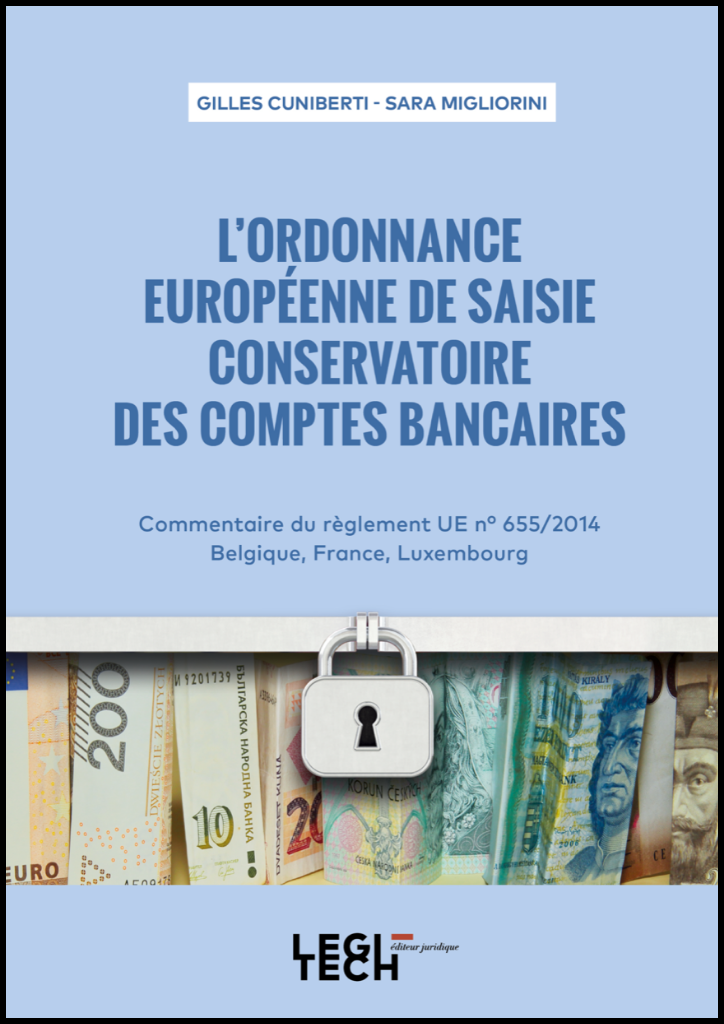
Various EU studies and publications looked into the operation of the EAPO Regulation, These include the deliverables of the IC2BE project (Informed Choices in Cross-Border Enforcement), which resulted in an insightful publication edited by Jan von Hein and Thalia Kruger, and the EFFORTS project (Towards more Effective Enforcement of Claims in Civil and Commercial Matters within the EU), focused national implementation and domestic case law. The Regulation also formed the object of various commentaries, such as those edited by Gilles Cuniberti and Sara Migliorini (here), Elena D’Alessandro and Fernando Gascón Inchausti (here), and by Nicolas Kyriakides, Heikki A. Huhtamäki and Nicholas Mouttotos (here), just to name those in English.

The latest publication on the EAPO Regulation is a book by Carlos Santaló Goris (Postdoctoral Researcher at the University of Luxembourg) entitled The Application of the European Account Preservation Order in Germany, Luxembourg and Spain. A Comparative – Empirical Analysis.

The book is based on the author’s PhD and explores in great detail the integration and application of the EAPO within the domestic civil procedural system of three Member States: Germany, Luxembourg, and Spain.

The work, carried out with attention to detail, combines a theoretical perspective that examines how the procedure is embedded in the national procedural rules of the studied jurisdictions, while the empirical part focuses on the use and application of the European procedure by the national courts. These national pictures are then compared to highlight similarities and differences in the functioning of the EAPO across the studied Member States. Throughout the book, Carlos Santaló Goris also provides useful insights from the practices and data of other Member States than the main studied jurisdictions. This adds to the richness of the information available and the useful knowledge readers can find in one place.

Features and Interaction between the European and National Procedural Rules

Chapter 2 reflects not only on the process of adopting the EAPO, but also on its features and interaction with other European Private International instruments such as the Brussels I-bis and the Maintenance Regulation. The author looks into the way the EAPO was received within the national framework of the studied systems: the implementation legislation, other national instruments with a similar purpose of attaching the debtor’s bank account(s), where useful information can be found at the institutional level, how familiar various stakeholders are with the EAPO and where do they take their information about the EAPO. This type of information is helpful to understand certain practices and be aware of the institutional and legislative background. This initial part of the book is followed by a detailed analysis of the various stages of the EAPO procedure.

Chapters 2-8 offer a comparative perspective on the various steps and uses of the EAPO.

Looking at How EAPO Works and What it Can Offer

Chapter 3 focuses on the scope of the regulation and the areas included or excluded from its application. The analysis is a joy to go through because of the level of depth and detail that scholars and practitioners will find useful for their work in relation to the EAPO procedure. The author leaves no stone unturned; he considers scenarios, reflects on the practice of the national courts of the selected jurisdictions, the scholarly opinions and interpretations, the CJEU case law, and other national case law from other Member States (e.g Lithuania, Poland) that are of interest for the interpretation of a concept or provision, or simply adopts a different interpretation.

Chapter 4 of the book focuses on the application of the EAPO and contains a very comprehensive discussion concerning the concepts of periculum in mora and fumus boni iuris, how the courts approach it in Germany, Luxembourg and Spain, the evidence used for proving such situations, and the matter of security payment. This is music for practitioners’ ears, especially those seeking to use or apply these provisions. They can find in one place information that is scarce elsewhere or difficult to find.

Another aspect that is useful to know more about is the practice of the courts and in which circumstances the applications for EAPOs have led to successful requests to obtain information about the debtor’s bank accounts. Chapter 5, which discusses this part, is a rich source of information as to the position of the German, Luxembourgish and Spanish courts, but also of those in other Member States receiving such requests from the studied jurisdictions (e.g. Italy, France) or from other Member States (e.g. Croatia, Cyprus, Estonia, Greece, Lithuania, Portugal, Slovakia). The chapter also contains interesting statistics on the EAPO requests received by information authorities, the storage of transferred information, and the notification to the debtor of the disclosure.

Chapter 6 is dedicated to the examination of the EAPO application by the court. The chapter meticulously goes through all the relevant aspects of the court assessment. This information is relevant to both the parties and the courts. Very useful analysis concerns the matter of establishing international jurisdiction and the practice of the courts in this respect, the relevant elements in the examination of the application, the payment of court fees, maintaining the inaudita aleta parte character of the order, the use of representation, the deadline for issuing a decision on the EAPO, the way the EAPO is issued based on the outcome of the procedure, and the appeal against the decision to reject the EAPO applications. The last part of the analysis is dedicated to the statistics of the use of the EAPO before national courts in the three jurisdictions.

Chapter 7 focuses on the next step of the procedure, the enforcement of the issue EAPO and its subsequent service on the debtor. The research carried out shows that most EAPO enforcement is carried out abroad, and this entails certain steps for the transmission of the order to the competent enforcement authority, which seem not always to be known in practice. This means that errors are registered at this stage. A good part of the chapter focuses on the implementation of the EAPO and the actual process of attachment of funds, the rank of the EAPO, the preservation of funds, exceeding and exempted amounts, the information of the debtor over the EAPO and attachment of his or her accounts, as well as the service procedure when this has to be notified abroad in another EU Member State or in a third country. These are all very useful matters to consider and be familiar with when using the EAPO.

The last part of the analysis – Chapter 8 – focuses on the specific mechanism the debtor has to challenge the order or ask for alternative security, and the liability of the creditor for damages the debtor might suffer. Here, valuable references to national case law can be found, as well as statistics related to such requests to revoke, terminate or limit the enforcement of such orders. The last part of the chapter is dedicated to the liability of the creditor and how this is handled through the lens of the German, Luxembourgish, and Spanish law.

The concluding part is a reflection on all the valuable research and insights the book brings to the forefront for anyone interested in understanding the EAPO, using the procedure, or applying it. It also contains relevant thoughts about policymaking paths and aspects that can be improved from a practice, organisational and/or legislative perspective.

Roundtable on The Application of the EAPO Regulation in Luxembourg: 7 Years On

On 27 November 2025, the University of Luxembourg will be hosting a hybrid event to discuss the work of Carlos Santaló Goris and the application of the EAPO in Luxembourg. The event will run from 5 to 7 pm CET, The following practitioners from Luxembourg will be aming the speakers: Ottavio Covolo (Senior Associate at NautaDulilh), Magedeline Mounir (Counsel at Arendt & Medernach), and Alexandra Thépaut (Jurist at Étude CALVO & Associés).

The event will be carried out in French. For those interested in attending in person or online, registration is available here.

The Permanent Bureau of the Hague Conference on Private International Law will host a hybrid conference on the 2005 Hague Convention on Choice of Court Agreements on 11 December 2025 in The Hague. The conference is organised on the occasion of the publication of a new commentary of the Convention and the tenth anniversary of the entry into force of the Convention.

Opening remarks: Christophe Bernasconi | Secretary General, HCCH

Panel 1 Introduction to the Commentary

Moderator | Melissa Ford | Secretary, HCCH

The Hague Convention on Choice of Court AgreementsThe manifest injustice and public policy exception in Article 6: novel, misconceived, or unremarkable?

Brooke Marshall | Associate Professor of Law, University of Oxford and Fellow of St Edmund Hall

Stefanie Francq | Professor and Chair of European Law, Catholic University of Louvain


Declarations under Article 21 and 22 and accommodating multiple legal systems

Louise Ellen Teitz | Professor of Law, Roger Williams University Law School

Fausto Pocar |   Professor Emeritus of International Law, University of Milan and former judge to international tribunals


Law applicable to the issue of consent to choice of court agreements

Gilles Cuniberti | Professor of Comparative and Private International Law, University of Luxembourg and President of the European Association of Private International Law (EAPIL)

Adrian Briggs KC | Emeritus Professor of Private International Law, University of Oxford and Emeritus Fellow of St Edmund Hall


Panel 2 Operation of the Convention – Views from Singapore

Moderator | Melissa Ford | Secretary, HCCH


Delphia Lim | Director, International Legal Division, Ministry of Law, Singapore

Colin Seow | Founder, Colin Seow Chambers LLC

Anselmo Reyes | Judge, Singapore International Commercial Court


Date: Thursday 11 December 2025
Time: 1.30 p.m. – 4.45 p.m. (CET)
Cocktail: 4.45 p.m. (CET)
Venue: International Development Law Office, Hofweg 9-E, The Hague

Attendance, whether in person or online, is free, but registration is required.

The Judges’ Newsletter is an open-access biannual publication of of the Hague Conference on Private International Law devoted to judicial co-operation in the international protection of children.

The latest issue tbrings together the contributions presented at the conference entitled 15 Years of the HCCH Washington Declaration – Progress and Perspectives on International Family Relocation, which took place in April 2025 at the Embassy of Canada in Washington, jointly organised by the Embassy of Canada in Washington, the International Academy of Family Lawyers and the Hague Conference itself.

A report on the conference was published on this blog a few months ago.

The issue follows the structure of the conference, with more than 30 contributions – including several national reports – dealing with the following topics: Setting the scene: The harmful effects of international child abduction and international family relocation as a potential tool to help prevent it; International family relocation – State of play; States with specific relocation procedures; States that follow case law or guidelines in relocation cases; States that utilise best interests assessments as guidelines in relocation cases; Research & Policy work on international family relocation; The use of alternative dispute resolution and other services in cases of international family relocation.

All the issues of the Judges’ Newsletter can be found here.

The fourth issue of the Journal du droit international for 2025 has been released.

It contains two articles and several case notes relating to private international law issues, including the 2024 case-law review dedicated to EU private international law prepared by Louis d’Avout, Jean-Sébastien Quéguiner, Stefan Huber, Patrick Kinsch, Lukas Rass-Masson, Sixto Sánchez-Lorenzo and Michael Wilderspin.

It is also worth mentioning the publication of three articles resulting from a round table held on 10 April 2025 on ‘Arbitration involving public entities’ during Paris Arbitration Week, authored by C. Lapp, P.-M. Duhamel and E. Silva Romero.

In this first article, Paul Klötgen (University of Lorraine) analyses the concept of forum necessitatis in the light of the public policy exception (L’ordre et la nécessité – Du forum necessitatis comme exception d’ordre public).

The English abstract reads:

The forum necessitatis, which exceptionally and subsidiarily establishes the jurisdiction of French courts in cases where there is a risk of a denial of justice, is nothing more than a form of international public policy argument. The approach of the French Cour de cassation in this respect appears flawless, both in the conditions for using the mechanism and in the terminology used to describe it. Well known in matters of conflict of laws or recognition and enforcement of judgments, the invocation of the ordre public exception can thus also apply to the question of direct jurisdiction; it is a general application mechanism. The forum necessitatis, based on the risk of denial of justice, clearly does not evict any foreign rule of law, but rather a repugnant legal situation. This allows for a renewed perspective on the function of the ordre public in Private international law: the historical dogma, according to which the triggering of the international ordre public exception serves to set aside the normally applicable foreign rule, does not reflect the current state of the law and deserves to be definitively forsaken.

In the second article, Johanna Guillaumé (University of Rouen Normandie) examines the complex issue of the represention of parties residing abroad before a French notary in matrimonial matters (La réception par le notaire français de la convention matrimoniale d’un couple domicilié à l’étranger).

The English abstract reads:

French notaries are obliged to act when requested to do so, and the exceptions to their obligation to act are listed exhaustively in the law. The foreign nature of the relationship is not a reason for refusing to act. For example, a couple living abroad, usually expatriates, may ask the French notary to draw up their marriage contract. Since French diplomatic and consular authorities abroad no longer perform notarial functions, the deed can only be drawn up on French territory. However, this does not necessarily mean that the future spouses have to travel abroad. Insofar as article 1394, paragraph 1, of the French Civil Code authorizes representation to conclude a marriage contract, notarized power of attorney concluding by distance avoids the need for travel. In the presence of a foreign element, it is still necessary to ensure that the article 1394, paragraph 1, is applicable and, if so, that the conditions of authenticity, on the one hand, and of simultaneous presence and consent, on the other, are met. The use of representation also raises the question of compliance with these conditions when drawing up powers of attorney and, consequently, of the use of the principle of parallelism of forms in private international law.

The table of contents of the issue can be accessed here.

Julien Chaisse (City University of Hong Kong) is the author of Advanced Introduction to International Commercial Contracts, recently published by Edward Elgar.

This practical, globally focused book explains how international commercial contracts are structured, negotiated, and enforced across major economies and key trade hubs. Instead of centring on a single jurisdiction, it provides comparative insights into major legal systems helping readers manage legal, economic, and cultural complexities in cross-border agreements. Covering contract formation, risk allocation, dispute resolution, and regulatory compliance, it also explores emerging trends like digital contracts, AI in contract management, and sustainability requirements, ensuring professionals stay ahead in a fast-changing market. For lawyers, business leaders, and students, this textbook offers the tools to draft, negotiate, and enforce international contracts with confidence.

Further information, including the table of contents, can be found here.

The sixth and final issue of the IPRax (Praxis des Internationalen Privat- und Verfahrensrechts) for 2025 has been published on 1 November. The following abstracts have been kindly provided by the editor of the journal.

M. Weller: Fundamental innovations in international art restitution: “Restatement of Restitution Rules for Nazi-Confiscated Art” and introduction of an “Arbitral Tribunal for Nazi-looted art” [German]

After 25 years of restitution practice under the “Washington Principles on Nazi-Confiscated Art”, two fundamental innovations are emerging for the restitution of Nazi-looted art: Firstly, a “Restatement of Restitution Rules for Nazi-Confiscated Art” was generated from case practice in six states (Germany, Austria, the Netherlands, France, the United Kingdom, Switzerland). Secondly, Germany has decided to set up an “Arbitral Tribunal for Nazi-Confiscated Art”. This article outlines the history and main features of these innovations.

A. Stein: The Anti-SLAPP Directive – minimum harmonisation of national civil procedural law to guarantee safeguards against abusive litigation [German]

The Anti-SLAPP Directive, which was adopted in 2024 and has to be transposed by EU Member States by May 2026, is the reaction of the EU legislator to the growing phenomenon of abusive civil litigation that has as its main objective the prevention, restriction or penalisation of participation in the public discourse or, in other words, a chilling effect on the freedom of expression and media freedom. The Directive obliges Member States to guarantee the existence of certain procedural safeguards including the early dismissal of manifestly unfounded claims, remedies against abusive court proceedings and protection mechanisms in relation to proceedings in third countries. This contribution presents the different elements of the Directive, placing a particular focus on changes the text has undergone in the legislative negotiation process, and takes into account the recently published proposal for transposition in Germany.

L. Veith: Ordre public reservation in case of rule of law deficits in the European order for payment procedure? [German]

The rule of law is not immune to attacks within the EU either. This is demonstrated in particular by the Article 7 TEU procedures initiated in the past against Hungary and Poland. With regard to the European order for payment procedure, a lowered level of legal protection appears to be particularly problematic, as European orders for payment are recognized and enforceable within the Union largely without preconditions. This system of accelerated prosecution is based on the premise that the rule of law in the state of origin is in line with Union values. This paper deals with the question of whether – from the perspective of the absence of an expressly stated ordre public reservation in the European order for payment procedure – possibilities for refusing the enforcement of European orders for payment can be derived from the case law of the ECJ if it was issued merely due to inadequacies in the rule of law. At the same time, dangers in connection with politically motivated SLAPP actions that are relevant in the context of a European order for payment procedure are also explored.

H. v. Scheliha: International jurisdiction in succession matters – when other courts may be better placed to rule [German]

The decision of the OLG Schleswig deals with the international jurisdiction in an application for a certificate of inheritance involving a German-French couple. At issue was whether German or French courts should decide over the estate, particularly in view of a marriage contract under French law. The OLG overturned the decision of the first instance and declared German courts to be competent, as French inheritance law was deemed not particularly complicated in this case. This assessment is open to criticism. French inheritance law, especially concerning the rights of reserved heirs, is indeed complex. The fact that the French courts would have been better placed to rule on the matter, and that their jurisdiction under Article 6(a) of the Regulation No 650/2012 should have been recognised, ultimately becomes evident in the misclassification of the daughters’ legal position by the OLG itself.

A. Junker: Overriding mandatory provisions and mandatory provisions in private international law in the field of individual employment contracts [German]

The article reviews a decision of the German Federal Labour Court dealing with the validity of the termination of employment of a United Airlines flight attendant based in Frankfurt due to the closure of United Airlines’ Inflight Service Base at Frankfurt Airport because of the Corona (Covid 19) lockdown of flight operations. Since the contract of the flight attendant dated back to the year 1993, the Court had to apply the German Private International Law (PIL) Statute of 1986. In applying the old PIL Statute the Court had to take the necessary notice period from German law, whereas the validity of the termination as such is to be judged by the law of the State of Illinois.

J. D. Lüttringhaus: Overriding mandatory provisions in non-contractual obligations: damages for bereavement and the ‘intra-EU’-enforcement of mandatory rules [German]

The question brought before the ECJ in HUK COBURG II is whether a court may apply its national rules on non-material damages as overriding mandatory provisions within the meaning of Art. 16 Rome II Regulation on the ground that “fair” compensation for non-material damage in cases where the death of a close person has occurred as a result of a tort or delict is considered a fundamental principle of the lex fori. Pursuant to Art. 4(1) Rome II Regulation, the terrible shock and grief suffered by family members learning that a loved one has been killed in an accident abroad is an “indirect consequence” of that accident. The family members’ claims for compensation of non-material damages are therefore governed by the law of the country in which the primary damage occurred, i.e. where their loved one was hurt in the accident. Art. 4(1) Rome II Regulation prevents unpredictable outcomes by ignoring the whereabouts of the remaining family members who may be scattered across the globe. However, compensation for grief may vary considerably. German law was (and still is) rather reluctant to award non-material damages. In the HUK COBURG II case, Bulgarian courts therefore sought to apply their national rules on non-material damage as overriding mandatory provisions irrespective of German law otherwise applicable. The ECJ reaffirms its restrictive approach to overriding mandatory provisions: The Court held that the Bulgarian provision does not fall within the scope of Art. 16 Rome II Regulation because the rule on non-material damage aims at compensating individual loss rather than at protecting fundamental public interests.

A. J. Baumert: The choice of German law to the exclusion of the law of the General Terms and Conditions in arbitration law [German]

If a state court is called upon to decide on a legal dispute, the court must determine the applicable law in accordance with the conflict of laws of the lex fori, particularly in the case of a choice of law. In Germany – as in the other EU member states – the Rome I Regulation and Rome II Regulation are primarily applicable. Section 1051 ZPO, on the other hand, stipulates for arbitration awards that the arbitral tribunal must decide the dispute in accordance with the legal provisions designated by the parties as applicable to the content of the dispute. It has always been disputed whether Section 1051 ZPO constitutes a special conflict rule for arbitration proceedings in the sense that it is lex specialis to the – for the state courts undisputedly – binding Rome Regulations and other EU Regulations. The question also arises as to how the special sub-case of the choice of German law to the exclusion of the law on general terms and conditions is to be assessed and what legal consequences are to be assumed if this should constitute a breach of mandatory law. The decision of the First Civil Senate of the Federal Court of Justice of 9 January 2025 (I ZB 48/24) provides an opportunity to deal with these questions at the interface of arbitration law and conflict of laws.

M. Erb-Klünemann: The exception in Art. 13 (1)(b) 1980 Hague Convention in the case of the return of abducted children to crisis areas [German]

During times of martial law applicable in Ukraine German courts are dealing more frequently with applications on the return of children under the 1980 Hague Convention to Ukraine. The main question is whether the actual situation in Ukraine leads to a grave risk of harm for the child according to the exception of Art. 13 (1)(b) 1980 Hague Convention. The Court of Appeal Stuttgart as well as the Court of Appeal Thuringia refused in October 2022 and February 2024 the return of a child to Ukraine because of a grave risk of harm. In May 2024 the Court of Appeal Stuttgart denied a grave risk of harm in relation to Israel. It distinguished the situation in Israel from that in Ukraine. On 23 April 2024, the German Constitutional Court made important statements on the topic which are included in the analysis.

S. Deuring: Surrogacy and parentage: on the recognition of foreign court decisions in France [German]

In its decision of 14 November 2024, the French Cour de cassation once again ruled that a foreign decision pertaining to surrogacy must be recognized and enforced in France. It argued that the recognition of parentage does not constitute a violation of public policy just because the parents are not the child’s biological forebears, as long as it can be inferred from the foreign decision that the surrogate mother acted voluntarily. There does not have to be a biological relationship between the intended parents and the child. The parentage relationship established in a foreign court decision must then be recognized as such in France.

A. Jeschor: Disinheritance by unworthiness in the case of German-English cross-border succession [German]

This article examines the legal institution of disinheritance by unworthiness in the case of German-English cross-border succession. The analysis is structured by four questions that will be addressed in detail: 1. What does the term “disqualification by conduct” encompass in the sense of Article 23(2)(d) Alternative 2 of the EU Succession Regulation (Brussels IV) (infra, II.)? 2. How is disinheritance by unworthiness treated in English law from a conflict of laws perspective (infra, III.)? 3. What does the answer to the previous question imply for understanding whether the EU Succession Regulation refers to English law including or excluding its private international law rules in German-English succession cases (infra, IV.)? 4. Given that English succession law applies: Does English succession law recognize the institution of disinheritance by unworthiness, and if so, what type of conduct does it cover (infra, V.)?

H.-P. Mansel: Peter Hay for his 90. birthday [German]

Noyer: Digital transformation and private international law – Local connections in boundless spaces – Conference for Young Researchers in Private International Law on 14 and 15 February 2025 in Heidelberg [German]

The latest issue of the International & Comparative Law Quarterly includes two contributions dealing with private international law.

The first, by Richard Garnett, is entitled Foreign Judgments and the Relationship between Direct and Indirect Jurisdiction.

A key issue in the recognition and enforcement of foreign judgments is jurisdiction, with a distinction drawn between ‘direct’ jurisdictional rules, which are applied by the court of origin at the time of initial adjudication, and ‘indirect’ rules applied by a court at the recognition and enforcement stage. While some commentators and national laws suggest that no jurisdictional ‘gap’ should exist between direct and indirect rules, in this article it is contended that, outside the context of a federal system or international convention with uniform rules, no compelling justification exists for eliminating the gap.

Ardavan Arzandeh is the author of the second article, on Anti-Suit Injunctions in Support of Foreign Dispute-Resolution Clauses.

Courts in England ordinarily grant anti-suit injunctions when proceedings are (or will soon be) initiated in a foreign court in breach of clauses which subject disputes to the exclusive jurisdiction of courts, or refer them to arbitration, in England. Would they, however, grant such relief in support of foreign dispute-resolution clauses? In UniCredit Bank v RusChemAlliance, the Supreme Court of the United Kingdom answered this question in the affirmative, thus expanding the English courts’ power to issue anti-suit injunctions. This article seeks to assess the likely extent of this expansion and the future implications it could have for the law on anti-suit injunctions in England. The article also examines the Supreme Court’s pronouncements on the other significant issue in the case concerning the law governing arbitration agreements and their potential effect following the enactment of the Arbitration Act 2025.

Both articles are open-access contributions.

The full table of contents of the issue is found here.

Jean-Baptiste Racine (University Paris II Panthéon Sorbonne), Fabrice Siiriainen (University of Nice) and Séverine Menétrey (Free University of Brussels) have published the fourth edition of a manual of French international commercial law (Droit du commercial international).

The book surveys all aspects of international commercial law: private international law of corporations, of contracts, and of guarantees. It also covers international litigation and arbitration. The first part of the book is concerned with the sources of international commercial law, with a distinctive French focus on the lex mercatoria.

More details can be found here.

The Greek publisher Nomiki Bibliothiki has published a book by Haris Meidanis, in English, titled The Private International Law of Commercial Mediation.

In a commercial contract that contains a mediation clause, a dispute arises. Mediation starts and the related questions begin: Must the parties sign an agreement with the mediator and under which law? Should the parties enter into detailed agreement to mediate and under which law? Could parties be obliged, or directed to mediation? What law (and rules) shall apply to the process of mediation? How will the mediator’s obligations be defined? Should mediation result to an agreement, would this be in writing and signed by whom? If a party does not abide by such agreement, what can the other party do? Can the non-abiding party defend its position in a court of law? Would the answers to the above questions differ, depending on the place of residence of the parties or on the place of the mediation? The answers to these questions (and more) can be found in this book, which is the first of its kind internationally and introduces novel theories and notions such as: the ‘hybrid legal nature’ of the mediated settlement agreement, the related theory of the inherent binding effect and enforceability such agreement may have, the notion of the ‘legal shell’ of mediation, the idea of the non-existence of forum in mediation the notion of ‘lex mediationis’.

Further information, including the full table of contents can be found here.

Earlier this year, Symeon Symeonides posted on SSRN an essay written in the occasion of a symposium titled 50 Years in the Conflicts Vineyard, which was held in the author’s honor in May 2024 at Willamette University Law School and sponsored by the Association of American Law Schools Section on Conflict of Laws.

The essay – Reflections from Fifty Years in the Conflicts Vineyard – can be found here.

In it, as noted in the abstract, the author reflects on some transformative events that occurred during his fifty-year labor in teaching, writing, and legislating in the field of conflict of laws, the teachers, mentors, and authors who have influenced him, and the lessons he has learned.

The  paper consists of four sections: an introduction, a ‘partial diary’ focusing on some key moments of Professor Symeonides’ academic and personal trajectory, the ‘lessons learned’ and, finally, an expression of gratitude addressed to those who organized or participated in the symposium, which marked, in the author’s words, ‘a wonderful conclusion my fifty years’ work in the conflicts vineyard’.

A remarkable piece from a true master of the discipline.

The third issue of the RabelsZ (Rabels Zeitschrift für ausländisches und internationales Privatrecht) for 2025 has been finalized. This is a special issue with contributions that were presented at the memorial symposium in honour of the late Jürgen Basedow, held in Hamburg on 29 November 2024, under the title “Private International Law – Uniform Law – European Private Law”.

The titles and English abstracts of the articles have been kindly provided to us by the editor of the journal. The issue is already available via open access; physical copies will be dispatched during the course of the week.

Eva-Maria Kieninger, Konrad Duden, and Ralf Michaels, Vorwort zu den Beiträgen des Gedenksymposiums (Preface to the Symposium Issue) (Open Access)

Hannah L. Buxbaum, The New Unilateralism in EU Cross-Border Regulation: Objectives, Methods, Institutions (Open Access)

For years, Europe was a site of resistance to regulatory unilateralism, particularly as practiced by the United States. Today, though, there are signs of a robust unilateralism at work in EU regulatory practices. To some extent it simply mirrors practices adopted in the United States and elsewhere: Like other lawmakers, the EU has begun to act unilaterally where necessary to achieve effective regulation of its own markets and to protect local interests. In other respects, though, the new unilateralism in the EU presents quite differently. First, the EU increasingly uses its own legislation not to advance purely local regulatory interests, but rather to achieve international or global goals – classically a more multilateral objective. Second, under EU law individual regulations in particular substantive areas are embedded in a larger framework of norms and values that claim universal appeal. In both of these regards, the EU version of unilateralism appears more benign than purely »self-interested« unilateralism. It nevertheless raises important questions about the way that local laws and institutions are used to project regulatory power in the international arena. The goal of this article is to explore these questions. It begins by describing the characteristics of this new unilateralism, in terms of both its doctrinal foundations and its regulatory objectives. It then focuses on one particular mechanism: the adequacy regime established under EU data protection law.

Dagmar Coester-Waltjen, Einheitsrecht – prinzipiell oder sektoral? (Uniform Law – a Principle- or Sector-based Approach?) (Open Access)

The purpose of this article is to shed some light on the possible future of uniform law. Notwithstanding the possible hinderances and difficulties faced by unification activities, especially a possible lack of interest in such activities, the article considers the question of which actors are and will be involved in legal unification and what types of uniform law can be expected. The growing involvement of private actors (the so-called commercial approach) and the concentration on different kinds of soft law promise an increasing degree of sectoral projects featuring a functional approach. However, it is essential to continue work on general principles that have applicability in specific areas of law; such principles are needed as interpretative aids and serve an important gap-filling function. Jürgen Basedow recommended keeping general principles in mind already at the stage of formulating a sectoral project. Thus, it can be expected that both the concept of principles and a sectoral approach will play an important role also in the future.

Christian Kohler, Zur Außenprivatrechtspolitik der Europäischen Union (On the External Policy of the European Union in the Field of Private Law) (Open Access)

The policy of the European Union in the field of private law is primarily aimed at shaping the internal market, but it also affects relations with non-EU states in a variety of ways as regards both regulatory private law and the conflict of laws. The EU’s underlying »external private law policy« is pursued in two ways. First, legal instruments include unilateral scope rules which bring persons or events in third states within the scope of the measure and which should promote the regulatory objectives at issue. Second, agreements on private law matters are concluded by or on behalf of the EU with third states. However, institutional weaknesses and the Union’s notorious lack of competence make it difficult to develop a coherent external private law policy. In the field of conflict of laws, the conclusion of multilateral agreements makes the unilateral extension of EU rules to situations involving third states not redundant. There is no discernible political will to extend the Union’s powers in the field of private law and thereby change the conditions under which the EU’s external private law policy is currently formed.

Matteo Fornasier, Modelle europäischer Privatrechtsharmonisierung. Die prozedurale Harmonisierung als neue Form der Rechtsvereinheitlichung in der EU? (Harmonization of Private Law in Europe. Procedural Harmonization as a New Path Towards the Approximation of National Laws in the EU?) (Open Access)

The article offers an overview on the variety of regulatory approaches towards the harmonization of private law in Europe, covering both negative and positive harmonization, including full, minimum, and optional harmonization. Particular attention is devoted to what appears to be a new model of harmonization, which is referred to in this article as procedural harmonization. Procedural harmonization occurs where the EU legislature or, in some cases, the EU Court of Justice confines itself to setting common European procedural standards for the protection of certain individual rights, without harmonizing the substance of those rights. The article draws on a number of examples from EU employment law, which is an important element of the system of EU private law, though it is often marginalized in European private law discourse.

Herbert Kronke, Weil Wissenschaft Wissen schafft: Zu Jürgen Basedows »Uniform Law« (Because Scholarship Generates Knowledge: On Jürgen Basedow’s »Uniform Law«) (Open Access)

The article highlights the innovative nature of Basedow’s third major monograph relative to other »modern classics« on uniform law, noting in particular its combination of (almost) encyclopaedic coverage, systematic structure, and critical analysis, incorporating well-known central topics along with commentary on numerous uniform legal instruments. In addition, there are new and surprising elements awaiting comparative commercial law scholars, such as the topic of »negative harmonization«. The author of the article also discusses hypotheses, arguments, and conclusions in regards to perpetual themes of transnational law, such as the choice between a classic international treaty or the now frequent alternative of a soft law instrument, the dynamic of mutual influence between uniform law and non-uniform national law, and the relationship of uniform law and private international law. Finally, the article looks at institutional, cultural, and economic framework conditions and – politically determined – obstacles to the development of modern uniform law, as felt by the institutions, as well as experts involved in their work.

As always, the issue also contains several book reviews. The full table of contents is available here.

The third issue of the Revue critique de droit international privé for 2025 was just published.

It contains three articles dealing with conflict issues (and a fourth concerned with immigration law) and a number of casenotes.

In the first article, Etienne Farnoux (University of Strasbourg) discusses the relationship between fundamental rights and the public policy exception in the context of the law of foreign judgments after the Real Madrid case (Les droits fondamentaux, l’exception d’ordre public et la prohibition de la révision au fond dans le système de Bruxelles I).

The case, which arose when recognition was sought in France of a Spanish court’s ruling against a French newspaper ordering it to pay heavy damages, highlights the conflict between the European objective of mutual trust and the protection of fundamental rights, particularly the freedom of the press. In a decision dated October 4, 2024, the Court of Justice (on a preliminary reference by the Cour de cassation) outlined the general methodology for controlling the proportionality of a financial penalty imposed abroad, on the basis of international public policy, a mechanism strongly influenced by European law. This control, which was subsequently implemented by the Court of Cassation in a ruling dated May 28, 2025, is severely limited by the European principle of prohibition of the review on the merits.

In the second article, Fabienne Jault- Seseke (University Paris Saclay, UVSQ) explores the unspoken aspects of European digital law in private international law, with a focus on the Digital Services Act (Les non-dits du droit européen du numérique en matière de droit international privé : l’exemple du règlement sur les services numériques).

The Digital Services Act (DSA) addresses issues of private international law in a very limited way. It mainly defines its territorial scope using a unilateral rule : it applies to any intermediary service provider that targets users in the European Union, regardless of its place of establishment. It is largely silent on other aspects of the private international law, such as determining the law applicable to illegal content or to actions for injunctions and damages. In terms of jurisdiction, it refers to the Brussels I bis Regulation, whose provisions are poorly adapted to the specificities of the digital world. The preference that the DSA seems to give to public enforcement rather than private enforcement cannot justify its silence on most questions of PIL, which are essential if we are to ensure effective protection of rights in the digital environment, which is almost always cross- border.

Finally, Marcel Zernikow (University of Orléans) explores how certificates and digitalisation have renewed the methodology of European judicial cooperation to serve the right to a fair trial (Le renouvellement des méthodes de la coopération judiciaire au service du droit au procès équitable : l’instrument du certificat et la numérisation).

Judicial cooperation is an object of study in private international law that is justified by the need to make the State’s jurisdictional activity effective in a foreign territory. Since it describes the connection between State or judicial authorities of two different States, it is governed by their respective territorial procedural laws. This field is nevertheless undergoing a renewal of its methods, which will be studied through the prism of the introduction of a new instrument: the certificate. The latter is gradually being used to accompany public documents or judicial decisions or for evidentiary purposes. How has this development become the basis for digitalization, which relies on the interconnection of legal systems and individuals via the internet? The renewal of methods is universal insofar as it is based on the guarantee of the right to a fair trial in international civil proceedings.

The full table of contents can be found here.

This post was contributed by Heloise Meur, who is a lecturer at Paris 8 University.


Les accords de distribution en droit... de Héloïse Meur - Grand Format ...International distribution agreements are a significant source of litigation which result in legal uncertainty. First, these contracts are not typical ones: they belong to a group of contracts which organize a kind of cooperation between the parties. Second, they are particularly subject to emerging forms of economic regulation. That has revealed a mismatch between traditional conflict-of-law methods and the structure of distribution agreements. It was therefore necessary to consider a more appropriate legal treatment of distribution agreements and try to resolve this mismatch.

This topic is central to the reflections presented in this book, which stems from a PhD thesis on Distribution Agreements in Private International Law, supervised by Professor Sylvain Bollée, which was recently published with Bruylant (Les accords de distribution en droit international privé).

To this end, the work first provides an overview of the inconsistencies in the treatment of distribution agreements under current private international law, highlighting the causes of dysfunction in traditional conflict-of-law and jurisdictional rules (Part I). It then proposes a renewed and coherent approach to the treatment of distribution contracts in private international law (Part II).

Critique

The overview of the difficulties raised by current private international law successively addresses the traditional issues, relating to the fragmented treatment of the contractual aspects of distribution agreements (Part I – Title 1), followed by the more recent issues, concerning the uncertain methodological treatment of the competition-related aspects of international distribution (Part I – Title 2).

Distinguishing between Framework and Implementation Contracts?

The traditional difficulties associated with distribution agreements in private international law stem, first and foremost, from the existence of a distinct category of “framework distribution contract,” separate from the implementation contracts that typically comprise the overall distribution arrangement (Part I – Title 1 – Chapter 1). The recognition of a “framework distribution contract” category makes it particularly challenging to apply the connecting factors used in contract conflict of laws. As a result, neither the obligation forming the basis of a claim under Article 7(1) of the Brussels I bis Regulation nor the characteristic performance under the Rome Convention can be identified. Attempts to simplify matters by classifying the framework contract as a “provision of services” under Brussels I bis (Case C-9/12, Corman-Collins), or by applying objective criteria under Articles 4(1)(e) and (f) of the Rome I Regulation did not resolve all difficulties arising from the reduction of the distribution contract to a framework contract. Moreover, these attempts of simplifications have generated new questions: What constitutes a “distribution contract” within the meaning of Article 4(1)(e) of Rome I Regulation? Where is the place of delivery of a “distribution service” under Article 7(1)(b) of Brussels I bis?

Secondly, treating framework distribution contracts as a distinct category in private international law introduces risks of contradiction, resulting from the potential application—possibly by different courts—of different laws to each contract within the overall distribution arrangement (Part I – Title 1 – Chapter 2). The strong interdependence between framework contracts and their implementation contracts makes it difficult to clearly separate issues pertaining to each individual contract. The termination of the framework contract halts the conclusion of implementation contracts. A breach of obligation in one contract may lead to the non-performance of an obligation contained in another one which takes part to the distribution operation. Therefore, a coherent legal treatment of distribution agreements lies on the parties, who must choose the law applicable to the entire contractual arrangement. However, equally complex questions regarding the extension of choice-of-law clauses or jurisdiction clauses—whether state or arbitral—across the entire arrangement appear. No existing remedy adequately resolves this difficulty.

— The distinction between framework distribution contracts and their implementation contracts, posited as an axiomatic starting point, appears as the first source of the difficulties in the legal treatment of distribution agreements.

Competition Law

More recently, the majority of caselaw relates to disputes concerning the competition-related aspects of distribution agreements (Part I – Title 2). These agreements raise broader questions about the relationship between private international law and competition law. First, distribution agreements constitute vertical restraints, which are strictly regulated under European competition law. In addition, the application of French law on restrictive trade practices, as set out in Title IV, Book IV of the Commercial Code (Articles L440-1 to L444-1 A) ), further complicates matters.

Both European competition law and French law on restrictive practices are particularly relevant to distribution and share a common feature: their mandatory nature, which does not easily accommodate territorial boundaries. As a result, distribution agreements have come to exemplify the complexity of the relationship between competition law, broadly understood, and international contract law, which is fundamentally based on the principle of party autonomy. This relationship is marked by a recurring tension between classifying competition-based claims as either tortious or contractual (Part I – Title 2 – Chapter 1), reflecting an underlying uncertainty regarding the appropriate methodological approach. Indeed, classifying such claims as tortious allows them to be removed from the contractual domain and from the principle of party autonomy, which would otherwise often lead to the application of overriding mandatory provisions (lois de police) to ensure the enforcement of competition law in its broadest sense. However, each of these approaches presents implementation challenges that continue to undermine the predictability of legal outcomes (Part I – Title 2 – Chapter 2).

— The tension between party autonomy and the mandatory nature of competition law has emerged as the new source of difficulty in the private international law of distribution.

Proposal

Following these observations, the present work proposes a more coherent treatment of distribution agreements by seeking to resolve both the original and contemporary sources of the identified difficulties. As a preliminary step, this renewed approach led to clearly define contractual and tortious matters within European private international law (Part II – Title 1). Only thereafter was a unified and more consistent treatment of the distribution contract within this clearly defined contractual domain proposed (Part II – Title 2).

After establishing the necessary methodological foundations for the emergence of an autonomous definition (Part II – Title 1 – Chapter 1), a redefinition of the contractual domain in European private international law was advanced (Part II – Title 1 – Chapter 2). Departing from the Jacob Handte solution (Case C-26/91, Jacob Handte), the Court of Justice gradually endorsed the criterion of contractual cause, which has become the sole criterion following the recent abandonment of the party identity requirement (Joined cases C-274/16, C-447/16, C-448/16, Flightrights;, Case C-337/17, Feniks). It is now sufficient to determine whether the claim could have been brought before a court if no contract existed between the parties—thus encompassing both the purely conventional effects of the contract and its statutory effects, such as obligations arising under the law on restrictive trade practices. This definition, which allows for greater autonomy of the contractual domain, has proven to enhance the predictability of legal outcomes. Unfortunately, its application by the Court of Justice remains inconsistent.

Single Category

Building on this clarification, the research undertook to propose a renewed and more coherent treatment of the distribution contract. This coherence was first achieved through a unified qualification of the contract under European private international law (Part II – Title 2 – Chapter 1). The “distribution contract,” encompassing both the framework agreement and its implementation contracts in accordance with applicable international instruments, is defined as the agreement by which an independent distributor obtains products or services from an independent supplier for resale on the market, with this purchase-for-resale operation facilitated by the imposition of vertical constraints. This (re)definition of the “distribution contract” category ensures both material unity—drawing inspiration from definitions found in European competition law—and structural unity of distribution contracts. As thus defined, the distribution contract cannot be reduced to the category of “the provision of services” under Article 7(1)(b) of the Brussels I bis Regulation, contrary to current jurisprudential interpretations.

This renewed treatment of the distribution contract could be the starting point for a rethinking of conflict-of-law rules, particularly by limiting the scope of party autonomy (Part II – Title 2 – Chapter 2). Indeed, the effectiveness of choice of law clauses now appears significantly undermined in light of the growing number of internationally mandatory rules to fight against anti-competitive practices. Moreover, distribution relationships typically involve a weaker economic party and a stronger one, the latter often seeking to choose the law most favourable to its interests, contrary to autonomy ratio legis. Consequently, legal predictability seems to require the abandonment of the principle of party autonomy in favour of an objective connecting factor in conflict-of-law matters—namely, the territory in which the distribution is carried out (see Article L444-1 A of the French Commercial Code).

Since the stronger party would no longer be able to select the applicable law solely based on its own interests, it appears sufficient to regulate the principle of autonomy through the principle of effet utile in matters of jurisdictional conflict. Following the approach of German judicial practice, a jurisdiction clause may only be disregarded if it is demonstrated that the court of a third State designated by such a clause will not apply the relevant internationally mandatory law. In such cases, a court of a Member State seized in breach of the clause may set it aside. Accordingly, the consistent application of protective foreign provisions and new European regulations by all courts within the Union will help foster a culture of loyalty in commercial relations, just as the application of European competition law has facilitated the emergence of a shared culture of competition.

Finally, the (re)definition of contractual and tortious matters can address existing challenges in positive private international law regarding the determination of the internationally competent court. As such, the creation of a specific jurisdictional rule for distribution contracts does not currently appear necessary. Indeed, disputes in international distribution, which primarily concern non-obligational effects, should principally fall under Article 4 of the Brussels I bis Regulation, thereby ensuring satisfactory predictability for the parties in resolving their disputes. At most, one might consider the creation of a special conflict-of-law rule applicable to competition matters, irrespective of whether the action is contractual or tortious in nature, to prevent the instrumentalisation of existing conflict rules—currently evident in the case law of the Court of Justice—for the purpose of advancing private enforcement.

Elena Bargelli (University of Pisa), Anatol Dutta (Ludwig Maximilian University of Munich) and and François Trémosa (Notary) have edited, in cooperation with  Paul Patreider (Ludwig Maximilian University of Munich) and Elisa Stracqualursi (University of Pisa), Extra-Judicial Administration of Justice in Cross-Border Family and Succession Matters ‒ Comparative and Policy Perspectives with Giuffrè.

The book examines the shift in several EU countries toward resolving family and succession issues outside the courts ‒ through notaries, civil-status officers, administrative bodies and lawyers.

It questions whether existing EU private international law rules on jurisdiction, choice of law and recognition and enforcement are adequate for these non-judicial procedures. Based on a comparative study carried out within the European Law Institute project “Extra-Judicial Administration of Justice in Cross-Border Family and Succession Matters”, and co-funded by the European Union under the JUST-2021-JCOO call as output of the project “The concept and role of ‘court’ in the age of dejudicialization. Reinforcing EU Family and Succession Law” (CODE.FS), the volume highlights challenges, gathers good practices and offers policy recommendations for reform.

The book opens with an introduction and a comparative report by Anatol Dutta and Paul Patreider. The core of the volume is a series of national reports: Paul Patreider on Austria; Frank H. Pedersen (University of Copenhagen) and Lars Thøgersen (Ministry of Social Affairs and Housing, Denmark) on Denmark; Tiina Karm (University of Tartu) on Estonia; Stéphane Berre (Université Jean Moulin Lyon 3) on France; Aron Johanson (Ludwig Maximilian University of Munich) on Germany; Eleni Zervogianni (Aristotle University of Thessaloniki) on Greece; Kathryn O’Sullivan (University of Limerick) on Ireland; Nicola Chiricallo (University of Ferrara) and Elisa Stracqualursi on Italy; Katarzyna Bogdziewicz (Mykolas Romeris University) on Lithuania; Merel Jonker (Utrecht University) and Wendy Schrama (Utrecht University) on The Netherlands; Katarzyna Kamińska (University of Silesia in Katowice) on Poland; Rute Teixeira Pedro (University of Porto) on Portugal; Ioan-Luca Vlad (Lawyer, Romania) on Romania; Nataša Erjavec (Notary, Slovenia) on Slovenia; Laura Esteve Alguacil (Universitat de València) on Spain; and Laima Vaigė (Uppsala University) on Sweden. The volume closes with policy recommendations drafted by Elena Bargelli, Nicola Chiricallo, Anatol Dutta, Paul Patreider, Elisa Stracqualursi and François Trémosa.

An open access version of this book is available here, thanks to funding from the Ludwig Maximilian University of Munich Open Access Fund.

The latest issue of the Journal of Private International Law (Volume 21, Issue 2) features seven articles.

Andrew Tettenborn, English conflicts law at sea – the transfer and creation of proprietary interests in ships, 211-227

Surprisingly, the law applicable to the creation and transfer of proprietary interests in ships remains remarkably obscure as a matter of the English conflict of laws. In this article an attempt is made to investigate the relevant authorities and to reconcile them. The conclusion is that, subject to exceptions, English courts will recognise transfers if they are effective under any one or more of (1) the lex situs, (2) the law of the registry and (3) (in the case of equitable interests) English law.

Gerard McCormack, Hands up for UK joining the Hague Judgments Convention 2019 but lukewarm on the UK returning to the Lugano Convention 2007, 228-251

This article considers the relative merits of the Hague Judgments Convention 2019 and the Lugano Convention 2007 for the UK in the post-Brexit era viewed primarily from the extent of the insolvency exceptions in both Conventions (and in the Hague Choice of Court Convention 2005) as they apply to UK schemes of arrangement and UK restructuring plans for companies. The article briefly takes account of some broader issues relating to arbitration and exclusive choice of court agreements, primarily through the lens of The Prestige litigation, before reaching a conclusion in favour of the UK having become a Party to the Hague Judgments Convention 2019 in 2025 and against the UK rejoining the Lugano Convention 2007.

Guangjian Tu and Tiezheng Yang, The doctrine of public policy in Chinese courts’ choice of law in the modern age, 252-281

It is generally agreed that in private international law the doctrine of public policy plays a fundamentally important role in the application of foreign law and can work as a safety valve. This doctrine has also been reflected in Chinese legislation as in many other jurisdictions. However, the application of this doctrine in Chinese courts is inconsistent, which could not only lead to uncertainty but also jeopardise justice. This article examines how the doctrine of public policy has been applied in choice of law in Chinese courts since 2010 when the new Chinese choice of law codification was made. It finds that there are basically four main types of cases in which Chinese courts have applied the doctrine of public policy to exclude the application of foreign laws. After detailed analysis and reflection, it is suggested that this doctrine continue to be applied for some of those cases but not for others.

Katja Karjalainen, Acquiring a child abroad and paths to parenthood in Finland: The difference between private adoptions and international surrogacy arrangements, 282-303

The article delves into issues of legal tourism and global justice. By referencing the Hague Adoption Convention as well as Finnish legal approaches and case law with respect to the confirmation of a child-parent relationship following private intercountry adoptions and international surrogacy arrangements (ISAs), the article elaborates on the problematics of recognition. Doubts with respect to ethical and commercial aspects of arrangements and the deprivation of rights of vulnerable individuals have been presented with respect to both cases. The article shows the paradox between the legal approaches in these two cases that both entail an independent endeavour to get a child abroad. In doing so, the article underlines how the regulatory framework built up by the Hague Adoption Convention for the area of intercountry adoptions creates more space for global justice and collective interests than non-regulation, but may, in some cases, be detrimental to individual rights and interests. Non-regulation of ISAs underlines individual rights and interests and at the same time erodes domestic legal norms.

Maria Hook, Are “extraterritorial” consumer laws anti-internationalist?, 304-327

This article asks whether extraterritorial consumer laws, defined as laws that create a risk of regulatory overlap, are anti-internationalist. Drawing on New Zealand law as a case study, the article argues that extraterritorial consumer laws may recognise intersecting but legitimate regulatory interests. If the plaintiff gets to choose the law, indirectly or directly, there is an appropriate process for identifying the applicable law based on the principle of favor laesi. In this sense, extraterritorial consumer laws do not just give effect to local interests, to be balanced with competing internationalist concerns. Rather, they themselves may reflect an internationalist approach to private international law, even if the approach is not universally adopted. The article then explores potential implications of this argument for the court’s analysis of the applicable law and jurisdiction. Courts may be more willing to embrace an extraterritorial interpretation of consumer laws, and to lean into the plaintiff’s ability to rely on foreign law despite local law also being applicable in principle (as has happened in New Zealand). Courts may also treat the plaintiff’s choice of forum with deference when they decide whether to exercise jurisdiction on the basis of the doctrine of forum (non) conveniens.

Aleksandrs Fillers, Venue in the Brussels Ia Regulation, 328-372

Anybody who has even superficial knowledge of EU private international law has heard about its cornerstone – the Brussels Ia Regulation. Typically, the major issue when dealing with the said regulation is to determine which Member State can hear the dispute. However, the Brussels Ia Regulation has a second layer. In addition to rules of international jurisdiction, the Regulation, as interpreted by the CJEU, contains venue rules that determine which specific court can hear a case. This issue is far less known to courts and practitioners and often glossed over by scholars. The article aims to provide a comprehensive study of venue rules in the Brussels Ia Regulation.

Augustin Gridel, Actions against issuers for inaccurate information: The difficulties of international jurisdiction in the EU, 373-392

Why does litigation with regard to the allocation of jurisdiction concerning the liability of issuers for inaccurate information continue unabated in the European Union? This paper identifies at least three reasons. Firstly, vagaries as to the characterisation of the action, which frequently depends on the way in which the investor frames their claims: matters relating to contract and matters relating to tort are more malleable concepts than Court of Justice jurisprudence might sometimes suggest. Secondly, obstacles placed in the way of jurisdiction clauses in terms of their effectiveness; and, in particular, the law applicable to their enforceability. Finally, the casuistry established by the case law of the Court of Justice when the action is characterised as a matter relating to tort. This paper argues that simple solutions do exist to enhance the predictability and fairness of outcomes. On the one hand, the enforceability of forum selection clauses should be subject solely to the lex contractus. On the other hand, where the action is contractual, the obligation on which the claim is based must necessarily be located in the investor’s domicile. Finally, in matters of tort, the actual solicitation of the investor should be made the sole criterion for the jurisdiction of the forum delicti, irrespective of whether the securities are listed or not.

Antonio Leandro has recently published a book titled Jurisdiction in EU Cross-Border Insolvency Law (Edward Elgar Publishing 2025).

The blurb reads as follows:

This book provides an in-depth analysis of the jurisdiction in cross-border corporate insolvency proceedings within EU member states, investigating the rationale, structure and functioning of the grounds to initiate and supervise the proceedings according to the European Insolvency Regulation (Recast). It explores personal, territorial, and substantive scopes of the insolvency courts’ jurisdiction, as well as its interplay with the jurisdiction of other courts and Alternative Dispute Resolution (ADR) mechanisms.

The author discusses national, EU and international case law and legislation, utilising practical and theoretical approaches. Chapters engage with liquidation and restructuring by adopting a combined perspective on European private international law and insolvency law.

Further details available here

Intersentia has recently published a new book by Michael Stürner (University of Konstanz), titled European Contract Law.

This volume provides a comprehensive presentation of European contract law. It analyses the growing body of private law rules on an EU level and their interplay with domestic law and legal methodology. This includes new features in contract law such as smart contracts, digital content, and the right to repair for consumers. Issues of choice of law as well as questions of law enforcement in the internal market are explored in detail to give a complete picture of the contractual obligation in European private law.

The book is divided in four parts. The first part establishes the institutional and methodological foundations of European contract law. The second part deals with substantive contract law in its various forms and shapes that have evolved in EU law. This includes both general principles such as formation, interpretation, and breach of contract, and specific types of contracts. The third part analyses cross-border issues, namely the Rome I Regulation on the law applicable to contractual obligations. Finally, the fourth part places European contract law in the broader context of EU private law, focusing on overarching issues like coherence, the role of the courts, and Alternative Dispute Resolution.

Legal academics and law students alike will find in this volume a well-structured and systematic account of European contract law. With its focus on regulatory issues and court practice, it also meets the needs of legal practitioners and regulators working in the field of EU private law.

More information on the book, including its table of contents, can be found here.

Isabelle Jäger-Maillet, a family lawyer who also serves as the International Coordinator for the German Institute for Youth Services and Family Law in Heidelberg (DIJuF), kindly provided a presentation of her dissertation titled Fortentwicklung des grenzüberschreitenden Unterhaltsvorschussregresses, on the improvement of maintenance recovery by public bodies, recently published by Wolfgang Metzner Verlag.


In European countries, advance maintenance payments are a widespread and effective social measure to fight child poverty. As subsidiary benefits, these measures are generally not financed solely by public contributions, but also by the defaulting maintenance debtor being required to reimburse the paid benefits to the public body.

The PhD-thesis, which was submitted to Düsseldorf University in April 2024 and published in August 2025, deals with the cross-border recovery of maintenance reimbursement obligations by German public bodies.

In the first section, the thesis identifies the challenges German Maintenance Advance Agencies encounter when seeking reimbursement of the benefits they disbursed pursuant to the current legal framework.

With regard to national law, the German Advance Maintenance Payments Act (Unterhaltsvorschussgesetz, or UVG) is identified as a hurdle to the cross-border recovery of claims because it does not take enough into consideration, and address, the particularities of the international legal framework. Compared to other systems, the German UVG is relatively generous for beneficiaries but restrictive in terms of recovery. On one hand, benefits are granted without the need for an existing maintenance order for the child. On the other hand, the UVG has only weak provisions requiring beneficiaries to support the recovery efforts.

As to international law, the thesis emphasizes the restraint evident in international instruments on conflict of laws and procedural law – which is guided by concerns of debtor protection. It points out that the different connecting factors in Article 10 and Article 11(f) of the 2007 Hague Protocol on the law applicable to maintenance obligations lead to complex delimitation questions, such as“Which aspects exactly fall under the term “extent” of the reimbursement obligation?”.

This is especially the case when the law to which the public body is subjected and the law applicable to the maintenance obligation do not coincide (which is not uncommon). In terms of procedural law, the thesis notes as significant progress the equal treatment of public bodies and individuals for the purpose of declarations of enforceability and enforcement, as well as the possibility for these procedures to be supported by Central Authorities according to Article 64 of Regulation No 4/2009 on maintenance obligations and Article 36 of the 2007 Child Support Convention. However, the establishment of a maintenance order is still considered to be difficult in cases in which the legal framework of State A does not allow proceedings to be filed in the state where the public body is based, or, when the legal framework of State B, which has been requested to enforce maintenance, does not recognize creditor-based jurisdiction. These jurisdictional [stalemates, deadlocks, etc] are often characterized by high costs of proceedings, little to no support from Central Authorities, lack of experience of program personnel and uncertainty regarding the applicable substantive law.

In the second section, possible solutions to remedy the issues mentioned above and to improve the national and international legal framework are developed.

At the core of reflections regarding the national German law is the need to get beneficiaries more closely involved in the recovery process – at least as long as the international legal framework grants them a more favorable legal position than public bodies. Some of the proposed measures can immediately be realized through better application of existing legislation while other measures could be achieved through minor legislative amendments.

The adjustments suggested for the international legal framework should be considered a longer-term process. They aim to simplify the application of the law in such a way that it better meets the special needs of public bodies for the efficient processing of a large number of cases, without compromising the goal of protecting the debtor’s interests.

In the area of procedural law, it is suggested that a creditor-based jurisdiction be established at the seat of the public body, which would be in line with the privilege granted to individuals. It is simply not justified that the statutory substitution (change of creditor) should result in the maintenance debtor only being able to be sued at his place of residence or at the child’s place of residence (which is not always in Germany).

With regard to conflict of laws, the proposals seek to more clearly link the calculation of reimbursement obligations to the (maintenance) law governing the public body. Admittedly, this solution may result in a certain dissociation of the reimbursement obligation from the maintenance obligation when the maintenance obligation is subjected to foreign law. However, this should not be considered prejudicial because this solution ultimately allows the particularities of maintenance recovery by public bodies to be taken into account without jeopardizing the concern for protecting the debtor’s interests. The calculation remains pursuant to maintenance law and Article 14 of the 2007 Hague Protocol still applies.

Finally, the thesis is focused upon legal policy perspectives and is primarily addressed to academics and legislators. However, section 1 also deals in detail with challenging issues of the daily practice of German Advance Maintenance agencies, such as (a) how to deal with maintenance waivers declared abroad, (b) the binding (or non-binding) effect of foreign maintenance orders for the public bodies as legal successor of the child and (c) which law is applicable when a public body applies for the establishment of a maintenance order abroad (see, Article 4(3) of the Hague Protocol). This makes the book particularly suitable as a working aid for maintenance agency case workers.

The table of contents and an extract of the book are accessible through the publisher’s website.

Legal Studies, the journal of the Society of Legal Scholars (SLS), has published an interesting article by Jared Foong on a recent case from Singapore concerning the recognition of foreign solvent proceedings under the UNCITRAL Model Law on Cross-Border Insolvency.

Although this article concerns a development under Singaporean law, it will be of interest to the readers of the blog given that the Model Law has been adopted in many, including European, jurisdictions.

The article is titled Recognising Foreign Solvent Proceedings under the UNCITRAL Model Law on Cross-Border Insolvency: The Singaporean Approach in Ascentra Holdings, Inc v SPGK Pte Ltd [2023] 2 SLR 421:

The article discusses the Singapore Court of Appeal decision in Ascentra Holdings Inc v SPGK Pte Ltd which held that foreign proceedings concerning solvent companies may be recognised under the Singapore statute which adopted the UNCITRAL Model Law on Cross Border Insolvency 1997. It compares the ruling with the contradictory decision in .

The second issue of the Revue critique de droit international privé for 2025 was published over the summer.

It contains four articles and numerous casenotes.

The first article is authored by Delphine Porcheron (University of Strasbourg) and discusses transnational actions for compensation of international crimes committed by States (Les actions transnationales en réparation de crimes internationaux commis par un État : l’émergence d’un nouveau contentieux).
In light of the limited availability of international judicial remedies for individuals and the inadequacy of existing compensation schemes, victims of international crimes attributable to a state increasingly seek redress through domestic courts. These transnational claims for reparation are on the rise and have generated a new category of litigation, raising complex legal questions. An emerging trend in favor of the admissibility of such actions before national courts calls for a re- examination of the relationship between different branches of law and highlights the evolving role of private international law in this context.
In the second article, Rebecca Legendre (University of Nanterre) reflects on whether private international law is properly equipped to deal with surrogacy (Le droit international privé à l’épreuve de la gestation pour autrui).
For over fifteen years, surrogacy has posed a persistent challenge to private international law. The most recent case law from France’s Cour de Cassation underscores this tension with striking clarity. The decisions handed down in October and November 2024 introduce significant developments to the field: the weakening of a substantive international public policy which is stripped of its essence, a procedural public policy distorted in service of substantive aims, a softening of the principle prohibiting review of the merits of foreign judgments, and the neutralisation of sanctions for fraud. Yet, upon closer examination, private international law appears ill- equipped to provide satisfactory solutions. It is by moving beyond its traditional boundaries— drawing instead on the framework of fundamental rights, and particularly on the principle of proportionality— that more viable and equitable answers may be found in the future.

In the third article, Georgette Salamé (St Joseph University of Beyrouth) and Guillaume Kessler (University of Savoie Mont Blanc) comment on the recent case of the Swiss federal tribunal on the recognition of gender neutrality in binary legal systems (Réflexions sur l’accueil du sexe neutre en droit international privé (à propos de la décision du Tribunal fédéral suisse du 8 juin 2023)).

The decision issued by the Swiss Supreme Federal Court on June 8, 2023, relates to the recognition of gender neutrality in binary legal systems. The Court ruled that a Swiss female citizen that had exercised in Germany the option to leave her gender designation blank in public registers, may not avail herself of such status to claim the same in Switzerland. The decision is remarkable considering the recent developments of private international law and therefore requires thorough assessment of its legal grounds. Moreover, it prompts a prospective study of the possible recognition in France of intersex individuals’ claims to a neutral gender registration in instances where such claims are based on a foreign judgment or foreign public document. It finally calls for an examination of considerations that argue for or against the recognition of a neutral gender in France from the standpoint of private international law; the analysis addresses the ongoing evolution of international public policy and the degree to which the legal categories of the forum can be reinterpreted and adapted.
Finally, in the fourth article, Maxime Barba (University of Grenoble) discusses the need for concentrating claims in exequatur proceedings (Les impératifs de concentration en matière d’ exequatur des jugements).
In a world where judgements circulate more and more freely, the exact place of concentration imperatives needs to be determined. Can a party initiate a new indirect proceeding by changing its pleas? Can a party assert, in the requested forum, pleas and claims omitted in the original forum? These are just some of the questions now facing French and European judges, who are taking their time, hesitating and, sometimes, contradicting each other. The aim of this contribution is to present the various solutions currently in force, and to suggest ways in which they might be developed – modified or generalized –, with a view to enabling jurisprudence to step up and improve its normative approach to these delicate issues.

The full table of content can be found here.


The fifth issue of the IPRax (Praxis des Internationalen Privat- und Verfahrensrechts) for 2025 will be published on 1 September. The following advance abstracts have been kindly provided by the editor of the journal. Two of the articles will be published in English: Krapfl and Krahn discuss evidence gathering in international arbitration via freedom of information laws, while Symeonides explains the functioning of the public policy exception in US conflict of laws.

C. Krapfl/N. V. Krahn: Can Parties Gather Evidence for Arbitration by Utilizing Freedom of Information Laws? [English]

This article examines the use of freedom of information laws, specifically the German Freedom of Information Act (“IFG”) and the United States Freedom of Information Act (“FOIA”), to gather evidence for arbitration. Both acts grant public access to government-held information but include exemptions. Recent German court decisions in the German car toll system case confirm that freedom of information requests can provide evidence for arbitration, emphasizing that such claims cannot be overridden by private arbitration agreements. The courts also ruled that transparency regarding documents enhances due process and does not undermine arbitral tribunals. The article concludes that freedom of information laws, including the IFG and FOIA, offer significant opportunities to gather evidence for arbitration, particularly when one party is a state or government entity, ensuring a fairer and more transparent arbitration process.

B. Schmitz: Protection Principle instead of Preferential Law Approach: A Dutch Alternative for Interpreting Article 6 (2) Rome I Regulation [German]

Article 6 (2) Rome I Regulation allows parties to a consumer contract to choose the applicable law, but “such a choice may not, however, have the result of depriving the consumer of the protection afforded” under the non-derogable rules of the consumer’s habitual place of residence. This article introduces the reader to two distinctly different ways of interpreting this restriction to party autonomy: the preferential law approach, which is followed by German scholars, and the protection principle approach, which is followed by the majority of Dutch scholars. The article argues that whilst the preferential law approach is likely to be the correct interpretation in the eyes of the CJEU, the “Dutch method” bears many advantages.

L. Hübner: Determination of the place where the harmful event occurred in lawsuits against manufacturers in the diesel emissions’ scandal [German]

This article examines the question of how the place where the harmful event occurred is to be determined in the context of the tort jurisdiction of the Brussels Ibis Regulation in actions brought by purchasers against the manufacturers of emissions-manipulated motor vehicles. While the ECJ had defined the place of acquisition as the place of success in the VKI case, the ECJ had to define the place of acquisition more precisely in FCA Italy. In doing so, the Court continues its questionable line of case law from the VKI decision. The article takes the criticism of the ECJ’s case law as an opportunity to also assess the alternative solutions considered in the literature.

W. Wurmnest: The single economic entity concept does not apply to claimants when determining international jurisdiction under Art. 7(2) Brussel Ibis Regulation [German]

In MOL, the CJEU rejected the application of the single economic entity doctrine to the claimant to localise “the place where the harmful event occurred” according to Art. 7(2) Brussels I bis Regulation. Consequentially, a parent company cannot bring an action for damages at its registered office to remedy the losses caused to its subsidiaries in various EU Member States through the acquisition of allegedly cartelised goods at supra-competitive prices. As the parent company is merely indirectly harmed, the damage caused to the subsidiaries is the relevant damage under Art. 7(2) Brussels I bis Regulation. The economic entity doctrine that was developed in EU competition law does not alter this finding. The CJEU’s interpretation is sound from the perspective of procedural law. Making the indirect losses of the parent company the cornerstone of jurisdictional analysis based on the single economic entity doctrine would contradict the Regulation’s objectives of proximity and predictability of the rules governing jurisdiction.

M. Lehmann: The United Kingdom as a Fourth State? Controversy About the Continued Application of the Brussels Ibis Regulation after Brexit [German]

Can EU consumers sue a British business in their home Member State? The answer seems obvious, but it has recently been the subject of a heated discussion between several German courts of appeal. At the heart of the debate is the Withdrawal Agreement, which was concluded between the EU and the UK in 2019. The article sheds light on its role and its relation to the Brussels Ibis Regulation.

Furthermore, the merits of the disputes underlying the actions will be addressed. They concerned a specific type of instrument under German law, the “Genussrecht” or “participation right”, which confers on its holders benefits usually reserved for shareholders. Holders of an Austrian issuer of these instruments sued its successor, a British company, in Germany. The article analyses the law governing their claims from various perspectives (contract law, tort law, M&A).

G. Freise: Brussels Ibis and CMR: Primacy of Application and Breach of Jurisdiction Agreements as Grounds for Refusal of Recognition [German]

The preliminary ruling procedure discussed in this article addresses two issues. Firstly, it deals with the relationship between the Brussels Ibis Regulation and the CMR, a topic that has previously been considered by the ECJ on several occasions. In this instance, the referring court raised the question of whether the priority given to the more specific CMR in Article 71 of the Brussels Ibis Regulation also applies in the case of a jurisdiction agreement. In contrast to the Brussels Ibis Regulation, the CMR does not recognise exclusive jurisdiction agreements, which is why the court considered a violation of the essential principles of the Brussels Ibis Regulation possible. Unfortunately, due to its lack of relevance to the decision, the ECJ did not comment on this intriguing question. According to the view presented here, however, the CMR should continue to take precedence even without the possibility of an exclusive jurisdiction agreement. Secondly, the referring court raised the question of whether decisions must be recognised if a jurisdiction agreement has been disregarded. On this point, the ECJ upheld its previous case law, reaffirming the principles of mutual trust and recognition. The Court clarified that disregarding a jurisdiction agreement does not constitute grounds for refusing recognition, particularly on the basis of a breach of public policy.

R. Wagner: Club de Fútbol Real Madrid vs. Le Monde before the ECJ: Does “the Spanish decision” violate French public policy [German]

“The [European] Union offers an area of freedom, security and justice …” (Art. 67 TFEU). The area of justice makes it possible to enforce civil court decisions from one EU Member State in another EU Member State. This possibility is based on the principle of mutual trust. However, trust in the judiciary of the other EU member states does not have to be completely unlimited. For example, the ECJ ruled, among other things, that a Spanish decision won by the football club Real Madrid against Le Monde does not have to be enforced in France, “… to the extent that this would result in a manifest violation of the freedom of the press, as enshrined in Article 11 of the Charter of Fundamental Rights, …”. The following article explains and evaluates this decision.

M. Andrae: On the Delimitation of the Provisions on Jurisdiction of the Brussels IIb Regulation and the 1996 Hague Child Protection Convention (CPC) [German]

The decision of the ECJ in case C-572/21 provides an opportunity to define the territorial scope of application of the individual provisions of the Brussels IIb Regulation, the 1996 Hague Child Protection Convention (CPC), and the German Act on Proceedings in Family Matters (FamFG) regarding the international jurisdiction of courts in matters of parental responsibility. With the entry into force of the Brussels IIb Regulation, this issue has not lost its practical significance. A considerable part of the discussion focuses on Article 10 of the Brussels IIb Regulation, which regulates the court’s jurisdiction based on a choice-of-court agreement. It is argued that such an agreement loses its effect if, after its conclusion but before the proceedings are concluded, the child lawfully relocates and establishes habitual residence in a Contracting State that is not bound by the Regulation. In this case, jurisdiction is determined by the CPC, and the principle of perpetuatio fori does not apply. The jurisdiction of the agreed court can only arise from ancillary jurisdiction under Article 10 of the CPC in such circumstances.

F. Berner: Settlement of estates in cases with a foreign element [German]

Complex estate settlements can become even more difficult when potential heirs live abroad. The Higher Regional Court in Düsseldorf (Oberlandesgericht Düsseldorf ) had to decide how a fraction of heirs could be registered in the German land register (Grundbuch) if another part of their community of heirs did not participate in the German proceedings and could not be reached by the land registry office.

C. v. Bary: The public law of names in cross-border situations taking into account the reform of the private law of names of 1 May 2025 [German]

The German law of names is divided between private and public law. In cross-border cases, this has been leading to questions of characterisation (in private international law) and scope of application (in public law) already in the past, with the decision of the Berlin Administrative Court concerning the latter. The answers to these questions are now reconsidered in light of the 2025 reform of the law of names because the scope of application of the private and public law of names now differ from each other. Therefore, a need for reform remains, which should ideally be resolved by abolishing the distinction between private and public law in the law of names altogether.

B. Hess: Shallows and abysses of the contractual jurisdiction, Art. 7 No. 1 b) and a) of the Regulation Brussels Ibis – the Higher Regional Court of Dresden in the interfaces between the German and the European laws of civil procedure [German]

The contractual jurisdiction of Article 7 No. 1 of the Brussels I-bis Regulation still causes difficulties for the courts of the EU member states. This demonstrates a judgment rendered by the Dresden Higher Regional Court dated 29 November 2024, that, unfortunately, misunderstood the meaning and the function of European procedural law.

L. D. Loacker/G. A. Capaul: Enforceability of foreign arbitration settlements or: Unequal treatment due to gradual differences? [German]

The enforceability of arbitral settlements under German procedural law is subject to considerable restrictions. Based on a recent decision of the Bavarian Higher Regional Court (BayObLG), the authors discuss the extent to which the widespread refusal to enforce foreign arbitral settlements appears justified. Overall, they advocate a more enforcement-friendly approach. Such an approach can be achieved by understanding the scope of application of the UN Arbitration Convention in a way that is more closely aligned with the party-autonomous nature of arbitral dispute resolution. In particular, the reference to the UN Arbitration Convention contained in section 1061 of the German Code of Civil Procedure (ZPO) does not have to preclude the enforcement of arbitral settlements. In all cases, however, it is important not to fall short of sufficient requirements for the enforceability of arbitral settlements. This is due to the fact that not all forms of arbitral settlements are suitable for a cross-border extension of their effect with regard to enforcement.

A. S. Zimmermann: Accelerated Enforcement Proceedings for Cross-Border Child Abductions: European Parameters for Domestic Procedural Law [German]

Child abduction cases are among the most sensitive matters in international family law. The 1980 Hague Convention on Child Abduction, which today connects more than 100 contracting parties, has led to great progress in this area. Its guiding principle is the child’s best interest, which generally requires an abducted child to be returned immediately. The Brussels II, II bis and II ter Regulations incorporated this guiding principle into EU law. Nevertheless, there is no agreement among the Member States as to how much procedural acceleration the child’s best interest requires. In the decision discussed here, the ECJ clarified how much (or rather: how little) the enforceability of return orders may be postponed by national law.

S. C. Symeonides: The Public Policy Exception in Choice of Law: The American Version [English]

To the surprise of many foreign readers, the American version of the public policy reservation (ordre public) is phrased exclusively in terms of jurisdiction and access to courts rather than as an exception to choice of law. At least in its “official” iteration in the First and Second Restatements, the exception allows courts to refuse to entertain a foreign cause of action that offends the forum’s public policy rather than to refuse to apply an offensive foreign law provision while adjudicating a (foreign or domestic) cause of action. This essay discusses the historical origins of this narrow and rather unique formulation, the problems it creates, its tacit rejection by most American courts, and the new flexible formulation of the exception in the proposed Third Conflicts Restatement.

A. Hermann: Applicability of the Hague Convention in British-European Legal Relations to Contracts Concluded before Brexit Confirmed [German]

The Belgian Cour de Cassation has ruled that the Hague Convention on Choice of Court Agreements became effective in the United Kingdom and, from the perspective of the EU Member States, in relation to the United Kingdom on 1 October 2015 and has been in force continuously since then. With this decision, the Cour de Cassation helps to eliminate uncertainty for future British-European legal relations.

The third issue of 2025 of ZEuP – Zeitschrift für Europäisches Privatrecht, is out.

Various articles featured in the new issue will likely be of interest for the readers of this blog, including one by Helmut Ortner, Veronika Korom and Marion Neumann, in English, titled Pacta Sunt Servanda’s Soliloquy Amidst Sanctions: The Impact of EU Sanctions on Contractual Performance in Arbitration Proceedings.

EU sanctions against Russia and Russia’s countermeasures have significantly disrupted trade, supply chains, and contractual relations, sparking disputes frequently resolved through arbitration. European legal systems provide a range of mechanisms — including force majeure, impossibility, frustration, and hardship — to address sanctions-related performance impediments. Despite doctrinal divergences, these frameworks tend to converge on practical outcomes. To mitigate risks and increase legal certainty, parties are well-advised to incorporate tailored clauses in their contracts.

The issue also includes an analysis by Fabian Kratzlmeier of the ruling of the Court of Justice in Olichart, concerning the European Insolvency Regulation (on which see the post by Antonio Leandro on this blog). The article’s title is Die europäische vis attractiva concursus – Altbekanntes, Neues und Ungeklärtes zu Reichweite, Kompetenzkonflikten und materieller Sperrwirkung.

Lilian Larribère (Université Paris Nanterre) and Étienne Nédellec (Université Paris 1 Panthéon-Sorbonne) are the leaders of a project aimed at offering retrospective interviews (in French) of leading French scholars (En Chair(e)).

The second interviewee is Pierre Mayer, who is Professor emeritus at the University Paris I and a leading French scholar of private international law and international commercial arbitration.

In the first part, Mayer recalls his days as a doctoral student of Henri Batiffol.

In the second and fifth parts, he surveys first his early career as an academic and then his appointment and teaching at Paris I University.

In the third and fourth parts, Mayer discusses some of his work respectively in international arbitration and in private international law.

Katharina Boele-Woelki (Bucerius Law School, Hamburg) and Maarit Jänterä-Jareborg (Uppsala University) edited What Family Law for Europe? with Intersentia.

The blurb reads as follows:

In what ways does contemporary European family law respond to evolving societal dynamics and the growing imperative to uphold human rights? This volume addresses this question by taking a crossnational, comparative approach, presenting research that examines how family law norms are shaped across Europe. The publication stems from a landmark scholarly conference held in Stockholm in October 2024 — the first of its kind to bring together a wide network of family law scholars and research groups from across Europe. In the spirit of enhancing a transnational dialogue and mutual understanding, several of the most pressing legal issues are identified and analysed using refined methodological approaches.

Three central themes have emerged as focal points for ongoing and future enquiry:
1. The transformation of parent-child relationships, particularly in relation to new forms of assisted reproductive technology (ART), with a focus on the interests of the child (to be born) and shifting definitions of legal parentage.
2. The legal recognition of gender and new forms of adult relationships, including non-romantic and community-based arrangements.
3. Enhancing legal protections against domestic violence with a particular focus on safeguarding the rights and well-being of children.

This volume contributes to the development of a more coherent and principled European family law system, based on comparative research and shared normative principles. It provides an invaluable source of inspiration and reference for academics, legal professionals and policymakers dedicated to advancing family law in an evolving Europe.

The table of contents is accessible through the publisher’s website.

Lilian Larribère (Université Paris Nanterre) and Étienne Nédellec (Université Paris 1 Panthéon-Sorbonne) are the leaders of a project aimed at offering retrospective interviews (in French) of leading French scholars (En Chair(e)).

The first interviewee is Paul Lagarde, who is Professor emeritus at the University Paris I and a leading French scholar of private international law that many readers will know.

The interview is divided in seven parts.

The first and second parts are dedicated to the early career of Lagarde.

In the third part, Lagarde recalls his work as an editor of the Revue Critique de Droit International Privé.

In the fourth part, Lagarde explains that the achievement that he is the most proud of was to establish and be the director of the leading Master of PIL of the University Paris I.

In the fifth and sixth part, Lagarde recalls his involvement in the making of international and European instruments.

Finally, in the seventh part of the interview, Lagarde surveys his main intellectual fights (including his critique of lex mercatoria, his support of the Europeanization of private international law, and his critique of the French proposed codification of private international law).

The first issue of the Revue critique de droit international privé for 2025 has been published. It features the proceedings of the international conference held in honour of the distinguished Austrian-American conflicts scholar Albert A. Ehrenzweig, which took place in Vienna in June 2024 under the scientific coordination of Matthias Lehmann and Florian Heindler.

In addition, this issue includes a critical analysis of a French Report prepared by the Cour de cassation on the handling of Private International Law (PIL) cases before that court, alongside numerous case notes discussing recent PIL decisions  from both by the CJEU and the French Cour de cassation.

In the first article, Matthias Lehmann (University of Vienna) offers a compelling analysis of Albert A. Ehrenzweig’s intellectual legacy in private international law (Albert A. Ehrenzweig: un géant du droit international privé).

With Albert Ehrenzweig, Austria lost one of its undoubtably greatest legal talents. But one’s loss was another’s gain, that of the US. This simple zero sum is worth emphasising at a time when the hatred against migrants is rising yet again on both sides of the Atlantic. Ehrenzweig brought to the US plenty of ideas from his native Austria. Among them is the abstract consideration of legal problems and the strictly logical approach to their solution, which is particularly helpful in areas such as conflicts of jurisdiction or conflicts of laws. He also brought with him a great deal of interest and knowledge in the area of psychology, which was en vogue in his days in Vienna.

In the second contribution, Florian Heindler (Sigmund Freud Privat University) examines Ehrenzweig’s comparative methodology and its implications for integrating conflict-of-laws rules in determining international jurisdiction in civil matters (Albert Armin Ehrenzweig : la méthode comparative et l’intégration du droit des conflits de lois dans la détermination de la compétence internationale en matière de juridiction civile).

Ehrenzweig’s work deserves attention – primarily because of its topicality – beyond its historical-bibliographical interest and its link the question of remedy for past injustices. Two methodological cornerstones of his work on the conflict of law must be emphasised. Firstly, transatlantic dialogue: Ehrenzweig frequently sought to align “European learning and experience” with the “pragmatic approach” and “technique of recording daily experiences”. He was endowed with the particular ability to address discussions in the US and in Europe so as to bridge the gaps between European and US private international law, thus bringing the highly divided US and European legal systems closer together. The second theme is linked to the integrated thinking of Ehrenzweig which shaped his theories in the area of conflict of laws. Indeed, Ehrenzweig was also famous tort lawyer, where he demonstrated out-of-the-box thinking, also characteristic of his way of conducting legal research. Illustrating this talent, most prominently, is his publication on “a proper law in a proper forum” (“jurisdictional approach”).

In the third article, Andrew D. Bradt (University of California, Berkeley School of Law) delves into Ehrenzweig’s opinion and impact on the Restatement of the conflict of laws in the United States (Albert Ehrenzweig, Berkeley, et la question du Restatement des conflits de lois).

Like his fellow realists, Ehrenzweig eschewed metaphysical dogma, viewing choice of law in a more “pluralistic” way, as a matter for the law of the forum, so that applying a different state’s law to a case is less a choice of foreign law than an expression of forum law and policy. In this respect, his campaign against Restatements of choice of law voices concerns that remain pertinent as the American Law Institute enters its second decade of its efforts to create a Third Restatement.

The fourth article, authored by Chris Thomale (University of Vienna), investigates Ehrenzweig’s legal scholarship approach, with a focus on the treatment of moral data (Datum et Substance – L’approche des données morales d’Albert Ehrenzweig).

The changing, almost fluid nature of Ehrenzweig’s legal scholarship between three modalities of claims about the law has opened up his work to much undeserved criticism, which calls for a new and instructive look at the very epistemological substance of his findings. Moreover, the contemporary re-politization of private law could also be a call for its re-moralization, raising exactly the same moral data questions that were on Ehrenzweig’s mind. In this respect, too, Ehrenzweig’s moral data approach offers a helpful heuristic to describe and understand these developments.

In the fifth article, Jeremy Heymann (University of jean Moulin Lyon 3) reflects on Ehrenzweig’s doctrinal legacy and its relevance for the development of EU private international law (La doctrine d’Ehrenzweig. Une pensée en héritage pour le droit international privé européen)

All too often reduced by his detractors, at least over the European side of the Atlantic, to his plea for the « proper law of the forum » – and all too often misread –, Ehrenzweig’s thinking calls to be reconsidered. His very distinctive unilateralist approach to the conflict of laws is well in tune with the method posited, in numerous judgments, by the Court of Justice of the European Union and more generally by the EU legislator.

Finally, in the sixth contribution, David Messner-Kreuzbauer (University of Graz) explores the substantive (tort) law approach in Ehrenzweig’s work, tracing its influence from Vienna to the US academia (L’argument de l’«évolution substantielle» en tant qu’héritage du droit international privé d’Albert Armin Ehrenzweig. Continuités de Vienne à Berkeley).

Albert Armin Ehrenzweig has been portrayed as a “European Legal Realist”, and is remembered for the fact-oriented data approach as well as a preference for the lex fori. This article presents a slightly different Ehrenzweig: a Viennese judge and academic who went to the United States formed by strong ideas about substantive (tort) law, by the jurisprudence of interests and with a keen sense for moral psychology. His thoughts may have great value in navigating a contemporary task: bringing together contemporary private international law with the evolution of substantive (tort) law in recent decades

These contributions will also be available in English.

The full table of contents is available here.

The latest issue of the Journal of Private International Law (Volume 21, Issue 1) features eight articles.

Pietro Franzina, Cristina González Beilfuss, Jan von Hein, Katja Karjalainen & Thalia Kruger, Cross-border protection of adults: what could the EU do better?, 1-29

On 31 May 2023 the European Commission published two proposals on the protection of adults. The first proposal is for a Council Decision to authorise Member States to become or remain parties to the Hague Adults Convention “in the interest of the European Union.” The second is a proposal for a Regulation of the European Parliament and the Council which would supplement (and depart from, in some respects) the Convention’s rules. The aim of the proposals is to ensure that the protection of adults is maintained in cross-border cases, and that their right to individual autonomy, including the freedom to make their own choices as regards their person and property is respected when they move from one State to another or, more generally, when their interests are at stake in two or more jurisdictions. This paper analyses these EU proposals, in particular as regards the Regulation, and suggests potential improvements.

Máire Ní Shúilleabháin, Adult habitual residence in EU private international law: an interpretative odyssey begins, 30-67

This article examines the first three CJEU cases on adult habitual residence in EU private international law, against the background of the pre-existing (and much more developed) CJEU jurisprudence on child habitual residence. While the new trilogy of judgments provides some important insights, many questions remain, in particular, as to the scope for contextual variability, and on the role of intention. In this article, the CJEU’s treatment of dual or concurrent habitual residence is analysed in detail, and an attempt is made to anticipate the future development of what is now the main connecting factor in EU private international law.

Felix Berner, Characterisation in context – a comparative evaluation of EU law, English law and the laws of southern Africa, 68-90

Academic speculation on characterisation has produced a highly theorised body of literature. In particular, the question of the governing law is the subject of fierce disagreement: Whether the lex fori, the lex causae or an “autonomous approach” governs characterisation is hotly debated. Such discussions suggest that a decision on the governing law is important when lawyers decide questions of characterisation. Contrary to this assumption, the essay shows that the theoretical discussion about the governing law is unhelpful. Rather, courts should focus on two questions: First, courts should assess whether the normative context in which the choice-of-law rule is embedded informs or even determines the question of characterisation. Insofar as the question is not determined by the specific normative context, the court may take into account any information it considers helpful, whether that information comes from the lex fori, the potential lex causae or from comparative assessments. This approach does not require a general decision on the applicable law to characterisation, but focuses on the normative context and the needs of the case. To defend this thesis, the essay offers comparative insights and analyses the EU approach of legislative solutions, the interpretation of assimilated EU law in England post-Brexit and the reception of the via media approach in southern Africa.

Filip Vlček, The existence of a genuine international element as a pre-requisite for the application of the Brussels Ia Regulation: a matter of EU competence?, 91-114

Under Article 25(1) of the Brussels Ia Regulation, parties, regardless of their domicile, may agree on a jurisdiction of a court or the courts of an EU Member State to settle any disputes between them. The problem with this provision is that it remains silent on the question of whether it may be applicable in a materially domestic dispute, in which the sole international element is a jurisdictional clause in favour of foreign courts. Having been debated in the literature for years, the ultimate solution to this problem has finally been found in the recent judgment of the ECJ in Inkreal (C-566/22). This article argues that the ECJ should have insisted on the existence of a material international element in order for Article 25 of the Regulation to apply. This, however, does not necessarily stem from the interpretation of the provision in question, as Advocate General de la Tour seemed to propose in his opinion in Inkreal. Instead, this article focuses on the principle of conferral, as the European Union does not have a legal base to regulate choice-of-court clauses in purely internal disputes. Accordingly, with the Regulation applying to legal relationships whose sole cross-border element is a prorogation clause, the Union legislature goes beyond the competence conferred on it by Article 81 TFEU. Such an extensive interpretation of the Regulation’s scope, which is, in reality, contrary to the objective of judicial cooperation in civil matters, is moreover prevented by the principle of subsidiarity as well as the principle of proportionality. Finally, this approach cannot be called into question by the parallel applicability of the Rome I and II Regulations in virtually analogous situations as those Regulations become inherently self-limiting once the international element concerned proves to be artificial.

Adrian Hemler, Deconstructing blocking statutes: why extraterritorial legislation cannot violate the sovereignty of other states, 115-134

Blocking statutes are national provisions that aim to combat the legal consequences of foreign, extraterritorial legislation. They are often justified by an alleged necessity to protect domestic sovereignty. This article challenges this assumption based on an in-depth discussion of the sovereignty principle and its interplay with the exercise of state power regarding foreign facts. In particular, it shows why a distinction between the law’s territorial scope of sovereign validity and its potentially extraterritorial scope of application is warranted and why, based on these foundations, extraterritorial legislation cannot violate foreign sovereignty. Since Blocking Statutes cannot be understood to protect domestic sovereignty, the article also discusses how they serve to enforce international principles on extraterritorial legislation instead.

Michiel Poesen, A Scots perspective on forum non conveniens in business and human rights litigation: Hugh Campbell KC v James Finlay (Kenya) Ltd, 135-152

In Hugh Campbell KC v James Finlay (Kenya) Ltd the Inner House of the Court of Session, the highest civil court in Scotland subject only to appeal to the UK Supreme Court, stayed class action proceedings brought by a group of Kenyan employees who claimed damages from their Scottish employer for injuries suffered due to poor labour conditions. Applying the forum non conveniens doctrine, the Court held that Kenya was the clearly more appropriate forum, and that there were no indications that the pursuers will suffer substantial injustice in Kenya. Campbell is the first modern-day litigation in Scotland against a Scottish transnational corporation for wrongs allegedly committed in its overseas activities. This article first observes that the decision of the Inner House offers valuable insight into the application of forum non conveniens to business and human rights litigation in Scotland. Moreover, it argues that the decision would have benefitted from a more rigorous application of the jurisdictional privilege in employment contract matters contained in section 15C of the Civil Jurisdiction and Judgments Act 1982.

Hasan Muhammad Mansour Alrashid, Appraising party autonomy in conflict-of-laws rules in international consumer and employment contracts: a critical analysis of the Kuwaiti legal framework, 153-184

Party autonomy plays a vital role in international contracts in avoiding legal uncertainty and ensuring predictability. However, its application in international employment and consumer contracts remains a subject of debate. Consumers and employees are typically the weaker parties in these contracts and often lack the expertise of the other party, raising questions about their autonomy to choose the applicable law. Globally, legal systems differ on this point with some permitting full party autonomy, others rejecting it outrightly and some allowing a qualified autonomy with domestic courts empowered to apply a different law in deserving cases to protect the employee or consumer. Kuwaiti law allows full autonomy only in international consumer contracts but prohibits it in international employment contracts. This paper critically analyses Kuwait’s legal approach to find an appropriate balance between the principle of party autonomy in the choice of law and the protection of employees and consumers.

Alexander A. Kostin, Recognition and enforcement of foreign judgments in bankruptcy and insolvency matters under Russian law, 185-209

This article addresses the role of certain Russian Federal Law “On Insolvency (Bankruptcy)” provisions (eg Article 1(6)) for resolving bankruptcy and insolvency matters under Russian law. The author argues that the “foreign judgment on the insolvency matters” term covers not only the judgments on initiation of bankruptcy/insolvency, but also other related judgments like those on vicarious liability, avoidance of transactions and settlement agreements. The issues associated with enforcing foreign judgments on the grounds of reciprocity under Article 1(6) of the Federal Law “On Insolvency (Bankruptcy)” are being explored and valid arguments in favour of recognition simpliciter (recognition of foreign judgments without extra exequatur proceedings at the national level) are provided. The legal effects of foreign judgments on the initiation of bankruptcy/insolvency proceedings recognition are analysed as well as the interconnection between relevant provisions of the Russian legislation on lex societatis of a legal entity and the rules for recognising foreign judgments on the initiation of bankruptcy/insolvency proceedings.

A collection of essays titled Europäisierung des Zivilrechts, edited by Guido Kosmehl, Steffen Pabst and István Varga, has been published by C.H. Beck to celebrate the 70th birthday of Thomas Rauscher.

It comes with some thirty contributions, mostly in German, dealing with a variety of topics in the area of private law and private international law.

Those focusing on private international law include the following: Thomas Garber and Matthias Neumayr, Zum Grundsatz der perpetuatio fori internationalis im Familienverfahrensrecht unter besonderer Berücksichtigung des KSÜ und der Brüssel IIb-VO; Andreas Geroldinger, Zur Missbrauchskontrolle im Rahmen des Art. 8 Nr. 1 Brüssel Ia-VO – Überlegungen aus Anlass der Entscheidungen OGH 9 Ob 18/22w und 5 Ob 73/23f; Sven Groschischka, Der Gerichtsstand des gewöhnlichen Arbeitsortes in der Brüssel Ia-VO und dessen Bestimmung beim fliegenden Personal; Anna Gürtler, Anerkennungsfähigkeit polnischer Gerichtsurteile nach der Brüssel Ia-VO nach Inkrafttreten der Justizreformen; Jan von Hein, Neues zum Kollisionsrecht der Patientenverfügung; Perrine Kobsik, Die Europäisierung des Erwachsenenschutzrechts; Line Olsen-Ring, Elternschaftsvermutung und Implikationen im internationalen Privat- und Prozessrecht am Beispiel des schwedischen Rechts; Tamás Szabados, Forum Shopping und die EU-Insolvenzverordnung – Das Galapagos-Urteil des Europäischen Gerichtshofs; Matthias Weller and Achim Czubaiko, Die Urteilsdefinition im Haager Anerkennungs- und Vollstreckungsübereinkommen (HAVÜ 2019) – Zur Einrahmung eines Schlüsselbegriffs im Spannungsfeld zwischen international einheitlicher Auslegung und nationaler Entscheidungstypologie.

See here for more details on the volume, including the full table of contents.

The third issue of the Journal du droit international for 2025 has been released. It contains one article and several case notes relating to private international law issues.

It is also worth mentioning a contribution on (public) international law that echoes a special issue of the Journal, published earlier this year to mark its 150th anniversary. In this special issue, eminent scholars analyse and reinterpret major articles – published in the Journal over the years – that have shaped and marked international law doctrine, in a retrospective and forward-looking manner.

In this first contribution, Yves El Hage (University of Jean Moulin Lyon 3) analyses the topical issue of potential imbalance in choice-of-court agreement (Le contrôle de l’équilibre des clauses d’élection de for dans les relations d’affaires internationales).

The English abstract reads:

Choice-of-court clauses in international contracts have recently come under increasing scrutiny, as litigants challenge their potential imbalance. Such imbalance may be objective, arising from the very structure of the clause, or subjective, resulting from a concrete disparity in the parties’ respective abilities to access the designated court. The possibility and appropriateness of subjecting such clauses to a substantive fairness review – beyond contracts involving a weaker party, and thus within commercial relationships – raise persistent questions and warrant a certain degree of caution.

In the second article which reproduces the speech celebrating the Journal’s 150th anniversary, Emmanuel Decaux (University of Paris Panthéon-Assas) offers a personal assessment of contemporary trends in international public law in times of crisis (150 ans du Journal du droit international [1874-2024], Regards de droit international public).

The English abstract reads:

On the occasion of the publication of the Special Issue dedicated to the 150th anniversary of the Journal of International Law, a long-term perspective is necessary at a time when the very foundations of public international law are increasingly being challenged. Born in the wake of the Defeat of 1870, the journal founded by Édouard Clunet embodies the ideal of a “common good of civilized nations,” based on comparative law and the critical study of jurisprudence. This pursuit of a multilateralism grounded in law — which has experienced successive incarnations through wars and crises — is once again shaken, whether it concerns the gradual development of international law or the peaceful settlement of disputes. In the face of the primacy of force, the resilience of law is needed now more than ever…

The table of contents of the issue can be accessed here.

Nadia Rusinova has recently published an open access book titled Practical Handbook on EU Family Law. Part I: Key Concepts, Legal Terminology, and CJEU Case Law in Cross-Border Judicial Cooperation (2025).The Handbook can be downloaded from the Author’s website here.

The blurb reads as follows:

The EU Family Law Handbook is a unique, practitioner-focused resource, that offers a clear and structured explanation of the legal terminology and key concepts used in EU family law instruments. It is designed to support legal professionals dealing with cross-border family cases within the EU.

The Handbook focuses on: key legal concepts used in EU family law instruments, autonomous terminology and its interpretation by the CJEU, cross-instrument analysis (Brussels IIb, Rome III, the Maintenance Regulation, Hague Conventions) and practical tools including flowcharts, tables, CJEU excerpts, and QR links to primary sources.

Written in clear, accessible English, the handbook is ideal for lawyers, judges, court staff, legal translators, and anyone dealing with international family law in a multilingual EU context. Unlike traditional commentaries, this handbook is not article-by-article, but concept-by-concept, offering a more intuitive and applied approach for daily practice, training, or decision-making.

The Handbook began from something simple: a need to explain a word. Not just its dictionary meaning, but how it travels across borders, regulations, and decisions. What happens to a legal concept when it’s lifted from one national context and placed into another, spelled in English, and interpreted under EU law? Working in the field of cross-border family law, I’ve often found that legal uncertainty is not only procedural — it is linguistic. And yet, tools that help us work through this uncertainty are still scarce.

Created outside formal funding or commissions, this handbook is offered freely as a small contribution to our shared efforts in improving cross-border family justice. It reflects the everyday needs of those who apply EU family law in practice—judges, lawyers, court staff, and legal educators alike.

The second issue of 2025 of the Rivista di diritto internazionale privato e processuale (RDIPP) is out.

It features three contributions.

Francesco Pesce, Il riconoscimento delle decisioni straniere in materia civile tra previsioni sulla competenza funzionale del giudice interno e comunicazioni alla Commissione europea [Recognition of Foreign Decisions in Civil Matters between Provisions on the Functional Jurisdiction of National Courts and Communications to the European Commission]

The implementation of the Regulations adopted by the EU in the context of so-called civil judicial cooperation has assumed an increasing importance over the last twenty years, due to the progressive expansion of the areas of intervention of the legislator of the European Union. Nonetheless, some of the repercussions of such uniform legislation do not seem to have been appropriately reversed, by the Italian national legislator, into the code of civil procedure and into the other special provisions aimed at ruling civil proceedings. With regard to the recognition and enforcement of foreign decisions, it appears that notwithstanding the ever more pressing need to address the matter in a complete and organic manner, a situation of inertia has prevailed in the Italian legal system, moving from the idea that, where compatible with the new EU Regulations, the domestic procedural rules could also be adapted to the intra-European circulation of judgments. This has resulted in a rather fragmentary and incomplete internal regulatory framework of civil procedure, so affecting the principle of legal certainty due to the lack of specific provisions aimed at implementing the EU discipline dedicated to the free movement of decisions. Moreover, the EU Regulations here considered require that each country informs the Commission, by means of a formal communication, of the internal procedures that may be relevant in the application of the uniform discipline (with particular reference to the competent national authorities and to the specific applicable procedures): in this regard – even after the 2022 ‘Cartabia’ reform of civil procedure – it seems that the content of the Italian communications is, in some cases, not only devoid of an adequate legislative basis of reference from the point of view of the national system, but even unreasonable and incoherent if observed in a systemic perspective.

Curzio Fossati, L’incidenza dell’obbligo di riconoscimento dello status filiationis nell’Unione europea sugli ordinamenti nazionali [The Impact on National Legal Systems of the Obligation to Recognise Filiation Status within the European Union]

This article examines whether each Member State of the European Union is obliged to recognise the filiation established in another Member State. Noting the current lack of uniform private international law rules on filiation, the paper considers some examples of conflict-of-laws rules in force in the Member States and highlights the main differences between them. It then analyses the case-law of the Court of Justice on the circulation of personal and family status between Member States in order to examine the scope and basis of the Court’s obligation for Member States to recognise such status. The aim of this work is to show that the solution adopted by the Court of Justice is only partially able to resolve the problematic aspects of the current private international law regulation of filiation, highlighting persistent uncertainties and critical issues.

Kevin Silvestri, La legge regolatrice degli effetti dell’apertura di procedure di insolvenza sui processi su crediti pendenti all’estero [The Law Governing the Effects of the Opening of Insolvency Proceedings on Proceedings Concerning Claims Pending Abroad]

This paper delves into a specific aspect of the broader challenge of cross-border insolvency proceedings: determining which law governs the impact of opening insolvency proceedings in one State on creditors’ claims-related lawsuits pending in another. This is a particularly delicate issue for a few reasons. On one hand, the effects of insolvency proceedings on ongoing creditors’ lawsuits are a critical component of how liabilities of the estate are ascertained under the lex fori concursus. This includes, crucially, how the proof of claims process coordinates with any pending lawsuits involving the debtor. On the other hand, according to the principle lex fori regit processum, the rules governing these lawsuits differ from those governing the insolvency proceedings themselves, especially when the lawsuits are pending in a different country. This work highlights the potential conflict between these opposing principles. It also examines the problems that can arise when the legal systems involved have different ways of coordinating proof of claim with creditors’ lawsuits. The paper then focuses on the differing interpretations of Article 18 of Regulation (EU) 2015/848. This article aims to identify the applicable law in these situations. Legal scholars have proposed various interpretations precisely because of the complexities introduced by differences among European leges concursus regarding the fate of creditors’ lawsuits pending when insolvency proceedings commence.

The second edition of International Asset Tracing in Insolvency, edited by Felicity Toube, has recently been published by Oxford University Press.

The publisher’s blurb reads as follows.

This is the only book to provide comprehensive coverage of the legal issues involved in asset tracing in insolvencies. Both corporate and personal insolvencies are covered in domestic and international cases. The second edition incorporates recent developments in case law and statutory frameworks in six key jurisdictions-the United States, England and Wales, the British Virgin Islands, the Cayman Islands, Jersey, and Guernsey. It analyses the latest legal developments in cross-border insolvency and general asset tracing initiatives, as well as jurisdiction-specific developments. Developments include the treatment of cryptocurrency insolvencies, legislative shifts in the UK post Brexit, Black Swan injunctions and the effect of the 2024 amendments to the Companies Act, the latest on the restructuring officer regime, and the positions on insolvent trusts. Featuring analysis from experienced specialists in key offshore and onshore financial centres, each chapter deals with a different national framework, setting out statute and case law, and identifying the international tools available to trace assets. These experts identify the specific tools available for tracing and recovering assets-for asset tracing inside or outside of bankruptcy or insolvency processes-and those available for cross-border international cooperation.

Additional information can be found here.

The fourth issue of the IPRax (Praxis des Internationalen Privat- und Verfahrensrechts) for 2025 will be published on 1 July. The following advance abstracts have been kindly provided by the editor of the journal.

H.-P. Mansel, 70 Years of the German Council for Private International Law (1953-2023) [German]

On the occasion of the seventieth anniversary of the founding of the German Council for Private International Law, a conference of the Council was held in Cologne at the invitation of the author as President of the Council, organized by the Institute for Private International and Foreign Law at the University of Cologne. The topic of the conference was “Global Private International Law and 25 Years of Judicial Cooperation in the European Union”. The German Council for Private International Law is an academic institution that advises the Federal Ministry of Justice on German and European legislative projects. Professor Zoltan Csehi, ECJ, gave the opening lecture.

Z. Csehi, The Approach of the Court of Justice of the European Union to Private International Law [German]

This article examines the reasons why some scholars, while considering the CJEU’s interpretation of private international law to be correct as to its result, disagree with the CJEU’s reasoning. An analysis of the CJEU’s methodology in this area shows that the approach adopted is not primarily based on the classic principles of private international law. Rather, the focus is on the applicable primary and secondary EU law, in particular the numerous regulations in the area of European judicial cooperation. These instruments are interpreted according to the CJEU’s usual methods, namely by way of autonomous interpretation. Therefore, due account should be taken of this “systemic change” that international civil procedure and conflict of laws rules have undergone as a result of the Europeanization of this area of law.

R. Wagner, 25 Years of Judicial Cooperation in Civil Matters [German]

With the Treaty of Amsterdam entering into force on 1 May 1999, the European Union obtained the legislative competence concerning the judicial cooperation in civil and commercial matters. This event’s 25th anniversary gives ample reason to pause for a moment to briefly appreciate the achievements and to look ahead. This article follows the contributions of the author to this journal in regard to the 15th and the 20th anniversary of the entry into force of the Treaty of Amsterdam (IPRax 2014, 217 and IPRax 2019, 185).

C. Budzikiewicz, European International Matrimonial Law and Third Countries [German]

The article examines the question of how relations with third countries affect international divorce law, international matrimonial property law and international maintenance law. In the European conflict of laws, the principle of lois uniformes applies. This means that conflict-of-law rules have been established that apply to both EU-related and third-country-related cases. Accordingly, the EU rules on jurisdiction also cover third-country-related cases in principle. Nevertheless, friction and tensions may arise in relation to third countries. This applies, for example, with regard to the primacy of international treaties. But it also covers the creation of limping marriages, the ordre public reservation and conflict-of-law rules relating to form requirements. The fact that both the Rome III Regulation and the European Matrimonial Property Regulation were adopted only by way of enhanced cooperation creates additional conflict potential, as the non-participating Member States are thus third countries, just like the non-EU states. The article deals with the resulting tensions and seeks solutions to overcome them.

D. Coester-Waltjen, European International Law on Parent and Child in Relation to Third States [German]

This article aims to analyse problems of determining international jurisdiction and applicable law in matters of parental responsibility as well as recognition of decisions in these matters under European law in connection with third countries. Special focus will be put on EU-Regulation 2019/1111, the 1996 Hague Child Protection Convention and the 1980 Hague Abduction Convention. Whereas those rules of the EU-Regulation 2019/1111 and the 1996 Hague Child Protection Convention, which form lois uniformes, allow a relatively clear and easy determination of international jurisdiction and applicable law even in cases in which the habitual residence of the child – the decisive factor – changed lawfully, the issues become more complicated in cases of child abduction. The EU-Regulation provides some specific rules for that situation concerning jurisdiction, proceedings and enforcement. However, these rules are only applicable if the child had its habitual residence before the abduction in a Member State that is bound by the Regulation and is presumably abducted to another Member State bound by the Regulation. The specific rules do not provide for abduction to or from a third state. For these cases redress should be had to the provisions of the 1996 Hague Convention, the 1980 European Convention on Recognition of Custody Decisions, the 1980 Hague Abduction Convention or the internal national law – possibly intertwined with other rules of the Regulation. Thus, it is complicated to determine the applicable mechanism – even though the concerns – mainly the well-being of the child – are the same in all abduction cases. As time is an issue the complications are counterproductive and may produce inconsistencies.

D. Looschelders, European International Succession Law and Third States [German]

The EU Succession Regulation is based on the principles of universal application and unity of succession. Accordingly, it contains only a few provisions that expressly distinguish between cases with substantial connections to two or more Member States and third state situations. The most important exception is the limited relevance of the renvoi in the case of references to third-state law in accordance with Article 34 of the EU Succession Regulation. However, there are numerous other constellations in which the assessment of the succession under the European Succession Regulation in third state situations poses particular difficulties. The article examines these constellations and identifies possible solutions. Finally, the disharmonies arising from the continued validity of bilateral treaties concluded between several Member States, including Germany, and third states are discussed.

T. Pfeiffer, The Impact of the Rome I and II Regulations on the Private International Law of Non-Member States and the Hague Principles on Choice of Law in International Commercial Contracts [German]

The article analyzes the influence of the Rome I and Rome II Regs. on the private international law of third countries and on the Hague Principles on Choice of Law in International Commercial Contracts. In doing so, it distinguishes between different ways in which influence is exerted and the varying degrees of influence in individual states or regions, whereby, with regard to the Hague Principles, the exemplary function of certain provisions in the Rome I Reg. can be clearly demonstrated. From an international perspective, the advantage of the Rome Regulations can be seen in the fact that, as European legal acts, they have already passed one, i.e. the European test of international acceptance. A disadvantage of some regulations, on the other hand, is the typical European fondness for detail.

H. Kronke, The European Union’s Role and its Impact on the Work of the Global Private-law-formulating Agencies (Hague Conference, UNIDROIT, UNCITRAL) [German]

Focusing, on the one hand, on the European Union’s constitutional competences and, on the other hand, the distinction between categories of instruments (treaties versus soft-law instruments), the author provides an overview of the Union’s participation in and the substantive impact on the negotiation processes over the past decades. While there are examples of highly satisfactory co-operation, there have also been instances of stunning obstruction or unhelpful disinterest. He underscores the role both the relevant Directorates General and individual officials in charge of a dossier may have and calls for better co-ordination of work in the Member States’ ministries and departments.

R. Michaels, Private International Law and the Global South [German]

“Modern law’s episteme is inescapably colonial and racist,” says Upendra Baxi, “and private international law cannot escape the, as it were, Original Sin.” With this in mind, I scrutinise for private international law what Nicolaïdis calls EUniversalism: Europe’s claim for universality of its values, spurred by its amnesia about their contingent and colonial origins. How was European private international law shaped against a non-European other? How does private international law today, in its relation, with the Global South, perpetuate colonial hierarchies? To what extent is European private international law an inadequate model for private international law within the Global South itself?

L. d’Avout, Explanation and Scope of the “Right to Recognition” of a Status Change in the EU [German]

The CJEU challenges the legislation of a Member State (Romania) which does not allow the recognition and recording on the birth certificate of a change of first name and gender identity, as lawfully obtained by a citizen of this Member State in another Member State by way of exercising their freedom of movement and of residence. The consequence of this legislation is that an individual person is forced to initiate new legal proceedings with the aim to change their gender identity within this first Member State. The judgment Mirin appears to develop the jurisprudence of the CJEU by confirming the subjective right of transsexual persons to unconditional recognition of their change of civil status in one Member State of the European Union by all other Member States without a supplementary procedure. A contextualised consideration of this judgment enables its significance to be assessed more precisely.

K. Duden, Recognition of the Change of Gender Entry: On the Home Straight to a Union-wide Comprehensive Status Recognition? [German]

The European principle of recognition is becoming more and more important. From company law, it has spread to the law of names, family law and the law of the person. For an increasing number of status questions, the CJEU has established benchmarks from EU primary law for how Member States must treat certain cross-border situations. Mirin is a further step in this development: the CJEU is extending the principle of recognition to a politically highly controversial and salient area – the change of a person’s legal gender entry. In doing so, the court is possibly paving the way for comprehensive status recognition and is setting limits for Member States invoking public policy. Furthermore, the ruling allows interesting insights into the procedural background of the principle of recognition and the object of recognition.

A. Dickinson, An Act of Salvage [English]

The sinking of the tanker, ‘The Prestige’, off the Spanish coast more than two decades ago triggered not only an environmental catastrophe, but also a complex chain of legal proceedings that have not yet reached their final destination. This note considers the procedural background to, and substance of, the most recent decision of the English Court of Appeal in Kingdom of Spain v London Steam-Ship Owners’ Mutual Insurance Association Limited [2024] EWCA Civ 1536, considering issues of judgment enforcement under the Brussels I regime and of remedies against a third-party victims pursuing direct actions against insurers without following the dispute resolution mechanisms in the insurance policy.

The establishment of an international chamber in the Paris Commercial Court aimed at competing with and divesting judicial business from the London Commercial Court. As the possibility that the United Kingdom would stop participating in the various instruments of judicial cooperation adopted by the European Union appeared to be increasingly credible, the governments of a number of EU Member States saw an opportunity to divest the judicial business of the London Commercial Court to their own courts. More specifically, it was believed that, as the EU judgments regulations would cease to apply as between the UK and EU Member States, the attractiveness of English courts would suffer as the recognition and enforcement of English judgments in the EU would not anymore be (almost) guaranteed.

Yet, it does not seem that the promoters of continental international courts in general, and of the French international chambers in particular made any effort to assess the number and nature of cases that they could hope to attract. The goal of the article that I have just published in Perspectives Contentieuses Internationales is to conduct this inquiry by studying and comparing the international caseloads of the London Commercial Court and the international chamber of the Paris Commercial Court.

The first part of the Article reflects on the conditions for international judicial competition and argues that the many types of cases that each of the two courts handles reveal the existence of different markets, which are not all competitive and international.

The second part offers an empirical study of the caseloads of the two courts focusing on potentially competitive markets only. It then argues that the international attractiveness of commercial courts is revealed by the origin of the parties and assesses the attractiveness of each of two courts by distinguishing the cases on this basis.

The Article can be freely downloaded here.

Revue Perspectives Contentieuses Internationales (PCI) - DANTEThe latest issue of the new French journal dedicated to international dispute resolution, Perspectives Contentieuses internationales (PCI), has been released.

It is an open access publication and can be freely downloaded here.

Real Madrid v Le Monde

The main focus of the issue is on the case of Real Madrid v. Le Monde (Case C-633/22). It offers 6 contributions exploring the various aspects and implications of the judgment.

Fabienne Jault, L’avenir de la libre circulation des décisions de justice dans l’Union européenne : l’affaire Real Madrid / Le Monde — Propos introductifs

The Real Madrid ruling is an important decision in European private international law, in that it obliges to refuse partial recognition of a decision that clearly infringes freedom of expression. At the same time, by specifying the way in which the proportionality test must be applied, the judgment has not left specialists in civil liability indifferent. These introductory remarks to the dossier, which echoes the various facets of the case, focus on the free circulation of judicial decisions that the proportionality review inherent in the implementation of fundamental rights alters.

Julie Traullé, La réparation du dommage causé par un abus de la liberté d’expression au coeur du dialogue des juges

The decision handed down on October 4, 2024, by the Court of Justice of the European Union in the so-called Real Madrid case offers a renewed vision of the relationship between civil liability law and freedom of expression. In light of what the European Court of Human Rights may otherwise rule, the review that the judge of the requested State is invited to carry out on the outcome of the civil liability action is limited. In light of what french civil liability law provides, the review that the judge of the requested State is invited to carry out is original.

Marie Dugué, Laura Vitale, De la marche à suivre pour décider si une sanction pécuniaire prononcée à l’étranger viole manifestement la liberté de la presse

The judgement delivered by the Court of Justice of the European Union on 4 October 2024 sets out a singular method for determining whether a court can refuse to enforce a foreign order for damages against a newspaper and a journalist, on the grounds that it manifestly infringes the freedom of the press guaranteed by Article 11 of the Charter of Fundamental Rights of the European Union. The court of the Member State in which enforcement is
sought is required to take into account not only the extent of the harm, but also the resources of the persons against whom judgment is given and the seriousness of their wrong. The way in which French judges will take this into account is open to question.

Ana Quiñones Escámez, Un article de presse, deux affaires en Espagne et vingt fois plus de dommages-intérêts moraux dans l’une d’elles: exequatur en France?

The case of Real Madrid vs. Le Monde is examined in the light of an earlier dispute with FC Barcelona, in which compensation for moral damages was twenty times lower. The study examines discrepancies in press law, false pretences (punitive damages) and judicial practice. Furthermore, the text undertakes an analysis of the implications for exequatur, in terms of mutual trust, the prohibition of substantive review and the strict interpretation of public policy, in the light of Regulation 44/2001 and the ECJ judgment of 4 October 2024. This judgment, in accordance with the chilling effect doctrine of the ECHR, paves the way for the French judge to refuse, partially or totally, recognition of the Spanish decision.

Oliveira Boskovic, L’ordre public international et les condamnations pécuniaires excessives

Does international public policy require that any award of damages be proportionate to the actual harm suffered by the claimant and/or to the fault committed by the defendant? The Real Madrid ruling raises this question, well known in French private international law and in two Hague Conventions, at the European level. This article examines the decision in its context, explores the possibility of extending its application beyond the specific case of press freedom violations addressed by the Court, and analyzes the consequences of a finding of disproportion.

Fabien Marchadier, Contrôler sans réviser ? Quelle place pour le contrôle du respect des droits fondamentaux dans un contexte de confiance mutuelle?

Is the review of foreign judgments in light of fundamental rights compatible with the prohibition of review on the merits, especially in a context of mutual trust presuming respect by all Member States for those same rights? To what extent does the review undertaken by the court of the requesting State differ from that carried out by the court of origin? In its Real Madrid judgment, the Court of Justice seeks to establish a methodology for review. Guided by the objective of free movement of decisions, it imposes constraints on the court of the requested State and proposes an innovative solution, namely partial recognition by way of reduction of the sentence.

Other Articles

Gilles Cuniberti, Assessing the International Attractiveness of Commercial Courts. Will Paris Eat London’s Lunch?

The establishment of an international chamber in the Paris Commercial Court aimed at competing with and divesting judicial business from the London Commercial Court. Yet, the promoters of the new French international courts haven’t made any effort to assess the number and nature of cases that French courts could hope to attract. This Article conducts this inquiry by studying and comparing the international caseloads of both courts.
Its first part reflects on the conditions for international judicial competition and argues that the many types of cases that each of the two courts handles reveal the existence of different markets, which are not all competitive and international. The second part offers an empirical study of the caseloads focusing on potentially competitive markets only. It then argues that the international attractiveness of commercial courts is revealed by the origin of the parties and assesses the attractiveness of each of two courts by distinguishing the cases on this basis.

Marylou Françoise, La saisine du juge dans les litiges internationaux

The date a court is seised is crucial in international litigation. It determines the competent court involving a lis pendens. However this moment may prove complex to determine. And it is not merely a matter of recording a date. According European regulations, it is also necessary to prove that the applicant has not subsequently failed to take the steps he was required to take in order to have service effected on the respondent. Thus, when the seising of a foreign court must be proven, several questions are raised: what is the applicable law? Where does the burden of proof lie? Are European regulations sufficient for a comprehensive and uniform framework? What is the role of the parties and the judge? Rules about the time when a court is deemed to be seised are clarified by the European Court of justice and by the French Cour de cassation.

Shorter pieces

Thomas Clay, L’Arbitration Act 2025

Sandrine Clavel, Rapport sur l’application du Règlement Bruxelles I refondu : To revise or not to revise?
Patrick Jacob, L’ordonnance rendue par la CIJ en l’affaire Soudan c. Emirats Arabes Unis : coup de frein à l’ouverture de la Cour

The Law Quarterly Review has published an interesting article by Richard Garnett and Ying Khai Liew (Professors at Melbourne Law School), titled Trusts Jurisdiction Clauses: An Analysis. The article can be found in (2025) 141 LQR 357-375 and on SSRN.

While jurisdiction clauses, or choice of court agreements, are increasingly utilised in trust deeds, the common law rules which apply to these clauses are far from clear. In comparison to the contractual context, the use of jurisdiction clauses in the trusts context is relatively more recent, and the relevant authorities are sparse. This situation is a source of concern, since the present state of the law detracts from the very reason for which a jurisdiction clause is frequently used in modern trusts practice, namely, the attainment of certainty. Therefore, it is important that this area of law is properly analysed, and its principles carefully stated.

This article begins first by discussing the contractual position, since the rules which apply in that context are often adopted, adapted, or taken as a point of comparison in trusts cases. It then discusses the three relevant questions which arises in relation to jurisdiction clauses in the trusts context, namely the existence, scope, and enforceability of a jurisdiction clause. The final section concludes the article.

The special course given by Andrés Rodríguez Benot (Pablo de Olavide University Sevilla) at the Hague Academy of International Law on Le régime économique des mariages et des partenariats enregistrés en droit international privé (The Property Regime of Marriages and Registered Partnerships in Private International Law) has been published in Volume 445 of the Collected Courses of the Academy. The author has kindly accepted the invitation of the editors of the EAPIL blog to prepare the following English summary of the book.


Community of life during marriage or registered partnership gives rise to property effects that may manifest either internally (between spouses or partners), or externally (with respect to third parties). The institution of the property regime of couples is one of the most complex in both domestic and comparative law. Its difficulties increases significantly at the international level when a marriage or a registered partnership are connected to at least two legal systems for personal, material, territorial or formal reasons.

To address this subject in a systematic and modern manner, this book analyses, among other aspects, the scope and definition of the institution (including its content and its connections with other constructs). It then examines the efforts to codify this area of law at both the universal and regional levels (with particular emphasis on the 2016 European regulations). The book also considers the procedural dimension of the topic, including jurisdiction and the cross-border recognition of decisions. Next, it explores the internal approaches to the subject —both substantive and conflict-of-laws— and concludes with the ad extra perspective, focusing on the protection of third parties.

The aim of this book is to provide jurists — both scholars and practitioners — with the tools necessary to achieve a thorough understanding of this topic from an international and comparative point of view.

The newest issue of the RabelsZ (Rabels Zeitschrift für ausländisches und internationales Privatrecht) has been published. Since 2024, RabelsZ has been an open access publication, with all articles freely available to readers online.

The second issue of 2025 contains four German-language articles on comparative and private international law. Here are their titles and English abstracts, kindly provided to us by the editor of the journal:

Urs Peter Gruber, Ein europäisches »Full Faith and Credit« für Rechtsgeschäfte? – Über die (partielle) Ersetzung des IPR durch ein Anerkennungssystem (European »Full Faith and Credit« for Private Acts? – On the (Partial) Replacement of PIL with a System of Recognition) (Open Access)

In EU law, there are increasing signs of a fundamental change in methodology: Step by step, the EU legislature could be moving towards extending the rules on the recognition of judgments to private acts. Taken to its logical conclusion, the (quasi-)procedural recognition of private acts means that there is no need for an ex post review of the validity of these acts in the Member State of recognition. Therefore, in the Member State of recognition, the application of conflict-of-law or substantive law rules is no longer admissible. At first glance, the (quasi-)procedural recognition of private acts appears to be incompatible with the established principles of private international law. It is therefore likely to meet with considerable resistance. However, upon closer look, it could prove to be an effective tool in the creation of a single European judicial area.

Frederick Rieländer, Digitalisierung des grenzüberschreitenden Zivilprozesses – Entwicklungsstufen und Entwicklungsperspektiven im europäischen Rechtsraum (Digitalization of Cross-Border Civil Procedure – Current Developments and Prospects for Reform Within the European Judicial Area) (Open Access)

Regulation (EU) 2023/2844 plays a key role in the European Union’s efforts to improve the efficiency and effectiveness of judicial proceedings in cross-border civil, commercial, and criminal matters and to utilize digital technology to improve access to justice in civil and commercial matters. It establishes a new frame-work for exchanging data in cross-border judicial procedures, introduces a central platform for communication between the parties and the authorities in cross-border civil cases, regulates the formal requirements for and legal effects of electronic documents, and provides for the optional use of videoconferencing or other remote communications in oral hearings in civil and criminal matters with cross-border implications. The article critically examines the reform package, arguing that while the EUs initiatives are an important step in the right direction, they are insufficient and not well coordinated. In particular, the article calls for the EU Service Regulation and the EU Evidence Regulation to be revised, and soon, to address these shortcomings.

Patrick Ostendorf, Auslegung und Wirksamkeit von Freizeichnungsklauseln im unternehmerischen Geschäftsverkehr im deutschen, Schweizer und englischen Recht (The Interpretation and Applicability of Exemption Clauses in Commercial Transactions under German, Swiss, and English Law) (Open Access)

Given the unlimited liability that most jurisdictions provide for breach of contract, exemption clauses are, due to the lack of adequate alternatives, an essential tool for contractual risk management in commercial transactions. At the same time, broad application of the law regulating general terms and conditions, in conjunction with the »cardinal obligation doctrine« of the German Federal Court of Justice (Bundesgerichtshof), has made it virtually impossible to draft enforceable limitation of liability clauses under German law. English and Swiss law, by contrast, are among the most frequently chosen laws for international commercial transactions and give the parties far more leeway to conclude exemption clauses. Against this background, the article examines principles of interpretation and applicable legal restrictions regarding exemption clauses in these legal systems, also with a view to the potential reform of German law.

Mika Sharei, Rechtsbegriffe in internationalen Wirtschaftsverträgen (Legal Terms of Art in International Commercial Contracts) (Open Access)

Rarely will a contract be free of terms that have specific meanings in legal contexts. This is especially true in the highly professionalized realm of cross-border commercial transactions. Some of the transactional attorney’s lexicon could even be considered to constitute a standard terminology. However, the exact recognized usage of a specific term will often differ from one jurisdiction to the next, and this can lead to considerable uncertainty in the practice of international business law. So it is no surprise that case law and scholarship perennially devote a great deal of attention to this kind of issue at the national level. This article critically examines different jurisdictions’ approaches to these issues, some of which appear to be marred by serious mis-understandings. Where this is so, this study aims to introduce clarity by suggesting viable principles instead.

As always, the issue also contains several book reviews. The full table of contents is available here.

Mathieu Combert and Jérémy Heymann are the editors of a book on the Circulation of Companies under EU Law (La circulation des sociétés en droit de l’Union européenne).

The purpose of the book is to take stock of the case law of the CJEU and recent EU legislation in the field of company law from the perspective of cross-border move of companies.

In addition to contributions surveying the caselaw and legislation (both primary and secondary EU law) which facilitate cross border move of companies, certain chapters focus on certain particular obstacles (public policy exception, evasion of law) or address more specific issues such as the move of companies incorporated in third States, listed companies, insolvency or the tax consequences of relocation.

The full table of contents can be found here.

Contributors include Hervé Synvet, Jean-Sylvestre Bergé, Francesco Martucci, Michel Menjucq, Anastasia Sotiropoulou, Edmond Schlumberger, Mathieu Combet, Jean-Pierre Viennois, Matthieu Zolomian, Nicolas Thirion, Régis Vabres, François Barrière, Thomas Mastrullo, Federico M. Mucciarelli, Cyril Nourissat, Jeremy Heymann, Marc Fallon and Fabrice Picod.

The third issue of the IPRax (Praxis des Internationalen Privat- und Verfahrensrechts) for 2025 has been published. The following English abstracts have been kindly provided by the editor of the journal.

M.F. Müller-Berg, The effects of the new product liability directive on international product liability [German]

The concepts of damage, marketing and the person sustaining the damage in Article 5 Rome II Regulation must be interpreted exclusively according to conflict of laws. Corresponding changes to the Product Liability Directive 2024 therefore have no effect on conflict of laws. However, an interpretative connection between Article 5 Rome II Regulation and Product Liability Directive 2024 must be recognized for the product and the person claimed to be liable. The partial expansion of the product concept into the area of digital services and information leads to an expansion of the subject matter of Article 5 Rome II Regulation at the expense of Article 4 Rome II Regulation. The associated expansion of the scope of the definition of (partial) manufacturer as well as the extension to authorised representatives of a manufacturer, “quasi-importers” and “quasi-dealers” of e-commerce affects conflict of laws likewise. Depending on the starting point adopted in Article 5 Rome II Regulation, this will only lead to a further loss of the Member State’s discretion for qualification of the subject matter in Article 5 Rome II Regulation or, more broadly, to a further immediate shift in the subject matter at the expense of Article 4 Rome II Regulation.

N.C. Kranzhöfer, Third-party effect of a jurisdiction clause in a bill of lading by virtue of the consignee’s succession into the rights and obligations of the carrier [German]

The ECJ had to decide whether a jurisdiction clause included in a bill of lading may be invoked against the consignee of the goods who has, pursuant to the applicable national law, succeeded in the carrier’s rights and obligations upon reception of the bill of lading. The Court drew on its case law beginning with the Tilly Russ case but was also required to answer questions that had been raised by inconsistencies in its more recent case law, in particular its judgment in the DelayFix case. The Court now rejects the choice-of-law rule formulated in the operative part of the DelayFix judgment pursuant to which the succession of the third party into the substantive rights and obligations of the original party to the jurisdiction clause is governed by the lex fori prorogati. Instead, the ECJ reaffirms its previous case law according to which the applicable law is to be determined pursuant to the private international law of the forum state. Moreover, the Court declares that national legal provisions are contrary to EU law if they make the third-party effect of a jurisdiction clause included in a bill of lading dependent on further conditions beyond the recipient’s full succession into the carrier’s substantive rights and obligations.

R.A. Schütze, Security for costs under the HCCH for Singapore residents in German courts [German]

The Regional Court of Appeal (Oberlandesgericht) Köln has decided that a claimant residing in Singapore is obliged to provide security for cost under sec. 110 German Code of Civil Procedure (ZPO) despite the fact that the Hague Convention on Choice of Court Agreements is already in force between Germany and Singapore. The Court thus dissented from an earlier decision of the Austrian Supreme Court (OGH). The Regional Court of Appeal Cologne erroneously did not apply the Hague Convention on Choice of Court Agreements because it interpreted terms of the convention from the point of view of German Civil Procedure instead of applying an autonomous interpretation.

F. Hess, No anti-suit injunction to prevent enforcement of an ICSID award in third States [German]

Investors cannot enforce intra-EU-investment treaty awards within the European Union. Against this background, investors seek to enforce awards abroad. To prevent an investor from enforcing an arbitral award issued by an ICSID tribunal in the United States or in other countries, Spain applied for an anti-enforcement injunction. The Regional Court of Essen refused to grant the injunction. It held that the claim was inadmissible because such an order would violate state sovereignty and was therefore incompatible with German and EU law. The article examines the interface between the Brussels Ibis Regulation and arbitration, noting that anti-arbitration and anti-enforcement injunction proceedings fall within the scope of the Regulation. It then argues that anti-suit and anti-enforcement injunctions are in principle incompatible with German law and that, unlike in disputes over standard essential patents where German courts have granted anti-anti-suit injunctions, there is no reason for an exception to this principle.

A. Schulz, One-year time limit and settling in under the Hague Child Abduction Convention [German]

The Higher Regional Court of Stuttgart ruled that if a child is first wrongfully retained in one state and then taken to several other states without the consent of the left-behind parent, the first wrongful act – in this case the retention – remains decisive for the start of the one-year period under Art. 12 para. 2 Hague Child Abduction Convention, also in the state in which the child is present at the end. However, in line with a more recent opinion in legal literature, the Higher Regional Court of Stuttgart affirmed its discretion to order the child’s return even if the one-year period has expired and the child has settled in their current state of residence. It based this on an argumentum a fortiori in comparison with Art. 13 para. 1 lit. b) of the Convention and on the behaviour of the abducting mother, who had already ignored a Romanian return decision and declared that she would not allow the courts to dictate her country of residence and that of the child.

C. Uhlmann, The untraceable plaintiff in International Civil Litigation – possibilities and limitations of European Union law [German]

In Credit Agricole Bank Polska, the ECJ decided upon the question which law governs international jurisdiction in a potential cross border case if defendant’s current residence cannot be localized: the Brussels Ia Regulation or national procedural law. The ECJ came to the conclusion that even in cases where the defendant is a national of a third state and a consumer, international jurisdiction under Art. 18(2) Brussels Ia Regulation is to be determined at the defendant’s last known residence as long as there is no firm evidence that the defendant’s residence is in another Member State or a third country. In „Toplofikatsia Sofia“ EAD, the ECJ dealt with national legislation with respect to Member State’s own nationals aiming to ensure a permanent domestic residence. Holding such national legislation contrary to EU law, the ECJ further articulated that international jurisdiction is governed exclusively by the Brussels Ia Regulation as soon as there are reasonable grounds for believing that the defendant resides in another Member State. The author agrees with the ECJ with respect to the result, but criticizes that its reasoning is not always conclusive.

J. Samtleben, International Procedure Law in the National Civil and Family Procedure Code of Mexico [German]

On 7 June 2023, a uniform Civil and Family Procedure Code for the entire Mexican state was promulgated in the Mexican Official Gazette. The legislatures of the federal area and the individual states have until 1 April 2027 to enact the Code and replace the corresponding procedural laws. In its Tenth Book, the Code contains a detailed catalogue of international procedural law that is partly based on traditional regulations, but which creates a new and detailed legal basis for many areas. For the first time, it expressly regulates the international jurisdiction of Mexican courts. The application of foreign law has also been regulated in detail. Among the provisions on international procedural cooperation, the enforcement of foreign protective measures and the use of videoconferencing are particularly noteworthy. As before, the enforcement of foreign judgments requires a request for legal assistance from the foreign court.

The Cambridge Law Journal has published, on First View (that is, online before print), an interesting article by Marcus Teo (Assistant Professor, Faculty of Law, National University of Singapore) on proof of foreign law in English law, titled The Inference of Similarity

English courts have long professed to apply a “presumption of similarity” when faced with inconclusive foreign law evidence. However, its precise nature and implications remain unclear. Here, I argue that no true “presumption” exists. Instead, courts should only draw an inference, that English and foreign courts would render similar rulings on the same facts, when that conclusion can be reliably drawn. Understanding the “presumption” as a reliable inference helps facilitate the accurate prediction of foreign decisions, resolves various controversies surrounding its “use” in civil proceedings and does not render the proof of foreign law unpredictable or inconvenient in practice.

It has not yet been reported on this blog that a few months ago an interesting collection of essays, under the title Die Achtung des Fremden – Leerformel oder Leitprinzip im Internationalen Privatrecht? (Deference to the Foreign – Empty Phrase or Guiding Principle of Private International Law?), has been published by Mohr Siebeck.

Edited by Florian Heindler and Martina Melcher, the volume contains the papers presented at the 4th Private International Law Conference for Young Scholars in Vienna. The contributions, in German and English, cover a range of topics from family and succession law to the law of obligations, while adddressing matters of principle and methodology.

Authors include Shahar Avraham-Giller, Tabea Bauermeister, Tess Bens, Raphael Dommermuth, Victoria Garin Giménez, Vanessa Grifo, Lena Hornkohl, Selina Mack, Horatia Muir Watt, and Sophia Schwimmer.

The full table of contents is here. See here for more information on the book.

How are overriding mandatory rules to be defined, in particular, how can they be distinguished from other mandatory rules? When shall a court apply overriding mandatory rules of a third country (other than the lex fori and the lex causae)? When should an international arbitral tribunal apply such rules? These questions have been struggled with over decades in various legal systems, and a plethora of answers have been given.

Min Kyung Kim has just published an insightful and thought-provoking book on these issues titled ‘Overriding Mandatory Rules in International Commercial Disputes’ (Hart 2025). The book is available in open access.

Kim provides a detailed report of case law and academic debates, retracing South Korean, German, English, Swiss and other legal systems, as well as international texts such as the Hague Principles on Choice of Law in International Commercial Contracts or the UNIDROIT Principles on International Commercial Contracts.

But she does not stop there. She also criticises these approaches, and this for very good reasons. Last but not least, she provides her own opinion on how these problems shall be dealt with. In the following, a short overview of her findings will be given.

What are ‘Overriding Mandatory Rules’?

Defining the term overriding mandatory rules seems to be as elusive as catching a fish with bare hands. Kim offers a list of some factors that may be used as a heuristic to identify them:

  • the wording of the provision
  • the legislative intent
  • whether the provision’spurpose would be undermined if it were not applied regardless of the governing law
  • whether the provision’s purpose can be achieved with a similar (equivalent or substitutable) rule of the otherwise applicable law
  • whether administrative or criminal sanctions are imposed for violations of the provision.

Helpfully, she also lists factors that are unimportant

  • whether there are special rules of Private International Law regarding the type of protection that the provision aims at
  • whether the provision is a ‘universal’ or ‘representative’ form of legislation, meaning that it exists in all legal systems
  • whether the provision is of a public or private law nature
  • whether not applying the provision would run counter the forum’s notions of good morals or social order .

She then exemplifies the relevant criteria using South Korean law. This part may be less interesting for international readers; still, it is impressive to see that her test works across a wide range of very diverse provisions.

When Should a Court Apply a Mandatory Rule of a Third Country?

Kim examines this question against the background of a vast number of theories from Civil and Common law countries. She discusses the local data (or ‘lex causae‘) theory, the theory of territoriality, comity, governmental interest analysis, the ‘power theory’, as well as the ‘theory of the two-sided conflict-of-laws rules’. None of them withstands her excruciating analysis, which is guided by two seemingly conflicting requirements: First, that the applicable law should be previsible for the parties, and second, that it should reflect the legitimate interests of all states concerned.

The theory that comes closest to her ideals is the German theory of special connection, which was most faithfully implemented by Art 19 of the Swiss Private International Law Act. (Art 9(3) Rome I Regulation is dismissed because, as Kim explains, it ignores the legitimate interests of third states other than that of the place of performance and does not even correctly reflect the state of English law on which it has been modelled.) But even Art 19 Swiss PILA has its shortcomings, as Kim convincingly shows. Therefore, she drafts her own, very succinct and plausible rule, which is based on three criteria:

  • the legislative purpose of the provision to be applied
  • the close connection of the enacting state to the disputed issue, and
  • whether the provision is legitimate in light of good morals and public order.

With regard to the consequences, she shows flexibility by allowing the court to recognise effects different from those provided by the law of the third country. Kim’s rule is a suggestion to the South Korean legislator, yet it would be useful if other legislators adopted it as well (hello Brussels!?).

And What About Arbitrators?

The question whether arbitrators can and should apply overriding mandatory rules of a law not chosen by the parties is arguably the hardest of all. Kim starts with the preliminary question whether disputes involving such rules are arbitrable. She joins here the US Supreme Court and the CJEU by pleading for a wide scope of arbitrability, combined with an ex post-court control of the award. She then makes clear that the arbitral tribunal has to power to apply third-country overriding mandatory rules even without an authorisation by the parties. Finally, she looks at the criteria for determining which rules should apply. In her view, the most persuasive is to consider or apply the overriding mandatory rules of third countries closely connected to the matter under arbitration.

Further Reflections

This short post cannot do justice to the breadth and depth of Kim’s thinking. The reader is well advised to look into the book itself. I do not suggest this lightly, as I know that everyone is short on time these days. But Kim’s work is a true reference in the best sense of the word. And since it is available in open access, you have no excuse to neglect it. Every discussion about overriding mandatory rules in the future must start with reading it.

The second issue of the Journal du droit international for 2025 has been released. It contains two articles and several case notes relating to private international law issues. It is also worth mentioning the 2024-2025 edition of the column dedicated to judicial cooperation in civil, criminal and arbitral matters authored by Kamalia Mehtiyeva (University Paris-Est Créteil), focusing inter alia on the impact of acute geopolitical issues in this area.

In the first contribution, Mathias Audit (University of Paris I Panthéon-Sorbonne) analyses the complex issue of the assignment of compensation claims in Investor-State disputes (La cession des créances indemnitaires dans les différends entre investisseurs et États).

The English abstract reads:

Investor-State Dispute Settlement (ISDS) allows foreign investors to claim compensation for losses caused by the host state’s breach of an obligation under international law. Specifically, ISDS claims require a finding that a state has violated these rules of conduct, giving rise to compensation for the investor. This particular liability mechanism therefore presupposes a legal relationship in which the investor is the creditor, and the host State is the debtor. Based on this background, this paper addresses the issue of the assignment of such ISDS claims, which is also the subject of a developing arbitral case law. It appears that assignments may complicate the arbitral proceedings themselves or the enforcement of the resulting awards. By examining the concept of claims in this particular context and their assignment, this article aims to situate itself at the intersection of investment law, arbitration law and private law mechanisms for the assignment of claims.

In a second article, Augustin Gridel (University of Lorraine) explores the rules of international jurisdiction in insolvency matters from a European Union perspective (Le domaine de la compétence internationale du tribunal de l’insolvabilité).

The English abstract reads:

In insolvency disputes, it is not unusual to ask the question of which court has international jurisdiction. In the context of the European law on international jurisdiction, there is a chronic difficulty over the respective application of the Brussels Ia and Insolvency Regulations: while the latter Regulation gives the insolvency court jurisdiction in all matters relating to insolvency, it is nevertheless necessary to delimit the area of jurisdiction thus assigned to it, in a context where other special, voluntary, exclusive or even ordinary jurisdictions may compete with it. The purpose of this article is to explore the rationale behind this special jurisdiction, which in many respects lies in the existence of a genuine organisation intrinsic to collective proceedings. This observation makes it possible to delimit the area of the scope, ratione materiae, of the insolvency court, which lies in the internal order of the collective proceedings.

The table of contents of the issue can be accessed here.

The second issue of the IPRax (Praxis des Internationalen Privat- und Verfahrensrechts) for 2025 has been published. The following abstracts have been kindly provided by the editor of the journal.

C. Budzikiewicz/H.-P. Mansel/K. Thorn/R. Wagner, European Conflict of Law 2024: Business as usual? [German]

This article provides an overview of developments in Brussels in the field of judicial cooperation in civil and commercial matters from January 2024 until December 2024. It presents newly adopted legal instruments and summarises current projects that are making their way through the EU legislative process. It also refers to the laws enacted at the national level in Germany as a result of new European instruments. The authors discuss both important decisions and pending cases before the CJEU as well as important decisions from German courts pertaining to the subject matter of the article. In addition, the article also looks at current projects and the latest developments at the Hague Conference of Private International Law.

Th. Klink, The Proceedings in Cross-Border Disputes before the Commercial Court [German]

By establishing the Commercial Courts and the Commercial Chambers, the Legal Venue Strengthening Act, which will enter into force on 1 April 2025, aims to enable innovative proceedings before state courts in important areas of commercial law (B2B cases, M&A cases and cases of D&O liability). State jurisdiction is to become more attractive, especially for cross-border disputes. Based on a litigation agreement pursuant to Sections 119b (2), 184a (3) of the German Courts Constitution Act on the first instance jurisdiction of the Commercial Court and on the conduct of proceedings in English, the article analyses details of the newly created procedural instruments and their implementation in practice. The focus is on trial proceedings. In addition, the special features of appeal proceedings and cross-border enforcement of judgments are also presented.

A. S. Zimmermann, Passportisation – Nationality between Public and Private International Law in Times of Forced Naturalisations by the Russian Federation [German]

In the course of its aggression against Ukraine, Russia employs its nationality as a strategic tool: It naturalises Ukrainian citizens living in occupied territories in large quantities, making them dual nationals. Their cooperation is often ensured by substantial pressure. This article aims to investigate the Private International Law consequences of this strategy, taking into account the Public International Law rules on naturalisations. The article thereby intends to provide a foundation for a common Public and Private International Law discourse on the subject.

G. Kulov, The justification and conflict of laws problems of liability of domestic companies by piercing the corporate veil in the light of the Corporate Sustainability Due Diligence Directive [German]

The Corporate Sustainability Due Diligence Directive (EU) No. 2024/ 1760 sets out certain due diligence obligations, negligent non-compliance with which can lead to civil liability. The Directive applies not only to companies in Member States, but also to companies in third countries that exceed certain turnover thresholds. However, civil liability cannot always be enforced against such third-country companies, as Regulation (EU) No. 1215/2012 does not foresee the jurisdiction of European courts for such claims. This provides an opportunity for companies in Member States to avoid civil liability under the Directive through intra-group restructuring. The exploitation of these enforcement deficiencies of the Directive to avoid civil liability may justify the cross-border liability of European companies by piercing the corporate veil, especially when they were originally intended to be covered by the Directive. Such liability may be applied as an overriding mandatory rule irrespective of the lex causae where the foreign company law is applicable. However, in the absence of a corresponding provision in the Directive, the establishment of such liability by case law inevitably leads to an impairment of legal certainty. Consideration should therefore be given to establishing such liability by amending the Directive.

S. L. Gössl, Ukrainian declaratory judgements in surrogacy cases – filiation link to the intended parents ex tunc or ex nunc? [German]

Since the BGH ruling that a Ukrainian birth registration does not constitute a recognisable decision, practice in Ukrainian surrogacy cases has changed. In order to obtain a recognisable filiation decision in favour of the intended parents, a (declaratory) court decision is sought in Ukraine after the child’s birth. Such a court decision can be recognised in Germany under procedural law. Dogmatically, it is convincing to recognise such an allocation of parents with ex tunc effect if this is the content of the court decision. The problem of protection of the child’s right to know its own origins in cross-border surrogacy cases – which would be better protected by an ex nunc effect – remains unresolved. A corresponding register should be introduced.

J. Kondring, The European Service Regulation and the service of documents on a domestic representative [German]

In a recent preliminary ruling by the ECJ, the ECJ had to rule on the question of whether, within the geographical scope of application of the European Service Regulation, an action for damages under antitrust law can be served on the domestic subsidiary of a foreign cartelist under the “unity of undertakings” doctrine which was developed in the field of antitrust law. According to the ECJ, such a possibility does not arise from the European Service Regulation itself. However, the European Service Regulation is not applicable to the service of a document in the forum Member State on a representative authorised by the person to be served. Such an authorisation for service can also be based on statutory law including the lex fori of the forum state. To such extent, the forum state can permit, under certain conditions, in its autonomous law even domestic service to the domestic subsidiary of a foreign parent, as is the case in the law of some US states for so-called “involuntary agents”. If service is made on an inadequately authorised person in the forum state, it is not possible to remedy the service error. However, this only applies to documents instituting proceedings as the European Service Regulation does not claim exclusivity for the service of documents that do not institute proceedings. This can be concluded from the materials on the 2020 version of the European Service Regulation as well as from its Article 22 which is silent on documents that do not institute proceedings.

L. Liu, Service of judicial documents in the People’s Republic of China [German]

The service of court documents from German proceedings in China is often challenging in practice due to the differences in the legal and judicial systems, legal bases and procedures between the two countries. Numerous judgments have already addressed this issue, including public service in Germany. This article will first outline the legal basis for the service of foreign judicial documents in China, as well as the process, methods and means of service, and then analyse whether the public service in the case of the judgment by the Krefeld Regional Court on October 6, 2022 – 7 O 156/20, was defective.

F. Maultzsch, Der Einfluss US-amerikanischer Iran-Sanktionsprogramme auf Verträge mit deutschem Vertragsstatut  [German]

The Higher Regional Court of Frankfurt a.M. (OLG Frankfurt a.M.) had to deal with the extraterritorial effect of so-called US secondary sanctions on contracts to which German law is applicable. Especially, it had to decide to what extent the foreign sanctions might influence the application of the German provisions on breach of contract on a substantive level if the foreign rules cannot be applied as overriding mandatory provisions under Art. 9(3) Rome I Regulation. In doing so, the court also had to deal with the relevance and coverage of the EU Blocking Regulation. The following article analyses the findings of the court and argues in favour of a rather narrow role for foreign extraterritorial rules in contractual relations.

M. Fornasier, Aligning the European Certificate of Succession with the Member States’ national rules on land registration [German]

Article 69(5) of the European Succession Regulation (ESR) provides that the European Certificate of Succession constitutes a valid document for the recording of succession property in the registers of foreign Member States. The same provision, however, contains a reference to point l of Article 1(2) ESR, which clarifies that the Regulation does not affect the Member States’ domestic rules on the recording of rights in registers. In order not to undermine the effectiveness of the Certificate, the Member States’ national rules on registers and the European provisions on the issuance of the Certificate need to be aligned with each other. In the recent Registrų centras case, which came before the Court of Justice of the European Union (CJEU) more than five years after its ruling in Kubicka, the Court was faced for the second time with the task of striking a balance between the effectiveness of the Certificate and the Member States’ regulatory autonomy in matters of land registration. While, in Kubicka, the CJEU had advocated a rather narrow interpretation of point l of Article 1(2) ESR, placing a strong emphasis on the effet utile of the Certificate, the Court took a different – and more formalistic – approach in Registrų centras, thus putting the effectiveness of the Certificate at risk. The following case note analyses the Court’s judgment, shedding light on the legal context of the case, and assesses its implications for the national authorities responsible for issuing the European Certificate of Succession.

M. Scherer/O. Jensen/C. Kalelioğlu, The Law of the Arbitration Agreement Meets Russia-related Anti-Suit Injunctions: The United Kingdom Supreme Court’s Decision in UniCredit Bank GmbH v RusChemAlliance LLC [English]

In retaliation to Western sanctions against the Russian Federation, Russia has introduced legislation that allows Russian courts to proceed with litigation involving entities affected by Western sanctions despite valid choice of foreign court or arbitration agreements. Russian courts make use of this option by assuming jurisdiction where otherwise none would exist and by issuing injunctions against parties attempting to rely on their arbitration agreements. Faced with such a scenario in UniCredit v RusChem, the UK Supreme Court strengthened the protective role of the English courts over contracts governed by English law that contain arbitration agreements. While the decision offers significant protections for contracts governed by English law, it also introduces further uncertainty to the common law test for determining the law governing arbitration agreements under English law. This case note examines the Supreme Court’s decision from both angles. It explores the decision’s impact on contracts governed by English law that designate arbitration as the dispute resolution mechanism, as well as the current developments on the law governing arbitration agreements under English law.

S. Noyer/E. Schick, Conference of the German Council for Private International Law on the occasion of the 70th anniversary of the Council, September 10-11, Cologne, Germany [German]

J. Bruls, “Who’s Afraid of Punitive Damages?”, March 8-9, Augsburg, Germany [English]

The first issue of 2025 of the Rivista di diritto internazionale privato e processuale (RDIPP) is out.

It features five contributions.

Bruno Nascimbene, Cittadinanza: riflessioni su problemi attuali di diritto internazionale ed europeo [Citizenship: Reflections on Current Issues of International and European Law]

The theme of citizenship is the subject of some reflections concerning its meaning and relevance in international, European and national law. The exclusive competence of the State is examined in the light of the evolution of the rules relating, above all, to the protection of fundamental human rights. The traditional domestic jurisdiction undergoes an important process of erosion.

Paolo Bertoli, La Palestina nel diritto internazionale privato e processuale [Palestine in Private International and Procedural Law]

The article discusses the applicability of private international law rules to cases involving connections with Palestinian territories or subjects. It argues that the notion of statehood relevant for the operation of private international law rules should be strictly functional, meaning it is detached from the concept accepted in public international law and determined with regard to the specific purposes of private international law. Consequently, the conflict of laws rules that lead to the application of Palestinian law are operational, the Palestinian citizenship can be configured as a connecting factor, it is possible to choose Palestinian courts as the competent forum, and exequatur can be granted to judgments issued by Palestinian courts.

Filippo Corsini, Arbitrato e misure conservative a tutela dei crediti [Arbitration and Provisional Measures for the Protection of Credits]

Notwithstanding the short duration of the arbitral proceedings, it is crucial that the plaintiff could enjoy the right to obtain injunctions from the arbitration panel, so to avoid that its claim suffers irreparable harms before the issuance and enforcement of the award. The essay analyses the recently enacted provisions of the Italian code of civil procedure, which confer, for the very first time in the Italian legal system, to arbitrators the power to issue interim measures; the attention is particularly focused on the two conservative measures which are commonly used in order to protect the right of the creditor through the freezing of the assets of the debtor (i.e. “sequestro giudiziario” and “sequestro conservativo”). A major step forward has been made, but still a number of issues remain unsolved. In order to ensure that an effective protection is granted to preserve the right of the plaintiff to enforce its credit vis-à-vis the defendant when the relevant contract includes an arbitration clause, other legislative amendments should be introduced.

Giovanni Zarra, Ciro Caccavale, Riflessioni sulla legge applicabile alla successione ab intestato del cittadino italiano residente abituale in Svizzera [Reflections on the Law Applicable to the Intestate Succession of an Italian Citizen Habitually Residing in Switzerland]

This paper discusses the law applicable to successions of Italian nationals habitually residing in Switzerland in the absence of a will, highlighting the interplay between (EU) Regulation No 650/2012 and the establishment and consular Agreement concluded on 22 July 1868 and in force as of 1 May 1869. In particular, this paper discusses whether Art 17(3) of the Convention – which apparently only regulates jurisdiction in succession matters – implicitly regulates (based on the alleged desirability of the alignment of jurisdiction and applicable law) also the question of applicable law, as supported by the Swiss jurisprudence and part of its scholarship. Based on the most recent scholarly publications (including from Switzerland), this paper criticizes this approach, highlighting the opportunity for an interpretation of the Convention based on its wording, in compliance with the 1969 Vienna Convention of the Law of Treaties, something which would determine the application (by the national courts of the Member States bound by the Regulation) of the EU Succession Regulation to the issues of applicable law.

Federica Sartori, La quantificazione del risarcimento del danno non patrimoniale nel prisma del diritto internazionale privato [The Determination of the Amount of Compensation for Non-Pecuniary Damage in Private International Law]

This article focuses on two recent decisions, one by the Italian Court of Cassation and the other by the Court of Justice of the European Union, concerning the quantification of non-pecuniary damage in a transnational case in which foreign law is applicable. Analyzing, respectively, the scope of operation of the criteria for the ascertainment of foreign law and international public order, on the one hand, and of the overriding mandatory rules, on the other hand, both decisions conclude that the lex fori is not applicable as a supplement or replacement to the applicable foreign law, which, as such, must be applied in its entirety, in compliance with the principle of the global application of foreign law.

The general course given by Louis d’Avout (Université Paris-Panthéon-Assas) in 2022 at the Hague Academy of International Law on Searching for Worldwide Legal Coherence (La cohérence mondiale du droit) was published in Volume 443 of the Collected Courses of the Academy and is soon to be published as a pocketbook.

The author has provided the following English summary of the book.

Abstract

Transnational lives and flows frequently cause legal systems to overlap, increasing both technical conflicts and collisions of institutional views. Humanity has a long history of developing mechanisms for overcoming these divergences. A cardinal property of law is thus maintained in cross-border or trans-community relations: coherence, i. e. the rationality and predictability of the rules applicable to civil conduct, and consequently their effectiveness in properly addressing the interests of both individuals and political communities.

These specific mechanisms, created by lawyers to resolve international conflicts of laws, jurisdiction or authority (particularly as parallel proceedings are concerned), historically emerged at the state level. They have evolved in line with the problems encountered and general changes in legal phenomena. Nowadays, conflicts are no longer confined to the narrow field of private law. They also relate to legal discrepancies in public law or in hybrid regulated areas. In addition, a-national and transnational legal systems are offering themselves as alternatives to state laws; and private methods of dispute resolution, such as arbitration (or other ADR methods), are giving rise to new frictions and sowing fresh discords with states’ judicial institutions. Above all, increased individual mobility, forced or voluntary, added to technological advancements eroding geographical distance, call for greater cooperation between political powers (both spontaneous or formalised), which, in turn, give rise to “supra-state” institutions. The end of closed and self-sufficient legal systems (autarkies), national or otherwise, is a natural consequence of globalised lives.

At the start of the third millennium, the quest for coherence must be approached from two different, yet complementary, perspectives. First, on a horizontal plane, the classic interactions between independent legal spheres make it possible to find legal coherence within transnational or ubiquitous private situations, ensuring these spheres take reciprocal notice of the other and then interact. Subsequently, and more remarkably, institutional verticalization can resurface, enabling certain authorities to act above states and for the benefit of individuals, businesses and other private entities. This sometimes gives rise to new types of conflicts, but primarily provides a means of addressing inconsistencies observed within or at the intersection of particular legal spheres. Pursuing the coherence of the law on a global scale is therefore a matter of legal methodology, which is age-old and yet still capable of responding to the legal frictions of the 21st century. It is equally a matter for international institutions to perfect in the common interest.

Overview of the Book Chapters

After a first chapter dedicated to definitions (Private international law, historically and under various doctrines, Legal Coherence), the First Part (Horizontalities) is divided in three successive chapters, each describing one founding concept of a millennial discipline: Fairness, Connecting rules and factors, and Cooperation. These three concepts, jointly, explain the foundations of private international law, understood as techniques of interaction of independent political and legal spheres.

Chapter II, whose title could best be translated as Fairness and the Softening of Lex Fori, describes, in a legal world without modern tools of private international law, how a spirit of relativity could appear in both private and criminal law, as applied locally to foreigners and crossborder relations. It then explains the spontaneous roots of conflict of laws through general legal techniques (interpretation, unilateral limitation of statutes, creation of transnational rules of jus gentium), creating international justice within particular legal systems.

Chapter III concentrates on the core-concepts of Connecting Factors and Rules. These concepts are discussed as such, and as they appear in both the modern law of international civil procedure (jurisdiction, recognition and enforcement) and that of choice of law. Their fundamental nature and justification are discussed from both a historical and a comparative perspective in the context of modern democracies. In short, the emphasis is put on the fact that there is no spontaneous supranational and a-political private international law. Modern PIL-rules do not localise transnational events or disputes; rather, they try to correctly regulate them. Modern techniques, like escape clauses or fine-tuning mechanisms (forum non conveniens, injunctions), are discussed incidentally in this chapter (as well as the modern vested rights theory and the apparently new recognition paradigm).

Chapter IV analyses the law of transnational cooperations. After a short focus on classical techniques and formal mechanisms (e.g. letters rogatory), this chapter describes the various forms of communication and co-action of authorities belonging to different legal spheres (states, international organisations, arbitrators), spontaneously or under integrated mechanisms for transnational cooperation (Hague Conventions, administrative networks). The nowadays frequent use of interim decisions, injunctive relief and forum non conveniens exceptions is significant of this new trend of transnational dispute resolution through judicial stimulation and dialogue. The reasons underlying this new form of concrete transnational dialogue are explained, and its efficiency in securing final and globally coherent dispute resolutions is questioned. The final section asks: is there a duty for states and disputes resolution bodies, under international law, to co-operate?

The Second Part (“Verticalization”) examines the desirability and reality of supra-state institutions that can better achieve, and guarantee for individuals, transnational and worldwide legal coherence.

In this respect, Chapter V studies achievements within federative organisations (primarily but not exclusively the European Union). These organisations can systematically connect particular legal spheres and authorities with the aim of making the consequences of states’ frontiers invisible for private actors, both citizens and businesses. This is especially remarkable in the field of criminal, public and regulatory law (with the help of tools like full faith and credit or the automatic recognition of legal acts). Federative organisations sometimes create not only specialised supranational judges, but also integrative bodies permitting an automatic cooperation between states (semi-horizontal, semi-vertical). Bearing in mind these models of transnational administrative or criminal law, Chapter V turns again to the more classical private law question of the renewed choice of law approach linked to the ab alto perspective of federative organisations. What is the benefit of procedural verticality above states? Do “diagonal conflicts” really exist within those integrative spheres, besides purely vertical and purely horizontal conflicts? What is to be expected from regional judges resolving conflicts through general principles like economic freedom and fundamental rights? The desirable answer is not necessarily that of legal uniformity, erasing local policies as applied to cross-border situations.

Chapter VI offers a final development, called Law and Justice Above the States. The focus is on classical, as well as forgotten, supranational mechanisms and judicial institutions, that lie at the border of public- and private international law (e.g. Mixed arbitral tribunals). The well-known topic of fragmented legal regimes is developed at the intersection of public and private law. Is, more generally speaking, the UN Organisation benefitting individuals claiming their right to continuity of legal treatment? The Chapter stresses, with the help of examples and case-law, some modern interactions between individual mobility and state sovereignty. Not everything appears as renewed, and the individual has no right to unconditional cross-border coherence and continuity of legal treatment. Conflict of laws situations turn to conflicts among legal spheres and regimes of all kinds (public and private; national, supra- and extra-national) and among the different values they pursue; coordination is still a possibility with the ultimate aim of delivering justice to individuals and communities. Coordination tools and mechanisms remain unchanged; they should now simply apply in a different context.

The latest issue of the Netherlands International Law Review (issue 3 of 2024) features five articles related to public interest litigation, preceded by an introductory paper by Xandra Kramer. The articles address different aspects of public interest litigation either from a primarily public law or private law perspective.

Xandra Kramer, Public Interest Litigation at the Intersection of Public Law and Private Enforcement

Public interest litigation has played an important role in enforcing rights involving a wide range of public or collective interests over the past decades. In recent years, particularly climate litigation and related social rights have gained substantial attention. This article sketches the background of public interest litigation, addresses the different procedural frameworks through which public interests are litigated, including public international, administrative and private law mechanism, and introduces the topic-specific contributions to this special issue. It concludes that while public interest litigation faces considerable legal, socio-political and financial challenges it fulfils an important role in legal mobilisation with the aim to pursue the enforcement of a multitude of collective interests.

María Carlota Ucín, In the Name of Human Rights: Sketching a Definition of Public Interest Litigation

Public interest litigation is currently receiving considerable attention as an emerging phenomenon in Europe. However, the movement is neither novel nor homogeneous. It is not novel, because over the last six decades many actors have been attempting to provoke social change through the courts in several jurisdictions. And it is not homogeneous, because as soon as the literature is reviewed, several dissimilar names that refer to the same body of cases can be found. Moreover, some cases are in a grey area that raises questions about their inclusion in the definition of public interest. Owing to this lack of clarity, it becomes pertinent to provide a clear concept of public interest litigation geared to inform not only academic discussions and research but also the future design of adequate judicial policies. The aim of this article therefore is to state a definition that isolates the main elements of this litigation experience, and also to offer preliminary guidelines for future regulations that can address the special needs of these cases within court procedures. To achieve this goal, the article will adopt a comparative perspective and explore the elements that appear to be constant in the different jurisdictions: namely, the human rights framework, which is applied to these claims, and the altruistic element, by which civil society actors such as NGOs or public authorities defend ‘other people’s rights’ while facilitating democratic participation geared towards promoting a certain degree of social change. As will be shown throughout the article, these elements allow us to distinguish these collective claims from others that are oriented towards a retributive or strategic rationale.

Gizem Halis Kasap, Defending Privacy Across Borders: Public Interest Litigation in the Fight Against Data Exploitation

This paper examines the pivotal role of public interest litigation in tackling the escalating issue of cross-border data exploitation. In an era where data flows freely across jurisdictions, multinational corporations often exploit legal loopholes to bypass accountability, posing serious risks to individual privacy and data security. Traditional legal avenues, while addressing personal grievances, often fall short of deterring large-scale abuses and do little to address the collective societal impacts that arise from widespread data misuse. Public interest litigation, however, enables individuals, civil society organizations, and advocacy groups to push for more extensive, structural changes that foster greater corporate accountability and compliance on a global scale. Through a thorough review of legal frameworks, real-world case studies, and the intricacies of international jurisdiction, this paper argues that public interest litigation is essential—not just as a complement to private enforcement but as a transformative tool for enforcing data protection laws and protecting collective digital rights. This analysis highlights the capacity of public interest litigation to prompt judicial activism and adapt to global digital challenges, marking it as a powerful pathway toward equitable data privacy protection.

Ignacio Vásquez Torreblanca, Pablo Neupert Kaplan, Public Interest Climate Litigation in Latin America Leading the Way in Addressing Climate Change? The New Focus on Ecocentric and Intergenerational Dimensions

In recent years, strategic litigation has established itself as a fundamental instrument in the defence and promotion of environmental rights in international law. Within this context, this article aims to characterize climate litigation in the Global South, specifically in Latin America. To achieve this, it analyses a series of cases illustrating innovative legal responses in Latin America being directed towards enhanced environmental and human rights protection in the region. The first part explores the phenomenon of climate litigation and its reception in Latin America, distinguishing between strategic litigation and public interest litigation. It concludes that, with some nuances, climate litigation in Latin America falls under the category of environmental public interest litigation. The second part analyses key judicial decisions, which have established significant precedents in terms of their transnational effects, allowing the consolidation of concepts such as intergenerational justice and ecocentric dimension in regional litigation.

Vera Strobel, Litigating and Enforcing International Humanitarian Law before German Courts: Public Interest Litigation via Individual Rights as a Vehicle for Access to Justice in Situations of Armed Conflict

Amidst global armed conflicts, the importance of International Humanitarian Law (IHL) is notably high. Unlike human rights, IHL does not grant individuals direct rights, but modifies individual rights, like the right to life, during armed conflict. Key principles of IHL include distinction and proportionality to limit civilian casualties. However, IHL lacks effective enforcement mechanisms. Public interest litigation offers a potential avenue for enforcing IHL through individual rights-based approaches with the potential to impact domestic and international law. Recent public interest cases range from climate change, digital rights, and corporate responsibility to refugee and human rights cases, often incorporating international law arguments. Resorting to (international) criminal law in the case of war crimes is an established public interest approach. Yet, recently, public interest litigation alleging violations of IHL before administrative, constitutional, and human rights courts has established itself as a novel approach. Scrutinizing such landmark decisions, particularly those involving IHL, provides insights into the approaches and potentials of public interest litigation. This contribution analyzes examples of public interest litigation seeking compliance with IHL in arms export, drone strike and air strike cases to illustrate the procedural avenues, legal arguments, and socio-political implications. The analysis offers a critical evaluation of the potential and challenges of public interest litigation in shaping domestic and international law and practice, especially concerning IHL.

Charlotte de Meeûs, Investing in Responsible Litigation: Third-Party Funding for Public Interest Litigation

While public interest litigation (‘PIL’) is on the rise, it continues to face significant funding challenges. In various sectors, financial barriers to accessing justice such as high litigation costs and a decline in public legal aid have gradually led to the development of private litigation funding mechanisms, such as third-party litigation funding (‘TPLF’). The development of TPLF primarily took place in the context of high-value commercial litigation with funders showing little interest in PIL. However, several recent PIL cases appear to have been backed by TPLF, suggesting that the TPLF market might be evolving in a new direction. Against this background, this paper explores the role that TPLF can play in enhancing access to justice in PIL. It attempts to highlight some of the obstacles that third-party litigation funders may encounter when financing PIL and focuses on two specific hurdles. First, the type of relief sought in PIL, which does not necessarily entail substantial pecuniary damages, does not align with the focus of third-party litigation funders on high-value litigation. Second, the difficulty in determining the law that is applicable to TPLF agreements may arguably affect the role of TPLF in PIL. It is indeed currently not clear whether EU courts will assess TPLF based on the law of the forum or based on the law contractually designated by the parties in the TPLF agreement. The last part of this paper explores some avenues for future research aimed at addressing these obstacles and encouraging the use of TPLF in PIL.

A collection of essays honoring Marc Fallon has recently been published by Larcier under the title Vers un code européen de droit international privé? Further information can be found here.

The collection, edited by Jean-Yves Carlier and Stéphanie Francq (both professors at the Université Catholique de Louvain, as the honoree), brings together some twenty contributions (mostly in French), divided into four parts.

Part one, opened by an introductory contribution by Alain Wijffels («Ceci n’est pas un code»: tout code est le miroir de la science juridique de son époque), revolves around national approaches to the codification of private international law in a selection of countries, namely Italy (Fausto Pocar), Belgium (Patrick Wautelet), France (Marie-Laure Niboyet), Switzerland (Thomas Kadner Graziano), Japan (Dai Yokomizo), the Netherlands (Hans Ulrich Jessurun d’Oliveira), and Germany (Christian Kohler).

Part two discusses the objectives of codification at the European level, specifically as regards the achievement of European integration (Stéhanie Francq), the concern for social justice (Étienne Pataut), the protection of human rights (Patrick Kinsch), and EU citizenship (Jean-Yves Carlier).

The questions surrounding the means, and the feasibility itself, of a European codification of private international law form the object of part three, with a focus on founding principles (Catherine Kessedjian), constraints arising from primary law (Pietro Franzina), the spatial and material code of a possible code (Thalia Kruger and Cristina González Beilfuss, respectively). Further analysis is offered in light of the on-going discussion on the codification of French rules of private international law (Hélène Gaudemet-Tallon) and in light of scientific codification and the work of learned societies (Fabienne Jault-Seseke and Thomas Kadner Graziano).

Part four is concerned with the implications of codification and consists of a general contribution by Pieter-Augustijn Van Malleghem, followed by a an analysis by Johan Meeusen of the impact of codification on domestic law and by Hans Van Loon on the complementarity of global and regional efforts aimed at the unification of private international law.

Some concluding remarks are offered by the book’s honoree himself, Marc Fallon.

See here for the full table of contents.

Stefano Dominelli (Univ. of Genova) has authored ‘Regolamento Bruxelles I bis e US jurisdiction in personam: riflessioni e proposte su condivisioni valoriali, influenze e osmosi di metodi’ (Editoriale Scientifica, Napoli, 2025). The volume, in Italian (with the conclusive chapter also translated in English) is freely accessible online. He has shared the following presentation of his book.


The aim of the book is to carry out a reading of the Brussels I bis Regulation and of US approaches to jurisdiction in order to develop a comparative assessment that allows to advocate, de iure condendo, for a slow convergence of methods and solutions.

The approach is novel, in that it changes the traditional perspective of the analysis: whereas continental legal traditions are in general juxtaposed by outlining differences in methods and specific solutions, the work seeks to determine the extent to which each legal system does not hold true to its own conceptual starting points. A conjunct reading of both legal orders in light of their respective ‘failures’ to implement their fundamental values, such as predictability, and fairness and justice, makes it possible to identify common ways of internal development (both systems are characterised as being functional-experimentalist in nature) and to detect how specific solutions have converged over time at least concerning general jurisdiction in personam,

The work starts from a classic contraposition between continental and US approaches. By intentionally exaggerating the differences between the two models, it is recalled how continental European legal traditions seek to develop certain, rigid, and predictable rules, as opposed to post US-conflict of laws revolution approaches grounded on considerations of fair play and justice. The introduction distinguishes between fundamental core values on jurisdiction, often implied in each system, which are supposed to be implemented by each rule, and ‘other fundamental principles’ (such as proximity, party autonomy, and others) that can be inferred from each rule, or group of rules. The introduction sets the research question, that is whether rules on jurisdiction in contractual matters and in torts implementing specific policies are also coherent with the fundamental core values that is supposed to shape any rule. The book argues this is not always the case.

By exploring the law in action, Chapter 2 argues that the values of certainty of law and rigidity of rules on jurisdiction in the Brussels I bis Regulation are not always effectively pursued by single provisions. Or, in other words, that other values may take the lead in determining jurisdiction. Whereas Article 4 of the Brussels I bis Regulation seeks to ensure predictability of the competent court, the effective modalities for such identification do not exclude uncertainties or multiple domiciles. Furthermore, the circumstance that the head of jurisdiction can be re-localised also in perspective of litigation, contributes to the erosion of subjective certainty of law. Even more so, the number and importance of special and alternative heads of jurisdiction, that according to Recital 15 of the Brussels I bis Regulation should ‘simply’ complement the general rule, seem to confirm that the general rule must indeed be subject to more flexible approaches. Exclusive fora (expressing State interests in jurisdiction), party autonomy (expressing the interests of State to avoid positive and negative conflicts of jurisdiction), and alternative heads of jurisdiction (expressing an interest in proximity also aimed at the sound administration of justice) are proof of the fact that the Court of Justice of the European Union is willing to take chances to argue that the actor sequitur forum rei solution, conceptualised as being be the primary rule to pursue the ‘constitutional goals’ of the legal framework, alone taken, is not always adequate.

Chapter 3 reconstructs the development of US approaches in respect to jurisdiction over out-of-States defendants. The analysis spans from a territorial conceptualisation of jurisdiction in Pennoyer to the introduction of the minimum contacts theory in International Shoe Co., allowing exercise of jurisdiction over out-of-State defendants so long the court has certain minimum contacts such that the maintenance of the suit does not offend “traditional notions of fair play and substantial justice”. Both elements of the test established in International Shoe Co., that of fair play and substantial justice, are contextualised in light of the most recent case law, amongst which Daimler, where it is argued that the relationship between such diverse elements condensate and crystallise in the ‘being-at-home’ test for general jurisdiction, not distant – content wise – from Article 4 of the Brussels I bis Regulation. Albeit fair play and justice may still play a role in justifying specific jurisdiction established by domestic long arm statutes over out-of-State defendants, the Chapter seeks to highlight how the International Shoe Co. test has led to backlashes in the case law as a reaction to the minimum contacts theory for general jurisdiction and, consequently, the making of solutions that are more certain and possibly rigid in their content.

Chapter 4 rationalises the findings, warning, though, that any assessment made on a different legal system should not be carried out in light of values that are alien to that system. It is argued that European rules of international civil procedure in contracts and torts in the Brussels I bis Regulation are not immune to forms of flexibilisation, suggesting that flexibility, on the one hand, and the rigid predetermination of rules, on the other hand, are not necessarily self-excluding values even in the Brussels I bis regime despite its declared aim to promote certainty and predictability. It is also argued that the tendency to flexibility, albeit being limited in nature, shows how much rigidity of provisions leads to backlashes and attempts to shift towards other models and approaches. Similarly, with reference to solutions adopted by US Sovereign Sister States, it is argued that a pure model based on considerations of fair play and substantive justice in establishing jurisdiction viz out-of-States defendants has also to reactions. Leaving too much room for interpretation on courts has determined the development of more predictable tests on jurisdiction, such as the being-at-home rule, that are not significantly dissimilar to more typically European solutions. In this sense, it is argued that systems based on considerations of rigidity and predictability of rules are ‘contaminated’ by flexibility considerations, and – the other way around – systems permeated by considerations of fair play have been themselves ‘contaminated’ by considerations of predictability.

Building upon the conclusion that both legal orders adopt specific solutions that are to some extent inconsistent with the assumed fundamental values of their respective legal framework (certainty and predictability on the one side, and fair play and substantial justice, on the other side), and that such systems are to some extent converging at least in part, the reading of such failures leads to the discovery of a fundamental principle that is common to both of them: that of the necessity for the jurisdiction to have some connection with the case. It is argued that this principle of connection, rather than others, is to be identified in light of statutory provisions and the case law as being the fundamental core value on jurisdiction that must necessarily be implemented by any rule and to which each rule must abide to. Even though, it is admitted, the two legal systems still diverge on the intensity of an objective or personal connection that might justify general or specific jurisdiction over out-of-State defendants.

The suggestion that both systems have the same fundamental aim paves the way to a reasoning on possible cross-fertilisation in terms of methods and solutions. If both purse the same aim (that of connection), single approaches of one legal system should not be necessarily and aprioristically labelled as being unacceptable in the other. However, the author advises for caution as the discovery of a common fundamental principle is per se not sufficient to ensure successful cross-fertilisation of methods sic et simpliciter. Local legal traditions (such as the strong preference for rigid rules in the Brussels I bis Regulation) cannot be ignored and contribute to the success or failure of any cross-influence.

Chapter 4 puts the idea of the possible transplant of solutions to a test, dwelling on whether something like the minimum contacts theory may – at least to some extent – be developed in the context of the Brussels I bis. The case of Due Diligence Directive is taken as a case study. It is argued that a ‘pure’ minimum contacts theory would never fit continental approaches; yet, a proper adaptation and the development of a specific rule which may translate in clearer terms the conditions to establish (and predict) specific jurisdiction, may theoretically be acceptable in the end even if the contact (such as revenues in a Member State of the European Union) is not a typical one under the European local tradition. In this sense, according to the author, a ‘predictable’ rule not expressing any connection between the jurisdiction and the case would have to be considered methodologically unacceptable. On the contrary, a rather flexible head of jurisdiction based on non-traditional connecting factors should at least not be excluded a priori if it does indeed express a connection between the case and the jurisdiction.

The work concludes by noting that despite the reconstruction of a fundamental common principle which may to some extent bring the two systems closer, significant divergencies still remain. The book takes the forum non conveniens doctrine as an example, suggesting that even though its dogmatic compatibility with the principle of connection should not be excluded a priori from the perspective of the Brussels I bis Regulation, as it would be functional to ensure effective connection in the single case, the different ways the two legal systems conceptualise exercise of jurisdiction does still strongly influence local legal cultures, up to the point that a generalised introduction of such an approach in the context of the Brussels I bis Regulation seems unlikely for the time being.

Reinhard Bork (University of Hamburg) and Michael Veder (Radboud University) edited The UNCITRAL Model Laws on Cross-Border Insolvency and on the Recognition and Enforcement of Insolvency-Related Judgments — An Article-by-Article Commentary with Edward Elgar. The book is part of the Elgar Commentaries in Corporate and Company Law series.

The commentary provides an analysis of UNCITRAL Model Laws designed to standardize cross-border insolvency law: the Model Law on Cross-Border Insolvency and the Model Law on Recognition and Enforcement of Insolvency-Related Judgments (MLIJ).

It explores how different countries across multiple continents have adopted and interpreted these model laws. It examines essential legal terms, such as foreign main and non-main proceedings, and discusses practical challenges in their application. The book also emphasizes the role of these model laws in fostering legal cooperation and ensuring more uniform insolvency practices worldwide.

In addition to the editors, the following have contributed to the commentary: Stephan Madaus, Irit Mevorach, Rodrigo Rodriguez, Catarina Serra, Christopher Symes, Virginia Torrie, Kristin van Zwieten, Wan Wai Yee and G. Ray Warner.

logo PCIThe latest issue of the new French journal dedicated to international dispute resolution, Perspectives Contentieuses internationales (PCI), has been released.

It is an open access publication and can be freely downloaded here.

Unfair Trade Practices

The focus of the issue is on unfair trade practices in private international law. It includes the following articles.

Hakim Hadj-Aïssa (University of Versailles St Quentin), Le droit français des pratiques commerciales déloyales inter-entreprises : état des lieux et analyse critique

The purpose of this article is to present French unfair trade practices law in b2b relationships in the light of the creation of European super purchasing bodies and to discuss certain avenues for both national and European reform that have been proposed in recent months in the context of the future Egalim 4 law and a possible European Egalim.

Carmen Estevan de Quesada (University of Valencia), Le droit espagnol des pratiques commerciales déloyales inter-entreprises applicable aux centrales d’achat

This article provides an overview of Spanish unfair trade practices law and its approach to industry-trade relationships, in a context of european grouping of central purchasing bodies. It argues in favour of harmonising unfair competition law at European level.

Laurent Jacquier (French Competition, Consumer Affairs and Fraud Control Directorate), L’action de l’administration : des voies procédurales diverses pour contrer les pratiques des centrales d’achat

The DGCCRF (French Competition, Consumer Affairs and Fraud Control Directorate) monitors the practices of purchasing centers, even those established abroad, as long as their activity concerns the French market. Legal action before civil courts available to the Minister is a long and obstacle-filled path with an uncertain outcome. The DGCCRF also uses administrative sanctions to enforce economic public order.

Valérie Pironon (Nantes University), La délocalisation des centrales d’achat au prisme du droit international privé

The French Minister of the Economy has exorbitant prerogatives to preserve the effectiveness of unfair commercial practices regulation in France. With the internationalization of group purchasing organisations, the territorial limits of the exercise by the Minister of his powers of investigation, administrative sanction and legal action are questioned in the light of private international law mechanisms whose limits are in turn called into question. The Eurelec “saga” gives a core illustration of the problem. In “Egalim 3”, the French legislator expressed a strong voluntarism to keep these crucial operators of the distribution chain under the influence of French jurisdictions and laws. The effectiveness of the rules inserted to this end in article L444-1 A of the Commercial Code remains extremely fragile though. Combining positive law and prospective law, this contribution attempts to carry out a diagnosis of the questions actually raised in international litigation before drawing national and/or European perspectives of evolution.

Cyril Nourissat (University of Lyon 3), Le contentieux européen des pratiques commerciales déloyales au prisme des pratiques des centrales d’achat. Propos conclusifs

After a deep clarification of terminology and concepts, the study try to show how – due to uncertainty about the possibility of an European legislation – the national judge and the Court of Justice (through a well-understood preliminary ruling dialogue) will be in the front line to sanction the unfair trading practices of pan-European purchasing groups.

Other Articles

Estelle Gallant (University of Toulouse), Gestation pour autrui à l’étranger : les clés de son efficacité en France

Following a series of rulings handed down by the French Supreme Court (“Cour de Cassation”) at the end of 2024, the strategy of parents of intention who have had recourse to surrogate motherhood abroad to have the parent-child relation ship established by the foreign court and then to apply for the exequatur of this decision in France seems likely to prevail. While the French Supreme Court considers that such decisions are not contrary to substantive public policy, even in the absence of any biological link between the child and the mother of intention, it is now taking the position that procedural public policy requires greater control over the reasons given for foreign decisions, justified by the vulnerability of the persons in question and the dangers inherent in the practice of surrogate motherhood. Furthermore, by specifying that such a filiation decision cannot be equated to full adoption judgments, the French Supreme Court definitively places filiation decisions resulting from surrogate motherhood in the category of non-adoptive filiations and thus removes any ambiguity as to the origin of filiations established abroad.

Justice Cyril Roth (Court of Appeal of Versailles), Les significations internationales : ancillaires mais indispensables

The service of a legal document to an addressee located abroad should be straightforward. Lawyers and bailiffs cannot be blamed for their imperfect command of international service procedures, given how challenging it is today to acquire relevant information, navigate between international instruments and domestic law, and sometimes overcome administrative resistance. This ultimately compromises access to justice, the length of proceedings and the enforcement of judicial decisions. While within the European space, mechanisms of inter-State cooperation are gradually giving way to direct transmission methods, the physical forwarding of paper documents will soon become obsolete: the decisive revolution will stem from the advent of digital identity for natural and legal persons.

The issue concludes with three short reports on a conference on regional human rights courts, on criminal settlement and on the establishment in Germany of international commercial courts.

The fourth issue of 2024 of the Dutch journal of private international law, Nederlands Internationaal Privaatrecht, was published a few weeks ago. It comes with the following contributions

An editorial is written by Mathijs ten Wolde (Professor of private international law and international transport law at the Groningen University) who provides an overview of the academic memorial that took place in September 2024 in Hamburg in honour of Professor Peter Mankowski as well as of the memorial book (Gedächtnisschrift für Peter Mankowski) that contains 81 essays by prominent colleagues on topics of private international law, insolvency law and civil procedural law, arbitration law, uniform law (in particular the UN Convention on Contracts for the International Sale of Goods) as well as comparative law and legal culture research.

The first contribution in the issue is by Aukje Mens and is titled De kwalificatie en de rechtsgevolgen van de erkenning van een kafala op grond van het Nederlandse internationaal privaatrecht (The qualification and legal consequences of the recognition of a kafala under Dutch private international law). It is based on the doctoral research of the author who obtained her doctorate on 16 September 2024 at the University of Groningen with a dissertation on international adoption.

A kafala is a child protection measure under Islamic law, which entails an obligation to care for, protect, raise, and support a child, but without any implications for lineage or inheritance rights. The main conclusion is that a kafala generally constitutes both a guardianship and a maintenance decision. Consequently, the recognition of a foreign kafala in the Netherlands essentially entails the recognition of both the guardian’s (kafil) authority over the child (makful) and the recognition of the guardian’s maintenance obligation towards the child.

The second contribution is by Birgit van Houtert under the title The Anti-SLAPP Directive in the context of EU and Dutch private international law: improvements and (remaining) challenges to protect SLAPP targets. The text of this contribution is available in open access and can be consulted here.

The author argues that while the scope of the Anti-SLAPP Directive is broad, the criteria of ‘manifestly unfounded claims’ and the ‘main purpose of deterrence of public participation’ may challenge the protection of SLAPP targets. More on Birgit van Houtert views on the matter can be read on this blog here.

The third contribution is by Veerle Van Den Eeckhout under the title Rechtspraak van het Hof van Justitie van de Europese Unie inzake internationaal privaatrecht anno 2024. Enkele beschouwingen over de aanwezigheid, de relevantie en de positie van internationaal privaatrecht in de rechtspraak van het Hof. Een proces van inpassing? Over de gangmakersfunctie van het ipr (The case law of the Court of Justice of the European Union on private international law in 2024. Some reflections on the presence, relevance and position of private international law in the case law of the Court. A process of integration? On the initiating function of PIL).

With the increase in the number of European regulations on Private International Law, increasing attention has been paid by scholars to issues of consistency between different private international law regimes. The foregoing also includes attention to the position of the Court of Justice of the European Union with regard to (un)harmonised interpretation when answering preliminary questions on the interpretation of those regimes.

This contribution examines a number of current developments concerning the ‘PIL case law’ of the Court, viewed from the perspective of consistency, albeit in a broad sense: it examines aspects of judgments of the Court that lend themselves to highlighting various facets and dimensions of consistency. As a matter of fact, current case law and developments invite those who wish to pay attention to issues of consistency regarding the Court’s PIL case law to adopt a broad perspective and, while discussing aspects of consistency, to highlight points of attention regarding the presence, the relevance and the position of PIL in the Court’s case law, going along with issues of ‘fitting in’ of case law.

The paper includes a discussion of aspects of, i.a., C-267/19 and C-323/19 (joined cases Parking and Interplastics), C-774/22 (FTI Touristik), C-230/21 (X v. Belgische Staat, Réfugiée mineure mariée), C-600/23 (Royal Football Club Seraing), C-347/18 (Salvoni) and C-568/20 (H Limited).

The fourth contribution, by Mathijs ten Wolde, comes under the title Oude Nederlandse partiële rechtskeuzes en het overgangsrecht van artikel 83(2) Erfrechtverordening (Old Dutch partial choices of law and the transitional law of Article 83(2) of the Succession Regulation).

On 9 September 2021, the Court of Justice ruled in case C-277/20 (UM) that Article 83(2) of the Succession Regulation on succession does not apply to a choice of law made in an agreement as to succession in respect of a particular asset of the estate. Such a choice of law does not concern the succession in the estate as a whole and therefore falls outside the scope of the said provision, the Court stated. The question arises whether such partial choices of law made before 17 August 2015 have been voided with the CJEU’s ruling now that they likewise concern only certain assets and not the estate as a whole.

The fifth contribution is by Benedikt Schmitz. It is titled Artikel 6 lid 2 Rome I-Verordening en het Duitse Bundesgerichtshof. Bundesgerichtshof 15 mei 2024 – VIII ZR 226/22 (Teakbomen) (Article 6 paragraph 2 Rome I Regulation and the German Federal Court of Justice. Federal Court of Justice 15 May 2024 – VIII ZR 226/22 (Teak trees)).

The German Federal Court of Justice (BGH) has ruled in its recent decision that Article 6(2) Rome I Regulation contains the preferential law approach. In its reasoning, the court specifically refers to three recent CJEU judgements to support this view. However, this case note argues that these CJEU judgements are not a valid basis for such reasoning. Instead, the BGH should have turned to Article 8 Rome I Regulation and its case law to apply the Gruber Logistics ruling by analogy.

The sixth contribution, also by Benedikt Schmitz, is titled Rethinking the consumer conflict rule – Article 6(2) Rome I Regulation and party autonomy in light of principles, efficiency, and harmonisation (dissertation, University of Groningen, 2024) (Summary) is an annotation of the German Bundesgerichtshof of 15 May 2024. In this annotation, he addresses the ‘Günstigkeitsprinzip’ used in German case law. In doing so, he considers the question of whether the Court of Justice bases its application of Article 6 of the Rome I Regulation on the principle of protection or on the principle of favourability. With this annotation, the author builds on his dissertation entitled ‘Rethinking the consumer conflict rule – Article 6(2) Rome I Regulation and party autonomy in light of principles, efficiency, and harmonisation’, which he successfully defended at the University of Groningen on 16 December. A summary of this dissertation forms the last contribution of this issue.

The issue includes a selection of judgments from Dutch courts on different topics of private international law.

The latest issue of the RabelsZ (Rabels Zeitschrift für ausländisches und internationales Privatrecht) has been published. Since 2024, RabelsZ has been an open access publication, with all articles freely available to readers online.

The focal point of the first issue of 2025 is international and comparative family law, with contributions critically examining the interactions between modern families and the law. Here are the titles and abstracts in full, which have been kindly provided to us by the editor of the journal:

Anne Röthel, Familienrechte unter den Bedingungen der Moderne – eine Erprobung (Family Law Under the Conditions of Modernity – An Assay) (Open Access)

Since the turn of the twentieth century, many European legal concepts of marriage, divorce, parentage, and family have been fundamentally transformed. These shifts are spoken of in terms of relaxation, liberalization, pluralization, individualization, and emancipation, whereupon family law is often said to have been »modernized« or become »more modern«, premised on the everyday usage of »modern« to signify what is new or has changed. This article focuses instead on the concept of modernity as the quintessential identifier of particular legal ideals and particular assumptions about developments in the law as they have unfolded in the sociological theory of modernization. Based on examples, this article shows how family law in European jurisdictions can be described as »modern« in this specific sense of the word, identifies the legal structures through which these modernizing instances have been accomplished, and points out ongoing tensions over the legal ideals of modernity. The result is a nuanced portrait of the modernity of family law in Europe and the various dynamics affecting it. Modernity is as much of a failure as it is a fait accompli. But modernity has fundamentally changed expectations, both about how the core notions of family law are to be justified as well as about law’s legitimate function.

Johanna Croon-Gestefeld, Is There Such a Thing as Transnational Family Law? (Open Access)

Analysis of transnational law embraces the idea that thinking about the law almost exclusively in national terms is inadequate. Transnational legal analysis further rests on the concept of legal pluralism. Family law has received little attention in the field of transnational law so far. But the existence of transnational and migrant families is plain. Moreover, family law pertains to events that take place in a pluralist environment. Does it therefore make sense to look at family law from the transnational point of view? This article explores this question in detail. It sets forth that the transnational perspective assists in depicting the operation of family law in a globalized world, including by encompassing the phenomenon of non-state actors being heavily involved in the creation, application and enforcement of family law.

Anatol Dutta, Familie und Personenstand: Die zunehmende Bedeutung des Personenstandswesens (Family and Personal Status: The Increasing Importance of Civil Status Registration) (Open Access)

This article focuses on the civil status registration system, an area of public administration whose central task is to record as completely as possible important life events of citizens – birth, marriage, the establishment of a registered partnership, and death. In many jurisdictions, the civil registrars thereby engage in public enforcement of otherwise private family status laws. The registry offices not only record the facts relevant for civil status but also certify parentage, marriage and partnership, name and gender as legal status relationships based on family law and the law of natural persons. This paper aims to show that certain recent developments have increased the importance of civil status registration, but so far the consequences of this increase have not always been sufficiently recognized, neither in legal policy nor in legal academia.

Katharina Kaesling, Kindliche Autonomie und elterliche Sorge im (digitalen) Binnenmarkt (Children’s Autonomy and Parental Rights of Care in the [Digital] Single Market) (Open Access)

Children are increasingly important actors in the (digital) single market. The realization of their (digital) autonomy has to be reconciled with their protection. The developing capacities of minors, to which the legal systems of the Member States and the European regulatory approaches refer in different ways, are crucial in this respect. The rules of the Member States determine how children can shape their external relations autonomously and how their opinions are taken into account within the family. Starting with the General Data Protection Regulation and continued by new EU digital legislation, such as the Digital Services Act, new, largely indirect regulatory approaches have emerged, based on the obligations of other private actors, such as data controllers and online platforms. Against this background, the article comparatively analyses context-specific regulations and their application in the analogue and digital spheres. The legal fragmentation resulting from the differences in regulation jeopardizes not only the internal market, but also the steering function of state law and thus the guarantee of children’s autonomy in the EU – especially in the data and platform economy.

Iryna Dikovska, Removal and Retention of Children in Times of War: The Hague Child Abduction Convention and the Case of Ukraine (Open Access)

It seems fair that a parent who has custody of a child who is removed or retained abroad without the parent’s consent should be able to have the child returned. However, what if this entails return to a country at war? What if the child has settled down in a new country to such an extent that returning to the country from which he or she was once removed would be highly traumatic? What should happen when the child objects to his or her return? To which state can a child be returned? Does the parental right of return depend on the legis-lative provisions regarding border crossings and whether they stipulate that a child may be taken out of the country without the parent’s consent? These and other questions are analysed under the lens of the 1980 Hague Convention on the Abduction of Children, con-sidering in particular the specific example of Ukrainian children who, after the beginning of Russia’s full-scale invasion of Ukraine, were taken to the territory of states that are party to the Convention.

The full table of contents, which also includes several book reviews on the subject of family law, is available here.

Louise Ellen Teitz (Roger Williams University School of Law) has posted Harmonizing Private International Law and International Private Law Through Softlaw on SSRN.

The abstract of the article, a homage to Symeon Symeonides and set to be published in the Willamette Law Review, reads as follows:

This article, prepared for a celebration of the career of Professor Symeon Symeonides, the world’s leading Conflict of Laws expert, uses Symeon’s work as a point of departure to consider what role hardlaw and softlaw play in creating and harmonizing private international law.

The article looks at “softlaw” generally and then examines several examples of its use in the harmonization of private international law and international private law. I consider the critical questions of whether softlaw can lead to harmonization and whether it can achieve this goal without hardlaw instruments and treaties. When is softlaw the goal in itself and when is it serving as the second-best alternative? And how does its role and significance differ among legal systems? Does it serve a different role in developing US law than in other legal systems (such as with ALI Restatements and Uniform Law)?

Looking at several areas and examples of softlaw instruments, certain patterns and themes emerge that answer some questions but raise new ones as well. One area where softlaw (and sometimes non-State law) seems to thrive is in connection with conduct that is privately regulated, especially in the area of dispute resolution. We see many examples in the area of cross-border arbitration and mediation and other areas where parties incorporate the softlaw into their contracts and these softlaw instruments create industry norms—UNIDROIT Principles; UNCITRAL Arbitration Rules; and ICC Incoterms and UCP.  Another area for softlaw is where there are evolving norms and the law is still unsettled, as with intellectual property, the internet, cyberspace—here softlaw lets us find common values and work towards a consensus and towards harmonization. One also sees softlaw principles, such as the UN Ruggie Principles, leading to emerging consensus on business and human rights and business and sustainable development, even to hard law instruments such as European and national regulations. One finds softlaw also where an area of law is in flux and there is not enough consensus but the softlaw serves as a placeholder until the next step can occur, as we have seen with the UNCITRAL work in Online Dispute Resolution (ODR), and with some of the softlaw gap-fillers to conventions such as Hague Conference Guides to Good Practice. The article concludes with a consideration of the obstacles that remain regarding how to quantify the success of softlaw, how to harmonize softlaw with substantive law, and how to reach a finalized legal instrument.

On 27 February 2025, the research services of the European Parliament published on line a briefing authored by David de Groot, entitled Surrogacy: The legal situation in the EU, setting out the legal situation in the EU regarding surrogacy.

The document provides a good, well-researched and easy-to-follow introduction to the topic. In 17 pages, it explains in some detail the approaches of the Member States having introduced laws for altruistic surrogacy (Ireland, Greece, Cyprus and Portugal; a similar move is under discussion in the Netherlands), and of those banning, either explicitly or implicitly, domestic agreements on surrogacy (Austria, Bulgaria, Croatia, Estonia, Finland, France, Germany, Hungary, Lithuania Malta, Slovenia, Spain, Sweden), or both domestic and cross-border arrangements to the purpose (Italy).

It also addresses the issue of recognition of parenthood involving surrogacy abroad, examining the case law of the ECHR and its Advisory Opinion of 10 April 2019, on the recognition in domestic law of a legal parent-child relationship between a child born through a gestational surrogacy arrangement abroad and the intended mother.

The final part of the document focuses on the EU action on the matter: the parenthood regulation proposal (NoA: negotiations ongoing, awaiting decision, and addressed by Justice and Home Affairs Council, of June 14, 2024, where exchange in particular dealt with cases of parenthood following surrogacy), and Directive 2024/1712, which identifies the exploitation of surrogacy explicitly as a form of human trafficking (although, if my understanding is correct, not punishable as an offence of trafficking in human beings except in case the surrogate mother is a child: see recital 6 and Article 1 amending Article 2, paragraphs 3 and 5 of Directive 2011/36, on preventing and combating trafficking in human beings and protecting its victims, and replacing Council Framework Decision 2002/629/JHA).

Reference is of course also made to the Hague Expert Group and the Working Group on surrogacy, with a link to the 2022 final report of the former (the said report, and more, can be found here).


Stefan Arnold (University of Münster) and Bettina Heiderhoff (University of Münster) edited Children in Migration and International Family Law – The Child’s Best Interests Principle at the Interface of Migration Law and Family Law with Springer.

The book, part of the EU-funded FAMIMOVE project, explores the challenges faced by children and families migrating to the EU, focusing on the interplay between international family law and migration law.

The book is available in open access and features the following contributions.

Introduction

Bettina Heiderhoff, Stefan Arnold, Children in Migration and International Family Law: An Introduction

This introductory chapter gives an overview over the aims and topics of the book. The key contents of the contributions to the book are briefly presented.
The authors begin by describing the complexity of the interface between migration law and family law and then highlight some crucial, overarching issues. In particular, they show that the best interests of the child are interpreted differently by different actors. The divergence of approaches in migration and family law is striking.
Also, some central case law of the CJEU and ECtHR for the topics covered by FAMIMOVE is discussed. The article concludes with an overview of the main actors at the interface between migration law and family law and their roles or activities.

Marta Pertegás Sender, An Introduction to FAMIMOVE, Its Accomplishments and Its Challenges

The author summarises the genesis, working methods and objectives of the FAMIMOVE project.

General Topics

María González Marimón, The Child’s Best Interests in International Jurisdiction Under the Brussels IIter Regulation

Cross-border conflicts dealing with parental responsibility matters have a wide diversity which is projected in the Brussels IIter Regulation international jurisdiction model. In particular, the system is articulated on the principle of the best interests of the child, linked to the criterion of proximity. Following this logic, the Brussels IIter Regulation, inheriting the system from its predecessor, reflects a much more accurate balance between the two conceptions of the best interests of the child, in abstracto and in concreto. The aim of this chapter is to present the jurisdiction model on parental responsibility matters of the Brussels IIter Regulation, from the necessary children-based approach that should be paramount in any case involving children, including Private International Law rules. This overview will allow to reflect on how the jurisdiction rules seek to answer to the complexity of international movement of families through the articulation of the best interest of the child principle.

Iris Goldner Lang, The Principle of the Child’s Best Interests in EU Law on Third-Country Nationals

This chapter demonstrates that the principle of the child’s best interests is an integral value of EU law and serves as an underlying rationale for EU legislation and judgments. It is analysed how the principle of the best interests of the child affects the rights of third country nationals in the EU, with a focus on decisions relating to family reunification and EU migration and asylum law. In this chapter a multidimensional conception of the child’s best interests principle is developed, emphasising its threefold function as a substantive right, as an interpretative tool and as a procedural rule. The article concludes that the principle of the child’s best interests will continue to grow in importance in EU law on third-country nationals.

Kai Hüning, Binding Effect of an Age Assessment

The assessment of age is one of the most challenging aspects when unaccompanied refugees, who are potentially minors, arrive in their country of destination. A particular problem arises when authorities in different countries or different authorities within the same country have doubts about whether a refugee is a minor.

Guardianship for Unaccompanied Minor Refugees

Orsolya Szeibert, Guardianship of Children in the Context of Migration in Hungary

This chapter explains the legal framework on guardianship for unaccompanied minor refugees in Hungary and deals with the real-life experiences of being an unaccompanied minor. The legal framework is fragmented and has continuously been such in the last decade. The situation of these children in Hungary was severely altered in the mid-2010s by several legal acts that contained special provisions for the “crisis situation caused by mass immigration”, and the (negative) effects of these provisions on minors are clearly pointed out in the chapter. These effects have been seen in the field of guardianship and other child protection measures and the prolongation of the crisis situation caused by mass immigration influences all legal sources which determine children’s rights. The chapter highlights the amendment of the child protection law and the implementation of children’s rights in case of unaccompanied minors. Some special legal protections of refugees from Ukraine are analysed as well. The chapter can be considered as a snapshot of how the situation of unaccompanied children is developing, and to which legal and temporal changes they and children’s rights are exposed to.

Bettina Heiderhoff, Guardianship and Other Protective Measures for Minor Refugees in Germany

This chapter explains the legal framework on guardianship and other protective measures, especially the so-called provisional taking into care, for unaccompanied minor refugees in Germany and explores the central terms “minor” and “unaccompanied”. Significant problems are highlighted in this chapter, in particular a conflict of interest on the part of the Youth Welfare Office, a lack of specific knowledge of asylum law on the part of guardians, the handling of cross-border guardianships, and certain problems in assessing age and responsibility.

Bettina Heiderhoff, A European Approach to Cross-Border Guardianship

This chapter considers whether the practice of appointing guardians could be improved by regulation at European level. It takes a pessimistic view of the future in the light of the New Pact on Migration and Asylum.

Early Marriage

Ulf Maunsbach, Early Marriages in Sweden

This chapter explains the recent developments in the Swedish legal framework on early marriage. It is shown, that early marriages are generally not recognised and only a narrow exception exists. This chapter argues for allowing individual exceptions to enable authorities and courts to make carefully considered decisions.

Stefan Arnold, Early Marriage in Germany: Law and Politics of Cultural Demarcation

This chapter examines the legal framework on early marriage for unaccompanied minor refugees in Germany. The article focuses on a critical analysis of the Federal Law to combat child marriages and its adjustments through the Law for the Protection of Minors in Foreign Marriages effective from 1 July 2024. It is demonstrated that the situation of those in need of protection, particularly the young women concerned and the children born from such marriage, has worsened as a result of the law.

Martina Melcher, Early Marriages in Austria: Private International Law and Ordre Public Assessment

This chapter explains the legal framework on early marriage in Austria. It is outlined, that the Austrian legal situation allows the courts to pursue a case-to-case approach in which the individual circumstances can be taken into account. The article argues in favour of the case-by-case approach, but emphasises that consequences of the non-recognition of an early marriage should be regulated.

Stefan Arnold, Early Marriage: A European Perspective

This article provides an overview and comparison of the findings of the contributions in this chapter and an outlook on possible European improvements. To protect the persons involved, the article argues against symbolic law-making and emphatically proposes a case-by-case approach.

Kafāla

Nadjma Yassari, Beyond Kafāla: How Parentless Children Are Placed in New Homes in Muslim Jurisdictions

Kafāla is just one of many systems used in the different Islamic laws in order to integrate a parentless child into a “foster” family. This article gives an overview of the different institutes and their functions.

Fabienne Jault-Seseke, Kafāla in France

This chapter explains the handling of kafāla-cases in France. The practical significance of kafāla in France is underlined, as many people of Moroccan or Algerian nationality living in France assume responsibility for a child born in their country of origin through kafāla. It is argued that although kafāla is not adoption, it should be treated in a similar way to ensure the protection of the fundamental rights of all parties concerned. It is stressed that the necessary framework for this regulation is provided by Article 33 of the 1996 Chid Protection Convention.

María Mayela Celis Aguilar, Kafāla in the Netherlands

This chapter explains the handling of kafāla-cases in the Netherlands, including the respective case law and migration legal framework. A change in policy in 2013 is noted, whereby kafāla is no longer handled in the same way as adoption but, with some caution, in a similar way to foster care measures. The Dutch policy on the recognition of kafāla is assessed as generally cohesive and in line with applicable international instruments. However, concerns are also raised about the use of kafāla to circumvent adoption and immigration policies and regulations.

Leontine Bruijnen, Kafāla in Belgium: Private International Law as an Essential Tool to Establish Migration Law Consequences?

This chapter explains how kafāla-cases are handled in Belgium, including the respective migration case law and migration legal framework. This article emphasises that a kafāla should be characterised as a child protection measure under the 1996 Child Protection Convention but that the Convention does not solve all issues relating to kafāla. The Belgian general recognition rules offer a solution for kafālas outside the scope of the 1996 Child Protection Convention. It is suggested that the private international law framework should be considered when determining whether a makfūl (ward) can be regarded as an unaccompanied minor.

Giovanna Ricciardi, Jeannette Wöllenstein-Tripathi, Principles to Ensure a Cross-Border Kafāla Placement Is in the Best Interests of the Child

This contribution aims at highlighting principles as well as recommended practice to guide states in ensuring a cross-border kafāla placement is in the best interests of a child. These principles stem from the ISS’ conviction that, from a child rights perspective, both public international and private international law provisions must inform approaches concerning cross-border kafāla. This joint approach is based on ISS’ long-standing casework experience in working daily and across the globe on complex cross-border child protection cases.

Fabienne Jault-Seseke, Recognition of Kafāla in European Member States: Need for a Uniform Approach?

This article provides an overview of the different approaches adopted by EU member states and highlights the lack of a uniform EU legislative approach. It is emphasised that any European solution must comply with the EU Charter, the 1996 Child Protection Convention and respect the cultural context of the child.

Additional Topics

Alessia Voinich, The Role of the Court of Justice in Shaping the Right to Maintain Family Unity for Beneficiaries of International Protection

The right to maintain family unity is one of the inherent guarantees of the content of international protection provided for in Chapter VII of the Qualifications Directive. This right extends to both refugees and beneficiaries of subsidiary protection, safeguarding the integrity of family units already present within the member state offering protection.
This inclusion of family unity within the framework of international protection reflects a more specific application of broader principles enshrined in instruments like the EU Charter of Fundamental Rights (Art. 7 and 24) and the European Convention on Human Rights (Art. 8). Notably, the Geneva Convention itself lacks an analogous provision, though the Final Act of the UN Conference of Plenipotentiaries on the Status of Refugees and Stateless Persons emphasizes family unity as an ‘essential right’ for refugees and urges the States to protect it.
However, ensuring the practical application of this right presents significant challenges. The Qualifications Directive (Directive 2011/95/EU) mandates member states to uphold family unity yet setting specific conditions and delegating aspects to national laws (para. II).
This has resulted in a complex body of case law from the Court of Justice, which has navigated this tension and developed innovative legal solutions within asylum law.
This Chapter delves into this landscape and examines how the Court has addressed issues such as the flexibility of member states in establishing more favorable national regimes (para. III), the complex link between family member rights and the asylum right of their relative who is a beneficiary of international protection (para. IV), and situations where responsibility for international protection and for ensuring family unity falls on different member states (para. V).
Finally, the Chapter will examine the impact of recent reforms within the Common European Asylum System (CEAS) on this evolving legal landscape (para. VI) and some concluding remarks will be drawn (para. VII).

Giovanni Zaccaroni, Polygamous Marriages and Reunification of Families on the Move Under EU Law: An Overview

Polygamous marriages are usually associated with countries outside the EU. However, their recognition and the rights attached to the status of spouse, both civil and social, gave rise to a debate both in case law as well as in scholarship. The existing prohibition of family reunification under EU law represents an obstacle to free movement and family reunification of migrant families, and, potentially, also to the best interest of the child. At the same time, such a prohibition is rooted in the necessity to protect and promote equal treatment between men and women, enshrined in the EU Charter as well as in the national constitutions. As it will be seen, the debate on the balance to be found between these competing rights is far from being over.

The Spanish publisher Marcial Pons has published in 2024 a collection of essays edited by Maria Font-Mas (Universitat Rovira i Virgili) titled Private International Law on Rights in rem in the European Union. Some of the contributions are in Spanish, others in English. Free online access to the whole book is provided here.

The essays collected in the book examine both the current status of private international law relating to property rights in Europe and the changes that can reasonably be expected to occur in the near future, including in light of the ongoing projects that are being carried out in the framework of the Groupe européen de droit international privé (GEDIP) and EAPIL.

The authors include Georgina Garriga Suau, Josep M. Fontanellas Morell, Héctor Simón Moreno, Christopher A. Whytock, Rocío Caro Gándara, Josep M. Fontanellas Morell, Iván Heredia Cervantes, Nerea Magallón Elósegui, Ángel Serrano de Nicolás, Albert Font i Segura, Pau Oriol Cosialls Perpinyà, Ilaria Pretelli, Carmen Parra Rodríguez, Cristina González Beilfuss, Diana Marín Consarnau, Eva-Maria Kieninger, Francisco J. Garcimartín Alférez, Afonso Patrão, Gilles Cuniberti, Jonathan Schenk, Birgit van Houtert, Alfonso Ortega Giménez, Ivana Kunda, Janeen M. Carruthers, Sabrina Ferrazzi, Guillermo Palao Moreno, Rosa Miquel Sala, Silvana Canales Gutiérrez and Vésela Andreeva Andreeva.

Katharina Boele-Woelki (Bucerius Law School, Hamburg), has posted The next step in the unification of private international law in Europe: should it be codification? on SSRN.

The abstract of the paper, a homage to Symeon Symeonides, reads as follows.

This contribution reflects on some issues of European private international law. More than a quarter of a century ago, the European Union (EU) began to legislate in the area of crossborder private relations through European Regulations on jurisdiction, applicable law and recognition and enforcement. Today, many but not all areas of private law are covered, but the sheer volume of rules is confusing. In addition, there are some gaps and overlaps, but also inconsistencies. The focus of this homage is on the question of whether and how the European Regulations should be brought together in an instrument that could facilitate their better understanding and application in legal practice and the academic teaching of private international law. It will briefly report on feasibility studies and current projects that are undertaken by academic groups. In addressing these questions, we enter the world of the codification of private international law which, as far as the subject matter is concerned, encompasses international procedural law.

The first issue of the Journal du droit international (JDI, Clunet) for 2025 has been released. It contains one article and several case notes relating to private international law issues.

In her contribution, Sandrine Clavel (University of Paris-Saclay) analyses the recently adopted Directive on Corporate Sustainability Due Diligence (“CS3D”) through the lens of European economic integration and EU values (La directive “Devoir de Vigilance” (CS3D), entre ambition politique et réalisme économique).

The English abstract reads:

The European Directive on Corporate Sustainability Due Diligence is a political project with a particularly ambitious agenda. On the one hand, it aims to bolster the social responsibility of major multinational corporations, by making them accountable to civil society and to their own value chains. On the other hand, it aims to use these companies to spread the humanist values now promoted by the European Union into global business practice, by transferring the duty of care to business partners operating exclusively in foreign countries. The undertaking is all the more delicate in that it cannot be carried out without a certain amount of caution, since the competitiveness of European companies must be preserved. The European and national negotiators have therefore engaged in a veritable balancing exercise, producing a text which, while still suffering from a number of shortcomings, represents a major step forward.

The full table of contents of the issue can be accessed here.

This post was written by Birgit van Houtert, Assistant Professor of Private International Law at Maastricht University. It builds on an article titled ‘The Anti-SLAPP Directive in the Context of EU and Dutch Private International Law: Improvements and (Remaining) Challenges to Protect SLAPP targets’, featured in issued 4 of 2024 of Nederlands Internationaal Privaatrecht. Apart from providing an overview of the main findings of the article, the post criticises the lack of transposition of Article 17(1) of the Anti-SLAPP Directive in the Dutch legislation aimed at implementing the Directive, as proposed by the Dutch government.


The right to freedom of expression and information is increasingly threatened worldwide by lawsuits aimed at silencing those who engage in public debate, such as journalists, academics and NGOs. To protect targets of strategic lawsuits against public participation (SLAPPs), the Anti-SLAPP Directive (EU) 2024/1069 entered into force on 6 May 2024. This Directive is due to be transposed in the EU Member States (except Denmark) by 7 May 2026. However, the Directive has already been invoked in Dutch courts by Greenpeace International, an NGO based in the Netherlands, against the US-based company Energy Transfer.

For more on the legislative process of this Directive, see Marta Requejo Isidro’s posts in 2021 and 2022, and Pietro Franzina’s blog post in 2023.

Broad Definition of ‘Cross-border Implications’

The Anti-SLAPP Directive applies to “manifestly unfounded claims or abusive court proceedings in civil matters with cross-border implications brought against natural and legal persons on account of their engagement in public participation” (Article 1). According to Article 5(1), the condition of ‘cross-border implications’ is met “unless both parties are domiciled in the same Member State as the court seised and all other elements relevant to the situation concerned are located only in that Member State”. The mere fact that the SLAPP target has published online appears to constitute cross-border implications.

PIL Implications of Procedural Safeguards 

According to Article 11 of the Anti-SLAPP Directive, Member State courts may dismiss claims against public participation if they are manifestly unfounded. With respect to the burden of proving that the claim is well-founded, Article 12 provides legal certainty for SLAPP targets by reversing the burden of proof regardless of the applicable law. However, Member States may interpret the undefined concept of ‘manifestly unfounded’ differently on the basis of their substantive law. The protection of SLAPP targets may therefore vary, particularly where a claim against a SLAPP target is based on an infringement of personality rights.

Furthermore, the ‘early dismissal’ mechanism does not effectively address the problem of abusive multi-state litigation. In particular, if the claim against the SLAPP target is based on online defamation or copyright infringement, the CJEU’s case law related to the special jurisdiction rule of Article 7(2) of the Brussels I bis Regulation facilitates abusive multi-state litigation.

Various scholars have therefore proposed an alternative jurisdictional approach for defamation cases (see Borg-Barthet, Lobina, Zabrocka, The Use of SLAPPs to Silence journalists, NGOs and Civil Society, p. 5, 42; Hess, Reforming the Brussels Ibis Regulation: Perspectives and Prospects, p. 10).

In the interests of predictability and the sound administration of justice, I advocate mitigating the negative effects of the mosaic approach by adopting the ‘directed activities’ approach to jurisdiction in defamation and copyright infringement cases when revising the Brussels I bis Regulation.

Article 15 of the Anti-SLAPP Directive states that Member State courts should be able to impose effective and appropriate penalties, including compensation for damages. The European Parliament argued that these courts should have full jurisdiction over the entire damage suffered by SLAPP targets. However, the scope of the court’s jurisdiction is determined by the ground on which the court seised obtains jurisdiction.

Claims against SLAPP targets may be based on various grounds, such as defamation, copyright infringement or infringement of privacy. With respect to online infringements of personality rights, Member States courts have full jurisdiction under Article 4(1) and under Article 7(2) of the Brussels I bis Regulation on the basis of the Handlungsort and the place of ‘the centre of interests’ of the victim, i.e. the SLAPP claimant. However, in the light of legal literature and case law, the extraterritorial effect of the resulting Member States judgments can be criticised due to the lack of uniform law on the balance between the right to freedom of expression and personality rights; these judgments may therefore not be recognised and enforced in third countries.

Grounds for Refusing Recognition and Enforcement of Third-country Judgments

With respect to third-country judgments against persons domiciled in the EU, Article 16 of the Anti-SLAPP Directive requires Member States to ensure that the recognition and enforcement is refused if the third-country proceedings are considered manifestly unfounded or abusive under the law of the Member State of the requested court. Member States may choose whether to apply the public policy exception or a separate ground for refusal (Recital 43). Although the Dutch public policy exception (see Gazprombank judgment para. 3.6.4) generally protects SLAPP targets, the grounds in Article 16 appear to provide legal certainty and are likely to have a deterrent effect on claimants outside the EU.

However, unlike the prohibition of révision au fond in EU and Dutch PIL, the grounds for refusal in Article 16 may require a rather comprehensive assessment of the merits of the case by the requested court; this will not enhance the sound administration of justice and may lead to conflicts with respect to international comity.

The outcome of this assessment may even differ from one Member State to another, in particular when balancing the right to protect one’s reputation against the right to freedom of expression. However, legal certainty and protection for SLAPP targets will increase if Member States courts apply by analogy the factors set out by the Court of Justice in the Real Madrid ruling (C- 633/22) in order to assess whether there is a manifest infringement of the right of freedom of expression and, therefore, a breach of public policy in the Member State in which enforcement is sought.

Jurisdiction for Compensation for the Damage and the Costs Arising from Third-country Proceedings 

According to Article 17(1) of the Anti-SLAPP Directive, if the SLAPP target is domiciled in a Member State, the courts of that State shall have jurisdiction to award damages and costs resulting from abusive court proceedings against public participation initiated by a claimant domiciled outside the EU. From the perspective of EU and Dutch PIL, this new jurisdiction rule improves the access to Member States courts for SLAPP targets domiciled in the EU. However, the assessment of ‘abusive court proceedings against public participation’, requires the Member State court seised to determine whether the third-country proceedings ‘have as their main purpose the prevention, restriction, or penalisation of public participation’ and ‘pursue unfounded claims’ (Article 4(3) of the Anti-SLAPP Directive). This may involve an extensive assessment of the merits of the case, which does not facilitate predictability and the sound administration of justice inherent in the jurisdictional phase. Furthermore, the reverse burden of proof rule in Article 12 Anti-SLAPP Directive does not include a denial of the main purpose of deterrence of public participation.

Finally, the recognition and enforcement of Member States’ resulting judgments may be refused in third countries. As indicated in recital 44, Member State judgments awarding damages and costs will nevertheless have effect if the SLAPP claimant has assets in the EU.

Article 17(2) Anti-SLAPP Directive leaves it to the Member States to limit the exercise of jurisdiction under Article 17(1) while third-country proceedings are still pending. However, a uniform approach would have provided more predictability for SLAPP targets. In view of international comity and the close connection between the dispute and the forum, it may be desirable to stay proceedings if it is anticipated that the third-country court will dismiss the SLAPP claim or issue a judgment in favour of the SLAPP target within a reasonable time.

Criticism of the Lack of Transposition of Article 17(1) in Dutch PIL

The Dutch Draft Explanatory Memorandum to the Act transposing the Anti-SLAPP Directive was published for the public consultation in October and November 2024 (see ‘relevante documenten’ under ‘Memorie van toelichting’).

The Dutch Ministry of Justice and Security states that Dutch PIL already provides for the special jurisdiction ground of Article 17(1) of the Anti-SLAPP Directive in Article 6(e) of the Dutch Code of Civil Procedure (DCCP) that confers jurisdiction on Dutch courts in respect of obligations arising out of a tortious act, provided that the harmful event has occurred or may occur in the Netherlands (Explanatory Memorandum, p. 14). Article 6(e) DCCP has to be interpreted in the light of the CJEU’s case law on the similar provision in Article 7(2) of the Brussels I bis Regulation. According to the Explanatory Memorandum, if the SLAPP target is domiciled in the Netherlands, the Dutch court has jurisdiction because “it may be assumed that the direct harm to this person occurs (also) in the Netherlands” (Explanatory Memorandum, p. 14).

However, the case-law of the Court of Justice shows that in the case of a claim for purely financial loss the place where the direct damage occurred does not automatically coincide with the claimant’s domicile. The fact that a financial loss is suffered directly on the claimant’s bank account at his or her domicile is not sufficient to establish jurisdiction in that place, but other circumstances specific to the case are required to contribute to the attribution of jurisdiction to the courts of the place where the purely financial loss occurred (see, inter aliaC-12/15 Universal Music paras. 38-40). Thus, the fact that SLAPP victims suffer financial losses on their bank accounts in their place of domicile in the Netherlands may not be sufficient in itself for the Dutch court to base its jurisdiction on it. If the SLAPP target claims compensation for psychological damage caused by the SLAPP, it could be argued that the damage to the psychological integrity of the SLAPP victim occurred in the place where the SLAPP claimant initiated the legal proceedings, which would also not give the Dutch court jurisdiction (see Supreme Court 7 December 2001, ECLI:NL:HR:2001:AD3965, para. 3.3).

The foregoing indicates that the special ground of jurisdiction of Article 17(1) of the Anti-SLAPP Directive should be transposed in Dutch PIL in order to promote legal certainty and in view of the possibility that Dutch courts do not have jurisdiction as required by Article 17(1) (see my legislative advice to the Dutch Ministry of Justice and Security).

Concluding Remarks            

From the perspective of EU and Dutch PIL, the Anti-SLAPP Directive is certainly an important step in the right direction for the protection of SLAPP targets. However, further reforms at EU level are required to combat abusive multi-state litigation. In addition, international cooperation is needed to effectively address SLAPPs worldwide, in particular to facilitate the recognition and enforcement of Member State judgments that provide redress to SLAPP targets. At the moment, it is particularly important to focus on the correct and timely transposition of the Directive by Member States.

Aperçu de l’imageThe French Journal du Droit International, also known as Clunet after the name of its founder, celebrates its 150th birthday.

On this occasion, a celebratory volume will soon be published. It contains 16 articles which each comments on one of the groundbreaking articles published in the Journal in the past decades.

In accordance with the broad scope of the Journal, which covers both public and private international law, the themes of the articles are varied.

As far as private international law is concerned, three articles revisit issues of choice of law (party autonomy in contractual matters, succession, foreign mandatory rules). Three others address certain aspects of international commercial arbitration peculiar to French law, such as delocalisation or lex mercatoria. One deals with uniform law (CISG). But, interestingly, none of them is concerned with jurisdiction, foreign judgments or international civil procedure.

More details can be found here, including an early bird offer (which will lapse on 19 Februay 2025)

The first book in the European Association of Private International Law series, announced in an earlier post on this blog, is out.

Edited by Morten M. Fogt (Aarhus University), the volume, published by Edward Elgar, builds on the presentations delivered at the EAPIL Founding Conference held in Aarhus in June 2022.

The chapters discuss current and future challenges of private international law.

While the focus is on the developments of European private international law, the relationship with thirds States is also considered in the various chapters.

Opened by a contribution by Peter Arnt Nielsen titled Civil cooperation in the EU from 1960 to 2024, the volume features a first set of chapters dealing with private international law and technology, covering digital platforms (Marie-Élodie Ancel), digital assets and smart contracts (Matthias Lehmann), transfer of digital assets (Burcu Yüksel Ripley), and digital judicial cooperation (Burkhard Hess).

The book goes on with a chapter on the fragmentation of European private international law in family matters (by Thalia Kruger), a chapter on family courts and inter-country arbitration on cross-border custody disputes (by Gian Paolo Romano), one on international property law and territoriality (by Marta Pertegás Sender) and one on selected challenges in international succession law (by Haris Pamboukis).

More information available here.

Cover image for Journal of Private International Law
The latest issue of the Journal of Private International Law (Volume 20, Issue 3) is a special issue in honour of Professor Trevor C Hartley. It features an introduction, Professor Hartley’s bibliography and 11 articles:

Jacco Bomhoff, Uglješa Grušić and Manuel Penades Fons, Introduction to the special issue in honour of Professor Trevor Hartley, 501-508

Professor Trevor C Hartley’s Bibliography (prepared by Jacco Bomhoff, Uglješa Grušić and Manuel Penades Fons), 509-521

Jacco Bomhoff, Law made for man: Trevor Hartley and the making of a “modern approach” in European and private international law, 522-538

This article offers an overview and an interpretation of Trevor Hartley’s scholarship in the fields of private international law and EU law. It argues that Hartley’s work, beginning in the mid-1960s and spanning almost six decades, shows striking affinities with two broader outlooks and genres of legal discourse that have roots in this same period. These can be found, firstly, in the approach of senior English judges committed to “internationalising” the conflict of laws in the post-war era; and, secondly, in the so-called “legal process” current of scholarship that was especially influential in American law schools from the late 1950s onwards. Reading Hartley’s writings against these backgrounds can help illuminate, and perhaps to some small extent complicate, two labels he himself has given to his own work: of a “modern approach”, in which “law is made for man, not man for the law”.

Adrian Briggs, What remains of the Brussels I Regulation in the English conflict of laws?, 539-553

The paper argues that whether we are concerned with retained or assimilated EU laws, or with rules of UK law made as close copies of EU laws, initial encouragement to interpret them as though they were still rules of EU law is coming to be, and should be, replaced by a cooler realisation that, as they no longer function in English law as cogs in a great European legal construction, they should be reassessed and repurposed to serve the purposes of domestic law. That will mean, for good or ill, that the tangible and intangible effect of the Brussels I Regulation on English law is less, and will come to be much less, than some had supposed.

Hans van Loon, A view from the Hague, 554-562

This article highlights the crucial role of Trevor Hartley as the principal author of the Explanatory Report of the 2005 Hague Choice of Court Convention. His exhaustive and crystal-clear explanations, for example on the Convention’s sophisticated rules on intellectual property and its relation to the Brussels I Regulation, are a lasting, indispensable help to its correct interpretation and application. They even shed light on some aspects of the 2019 Hague Judgments Convention. The article also recalls Trevor Hartley’s essential role in the European Group for Private International Law, of which he has been an original member since 1991, most of the time as the only representative of a common-law legal system. Lastly, this contribution praises Trevor Hartley’s exceptional scholarly and pedagogical qualities, as evidenced notably by his widely used International Commercial Litigation.

Linda Silberman, Trevor Hartley: champion for the Hague Choice of Court Convention, 563-572

This article, in tribute to Professor Trevor Hartley, discusses the debate between Gary Born and Professor Hartley about whether countries should ratify the Hague Choice of Court Convention. It also explains how that debate contributed to the conclusions reached by a New York City Bar Committee that was asked by the United States State Department for its views on ratification of the Convention.

Alex Mills, Assessing the Hague Convention on Choice of Court Agreements 2005, 573-585

Almost twenty years after the adoption of the Hague Choice of Court Convention 2005, it may be an appropriate moment to reflect on and assess its legacy to date. This article, part of an issue paying tribute to the work of Professor Trevor Hartley, notes a number of different ways in which the legacy of the Convention may be evaluated, particularly appreciating the important role of the Explanatory Report co-authored by Professor Hartley. It argues that the Convention should not be judged merely based on the (admittedly limited, but perhaps growing) number of state parties, but also taking into account its wider influence in a number of different respects which may cast a more positive light on its achievement. These include the importance of the Convention to the Hague Conference on Private International Law, the soft power of the Convention, and the role of the Convention in preserving the enforceability of UK judgments based on exclusive jurisdiction agreements in European Union Member States notwithstanding Brexit.

Andrew Dickinson, Anti-suit injunctions – beyond comity, 586-597

This short article considers a theme emerging from Trevor Hartley’s writing on the topic of anti-suit injunctions – the significance of the existence of an international treaty that regulates the circumstances in which the States concerned may or must assert, and may or must decline, jurisdiction with respect to the subject matter of the dispute. It examines, in particular, recent case law extending the reach of the European Union’s prohibition on anti-suit injunctions within the Brussels I regime, and the place of anti-suit injunctions within the framework of the Hague Choice of Court Convention.

Verónica Ruiz Abou-Nigm, Iconic asymmetries of our times: “super Highways” and “jungle tracks” in transnational access to justice, 598-614

Drawing from Hartley’s “Multinational Corporations and the Third World: A Conflict-of-Laws Analysis” where he exposes the “unequal fight” between powerful multinational corporations and the people and communities in “the third world”, suggesting that this is partly a consequence of the deficits of legal infrastructures therein, this brief contribution dwells on the global systemic impact of channelling legal proceedings justiciable in the Global South (GS) to courts in the Global North (GN). It takes a private international law and sustainable development perspective and draws attention to the rhetoric and narratives of interdependence between the “super highways” and the “jungle tracks”- the illustrations used by Hartley. The main argument taken forward in this paper is that to realise private international law’s contribution to SDG 16 (peace, justice and strong institutions) responsivity is necessary in jurisdictional decision making in this context to enhance access to justice for all in the GS.

Grace Underhill, Masterstroke or misguided? Assessing the proposed parallel proceedings solution of the Hague Conference on Private International Law and the likelihood of its acceptance in Australia, 615-650

A dispute litigated simultaneously in two different jurisdictions wastes time and resources, and risks inconsistent judgments. In March 2024, the Hague Convention on Private International Law’s Working Group on matters related to civil and commercial jurisdiction released its third iteration of draft provisions on parallel proceedings. These provisions represent the groundwork (and one chapter) of a long-awaited international instrument that addresses the assumption and declining of jurisdiction. This article canvasses the proposal’s successes and failures in securing the continuance of litigation in a single forum. To assist, this article selects the example of Australia, against whose judicial practice the compatibility of the Working Group’s proposal is tested. This exercise identifies fundamental inconsistencies between the two schemes. Those (potentially insurmountable) concerns for judicial practice, alongside bureaucratic stagnation in Australia’s policy-making appetite in this area must, it is argued, be balanced against the strong normative influences for Australia’s accession to such an agreement. This invites concern for the acceptance of the proposal, and the broader future of the Jurisdiction Project as a whole.

Tobias Lutzi, What remains of H Limited? Recognition and enforcement of non-EU judgments after Brexit, 651-667

In its controversial decision in H Limited, the Court of Justice held that an English confirmation judgment, transforming two Jordanian judgments into an English one, constituted a judgment in the sense of Articles 2(a) and 39 Brussels Ia and, as such, qualified for automatic recognition and enforcement in all Member States. The decision has been heavily criticized for seemingly violating the rule against double exequatur and potentially opening a backdoor into the European Area of Justice. As the particular door in question has already been closed with the UK’s completed withdrawal from the EU, though, crafty judgment creditors will have to look to other Member States. This paper will make an attempt at identifying those jurisdictions to which they might look. For this purpose, it will first argue that for an enforcement decision to fall under Chapter III of the Regulation, two requirements must be fulfilled: It must be a new decision on the judgment debt (rather than a mere declaration of enforceability) and it must have come out of adversarial proceedings. The paper will then look in more detail at a selection of jurisdictions that might fulfil these two requirements.

Monika Wałachowska (Nicolaus Copernicus University, Toruń), Mariusz Fras (University of Silesia, Katowice) and Pierpaolo Marano (University of Malta) edited Insurance in Private International Law. Insurance and Reinsurance in Private International Law, Jurisdiction and Applicable Law with Springer. The book is part of the AIDA Europe Research Series on Insurance Law and Regulation.

Structured into two main sections, the book addresses jurisdictional questions under the Brussels I bis Regulation and explores applicable law matters under the Rome I Regulation. Specifically, the book is divided into 9 parts, dealing with jurisdiction and applicable law in cross-border insurance disputes, law applicable to insurance matters according to Rome I Regulation (and national laws), jurisdiction in matters relating to insurance, reinsurance, actio directa, Insurance Distribution Directive and private international law, space insurance, semi-automated and automated vehicles and recourse claim.

Contributors include Deyan Draguiev, Geert van Calster, Petr Dobiáš, Stefano Dominelli, Helmut Heiss, Monika Wałachowska, Iryna Dikovska, Kyriaki Noussia, Rui Dias, Mariusz Fras, Pilar Jiménez Blanco, Jacek Kudła, Bartosz Wołodkiewicz, Balázs Tőkey, Dafina Dimitrova Sarbinova, Dariusz Fuchs, Georgina Garriga Suau, Christian Rüsing, Mateusz Pilich, Katarzyna Malinowska, Mihael Mišo Mudrić and Ewa Bagińska.

The fourth issue of 2024 of the Rivista di diritto internazionale privato e processuale (RDIPP) is out.

Along with recent case law and materials, it features five contributions.

Francesca C. Villata, On the Track of the Law Applicable to Preliminary Questions in EU Private International Law

Silenced, if not neglected, in (most) legislation and practice, the issue of determining the law applicable to preliminary questions is a constant feature in the systematics of private international law (“p.i.l.”). In legal doctrine, in a nutshell, the discussion develops along the traditional alternative techniques of (i) the independent connection (or disjunctive solution, based on recourse to the conflict rules of the forum even for preliminary questions), (ii) the dependent connection (to which both the so-called “joint” solution and the “absorption” solution are attributable, for which, respectively, the conflict rules of the lex causae or, directly, the substantive law of the latter are relevant), or, finally, (iii) the approach which emphasises the procedural dimension of preliminary questions and leads them back to the substantive law of the forum. In these pages, an attempt is made to ascertain whether, in the absence of EU rules explicitly intended to determine the law applicable to preliminary questions, there are nevertheless indications within the EU Regulations containing uniform conflict rules that make it possible to reconstruct, at least in selected cases, an inclination, if no adherence, of the European legislature to a specific technique for resolving preliminary questions. To this end, particular attention will be paid to the rules defining the material scope of application of the various EU p.i.l. Regulations in force and in the making, to those establishing the “scope” of the applicable law identified by these Regulations, and to those concerning the circulation (of points) of decisions on preliminary questions. This approach will concern both the preliminary questions the subject-matter of which falls ratione materiae within the scope of those Regulations and those that do not. On the assumption that at least in some areas, if not in all, the EU legislator does not take a position on the law applicable to preliminary questions, leaving this task to the law of the Member States, the compatibility of the traditional alternative techniques used in the law of the Member States (or in practice) with the general and sec-toral objectives of EU p.i.l. and with the obligation to safeguard its effectiveness will be assessed. Finally, some considerations will be made as to the appropriateness, relevance and extent of an initiative of the EU legislator on this topic, as well as the coordinates to be considered in such an exercise.

Sara Tonolo, Luci e ombre: il diritto internazionale privato e strumento di contrasto allo sfruttamento della poverta`o di legittimazione dell’ingiustizia? [Lights and Shadows: Is Private International Law a Tool for Combating the Exploitation of Poverty or Legitimising Injustice?]

The relationship between private international law and poverty is complex and constantly evolving. It is a multifaceted issue in which private international law plays an ambivalent role: on the one hand, as a tool to combat the exploitation of poverty, and on the other, as a means of legitimizing injustice. The analysis of the role of private international law in countering the exploitation of poverty often intersects with other fields, such as immigration law, due to the relevance that private law institutions have on individuals’ status and their international mobility, which is significantly affected in the case of people in situations of poverty.

Lidia Sandrini, La legge applicabile al lavoro mediante piattaforma digitale, tra armonizzazione materiale e norme di conflitto [The Law Applicable to Labour through a Digital Platform, between Material Harmonisation and Conflict of Law Rules]

This article explores the phenomenon of platform work in the legal framework of the European Union from the methodological point of view of the relationship between substantive law and conflict-of-law rules. After a brief examination of the text of the Directive (EU) No. 2024/2831 “on improving working conditions in platform work”, aimed at identifying its overall rationale and the aspects that most directly reverberate effects on the EU conflict-of-law rules, the article investigates its interference with Regulation (EC) No. 593/2008 (Rome I), proposing an assessment of the solutions accepted from the point of view of the coherence between the two acts and their adequacy to their respective purposes.

Stefano Dominelli, A New Legal Status for the Environment and Animals, and Private International Law: Tertium Genus Non Datur? Some Thoughts on (the Need for) Eco-Centric Approaches in Conflict of Laws

Traditional continental approaches postulate a fundamental contraposition between (natural and legal) ‘persons’ – entitled to a diverse range of rights – and ‘things’. Conflict of laws is methodologically coherent with an anthropocentric understanding of the law. Yet, in some – limited – cases, components of the environment are granted a legal personality and some rights. Narratives for animals’ rights are emerging as well. This work wishes to contribute to current debates transposing in the field of conflict of laws reflections surrounding non-human legal capacity by addressing legal problems a national (Italian) court might face should a non-human-based entity start proceedings in Italy. The main issues explored are those related to the possibility of said entity to exist as an autonomous rights-holder and thus to start legal proceedings; to the search for the proper conflict of laws provisions as well as to the conceptual limits surrounding connecting factors developed for ‘humans’. Furthermore, public policy limits in the recognition of non-human-derived autonomous rights-holders will be explored. The investigation will conclude by highlighting the possible role of private international law in promoting societal and legal changes if foreign legal personality to the environment is recognised in the forum.

Sara Bernasconi, Il ruolo del diritto internazionale privato e processuale nell’attuazione del «pacchetto sui mercati e servizi digitali» (DMA&DSA) [The Role of Private International and Procedural Law in the Implementation of the ‘Digital Markets and Services Package’ (DMA&DSA)]

In line with the goal to achieve a fair and competitive economy, Regulation (EU) 2022/1925 of 14 September 2022 on contestable and fair markets in the digital sector and amending Directives (EU) 2019/1937 and (EU) 2020/1828 (Digital Markets Act) and Regulation (EU) 2022/2065 of 19 October 2022 on a Single Market For Digital Services and amending Directive 2000/31/EC (Digital Services Act) – composing the so called Digital Services Act Package – aim at introducing a uniform legal framework for digital services provided in the Union, mainly protecting EU-based recipients, companies and the whole society from new risks and challenges stemming from new and innovative business models and services, such as online social networks and online platforms. Namely, the ambition of the abovementioned regulations is, on the one hand, to regulate, with an ex ante approach, platform activities so to reduce side-effects of the platform economy and therefore ensure contestable and fair markets in the digital sector and, on the other hand, to introduce EU uniform to grant a safe, predictable and trustworthy online environment for recipients (e.g. liability of providers of intermediary services for illegal contents and on obligations on transparency, online interface design and organization, online advertising). Despite expressly recognising the inherently cross-border nature of the Internet, which is generally used to provide digital services, DMA and DSA do not contain any private international law rule or provide for any provision on the relationship between the two sectors, but only state that their rules do not prejudice EU rules on judicial cooperation in civil and commercial matters. Therefore, the present article will discuss the role of private international law rules in the daily application of DMA and DSA to cross-border situations. Accordingly, after having ascertained the so called extraterritorial effects of the new rule on digital markets and digital services and assessed their overriding mandatory nature, the author first investigates the role that conflict-of-laws provisions could possibly play in the application of DMA and DSA, by integrating such regimes, and then suggests a possible role also for rules on jurisdiction in a private enforcement perspective, highlighting potential scenarios and possible difficulties arising from the need to coordinate two different set of rules (i.e. substantive provisions on digital markets and digital services, on the one hand, and private international rules, on the other hand).

The latest issue of the Oxford Journal of Legal Studies (Volume 44, Issue 4) features one article of interest to private international lawyers.

Georgia Antonopoulou, Forum Marketing in International Commercial Courts?, p. 860-888

Forum selling is a legal term used to describe the practices of courts and judges, geared towards attracting cases, such as increasing the predictability of judgments or speeding up trials. However, do courts also go beyond forum selling to attract cases? Taking international commercial courts as its focus, this article explores how these courts market themselves to attract cases and coins the term ‘forum marketing’. It demonstrates that the courts’ recent establishment, coupled with their voluntary jurisdiction, creates a compelling context, which encourages them to engage in forum marketing. The article argues that forum marketing is not merely a byproduct of the competition in commercial dispute resolution, but a powerful mechanism with deeply persuasive, normative and, effectively, structuring properties. Forum marketing is central to disseminating and reinforcing a pro-business approach in civil justice, consequently setting the stage for procedural inequality and a one per cent procedure.

Issues 3 and 4 of 2024 of ZEuP – Zeitschrift für Europäisches Privatrecht have recently been published. They feature various contributions that may be of interest for the readers of this blog.

Specifically, issue 3 includes the following articles and case note.

Die Europäisierung des internationalen Erwachsenenschutzes
Jan von Hein on the proposal for a regulation on the international protection of adults: On 31.5.2023, the European Commission presented a proposal for a regulation on the international protection of adults. This proposal is closely intertwined with the Hague Convention on the international protection of adults. Therefore, the proposed regulation shall be accompanied by a Council decision authorising Member States to become or remain parties to the Hague Convention. The contribution analyses the proposed regulation and its relationship with the Hague Convention.

Justizgrundrechte im Schiedsverfahren? – Pechstein und die Folgen für die Handelsschiedsgerichtsbarkeit
Gerhard Wagner and Oguzhan Samanci on human rights and commercial arbitration: Does the ECHR and the German constitution require public hearings in arbitral proceedings, provided that one of the parties had the power to impose the arbitration agreement on the other through a contract of adhesion? This article analyzes the potential implications that the Pechstein decision of the Federal Constitutional Court and ist precursor in the jurisprudence of the ECHR may have for commercial arbitration. The focus is on arbitration clauses in general business terms and in contracts with undertakings that occupy a dominant position in a specific market. The conclusion is that, despite the broad formula employed by the Federal Constitutional Court, the right to a public hearing should remain limited to sports arbitration.

Die Auslegung von EuGH-Entscheidungen – ein Blick aus der Gerichtspraxis
David Ullenboom on the interpretation of CJEU decisions: This article examines the question whether a European methodology is needed to interpret judgments of the CJEU for judicial practice. It argues that judgments of the CJEU need to be interpreted in the same way as legal provisions and are therefore subject to a grammatical, systematic, genetic and teleological interpretation in order to determine their meaning for future legal cases.

Schweizerisches Bundesgericht, 8 June 2023, 5A_391/2021
Tanja Domej
discusses a decision of the Swiss Federal Tribunal on the recognition of the deletion of a gender registration under German law.

Issue 4, for its part, includes the following:

Chancen und Risiken eines Virtual Registered Office (VRO)
Stefanie Jung and Anne-Kathrin Haag on the virtualization of the registered office of a business: A virtualisation of the registered office and, possibly also the domestic business address would eliminate the need for a physical connection with the country of registration and thus save effort and costs relating to the establishment of a business. This article explores the opportunities as well as the risks of such a virtualisation. At the same time, the existing requirements for the registered office, the administrative office, the domestic business address, and the business premises will be reflected upon.

La loi vit-elle? Erste Entwicklungen in der Rechtsprechung zum französischen Lieferkettengesetz
Laura Nasse on the French Supply Chain Act: The French Supply Chain Act that entered into force on 27.3.2017 is a prime example for national and European legislation in the field of business and human rights. It has inspired the German Supply Chain Act and acted as a benchmark in negotiations on the European Corporate Sustainability Due Diligence Directive. Based on recent case law, this article analyses the impact of the French legislation in practice.

ECJ on “Quasi-Anti-Suit Injunctions” – Old Wine in New Bottles? – Judgment of the European Court of Justice of 7 September 2023
Madeleine Petersen Weiner comments on a decision by the ECJ on “Quasi-Anti-Suit Injunctions”.

Konkretisierung des Orts des Schadenseintritts nach Art. 7 Nr. 2 Brüssel Ia-VO in den sogenannten „Dieselfällen“ – Urteil des EuGH (Neunte Kammer) vom 22.2.2024
Marko Andjic discusses a decision by the ECJ on the interpretation of Article 7 of the Brussels I bis Regulation concerning the place where the harmful event occurred.

The Société de législation comparée has published a compendium of legal studies on foreign law (Le Droit Étranger). The scholarly works in this 3-volume collection examine the role of foreign law in shaping legal thought and practice, offering insights into its academic contributions, practical applications, and future perspectives.

Background

Over the last ten years, the Société de législation comparée has produced a series of collective studies on the theoretical, methodological and practical issues of access to, knowledge of and implementation of the law. These studies have now been brought together in this compendium, thanks to Gustavo Cerqueira (Professor at the University Côte d’Azur) and Nicolas Nord, Secretary General of the International Commission of Civil Status). The objective is to provide academics and practitioners with an overview of the reflections of lawyers from different backgrounds on the most salient issues relating to this often neglected chapter of conflict-of-laws, as well as their proposals for ensuring the most accurate establishment of the content of  foreign law.

Compendium Launch

A conference devoted to the compendium will be held on 23 January 2025 at 5.00 PM (UCT+1) in Paris (28, rue Saint Guillaume). The compendium’s academic contributions will be illustrated, starting with its insights into private international law and beyond this field. The discussion will then turn to the practical applications of the compendium, focusing on its value for assessing and providing expertise on foreign law. Finally, the event will address the perspectives offered by the compendium on codification, with presentations dedicated to both national and international “codifiers”. The conference will conclude with closing remarks.

The list of speakers includes François Molinié (President of the Société de législation comparée), Hélène Gaudemet-Tallon (Univ. Panthéon-Assas) Eleonora Rajneri (Univ. Piemonte Orientale), Vincent Vigneau (French Cour de cassation), Lukas Heckendorn Urscheler (Swiss Institute of Comparative Law), Julien Dubarry (Univ. Sarre), Cyril Nourissat (Univ. Lyon 3), Nicolas Nord (ICCS) and Gustavo Cerqueira (Univ. Côte d’Azur).

This conference will be held in French.

Registration is necessary by 21 January 2025 via email (emmanuelle.bouvier@legiscompare.com)

Johan Tufte-Kristensen (Copenhagen University) and Mustafa Sert (Gorrissen Federspiel law firm) have authored a new Danish textbook titled International privatret (Private International Law). The book focuses exclusively on choice of law issues, omitting procedural aspects such as jurisdiction and the recognition and enforcement of judgments. It offers a comprehensive overview of choice of law issues from a Danish perspective.

Spanning 316 pages, the book is organized into seven parts and 18 chapters. It begins with an introduction in Part I. Chapter 1 explores the rationales, ideas, and methodologies of private international law, while Chapter 2 provides a historical overview, tracing the field’s roots from non-legal religious concepts in ancient civilizations to its development as a legal discipline in Denmark.

Part II (Chapters 3 and 4) covers general issues. Chapter 3 discusses classical choice-of-law methodologies, including characterization, substitution, and the application of foreign law. Chapter 4 addresses the limits of choice of law, focusing on procedural boundaries, public policy considerations, and evasion of laws.

Part III delves into family law, spanning five chapters. Chapter 5 covers personal law, Chapter 6 focuses on children’s rights, Chapter 7 examines marriage, Chapter 8 discusses matrimonial property, and Chapter 9 explores succession law.

Commercial law dominates Parts IV to VII. Part IV (Chapter 10) addresses company law. Part V (Chapters 11–13) focuses on contracts. Chapter 11 highlights Denmark’s unique position within the EU, applying the 1980 Rome Convention instead of the Rome I Regulation. Chapter 12 discusses choice of law for general contracts, while Chapter 13 surveys specific contracts such as consumer, transport, and arbitration agreements.

Part VI examines non-contractual obligations, mirroring the structure of Part V. Chapter 14 discusses general issues regarding choice of law for non-contractual obligations, Chapter 15 explores connecting principles and factors, and Chapter 16 addresses specific areas like product liability and intellectual property.

Finally, Part VII concludes with Chapters 17 and 18, focusing on property law and creditor protection. Whereas other EU member states are bound by the Rome II Regulation for non-contractual obligations, Denmark is not. The authors emphasize that the choice of law rules in the Rome II Regulation cannot generally be made applicable by analogy in Denmark (p. 243). This conclusion can be compared to the contrary position taken in Norwegian private international law, where the Supreme Court repeatedly has stated that the Rome II Regulation shall be made applicable by analogy for issues where there are no explicit Norwegian conflict of law rules (see e.g. my blog post of 1 July 2024, “Norwegian Supreme Court on the Law Applicable to Traffic Accidents”). Instead of applying the lex loci damni rule (which is the general rule set out in Article 4.1 of the Rome II Regulation), Denmark traditionally relied on the lex loci delicti as its general rule for non-contractual matters but has gradually adopted a centre of gravity test for establishing the law applicable to non-contractual matters (p. 253).

The ambitious work by Tufte-Kristensen and Sert provides an excellent survey of Danish private international law. As Denmark does not apply the EU private international law regulations like other EU member states, such an overview is both valuable and thought-provoking. The book’s clear and logical structure makes it a useful resource for practitioners and scholars alike. For anyone interested in private international law and proficient in a Scandinavian language, International privatret is an essential addition to their library.

Francesca Farrington (University of Aberdeen) and Michiel Poesen (University of Aberdeen) have made available on SSRN the Research Project Papers No 2024.13-05 on Applicable Law in Claims for Damage Arising Out of Unsafe Working Conditions: The Case of Begum v Maran. This publication is part of an ongoing series of outputs from the LSGL-funded project Global Value Chains and Transnational Private Law, co-directed by Michael Nietsch (EBS Law School) and Verónica Ruiz Abou-Nigm (Edinburgh Law School).

The abstract of the paper reads as follows:

This article explores the issue of applicable law in cross-border negligence claims for damage arising out of unsafe working conditions. While there are special rules relating to environmental damage, no such equivalent exists for damage arising out of unsafe working conditions. Yet, such cases represent a significant subset of business and human rights claims. Through an analysis of the case of Begum v Maran¸ this article explores how the application of the lex damni under Article 4(1) Rome II allows transnational corporations to opt into a potentially more lenient liability regime by offshoring or outsourcing corporate activity. In response, the article suggests that in negligence claims for damage arising out of unsafe working conditions, the claimant should have a choice between the lex damni and the lex delicti.

logo PCISandrine Clavel, Patrick Jacob and Fabienne Jault Seseke (all professors at the University of Versailles St Quentin) are the editors of a new French journal dedicated to international dispute resolution, Perspectives Contentieuses internationales (PCI).

The journal, which will be freely available, aims at covering both public and private law aspects of international dispute resolution. It will be published twice a year.

The first issue, which can be accessed here, is primarily dedicated to the relationships between local communities and arbitration, and offers nine pieces on this topic. It also includes one additional article on private international law in arbitration, a commentary of the Inkreal decision and notes on recent developments in French private international law. The table of contents can be accessed here.

The first issue of the IPRax (Praxis des Internationalen Privat- und Verfahrensrechts) for 2025 will be published on 6 January 2025. The following advance abstracts have been kindly provided by the editor of the journal.

W. Hau, Third countries and the revision of the Brussels Ibis Regulation: jurisdiction, parallel proceedings, recognition and enforceability [German]

The question of whether the provisions of the Brussels Ibis Regulation on international jurisdiction should be extended to defendants not domiciled in a Member State is to be considered in the upcoming round of revision (as expressly stated in Article 79). This paper discusses this question, but also whether the already existing provisions on the relevance of parallel proceedings in third countries have proven effective and whether the recognition and enforcement of third-country judgments should finally be put on the Brussels agenda.

Ch. Thomale, Ipso facto clauses in cross-border cases [German]

Ipso facto clauses or bankruptcy clauses present a controversial problem to both contract law and insolvency law. After a comparative overview of international substantive solutions to the problem, the article addresses associated conflict of laws issues, notably of characterisation. Special attention is given to “anticipatory” ipso facto clauses, cancelling the contract before the opening of insolvency proceedings.

A. Engel and R. Müller, Limits to the freedom of choice of law in the context of player agent services [German]

The article deals with a decision of the Rechtbank Limburg (Netherlands) (31 January 2024 – C/03/313729 / HA ZA 23–42, ECLI:NL:RBLIM:2024:524) concerning limits to the freedom of choice of law, in the context of player agent services in international football. The decision hinged upon the application of Section 297 No. 4 of the German Social Security Code III (SGB III). The relevant contract between the parties contained a clause according to which the claimant was exclusively authorised to represent the player during the term of the contract. The German provision would render the clause invalid.

While the parties had chosen Dutch law to be applicable to the contract, the court held that the German provision was applicable in view of Art. 3 para. 3 of the Rome I Regulation, which stipulates the application of mandatory provisions of the state in which the facts of the case are exclusively located if the law of another state is chosen. The article analyses this limit to party autonomy in the context of other limitations which could have been applied: Art. 9 Rome I, regarding overriding mandatory provisions, and Art. 6 Rome I, regarding the protection of consumers. The article pays heed in particular to the requirements of the domestic connections of the case.

J. M. Blaschczok, The assessment of arbitration agreements in competition law [German]

In recent years, arbitration agreements have come under the repeated scrutiny of competition law enforcers. By analysing a recent judgment of the CJEU, the Article finds that arbitration agreements are generally still regarded as harmless to competition in EU law. The Article subsequently discusses the exceptional cases in which arbitration agreements have been found to violate competition law. These cases include arbitration agreements which serve to cover-up other infringements of competition law as well as arbitration agreements by which a dominant undertaking imposes an unfair dispute resolution mechanism on a structurally disadvantaged party. The Article concludes that neither EU competition law nor other EU law require the place of arbitration to be located within the single market.

D. Fischer, § 40 KGSG as an overriding mandatory provision [German]

Erik Jayme stated incidentally in a conference report in 2018 that sec. 40 (1)–(4) Kulturgutschutzgesetz (KGSG) is an overriding mandatory provision. Haimo Schack makes the same qualification. This finding can be confirmed for sec. 40 (1) and (2) KGSG. This article concentrates on the nature of these two paragraphs of sec. 40 KGSG as overriding mandatory provisions.

B. Kasolowsky and C. Wendler, German Courts confirm Anti-Suit Remedy against Sanctioned Russian Parties breaching Arbitration Agreements pursuant to Section 1032(2) GCPR [English]

Following last year’s landmark decision recognising the availability of declaratory anti-suit relief, the Berlin Higher Regional Court has again applied Section 1032(2) GCPR and broadened its scope of application. In its new decision, the court reiterated that sanctioned Russian parties remain bound to previously concluded arbitration agreements. In addition, the court offered even more hands-on protection for parties trying to serve proceedings in Russia.

L. M. Kahl, Security for legal costs before the Unified Patent Court compared to German and Austrian law (on UPC, Central Division Munich of 30 October 2023, UPC_CFI_252/2023) [German]

The article takes a decision of the Unified Patent Court (UPC) as an opportunity to examine the discretionary provision on security for costs, Art. 69 (4) UPCA, in more detail. According to this provision, both enforcement difficulties against third countries and the insolvency risk of the plaintiff can be considered. Among other things, the article deals with the effects of the attribution of UPC acts to the contracting member states pursuant to Art. 23 UPCA on the ordering of a security, how a so-called decision by default is to be interpreted when the claimant fails to provide a security and traces the line of previous case law. This can be seen as part of a general trend towards better protection of defendants.

J. Gibbons, Acceptance of English Notary Public Certificate of corporate representation without requirement of being a scrivener notary: recent decision of Regional Higher Court of Cologne [English]

The purpose of this article is to explain the professional standing, qualification, legal competence, regulatory equivalence, authority and evidential value of the acts of notaries public and scrivener notaries in England and Wales. This is considered necessary, as a number of German courts have, in recent years, rejected certificates of corporate representation issued by a notary public in England for use in Germany and elsewhere on the ground that they are not issued by a scrivener notary.

Ch. Thomale, Inheritance of limited partnership interests in cross-border cases [German]

The case note discusses a judgment rendered by the Higher Regional Court of Hamm, concerning the inheritance of limited partnership interest in a German partnership while the inheritance succession is governed by Austrian law. The note focuses on the company and partnership law exceptions according to Art. 1 para. 2 lit. h) and i) Regulation (EU) 659/2012 and places these in the overall context of EU conflict of laws.

S. L. Gössl, Birth registrations and (no) procedural recognition in Ukrainian surrogacy cases [German]

In two cases, the BGH dealt with the attribution of parenthood to a child born to a surrogate mother in Ukraine. Under Ukrainian law, the German intended parents would have been the legal parents. The BGH refused to recognise this allocation under both procedural law and conflict of laws. From a dogmatic point of view, her statements are well justifiable. The distinction between a ‘decision’ and other administrative acts in the sense of procedural recognition could have been explored further.

M. Andrae, Correction of the date of birth under civil status and social law based on foreign court decisions and public documents [German]

A person‘s identity includes their date of birth. In the area of social law, a person’s rights and obligations are partly dependent on their age. The date of birth is part of the social insurance number. If the person in question was born abroad, it is often the case that only the year of birth is given and, if necessary, proven. This has corresponding consequences for civil status certification and social law. The registration under civil status law is then limited to stating the year of birth. In the area of social law, July 1st of the year in question is fictitiously assumed. The insurance number contains blank spaces in this regard. Later, a specific date of birth is claimed and a foreign decision or documents are presented as proof. In other cases, a date of birth with a different year of birth is claimed in this way. The article discusses under which conditions the original civil status entry must be corrected and a different date of birth must be assumed for social law purposes.

A. Anthimos, UK Third Party Costs Orders Enforceable in Greece [German]

A UK third-party costs order (TPCO) is a totally unknown procedural concept in Greece. In the course of exequatur proceedings, the Piraeus first instance court and the Piraeus court of appeal were called to examine the issue for the first time in Greece, both declaring that no obstacles, especially those intertwined with procedural public policy, are barricading the path towards the declaration of enforcement of a TPCO issued by a judge in the UK.

The latest issue of the RabelsZ (Rabels Zeitschrift für ausländisches und internationales Privatrecht) has been published. Since the beginning of 2024, RabelsZ has been an open access publication, with all articles freely available to readers online.

The fourth issue of 2024 closes off the year with a varied selection of essays on comparative and private international law, two of which are published in English. Here are the titles and abstracts in full, which have been kindly provided to us by the editor of the journal:

Holger Fleischer and Simon Horn, Unternehmensskandale und skandalgetriebene Regulierung: Die Stavisky-Affäre als Prüfstein (Corporate Scandals and Scandal-Driven Regulation: The Stavisky Affair as Touchstone) (Open Access)

This article is an opening contribution to a new research program on corporate scandals and their legal treatment around the world. In addition to addressing civil and criminal sanctions, the main focus lies on the widespread but under-researched phenomenon of scandal-driven reform legislation. Selected case studies from the past and the present will help to create a better picture of the connections between business scandals and legal regulation. A first touchstone for such systematic comparative scandal-based research is found in early 1930s France with the Stavisky affair – a case that not only kept the business and financial world in suspense, but one that also shook the political foundations of the Third Republic.

Chukwuma Samuel Adesina Okoli and Richard Frimpong Oppong, Enhancing the Draft African Principles on the Law Applicable to International Commercial Contracts – Innovations for the African Context (Open Access)

This article examines the draft African Principles on the Law Applicable to International Commercial Contracts, evaluating current and proposed choice of law rules in numerous African countries and incorporating global comparative perspectives. It argues that the African Principles should not only largely echo regional/supranational and international instruments like the Rome I Regulation and the Hague Principles on the Law Applicable to Commercial Contracts but should innovate to address the specific needs of the African context. The article suggests reforms in several areas: the scope of the African Principles, protection of weaker parties such as consumers and employees, government contracts, non-state law, and in provisions for the law applicable in the absence of choice.

Béligh Elbalti, The Applicable Law in Succession Matters in the MENA Arab Jurisdictions – Special Focus on Interfaith Successions and Difference of Religion as an Impediment to Inheritance Open Access)

This article examines the question of the law applicable in cross-border successions in the MENA Arab region, with a particular focus on the issue of interfaith succession. It shows that the private international law treatment of succession matters depends largely on derogative factors, in particular the involvement of Islam as the religion of one of the parties. In cases where all the parties are foreign non-Muslims, the conflict of laws approach is usually observed, and the foreign law is applied. However, if one of the parties is a Muslim, nationality as the connecting factor is effectively supplanted by the religion of the parties, and the lex fori is applied. Unlike the usual perspective, which typically examines this approach through the lens of public policy, this article argues that the practice, of substituting the lex fori for the ordinarily applicable law in disputes involving Muslims, is based on an »unwritten principle of private international law« that effectively designates the Islamic religion as a de facto connecting factor under the cover of public policy.

Martin Lutschounig, Eingeschränkte Anwendung des lex fori-Prinzips bei internationalen Verkehrsunfällen (Limited Application of the lex fori Principle for Cross-border Traffic Accidents) (Open Access)

According to the principle of forum regit processum, a court deciding a dispute applies its own national procedural law even in cases which are substantively governed by foreign law. It is therefore crucial how the individual legal question is categorized, namely whether it is classified as substantive or procedural. According to the prevailing opinion, this decision is made applying the lex fori. The situation is different, however, under the Rome II Regulation, as also the scope of the applicable law (lex causae) is subject to an autonomous interpretation. The article argues that the question of whether a foreign rule is to be classified as procedural or substantive is, therefore, not a question of national but of autonomous European law. A classification according to the lex fori would, by contrast, bear the danger of leading to different scopes of application of the lex causae depending on the place of jurisdiction. These problems are illustrated with reference to traffic accident cases in which a litigant seeks recovery of a supplementary claim, such as the pretrial costs of an expert opinion, an out-of-court settlement, or lump-sum costs.

The full table of contents, which also includes several book reviews, is available here. The issue also contains an index of all contributions to this year’s volume.

Droit des affaires internationales - Walid Ben Hamida - Olivier Cachard - Rémi Dalmau - 4e édition | Lgdj.frOlivier Cachard (University of Nancy), Walid Ben Hamida (University of Lille) and Rémi Dalmau (University of Nancy) are the authors of the fourth edition of Cachard’s texbook on international commercial and investment law (Droit des affaires internationales – Commerce international et investissement).

In line with the French tradition, the book was initially dedicated to commercial conflicts and uniform law (CISG, conventions on carriage of goods and persons, etc…) and covered essentially international company law (including insolvency), international contracts and international commercial arbitration. These topics are still covered, but a new part focusing on international investment law is added, which explains the addition of Prof Ben Hamida. The title of the book aims at reflecting the extension of its scope.

The French blurb reads:

Le droit des affaires internationales régit les opérations du commerce international (l’établissement, la vente ou le transport…) et l’investissement étranger dans un État d’accueil. L’investissement étranger a conquis une place centrale durant les 20 dernières années. Il gagne à être présenté après le droit du commerce international car, en pratique, l’investissement étranger protégé par les traités internationaux d’investissements se concrétise par des mécanismes classiques du commerce international tels que l’établissement de filiales communes ou les contrats de Build Operate Transfer, de construction, ou encore de joint-venture.

Le manuel présente ainsi successivement les deux piliers du droit des affaires internationales en mettant l’accent sur leur réalisation contentieuse au moyen de l’arbitrage commercial international et transnational d’investissement. Conforme aux programmes de master 1 et 2, il est adapté à la préparation de l’examen du CRFPA, en particulier l’option droit international et européen. Véritable couteau suisse, il servira aussi au praticien et aux activités de formation continue en entreprise.

More details on the book can be found here.

The latest issue of the International and Comparative Law Quarterly (Volume 73, Issue 4) features two short articles on private international law.

Maria Hook, The Purpose of the Gateways for Service out of the Jurisdiction, pp 1023-1044

This article argues that the purpose of the English gateways for service out of the jurisdiction is to identify a presumptive meaningful connection; that courts have used different mechanisms to rebut the presumption of a meaningful connection established by the gateways; and that there are lessons to be learnt from a clearer, more explicit understanding of this presumptive purpose of the gateways. The article uses Brownlie (I and II) and Fong v Ascentic Ltd to support and illustrate these arguments.

Uglješa Grušić, The Law Governing United Kingdom Government Tort Liability in the ‘War on Terror’, pp 1045-1060

This article discusses the United Kingdom Supreme Court judgment in Zubaydah v Foreign, Commonwealth and Development Office, which addressed the law governing the tort liability of the United Kingdom Government for its alleged complicity in the claimant’s arbitrary detention and torture overseas by the Central Intelligence Agency. In holding that English law applied, the Court departed from previous case law by giving decisive weight to public law factors in its choice-of-law reasoning. This decision arguably heralds a greater role for English law in relation to tort claims brought by overseas victims of allegedly wrongful exercises of British executive authority as a mechanism for achieving executive accountability, controlling abuse of power, ensuring the rule of law and providing victims access to remedy.

The latest issue of the Cambridge Law Journal (Volume 83, Issue 2) features one article on private international law.

Ardavan Arzandeh, Interpreting Multiple Dispute-Resolution Clauses in Cross-Border Contracts, p. 244-273

Cross-border contracts often contain a clause which purports to reflect the parties’ intention regarding how disputes arising from their agreement should be resolved. Some such contracts might feature a “jurisdiction clause”, thus signifying the parties’ wish to subject their disputes to litigation before the courts in a specific state. Others may include an “arbitration clause”, meaning that claims arising from the contract should be subjected to an arbitral hearing. More unusual are cases in which the parties have included a jurisdiction and an arbitration clause in the same cross-border contract. This article seeks to assess English law’s approach to determining the parties’ preferred mode of dispute resolution in these more difficult cases. As it seeks to demonstrate, the current practice in this area is not always easy to defend. The article advances an alternative basis for determining which of the two competing clauses should prevail.

The latest issue of the IPRax (Praxis des Internationalen Privat- und Verfahrensrechts) has been published. The following abstracts have been kindly provided by the editor of the journal.

S. Deuring, Gender and International Private Law – Comments on the New Article 7a of the German Introductory Act to the Civil Code

Although the attribution of a specific gender to a person has become less important in the German legal order, it can still be relevant. Thus, the rules of descent set out in Sections 1591 et seqq. of the Civil Code provide that a mother is a woman and a father a man. The legislature has therefore done well to address private international law issues of gender attribution in a new specific gender conflict rule, Art. 7a of the Introductory Act to the Civil Code. In doing so, it primarily opted for a nationality-based approach: According to Art. 7a para. 1, a person’s birth gender is determined by the law of the state of whom the person is a citizen. This is remarkable because, in other areas, conflict rules increasingly hold a person’s habitual residence determinative. At the same time, Art. 7a para. 2 provides that a person who habitually resides in Germany can opt for the application of German law to the change of their gender or first name later in life. The following article will outline and discuss these legislative decisions and other questions regarding the scope of Art. 7a.

P. Wittum, No conflict of laws fit for the digital age? Law applicable to contracts for the supply of digital content and digital services

This article shows that Directive (EU) 2019/770 on contracts for digital content and services does not harmonise perfectly with the existing EU conflict of laws. Regarding consumer contracts, Art. 6(1) of the Rome I Regulation convinces through its contract type neutrality; however, the service exception of para. 4(a) does not fit to digital products. Correctly viewed, the Geoblocking Regulation does not affect the directing criterion of para. 1(b). If Member States made use of the option to extend the consumer concept under Directive (EU) 2019/770, conflict of laws would in most cases defeat such an implementation. On the other hand, the trader’s recourse pursuant to Art. 20 of the Directive (EU) 2019/770 is defective. The chain of recourse (implementation variant 1) can be broken if the CISG or a third-country legal system apply. In comparison, the direct claim (implementation variant 2) is superior as the loss cannot be taken by someone halfway up the chain of recourse. The eCommerce Directive, which would also render the direct claim meaningless, is not applicable. If both implementation variants collide, the redress system breaks down entirely. In terms of legal policy, the trader’s recourse should be abolished.

P. Vollrath, Protection of EU Member States’ Treaties with Third Countries in European Private International Law

In a decision from 2020, the Supreme Court of the United Kingdom authorised the enforcement of an ICSID-award in the United Kingdom. This arbitral award being incompatible with primary European Union law, the Supreme Court applied Art. 351(1) TFEU to the ICSID Convention, a multilateral treaty signed by both member states and non-member states. Although all the relevant facts of the case were located inside the EU, the Supreme Court held that “rights” of non-member states were affected and therefore a derogation from primary law was permitted. The Supreme Court reached this conclusion characterising the obligations under the ICSID Convention as obligations erga omnes partes. Following an infringement procedure initiated by the European Commission, the CJEU rejected this reasoning in its judgment of 14 March 2024. For the first time, the CJEU affirms its authority to interpret (at least certain aspects of) member states’ international agreements with non-member states also in proceedings under Art. 267 TFEU. The case note proposes criteria in order to determine whether such agreements in the field of private international law fall within the scope of Art. 351(1) TFEU and analyses the decision’s consequences for the court’s TNT Express Nederland case law.

C. Rüsing, International jurisdiction and applicable law for holiday letting agreements

According to Art. 24(1) of the Brussels Ibis Regulation, in proceedings which have as their object tenancies of immovable property, the courts of the Member State in which the property is situated have exclusive jurisdiction. In Roompot Service (C-497/22), the CJEU held that this provision does not apply in a case, in which a tourism professional lets holiday accommodation situated in a holiday park and offers other services in return for a lump sum. The court based its reasoning on a very broad understanding of the concept of “complex contracts” and on a case-by-case assessment leading to considerable legal uncertainty. The article criticises this and proposes an alternative justification that would generally exempt contracts with tourism professionals from exclusive jurisdiction.

P. Huber/M. Boussihmad, Recognition of a Member State decision to establish a liability limitation fund under maritime law and its effects on obligation claims

In this case, the Bundesgerichtshof dealt with the procedural effects of a Member State decision to establish a maritime liability limitation fund. In the past, the CJEU had already classified such decisions as recognisable under the Brussels I Regulation. The Bundesgerichtshof now drew the consequences and strictly adhered to the extension of the effect to other Member States in accordance with Art. 36(1) Brussels I Regulation. In addition, the Bundesgerichtshof commented on disputed questions of private international law concerning the limitation of liability under maritime law.

J. O. Flindt, Lugano Convention VS national procedural law: How to classify a cause of action between a spouse and a third party

The international jurisdiction of courts is being increasingly harmonised within the European Union and also among the EFTA states. However, the relevant provisions are scattered across various legal acts. Thus, delimitation problems arise. To delineate the scope of the application of the various regulations, a precise qualification of the legal dispute is required. The Higher Regional Court of Karlsruhe had to decide on a claim for restitution under property law, which a spouse asserted against a third party by exercising a special right of asserting the ineffectiveness of the other spouses’ disposition (Section 1368 of the German Civil Code). The question arose as to whether this was a general civil matter subject to the Lugano Convention or whether it was a matrimonial property law matter for which there was an exception under Art. 1 para. 2 lit. a) var. 5 Lugano Convention. The Higher Regional Court of Karlsruhe makes a distinction according to whether the matrimonial property regime aspect is the main issue of the dispute or merely a preliminary issue. The court concludes that it is only a preliminary issue. The legal dispute should therefore be categorised under property law, which means that the Lugano Convention applies. The author retraces this decision and shows that the question of delimitation is also relevant to the Brussels I Regulation and the EU Regulation on Matrimonial Property. He comes to another solution and argues in favour of a differentiated approach.

F. Berner, Restitution of Wrongs in the Conflict of Laws – a critical evaluation of OLG München, 23.3.2023 – 29 U 3365/17

The classification of restitutionary claims within the Conflict of Laws remains difficult. In particular, the classification of the German “Eingriffskondiktion” is unclear. The Higher Regional Court in Munich (Oberlandesgericht München) held that under both the European and the national jurisdictional regimes, “Eingriffskondiktion” were to be understood as tort claims. Under the Rome II Regulation, however, the court classified such claims not as tort claims but as claims falling under Art. 10 (“unjust enrichment”). The case note argues that the court was correct in its classification under European Conflict of Laws but wrong in its classification regarding the German rules of jurisdiction. Furthermore, the case note challenges the court’s assumption that German national law governs the question of whether one of the defendants had sufficiently contested the court’s jurisdiction.

G. Cuniberti, French Supreme Court Excludes Insolvency Proceedings from Scope of Nationality Based Jurisdiction (Art. 14, C. civ.)

In a judgement of 12 June 2024, the French Supreme Court limited the material scope of nationality-based jurisdiction (Article 14 of the Civil Code) by excluding from its scope insolvency proceedings. The judgment is remarkable as it is the first time in years that the court limits the operation of this exorbitant rule of jurisdiction. The reasons given by the court, however, are substance specific, which makes it unlikely that the judgment announces a more far reaching reconsideration of the rule, in particular on the ground of fairness to foreigners.

M. Klein, Spanish default interest between insurance law and procedure

In Spanish insurance law, there is a provision (Art. 20 para. 4 subpara. 1 LCS) that mandates courts to sentence insurance company defendants to pay default interest without petition by the claimant. The Spanish law is intended to penalise insurance companies for their default. As the provision relates to procedural as well as to substantive law, the question of characterisation arises. This paper argues to characterise it as substantive (insurance) law. Furthermore, it discusses criteria that the CJEU has recently used to differentiate between procedural and substantive law. Finally, this paper suggests liberal construction of the Rome Regulations with respect to Art. 20 para. 4 subpara. 1 LCS and similar provisions that relate to both procedural and substantive law.

This post has been written by Ekaterina Aristova, Leverhulme Trust Early Career Fellow, Bonavero Institute of Human Rights, Faculty of Law, University of Oxford. It is the sixth and final post in the EAPIL blog on-line symposium on Ekaterina Aristova, Tort Litigation against Transnational Corporations: The Challenge of Jurisdiction in English Courts (OUP 2024). The others contributions, by Ekaterina Aristova, Peter Muchlinski, Geert Van Calster, Mukarrum Ahmed and Dalia Palombo can be found here, here, here here and here respectively. Readers are encouraged to participate in the discussion by commenting on the posts.


On 26 November 2024, the Ontario Superior Court, under Justice Morgan, dismissed a civil case against Barrick Gold Corporation (Barrick) on jurisdictional grounds (Judgment). The case involved allegations of gross human rights abuses in Tanzania. The Judgment came out while I was reading insightful blogs by Professor Peter Muchlinski, Professor Geert Van Calster, Dr Mukarrum Ahmed and Dr Dalia Palombo. I want to thank the contributors again for their generous assessment of my book and thoughtful critique. The Judgment provides an excellent opportunity to reflect on the role of jurisdictional rules in business and human rights litigation, as well as the broader arguments raised in this symposium.

The case against Barrick drew on the precedent set in Nevsun Resources Ltd v Araya, where the Canadian Supreme Court ruled that Canadian companies may be held liable under Canadian law for breaches of customary international law committed in foreign jurisdictions. While the Nevsun case was ultimately settled, it raised hopes that the claims against Barrick might further clarify the scope of corporate liability. Unfortunately, those hopes have not materialised. Once again, the rules of jurisdiction under private international law proved to be a significant barrier for claimants pursuing justice in business and human rights litigation.

Discussion of the Judgment

The case against Barrick was launched by Tanzanian citizens who claimed that they or their family members had been injured or killed at a mining site in Tanzania. The mine is owned by North Mara Gold Mine Limited (NMGML), a local company. Barrick, a Canadian parent company, is the majority shareholder of NMGML alongside the Tanzanian government. The ‘violent incidents’, as referred to in the Judgment, were carried out by armed members of the Tanzanian police, who provide security at the mine. These police officers work alongside unarmed private security guards contracted by NMGML and Twiga Minerals Corporation (Twiga), a Tanzanian company that provides management services to the mine. Twiga itself is also jointly owned by Barrick and the Tanzanian government. The involvement of the Tanzanian police is governed by Memorandums of Understanding (MoUs) signed with NMGML. Under these agreements, NMGML provides funding and certain equipment to support police operations at the mine. However, the Tanzanian police remain an independent unit of the sovereign state.

There is no dispute between the parties that the killings and severe injuries were perpetrated by the Tanzanian police [12]. The claimants’ case against Barrick relies on the management and oversight exercised by the parent company over the mine. The claimants argue that Barrick undertook responsibility for ensuring human rights standards at its mining operations worldwide and facilitated specific training programs for the Tanzanian police. Additionally, the claimants point to the fact that the MoUs were signed by NMGML officers and directors who were appointed by Barrick [12]. To further substantiate their case, the claimants rely on internal corporate documents, which – they assert – demonstrate that Barrick is ‘ultimately the source of wrongdoing at the mine’ [14]-[15].

In sum, the framing of the case closely resembles foreign direct liability claims (FDL Claims) brought against transnational corporations in other jurisdictions. The claimants are directly targeting a powerful parent company in its home jurisdiction, alleging that its own acts or omissions at the place of domicile resulted in a breach of the duty of care owed to them.

Like many other corporate defendants facing FDL claims, Barrick sought to have the case dismissed or permanently stayed for lack of jurisdiction or, alternatively, on the forum non conveniens grounds [1]. Justice Morgan agreed, concluding that the subject matter of the litigation was located in Tanzania [142]. He found the evidence compelling that the incidents occurred in Tanzania, the mine was neither operated nor overseen from Ontario, and, ultimately, the alleged human rights violations did not take place in Ontario [148].

Justice Morgan also made obiter comments regarding the forum non conveniens challenge. Again, he sided with the defendant, holding that Tanzania was clearly a more appropriate forum for adjudicating the case. In his view, several factors strongly favoured Tanzania, including the likely application of Tanzanian law, the convenience and cost-effectiveness of litigating in Tanzania and the presence of most witnesses in that jurisdiction [149]-[168].

Comparative Jurisprudence

Undoubtedly, the Judgment is deeply disappointing for victims of business-related human rights abuses affected by the overseas activities of Canadian corporations who seek justice in Canadian courts. It is interesting to assess how the Judgment aligns with broader debates on corporate accountability for human rights violations and comparative jurisprudence.

One particularly striking aspect of the Judgment is Barrick’s characterization of the case and Justice Morgan’s apparent agreement with this framing. Barrick argued that ‘by suing the geographically distant majority shareholder of NMGML in a jurisdiction detached from the events giving rise to the claim, the Plaintiffs will be able to emphasize generic pronouncements about corporate responsibility rather than focus on rights and wrongs on the ground during the violent incidents at issue’ [13]. Justice Morgan echoed this perspective, cautioning – through a reference to a different case – against Ontario becoming an ‘international hosting court’ for disputes with no ‘real or substantial’ connection to the jurisdiction [147].

This approach underscores a critique I raised in my introductory blog: the lack of recognition, for jurisdictional purposes, of the underlying nature of FDL Claims. The Judgment views the case solely through the lens of events that occurred in Tanzania. But they are only one aspect of the whole story. The case brought in the Canadian court fundamentally concerns the role of the Canadian company in managing and overseeing its global business operations. FDL Claims ought to be assessed by the courts in their entirety with due consideration of both the local and foreign aspects of the parent company’s activities. It is problematic to suggest that the case relates solely to the subsidiary’s or third party’s misconduct in a host state. Such an approach simply does not match the organizational structure and economic reality of transnational corporations. I explore this argument in much greater detail in my book.

The stance taken to undermine the parent company liability aspect of the case in the Judgment seems at odds with the broader international direction of travel, particularly in the context of mandatory human rights due diligence. While EU Member States are actively preparing to transpose the Corporate Sustainability Due Diligence Directive (CSDDD) into their national laws, there is also a debate about the appropriate regulatory framework in Canada itself, including the potential of Canada’s recent modern slavery legislation. Moreover, Canada has become, over the last decades, a jurisdiction with a significant number of FDL Claims, which, one might argue, should have better prepared domestic courts for the complexities of such disputes. Two prominent examples are the Nevsun case mentioned earlier and Choc v Hudbay, which was recently settled. I must also acknowledge the valuable contributions of Canadian scholars in addressing the governance gap surrounding the operations of Canadian multinationals, as well as the growing emphasis on home state regulation (see, e.g., work by Penelope Simons and Audrey Macklin and Sara Seck).

How does the Judgment compare to English jurisprudence, which is the focus of the book? On one hand, there is a clear similarity in the difficulty of litigating cases of corporate complicity, particularly where parent companies or their subsidiaries are involved in the commission of abuses by third parties, such as police or private security companies. These abuses may occur through activities like providing goods and services, purchasing raw materials, hiring or training security services, or financing harmful behaviour. When considering the parent company’s duty of care in Kalma v African Minerals (cited by Justice Morgan), the English Court of Appeal acknowledged that  ‘this was not a situation which easily fitted into the established authorities in this area’ [111].

However, there are also apparent differences in judicial reasoning. The first concerns the legal weight given to corporate human rights policies. Many readers of this blog will be familiar with the English cases of Lungowe v Vedanta and Okpabi v Shell, in which the UK Supreme Court expanded the scope of the parent company’s duty of care. It was held that, under appropriate circumstances, parent companies could be held liable for providing defective advice to subsidiaries, promulgating defective group-wide policies that the subsidiary implemented, making representations about exercising a certain degree of supervision and then failing to act accordingly. In contrast, Justice Morgan described Barrick’s global sustainability policies as ‘analogous to the marketing efforts of an international hotel chain […]’ [144]. This approach, once again, overlooks the efforts of many home states, including Canada, to strengthen corporate transparency and accountability for human rights commitments. Let’s not forget the growing importance of greenwashing litigation and the willingness of domestic courts and state competition authorities to challenge unsubstantiated corporate net zero commitments or sustainability claims.

The second significant difference between the Judgment and the rulings of English courts in FDL Claims concerns the assessment of the likelihood of a fair trial in a foreign state. English courts have frequently resolved jurisdictional issues on forum non conveniens grounds. Without delving into extensive detail, the test essentially requires a nuanced assessment, avoiding abstract statements about the legal system and judiciary of another sovereign state. The focus is on whether, in this specific case, the claimants would be denied substantial justice in the foreign forum. In contrast, the Judgment largely focuses on a general assessment of the independence of the Tanzanian judiciary, the peculiarities of the Tanzanian legal system and the availability of activist lawyers in Tanzania. However, there is a lack of a more specific evaluation regarding whether the claimants would receive a fair trial in Tanzania in a case about the liability of a Canadian company, where the Tanzanian police are the primary perpetrators of human rights violations, and the Tanzanian government is involved in joint ventures with the said Canadian company. To be fair, Justice Morgan did note the lack of evidence from the claimants that could have strengthened their case. It would be interesting to see more research on the differences between the forum non conveniens test under Canadian and English law and its implications for business and human rights litigation.

Future Imperfect

There is a certain irony in the fact that the Judgment was released on 26 November 2024, coinciding with the second day of the 13th UN Forum on Business and Human Rights in Geneva. This annual event gathers over 2,000 participants to discuss advancing corporate accountability frameworks. One might expect Canada to demonstrate leadership in this area; however, the Judgment serves as yet another example of a parent company sheltering behind a jurisdictional veil, thereby contributing to the corporate immunity gap.

How does the Judgment align with the narratives discussed in this symposium? Dr Ahmed has forcefully advocated revisiting the application of the forum non conveniens test by English courts – a reform that could be equally relevant for Canada. In the absence of judicial progress, legislative action may provide a solution. Professor Muchlinski has compellingly argued for the introduction of a statutory duty of care, enforceable through damages – a model embraced by the EU in its CSDDD. However, as the enforcement of the French Duty of Vigilance Law illustrates, creating a cause of action to sue a parent company in its home state is only a partial solution. Procedural barriers to justice must also be addressed. Civil society organizations have emphasized that transposing the CSDDD into domestic law will require significant attention to litigation costs, the availability of representative actions, burden of proof requirements, jurisdiction over non-EU defendants and choice of law issues.

At the same time, debates over the scope of extraterritorial action by home states – whether through legislative measures or judicial interventions – risk distracting from the elephant in the room: the historical roots of injustice. Dr Palombo insightfully highlights how the international legal system often privileges transnational corporations at the expense of people and the planet. Many of these inherent power dynamics lie beyond the reach of private international law, drawing us instead into the political realm.

The book under discussion at this symposium began as my PhD thesis. During the viva, I was challenged by my knowledgeable examiners, Professors Richard Fentiman and Robert McCorquodale, on whether courts should accept jurisdiction over all human rights cases brought by foreign citizens against local companies without imposing any tests of jurisdictional reasonableness. My answer then – and as articulated in the book – remains that while domestic courts cannot transform into global courts for human rights, private international law holds significant potential to contribute to corporate accountability debates. However, this potential can only be realized if adjustments are made to bridge the mismatch between the transnational nature of business and the territorial nature of jurisdiction. Without such reforms, private international law risks remaining, in the powerful words of Professor Horatia Muir-Watt, ‘closeted’.

Professor Van Calster questioned whether my perspective on the current state of business and human rights litigation is overly optimistic. The Judgment undeniably feels like another drop in a glass half-empty. In England, we are also awaiting the outcome of the appeal in Limbu v Dyson, which, like this one, was dismissed at first instance on forum non conveniens grounds. For now, and until the Court of Appeal judgment in Dyson is published, I choose to remain hopeful. However, the future of business and human rights litigation depends more than ever on the willingness of courts to recognize the underlying nature of FDL Claims and to engage with their transnational dimensions.

This post has been written by Dalia Palombo, Assistant Professor of Human Rights Law, Department of Public Law and Governance, Tilburg University. It is the fifth post in the EAPIL blog on-line symposium on Ekaterina Aristova, Tort Litigation against Transnational Corporations: The Challenge of Jurisdiction in English Courts (OUP 2024). The others contributions, by Ekaterina Aristova, Peter Muchlinski, Geert Van Calster, Mukarrum Ahmed and Ekaterina Aristova can be found here, here, here, here and here respectively. Readers are encouraged to participate in the discussion by commenting on the posts.


Dr Ekaterina Aristova wrote an insightful book that is a must-read not only for private international law scholars but for anyone interested in the business and human rights field or in English tort law. It is a privilege to comment on Chapter 6 of the book ‘Private and State Interests in Foreign Direct Liability Claims’. However, I will start my brief analysis from an argument introduced in Chapter 5 and further developed in Chapters 6-7-8: private international law is a neutral and apolitical body of law that needs to catch up with globalization and address complex jurisdictional conflicts in the twenty-first century-world dominated by transnational companies.

I do not agree with the assumption that private international law is neutral and apolitical. If one zooms out of the private law realm, it becomes clear that such a ‘neutral’ system is actually determining the difference between winners and losers in a multitude of lawsuits.

Indeed, the picture of the private international law field that appears from Dr Aristova’s careful analysis is far from neutral, as demonstrated by a helpful example provided in Chapter 6 of the book. On the one hand, it was not possible for indigenous people from Ecuador to assert jurisdiction against Chevron/Texaco in US courts to claim environmental damages caused by massive oil pollution. The US District Court for the Southern District of New York ruled that the case belonged to Ecuador, a country that was found to have a functioning judicial system. On the other hand, once, after over ten years of litigation, the indigenous people were able to hold Chevron/Texaco to account in Ecuadorian courts (this included a judgment delivered by the Ecuadorian Constitutional Court), Chevron/Texaco filed an ISDS (investor-state dispute settlement) claim against Ecuador, alleging that Ecuadorian courts were not independent and unjustly (through corruption, bribery and fraud) ruled against them. Chevron/Texaco received the award. It ordered Ecuador to cease enforcing the judgment. Although Ecuador challenged the arbitral decision, and continued to consider its judgment enforceable, Chevron/Texaco no longer had substantial assets in Ecuador. Thus, the indigenous people attempted to enforce the Ecuadorian judgement against Chevron/Texaco in several jurisdictions where the multinational held its assets (including the US). However, they were always unsuccessful. In Dr Aristova’s words ‘[..t]he claimants were prevented from commencing proceedings in the US because Ecuador had an independent judiciary but were also prevented from enforcing a judgment because it did not’ (pp. 200-201 of the book).

Notwithstanding the merit of this particular case (which is not for this post to analyse), this is a remarkable example of a glaring double standard in terms of procedural rights. Multinationals benefit from a public international law system at their disposal to sue foreign host states when they violate their property rights. This includes not only clear-cut cases of expropriation but also situations when a host state court holds an investor responsible for environmental damage or when a host state enacts environmental laws that reduce the investor’s profit (even if potential). However, when a foreign investor violates the human rights of people in a host state, victims have to engage in complex transnational litigation to convince a foreign home state court that it has jurisdiction over their case. They could sue the investor in the host state, but as convincingly argued by Dr Aristova, this is often not possible because of a variety of legal hurdles, including the limited liability of parent companies, the difficulty of enforcing host state judgements in the home state and the possible denial of justice in host state courts.

Furthermore, this unequal system enables multinationals to use their corporate structure to either enhance or shield themselves from the jurisdiction of a tribunal, depending on whether they want to claim their rights or limit their liability. In most bilateral investment treaties, the term ‘investment’ includes shares in a company. This makes, under investment law, any parent company incorporated in a home state (such as the UK) a foreign investor towards the host state (such as Nigeria) where its subsidiary is located. Thus, owing a subsidiary in Nigeria opens up the possibility for a UK parent company to file a request for arbitration against Nigeria. In essence, parent companies can use their corporate structure as a jurisdictional basis to initiate proceedings against a host state for the violation of their property rights under public international law. However, under private international law, as exhaustively analysed in the book, the same corporate structure represents a jurisdictional shield for parent companies to avoid liability in respect of the harm inflicted by their subsidiaries on people and the planet. Owing a foreign subsidiary in Nigeria limits a UK parent company’s prospective liability not only because most subsidiaries are limited liability companies but also because incorporating a subsidiary in a foreign jurisdiction makes it particularly difficult for potential victims to file a transnational claim against the parent company.

Furthermore, since its inception, ISDS has been developed and used to circumvent host state judicial systems, often considered weak, corrupted or biased. In order to avoid host state domestic justice, under most investment treaties, investors can simply file an arbitral claim without the need to exhaust local judicial remedies. However, as explained in Chapter 6 of the book, when victims harmed by multinationals claim that host state courts cannot ensure access to justice, this is perceived as an attack on the host state’s sovereignty. Indeed, as the book explains, post-Brexit, without the benefit of the Brussels I Regulation, litigation in the UK will often depend on the application of the forum non convenience doctrine. A pivotal element of the forum non convenience analysis in this context is whether or not foreign tort victims can demonstrate a lack of substantial justice in the host state. The burden of proof is on the victims. Instead, investors do not even have to start an argument concerning the fairness of host state domestic courts because ISDS typically enables them to avoid dealing with the host state judicial system.

Despite these apparent inequalities of arms, we lawyers keep saying to each other that the law is neutral. It is just having difficulty adapting to an increasingly complex world. If it is neutral, then why are multinationals benefiting from the legal system whilst stakeholders harmed by corporate abuses are not?

Maybe the answer could be found in history. Indeed, as demonstrated by a number of scholars, such as Erika George and Doreen Lustig, multinationals are not a new phenomenon of the XX and XXI centuries. They are, at least, as old as the British colonial Empire. Transnational companies such as the East Indian and Hudson’s Bay companies were creatures of the British empire, conflating both the power of dominium and imperium (which could be translated as the precursors of property and sovereignty) in their hands. In different decades, they were regulated by a mix of public and private, national and international law designed to further the interest of the Crown in British colonies. Analogous arrangements were made by other colonial states that also had their commercial interests secured by transnational companies.

A lot has changed since that time, as we are in a postcolonial world. Increasingly, the public and private divide has captured the discourse, and most legal scholars now believe that a private company cannot be regulated by public international law, let alone human rights. Of course, investment law represents the exception confirming the rule. Against this background, Dr. Aristova’s book investigating the business and human rights implications of private international law was very much needed. Nevertheless, it should be acknowledged that multinational corporations are still benefiting from an international legal system that is far from neutral because it shields them from liability (through private international law), by making it extremely difficult for any victim to assert jurisdiction on a fragmented enterprise, but at the same time, enables that same fragmented enterprise to easily reclaim its rights through ISDS.

In sum, Chapter 6 of the book very well addresses the complex questions related to the perceived imperialism of home-state laws in host-state countries. But it does so in isolation from the bigger picture of the benefits that multinationals have historically enjoyed and still enjoy today when conducting transnational trade. Dr Aristova nicely identifies the shortcomings of transnational litigation, such as the growing number of transnational cases that could overwhelm home state courts, or the fact that an English court accepting jurisdiction over the Zambian subsidiary of a UK corporate group could be perceived as an imperialistic imposition of home state laws on the host state. However, I am afraid that these shortcomings are not the result of an increasingly complex system emerging from globalization, but of an historically biased system that benefits multinationals at the expense of people and the planet. Globalization made this inequality of arms just more visible to our eyes. Recognising this reality could trigger new and interesting normative questions as to how the system could change in order to achieve this so-called neutrality.

This post has been written by Mukarrum Ahmed, Lecturer in Business Law, Lancaster University. It is the fourth post in the EAPIL blog on-line symposium on Ekaterina Aristova, Tort Litigation against Transnational Corporations: The Challenge of Jurisdiction in English Courts (OUP 2024). The others contributions, by Ekaterina Aristova, Peter Muchlinski, Geert Van Calster, Dalia Palombo and Ekaterina Aristova can be found here, here, here, here and here respectively. Readers are encouraged to participate in the discussion by commenting on the posts.


This is a contribution to a symposium on Tort Litigation against Transnational Corporations: The Challenge of Jurisdiction in English Courts. This author will address the potential for the application of a different test for forum non conveniens in the context of tort litigation against transnational corporations in the English courts. Dr Aristova’s thorough, comprehensive and agenda setting book is the inspiration that has given rise to this symposium. She identifies and discusses jurisdictional challenges including the utility of an alternative forum (non) conveniens test in Chapter IV of the book.

Jurisdiction over English parent companies and their overseas subsidiaries may be perceived as a hurdle in business and human rights litigation commenced by aggrieved foreign claimants. Foreign litigants aggrieved by business and human rights related abuses utilise the duty of care in tort to bring proceedings against English parent companies and their overseas subsidiaries. Before the end of the Brexit transition period, mandatory jurisdiction over English domiciled parent companies pursuant to Article 4 of the Brussels Ia Regulation served as an anchor that allowed the joinder of foreign subsidiaries under the necessary and proper party gateway.

Post-Brexit, the English courts have reverted to the broader application of the doctrine of forum non conveniens even in cases where previously it could not be employed because of the limitations of EU civil procedural law (Case C–281/02 Owusu v Jackson [2005] ECR I-1383). An English court may decide not to exercise jurisdiction by staying proceedings where the preponder­ance of connecting factors (or localising elements) indicate there is another available forum with jurisdiction that is more appropriate for the trial of the dispute. The two stage Spiliada approach to forum non conveniens has provided a refined response to jurisdictional disputes in international commercial litigation by balancing the demands of a natural forum abroad with the interests of justice necessitating the matter to be nevertheless heard in England (Spiliada Maritime Corpn v Cansulex Ltd [1987] AC 460 (Lord Goff)). In the seemingly unlikely event that the UK accedes to the Lugano Convention, the doctrine of forum non conveniens would almost certainly not be permitted if an English court has jurisdiction under the Convention.

The Spiliada forum non conveniens test relies on litigating parties providing a list of connecting factors to the trial judge to consider. The court would not be referred to other decisions on other facts and submissions would be measured in ‘hours and not days’ (ibid, 465 (Lord Templeman)). It was expected that an appeal should be rare and the appellate court should be reluctant to interfere (ibid). The practical experience of courts in England has been to the contrary. The time, cost, and court resources expended in jurisdictional disputes have been highlighted by the senior judiciary over the years. (Vedanta v Lungowe [2019] UKSC 20, [6]– [14] (Lord Briggs); Okpabi v Shell [2021] UKSC 3, [107] (Lord Hamblen)).

In the context of business and human rights litigation commenced by foreign claimants against English parent companies and their foreign subsidiaries the availability of forum non conveniens may help the courts to ward off jurisdictional challenges at the outset. However, this has generally not occurred if the case progresses through to the appellate courts. In exceptional cases, the claimant’s lack of financial and litiga­tion strength in the natural forum abroad may be considered under the interests of justice prong of the Spiliada test which would lead to an English court deciding not to stay proceedings (Vedanta v Lungowe [93]). It should be noted that the ‘advantage of financial assistance available here to obtain a Rolls Royce presentation of his case, as opposed to a more rudimentary presentation in the appropriate forum’ is not a sufficient reason to justify the refusal of a stay of proceedings (Connelly v RTZ [1997] UKHL 30, [1998] AC 854, page 874D; Limbu v Dyson [2023] EWHC 2592 (KB), [44]; see also Campbell KC v James Finlay (Kenya) Ltd [2023] CSIH 39, [69]). Therefore, successfully invoking the substantial justice criterion under the second limb of the Spiliada test may prove to be a difficult proposition.

This author has argued elsewhere that if the Australian ‘clearly inappropriate forum’ (Voth v Manildra Flour Mills Pty Ltd (1990) 171 CLR 538 (HC)) test is adopted in the context of business and human rights litigation against transnational corporations, it is unlikely that a foreign claimant seeking compensation from a parent company in an English court would see the case dismissed on forum non conveniens grounds (M Ahmed, Brexit and the Future of Private International Law in English Courts (2022) 127-130). Under the Australian Voth test, the judge’s inward-looking focus should be upon the clear or manifest inappropriateness of the local court and not the com­parative appropriateness of the local court and the available foreign forum. A diminished, but accept­able, global role for forum non conveniens is also based on a ‘clearly inappropriate’ forum test (P Beaumont, ‘Forum Non Conveniens and the EU rules on Conflicts of Jurisdiction: A Possible Global Solution’ [2018] Revue critique de droit international privé 447).

Indeed, jurisdictional certainty and efficiency will be augmented because of a test whose methodologically pluralist parameters are less discretionary than the wide-ranging evaluative enquiry undertaken in the quest for the natural forum (A Dickinson, ‘Walking Solo— A New Path for the Conflict of Laws in England’ Conflictoflaws.net, 4 January 2021). The increased predictability that results from acceptance of the ‘clearly inappropriate’ test could well channel litigation to the forum obviating the need for litigation about where to litigate. From a comparative law perspective, the adoption of the Australian common law variant of forum non conveniens would effectively synthesise the Spiliada’s extensive evaluative enquiry with the certainty and efficiency inherent in the mandatory direct rules of jurisdic­tion of the Brussels–Lugano regime.

This solution may be criticised for increasing the litigation risk for UK com­panies, but it has become imperative that jurisdictional alternatives to the status quo are explored because otherwise access to justice for dis­advantaged foreign litigants may be delayed or denied.

There is broad agreement in the decision in Voth with the substance of the advice contained in the speech of Lord Templeman in Spiliada (ibid, 565). In some cases, the question ‘what is the natural and appropriate forum’ will be ‘by no means easy to answer, particularly at an interlocutory stage of proceed­ings’ (ibid, 558). Secondly, ‘the complexity of modern transnational transactions and relationships be­tween parties is such as to indicate that in a significant number of cases there is more than one forum with an arguable claim to be the natural forum’ (ibid, 558). It is desirable to discourage the litigation about such a potentially complex issue. Thirdly, ‘there are powerful policy considerations which militate against Australian courts sitting in judgment upon the ability or willingness of the courts of another country to ac­cord justice to the plaintiff in the particular case’ (ibid, 559).

In hard cases, there may be no easy answers as to the natural forum. In practice, it is impossible to find an omniscient judge and there may be more than one way of identifying, understanding, evaluating, and weighing inconsistent connecting factors. Eventually, a judge may not arrive at a result closely approximating to the identity of a singular natural forum. The difference in the application of the ‘clearly inappropriate forum’ and ‘more appropriate forum’ tests in hard cases is alluded to, if not explicitly, in the decision in Voth itself: (ibid, 558)

The ‘clearly inappropriate forum’ test is similar to and, for that reason, is likely to yield the same result as the ‘more appropriate forum’ test in the majority of cases. The difference between the two tests will be of critical significance only in those cases — probably rare — in which it is held that an available foreign tribunal is the natural or more appropriate forum but in which it cannot be said that the local tribunal is a clearly inappropriate one. But the question which the former test presents is slightly different in that it focuses on the advantages and disadvantages arising from a continuation of the proceedings in the selected forum rather than on the need to make a comparative judgment between the two forums.

The ‘system transcendent’ success of the Spiliada doctrine depends largely on its mutual adoption in states that share a common legal tradition. It has been argued that the Spiliada doctrine has not lived up to the expectations of those who thought that its application would be short, simple, and straightforward (A Bell, ‘The Natural Forum Revisited’ in A Dickinson and E Peel (eds), A Conflict of Laws Companion: Essays in Honour of Adrian Briggs (2021) 30). The stricter variant of the forum non conveniens test could help structure the judge’s evaluative process and allocation of time and resources in hard cases where there may be no straightforward answers as to the natural forum at the interim stage of proceedings.

The decision in Brownlie II [2021] UKSC 45 has given rise to commentary on the scope of the English common law jurisdictional rules. Precise rules for service outside jurisdiction based on a sound territorial connection would inject certainty into the law rendering recourse to the discretionary and evaluative forum non conveniens ‘safety valve’ for establishing a connection between the dispute and the forum less significant.

The scholarly discussion has thus far not focussed on the development of a discrete jurisdictional gateway for tort litigation against transnational corporations. Notwithstanding, Dr Aristova’s book is undoubtedly an invaluable resource that will guide academics, practitioners, policy makers and other key stakeholders in this developing area of the law.

This post has been written by Geert Van Calster, Professor of Private International Law, KU Leuven and member of the Belgian Bar. It is the third post in the EAPIL blog online symposium on Ekaterina Aristova, Tort Litigation against Transnational Corporations: The Challenge of Jurisdiction in English Courts (OUP 2024). The others contributions, by Ekaterina Aristova, Peter Muchlinski, Mukarrum Ahmed, Dalia Palombo and Ekaterina Aristova can be found here, here, here, here and here respectively. Readers are encouraged to participate in the discussion by commenting on the posts.


In Chapter 4 of Tort Litigation against Transnational Corporations, Dr Aristova discusses jurisdiction of the English courts in foreign direct liability claims. The focus in this Chapter is on the material rules (and their application), not on the substantive question whether as such it is warranted for English courts to exercise such jurisdiction: that question is considered in Chapter 6 in the volume.

The jurisdictional leg of foreign direct liability claims clearly is a crucial one: it is literally a knock-out point. Chapter 4 discusses the legal issues as they apply in the English courts in an accessible fashion. It justifiably reviews the pre- and post-Brexit situation in two separate sections.

Pre-Brexit, the application of the common law’s forum non conveniens mechanism as applied in England (like Dr Aristova, I return to the Australian application later) could only be applied to the parent company’s subsidiaries and other non-EU incorporated defendants. Against the EU defendants (seeing as the book focuses on England: England-incorporated defendants), forum non of any kind could not be applied following CJEU Owusu prior to the adoption of Brussels Ia. Under Brussels Ia, a type of forum non light can be applied under Articles 33 and 34 of that Regulation and the limited authority on that Article (most of it English indeed) is discussed briefly in the Chapter. It is certainly not wrong for the Chapter to state that ‘the exact operation of the discretion to stay proceedings to prevent injustice to the claimants in the foreign forum is yet to be seen and may require the CJEU’s guidance and clarification’. However, given the references to substantive justice in the authorities so far, and to ‘sound administration of justice’ in the statutory instruction, this is a point that I would have liked Dr Aristova herself giving instruction on.

As Dr Aristova documents, defendants’ attempts pre-Brexit to bring in via the backdoor what Owusu had closed the front door on (to use the expression of Purle J in Jong v HSBC [2014] EWHC 4165 (Ch)) either by case-management decisions or by reference to abuse of EU law, failed among others in Municipio De Mariana v BHP Group (UK) Ltd [2022] EWCA Civ 951.

Post-Brexit, forum non conveniens has returned with a vengeance for England-incorporated defendants and non-incorporated defendants alike. England-incorporated defendants can be sued as of right but the defendant can ask the court to stay the proceedings on the basis of forum non conveniens. In order successfully to seize an English court of a claim over a non-incorporated defendant, claimant must show firstly ‘a good arguable case’ that the claims fall within one of the gateways in the civil procedure rules – CPR, introduced by Statute; further a serious issue to be tried on the merits (this is designed to keep out frivolous suits); in case the claim makes use of an anchor defendant, the case against the anchor defendant, too, must be shown to have merit; and finally that England is the appropriate forum for trial and the court ought to exercise its discretion to permit service out of the jurisdiction: that is the forum non conveniens test.

Chapter 4 summarises the extensive case-law in admirable fashion, and Dr Aristova concludes at one stage ‘One can only hope that the transition from a harmonised and predictable Brussels I regime to a complex service based model will be smooth.’ I appreciate that court practice needs further settling, however, all in all, I am a touch more pessimistic when it comes to judging the post-Brexit outcome. In FS Cairo (Nile Plaza) LLC v Brownlie [2021] UKSC 45) the Supreme Court has widened the scope of potential gateways to establish jurisdiction in England, with ‘forum non’ considered to be the necessary gatekeeper. Despite the same Supreme Court’s instruction in Vedanta Resources Plc v Lungowe [2019] UKSC 20 that there should be no ‘mini-trial’ at the jurisdictional stage, deep-pocketed defendants do use the jurisdictional thresholds to force claimants into lengthy, and expensive argument on jurisdiction alone. Lord Briggs’ suggestion [40] in Vedanta that a defendant’s guarantees of submission to jurisdiction in the ‘host’ States (where the multinational corporation and /or its subsidiaries operate) ought to feature in the forum non assessment, in my view is a crucial get-out off jail free card and one which features among others in the Dyson litigation heard in the last week of November upon appeal. (Dr Aristova refers to the High Court case in footnote 292 (the case came late in the publishing process of the book) and reminds us justifiably of her critical reception of the judgment).

The Chapter’s suggestion at 4.81 that jurisdictional issues have not been a significant obstacle to foreign direct liability cases in England, refers in support to 2013 and 2014 sources (i.e. pre-Brexit) and again I think is optimistic. It may be correct on the final outcome of many of the heavily litigated cases where in the end and usually after having gone all the way to the Supreme Court, the English courts did eventually accept jurisdiction. Yet the efforts in getting to that result undoubtedly have had a freezing effect on other claims that might have been brought.

Dr Aristova confirms a suggestion she has made earlier elsewhere, namely to replace the English forum non test with the Australian model: (4.92) ‘The classic [English, GAVC] Spiliada inquiry of the most appropriate forum thus becomes a question of why England is the clearly inappropriate forum to try FDL claims.’ While indeed there are plenty of reasons why Australia is not the natural home of many FDL claims, its forum non test does not feature chiefly among them. I would also argue that the Australian test aligns with the sentiment of Brussels Ia’s Articles 33-34 test, with the latter’s strong presumption against a stay of the European proceedings.

In Chapter 6, the volume then turns more conceptually to the factors that in the view of the author ought to be considered when defining the legitimate scope of the English courts’ jurisdiction in FDL claims. This includes

– strategic reasons for forum shopping;

– procedural fairness to the corporate defendant (Dr Aristova is to be commended for developing a set of criteria (6.21) ff which in her view should guide this factor, such as the avoidance of parallel litigation in several fora and the advantage of consolidation, as well as the Brussels regime-type expectation of predictability);

– the impossibility in practice (different from: a call to embrace them) to avoid policy implications in the exercise, or rejection, of jurisdiction: despite the English and other courts’ attempts to avoid to do so. The discussion of this issue invites comparison with US developments both in classic, domicile-based jurisdiction and in the application of the Alien Tort Statute; and it links directly to developments such as the EU’s Corporate Sustainability Due Diligence Directive CS3D; and

– the flip side of the coin, namely the policy considerations of preferring jurisdictions for the host as opposed to the home state of the corporation. In this section, Dr Aristova convincingly engages ia with Third World Approaches to International Law (TWAIL) scholars, and proposes solutions closely connected to her proposal for reform to the English FNC test, in Chapter 4.

While Chapter 4 is extremely informative to the non-conflicts scholar yet harbours no surprises to those of us who are in the conflicts-know, Chapter 6 speaks to all constituencies when discussing the why (at a policy level) and how (in suggesting acceptable models for doing so) of home state regulation and adjudication of corporations’ activities abroad. It is a very strong chapter, in a very strong book, which practitioners and students of the law as well as policymakers would do well to read when they consider the wider implications of their litigation, studies and political views.

This post has been written by Peter Muchlinski, Emeritus Professor of International Commercial Law, The School of Law, Gender and Media, SOAS, University of London. It is the second post in the EAPIL blog online symposium on Ekaterina Aristova, Tort Litigation against Transnational Corporations: The Challenge of Jurisdiction in English Courts (OUP 2024). The others contributions, by Ekaterina Aristova, Geert Van Calster, Mukarrum Ahmed, Dalia Palombo and Ekaterina Aristova can be found here, here, here, here and here respectively. Readers are encouraged to participate in the discussion by commenting on the posts.


Dr Ekaterina Aristova’s excellent book provides us with a definitive road map by which to navigate the complexities of civil liability claims against UK-based parent companies for alleged torts committed by their overseas subsidiaries, commonly referred to as foreign direct liability (FDL) claims. Her focus is specifically on parent/subsidiary liability and so does not engage with questions of network liability in global production chains organised around sub-contracting, a topic that deserves a book of its own. With this in mind, Dr Aristova shows how tort-based FDL litigation amounts to a very difficult process for holding multinational corporate group parents liable for the wrongs of their overseas subsidiaries. In particular, she highlights, first, the myriad jurisdictional issues that complicate, prolong and render costly the bringing of such claims and, secondly, the obstacles to a finding of substantive liability given the legal separation of the parent from the subsidiary which gives rise to the fiction that they operate as separate entities when in fact they constitute an integrated transnational enterprise.

Why tort litigation? Given the rise and fall of the very particular US Alien Tort Claims Act line of litigation in recent years (covered in paras 1.15-1.16), and the currently limited availability of pure human rights-based claims against parent companies (see e.g. Araya v. Nevsun Resources Ltd [2020] 1 SCR 166), tort may offer an obvious and readily available avenue for corporate accountability. Despite the obstacles pointed out by Dr Aristova, as Richard Meeran notes (in ‘Multinational Human Rights Litigation in the UK: A Retrospective’ (2021) 6(2) BHRJ 255 at 268-9), tort claims may provide claimants with the easiest route to success.

The key theme of the book is the need to develop remedies for corporate human rights violations (see para 1.04). Adapting the duty of care in negligence would appear to offer a good approach to remedying corporate human rights violations. The UN Guiding Principles on Business and Human Rights (UNGPs) introduced the concept of corporate human rights due diligence (HRDD) as a process for identifying, avoiding or mitigating adverse human rights impacts arising from the overseas operations of multinational enterprises (MNEs). HRDD provides, in essence, a guide to a developing corporate duty of care to avoid violating human rights in the course of business operations (see further Peter Muchlinski ‘Implementing the New UN Corporate Human Rights Framework: Implications for Corporate Law, Governance, and Regulation’ (2012) 22(1) Business Ethics Quarterly 145). This duty of care may be owed not only by the corporation but also its directors on the basis of their fiduciary duty to ensure the success of the company (for a detailed discussion see David Bilchitz, Fundamental Rights and the Legal Obligations of Business (CUP 2022) ch 9).

HRDD has four components: initial identification of human rights risks and impacts; assessment of their seriousness and of those most at risk; avoidance and mitigation of risks; and accounting for and remediation of human rights risks. Failure to address any one or more of these elements would count as a breach of the duty of care. Equally, corporate directors should be expected to consider both potential and actual human rights impacts and formulate a prevention or mitigation strategy for the former and respond to the latter through remediation. This should include the establishment of effective and continuing consultation frameworks with the local community in which the overseas subsidiary operates. HRDD needs to be carried out as early as possible in a project or decision to maximise the prevention of adverse impacts. Again, failure on these fronts would amount to a breach of the duty of care.

For now, such a duty of care based on corporate human rights obligations goes beyond what English law has accepted in the cases discussed by Dr Aristova in Chapter 3. Nonetheless, even the narrow personal injury-based focus of this FDL case law offers in Dr Aristova’s words ‘the only avenue for the individuals and local communities from the host states to an effective remedy’ (para 3.130). However, she also notes that these cases, ‘are unlikely on their own to close existing gaps in corporate accountability for human rights violations’ but that ‘their outcome has high-stake consequences and raise important considerations for the parent companies about the necessity to implement adequate human rights standards at all levels of corporate structure. In this context, FDL claims remain a vital piece of the business and human rights framework.’ (ibid).

If FDL litigation helps but cannot fully resolve the issue of corporate liability for human rights violations, what more is needed? Dr Aristova follows through by discussing a key obstacle in FDL litigation, namely, establishing a solid normative grounding for the exercise of jurisdiction in Chapters 5 and 6. She calls for a stronger understanding of the characteristics of FDL claims and claimants which require a reconsideration of the formal neutrality of private international law to policy choices. In addition, the question of whether FDL in the MNE home state is a means of limiting the sovereignty of the host state, possibly to the extent that it amounts to an exercise in legal imperialism over that state, has to be addressed. For Dr Aristova this requires a more nuanced approach based on the needs of claimants. It is for the claimants to decide where they have the best chance of success and as Dr Aristova points out there are no instances of objections to jurisdiction being raised by the host state to the FDL claims covered in the book (para 6.90), and it should be remembered that India did intervene in the initial US claims against Union Carbide arising from the Bhopal disaster arguing that the US was the more appropriate forum for the litigation.

That said, the need to develop effective local remedies in host states remains a major goal and home state FDL should be seen as a remedy of last – not first – resort. The main priority should be the development of local capacity to hear and resolve claims. However, when the legal entrepreneurship of home country-based lawyers specialising in business and human rights litigation and the campaigning objectives of human rights NGOs to highlight cases of corporate abuse of human rights are taken into account, the impetus for prioritising home state litigation is strong especially where the host state legal system is not able to provide adequate procedures, expertise or redress.

Equally, as Dr Aristova points out, there is a growing consensus that home states have a duty to regulate the human rights impacts of home-based MNEs through the regulation of their parent companies (para 6.52-6.54). This includes establishing rights of action against parent companies for the human rights violations of their overseas subsidiaries.

A further consideration is whether a new connecting factor test based on enterprise analysis could be introduced (see Chapter 7). Enterprise analysis represents an advance over the separate entity approach to corporate group liability as it replaces deference to separate incorporation and looks to the underlying economic integration of the parent and its subsidiaries. Accordingly, if the claimant has an arguable claim against the English parent and the parent and subsidiary are an integrated enterprise jurisdiction would be granted.

While this offers a more accurate analysis of the reality of corporate group structures, Dr Aristova ultimately warns that its practical application may make it too difficult to apply. Indeed, trying to understand the complexities of MNE organisation is a huge task in an adversarial system. It falls on the claimants to prove that the parent does have the power and ability to direct the subsidiary while the defendant corporation holds all the relevant evidence. Delay and prevarication over discovery will follow. It is hard to see how that can help claimants in the absence of a formal public investigative agency which can amass such evidence by order. New ways of dealing with evidence gathering would appear necessary. At this point new obstacles of cost and administrative efficiency could arise as does the question of whether the courts have adequate commercial understanding to take an informed view on the evidence of corporate organisation and management.

Ultimately, FDL is best seen as a sticking plaster remedy which is used once the defendant corporation has failed to avoid the occurrence of human rights violations in its overseas subsidiary operations. It must be remembered that a key element in the UNGPs is the avoidance of corporate harm through the effective use of HRDD leading to improved observance of human rights as an aspect of responsible business practice. Also, the UNGPs stress that access to remedy involves the interaction of both judicial and non-judicial and of state and non-state remedies as the preferred approach. Accordingly, it is necessary to read Dr Aristova’s book in that context. It offers a thorough and valuable analysis of the opportunities and limitations of FDL as a remedy for human rights claims against MNEs but it has to be seen against a wider debate on how best to avoid corporate human rights harm.

Finally, and in response to these concerns, it is hard to see how parent company liability for human rights violations committed by overseas subsidiaries can ever be placed on a sound legal footing without effective legislation. At the normative level a statutory clarification of corporate human rights responsibilities for their global operations would provide guidance for businesses, allowing them to determine more accurately when an action might incur legal liability. A possible way forward is to use HRDD in the UNGPs as a benchmark for a statutory duty of care remedied by the award of damages.

At the level of remedies, a statutory scheme could establish that a human rights violation by a corporation domiciled in the UK, or its overseas affiliates and sub-contractors that are covered by the due diligence obligation, will incur liability to pay damages and, where reasonably practicable, to make other reparations to ensure the restitution of the victim to as close a situation as they were in before suffering the damage.

In 2017, the UK Parliamentary Joint Committee on Human Rights proposed that new legislation be adopted, ‘to impose a duty on all companies to prevent human rights abuses, as well as an offence of failure to prevent human rights abuses for all companies, including parent companies, along the lines of the relevant provisions of the Bribery Act 2010’. In its response, the then Conservative UK Government reiterated its commitment to voluntary approaches to due diligence reporting stating that it had no immediate plans to legislate in this area. The Labour Party’s National Policy Forum programme announced in October 2023 includes assessing ‘the best way to prevent environmental harms, modern slavery and human and labour rights abuses in … supply chains including effective due diligence rules’. To date, the new Labour Government has yet to make any formal announcements on business and human rights developments. However, a private members bill entitled the Commercial Organisations and Public Authorities Duty (Human Rights and Environment) Bill was introduced before the House of Lords in April 2024 by Baronness Young of Hornsey (House of Lords Library Briefing is available here). At the time of writing, it has not proceeded beyond a second reading in the House of Lords.

This post has been written by Ekaterina Aristova, Leverhulme Trust Early Career Fellow, Bonavero Institute of Human Rights, Faculty of Law, University of Oxford. It is the first post in the EAPIL blog online symposium on Ekaterina Aristova, Tort Litigation against Transnational Corporations: The Challenge of Jurisdiction in English Courts (OUP 2024). The others contributions, by Peter Muchlinski, Geert Van Calster, Mukarrum Ahmed, Dalia Palombo and Ekaterina Aristova can be found here, here, here, here and here respectively. Readers are encouraged to participate in the discussion by commenting on the posts.


I am delighted that the EAPIL blog is hosting a symposium on my book, Tort Litigation Against Transnational Corporations: The Challenge of Jurisdiction in English Courts, published earlier this year in the Oxford University Press Private International Law Series. This symposium provides a unique opportunity to reflect on the book’s key themes and to engage in meaningful dialogue about the crucial questions it raises.

At its core, the book examines how English courts navigate jurisdictional challenges in cases involving transnational corporations (TNCs). Specifically, it focuses on tort litigation brought against parent companies registered or having their headquarters in England and their foreign subsidiaries for alleged human rights violations and environmental harm that occurred overseas. These claims leverage the frameworks of tort law and private international law, illustrating how civil remedies can serve as a vital mechanism for accountability when other avenues are unavailable or ineffective.

While the book is written from the perspective of English law, it also draws on examples of similar claims in other jurisdictions to broaden the discussion. For instance, it examines high-profile cases such as the Nevsun litigation in Canada concerning forced labour in Eritrea; the Shell  case in the Netherlands concerning environmental pollution in Nigeria; the KiK case in Germany addressing the deaths of factory workers in Pakistan due to a devastating fire; and the Chevron case in Ecuador involving environmental devastation in the Amazon region. These examples underscore the transnational nature of business and human rights litigation and the common challenges faced across different legal systems.

The Challenge of Jurisdiction

A central question explored in the book is whether English courts should exercise jurisdiction over mass tort claims when England is the home state of a TNC. My research demonstrates that this decision often carries significant consequences: if such claims cannot proceed in English courts, they frequently cannot proceed in any forum. This reality underscores the stakes of jurisdictional determinations, which serve not only as procedural thresholds but also as gateways to substantive justice.

English courts’ decisions on jurisdictional issues reveal critical tensions inherent to cross-border disputes. These cases often involve a delicate balancing act: on one side are victims who face profound obstacles to obtaining redress in their home states due to systemic power imbalances, weak governance or lack of effective remedies. On the other side are corporate defendants, whose legal strategies frequently invoke concerns about predictability, fairness and the alleged risks of judicial overreach or forum shopping.

I argue in the book that the approach of the English courts to the operation of the rules of jurisdiction in business and human rights litigation is workable in practice.

In the pre-Brexit framework, the application of the Brussels I Regulation and the principles of English common law secured a few important wins for the claimants. For instance, the landmark Supreme Court judgments in Vedanta and Okpabi cleared several hurdles necessary to successfully establish the jurisdiction of the English courts against both the local parent and the relevant foreign subsidiary. This approach proved to be viable for many claimants.

Nevertheless, I still aim to demonstrate that the rules of jurisdiction are characterised by a conceptual challenge – a lack of normative recognition that these claims are substantially connected with England. In practice, this is problematic in the context of the wide discretionary powers of the English courts to stay proceedings in favour of the foreign forum or refuse service out of the jurisdiction. The change in the UK’s status under the Brussels I Regulation does not mean that overseas claims against British multinationals are now banned in England. The claimants are able to rely on the common law rules to initiate proceedings against English parent companies as well as foreign subsidiaries as necessary or proper parties. At the same time, as evidenced by the ongoing proceedings against Dyson, a revival of the forum non conveniens control may weaken the position of foreign claimants before the English courts. If the claimants fail to produce cogent evidence that no substantial justice will be obtainable in the foreign forum, the English courts may decline jurisdiction over claims against both local parent companies and foreign subsidiaries.

I argue that the position of claimants would be improved if greater recognition were afforded to the underlying nature of the dispute when identifying the appropriateness of England for trying business and human rights claims. These cases should not be viewed as a dispute arising solely from the subsidiary’s operations and, as such, having forum connections solely with the foreign state. Rather, they are about allocating liability between the parent company and the subsidiary, and the jurisdictional inquiry could and should reflect it.

Private Claims, Public Interest

An important theme running through the book is the dual nature of these claims: while they are framed as private disputes, they often serve broader public interest purposes. Tort litigation against TNCs is more than a matter of resolving liability between claimants and corporate defendants – it also functions as a tool for advancing corporate accountability for human rights and protecting emerging public norms.

By situating these cases at the intersection of private law and public interest, the book highlights how tort litigation challenges traditional distinctions between public and private norms. It argues that English courts’ approaches to jurisdiction in these cases have far-reaching implications for the global regulatory landscape, particularly in the field of business and human rights.

Looking Ahead

The book concludes by advocating for a more nuanced approach to jurisdiction in tort litigation against TNCs, one that complements rather than replaces substantive legal rules on corporate accountability. It argues that private international law when applied thoughtfully, can serve as a powerful tool to bridge governance gaps in the business and human rights field. While litigation is not a perfect solution, it plays an important role in the absence of binding international frameworks. It offers victims a means of asserting their rights, challenging power imbalances and seeking remedies in otherwise inaccessible contexts.

I am thrilled to have an esteemed panel of discussants – Professor Peter Muchlinski, Professor Geert van Calster, Dr Dalia Palombo and Dr Mukarrum Ahmed – join the symposium. Each brings a unique perspective to the debates sparked by the book, from legal theory to regulatory practice, and I am eager to hear their insights.

This symposium is an opportunity to engage critically with the questions at the heart of my book: How should courts balance competing interests in cross-border tort claims? What role should home states play in regulating their corporations’ overseas conduct? And how can private international law evolve to meet the challenges of globalisation? I look forward to these discussions and hope they will inspire new thinking about the intersections of law, business and human rights.

On 25 April 2024, Oxford University Press published an important book in its Private International Law series: Ekaterina Aristova, Tort Litigation against Transnational Corporations: The Challenge of Jurisdiction in English Courts (OUP 2024).

The blurb reads:

There is an emerging trend of private claims being brought against parent companies of transnational corporations for their alleged involvement in human rights and environmental abuses committed abroad. These cases form part of an international effort aimed at strengthening responsible business conduct, the success of which depends on the rules governing domestic courts’ power to adjudicate disputes. However, in an increasingly globalised environment, the territorial focus of the adjudicative jurisdiction is often contrary to the transnational nature of the business activities.

To address this puzzle, Tort Litigation against Transnational Corporations seeks to answer three questions: Firstly, to what extent can English courts, under existing rules, exercise jurisdiction over an English parent company and its foreign subsidiaries as co-defendants? Secondly, is England a suitable forum for deciding transnational human rights claims? And, finally, should the jurisdictional competence of the English courts be broadened through a new connecting factor derived from the ‘economic enterprise’ theory?

While the book is written from the perspective of English law, it also draws on examples of similar claims in other jurisdictions to broaden the discussion. It offers a new angle to the business and human rights discourse by placing the discussion of parent company liability cases in the context of the topical debate about the changing role of private international law in a globalised world.

Given the importance of the book, which addresses contemporary challenges that have been capturing the imagination of private international law (and other) scholars and practitioners, in the EU and beyond, for decades, the editors of the EAPIL Blog have decided to host a symposium on this book. The symposium will take place on 9-11 December 2024 and will consist of the following six posts: Ekaterina Aristova, Tort Litigation against Transnational Corporations and the Challenge of Jurisdiction: An Introduction; Peter Muchlinski, Tort Litigation Against Transnational Corporations in the Business and Human Rights Framework; Geert Van Calster, Jurisdiction of English Courts in Foreign Direct Liability Claims; Mukarrum Ahmed, A Different Forum (Non) Conveniens Test for Tort Litigation against Transnational Corporations?; Dalia Palombo, Who is Benefiting from the “Neutrality” of Private International Law?; and Ekaterina Aristova, PostScriptum: Barrick Gold in the Canadian Court, the Jurisdictional Veil and What Lies Ahead.

Readers are encouraged to participate in the discussion by commenting on the posts.

L'internationalité du litigePaola Nabet, who is a senior lecturer at the University of Metz/Lorraine, is the editor of a book on the requirement of internationality in private international law (L’internationalité du litige – de l’élément d’extranéité en droit international privé).

The book, which was published with Legitech earlier this year, collects the proceedings of a conference hosted in Metz in 2022.

The contributors include Barbara PalliClémentine Legendre, Gilles Cuniberti, Jean-Luc Vallens, Marie Fernet, Natalie Joubert and Olivier Cachard.

They discuss the requirement of internationality from the perspective of contract law in general, torts, family law, labour law, arbitration, customs and insolvency.

More information is available here, including a blurb in French.

The latest issue of the RabelsZ (Rabels Zeitschrift für ausländisches und internationales Privatrecht) has been published. Since the beginning of 2024, RabelsZ has been an open access publication, with all articles freely available to readers online.

This issue deals with diverse topics such as sovereign immunities in front of Chinese courts, Puerto Rico’s newly-codified private international law, and the private enforcement of the EU Supply Chain Directive. Here are the titles and abstracts in full, which have been kindly provided to us by the editor of the journal:

Chris Thomale and Stephan Schmid, Das Private Enforcement der EU-Lieferkettenrichtlinie – Eine rechtsvergleichende und rechtsökonomische Beurteilung der finalen Fassung mit Anregungen für die mitgliedstaatlichen Umsetzungsgesetze (Private Enforcement in the EU Supply Chain Directive: A Critical Comparative Law and Economics Analysis of the Final Compromise with Suggestions for its Implementation by the Member States) (Open Access)

One component of the European Green Deal is the implementation of a harmonized supply chain law in the form of the Corporate Sustainability Due Diligence Directive (CS3D). The final compromise imposes a new type of due diligence obligation on companies to protect the climate, human rights and the environment in the supply chain. Its enforcement will rely inter alia on private law mechanisms. This article describes how private-law enforcement mechanisms so far have fallen short in ongoing human rights, environmental and climate litigation. It then assesses the new supply chain regulation’s effectiveness and efficiency, especially in comparison to alternative regulatory instruments. It also contains recommendations for the upcoming implementation process by the EU member states.

Jochen Hoffmann and Lisa-Marie Pischel, Die Kollision von CISG und nationalem Verbraucherschutzrecht (Conflicts Between the CISG and National Consumer Law) (Open Access)

Despite the exclusion which Art. 2 lit. a CISG sets out for a sale of goods for personal use, the UN Sales Law may in individual cases be applicable to cross-border sales contracts that are also subject to national consumer protection law. This is due to the fact that the wording of the exclusion may not align with the legal conception of a consumer in the national laws of the Contracting States, in particular the European concept of a consumer. The involved provisions are generally not compatible with each other, with the result that they cannot be applied to the same contract. In resolving such a conflict, it is therefore necessary to interpret Art. 2 lit. a CISG through the lens of the national conception of a consumer. For any remaining conflicts, it falls upon national law to decide which provisions prevail.

Knut Benjamin Pißler, Die Immunität ausländischer Staaten im Recht der Volksrepublik China – Das Gesetz vom 1. September 2023 als Instrument zur Gestaltung des Völkergewohnheitsrechts (Immunity of Foreign States Under the Law of the People’s Republic of China. The Law of 1 September 2023 as an Instrument for the Shaping of Customary International Law) (Open Access)

The Law of the PR of China on the Immunity of Foreign States (Immunity Law) has been adopted by the Standing Committee of the National People’s Congress and entered into force on 1 January 2024. The law is a legislative measure to establish a “foreign-related rule of law” that is directed both inwards and outwards. Inwardly, it means that the courts of the People’s Republic of China are now entitled to hear lawsuits brought against foreign states. Outwardly, the Immunity Law enables China to actively participate in the development of customary international law, as many rules regarding restrictive immunity have still not been conclusively clarified. Active participation of this nature is a declared goal of foreign-related rule of law as proclaimed under Xi Jinping, seeking namely to give Chinese law a higher status at the international level and to allow the Chinese government and Chinese courts to influence the shaping of international legal norms.

Leon Theimer, Die unionsrechtliche Zukunft des Schadensersatzes wegen Verletzung einer ausschließlichen Gerichtsstandsvereinbarung (The Future of Damages for Breach of an Exclusive Choice of Court Agreement in EU Law) (Open Access)

Damages for breach of an exclusive choice-of-court agreement have fascinated legal scholars for quite some time. Once a peculiarity of the common law, the remedy is now also recognised in the legal systems of Spain and Germany. Recently, the EU-law dimension of the topic has come to the fore. However, despite a recent decision by the CJEU, the issue of whether damages for breach of an exclusive choice of court agreement are compatible with the Recast Brussels I Regulation has not yet been conclusively resolved. The article examines this question with regard to hurdles arising from the CJEU’s case law on (quasi) anti-suit injunctions, hurdles arising from the law on recognition of a foreign judgment, and doctrinal hurdles. In carrying out this analysis, the principle of mutual trust serves as a key standard of assessment. Moreover, the fundamental rights dimension of the topic is examined for the first time. The article concludes that damages for breach of an exclusive choice of court agreement indeed have a future in the EU, but only where the derogated court has not already rendered a decision or declined its jurisdiction.

Jürgen Samtleben, Das Internationale Privatrecht im neuen Zivilgesetzbuch Puerto Ricos – Abkehr vom common law (Private International Law in Puerto Rico’s New Civil Code – Farewell to Common Law) (Open Access)

Puerto Rico enacted a new civil code in 2020 the introductory title to which regulates private international law. The code, which supersedes the earlier Civil Code of 1902/1930, was over twenty years in the making. The code it replaced was rooted in the country’s Spanish heritage but overlain by common law principles, as the island of Puerto Rico has been a territory of the United States since 1898. It was against this common law influence that the reform movement arose that led to the creation of the new Civil Code. Article 1 of the Code postulates Puerto Rico’s membership in the civil law family of nations, declaring civilian methods of finding and interpreting the law to be the exclusively binding approach. The same approach is taken to private international law, which was the subject of great controversy during the consultations in advance of the new code. Late in the consultations, a new chapter on „Conflicto de Leyes“ was drafted that takes up elements from various sources but never arrives at a unified synthesis and shows signs of lingering editorial uncertainty. It is a heterogenous body of rules that calls for jurisprudence to build a logically consistent system out of, even as Article 1 of the Civil Code forbids any resort to common law principles.

Jürgen Samtleben, Puerto Rico: Zivilgesetzbuch vom 1. Juni 2020 (Auszug in Übersetzung)(A German translation of the introductory title in the Código Civil de Puerto Rico of 1 June 2020, Ley 55 of 1 June 2020, in force since 28 November 2020) (Open Access)

The full table of contents, which also includes several book reviews, is available here.

The latest issue of the RabelsZ (Rabels Zeitschrift für ausländisches und internationales Privatrecht) has been published. The following abstracts have been kindly provided to us by the editor of the journal.

Holger Fleischer and Heike Schweitzer, Ernst-Joachim Mestmäcker † 22 April 2024 (Open Access)

Klaus Ulrich Schmolke, Das Prinzip der beschränkten Gesellschafterhaftung – Ein Streifzug durch die Debatten- und Argumentationsgeschichte (The Concept of Limited Shareholder Liability – A Walk Through History’s Debates and Lines of Argument.) (Open Access)

Today, the concept of limited shareholder liability is considered a core feature of the modern corporation. And indeed, limited liability has been continuously provided for in the corporate (and limited partnership) laws of western jurisdictions since the 19th century. However, limited liability is not such a matter of course as it is widely perceived today. Rather, it took tough disputes and hard-fought debates before the legislators of the major European jurisdictions of the time were able to bring themselves to provide for limited shareholder liability without tying it to prior state approval. Even after this breakthrough, the debate about the legitimacy and scope of limited liability flared up time and again. This is particularly true for the close corporation, in which the shareholders also exercise control over the management of the business. This article traces the historical dimension of the transnational debate and evaluates the arguments for and against limited shareholder liability that have been put forward over time. The insights gained thereby provide a basis for analysing and evaluating the currently revived criticism of limited shareholder liability.

Sandra Hadrowicz, Natural Restitution in a Comparative Legal Perspective – An Underappreciated Remedy or an Unnecessary Relic? (Open Access)

Natural restitution is one of the permissible methods for remedying damage in numerous legal orders. However, this form of compensation is much less frequently used in practice than monetary compensation. While monetary compensation is a universally found method of reparation in major legal orders, the issue is more complex when it comes to natural restitution. In some countries (e. g. England, France, the Netherlands), natural restitution is used only by way of exception, in specific cases. In others (e. g. Poland), despite the injured party being given the right to choose the method of reparation, natural restitution is very rarely requested by injured parties. Even more intriguingly, in jurisdictions where natural restitution is theoretically upheld as a principle – including Germany, Austria, Portugal, and Spain – its actual adoption by courts remains relatively rare. The question then arises: Have courts and victims come to undervalue natural restitution or even forgotten of its existence? Or, conversely, does it represent an obsolete or unnecessary element of compensation law?

Domenico Damascelli, Determining the Applicable Law in Matrimonial Property Regimes – On the Interpretation of Article 26 Regulation (EU) No 2016/1103 in the Absence of Choice-of-law and Common Habitual Residence (Open Access)

Wishing to remain faithful to the alleged principle of immutability of the law governing matrimonial property regimes, the literature interprets Art. 26 para. 1 Regulation (EU) No 2016/1103 such that if the spouses have their habitual residence in different States at the time of marriage, it is necessary to wait for a period of time to ascertain whether they will move it to the same State. If so, only the law of that State is to apply (retroactively); if not, one of the other two laws indicated in Art. 26 is to apply (once and for all). This position gives rise to uncertainty in the determination of the applicable law and is contradicted by literal, systematic and teleological interpretations of the Regulation, which show that, in the absence of a common habitual residence, the law governing the matrimonial property relationships is, depending on the circumstances, the one provided for in letters b or c of para. 1 of Art. 26. However, this law may change the moment the existence of a first common habitual residence is ascertained, regardless of whether it was established immediately, shortly, or long after the conclusion of the marriage.

María Mercedes Albornoz, Private International Law in Mexico’s New National Code of Civil and Family Procedure (Open Access)

In June 2023, Mexico enacted a National Code of Civil and Family Procedure that includes private international law provisions on procedural matters. The adoption of this Code constitutes a landmark reform in the Mexican legal system, modernizing and, for the first time, unifying civil and family procedural laws across the country. The Code’s primary objectives are to streamline legal processes, enhance judicial efficiency, and promote consistency in civil and family litigation. This article contains a study of the main rules that adjust the goals of the Code to cross-border cases. Some of those rules introduce significant innovations compared with previous bodies of procedural legislation in force in Mexico. It sets direct rules for international jurisdiction as well as novel provisions on foreign law, rules on international cooperation and recognition and enforcement of foreign judgments, and provisions on international child abduction. Furthermore, the Code promotes digital justice and thus expressly allows and promotes the use of technological resources in international cooperation. All these rules are expected to improve access to justice in private international law cases.

Jürgen Samtleben, Mexiko: Nationales Zivil- und Familienprozessgesetzbuch 2023 (Auszug) ( Mexico: National Code of Civil and Family Procedures 2023 [German Translation, Excerpt].) (Open Access)

The table of contents is available here.

The University of Luxembourg will host an event to present a newly released book, European Account Preservation Order – A Multi-jurisdictional Guide with Commentary, published by Bruylant/Larcier.

Co-edited by Nicolas Kyriakides (University of Nicosia), Heikki A. Huhtamäki (Huhtamäki Brothers Attorneys Ltd), and Nicholas Mouttotos (University of Bremen), the book offers a detailed analysis of Regulation (EU) No 655/2014 establishing a European Account Preservation Order (EAPO) procedure to facilitate cross-border debt recovery in civil and commercial matters.

The first panel will explore practical challenges in the use of EAPO in Luxembourg and France, moderated by Elena Alina Onţanu (University of Tilburg) and featuring insights from Laurent Heisten (Moyse & Associates Law Firm, Luxembourg), Alexandra Thépaut (Étude Calvo & Associés, Luxembourg) and Lionel Decotte (SAS Huissiers Réunis, France).

The second panel will examine future developments and reforms, moderated by Nicholas Mouttotos (University of Bremen), with contributions from Gilles Cuniberti (University of Luxembourg), Carlos Santaló Goris (University of Luxembourg) and Nicolas Kyriakides (University of Nicosia).

The event will take place on 3 December 2024 in Room A401, University of Luxembourg – Weicker Building, from 11:00 to 13:15 CET.

For more details and to secure your spot at the conference, please see here.

Javier Carrascosa González (University of Murcia) and Esperanza Castellanos Ruiz (University Carlos III of Madrid) kindly accepted the invitation of the editors of the EAPIL blog to prepare a post as special editors of Vol. 16 No. 2 (2024) of Cuadernos de Derecho Transnacional, issued as a special edition dedicated to Studia Amicorum Alfonso-Luis Calvo Caravaca.


The multifaceted personality of Alfonso-Luis Calvo Caravaca has been honoured in Vol. 16 No. 2 (2024) of Cuadernos de Derecho Transnacional. The volume covers more than eighty works and more than 90 authors, as it can be seen in the table of contents.

Not only is the Curriculum Vitae of Alfonso-Luis Calvo extraordinarily extensive and profound but it also covers all areas, without exception, of private international law and international economic law. On the occasion of his 70th birthday, this volume pays tribute to his outstanding work.

Alfonso-Luis Calvo has devoted more than forty years of his life to private international law with astounding dedication and vocation. Professor Alfonso-Luis Calvo obtained his doctorate at the University of Bologna, Italy, in May 1978 with a brilliant doctoral thesis on the doctrine of “l’intérêt national“. After teaching at the Autonomous University of Madrid and the University of Murcia, he obtained the position of Full Professor of Private International Law at the Carlos III University of Madrid, which he currently holds. Alfonso-Luis Calvo is a first-rate teacher, an astonishing and meticulous researcher, an excellent communicator and a magnificent and inspiring mentor. He is also a lawyer and has acted as an arbitrator in international disputes.

The volume brings together contributions from friends, colleagues, peers, followers and protégées. Readers interested in national as well as in European private international law will certainly find everything they are looking for in this volume of Cuadernos de Derecho Transnacional. The volume is an impressionist puzzle which pays tribute to Professor Calvo Caravaca and offers a collection of carefully selected papers inspired on the matters and topics Professor Alfonso-Luis Calvo has dealt with during his professional life so far. From international family law to international business law through international civil procedure, almost every topic of private international law has been examined in this volume.

The world of private international law has been the oyster of Professor Calvo Caravaca. He has had the talent and the opportunity, he has worked superlatively hard, and, above all, Professor Calvo Caravaca is an excellent person, generous, extremely kind and with a fine sense of humour. Thus, a great and very well deserved welcome should be given to this new volume of Cuadernos de Derecho Transnacional.

Strength and honour are the clothing of Professor Alfonso-Luis Calvo Caravaca and the volume of Cuadernos de Derecho Transnacional is the clear evidence that what we do in life echoes in eternity.

Christian von Bar (University of Osnabrück), Oliver L. Knöfel (European University Viadrina Frankfurt (Oder)), Ulrich Magnus (University of Hamburg), Heinz-Peter Mansel (University of Cologne) and Arkadiusz Wudarski (European University Viadrina Frankfurt (Oder) and University of Szczecin) edited Gedächtnisschrift für Peter Mankowski with Mohr Siebeck.

The commemorative volume honours the late Peter Mankowski, who served as a professor of civil law, comparative law, and private international law at the Faculty of Law, University of Hamburg. Peter Mankowski passed away on 10 February 2022, at the age of 55.

Compiled by his friends, students, and colleagues, the volume includes contributions from both Germany and abroad. Covering a broad spectrum of topics, the collection is organized into eight sections that address international private and procedural law, international insolvency, international arbitration, international supply chain law, comparative law, uniform law (with a focus on the UN Convention on Contracts for the International Sale of Goods), and a final miscellaneous.

The volume celebrates Peter Mankowski’s impact on these fields, reflecting his academic achievements and honouring his legacy as a respected scholar and professor.

More information and the full details of the contributions contained therein are available here.

The fourth issue of the Journal du droit international for 2024 has been released. It contains four articles, two of which might be of interest for the purposes of private international law. It also contains several case notes and a survey of the most important judgments addressing private international law issues delivered by the CJEU in 2023.

In the first article, Francesco Seatzu (University of Cagliari) examines the international responsibility of the Holy See concerning instances of pedophilia committed by members of the Catholic clergy (L’ouverture de la jarre de Pandore).

The aim of this study is to examine the international responsibility of the Holy See concerning instances of pedophilia committed by members of the Catholic clergy. This topic presents intricate legal challenges, particularly the differentiation between the Holy See and the State of the Vatican City, as well as the function of clerics as de facto representatives of the Holy See. Despite being a non-state entity, the Holy See has ratified various international treaties, including the Convention on the Rights of the Child, thus incurring obligations. Members of the clergy, though not diplomats, exert effective control, which strengthens the Holy See’s accountability for illicit actions. Additionally, the reservations expressed by the Holy See regarding the convention’s application raise concerns, as they cannot nullify its international responsibilities. This study underscores the imperative to clarify the Holy See’s accountability within the context of human rights.

In the second article, Magali Boucaron-Nardetto (University of Nice Côte d’Azur) discusses the concept of deforestation-free (“Zéro déforestation” : protéger les forêts sous pression).

The concomitant emergence of the notion of “deforestation-free” in different branches of law raises questions. This notion has its own definition, but varies depending on the dedicated legal instrument. It characterizes the fact that a movable good, raw material or processed product, supplying the public or private sector, has not generated global deforestation. The notion of “deforestation-free” pursues, through distinct legal techniques, a common objective : to regulate global value chains through “co-regulation” between companies and States to protect the planet’s forest cover. It illustrates the progressive integration by the legal system of planetary boundaries, and the evolution of soft law CSR into hard law.

The full table of contents can be found here.

Elena D’Alessandro and Davide Castagno (both University of Torino) have authored a Handbook on Cross-border Litigation, in English, published by Walters Kluwer Italia.

International litigation necessitates a distinct set of skills and a broad perspective that extends beyond national boundaries. This is why the Handbook on Cross-Border Litigation has been crafted with innovation at its core. By incorporating multimedia elements such as visual summaries, videos, and interactive exercises, this Handbook aims to provide readers with a dynamic and engaging learning environment. This approach goes beyond traditional teaching methods to ensure that students grasp the practical aspects of legal practice. All materials are designed to offer thorough insights into litigating cross-border cases across various jurisdictions. Each topic addresses essential questions, shedding light on the key distinctions between domestic and cross-border litigation, as well as crucial considerations to be mindful of. Since theoretical knowledge alone may not suffice in preparing for the challenges of legal practice, significant emphasis is placed on practical case resolution strategies.

The table of contents can be found here. Further information are here.

On 8 November 2024 Gunnar Bramstång will publicly defend his doctoral thesis on economic sanctions in private international law at Lund University in Sweden. The thesis, written in Swedish, is titled Ekonomiska sanktioner i svensk internationell privat– och processrätt (Economic Sanctions in Swedish Private International Law) and is available in its entirety here.

The English abstract of the thesis reads as follows:

This thesis deals with private international law issues related to the treatment of economic sanctions in international commercial contract disputes in Swedish courts. The dissertation consists of 10 chapters. The first chapter is an introduction. Chapter 10 contains a summary.

In Chapter 2, the author examines what economic sanctions are, and in chapter 3, economic sanctions are classified as belonging to public law. This gives rise to specific problems in the field of private international law, especially when the sanctions belong to foreign law and not to the lex fori. As far as Swedish private international law is concerned, attitudes towards foreign public law have been expressed in the principle of isolation (isolationsprincipen).

In Chapters 4–6, the author primarily considers whether commercial disputes involving economic sanctions fall within the framework of the Brussels I Regulation and the Lugano Convention. The author examines the extensive case law of the CJEU on the interpretation of civil and commercial matters, which determines the material scope of the instruments. Disputes between commercial parties involving economic sanctions should, in general, be classified as civil and commercial matters. When the same disputes fall outside of the Brussels/Lugano-instruments Swedish courts determine their jurisdiction according to Swedish private international law.

In Chapters 7–9, the author explores two different methods for dealing with sanctions when determining their effects on the contractual relationship. A first option is to classify the economic sanctions as internationally mandatory rules under Article 9 of the Rome I Regulation. The second option is to take the sanctions into account as facts when applying the lex contractus, e.g. as force majeure. The approach chosen depends on the origin of the economic sanctions and their connection to the dispute.

Erik Sinander (Stockholm University) will act as faculty opponent.

A collection of essays has been published by Intersentia, a few months ago, under the title Climate Change Litigation in Europe – Regional, Comparative and Sectoral Perspectives, edited by Ivano Alogna, Carole Billet, Matteo Fermeglia and Alina Holzhausen.

The blurb reads:

Climate change litigation is emerging as a global response to the unfolding climate crisis. As global warming increases and the catastrophic consequences of climate change become apparent, individuals and civil society as a whole are increasingly looking to the judiciary to uphold public and private entities’ obligations to fight global warming and step-up actions to protect present and future generations.

Climate change litigation is particularly pertinent in Europe. Since the landmark decision in Urgenda v. The Kingdom of The Netherlands in 2015, climate cases have been filed across European jurisdictions and reaching European regional courts, such as the Court of Justice of the European Union and the European Court of Human Rights. Consequently, climate change litigation is also emerging as a consolidated body of knowledge and practices, with the common objective of enhancing climate change mitigation and adaptation action. It is a multi-faceted phenomenon, engaging with a wide array of substantive and procedural legal challenges and issues. Legal architectures and strategies for climate cases include, among others, environmental law, tort law, constitutional law, consumer law, administrative law and human rights law.

Against such a backdrop, Climate Change Litigation in Europe provides, for the first time, a comprehensive account of the most relevant developments around climate change litigation, with a specific focus on Europe. To this end, the book aims to address the phenomenon of climate change litigation from a threefold perspective. First, it unpacks the supranational dimension of climate change litigation within Europe, with a particular focus on European regional courts. Second, it provides a comparative analysis of climate change litigation from different European jurisdictions, in order to understand points of convergence and departures among the different approaches to the common problem of tackling global warming. Finally, it analyses relevant substantive and procedural issues underpinning both existing and future climate change litigation, ranging from human rights to state and corporate responsibilities, international trade and investment and procedural rights.

Various contributions will likely appeal to those interested in the private international law aspects of climate change litigation, including Rhonson Salim’s Collective Redress and Climate Change Litigation in the EU: A Promising Future or More of the Same?, and the two contributions featured in in the section of the book devoted to Corporate Responsibility and Climate Change Litigation, namely From State to Corporate Liability in Climate Litigation: How Can Urgenda-Type Cases Inform the Responsibility of Private Companies to Mitigate Climate Change?, by Maria Antonia Tigre, and The Liability of Financial Institutions for Climate Change: Legal Mechanisms and Principles for Assessing the Financial Industry’s Responsibility for Global Warming, by Marta Zamorska.

See here for the full table of contents. Further information on the book is available here.

L'immunité d'exécution de l'état étranger et des organisations ...Victor Grandaubert, who is a lecturer at Paris Nanterre University, has published L’immunité d’exécution de l’Etat étranger et des organisations internationales en droit international (The Immunity from Enforcement of Foreign States and International Organisations in International Law) with the French publisher Pedone in 2023.

The book is based on the doctoral thesis of the author. The main claim is that immunity from enforcement should be considered as functional. The author submits that immunity from enforcement serves the function of enabling States and international organizations to act in the public interest on the territory of the host State, and that immunity from enforcement should therefore be understood as protecting its beneficiary for the purpose of exercising this function. As both foreign States and international organisations are public institutions acting in the public interest on the territory of a State which has exclusive jurisdiction to enforce, they both need the same protection, in order to conduct their public activities on the territory of the host State.

As far as immunities of States are concerned, the main claim requires, as a preliminary step, to challenge the traditional view that immunities of States are founded in the principles of sovereignty and of sovereign equality of States. Dr. Grandaubert argues that this rationale is unable to explain the evolution of the law of State immunities from absolute to limited immunity, and should thus be reconsidered.

Another claim of the book is that, as a result of the main claim, immunities from enforcement of States and of international organizations should not be considered as distinct conceptually, but rather as a single concept benefitting different actors of the international legal order, namely States and international organizations.

The blurb reads:

Pour quelle raison les immunités d’exécution de l’État étranger et des organisations internationales résistent-elles fermement au processus d’érosion des immunités internationales ? Selon toute apparence, contrairement à l’immunité de juridiction, l’immunité d’exécution fait échapper ses bénéficiaires à des actes d’une certaine gravité sur leurs biens, à savoir des mesures de contrainte étatique. Ce constat en soi est toutefois insusceptible d’expliquer la solidité commune dont ces immunités font preuve dans un contexte où l’on distingue a priori entre l’immunité souveraine de l’État et les immunités fonctionnelles des organisations internationales.

Pour appréhender précisément la singularité de l’immunité d’exécution, cette thèse démontre que cette immunité tire sa force de son caractère fondamental pour le maintien de l’architecture du droit international. Il n’en demeure pas moins qu’en analysant ainsi l’immunité d’exécution, la thèse contribue à mettre en évidence l’effacement de la distinction communément admise entre les immunités de l’État et celles des organisations internationales.

En effet, l’immunité d’exécution a par essence pour objet d’assurer une protection contre la contrainte étatique, exercée dans un cadre juridictionnel ou non, aux biens employés par des entités agissant librement en qualité de pouvoir public en dehors d’un cadre exclusivement national. Reflet de la stabilité qui caractérise cette immunité en droit international, la protection qu’elle assure en pratique s’inscrit du reste dans un phénomène de consolidation.

More details can be found here.

Victor Contreras Kong (Rabobank Private Banking) and Ebbe Rogge (Leiden University – Leiden Law School) have recently posted on SSRN an article titled Sustainability-Linked Products: International Private Law Standards, published in the Hazelhoff Research Paper Series. The (final, edited version of this) article was published in Journal of International Banking Law and Regulation.

The abstract reads as follows:

The last few years there has been a steady increase in sustainability-linked financial products. This paper examines in particular sustainability-linked bonds, loans, and derivatives. The focus is on the development of international private law standards which have arisen in this market, similar to those present in a wide range of ‘usual’ financial products. Some difficulties remain, such as performance measurements and verification. This raises the risk of green washing. Various regulatory initiatives, complementing or partially replacing private law standards, and which are aimed at addressing these issues, are discussed.

The third issue of 2024 of the Rivista di diritto internazionale privato e processuale (RDIPP) is out.

Along with recent case law and materials, it features an article, a collection of debates contributions, and a comment.

Article:

Cristina Campiglio, Linguaggio e tecniche redazionali nel diritto internazionale privato italiano [Language and Drafting Techniques in Italian Private International Law]

Like other legal lexicons, the international-private lexicon is a specialized lexicon, which can be defined as sub-sectoral, specifically relating to private situations with transnational implications. However, it is much less technical than others, since the conflict rules do not aim at fully regulating the matter under consideration but limit themselves to directing towards the legal system from which the regulation of a specific category of legal situations can be deduced. This simplicity in form, however, hides complexity in practice: the very absence of a monoreferential technical vocabulary determines application difficulties. In the law 31 May 1995 No 218 (Reform of the Italian system of private international law) itself, semantic and expression ambiguities are found, as well as inconsistencies of various types: between the rubric and the provision of the law, and even between rules. This contribution, after reporting the semantic, syntactic and pragmatic aspects of these ambiguities/inconsistencies, focuses in the last part on the legislative technique of referral, which in law No 218 of 1995 is used to refer not to a different Italian regulatory text, but to sources of other systems: foreign rules (of private international law), international and European sources.

Debates: Teaching and Research in International Law Today: Challenges and Methods

Cristina Campiglio, L’insegnamento del diritto internazionale privato [Teaching Private International Law]

In Italy, private international law is mostly subject of free-choice teaching. However, some degree courses offer a module dedicated to our subject within the teaching of international law. Depending on the degree course and the year of teaching, the teaching approach varies: the traditional, dogmatic one is now often accompanied by a purely practical approach, focused on the European discipline. As with other subjects, innovative teaching strategies are also being tested for private international law subjects, which involve the active participation of students. Finally, as regards the contents, we cannot ignore the challenges of globalization and the digitalisation of daily life and legal relationships: both in university courses (and manuals thereof) and in the courses held at the Hague Academy.

Giuseppe Nesi, Challenges and Methods in Teaching, Researching, and Practicing International Law: A Few Reflections

This paper provides personal insights into a career characterized by experiences as a researcher, a legal adviser and a teacher. It evidences how while these different functions can enter into conflict with each other, most often synergies prevail. This autobiographical report can be interpreted as an encouragement to teachers to gather practical experience beyond the “ivory tower”. The experience of working as a legal adviser is presented as a conduit to overcome cynicism, acquire greater credibility and better convey enthusiasm for international law to students. At the same time, practice can profit from academic experience by providing a greater depth of knowledge as well as all the structural thinking this activity demands.

Attila M. Tanzi, Teaching and Learning International Law in Troublesome Times

The article addresses the changes occurred over the last fifty years in the research and teaching of international law, which have sensibly increased their complexity and difficulty. In particular, the following multiple changes are illustrated and emphasized: the increased number of bodies of material international law, parallelled by the multiplication of international jurisdictional fora; the accelerated evolution of the political configurations of the international society since the Cold War, up to the contemporary demise of multilateralism and the upsurge of nationalism; the quest for reform and change of the international regulatory setting, so as to meet new social, climatic and technological challenges; increased diversity of methodological approaches to international legal research, in terms which find no comparator in the differences between legal methodologies existing in the last quarter of the last century; and, finally, the ensuing cleavage between the international law scholarship and the international legal profession.

Giuditta Cordero-Moss, The Private/Public International Law Divide: Is It Still Relevant?

The traditional divide between public and private international law is increasingly challenged. This article pleads for maintaining the division between the two disciplines, but in the awareness that the borders are relative, and that a mutual understanding is necessary.

Massimo V. Benedettelli, Teaching ‘‘International Law’’ to ‘‘International Lawyers’’: The Epistemological Challenge in the Era of Global Law and Legal Pluralism

At the dawn of the III Millennium, the areas regulated by international law have expanded as globalisation has expanded the interconnections among nations, with the consequence that international law is being used by an ever-wider community of legal practitioners. “International lawyers”, however, sometimes blur international law stricto sensu (i.e., public international law as the legal system of the international community) with other sources which may also be relevant for the regulation of crossborder matters (private international law, “a-national” or “transnational” laws, whether or not expression of private customs or non-State autonomous legal systems), with the consequence of being unable to establish correct relations between such different dimensions of normativity. This happens at times when the authority and effectiveness of international law is challenged both politically, by the opposite but converging narratives of “antiglobalisation” and “sovereigntism”/populism, and theoretically, by “global law without a State” doctrines, according to which a plurality of self-standing and possibly colliding regimes exists in a “post-Westphalian” international community, where international law has become more and more “fragmented” and States are less and less powerful in exercising their regulatory function. Against this backdrop, the importance of international law must be reasserted. If it is a fact that legal pluralism is a feature of our world, lawmaking is not an exclusive prerogative of States, and the concurrence and possible conflict of sources may pose problems of coordination among overlapping regimes jeopardising the effectiveness of their regulations, it is also a fact that the world remains divided into distinct national communities over which State exercise regulatory powers, keeping the monopoly in the use of coercion when needed to enforce the relevant regimes, as it is a fact that the worldwide recognition of party autonomy is accompanied by different limits and conditions that sovereign States may fix in the pursuit of different policies for the well-being of their nations. Thus, the “scientific revolution” somewhat implied in the “global law” construct does not seem justified. Legal pluralism certainly causes problems, but such problems can be managed through traditional instruments, under the condition that the syntax and grammar of international law (and private international law) are not subverted. Indeed, “international lawyers” should be well versed in both disciplines, and their education should be oriented by four basic considerations. First, in the contemporary world, overlapping regimes may result from the interplay between different legal systems, and legal systems may contain different rules regarding their mutual coordination, which may give rise to contradictory regulations as well as forum/law shopping opportunities. Second, the framework within which such interplay takes place is ultimately governed by international law to the extent that international law protects State sovereignty, limits its exercise, offers States tools by which they can cooperate in the implementation of their laws and may react to forms of private ordering inconsistent with their policies. Third, private international law may be used beyond its original remit as a reservoir for sophisticated techniques, through which issues of coordination among legal systems can be addressed also in the regulation of matters other than private cross-border relationships. Fourth, the emergence of a “cosmopolitan” uniform law elaborated by private actors and displacing State and international law altogether is a chimera since, on the one hand, harmonisation is limited or non-existent in important areas of legal practice (a gap which cannot be filled by lawmaking activities of entities lacking legitimacy, particularly when third party or public interests are at stake), on the other hand, private actors still rely on State laws and institutions to enforce their deals, leading to “jurisdictional touchdowns” in the context of which States have are able to enforce their mandatory laws and react to opportunistic normative arbitrages.

Verónica Ruiz Abou-Nigm, Private International Law’s Inter-Systemic Thinking in Global Legal Education

Private international law is key to cultivate legal professionals equipped for global legal practice. The field is a platform for honing advanced technical and critical legal skills. It requires inter-systemic thinking, pluralist approaches, and intercultural dialogues. The Hague Academy has nurtured these capabilities, fostering the development of the discipline globally for the last century.

Comment:

Anna Facchinetti, Immunità dalle misure di esecuzione, Fondo di ristoro per le vittime del Terzo Reich e diritto di accesso alla giustizia davanti alla Corte Costituzionale [Immunity from Enforcement Measures, Compensation Fund for Victims of the Third Reich, and Right of Access to Justice before the Italian Constitutional Court]

The article comments on Judgment No. 159/2023 of the Italian Constitutional Court from three points of view. First, it considers the Constitutional Court’s distinction between immunity from jurisdiction and immunity from enforcement measures, which finds confirmation in international law. Second, it addresses the alternative remedies argument, noting that in international and national jurisprudence the argument is not applied to immunity from enforcement measures, but only to immunity from jurisdiction. Finally, the article focuses on the fate of Greek claimants who have obtained an exequatur in Italy, who seem to suffer an unfavourable treatment compared to Italian victims of the Third Reich due to the lack of access to the Compensation Fund. The article concludes by pointing out that, among the three aspects discussed, the open and most important question remains that of immunity from jurisdiction, both in the Italian-German dispute and in the light of possible developments in customary international law.

Droit européen de l'insolvabilité - Adrien Tehrani | Lgdj.frAdrien Tehrani, who is professor of private law at the University of Montpellier, has published Droit européen de l’insolvabilité (European insolvency law) with Bruylant.

The book offers a comprehensive treatment not only of the Insolvency Regulation but also of the Restructuring and Second Chance Directive. It is thus not only focused on private international law, and delves into substantive European insolvency law.

The book does not only rely on French sources, but also on the leading commentaries written in English of the Insolvency Regulation and of the Directive and on US scholarship.

The blurb reads as follows:

Le droit européen de l’insolvabilité est en construction. Présenter au sein d’un unique ouvrage les règles générales applicables à ce jour, qui prennent pour l’essentiel leur source dans le règlement Insolvabilité bis et dans la directive Restructuration et Insolvabilité, contribue à en mesurer l’avancée. Sans doute les différences entre ces deux textes sont-elles nombreuses : le règlement, d’application directe, édicte des règles uniformes de détermination des juridictions compétentes et de la loi applicable, alors que la directive, d’harmonisation minimale, s’efforce de rapprocher au fond, sur certains points, les droits nationaux dans lesquels elle doit être transposée. Il convient toutefois de prêter attention au fait que les domaines d’application des textes commentés se recouvrent en partie, sans oublier non plus que le règlement ne se désintéresse pas du fond du droit, dans la mesure où il édicte plusieurs règles matérielles de droit international privé. Des liens pourront ainsi être établis, au fur et à mesure, entre le règlement Insolvabilité bis et la directive Restructuration et Insolvabilité.

À ce propos, s’il est permis de se réjouir, dans une certaine mesure, que l’entreprise européenne d’harmonisation des droits nationaux se poursuive, avec la proposition de directive Insolvabilité III, l’on sera aussi tenté d’appeler à consolider les premiers acquis. Il ne faudrait pas que le dynamisme actuel du droit européen de l’insolvabilité conduise à ériger un colosse normatif aux pieds d’argile.

Centrée sur le règlement Insolvabilité bis et sur la directive Restructuration et Insolvabilité, prenant notamment appui sur la jurisprudence de la Cour de justice de l’Union européenne, l’analyse entend en tout cas contribuer à la bonne compréhension des textes en vigueur, comme à l’identification de zones d’ombre dont l’on ne voudrait pas qu’elles fragilisent l’ensemble.

More details can be found here.

Madalena Perestrelo de Oliveira (University of Lisbon) and António Garcia Rolo (University of Lisbon) edited Decentralised Autonomous Organisation (DAO) Regulation – Principles and Perspectives for the Future with Mohr Siebeck.

The Lisbon Centre for Research in Private Law (CIDP) launched the Lisbon DAO Observatory to address legal challenges surrounding decentralised autonomous organisations (DAOs) and to guide future legislative action. In April 2023, the project hosted a global conference that brought together leading scholars, industry professionals, and practitioners to discuss how DAOs should be regulated, recognized, or whether regulation is needed at all. This volume, resulting from the conference, explores key topics like decentralization, legal personality, governance, limited liability, and sector-specific issues such as dispute resolution, civil liability, tax law, and conflict of laws.

Among the contributions are those addressing issues such as DAOs before state courts, dealing with how private international law can keep up with global digital entities and the applicable law to international smart contracts and DAOs.

Contributors include Madalena Perestrelo de Oliveira, António Garcia Rolo, Marta Boura, Nathan Vandy, Henrik Axelsen, Johannes Rude Jensen, Omri Ross, Florian Möslein, Daniel Ostrovski, Biyan Mienert, Christopher Wray, Florence Guillaume, Peder Østbye, João Serras de Sousa, João Vieira dos Santos, Bianca Kremer, Kanye Ye Wang, António Rocha Mendes and Luís de Lima Pinheiro.

The book is available in open access here.

Wolfgang Hau (Ludwig Maximilian University of Munich), Bart Krans (Leiden University) and Anna Nylund (University of Bergen) edited European Law and National Organisation of Civil Justice with Nomos. The book is part of the Streitbeilegung und Streitvermeidung im Zivilrecht – Schriftenreihe des Munich Center for Dispute Resolution.

The book explores the interplay between European law and the civil justice systems within EU Member States. Through various lenses, the authors investigate how both EU primary and secondary law, as well as rulings from the European Court of Justice and the European Court of Human Rights, shape not only national civil procedural laws but also the structure of national judicial systems.

Topics dealt with include providing answers to questions such as when a body qualifies as a court under EU law, what is a judicial decision from an EU law perspective, identifying the specific tasks that EU law reserves for formal courts, and examining judicial protection as protection against the judiciary discussing if there is a right of appeal against court judgments in European civil procedure.

Contributors include Wolfgang Hau, Bart Krans, Anna Nylund, Aleš Galič, Wolfgang Hau, Anna W. Ghavanini, Piet Taelman, Jarich Werbrouck, Jordi Nieva-Fenoll, Laura van Kessel and Bart Krans.

Emre Esen (Istanbul University) and Melis Avşar (Istanbul University) authored Private International Law in Türkiye with Istanbul University Press.

The authors explain that, while teaching private international law in English to Erasmus students at Istanbul University’s Faculty of Law, they noticed a gap: despite the availability of numerous resources on private international law in Turkish, there is a shortage of English-language reference materials. To address this, they decided to compile this book based on their lecture notes, intended as a textbook for private international law courses taught in English.

The book is divided into three parts. The first part covers jurisdiction in various areas of private international law and international civil procedure. The second part addresses the issue of applicable law, while the third focuses on the recognition and enforcement of foreign judgments.

The book is available in open access, and more information can be found here.

As announced on this blog, Xandra Kramer (Erasmus University Rotterdam and Utrecht University) and Laura Carballo Piñeiro (University of Vigo) edited Research Methods in Private International Law – A Handbook on Regulation, Research and Teaching.

Following the previous online book launch, an additional one is scheduled for 23 September 2024, from 10am to 11:30am CEST. Similar to the first session, this event will feature several contributors to the book, who will offer their insights on methods of regulation, research, and education in private international law.

Participants in the online book presentation, moderated by Jie (Jeanne) Huang, in addition to the editors Laura Carballo Piñeiro and Xandra Kramer, include Veronica Ruiz Abou-Nigm, Ramani Garimella, Chukwama Okoli, Abubakri Yekini and Aukje van Hoek.

For more information, see here.

Oxford University Press has recently published The 1970 UNESCO and 1995 UNIDROIT Conventions on Stolen or Illegally Transferred Cultural Property – A Commentary, edited by Ana Filipa Vrdoljak, Andrzej Jakubowski and Alessandro Chechi. The 900-page long book is part of the Commentaries on International Cultural Heritage Law series.

The UNESCO Convention of 14 November 1970 requires that contracting States take measures to prohibit and prevent the illicit trafficking of cultural property. The UNIDROIT Convention of 24 June 1995 on stolen or illegally exported cultural objects builds on the provisions of the UNESCO Convention and supplements them by formulating minimal legal rules on the restitution and return of cultural objects. It lays down the rules of private international law and international procedure which make it possible to turn the principles of the UNESCO Convention into practice.

The impressive list of contributors includes some of the most renowned experts in private international law issues relating to cultural property, such as – to name only a few – Manlio Frigo, Toshiyuki Kono, Elina N. Moustaira, Elena Rodríguez Pineau, Christa Roodt, Kurt Siehr, Tamás Szabados and Matthias Weller.

Further information available here.

The latest issue of the IPRax (Praxis des Internationalen Privat- und Verfahrensrechts) has been published. The following abstracts have been kindly provided by the editor of the journal.

Th. Klink, The Commercial Court according to the Justizstandort-Stärkungsgesetz (Legal Venue Strengthening Act) – a model project for cross-border court proceedings

The Legal Venue Strengthening Act allows the German states to establish Commercial Courts at the higher regional courts as of 2025. The project aims to make the jurisdiction of state courts more attractive, especially for cross-border disputes, by implementing elements of arbitration. In a contract or after the dispute has arisen, the parties can agree on the jurisdiction of the Commercial Court as a special court of first instance in cases with a value of EUR 500,000.– or more, provided that a specific area of law is involved (B2B cases, M&A cases and cases of D&O liability). For the first time, the entire civil procedure from complaint to judgment can be conducted in English. Commercial Chambers may be established at the regional courts, allowing for similar specialization regardless of the amount in dispute. The article explains the background to the legislative reform and analyzes the procedural framework for jurisdiction and commencement of proceedings, with a focus on cross-border litigation.

F. Hoffmann, New developments regarding the relationship between main and secondary insolvency proceedings in European insolvency law?

The ECJ had to answer fundamental questions concerning the relationship between main and secondary proceedings under the European Insolvency Regulation. Firstly, the ECJ affirms that the lex fori concursus of the main proceedings applies to liabilities of the estate that arise between the opening of the main proceedings and that of the secondary proceedings. Reading between the lines, it can be inferred from the decision that the secondary estate is also liable for these preferential debts of the main proceedings. However, a number of details remain vague and in the future, the individual categories of liabilities of the estate should be more clearly distinguished: The secondary estate should only have subsidiary liability for the costs of the main proceedings. Genuine privileges of the main proceedings that are not related to the administration of the estate should not be able to be invoked in the secondary proceedings, just as, conversely, the secondary proceedings should be able to recognize their own privileges in accordance with the lex fori concursus secundarii.
Secondly, the ECJ states largely undisputed that the secondary estate is only constituted at the time the secondary proceedings are opened. The main administrator may transfer assets from the state of (future) secondary proceedings to the state of main proceedings prior to the opening of secondary proceedings. Although this may constitute abuse of rights under certain circumstances, the ECJ does not specify this further. The ECJ also takes a position in favor of avoidability on the highly controversial question of whether the secondary administrator can take action against the main administrator by way of insolvency avoidance. However, no further clarification is provided. The question is ultimately left entirely to the national regulations on insolvency avoidance, which is not a convincing solution. In substance, the powers of the main administrator to deal with assets located in other Member States should be limited to what is necessary for the proper conduct of the insolvency proceedings as a whole (ordinary course of business).

B. Kasolowsky/C. Wendler, Sanctioned Russian parties breaching the arbitration agreement: an extra-territorial declaratory relief in aid of arbitration

In a landmark decision on 1 June 2023, the Berlin Higher Regional Court upheld the validity of an arbitration agreement under Section 1032(2) of the German Code of Civil Procedure in a novel context. The court used this provision to bind a sanctioned Russian entity to an arbitration agreement, which it had breached by initiating proceedings in Russian state courts. This decision also sheds light on how German courts deal with the practical challenges of serving court documents on Russian parties. Notably, the court ruled that Russian parties could be served by public notice in German courts, as the Russian authorities currently refuse to accept service of documents under the Hague Service Convention.

B. Steinbrück, Federal Court of Justice rules foreign judgments refusing to set aside an award cannot bind German courts

Does a foreign decision upholding an arbitral award on challenge have binding effect in enforcement proceedings in the German courts? If a foreign award has already been challenged unsuccessfully at the arbitral tribunal’s seat, a full re-hearing of the same grounds of challenge can seem inefficient; however, foreign decisions vary widely in their quality, so a blanket binding effect equally seems inappropriate. The Federal Court of Justice has nonetheless now ruled out any binding effect of foreign decisions rejecting challenge proceedings. The Federal Court of Justice also decided that, even if the court at the seat of the arbitration has rejected a challenge, it is open to the losing party to proactively apply to the German courts for a declaration that the foreign award cannot be enforced in Germany.
On the facts of the present case, this outcome appears justified, since the arbitral award at stake in the decision itself appears to have been obtained in highly dubious circumstances and suffered from serious irregularity. Nonetheless, it is less clear why a foreign decision rejecting the challenge to an arbitral award should not be taken into account in German enforcement proceedings if the foreign challenge proceedings are comparable to German litigation standards. As such, a more nuanced approach that is able to reflect that foreign decisions on arbitral awards vary widely would have been preferable.

Ch. Reibetanz, The purely domestic case under Article 3(3) Rome I Regulation

In its first decision concerning Article 3(3) Rome I Regulation, the German Federal Court of Justice has set out guidelines as to when “all other elements relevant to the situation […] are located in a country other than the country whose law has been chosen”. The provision constitutes a relevant restriction of the principle of party autonomy in international contract law. The case concerns a choice-of-law clause in a tenancy agreement to which the Bulgarian embassy was a party. The Federal Court decided that the case is “purely domestic”. The author argues that the decision is highly questionable from a dogmatic point of view. Instead of applying Article 3(3) Rome I Regulation, the Court should have at least referred the question to the ECJ. The protection of the tenant could have been equally safeguarded by means of Article 11(5) Rome I Regulation.

J.P. Schmidt, The European rules on the service of documents and national time limits for appeals – the translation regime must not be hollowed out

The European rules on the service of documents allow for the service without translation. However, the addressee may refuse to accept the document to be served if it is not written in either a language which the addressee understands or the official language of the Member State addressed. In order to safeguard this protection, but also to promote the efficiency and speed of cross-border judicial proceedings, the ECJ ruled that the period for Coding an Appeal under national law may not start to run at the same time as the period for refusing acceptance (Case C-7/21, LKW Walter). The ECJ’s decision deserves support, even though it raises a number of follow-up questions and highlights the practical downsides of the flexible translation regime.

F. Heindler, The validity of the marriage of two Afghan nationals as a preliminary question in the treatment of an application for divorce by mutual consent brought before Austrian courts

The Rome III Regulation on the law applicable to divorce and legal separation excludes the existence, validity or recognition of a marriage from its scope (“preliminary question”). Austrian courts dealing with divorce applications from spouses in a cross-border situation apply national Private International Law provisions to determine if the marriage validly exists. This annotation comments on a decision concerning two Afghan citizens who married in Afghanistan in 1996. According to section 16(2) of the Austrian Private International Law Act, the form of a marriage celebration abroad is subject to the personal status law of each of the betrothed, sufficient is, however, compliance with the provisions on form of the place of celebration. According to section 17(1) of the Austrian Private International Law Act, the prerequisites for entry into marriage are subject to the personal status law of each of the betrothed. In both cases, a subsequent change in the prerequisites determinative for the reference to a particular legal order has no effects upon already completed facts (section 7 of the Austrian Private International Law Act). Personal status law in the case at hand was determined according to the Afghan citizenship. The question decided by the Austrian Supreme Court was a matter of form of marriage celebration, i.e. whether in 1996 Afghanistan (the exact locus is not reported in the decition) the marriage had to be registered. The Austrian Supreme Court stated that a registration requirement postulated in the Afghan Civil Code of 1977, but widely ignored in practice in 1996, could not render a marriage celebration ineffective. The Supreme Court recalled that foreign law shall be applied as it would be in its original jurisdiction (section 3 of the Austrian Private International Law Act).

G. Zou/Z. Wang, The Refinement of Rules on the Ascertainment of Foreign Laws in China

The ascertainment of foreign law has always been a major challenge that has long constrained the quality and effectiveness of foreign-related civil or commercial trials by Chinese people’s courts. The judicial interpretation (II) concerning the application of Chinese PIL-Act newly promulgated in November 2023 by the Supreme People’s Court of China greatly refines many aspects in ascertaining foreign laws including the responsibility, means, relevant procedures, criteria, the burden of the expenses, etc. It is expected but remains to be seen whether the people’s courts as well as Chinese and foreign parties could benefit from such refinement.

D. Sprick, Building a “Foreign-Related Rule of Law”: China’s State Immunity Law

With its new Law on Foreign State Immunity, the People’s Republic of China abandons its long-standing notion of absolute state immunity and introduces a paradigmatic shift towards the internationally dominant restrictive approach of state immunity. Furthermore, this law needs to be understood as a building block of China’s ambitions for a stronger impact of its legal system around the globe within the agenda of a “foreign-related rule of law”. This paper will therefore discuss this new avenue for the resolution of commercial disputes between private parties and states before Chinese courts, which is certainly also aimed at providing enhanced protection for Chinese businesses considering their legal risks stemming out of China’s going global strategy and especially its Belt and Road Initiative (BRI). Furthermore, China’s new Law on Foreign State Immunity will be analysed within the specific setting of China’s approach toward the rule of law and its limited legal certainty as well as its political functionality understanding of Chinese courts.

Zou/Z. Wang, The Interpretation of the Supreme People’s Court on Several Issues Concerning the Application of the Act of the People’s Republic of China on the Law Applicable to Civil Relations with Foreign Elements (II)

E. Jayme , On the dual applicability of German law of succession and Cuban matrimonial property law

Private International Law in Russia, by Anton Asoskov, Daria Levina and Milana Karayanidi, has just been published by Bloomsbury Publishing.

The blurb reads:

This book provides the first comprehensive introduction to Russian private international law (PIL) for the foreign lawyer.

The book carefully examines the applicable conflict of law and jurisdictional rules on the basis of the relevant statutory provisions, case law, and doctrinal writings developed in Russia for the purposes of dealing with cross-border commercial issues. It covers topics that will be of particular interest to comparative scholars, for instance the sources of PIL in Russia, including international conventions and treaties; party autonomy and the choice of law by the parties; determination of applicable law in the absence of choice by the parties; public policy exceptions and overriding mandatory provisions; and many more. These and other topics serve as an entry point to the hybrid system of law that Russian PIL is: modelled on European law but characterised by its Soviet past.

The second issue of 2024 of the Rivista di diritto internazionale privato e processuale (RDIPP) is out.

Along with recent case law and materials, it features four contributions.

Sara Tonolo, Il contributo degli studiosi italiani ai corsi de L’Aja di diritto internazionale privato (1973-2023) [The Contribution of Italian Scholars to The Hague Academy Courses on Private International Law (1973-2023)]

The Private International Law Courses taught by Italian scholars within the Hague Academy have undergone an interesting evolution that deserves consideration on the occasion of the Academy’s Centennial Anniversary, especially regarding the period between 1973 and 2023. Alongside features commons to the courses of the initial period, such as the approach to the study of private international law, outlined by Pasquale Stanislao Mancini, and the comparative method, there are however distinctive and noteworthy features in the courses offered between 1973 and 2023. Among the topics analysed in the Italian Courses during the considered period, the recognition of the substantive effectiveness of judgments through private international law rules is particularly noteworthy both for its influence on the national codification of private international law, and for its relevance in addressing coordination issues arising from the communitarization of private international law. This topic is particularly relevant concerning the interrelation of private international law with other areas of international law, such as international protection of human rights. Given the circular relationship between international protection of human rights and private international law, coordination needs to be established within a debate that is becoming increasingly complex among private international law scholars, thanks also to the role of Italian scholars within the Hague Academy.

Giacomo Biagioni, Dichiarazione ONU sui diritti dei contadini e diritto internazionale privato dell’Unione europea [The UN Declaration on the Rights of Peasants and EU Private International Law]

On 17 December 2018 the United Nations General Assembly adopted by a majority the UN Declaration on the Rights of Peasants and Other People Working in Rural Areas, stressing the importance of agricultural production and recognizing individual and collective rights granted to people living and working in rural areas. The paper aims at assessing the possible impact of the principles enshrined in the Declaration on the system of private international law sources, moving from the general assumption that UN declaration of principles may contribute to the interpretation of domestic law. As peasants and other workers in rural areas can qualify, under the 2018 Declaration, as weaker parties, the paper attempts to clarify to what extent solutions enacted in EU private international law for other categories of weaker parties (such as employees or consumers) with regard to conflict-of-laws and to jurisdictional competence in contractual matters may be extendable to peasants. However, the general approach of EU instruments concerning judicial cooperation in civil matters does not seem to be especially open to receiving the instances of protection of the rights of categories of weaker parties, which are not expressly mentioned in those instruments. Accordingly, as the law now stands, only recourse to general clauses (fraude à la loi, public policy, overriding mandatory rules) may lead to give some consideration to the special position of peasants and other workers in rural areas and to adapt private international law rules to the protection of their fundamental rights.

Anna Liebman, Il rinvio ai criteri della convenzione di Bruxelles del 1968 nel diritto internazionale privato italiano: orientamenti consolidati e questioni aperte [The Reference to the Jurisdiction Criteria of the 1968 Brussels Convention in Italian Private International Law: Established Orientations and Open Questions]

The article examines a few issues arising in connection with the reference made by Art 3(2) of Law 31 May 1995 No 218 to the criteria laid down in the 1968 Brussels Convention. It is first observed how, in recent times and especially in the light of two recent judgments of the Italian Supreme Court, the traditional orientation has completely changed, and that scholars and jurisprudence agree in considering the reference made by this provision as a reference to the most recent EU regulations and not to the 1968 Convention. Second, the need for a uniform interpretation of the criteria nationalised by Art 3(2) is emphasised, as it is considered the only solution that allows not to undermine the coherence of the system. Lastly, the possibility for Italian judges to submit a preliminary ruling to the Court of Justice concerning the interpretation of the European discipline made applicable through Art 3 of Law No 218/1995 is considered, a possibility that seems to be confirmed by European case law.

Enrico Pedrotti, Problemi di giurisdizione in tema di azione contrattuale di garanzia proposta in via autonoma [Questions of Jurisdiction in Contractual Warranty Actions Brought in Autonomous Proceedings]

Relying on the Italian Court of Cassation’s judgment No 613 of 8 January 2024, according to which Italian courts do not have jurisdiction pursuant to Art 8(2) of Regulation (EU) No 1215/2012 when an action on guarantee is brought in autonomous proceedings, this article discusses the link between such provision and national procedural rules on guarantees, highlighting how the exercise of judicial discretion in the authorization of a third-party claim in accordance with Art 269 of the Italian Code of Civil Procedure bears significant consequences on jurisdiction. Furthermore, the Author discusses the applicability of Art 7(1)(b) of Regulation No 1215/2012 on the basis of Art 3 of Law 31 May 1995 No 218 reforming the Italian system of private international law, in case the place of performance is located outside the EU, concluding in the negative.

The third issue of the Journal du droit international for 2024 has been released. It contains two articles and several case notes relating to private international law issues. It also pays tribute to Ibrahim Fadlallah (1942-2024) who was a leading Lebanese-French academic and arbitrator.

In the first article, Daniel Mainguy (University of Paris Panthéon-Sorbonne) uncovers the impact of war as a mutlfaceted situation on arbitration, studying the place of mandatory law and the future of this method of dispute resolution in this peculiar context and beyond (Arbitrage et litiges de guerre).

The English abstract reads:

While arbitration, including inter-state arbitration, and in particular its advantages over state, national or international proceedings are well known to lawyers, the concept of “war” is less clear. In addition to classic wars, such as the one in Ukraine, there is now a variety of non-armed, non-military acts of aggression by or against private entities, by or against states, including ordinary investment or commercial disputes, but in an “atmosphere of war”. In contrast to the law of armed conflicts, these forms of “atypical warfare” are not the subject of specific international law. This leaves the place of war, war disputes and their treatment to be measured. Consequently, while war is usually covered by arbitral practice in all its aspects, from the constitution of the arbitral tribunal to the award and the conduct of the proceedings, there is a major difficulty : are the mandatory law of these forms of war, such as economic sanctions or norms of conduct prohibiting human rights violations, likely to be covered by the international arbitrator ? Could the development, not so much of arbitration as of the control of arbitral awards, or even of the prevalence of mandatory law, lead to a change in the very mission of the arbitrator ? In addition to these many questions, there is another dimension : the way in which arbitration law deals with war. Numerous international instruments deal, primarily or secondarily, with the fact of war, but the idea of arbitration as an ordinary mode of peaceful dispute resolution, so essentially envisaged at the beginning of the twentieth century, has not allowed this extraordinary tool, arbitration, to really emerge. Now, with the disintegration of the international order and the general criticism of its institutions, it is perhaps time, indeed urgent, to return to this subject.

In a second article, Bernard Teyssié (University of Paris-Panthéon-Assas) also deals with arbitration but in the context of international labour law. The contribution analyses the development of conventional arrangements within transnational companies, protecting workers’ rights beyond the diversity of national labour laws (Les accords de groupe transnationaux).

The English abstract reads:

For more than twenty years, groups with an international dimension have multiplied the agreements concluded with similar trade union organizations, with a view to harmonising the standards in force in their constituent entities, irrespective of the country in which they are based. This desire for harmonisation is combined with that of requiring all subsidiaries, which are expected to adopt a socially responsible attitude, to comply with rules that are consistent with the provisions of international conventions, starting with those adopted within the framework of the International Labour Organization. Particular attention is paid to the rejection of discriminations, especially on the grounds of sex, the protection of employees’ health and safety, and the payment of decent wages. On a collective level, the emphasis is on freedom of association, an instrument for defending workers’ interests and a key to negotiating collective agreements that will ensure them more favourable treatment than that resulting from the application of the provisions of the national legislation to which they are subject.

The standards in force in a State are unable to deal with transnational company agreements. Their negotiators opt for conventional arrangements, based on conciliation, mediation or arbitration, with a view to ensuring that any difficulties arising during their application are settled out of court. It is essential to avoid having to resort to a judge and the national law that he applies. The only law that allows transnational company agreements to be fully understood is the international social law set out in the international instruments that are wholly or partly devoted to labour relations and to which transnational agreements systematically refer. The creation, if necessary under the aegis of the International Labour Organization, of an arbitration chamber to which disputes arising from these agreements could be referred, and which would decide them in the light of the international social law thus identified, would help to define their contours and ensure their deployment.

The table of contents of the issue can be accessed here.

Christine Budzikiewicz (University of Marburg), Konrad Duden (Institute for Foreign and European Private and Procedural Law at the University of Leipzig), Anatol Dutta (Ludwig Maximilian University of Munich) Tobias Helms (University of Marburg) and Claudia Mayer (University of Regensburg) authored The Marburg Group’s Comments on the European Commission’s Parenthood Proposal with Intersentia.

The European Commission’s proposal of 7 December 2022 for a regulation on jurisdiction, applicable law, recognition of decisions, and acceptance of authentic instruments in matters of parenthood, including the creation of a European Certificate of Parenthood, is currently pending.

This proposal was specifically addressed in a series of EAPIL webinars held in May 2023 under the title The Future of Cross-Border Parenthood in the EU – Analyzing the EU Parenthood Proposal and discussed on this blog here.

The Marburg Group, comprising the aforementioned authors, has already issued a paper suggesting some fundamental changes, in addition to technical amendments, noted in this blog here by Pietro Franzina.

This time, the Marburg Group provides a comprehensive analysis of the European Commission’s proposal on parenthood in the referenced book.

The book consists of  nine chapters: (i) Subject matter, scope, and definitions; (ii) Jurisdiction; (iii) Applicable law; (iv) Recognition; (v) Authentic instruments with no binding legal effect; (vi) European Certificate of Parenthood; (vii) Digital communications; (viii) Delegated Acts; and (ix) General and final provisions.

More information is available here.

Johannes Ungerer (University of Oxford and Notre Dame Law School) has published recently his article German Law’s Dilemma with Punitive Damages: German Federal Court of Justice, Judgment of 4 June 1992, Case IX ZR 149/91 (BGHZ 118, 312) on SSRN.

The article is included also in the volume edited by James Goudkamp and Eleni Katsampouka titled Landmark Cases in the Law of Punitive Damages published by Hart in 2023.

The abstract reads as follows:

German law faces a dilemma when it comes to punitive damages, which potentially exposes it to the criticism of hypocrisy. On the one hand, doctrinally, the German law of damages is intended to be strictly compensatory and free from punitive damages. In order to protect its domestic system, the German Federal Court of Justice (Bundesgerichtshof) held in its 1992 landmark decision that German law does not recognise and enforce foreign judgments awarding punitive damages. Yet, on the other hand, developments in German law both before and after this landmark decision have possibly watered down the doctrinal insistence on damages being solely compensatory. These domestic developments might have made it difficult for German law to maintain the refusal to recognise and enforce foreign judgments in which punitive damages have been awarded. Thus, the question to be answered is: can German law confidently claim that punitive damages are still sufficiently foreign to the domestic system and that punitive damages awarded by foreign courts can thus be rejected without self-contradiction?  To respond, the chapter will, after a short explanation of the doctrinal situation in German law, analyse the landmark case. The discussion will afterwards address the caveats that have been made by German courts for dealing with punitive damages. Finally, and changing the perspective slightly from the issue of recognition to applicable law, consideration will be given to how German courts handle claims that are governed by foreign law which allows awarding the remedy of punitive damages.

The central theme of the latest issue of the Revue critique de droit international privé (announced on this blog here) is migration. While most of the articles focus on the new French statute to control immigration and improve integration, Hans van Loon takes a broader perspective and argues in the opening article (La nécessité d’un cadre mondial de coopération pour une réglementation durable de la migration de travailleurs), based on the practical experience in migration-related issues with private international law treaties, that sustainable regulation of labour migration requires cooperation between workers’ countries of origin and destination. There is a need to develop a global cooperative framework to regulate labour migration.

With at least 170 million migrant workers in the world, such a framework is sorely lacking at present. The 1990 UN Convention on the Protection of the Rights of all Migrant Workers and Members of their Families has been ratified essentially by States of origin of workers only, not by any receiving countries. This may be due to its overly broad scope, and the absence of a mechanism for international cooperation. Against this background, successful Hague Conventions on private international law such as the 1993 Hague Intercountry Adoption Convention or the 2007 Child Support Convention may provide models for an innovative approach to regulate international labour migration.

Such a new global legal framework should focus on temporary and circular migration. Circular migration, in particular, may offer a triple benefit. First to the migrant who builds and keeps a relation with both his or her country of origin and the country of their temporary work, as they acquire experiences, qualifications, and networks which they can put to good use in their country of origin. Second, to the country of origin, which will benefit from such returning migrants, who will give their economies a fresh boost, thereby avoiding the definitive loss many of its most ambitious and entrepreneurial citizens as well as “brain drain”. Third, to the receiving country, which will dispose of a flexible mechanism to adapt labour migration to the evolving needs of its labour market.

The success of circular labour migration, however, requires a minimum level of cooperation as illustrated by recent treaties concluded by EU Member States with some non-EU States. Essential aspects of procedures for admission to receiving countries and for readmission and re-integration to countries of origin must be ensured and coordinated. This requires a minimum of institutional and procedural inter-state agreement on an ongoing basis. The cooperation framework should also include a system for licensing and supervising intermediaries (as in the 1993 Hague Convention) and for the easy and inexpensive transfer of money by workers to their home countries (as for the transfer of funds under the 2007 Hague Convention).

This multilateral framework would thus focus on the crucial procedural and institutional aspects that should apply in all cases of circular migration. Under this regime, specific circular migration programmes would be agreed between two countries on a bilateral basis. The framework would also provide a permanent basis for regular consultations between States. Moreover, regular meetings of all States parties would monitor the practical functioning of the framework, thereby combating adverse competition between countries.

Such a framework would also contribute to achieving the goals of the 2018 Global Compact for Safe, Orderly and Regular Migration and those of the UN 2030 Agenda for Sustainable Development. And a refocus on efforts to regulate (circular) labour migration would help clarify the current confusing public debate on migration.

The article concludes with a tentative draft for such a framework convention. It suggests that, if the framework works in practice, it could be extended to other types of migration.

The article ties in with the theme of the roundtable concluding EAPIL’s Wroclaw Conference on Private International Law and Global Crises of June 2024. There, Hans van Loon mentioned this proposal for a framework convention on circular migration, alongside a proposal for a global treaty on environment and climate damage, as possibilities for much-needed global PIL initiatives in response to the question How Can Private International Law Contribute to a More Sustainable Life? He suggested that EAPIL should join hands with other academic NGOs such as GEDIP and ASADIP to advance these and other urgent projects in international fora.

EAPIL Members interested in this project are invited to contact the President or the Secretary-General of the Association to discuss the most appropriate form for moving forward.

Csongor István Nagy (University of Galway, Ireland; HUN-REN Centre for Social Sciences, Institute for Legal Studies, Hungary) authored a book titled Private International Law: A Hungarian Perspective, published by Brill in its Law in Eastern Europe series.

The book is accessible through the publisher’s website and on SSRN.

The abstract provided by the author on SSRN reads as follows:

This book provides a concise and analytical introduction to private international law in Hungary: international jurisdiction of courts, choice of law (applicable law) and the recognition and enforcement of foreign judicial decisions. It presents both Hungarian conflicts rules and their judicial practice and the application of EU conflicts rules by Hungarian courts.

In the last two decades, the overwhelming part of PIL shifted to the EU level. Still, national PILs have remained the primary sources in quite a few fields and in the fields where they did not it is still the national judiciary that turns the European “law in books” into “law in action”. This monograph provides an analysis of both aspects from a Hungarian perspective. First, Hungarian PIL was recodified in 2017 and the book provides an account of how European and national conflicts rules coexist, interact and symbiose. Second, it provides a comprehensive analysis of the application and interpretation of EU PIL by the Hungarian judiciary.

Matthias Lehmann (University of Vienna and Radboud University Nijmegen) has made available on SSRN the article on Digital Assets in The Conflict of Laws: A Comparative Search for the Ideal Rule that is being published on Singapore Journal of Legal Studies 2024.

The abstract of the article reads as follows:

Which law applies to private disputes over assets recorded on the blockchain, such as Bitcoin, Ether or stablecoins? This question has long eluded legal academia and practice. Now, states have begun to enact hard and fast rules. This contribution compares legislative provisions, soft law and judicial rulings in the US, England, Singapore, Germany, Liechtenstein, Spain, and Switzerland, and juxtaposes them to the recently adopted UNIDROIT Principles on Digital Assets and Private Law.

A careful analysis of these novel rules shows the emergence of a new gulf in the conflict of laws. The law governing digital assets is determined in different ways. This divergence risks undermining the functioning of the crypto economy even further. That is why this gap must be overcome before the differences are further entrenched and reciprocated by the laws of those states which have not yet regulated the question. The means to do so is a uniform text of conflict of laws.

Mindful of the need for conflict-of-laws unification, an attempt will be made to distill an ‘ideal’ conflicts rule for digital assets from the various national and international approaches. This results in an exact proposal of how an ideal rule could look like. It can serve as a blueprint for national legislation or case law. The hope is that this suggestion will lead to a worldwide consensus in determining the law applicable to digital assets.

As already noted on this blog, a PAX Moot Court Half-Day Conference was held on 26 April 2024, organized by the Centre for Private International Law at the School of Law of the University of Aberdeen, in cooperation with the Faculty of Law of the University of Ljubljana.

The conference titled Private International Law in Dispute Resolution brought together leading experts to examine the evolving landscape of private international law and its role in resolving cross-border disputes.

A series of posts resulting from the conference are now available on the website of the University of Aberdeen.

The first post corresponds to the opening keynote speech by Ronald Brand. It deals with the intricacies of drafting choice of court and arbitration agreements, and examines private international law from a transaction planning perspective.

The second post (Business and Human Rights Litigation and Private International Law) by Uglješa Grušić highlights insights put forward by panelists on sustainability, private international law, and human-rights-related torts within the context of the EU private international law framework.

The third post (The Law Applicable to the Arbitration Agreement) by Ronald A. Brand delves into the legal complexities and considerations in determining the applicable law for arbitration agreements, particularly in light of the latest changes to the 1996 English Arbitration Act.

The fourth post (Decolonisation and Private International Law) by Sandrine Brachotte, Robin Cupido, Gyooho Lee, Tena Hoško and Thalia Kruger provides a fresh perspective on the influence of globalization on private international law. They contend that the purported neutrality of private international law is becoming more of a myth, as it is deeply rooted in a particular liberal and Euro-centric ideology.

As already noted on this blog, Xandra Kramer (Erasmus University Rotterdam and Utrecht University) and Laura Carballo Piñeiro (University of Vigo) edited Research Methods in Private International Law – A Handbook on Regulation, Research and Teaching.

An online book launch is scheduled for 10 September 2024, from 10am to 12pm CEST. During this event, several contributors to the book will share their perspectives on methods of regulation, research, and education in private international law.

Participants in the online book presentation include Xandra Kramer, Laura Carballo Piñeiro, Dulce Lopes, Adriani Dori, Diego P. Fernández Arroyo, Giesela Rühl and Mary Keyes.

For more information, see here.

Private International Law in BRICS: Convergence, Divergence and Reciprocal Lessons, edited by Stellina Jolly and Saloni Khanderia, has just been published by Bloomsbury Publishing.

The blurb reads:

This book examines the convergences, divergences and reciprocal lessons that the BRICS countries (Brazil, Russia, India, China and South Africa) share with one another in developing the principles of private international law.

The chapters provide a thematic understanding of the cornerstones of private international law in each of the BRICS countries: namely, (1) the procedure to initiate claims in civil and commercial matters, (2) the law that would govern such matters in litigation and arbitration, as well as (3) the mechanism to recognise and enforce foreign judgments and arbitral awards.

Written by leading private international law scholars and practitioners, the chapters draw on domestic legislation and its interpretation through cases decided by the courts in each of these emerging economies, and explicitly cover the rules applicable in contractual and non-contractual concerns and issues of choice of court agreements. Issues around marriage, divorce, matrimonial property, succession and surrogacy are also addressed, considering the implication of such aspects through the increased movement of persons.

The book is a useful comparative resource for the governments of the BRICS countries, legislators, traders, academics, researchers and students looking for an in-depth discussion of the reciprocal lessons that these countries may have to offer one another on these issues.

The latest issue of the IPRax (Praxis des Internationalen Privat- und Verfahrensrechts) has been published. The following abstracts have been kindly provided by the editor of the journal. While all contributions are interesting, let me especially highlight the first one, written by Tobias Lutzi, who addresses an issue that permeates the whole European Private International Law. It is a pity that IPRax articles are written in German, but then again there is DeepL!

T. Lutzi, Unilateralism as a structural principle of the Digital Single Market?

While the body of instruments through which the European legislator aims to create a Digital Single Market keeps growing, it remains strangely devoid of multilateral conflicts rules. Instead, directives in this area usually contain no conflict-of-laws provisions at all, while regulations limit themselves to a unilateral definition of their territorial scope of application. As the instruments do not regulate the matters falling into their material scope of application conclusively, though, they continue to rely on, and interact with, national systems of private law. The existing, general conflict-of-laws rules do not coordinate between these systems satisfactorily. In order to realise a genuine Digital Single Market with uniform standards of liability, specific universal conflicts rules thus seem indispensable.

L. Theimer, The last arrow in the English courts’ quiver? ‘Quasi-anti-suit injunctions’ and damages for breach of exclusive choice of court agreements

This article analyses the last instance of failed integration of English common law instruments into the jurisdictional system of the Brussels regime. In its decision in Charles Taylor Adjusting, the ECJ held that decisions granting provisional damages for bringing proceedings in another Member State, where the subject matter of those proceedings is covered by a settlement agreement and the court before which proceedings were brought does not have jurisdiction on the basis of an exclusive choice of court agreement, are contrary to public policy under Art 34 (no 1) and Art 45(1) Brussels Ibis Regulation. More specifically, they violate the principle of mutual trust by reviewing the jurisdiction of a court of another Member State and interfering with its jurisdiction. Such decisions also undermine access to justice for persons against whom they are issued. By and large, the decision merits approval as it unmasks the English decisions as “quasi-anti-suit injunctions” which are incompatible with the Brussels Regulation, just like their “real” siblings, anti-suit injunctions. The ECJ’s analysis is, however, not in all respects compelling, particularly with regard to the point of reviewing another court’s jurisdiction. Moreover, the Court’s and the Advocate General’s reluctance to engage with the English view on the issue is regrettable. In conclusion, the ECJ’s decision may well – in terms of EU law – have broken the last arrow in the English courts’ quiver. It is unlikely, however, that English courts will be overly perturbed by this, considering that, following Brexit, their arsenal is no longer constrained by EU law.

W. Hau, The required cross-border implication in Art 25 Brussels Ibis Regulation: prerequisite for application or measure against abuse?

It has long been debated whether two parties domiciled in the same Member State can agree on the jurisdiction of the courts of another Member State pursuant to Art 25 Brussels Ibis Regulation if, apart from this agreement, the facts of the case have no other cross-border implications. The ECJ has now convincingly answered this question in the affirmative. This ruling provides an opportunity to take a closer look at the function of the requirement of an international element in the context of Art 25 Brussels Ibis Regulation and some questionable arguments that are derived from other legal instruments.

A. Hemler, The “consumer jurisdiction of the joinder of parties” in the Brussels Ibis Regulation and the comparison between the law applicable to consumer contracts and other contracts in the Rome I Regulation

In the cases Club La Costa and Diamond Resorts, Spanish courts referred various questions to the ECJ on timeshare contracts between consumers and businesses residing in the UK concerning the right to use holiday accommodations in Spain. In Club La Costa, the ECJ primarily discussed whether the consumer jurisdiction of Art 18(1) Brussels Ibis Regulation permits an action in front of Spanish courts against the consumer’s contractual partner if the latter is not established in Spain and if the co-defendant, who is only connected to the consumer via an ancillary contractual relationship, has a registered office in Spain. In both proceedings, the question also arose as to whether the law applicable under the general rules of Art 3, 4 Rome I Regulation can be applied instead of the law applicable under Art 6 Rome I Regulation if the former is more favourable to the consumer in the specific case. The ECJ answered both questions in the negative and with somewhat generalised reasoning. Both decisions can be endorsed above all because both International Civil Procedural Law and the Conflicts of Laws realise consumer protection through abstract rules on the access to domestic courts or the applicable law, which means that, in principle, choosing the most favourable forum or legal result in each individual case is not a valid option.

C. Uhlmann, The contract to enter into a future contract in Private International Law and International Civil Litigation

In EXTÉRIA, the ECJ decided upon the question of whether a contract to enter into a future contract relating to the future conclusion of a franchise agreement, which provides for an obligation to pay a contractual penalty based on non-performance of that contract to enter into a future contract, is a service contract in accordance with Art 7(1)(b) Brussels Ibis Regulation. The ECJ answered this question in the negative on the grounds that the contract to enter into a future contract does not stipulate the performance of any positive act or the payment of any remuneration; in the absence of any actual activity carried out by the co-contractor, the payment of the contractual penalty could also not be characterized as remuneration. Instead, international jurisdiction should be determined in accordance with Art 7(1)(a) Brussels Ibis Regulation. The author criticizes that the ECJ characterizes the contract to enter into a future contract detached from the future contract and generally argues in favor of an ancillary characterization and a broad understanding of the provision of services for the purpose of Art 7(1)(b) Brussels Ibis Regulation.

C. Rüsing, Transfer of jurisdiction under Article 15 Brussels IIbis Regulation and Articles 12, 13 Brussels IIter Regulation in cases of child abduction

According to Art 15 Brussels IIbis Regulation, a court of a Member State may, under certain prerequisites, transfer its jurisdiction in custody proceedings to the court of another Member State. In TT ./. AK (C-87/22), the CJEU held that in cases of child abduction, a court with jurisdiction under Art 10 Brussels IIbis Regulation may also transfer jurisdiction to a court of the state to which the child has been abducted. The article welcomes this, but highlights problems that both courts must take into account in doing so. It also discusses changes under the Brussels IIter Regulation now in force.

D. Looschelders, Time-preserving effect of a waiver of the succession before the courts of the heir’s habitual residence

Whether a waiver of the succession before a court at the habitual residence of the heir competent under Art 13 EU Succession Regulation has time-preserving effect, even if the declaration of the heir is not forwarded to the court responsible for settling the estate within the period stipulated by the law applicable to the succession, has been controversial to date. In the present decision, the ECJ has affirmed a deadline-preserving effect. The operative part and the grounds of the judgement suggest that the ECJ regards the question of before which court the waiver of the succession is to be declared as a matter of form. The prevailing opinion in Germany, on the other hand, still categorises this question as a matter of substantive law; the jurisdiction of the courts at the habitual residence of the heirs is therefore understood as a case of substitution ordered by law. Within the scope of application of Art 13 EU Succession Regulation the divergent characterisation has no practical significance. However, different results may arise if an heir according to the law of his habitual residence does not waive the succession before a court or if he declares the waiver of the succession before a court of a third country. In these cases, only Art 28 EU Succession Regulation is applicable, but not Art 13 EU Succession Regulation. As the ECJ has argued with the interaction between both provisions, a new referral to the ECJ may be necessary in this respect.

C. A. Kern and K. Bönold, Blocking effect of filing an insolvency petition with courts in Member States and third countries under the EU Insolvency Regulation and InsO

In its preliminary ruling of 24 March 2022 (Case C-723/20 – Galapagos BidCo. Sàrl ./. DE, Hauck Aufhäuser Fund Services SA, Prime Capital SA), the ECJ confirmed that the filing of an insolvency petition with a court of a Member State triggers a bar to the jurisdiction of courts of other Member States. Due to Brexit, the BGH, in its final decision of 8 December 2022 (IX ZB 72/19), had to apply German international insolvency law, which it interpreted differently from the EU Insolvency Regulation.

H.-P. Mansel, In memory of Erik Jayme

C. Kohler, Guidelines on the recognition of a foreign legal relationship in private international law – Conference of the European Group for Private International Law 2023, Milan, September 2023

Giovanni Chiapponi (University of Florence; previously Bologna University and Max Planck Institute in Luxembourg) has published a book titled Interfaces between National and EU Law. Time Limits in Cross-Border Civil Proceedings and Their Impact on the Free Circulation of Judgemen31t. The book is published by Nomos, in the Luxembourg Legal Studies series.

The blurb reads:

This book aims at exploring possible solutions to remove the obstacles to the free circulation of judgments in the civil justice area which arise from the remarkably different national rules on procedural time limits. The interplay between national and EU law reveals that time limits raise significant challenges connected with the right to a fair trial under Art. 6 ECHR and Art. 47 CFR, which negatively impact EU cross-border civil litigation. To overcome some of the weaknesses of the current legal framework governing the cross-border enforcement of judgments and strengthen the parties’ procedural rights, the book intends to determine whether and to what extent time limits can be harmonised at EU level.

The book is based on the PhD thesis defended in the Max Planck Institute in Luxembourg in 2023. It can be ordered here.

Nicolas Kyriakides (University of Nicosia), Heikki A. Huhtamäki (Lawyer, academic) and Nicholas Mouttotos (University of Bremen) have edited European Account Preservation Order – A Multi-jurisdictional Guide with Commentary, on Regulation No 655/2014. The book has just been published by Bruylant / Larcier.

The book provides insights on the implementation of the Regulation in each Member State (excluding Denmark) but also on the EAPO and the common law practice, shedding light on the progression, or lack thereof, of the EAPO since its implementation date.

This new book on the European Account Preservation Order offers a multi-jurisdictional guide of the Regulation, examining the national operation and implementation of the Regulation establishing the Order in the EU Member States. In that aspect, it is unique since it provides insights from the 26 Member States (not applicable in Denmark) on how the EAPO has been implemented by the legislature and applied by the courts, building upon the work undertaken by the EFFORTS project. The EAPO has been established in order to facilitate cross-border debt recovery in civil and commercial matters by offering an alternative to the national protective measures within the EU. While provisional measures exist in all national legal systems of the EU with the purpose of preserving a factual or legal situation so as to safeguard rights, the conditions for obtaining them are extremely heterogeneous. The data collected in this book show that the implementation of the EAPO leads to divergent interpretations, something that the decisions of the Court of Justice of the European Union will remedy in the future. Part I of the book provides the background and the research questions addressed and gives a brief overview on whether the EAPO -seven years after the Regulation became applicable- is fulfilling its purpose of facilitating cross-border debt recovery in civil and commercial matters. Part II of the book deals with the application and enforcement of the EAPO in the Member States. Each contribution by the expert from the respective jurisdiction analyses how a litigant can apply and enforce an EAPO in the Member State and examines any existing case law. In addition, each contribution describes any other methods that are in place to obtain bank account information outside and within the context of the EAPO. Part III of the book provides an outlook for the day after with an examination of the EAPO and the common law practice and a synopsis of the application of the EAPO in the Member States. This book is an essential guide for practitioners seeking to use the Regulation; is an important source for the EU lawmaker in assessing a potential recast to the Regulation; as well as a source of information for the comparative scholars of international civil procedure.

Authors include Maria Afxentiou, Daniela Antona, Arató Balázs, Magnus Berlin, Carri Ginter, Carla Gonçalves Borges, Luisa Cassar Pullicino, Andrej Ekart, Georg Hiiesalu, Tjaša Ivanc, Parisa Jahan, Kazimieras Karpickis, Cian Kinsella, Sofia Kurochka, Lenka Kubická, Juliana Georgallidou Kyriakidou, Jaroslav Kudrna, Albin Larsson, Katharina Lugani, Sara Migliorini, Boriana Musseva, Valts Nerets, Elena Alina Onțanu, Michael Otti, Gonçalo Pacheco Vilela, Carlos Santaló Goris, Paul Sluijter, Nedas Tamšauskas, Eleni Tzounakou, Alan Uzelac, Bartosz Wołodkiewicz, Marek Zilinsky.

The book features a preface by Gilles Cuniberti and one by Nicolas Kyriakides.

More information available here.

The second issue of the Revue for 2024 is dedicated to the law of migration which, in the French tradition, belongs to private international law.

The issue features seven articles which, for most of them, discuss certain aspect of a French statute adopted in January 2024 to control immigration and improve integration.

The issue also includes several case notes on recent judgments, including the judgments of the CJEU in Inkreal and BNP Paribas and French cases on the recognition of foreign adoption judgments and on immunity in exequatur proceedings.

The full table of contents is available here.

Janeen M. Carruthers (University of Glasgow) and Bobby W.M. Lindsay (University of Glasgow) edited Research Handbook on International Family Law.

Published by Edward Elgar in its Research Handbooks in Family Law series, the book addresses legal topics pertaining to family relationships in a cross-border context, and international family law disputes. It shows how this field of study has developed, and continues to develop, and adeptly surveys the practice and regulation of international family law.

It takes an international approach, examining various jurisdictions and viewpoints, and demonstrates that as the number of international families grows, so does the potential for cross-border family law disputes. It provides an overview of current research in international family law, analysing topics such as legal parentage, intercountry adoption, habitual residence, parental responsibility, child and family relocation, international child abduction, forced marriage, and the financial and property consequences of adult relationships.

Contributors include Janeen M. Carruthers, Bobby W.M. Lindsay, Laura Carpaneto, Onyója Momoh, Magdalena Pfeiffer, Susanne Lilian Gössl, Kirsty J. Hood KC, Ruth Lamont, Rhona Schuz, Maria Caterina Baruffi, Lauren Clayton-Helm, Janeen M. Carruthers, Felicity Belton, Lara Walker, Máire Ní Shúilleabháin, Ilaria Viarengo, David Hodson OBE KC (Hon), Cristina González Beilfuss, Ann Laquer Estin, Verónica Ruiz Abou-Nigm and María Mercedes Albornoz.

Michael S. Green (William and Mary Law School), Ralf Michaels (Max Planck Institute for Comparative and International Private Law, Hamburg) and Roxana Banu (Oxford University) are the editors of Philosophical Foundations of Private International Law published by Oxford University Press.

The book is divided into four sections focusing on normative structure, authority, plurality, and the final part.

After the joint introduction by the editors, contributors include Florian Roedl, Sagi Peari, David Dyzenhaus, Kermit Roosevelt III, Giovanni Sartor, Antonino Rotolo, Michael S. Green, Lea Brilmayer, Alex Mills, Joanna Langille, Nicole Roughan, Hans Lindahl, Ralf Michaels, Horatia Muir Watt and Alejandro Aldo Menicocci.

The publisher’s blurb reads as follows:

Private international law has long been understood as a doctrinal and technical body of law, without interesting theoretical foundations or implications. By systematically exploring the rich array of philosophical topics that are part of the fabric of private international law, Philosophical Foundations of Private International Law fills a significant and long-standing void in the legal and philosophical literature.

The contributions to this volume are testimony to the significant potential for interaction between philosophy and private international law. Some aim to expand and rethink classical jurisprudential theories by focusing on law beyond the state and on the recognition of foreign law and judgments in domestic courts. Others bring legal and moral theories to bear on traditional debates in private international law, such as legal pluralism, transnational justice, the interpretation of foreign legal policies, and the boundaries of the legal system. Several engage with the history of both private international law and legal and political philosophy. They point to missed opportunities when philosophers ignored law’s transnational dimensions, or when private international law scholars failed to position their theories within broader philosophical schools of thought. Some seek to complete past attempts to articulate the philosophical dimensions of private international law that were never carried through. Thought-provoking and topical, this volume displays the varied themes cutting through the disciplines of private international law and philosophy.

Jacco Bomhoff (Law Department of the London School of Economics and Political Science) has made available on SSRN a paper on Cold-War Private International Law that was published also as a LSE Legal Studies Working Papers (Paper No 16/2024).

The abstract reads as follows:

This paper explores the character of Private International Law, or the Conflict of Laws, during the Cold War. It does this mainly by looking at one specific site where legal scholars and practitioners from the different blocs and non-aligned parts of the world, continued to come together to discuss their field: the yearly summer courses at the Hague Academy of International Law. The paper looks at the striking efforts made by lecturers at The Hague to keep a conversation going, in technical terms and among experts; and at how these efforts related to their conception of their discipline. Starting from these exchanges, but also taking in broader institutional and practical innovations of the era, the paper formulates a double-sided view of Private International Law during the Cold War. The period was in many ways foundational for the field as it exists and operates today. But tying contemporary disciplinary trends and innovations to any specific Cold-War related exigencies is not so easy. ‘Cold-War’ Private International Law, in the end, is probably best seen, in deceptively simple terms, as ‘Modern’ Private International Law. That observation itself, finally, is revealing for the longer term, secular, character of the field.

Vesna Lazić (Associate Professor at Utrecht University and Senior Researcher at T.M.C. Asser Institute in The Hague) and the late Peter Mankowski (formerly Professor at the Faculty of Law, University of Hamburg, Germany) published  in 2023 a book titled ‘The Brussels I-bis Regulation: Interpretation and Implementation’.

The book is a part of the JUDGTRUST Project titled ‘Regulation Brussels Ia: a standard for free circulation of judgments and mutual trust in the European Union’ funded by the European Commission’s Justice Programme (JUST-AG-2017/JUST-JCOO-AG-2017). More information about the project was  reported earlier on the EAPIL Blog here. The findings of this research are available online here.

The work carried out by the authors provides an in-depth analysis on the provisions regarding international jurisdiction and recognition and enforcement of judgments taking into consideration the relevant CJEU case law, as well as the results of the empirical research gathered for the JUDGTRUST Project from the National Reports from all EU Member States.

Within this context, the book identifies difficulties in the application of the Brussels Ia Regulation, as well as shortcomings and inconsistencies of the current legal framework, and provides suggestions for improvements.

Given the richness of information that was used to produce this volume, the book may be of assistance to scholars in private international law, legal practitioners, and students. Also, it may prove useful to legislators involved in the process of a future revision of the Brussels Ia Regulation.

Critical views expressed throughout the book and suggestions for the improvement are likely to trigger discussions that will certainly contribute towards advancing the effectiveness of this Regulation.


The first issue of 2024 of the Rivista di diritto internazionale privato e processuale (RDIPP) is out.

Along with recent case law and materials, it features six contributions.

Francesco Salerno, Il contributo degli studiosi italiani ai corsi de L’Aja di diritto internazionale privato (1923-1972) [The Contribution of Italian Scholars to The Hague Academy Courses on Private International Law (1923-1972)]

Even though authoritative absences may be identified, significant portions of the Italian School of Private international law were represented by Italian courses on this subject published from 1922 to 1972 in the Academy of International Law’s Recueil. However, these Italian courses predominantly focused on questions of applicable law, dedicating limited attention to topics of international civil procedure, despite the abundance and importance of Italian studies on the subject. The main purpose of these courses was to disseminate the experience of the Italian legal model in Private international law, using it as a parameter for comparing both other national models and international uniform rules. This further supported the Italian teachings’ trend towards a systemic approach, which was not always dogmatic in nature; instead, this method characterized Ago’s lecture, the most recognized Italian course abroad. The systemic approach of the Italian school of Private international law strongly endorsed the “maieutic” scientific attitude of its authors concerning numerous essential and general national rules. Consequently, Italian scholarship provided a broad and autonomous framework for different authors, offering various interpretative and systemic solutions, even though their unitary intent was that to ensure legal predictability. Despite this, Italian courses held little relevance in The Hague forum, as main attention was reserved to the Italian dogmatic approach, thus undermining dialogue with foreign authors.

Alberto Malatesta, Arbitrato e Regolamento Bruxelles I-bis: una riforma necessaria [Arbitration and the Brussels Ia Regulation: A Reform Is Needed]

After reviewing the existing main conflicts between State and arbitral jurisdictions, with special reference to the conflicts between judgments and awards, this essay explains the 2022 CJEU judgment in London Steam-Ship and highlights its impact on the scope of the so-called arbitration exclusion within the EU Brussels I-a Regulation. Given the possible rising of further interferences upon the arbitral regime, with a view to the next imminent recast the Author proposes to include the exequatur judgments of awards within the scope of the Regulation.

Chiara E. Tuo, Decisioni arbitrali e giudizi interni [Arbitral Awards and National Judicial Proceedings]

It has recently been written that the role of national courts in the context of the conduct of arbitration is «both supporting and supervising on the one hand and reviewing on the other». Therefore, it is incorrect, and certainly does not reflect the reality of the facts, to argue that, as a result of the arbitration option, the parties intended to exclude any and all use of national courts justice. The purpose of this paper is therefore to ascertain the attitudes, in practice, of the relationships between arbitral decisions and domestic judgments, and whether these relationships can indeed be traced back to the two, aforementioned, essential roles/models of support and supervision, on the one hand, and control, on the other, of domestic courts with respect to arbitration, or whether practice brings out additional ones. Therefore, on the basis of the legal context in the field of arbitration and with respect to the possible occasions of relationship or contact between arbitral decisions and domestic judgments, it has been chosen (a) to consider (some of) the possible interactions likely to occur in the three different stages of the arbitration proceedings, and thus (i) in the first, when it is a question of ascertaining the competence of the arbitrators, (ii) in the course of the proceedings themselves, when recourse to provisional or interim measures is necessary, and, finally, (iii) after the award has been issued, when a question arises as to its validity or enforceability from the specific point of view of its compatibility with rules of a mandatory nature, and (b) to highlight, for each of these situations, the contents, boundaries and effects of the relevant arbitral decisions in domestic judicial proceedings, and thus before the national courts to whose consideration such decisions are to be referred.

Antonio Leandro, State Immunity from Execution of International Arbitral Awards: Consent to Arbitration vs Consent to Execution Along the Double-Step Enforcement

If a State consents to international commercial or investment arbitration, then it accepts the arbitration-supportive role of domestic courts. This role differs depending on the rules governing the arbitration. Irrespective of the arbitration regime, consent to arbitration does not per se extend to the execution of awards performed through judicial measures of constraint against the debtor State’s assets. After clarifying why consent to arbitration is so limited and what the “enforcement” of an international award consists of, the paper critically explores the ways to infer consent to execution beyond mere statements or declarations by the debtor State.

Elena Terrizzi, Diritto internazionale privato e protezione dei minori: riflessioni a margine della riforma della volontaria giurisdizione [Private International Law and Child Protection: Reflections on the Italian Reform of Voluntary Jurisdiction]

Child protection provisions generally involve a series of measures directed at granting the person or the property of children. Starting from the analysis of the current legal framework in this field, the following article especially focuses on the existing provisions of international private law, which are mainly aimed at identifying the competent authority and the law applicable to such measures of protection, whenever “international features” may arise. In this context, a prominent role as a connecting factor is recognized towards the criterion of “habitual residence”, while the authorities’ decisions shall always be inspired by the “best interests” of the child, in every case in which the latter is involved. However, absent any specific definitions of such concepts of “habitual residence” and “best interests”, the analysis of national and international case-law becomes relevant for the assessment of their practical content and application. In light of the above, the recent Italian reform on non-contentious jurisdiction – introduced by legislative decree No 149/2022 – also assumes a significant importance, as it appoints a “concurrent” competence to the notary public in issuing measures of child’s property protection – without prejudice to the ordinary competence of the Italian judicial authority. Therefore, the above-mentioned extension of competence, introduced by the recent Italian reform, makes it necessary to consider if and how the principles generally provided at the international level shall also apply towards the new role exercised by the notary public in the field of child protection.

Pietro Villaschi, The Regulation of Political Targeting in the Italian and European Union Legal Framework

This article deals with the regulation of political targeting in the Italian and European Union legal framework. After providing an overview of relevant constitutional principles, with reference to freedom of information and the right to be informed, the first part of the study focuses on the characteristics of political targeting and on its consequences for the rights of users-citizens-voters, the role played by Internet platforms and the democratic system. After a long time in which the framework was characterized by a self-regulatory approach, mitigated only by co-regulatory initiatives, in 2022 the European Union approved the Digital Services Act (DSA), establishing a new set of rules, which extend to online intermediary services and aim to ensure a safe, predictable and trusted digital environment as well as to improve the functioning of the internal market. The purpose of the second part of the analysis is therefore to assess the risks and opportunities of these new rules, also reflecting on the proposal for a regulation on transparency and targeting of political advertising (RPA). In particular, the aim is to verify whether these rules could be a response to political targeting, curbing the power of the new gatekeepers of cyberspace and guaranteeing the rights of users.

The second edition International Commercial Contracts – Contract Terms, Applicable Law and Arbitration, authored by Giuditta Cordero-Moss (University of Oslo), is out. The book is published by Cambridge University Press.

Any practising lawyer and student working with international commercial contracts faces standardised contracts and international arbitration as mechanisms for dispute settlement. Transnational rules may be applicable, but national law is still important. Based on extensive practical experience, this book analyses international contract practice and its interaction with various applicable sources. It considers vital questions concerning the role played by contractual regulation, by national law and by transnational sources. What is the interaction among these factors, and how does this all apply to contracts that refer disputes to international arbitration? This revised second edition has been fully updated to reflect developments in the field and includes useful tools like tables of cases and sources, and a list of electronic resources and databases.

This is the third post of the online symposium on the recent judgment of the CJEU in Air Berlin (see also here). It is authored by Patrick Wautelet (University of Liege, Belgium), who contributed to the recent Elgar Commentary on the European Insolvency Regulation and Implementing Legislations. The first post was authored by Ilaria Queirolo and Stefano Dominelli and the second by Antonio Leandro.


D-AHXD - Air Berlin Boeing 737-700 at Berlin - Tegel | Photo ID 155688 ...

Cross-border insolvency proceedings remain a minefield fraught with bootstraps. The Air Berlin case decided by the CJEU demonstrates that the road to the resolution of such proceedings is not always smooth ride.

The first bump on the road in this case came when the insolvency practitioner appointed in Germany following the opening of main proceedings in that Member State, failed to seek the prior authorization of a Spanish court before dismissing employees who had been working for the Spanish branch of the debtor. Under Spanish law, the insolvency practitioner must obtain such authorization from the court before dismissing employees. As is well known, the Recast Regulation makes it possible to seek such approval in a Member State “even if no insolvency proceedings have been opened in that Member State” (Art. 13(2)). One is left to guess whether this was a mere negligence on the part of the insolvency practitioner or a deliberate attempt to circumvent a requirement deemed too troublesome.

The failure on the part of the insolvency practitioner led a Spanish court to order Air Berlin to pay compensation to the employees. At that time, the insolvency proceedings had been opened for six months already. As a consequence, the claims of the ex-employees were considered, under German law, to be claims against the assets of the insolvent debtor (so-called ‘Masseforderungen’ or ‘créditos contra la masa’) which could enjoy a preferential treatment. The ex-employees had, however, set their eyes on an important claim held by Air Berlin on assets located in Spain, with a special privilege. Much to their surprise, the practitioner appointed in Germany managed to transfer the claim to his fiduciary account in Germany, even though part of the claim had been provisionally attached. This secund bump in the road may be linked to a lack of coordination between various courts within a Member State rather than a shortcoming in the scheme of the Regulation. It shows, however, that navigating cross-border insolvency proceedings also requires well-functioning cooperation mechanisms at the domestic level.

Finally, the uncertainty surrounding the status of the claims of the ex-employees also added to the confusion. The claims arose out of a decision issued by a Spanish employment court after the main insolvency proceedings were opened, but well before the former employees requested the opening of secondary proceedings in Spain. As such, they could be subject either to German law, which governed the main proceedings, or to Spanish law, which applied to the secondary proceedings. The uncertainty surrounding the issue of the applicable law was a third bump on the road and one with important consequences, as the claims were deemed to be privileged under German law while their status was unclear under Spanish law.

These three examples demonstrate that the road to a harmonious European resolution of cross-border insolvency proceedings is a long one, and one in which debtors, creditors and insolvency practitioners may well get lost.

True, the (recast) Regulation aims to make the ride smoother. It does so by providing for a nuanced approach reconciling seemingly opposed interests. The choice for a nuanced universalist approach as a cornerstone of the Regulation (as underlined in Recital 22) is, however, only robust to the extent that the dividing line between main and secondary proceedings can be drawn very clearly. In most cases, there will not be much hesitation on the respective realm of the main and secondary proceedings.

In the Air Berlin case, the unusual entanglement between main and secondary proceedings contributed, however, to somewhat blur the distinction. The claims held by the ex-employees related directly to the operations of the Spanish branch. Because of the peculiar sequence of events, however, no secondary proceedings were yet opened when the claims were granted by the court in Spain. These claims were therefore floating in the air between the main and secondary proceedings.

The Court first confirmed that the former employees could not avail themselves of Art. 13 (para. 55). As is well known, this exception to the lex concursus only deals with the immediate consequences of dismissal, not with the question “whether the employee’s claims are protected by preferential rights” (Recital 72). This issue remains solely governed by the lex concursus (for further details, see Crespi Reghizzi, in Cuniberti, Leandro, 2024, art. 13, para. 13.026).

Once it was accepted that the treatment of the claims fell under the lex fori concursus, the Court had to decide whether the claims could be considered to have arisen after the opening of insolvency proceedings and, if yes, which one. This was necessary because the Spanish court had firmly brought Art.7(2)(g) of the Regulation to the center of the debate: by doing so, the referring court sought to protect “local interests” (para. 30) by opening up the possibility to apply a provision of Spanish law specifically aimed at claims arising after the opening of insolvency proceedings (Art. 242, 8° Spanish law).

The move by the Spanish referring court was a bold one: Art. 7(2)(g) refers to “claims arising after the opening of insolvency proceedings”. This category classically covers the “administration costs, including the compensation of the [insolvency practitioner] and the obligations of contracts adopted or created by the [insolvency practitioner]” (Westbrook, Booth, Paulus & Rajak, A Global View of Business Insolvency Systems, 2010, p. 86). In the present case, the claims of the former employees did not squarely fell into this category, as they were not linked to the actual expenses of the proceedings, nor to new liabilities incurred to keep the business running. The former employees were dismissed shortly after the opening of the main proceedings. They sought “compensation and outstanding remuneration that had fallen due during the proceedings and challenging the dismissals” (para 23).

By accepting that their claims fell under Art. 7(2)(g), the Court seems to have somewhat expanded the scope of that provision: not only does it cover the expenses incurred by the insolvency practitioner or liabilities linked to contracts he concluded or chose to continue. It may also, according to the Court, be used for claims which are upheld by a court following the opening of insolvency proceedings, even if they relate to contracts concluded before such opening.

If the Court confirms this interpretation in future cases, it would not substantially change the balance achieved by the Regulation between competing interests. Had the Court indeed rejected the suggestion of the referring court to apply Art. 7(2)(g), the status of the claims held by the former employees would have nonetheless been governed by the lex concursus.

A much more significant question concerned the next bold move suggested by the Spanish court: the referring court indeed sought to know whether under Art. 7(2)(g), Spanish law should apply as lex concursus to claims arising after the opening of main proceedings, because in the meantime secondary proceedings had been opened in Spain. In other words, the referring court sought, again in the name of “the protection of local interest” (para. 30) to broaden the scope of Art. 7(2)(g) to include claims arising before the secondary proceedings were opened.

The Court flatly refused to condone such a broad interpretation of Art. 7(2)(g). As main justification, the Court put forward the need to guarantee the legal certainty (para. 60). Beyond the need to safeguard legal certainty, accepting that Art. 7(2)(g) could be applied to claims which have arisen before the relevant proceedings were opened, would contradict the very foundation of the provision. Art. 7(2)(g) directs that the lex concursus be applied to “the expenses of the proceedings and also the debts and liabilities arising from the administration of the estate as a result of new contracts or torts” (Virgos/Garcimartin, at p. 77) because these claims arise precisely after the proceedings have been opened.

This ruling helpfully clarifies that claims can only be deemed to be post-commencement claims if they truly arise or are upheld following the opening of the relevant proceedings. In other words, the Court gave to secondary proceedings what belong to secondary proceedings. Unfortunately, the Court expressed this solution in very general terms. Reading para. 62, one could be under the impression that the lex concursus of the secondary proceedings may not be applied to claims which have arisen before the proceedings were opened. This must be read to apply solely to Art. 7(2)(g). It would indeed make no sense to provide that the law of the Member State where secondary proceedings have been opened, cannot apply to e.g. the ranking of claims which have been lodged in those proceedings. Admittedly, with this caveat in mind, the ruling of the Court is, on this issue, of minor importance. It is indeed difficult to think of other examples in which claims will be sandwiched between main and secondary proceedings.

One issue not tackled by the Court remains : do creditors have the possibility to cross-file their claims in both main and secondary proceedings, as allowed by Art. 45, when their claim is a post-commencement one? It has been suggested that this possibility should be reserved to regular creditors (Damman/Sénéchal, Art. 45). There may, however, be convincing arguments to adopt a more generous reading of Art. 45.

A final word on the fate of employees: the Air Berlin case demonstrates that unless they very rapidly request the opening of secondary proceedings, they depend very much on the protection afforded (or not) by the lex concursus. This may give rise to serious tensions, as the issue of the competing priorities between employees and secured creditors is one of the most contentious in insolvency proceedings. No wonder that the Regulation itself acknowledges that a future recast should focus on the improvement of the preferential rights of employees at European level (Recital 22). Let’s hope that the European legislator will seize this opportunity to address this significant bump on the road to smooth pan-European insolvency proceedings.

Olga Ceran (Leiden University) has kindly prepared this presentation of her recent book titled Cross-Border Child Relocation in the EU – The Dynamics of Europeanisation published by Intersentia in 2024 in its European Family Law series.


This book is the first monograph to investigate cross-border child relocation as a unique legal issue in the EU context.

The book focuses on different dimensions of Europeanisation of cross-border child relocation, understood broadly. It analyses the demands posed by the European legal framework (both regarding fundamental rights and free movement rights) on child relocation laws and harmonisation prospects in the field. Considering the limited nature of the EU’s competence, it simultaneously proposes a conceptualisation of EU law’s influences from a constructivist perspective. It suggests how EU law might shift the scope of autonomy granted to EU citizens and hence lead to new dilemmas regarding the assessment of children’s and adults’ interests in child relocation cases. The book then closes with an examination of published child relocation judgments in Germany, Poland, and England and Wales (before and around Brexit). It analyses how national judges occasionally draw from different EU legal features, finding however that EU law does not (yet) seem to fundamentally challenge the established child relocation doctrines.

Three chapters specifically touch upon private international law issues. Chapter 3 assesses the prospects of harmonisation of child relocation law in the EU, also in reference to potential future revisions of the Brussels IIter Regulation. Chapter 6 discusses how the EU private international law framework (among others) might play a role in the resolution of child relocation disputes, but also draws attention to the fact that it is normatively inflicted in a particular way and might feed into people’s expectations and courts’ contextual assessments. In reference to that, Chapter 7 qualitatively analyses different national encounters (or the lack thereof) with EU law, including EU private international law, and their normative consequences in the three selected jurisdictions.

This is the second post in the online symposium on the recent judgment of the CJEU in Air Berlin (see also here). It is authored by Antonio Leandro (University of Bari, Italy), who edited and contributed to the recent Elgar Commentary on the European Insolvency Regulation and Implementing Legislations. The first post was authored by Ilaria Queirolo and Stefano Dominelli.


D-AHXD - Air Berlin Boeing 737-700 at Berlin - Tegel | Photo ID 155688 ...As already noted in previous posts (see Cuniberti and Queirolo/Dominelli), the Air Berlin case addresses several issues of coordination between main and secondary insolvency proceedings.

Against the normative background of the European Insolvency Regulation (Recast) (‘EIR’), and the factual context in which the practitioner in the main proceedings (opened in Germany) obtained the removal of assets located in the State of the establishment (Spain) before the opening of secondary proceedings therein, the Court of Justice spells out, in particular, what the practitioners in the secondary proceedings may do in the interest of local creditors. For the sake of brevity, the insolvency practitioner appointed in the main proceedings and the one appointed in the secondary proceedings will be referred to respectively as ‘main insolvency practitioner’ and ‘secondary insolvency practitioner’.

It is worth remembering that the assets in question were the object of a freezing order granted by the Spanish courts before the opening of the Spanish secondary proceedings.

The Court echoes Article 21(2) of the EIR (on which see Cuniberti, Article 21, in Cuniberti, Leandro) when stressing that secondary insolvency practitioners may ‘bring any action to set aside which is in the interests of the creditors’. Additionally, the Court clarifies that such provision ‘has practical effect’ for ‘property […] removed from the territory of the Member State of the secondary insolvency proceedings before those proceedings were opened’ (emphasis added), while complaints concerning removals occurred after the opening fall under the first part of Article 21(2) (para 77). Furthermore, the Court recognizes that secondary insolvency practitioners may even bring such actions against main insolvency practitioners if they consider ‘that action to be in the interests of the creditors’ (para 84).

When depicting such ius standi, the Court also relies on Recital 46, which affirms that main insolvency practitioners ‘should not be able to realise or re-locate, in an abusive manner, assets situated in the Member State where an establishment is located, in particular, with the purpose of frustrating the possibility that such interests can be effectively satisfied if secondary insolvency proceedings are opened subsequently’. Recital 46 seems to put forward an avoidance uniform principle against specific abusive acts performed by the main insolvency practitioner.

This scenario seems to trigger uncertainty in practical terms, considering that Air Berlin emphasizes that the main insolvency practitioner is entitled to remove assets from the State of the establishment before the opening of secondary proceedings. In other words, the powers the CJEU recognizes to both the insolvency practitioners vis-à-vis situations occurred before the opening of the secondary proceedings seem to conflict with each other if one notes that the secondary insolvency practitioner may demand in the interest of local creditors to set aside assets acts that the main insolvency practitioner has previously performed to remove assets from the establishment.

However, the uncertainty fades after more closely noting that main insolvency practitioners are entitled to exercise powers, while secondary insolvency practitioners may bring actions that courts may well dismiss.

Moreover, Air Berlin stresses that, except for measures protecting secured rights and reservations of title under Arts 8 and 10, which can hamper the main insolvency practitioner’s powers, attachments merely preserving the claims of local creditors cannot prevent the main insolvency practitioner from realizing and relocating assets from the State of the establishment before the opening of secondary proceedings therein. Main insolvency practitioners may even act so after giving an undertaking pursuant to Article 36 to avoid the opening of the secondary proceedings; should the proceedings be concretely opened, they only must transfer to the secondary insolvency practitioner any assets removed or the proceeds realized after giving the undertaking, which implies that they have ‘the power to remove those assets’ (para 80). Admittedly, local creditors may avail themselves of specific remedies to ensure compliance by the main insolvency practitioner with the terms of the undertaking (see Requejo Isidro, Article 36, in Cuniberti, Leandro).

Ultimately, primauté and universality of the main proceedings with associated extraterritorial powers of the main insolvency practitioners override the protection of local creditors, who have no choice but to request as soon as possible the opening of secondary proceedings and seek protective measures after the request in order to be effectively satisfied if those proceedings are subsequently opened. If the measures were granted, the secondary insolvency practitioner would likely to rely on Recital 46 and submit avoidance actions against abusive contrary realisation or relocation conducted by the main insolvency practitioner.

It remains to figure out which courts have jurisdiction over the avoidance action brought by the secondary insolvency practitioner against the main insolvency practitioner. The Court was not requested to take position in this respect.

It is well known that Article 6 of the EIR, read in conjunction with Recital 35, confers vis attractiva to the courts in the main and secondary proceedings without substantial differences (Leandro, Article 6, in Cuniberti, Leandro). On the other hand, vis attractiva works in accordance with the territorial effects allocated to each proceeding under the modified universalism principle. And it is worth recollecting that both COMI’s and establishment’s courts have jurisdiction ‘to rule on the determination of the debtor’s assets falling within the scope of the effects of’ the proceedings they supervise (Comité d’entreprise de Nortel Networks SA and Others, para 46).

This means that the vis attractiva of the establishment’s courts covers actions, such as avoidance actions, which do meet the Gourdain requirements (actions must derive directly from the insolvency proceedings and be closely linked with them), but only vis-à-vis disputes concerning assets that are located in the State of that establishment at the time of the opening. In light of Air Berlin, this competence should also cover assets removed before the opening by the debtor, creditors or more generally by other people than the main insolvency practitioner.

Consequently, if secondary insolvency practitioners may take over avoidance actions against the main insolvency practitioner, as the Court of Justice maintains in Air Berlin, this hardly means that the COMI’s courts lose jurisdiction vis-à-vis assets that are located in the COMI’s State or in States other than that of the secondary proceedings at the time at which the action is brought, especially when the courts have determined that the assets belong to the main proceedings. Arguably, the secondary insolvency practitioners ought to act before the COMI’s courts, complain under the COMI’s insolvency rules (having regard to the effet utile of Recital 46), and, if needed, challenge the decision qualifying the assets as a part of the main insolvency proceeding’s estate.

This is the first post in the online symposium on the recent judgment of the CJEU in Air Berlin (see also here). It is authored by Ilaria Queirolo and Stefano Dominelli (University of Genoa, Italy), who contributed to the recent Elgar Commentary on the European Insolvency Regulation and Implementing Legislations.


In Air Berlín Luftverkehrs KG, the Court of Justice of the European Union has dealt with a number of questions on the Insolvency Regulation Recast (cfr. para. 49 on matters of intertemporal law). As already noted by scholars (see Cuniberti here), the underlying issue is that of coordination between a main insolvency procedure (opened in 2017 Germany against the air carrier) and a subsequent secondary procedure (opened in 2020 in Spain). Following the opening of the main proceedings, creditors in Spain obtained Spanish courts relief orders for payments in their favour – without opening a secondary proceedings. The main practitioner obtained a Spanish authorisation to transfer assets (despite a Spanish freezing order) and after that, a secondary insolvency proceedings was opened in Spain as well.

The judgment makes use and applies one provision of the Insolvency Regulation Recast that finds no direct ‘predecessor’ in the previous Regulation 1346/2000 (albeit the term was already used), i.e. current article 2(11) on ‘local creditors’. The definition of ‘local creditors’ acquires relevance in as much such a category is granted given rights under the Regulation: for example, under article 3(4)(b), it is for ‘local creditors’ and public authorities to request the opening of a territorial procedure before a main insolvency proceedings has been opened.

There is little doubt that in the case dealt with by the Court of Justice, former employees litigating in Spain did fulfil the requirements to be considered as ‘local creditors’ as they had ‘claims [which] arose from or in connection with the operation of an establishment […]’. Rather, the judgment offers some food for thinking as per the balancing of different values and principles enshrined in the Regulation.

According to article 45 of the Insolvency Regulation Recast, ‘creditors’ have the possibility to lodge their own claims against the debtor in any insolvency proceedings opened in the Member States. This is a case of cross-filing the same credit in multiple parallel insolvency proceedings. In Air Berlín Luftverkehrs KG, former employees did file their claim in both the German main insolvency proceedings and the Spanish secondary insolvency proceedings.

It has been argued that (see ex multis Peter Mankowski, art. 45, para. 6; for further references, see Queirolo/Dominelli, in Cuniberti, Leandro, 2024, art. 45, para. 45.11) whereas creditors have an EU-derived substantive right to file claims under article 45(1) of the Regulation, the admission of the claim, as well as its ranking, is done according to the lex concursus where the claim is filed.

In its latest decision, the Court of Justice concludes that the lex concursus secondarii, under article 7 g) and h) of the Regulation, governs claims to be admitted only if said claims arose after the opening of the secondary proceedings. The relevant point before Spanish national courts being that the secondary proceedings in Spain was opened quite some time after the main German procedure. In between the opening of the two proceedings employees were recognised the right to payment in Spain. Such a right, under the law of the main procedure, was a non-privileged ‘claim against the insolvency procedure’, whilst under the local Spanish law, it would have been a privileged ‘insolvency claim’.

The referring court (para. 30) argued that ‘it would be inconsistent for Regulation No 2015/848 to provide that the priority of claims or the ranking of employees’ claims must be determined, in order to protect local interests, in accordance with the law on insolvency proceedings of the State of the opening of proceedings, only for the application of that law to lead to an outcome that is detrimental to the interests the protection of which is sought’.

What – with a margin of uncertainty (see Cuniberti, here) – the Court seems to argue is that claims in the case at hand should have been filed in the Spanish secondary proceedings under the German law of the main proceedings. The strongly adherence to the letter of the Regulation, leading in the practical case to a treatment of local creditors worst-off than the one under the local insolvency law, confirms the Court’s vision according to which the main insolvency procedure has a ‘predominant role’ (para. 70) in the European judicial space and seems to translate in one important practical consequence: local creditors should not wait more than necessary to open a secondary insolvency proceedings, as only from the moment of its opening the lex concursus secondarii will govern the claims, their rankings and lodgement.

Not only the nature of the main insolvency proceedings is ‘protected’ as per the law applicable to claims; the Court also argues that the removal of assets (even despite local court orders to the contrary) by the main insolvency practitioner that has been authorised by (another) local court is not against the Regulation if a secondary proceedings has not been opened yet (para. 73). In this case, however, the Court does make use of principle of the protection of local interests (para. 85) and concedes that, once opened, the practitioner appointed in the secondary proceedings may exercise a claw-back action not only against the debtor, but also against the administrator appointed in the main procedure (para. 84). It remains, nonetheless, that such actions can only be exercised to retrieve assets that fall within the scope of the local proceedings. Before the opening of such proceedings, the foreign main administrator may indeed transfer goods and assets which could potentially be under the competence of a possible subsequent secondary procedure.

What seems to emerge, thus, is that in specific contexts, the best way for local creditors to protect their interests appears to be that of an immediate opening of a local insolvency proceedings.

On 18 April 2024, the CJEU delivered its judgment in Joint Cases C-765/22 and C-772/22, Air Berlin Luftverkehrs KG. The judgment, which was briefly presented on this blog, addresses several novel issues related to the application of the European Insolvency Regulation.

In the coming days, the EAPIL Blog will host an online symposium on this case.

The European Insolvency Regulation and Implementing LegislationsThe symposium is organised on the occasion of the publication of a new article per article commentary of the European Insolvency Regulation in the series of the Elgar Commentaries in Private International Law.

The first contributors to the symposium also contributed to the commentary. The editors of the EAPIL blog and the team of contributors welcome, however, comments and additional contributions by all readers of the blog.

The contributors to the book are Zeno Crespi Reghizzi, Gilles Cuniberti, Stefano Dominelli, Anna Hrycaj, Tuomas Hupli, Fabienne Jault-Seseke, Antonio Leandro, Matthias Lehmann, Thomas Mastrullo, Ilaria Queirolo, Marta Requejo, Teun D. Struycken, Chiara Enrica Tuo, Robert van Galen and Patrick Wautelet.

More details on the book can be found here.

Francisco Garcimartin (University Autónoma of Madrid) has posted Is EU Insolvency Law consistent? on SSRN.

The abstract reads as follows:

The piecemeal approach to the harmonisation of insolvency law in the EU and the corresponding time lag between the unification of choice of law rules, on the one hand, and substantive harmonisation, on the other, has led to certain inconsistencies between the different sets of rules. In particular, the EU Insolvency Regulation was drafted on the assumption that there were significant differences between the insolvency laws of the Member States which created a certain degree of distrust between them in this area. This distrust led, in particular, to the introduction of a long list of exceptions to the application of the lex fori concursus. Once the harmonisation process to eliminate such divergences has begun, the question that immediately arises is the need to revise this approach. The purpose of this contribution is to highlight some of these divergences and to draw a general conclusion for any effort to unify conflict-of-laws rules on a global scale.

The latest issue of ZEuP – Zeitschrift für Europäisches Privatrecht has just been released. It includes contributions on private law, comparative law and legal history, among others. The full table of content can be accessed here.

In addition to the editorial by Christine Budzikiewicz on the Commission Proposal for an EU Regulation on Parenthood and the Creation of a European Certificate of Parenthood (Auf dem Weg zu einer europäischen Abstammungsverordnung? – Licht und Schatten im Vorschlag der Europäischen Kommission), the following contributions may be of interest to those dealing with private international law.

Sebastian Steuer, Europäischer Emissionsrechtehandel – Eine Momentaufnahme nach der Reform durch das „Fit for 55“-Paket (European Emissions Trading – A snapshot after the reform carried out in the framework of the “Fit for 55” package)

Carbon pricing according to the “cap and trade” principle plays a key role in European climate policy. As part of the “Fit for 55” package, the Emissions Trading Directive has, once again, undergone comprehensive revisions and has been substantially toughened in certain respects. This article gives a basic overview of the current state of European emissions trading after the recent changes. It explores the chief components of the Emissions Trading Directive, highlights the economic differences between quantity- and price-based regulation, and discusses the interplay of the EU emissions trading system with international and German climate policy.

Stephanie Nitsch, Microplastics Litigation: eine rechtsvergleichende Orientierung (Microplastics litigation: a comparative legal approach)

The present paper provides a comparative law analysis of liability for microplastics pollution with a special focus on product liability as well as liability due to deliberate or negligent breaches of statutory duties or duties of care.

Finally, Susanne Zwirlein-Forschner discusses a decision of the German Federal Court of Justice on the law applicable to liability due to economically destructive actions and to the assignment of claims (Existenzvernichtungshaftungs- und Abtretungsstatut).

Katarina Trimmings (University of Aberdeen), Sharon Shakargy (Hebrew University of Jerusalem) and Claire Achmad (Universiteit Leiden) edited Research Handbook on Surrogacy and the Law.

Published by Edward Elgar in its Research Handbooks in Family Law series, the book provides a multifaceted exploration of surrogacy and the law, examining a variety of critical yet under-researched perspectives including globalisation, power, gender, sexual orientation, genetics, human rights and family relations.

The book consists of four parts, respectively devoted to surrogacy and rights, the interplay between surrogacy and different areas of the law, cross-border dimensions, and regional perspectives.

Three contributions specifically address the cross-border aspects of surrogacy: Surrogacy in private international law, by Sharon Shakargy; Surrogacy and the Hague Conference on Private International Law, by Laura Martínez-Mora; and Nationality and immigration obstacles in cross-border surrogacy arrangements, by Michael Wells-Greco.

The first issue of the Revue critique de droit international privé of 2024 has been released. It contains two articles, several briefing notes as well as numerous case notes on private international law.

In the first article, Nicolas Nord (University of Strasbourg & ICCS) examines the role of French civil registrars in the international context, focusing on the (non)-application of foreign law (L’officier de l’état civil et le droit étranger. Analyse critique et prospective d’une défaillance française). This paper will be soon available in English on the Dalloz website.

In international situations, French civil registrars may frequently be confronted with the application of foreign law. However, by virtue of the General Instruction on Civil Status and other administrative texts, they are under no obligation to establish the content of foreign law and can be satisfied with the sole elements reported by requesting private individuals. This solution certainly has the advantage of simplifying the task of civil registrars, who are not legal professionals. However, it leads to inconsistencies within the French legal system. The article therefore recommends reversing the principle and creating a duty for the French authority in this area. However, the burden should be lightened by facilitating access to the content of foreign law. Concrete proposals are put forward to this end, both internally and through international cooperation.

In the second article, David Sindres (University of Angers) analyses – in the light of French and European case law – the application of a jurisdiction clause to third parties in the context of international maritime transport (Le « destinataire réel » des marchandises peut-il se voir opposer la clause attributive de compétence convenue entre le chargeur et le transporteur maritime ?). This paper, too, will be available in English on Dalloz.

In two notable decisions, the French Cour de cassation has ruled that the case law of the Court of Justice Tilly Russ / Coreck maritime is strictly confined to the third-party bearer of a bill of lading or sea waybill, and cannot be applied to the “actual addressee” of the goods. Thus, unlike the third-party bearer, the “actual addressee” cannot be submitted to the clause agreed between the shipper and the maritime carrier and inserted in a bill of lading or a sea waybill, even if he has succeeded to the rights and obligations of the shipper under the applicable national law, or has given his consent to the clause under the conditions laid down in article 25 of the Brussels I bis regulation. The distinction thus made by the Cour de cassation with regard to the enforceability against third parties of jurisdiction clauses agreed between shippers and carriers is extremely difficult to justify. Indeed, it is in no way required by the Tilly Russ and Coreck maritime rulings and is even difficult to reconcile with them. Furthermore, insofar as it may lead to the non-application of a jurisdiction clause to an actual addressee who has nevertheless consented to it under the conditions of article 25 of the Brussels I bis regulation, it fails to meet the requirements of this text.

The full table of contents is available here.

Paul Herrup and Ronald A. Brand (University of Pittsburgh – School of Law) have made available on SSRN a paper on the developments in the Hague Conference project on concurrent proceedings, titled A Further Look at a Hague Convention on Concurrent Proceedings.

The abstract reads as follows:

The current project of the Hague Conference on Private International Law has reached a critical juncture that requires careful consideration of the terms that delineate the scope of the proposed convention. Work to date has not followed the mandate of the Council on General Affairs and Policy to produce a convention that would deal with concurrent proceedings, understood as including pure parallel proceedings and related actions. In two previous articles we have addressed the practical needs that should be addressed by the concurrent proceedings project and the general architecture of such a convention. The process is now mired in terminological confusion that has hampered progress on a practical result. Differing interpretations of the directions given to those doing the work has led to situations in which the participants have been speaking past each other. In this article, we provide a reminder of the common law/civil law divergence of approaches to concurrent litigation; review the approach taken in the EU’s Brussels I (Recast) Regulation and the problems it has created; and offer suggestions regarding the proper scope and architecture of a global convention addressing the problem of concurrent proceedings.

The paper follows earlier shared contributions on the topic from the same authors that can be accessed here and here.

More information on the on-going work on this topic at the Hague Conference can be found on the Jurisdiction Project page in the Conference’s website.

Anna Nylund and Antonio Cabral are the editors of Shaping Civil Litigation Using Procedural Agreements, recently published by Eleven.

Procedural agreements hold the potential to effectively customise and expedite civil proceedings. However, their impact on access to justice, particularly for weaker litigants, and the potential erosion of the court’s role raise significant concerns. Despite the growing acceptance of procedural contracts, it is still unclear how courts should interpret and when they should enforce these agreements. This book delves into the critical examination of choice-of-court, evidentiary, costs, appeal, and alternative dispute resolution agreements, offering a discussion on the boundaries between procedural and contract law. It interrogates the entanglements between procedural agreements, flexible procedural rules, case management, and the increasing complexity of litigated cases. Additionally, it examines the interrelations between procedural contracts and current trends in civil litigation, including the obligation of European courts to safeguard consumers against unfair terms and the emergence of international commercial courts. The book provides valuable insights on procedural agreements for both academics and practitioners, illuminating the dynamics of ‘contractualisation’, ‘flexibilisation’, ‘diversification’, and ‘arbitralisation’ of civil litigation.

The authors include Alain Ancery, Henrik Bellander, Antonio Cabral, Florian Eichel, Rorick Tovar Galván, Wolfgang Hau, Shushuke Kakiuchi, Bart Krans, Anna Nylund, Magne Strandberg, Alan Uzelac and Vigita Vebraite.

More information, including the table of contents, are found here.

The second edition of Pedro De Miguel Asensio‘s Conflict of Laws and the Internet has just been published by Edward Elgar.

The blurb reads:

In this thoroughly revised second edition, Pedro De Miguel Asensio presents a practical analysis of jurisdiction, choice of law, and recognition and enforcement of judgments in the context of online activities, examining areas where private legal relationships are most affected by the Internet.

Addressing the tension between the ubiquity of the Internet and the territorial nature of national legal orders, the author sets out the latest developments across multiple jurisdictions in this dynamic field.

Xandra Kramer (Erasmus University Rotterdam and Utrecht University) and Laura Carballo Piñeiro (University of Vigo) edited Research Methods in Private International Law – A Handbook on Regulation, Research and Teaching.

The book, which has just been published by Edward Elgar in its Handbooks of Research Methods in Law series, offers perspectives on the diverse methodological approaches to private international law, examining both regulatory and educational aspects.

Contributors include Laura Carballo Piñeiro, Adriani Dori, Diego P. Fernández Arroyo, Sai Ramani Garimella, Marco Giacalone, Paola Giacalone, Nuria González Martín, Christoph A. Kern, Mary Keyes, Patrick Kinsch, Xandra Kramer, Dulce Lopes, Cristina M. Mariottini, María Mercedes Albornoz, Ralf Michaels, Chukwuma Samuel Adesina Okoli, Marta Pertegás, Giesela Rühl, Veronica Ruiz Abou-Nigm, Maria Carlota Ucín, Aukje A.H. van Hoek, Christopher A. Whytock, and Abubakri Yekini.

For more details, see here.

The fifth edition of Adrian BriggsConflict of Laws was published in Oxford University Press Clarendon Law Series on 22 March 2024.

The blurb reads:

The Conflict of Laws provides an introduction and analysis of the rules of private international law as they apply in England, describing the topic’s three distinct branches comprising the conflict of jurisdictions, the conflict of judgments, and the conflict of laws. The volume covers a broad range of topics, from examining different jurisdictions, the law applicable to contractual and non-contractual obligations, to the impact of foreign judgements and more.

Following a significant period of uncertainty as depicted in the previous edition, this new fifth edition represents the subject as it has settled in the aftermath of the post-Brexit upheaval. It seeks to illustrate how the retained (or assimilated) EU law has been integrated into the overall structure of private international law as it evolved in common law, and to assess the extent to which the nature of the subject has been altered or otherwise affected by the Brexit changes.

The areas in which reform or other development may be needed are identified. However, the theme throughout is that the theoretical underpinnings of the subject are strong, if not always appreciated, are rational and robust. It is designed to explain why the detailed rules which make up a subject – which may appear at first sight to be complex – are sensible and coherent.

The second issue of the Journal du droit international for 2024 has been released. It contains two articles and several case notes relating to private international law issues. It is also worth mentionning the new edition of the column dedicated to judicial cooperation in civil, criminal and arbitral matters authored by Kamalia Mehtiyeva (University Paris-Est Créteil), focusing inter alia on the effectiveness of judicial cooperation in wartime.

In the first article, Gustavo Cerqueira (University of Nice) discusses the voluntary internationalisation of contracts based on choice of law, in the light of international uniform substantive law (Un impensé de l’internationalisation volontaire du contrat par le choix de loi: du jeu des conventions de droit matériel uniforme).

European Private International Law grants parties to a purely domestic contract the freedom to choose a foreign law to govern their contractual relationship. Although opting for a foreign law in a domestic contract may seem counterintuitive, practice shows this freedom can be used effectively. This opens new perspectives in the field of conflict of laws, including the potential application of uniform substantive law conventions aimed at international transactions in force in the country of the chosen law. This alternative is all the more interesting given that the choice of foreign moves an otherwise domestic transaction beyond the boundaries of its legal system, connecting it to the law of different jurisdiction. In doing so, the contract becomes part of the international legal canvas, and thereby benefits from the same treatment afforded to international contracts. This proposition, which involves looking at the applicable law in context, emerges as an unexplored aspect of European Private International Law of Contracts. This should indeed be approached as a proposition, as we are addressing a potential contribution to Article 3, paragraphs 3 and 4 of the Rome I Regulation and the 1980 Rome Convention. As such, several points need to be clarified to support this proposition.

In a second article, Pierre Fini (University of Paris-Saclay) analyses the provisions of the draft French Code of Private International Law relating to trusts from a comparative perspective (Les dispositions sur le trust du projet de Code de droit international privé à la lumière de la convention de La Haye du 1er juillet 1985).

The provisions on trusts in the French draft Code of international private law in the light are purported to define the trust, establish its connecting factors, precise the scope of its law and organise its recognition Although these provisions represent an (r)evolution for French international private law, they are moderately disappointing when compared to the Hague Convention of July 1st 1985 and English law, and not only from a quantitative perspective. The draft is sometimes imprecise, sometimes silent, and retains (and rightly so) for other laws their vocation of application, which will result in pure and simple priority of application in the event of incompatibility with the law of the trust. The draft, while useful, is not a panacea and will need to be improved, interpreted and articulated with international and domestic law.

The table of contents of the issue can be accessed here.

A new book titled Tort Litigation against Transnational Corporations has been published in the Oxford University Press Private International Law series. The author, Ekaterina Aristova, is Leverhulme Trust Early Career Fellow at the Bonavero Institute of Human Rights at the University of Oxford.

The description of the book on the publisher’s website reads as follows:

There is an emerging trend of private claims being brought against parent companies of transnational corporations for their alleged involvement in human rights and environmental abuses committed abroad. These cases form part of an international effort aimed at strengthening responsible business conduct, the success of which depends on the rules governing domestic courts’ power to adjudicate disputes. However, in an increasingly globalised environment, the territorial focus of the adjudicative jurisdiction is often contrary to the transnational nature of the business activities.

To address this puzzle, Tort Litigation against Transnational Corporations seeks to answer three questions: Firstly, to what extent can English courts, under existing rules, exercise jurisdiction over an English parent company and its foreign subsidiaries as co-defendants? Secondly, is England a suitable forum for deciding transnational human rights claims? And, finally, should the jurisdictional competence of the English courts be broadened through a new connecting factor derived from the ‘economic enterprise’ theory?

While the book is written from the perspective of English law, it also draws on examples of similar claims in other jurisdictions to broaden the discussion. It offers a new angle to the business and human rights discourse by placing the discussion of parent company liability cases in the context of the topical debate about the changing role of private international law in a globalised world.

Ioannis Revolidis, Lecturer at the L-Università ta’ Malta (UM), has published an article titled Collective Redress in Environmental Matters – A Private International Law Perspective Through the Lens of the Dieselgate Scandal, which can be downloaded here.

The Dieselgate emissions scandal, which surfaced in 2015, implicated several European car manufacturers found to have installed software in diesel vehicles that manipulated emissions tests. In addition to provoking significant public discourse, the scandal has triggered multiple ongoing litigation actions that have tested the limits of existing EU legal frameworks concerning product safety and certification, consumer protection, and private international law. In the latter case, the collective nature of legal recourse sought by consumers highlighted certain limitations in the existing rules of international jurisdiction and the coordination of parallel proceedings, particularly when multiple representative organisations or both organisations and individual consumers seek redress for the same violation.

This paper explores the challenges and complexities of collective environmental redress from a private international law perspective, with a particular focus on the Dieselgate scandal. Through an analysis of the Brussels Ia Regulation and the Representative Actions Directive, it examines issues of international jurisdiction and the coordination of parallel proceedings in transnational environmental litigation. Drawing upon the ongoing Dieselgate litigation saga before the Court of Justice of the European Union (CJEU), this paper provides insights into the legal and practical hurdles encountered by representative organisations in navigating cross-border environmental disputes. By elucidating jurisprudential developments and practical implications stemming from Dieselgate, this study offers a nuanced understanding of collective redress mechanisms in the context of environmental and private international law.

A new handbook titled European Judicial Cooperation in Cross-Border Litigation, edited by Paolo Biavati and Michele Angelo Lupoi, has just been published by Bologna University Press.

The blurb reads as follows:

There is an increasing amount of European legislation in procedural matters, with which legal practitioners from EU member States (and beyond) must deal on a daily basis. This book is designed to introduce, in institutional ways, law students to such legislation, in order to make future legal practitioners alert to the coexistence, in the discipline of civil procedure, in addition to the classic domestic sources, of European sources having an increasingly relevant impact. Awareness should be fostered that the issues, invested by the European legislation, touch on the common and daily development of civil proceedings and that, therefore, they no longer represent a niche for some, but must enter the basic knowledge of all. Designed for students, the book is also aimed at professionals, for an initial approach to the topics at issue, providing an articulate bibliography and the main case-law references for further study.

The table of contents can be found here.

A new book titled Brussels II-ter – Cross-border Marriage Dissolution, Parental Responsibility Disputes and Child Abduction in the EU has been published by Larcer-Intersentia. The authors of the book are Nigel Lowe (Cardiff University), Constanza Honorati (Milano-Bicocca University) and Michael Hellner (Stockholm University).

The description of the book at the publisher’s website reads as follows.

The ‘Brussels II’ Regulations have a long history and provide the EU’s rules on jurisdiction, recognition and enforcement of matrimonial matters, matters of parental responsibility, and international child abduction. In 2016, the EU Commission published its Proposal for recasting what was then Council Regulation No 2201/2003 (‘Brussels II-bis’). There followed lengthy negotiations that resulted in the recast Council Regulation No 2019/1111 (‘Brussels II-ter’), which came into force in August 2022. Brussels II-ter has made substantial changes. Brussels II-ter is the key EU instrument for dealing with cross-border issues involving recognition of divorce, custody and access disputes over children, international abduction and the placement of children from one Member State to another.

This book provides an in-depth discussion of this complex Regulation. Written by three renowned experts, this comprehensive analysis benefits from the collective scope of their experience and knowledge, not only of their respective jurisdictions (Italy, Sweden and the UK) but also more generally of international family law and private international law. Brussels II-ter: Cross-border Marriage Dissolution, Parental Responsibility Disputes and Child Abduction in the EU provides not only a clear exposition of the Regulation’s provisions, but also a critical evaluation of them.

Rather than an Article-by-Article analysis, the book instead comprises separate chapters on discrete parts covered by the Regulation—namely, on the history and scope of Brussels II-ter; common rules on court proceedings; jurisdiction in matrimonial matters; parental responsibility; coordination of proceedings; international child abduction; the hearing of the child; recognition, enforcement, authentic instruments and agreements; and cooperation in matters of parental responsibility. An exposition of the relationship between the EU and the UK following Brexit concludes this volume, which discusses, among other issues, the often problematic inter-relationship between Brussels II-ter and the 1996 Hague Child Protection Convention.

Marie Linton (Uppsala University) has kindly prepared this presentation of her recent book titled ‘Erkännande och verkställighet av utländska domar i förmögenhetsrätt‘ (Recognition and Enforcement of Foreign Judgments in Commercial Matters), published by Norstedts Juridik 2023.


What is the significance of a foreign judgment in Sweden? Is the judgment effective? Can assets in Sweden be seized based on the foreign judgment? Must the case be re-litigated in Swedish courts?

These are but a few of the questions addressed in the book. The study covers the 2012 Brussels I Regulation, the 2007 Lugano Convention, the 2005 Hague Convention on Choice of Court Agreements and the 2019 Hague Convention on Recognition and Enforcement of Foreign Judgments in Civil and Commercial matters, as well as Swedish autonomous law.

Historically, a foreign judgment is eligible for recognition or enforcement only if it falls within the scope of Swedish law on recognition and enforcement, which can originate in in EU law or in international conventions to which Sweden or the EU is a party.

In some ways, Swedish law has evolved and expanded towards a more accepting approach to foreign judgments, in large parts because of EU’s activity in this legal area. Accordingly, judgments from EU Member States or from States to an international convention can be recognized and enforced in Sweden, albeit under different circumstances depending on the legal source.

Uncertainty occurs if the foreign judgment is not covered by any Swedish legislation, and autonomous Swedish law needs to be applied. This field of Swedish law is largely uncodified and unexplored.

Judgments not covered by Swedish law have no binding effect in Sweden. Foreign judgments that fall into this category include i.a. judgments originating in Australia, China, the US, India, the whole of Latin America or Africa. At most, the judgment will have evidentiary value in new Swedish proceedings. Hence, the issue will have to be re-litigated in a Swedish court, if the judgment creditor wants a viable judgment in Sweden.

In this Swedish procedure, the court will check the foreign judgment as if the court was an appellate court to the original foreign court. The procedure is conducted in a summary manner, seemingly dependent on the parties’ pleadings.

The Swedish court will check if the foreign proceedings meet the criteria of a fair trial, and if the foreign judgment gives rise to any doubts of a substantive nature. If not, the Swedish court will issue a Swedish decision based on the foreign judgment that can be used for enforcement purposes. Thus, a Swedish court may have to assess whether or not the foreign court of origin applied its own rules correctly!

Moreover, the study addresses the question of whether a new Swedish procedure is compatible with Article 6 of the European Convention on Human Rights. In addition, underlying theories and principles on why foreign judgments can or should be given effect in another State are considered.

Jacco Bomhoff, Associate Professor at LSE Law School, has published an important article on US conflicts revolution and history of private international law. The title of the article is ‘Rationalising Mid-Century Choice of Law: Legal Technique and its Limits in the “Dark Science” of Conflicts’ and it has been published by the Modern Law Review.

The abstract reads as follows:

Under the common banner of a search for a ‘more rational’ approach to choice of law, US conflict-of-laws scholars of the late 1950s and the 1960s produced an impressive array of new technical instruments for their discipline. This article situates their work in the broader contexts of innovations in the social- and behavioural sciences and in legal- and political theory of this period. On this contextual reading, the methodological clashes of the so-called ‘choice-of-law revolution’ change in shape and become part of a much larger story – one with relevance also outside the discipline and beyond the United States. That story is about different degrees of faith in the capacities of technical instruments and practices, like legal doctrine, to manage and resolve conflict, by making disparate factors commensurable, and by affording outcomes that optimise all competing interests in play. By revisiting these mid-century battles over conflicts methods in light of contemporaneous understandings of ‘rationality’ and ‘legitimacy’ in other fields, the article contributes to our understanding of the genealogy of post-war choice of law, as well as of the history of these ideals – and their technical means – in modern legal thought.

Marcel Zernikow (University of Pau and Pays de l’Adour) has kindly prepared this presentation of his recent book titled Les règles de conflit de lois confrontées au marché intérieur. Étude en droit international privé européen du travail (Conflict of Law Rules Confronted with the Internal Market. A Study of the European Private International Law of Employment) published by L’Harmattan in 2024. 


What has become more evident over the past years has always existed in isolated cases. The international character of the work relation adds a supplementary complexity to employment law litigation. Let us only mention the examples of transnational teleworkers, crew members, mobile workers or posted workers to illustrate common legal issues. Starting from the relevance of Private International Law (PIL) of Employment in an integrated market, the monograph deals with the specific conflict of law rules of the European Union (EU). Its title also refers to the possible confrontation between the solutions given to the conflict of law and the law of the internal market of the EU. Thus, alongside other studies on European PIL, this research has chosen its field of analysis for reasons of coherence between PIL and the legal order into which the relevant rules for worker mobility are enshrined. From this point of view, this book will also serve as a starting point for reflecting on regionalism and PIL.

Precisely, our study, which is an updated version of a dissertation defended at the University Paris I Panthéon-Sorbonne in 2019, searches to establish the appropriate mechanisms in PIL of employment for the integration of the internal market as a legal concept. To respond to this problematic, it is necessary to read the conflict of law rules in the light of the substantive law of the EU in a broad sense. In other words, PIL should be understood as a means to achieve the integration of the EU.

The thesis proceeds in a binary dialectic which, in the first part, establishes a link between conflict of law rules and EU law. We know that the relevant conflict of law rules in our (European) jurisdictions are those adopted by the EU. For understanding and interpreting them, one must, first, remind oneself of their foundations. What has first arisen in the form of international conventions has then been adopted as proper EU legal acts relying on the competence of the treaty (article 81, § 2 TFEU). The latter refers expressly to the link between PIL and the proper functioning of the internal market. Even if the existing EU PIL rules should nowadays have integrated the requirements of EU law, our purpose is to underline that the confrontation between the solutions of the conflict of law mechanisms with internal market law still takes place, more particularly, when (national) unilateral overriding mandatory rules (lois de police) are at stake. Paradoxically, the latter are promoted by the EU instruments in PIL, such as the Posted Workers Directive (and its last amended version). In this sense, they are an indicator for a missing harmonisation of the multilateral conflict of law rules for this subject matter. Namely, article 8 of the Rome I Regulation is imprecise when it comes to determining the connecting factor for posted workers and is – only insufficiently – supplemented by the Posted Workers Directive. In other contexts, unilateral rules can also be identified, as a mechanism to compensate the missing harmonisation of private law in the branch of labour law, where a strong divergence (e.g. the scope of collective labour law or even the scope of labour law as such) is observed. In general, from the perspective of the freedoms of movement, unilateral rules are put under scrutiny because they promote the territoriality of the conflict of law reasoning.

Positively, while considering the foundations of the EU conflict of law rules, our aim is to identify the principles that the European conflict of law rules should reflect. The law of the internal market, initially understood, in our context, as referring to the free movement of workers and services, has over the past 25 years, been completed by the law of the area of freedom, security and justice whose provisions are nowadays the seat of the EU’s competence for adopting PIL rules. Moreover, the Charter of fundamental rights interacts with the conflict of law rules. Gradually, the analysis of the evolution of EU law should bring us to the identification of what characterises the concept of the internal market and influences the EU’s competence for adopting conflict of law rules.

The second part of the study has the objective to apprehend the European conflict of law mechanisms in a concrete manner. To conclude on how EU law characterises the conflict of law rules, one must draw some lessons from the concept of the internal market with respect to the mobility of workers. The internal market has evolved as an area of free movement for workers. This also brings up the serious question of its articulation with other freedoms such as those of services and of establishment. Eventually, their articulation leads us to the definition of the worker protection principle which is enshrined in the internal market and to which the relevant PIL regulations refer by mentioning the protection principle. In other words, EU law is both substantive law in the sense that it harmonises the national legislations and PIL in the sense that it regulates the applicable law. Both share common principles such as the worker protection principle.

From a theoretical point of view, this conclusion has further implications on the function of the European conflict of law rule which is regulatory insofar as it also contributes to the proper functioning of the internal market. More precisely, it is limited to regulating the internal market internally. Concerning the function of the conflict of law rule in legal relationships implying a third State, it has been noted that the conflict of law rule would have a more distributive function, as it would decide on the application of an EU vs. a non-EU substantive legislation.

As part of a mass of European PIL acts (contractual and non-contractual obligations, maintenance obligations, divorce, legal partnerships, successions, etc.), the specific conflict of law rules in employment matters are the object chosen for our study on the characteristics of EU PIL. From this perspective, the book necessarily develops the different characteristics and possible evolutions of the European conflict of law rules that may have relevance beyond the field of employment law. The reference to more general considerations such as that on harmony of decisions implying itself legal certainty and predictability is inevitable. However, the focus is the substantive orientation of the specific conflict of law rule in employment matters.

The EU conflict of law rule responds to the characteristics of a result-oriented conflict of law rule. Our book suggests witnessing the process of matérialisation of the conflict of law rule through a case study that analyses the absorption of the substantive rationale formerly expressed in the unilateral conflict rules by result-oriented rules. Technically speaking, the European conflict of law rule uses multilateral and alternative connecting factors. These are mostly – but not exclusively – contained in article 8 of the Rome I Regulation. One must note beforehand, that in the specific context of employment matters, the presence of freedom of choice raises serious doubts for the national judges who seem to radically restrict the choice of law. As a result of the influence of the principle of proximity in an interplay with the worker protection principle, the habitual workplace evolves as the principal connecting factor whereas the closest connection remains a possible connecting factor. The place of business through which the worker was engaged should be limited to specific cases. Eventually, against the background of the substantive harmonisation of labour law at the EU level, this study also insists on the need of autonomous notions for this context (e.g. who is a worker?).

In conclusion, this panorama distinguishes the arising European conflict of law rules, while we have learnt from Gamillscheg’s Course that the former (national) conflict of law mechanisms of European countries were different. One should repeat that what is identified here are the proper EU conflict of law mechanisms which follow the rationale of EU law. Thus, our analysis is proper to this context, and we would come to slightly different results if we took the PIL in another (e.g. regional or global) context.

There are big news for RabelsZ (Rabels Zeitschrift für ausländisches und internationales Privatrecht). Firstly, they have introduced a new layout, the merits of which are a matter of personal taste. Secondly, they have a new co-editor, Anne Röthel, who has recently joined the Max Planck Institute in Hamburg as a director. However, the most significant news is that the journal has shifted to an open science model. This means that all articles are now accessible to everyone, at any time, for free! This is great news for readers interested in conflicts and comparative law, as they can now access top-quality science without any cost.

To kick off, they have some interesting articles. The first one, written in English by Symeon Symeonides, discusses the chapter on tort conflicts in the upcoming Third Restatement on the Conflict of Laws. There is further a French contribution, authored by Yves-Junion Manzanza Lumingu and Jules Masuku Ayikaba, about the recognition of foreign companies in the 17 OHADA Member States in Western Africa. Finally, Eckart Bueren and Jennifer Crowd provide an economic and comparative analysis (in German) of multiple voting rights in corporations, which have recently become popular again. There is also an obituary for the German scholar Wernhard Möschel, known for his contributions to competition law and policy.

Here are the titles and abstracts in full:

Wernhard Möschel † 9.2.2024 (Open Access)

Symeon C. Symeonides, The Torts Chapter of the Third Conflicts Restatement: An Introduction (Open Access)

This article presents the torts chapter of the Restatement (Third) of Conflict of Laws, as approved by the American Law Institute in May 2023. That chapter steers a middle ground between the broad, inflexible rules of the First Restatement of 1934 and the exceedingly equivocal directives of the Second Restatement of 1971. It accurately captures the judicial decisional patterns emerging in the more than forty US jurisdictions that have abandoned the old lex loci delicti rule and joined the choice-of-law revolution of the 1960s. It recasts them into new, narrow, and “smart” rules that incorporate the revolution’s methodological advances but without reproducing its excesses. The most noteworthy features of these rules are: (1) the distinction between conduct-regulating and loss-allocating tort rules; (2) the application of the law of the parties’ common domicile in loss-allocation conflicts; (3) a rule giving victims of cross-border torts the option of requesting the application of the law of the state of injury, if the occurrence of the injury there was objectively foreseeable; and (4) the general notion that the choice of the applicable law should depend not only on a state’s territorial contacts, but also on the content of its law.

Yves-Junior Manzanza Lumingu and Jules Masuku Ayikaba, Accessibilité des sociétés commerciales de droit étranger à l’espace OHADA – Sur la reconnaissance de leur personnalité juridique selon la jurisprudence de la CCJA (The Access of Foreign Commercial Companies to the OHADA Area – Recognition of Legal Personality under CCJA Case Law.) (Open Access)

The Organization for the Harmonization of Business Law in Africa (OHADA) is striving to make its geographical area more attractive, particularly to foreign investors and foreign commercial companies. This should be achieved by adopting, at a supranational level, uniform and modern legal standards which can be readily embraced by the business community and by ensuring legal certainty through the establishment of the Common Court of Justice and Arbitration (CCJA). To date, however, OHADA has not yet adopted any provision recognizing the legal personality of companies operating throughout its region. However, the recognition of such entities is essential with regard to their participation – particularly as shareholders or partners – in a commercial company incorporated under OHADA law or in relation to the establishment of branches or subsidiaries within OHADA member states. The CCJA has, however, issued a number of rulings on this issue. This study examines these decisions and recommends the adoption of an OHADA-wide procedure for recognizing the legal personality of foreign commercial companies.

Eckart Bueren and Jennifer Crowder, Mehrstimmrechte im Spiegel von Rechtsvergleichung und Ökonomie (Multiple Voting Rights Through the Lenses of Comparative Law and Economics) (Open Access)

Multiple voting rights have been gaining ground internationally with several jurisdictions authorizing them in little more than a decade, including for listed companies. Germany recently followed suit with its “Zukunftsfinanzierungsgesetz”, and the EU Commission intends to do the same as part of the Listing Act. This article explains these developments with a view to contemporary conditions and law and economics conceptions. It then contrasts them with developments in the United States, Asia, and Europe and sheds light on their relationship to other trends in corporate law. Particular attention is paid to findings that may help to properly calibrate mechanisms against abuse, e. g. a possible segment specificity, limitations on resolution items, variations in terms of sunsets or time-phased voting (loyalty shares). The article concludes with considerations on how multiple voting rights and other key legislative objectives of recent years, namely stewardship, sustainability, and corporate purpose, can be coherently developed.

The table of contents is available here.

The fourth issue of the Revue critique de droit international privé for 2023 will be released shortly. It contains two articles, several briefing notes as well as numerous case notes on private international law.

In the first article, El Hadji Samba Ndiaye (Cheikh Anta Diop University, Dakar) examines the growing situations of conflicts of nationality in sub-Saharan Africa in the context of contemporary migration and suggests new solutions to these conflicts (La double nationalité des Africains subsahariens et les conflits de lois en matière de statut personnel).

The principle of precedence of the nationality of the forum has an undeniable foundation in African private international law. Fortunately, however, it does not converge with the dynamics of migration of Africans towards the West and the contemporary diasporic realities. Dual nationality becoming more and more a reality in sub-Saharan Africa, it is urgent to review the treatment it receives in the field of conflicts of laws in matters of personal status when the African courts are the subject of direct referral to the proportion of dual African nationals who obtained a naturalization decree during their stay in the West. Taking advantage of the singularities shared between the conflit mobile and the positive conflict of nationalities, this analysis suggests applying to African dual nationals the law of their secondarily acquired nationality corrected, if possible, by the exception of dual nationality.

This paper will be soon available in English on Dalloz website.

In the second article, Sabine Corneloup (University of Paris-Panthéon-Assas) explores methodological issues and legal policy questions raised by marriages of minors celebrated abroad, from a private international law perspective (L’appréhension des mariages d’enfants célébrés à l’étranger. Droit international privé et droits fondamentaux).

While the fight against child marriages is a widely shared international objective, the choice of the best way to deal with such marriages, when they have been legally celebrated abroad, is a highly complex and controversial issue. On 1 February 2023, the German Federal Constitutional Court declared that article 13, paragraph 3, 1°, of the EGBGB relating to marriages of minors under the age of 16 celebrated abroad was contrary to the freedom to marry guaranteed by the Basic Law of 1949. On the basis of this German decision, this contribution proposes a more general reflection, beyond German constitutional law, on the methodological and legal policy questions that such marriages raise in private international law.

The full table of contents is available here.

In March 2023, Professor Bernd Waas, Chair of Labour Law at Goethe University Frankfurt, organised an event under the auspices of the European Centre of Expertise on EU private international law of employment.

The event was an expert meeting, whose aim was to provide the European Commission with academic expertise on this particular topic, thus aiding in its role of ensuring correct application of EU law across the Member States, as well as offering food for thought for a future review of EU private international law instruments. Four experts presented papers on different aspects of EU private international law of employment.

Uglješa Grušić, Associate Professor at University College London, provided an overview of the private international law regulation of individual employment relationships and future perspectives. Aukje AH van Hoek, Professor at the University of Amsterdam, examined industrial action from the perspective of private international law. Laura Carballo Piñeiro, Professor at the University of Vigo, explored the question of how to determine the habitual place of work of workers in the transport sector. Michael Wilderspin, former legal adviser to the European Commission, analysed the relevant case law of the CJEU.

These papers have now been published in the European Labour Law Journal (Volume 15, Issue 1, 2024)

Bernd Waas, Guest Editorial, 3

Uglješa Grušić, Private International Law Regulation of Individual Employment Relationships within the European Union, 86-101

This article is a revised version of a concept paper written for the European Commission on the private international law regulation of individual employment relationships within the EU. It aims to assess the regulation of such relationships from the perspective of European private international law and indicate potential avenues for reform.

Aukje AH van Hoek, Industrial Action in Private International Law, 102-122

This contribution deals with both jurisdiction and applicable law with regard to cross-border collective actions in labour law. It demonstrates that the European conflicts rule embodied in Article 9 of the Rome II Regulation is open to diverging interpretations. This can, to a large extent, be explained by the very diverse legal characterisation of industrial action in the national systems of the EU Member States. The connecting factors used in the Rome II Regulation also create specific challenges when applied in the context of industrial action. As a result of these complications, Article 9 Rome II currently fails to fulfil its function of creating legal certainty around the legality and the legal consequences of industrial action with a cross-border element. A further clarification of the scope of Article 9 and the role played by the law of the country in which the industrial action is taken would help to reduce the current confusion and uncertainty. The uncertainty as to the applicable law is exacerbated by the rules on jurisdiction in the Brussels I bis Regulation which allow, to some extent, for forum shopping. Two provisions of the Brussels I bis Regulation might warrant revision to reduce their negative impact on the exercise of the right to industrial action: the rule on multiple defendants (Article 8(1)) and the rule granting jurisdiction to the place where the damage caused by the industrial action is sustained (Article 7(2)).

Laura Carballo Piñeiro, The Conundrum of the Habitual Workplace: In Search of Access to Justice for Transport Workers in the European Union, 123-136

EU private international law regulations are articulated around the ‘habitual place of work’ factor, which does not fit well with the fact that not only are these workers mobile, but their place of work is also mobile. This article critically examines the proxy to this concept developed by the Court of Justice to provide transport workers with access to justice. There are some caveats to the chosen factual approach, in particular its complexity as well as the disregard for the collective dimension of employment relationships, since it can only be undertaken on a case-by-case basis. Moreover, this factual approach does not fit well to all transport sectors. The application of this approach considering the transport worker’s domicile/habitual residence might enhance the said access to justice. A similar factual approach is employed in the Posting Drivers in the Road Transport Sector Directive which further compromises worker protection in this sector.

Michael Wilderspin, The Contribution of the CJEU to the Notion of Habitual Workplace in the Field of International Transport, 137-143

The notion of the place (or country) in or from which the employee habitually carries out his or her work in performance of the contract of employment plays an important role in determining the allocation of international jurisdiction and the law applicable to the employment contract in the case of international transport. The CJEU has interpreted the notion of ‘where, or from where, the employee habitually carries out his or her work’ very broadly, concomitantly reducing the scope of the ‘engaging place of business’ criterion. This article shows the evolution of CJEU case law and its contribution to the development of the notion of habitual workplace in the field of international transport.

Eva Jueptner (University of Dundee) has kindly shared a presentation of her book titled A Hague Convention on Jurisdiction and Judgments: Why did the Judgments Project (1992–2001) Fail? published by Intersentia in 2024.


A Hague Convention on Jurisdiction and Judgments – Why did the Judgments Project (1992 -2001) Fail? provides the first comprehensive analysis of the reasons that may have contributed to the failure of the Judgments Project of the Hague Conference on Private International Law. The Judgments Project was abandoned after an unsuccessful Diplomatic Session of the Hague Conference Member States in 2001, after preparatory work on the project which lasted for almost ten years. The project aimed at both securing the recognition and enforcement of foreign judgments in civil and commercial matters and unifying grounds of international direct jurisdiction on a broad scale. If the project had been successful, it would have filled a massive gap in the international legal order, by securing the recognition and enforcement of judgments in civil and commercial matters on a potentially worldwide scale.

As this monograph shows, reasons for the failure are not to be found in the subject matter (the unification of grounds of international direct jurisdiction). Rather, the analysis of the pre-negotiation process of the project from the perspective of project management suggests that its discontinuation is directly linked to the management of the pre-negotiation phase by the secretariat of the Hague Conference. By comparing the preparatory work done for the Hague Judgments Project with the work done on two other successful Hague Conventions, the 1980 Hague Convention on International Child Abduction, and the 1993 Hague Convention on Intercountry Adoption, the book concludes that the preparatory phases of the Hague Judgments Project were not managed with the same rigour as the preparatory phases for the other two conventions. Through the case study of the Hague Judgments Project, this monograph also shows the direct connection between the management of the pre-negotiation phase of a multilateral convention and the successful adoption of a convention text at a diplomatic conference.

The latest issue of the IPRax (Praxis des Internationalen Privat- und Verfahrensrechts) has been published. The following abstracts have been kindly provided by the editor of the journal.

H.-P. Mansel, K. Thorn and R. Wagner, European Conflict of Law 2023: Time of the Trilogue

This article provides an overview of developments in Brussels in the field of judicial cooperation in civil and commercial matters from January 2023 until December 2023. It presents newly adopted legal instruments and summarizes current projects that are making their way through the EU legislative process. It also refers to the laws enacted at the national level in Germany as a result of new European instruments. Furthermore, the authors look at areas of law where the EU has made use of its external competence. They discuss both important decisions and pending cases before the CJEU as well as important decisions from German courts pertaining to the subject matter of the article. In addition, the article also looks at current projects and the latest developments at the Hague Conference of Private International Law.

H. Kronke, The Fading of the Rule of Law and its Impact on Choice of Court Agreements and Arbitration Agreements

Against the background of declining standards of the rule of law in an increasing number of jurisdictions, the article identifies and discusses problematic choices of a forum or of an arbitral seat as well as solutions developed by courts and legal doctrine in private international law, civil procedure and arbitration law. Businesses and their legal advisers are encouraged to anticipate risks and consider appropriate measures when drafting contracts.

L. van Vliet and J. van der Weide, The Crimean treasures

In 2013, a collection of highly important archaeological objects, the “Crimean treasures” had been loaned by four Crimean museums to the LVR-Landesmuseum in Bonn, Germany, and the Allard Pierson Museum in Amsterdam for exhibition purposes. During the exhibition at the Allard Pierson Museum, the Crimean Peninsula was illegally annexed by the Russian Federation. The question then arose to whom the Crimean treasures should be returned by the Allard Pierson Museum: to the Crimean museums (de facto in possession of the Russian Federation) or to the State of Ukraine? The legal proceedings concentrated on the interpretation of the notion of “illicit export” in the UNESCO Convention 1970 and on the application of the concept of overriding mandatory rules in the area of property law. As to the UNESCO Convention 1970, the question was whether the concept of illicit export includes the case where protected cultural property is lawfully exported on the basis of a temporary export licence and is not returned to the country that issued the licence after the expiry of the term in the licence. The drafters of the UNESCO Convention did not consider this case. These proceedings are most probably the first to raise and answer this question. The 2015 Operational Guidelines to the UNESCO Convention contain a definition of illegal export that explicitly includes the case of non-return after temporary export. In our opinion, this allows for a broad interpretation of the UNESCO Convention.
The Dutch courts had international jurisdiction because the claims of the Crimean museums were based on the loan agreements and the real right of operational management falling within the scope of the Brussels I Regulation. For the claims of the State of Ukraine, a clear basis for international jurisdiction does not exist when it acts in its state function. Claims iure imperii do not fall under Brussels I or Brussels I bis.
Having ruled that there was no illicit export, the Court of Appeal Amsterdam had to decide whether the contractual and property rights of the Crimean museums to restitution might be set aside by Ukrainian laws and regulations, including Order no. 292 requiring that the Crimean treasures be temporarily deposited with the National Museum of History of Ukraine in Kiev. The Court held that this Order applied at least as an overriding mandatory rule within the meaning of Article 10:7 of the Dutch Civil Code. The Dutch Supreme Court upheld the Court of Appeal’s judgment, agreeing with the Court of Appeal’s application of the concept of overriding mandatory rules. However, the Supreme Court could not give its view on the interpretation of the UNESCO Convention 1970.

W. Hau, Litigation capacity of non-resident and/or foreign parties in German civil proceedings: current law and reform

This article deals with the litigation capacity (Prozessfähigkeit) of non-resident and/or foreign parties in German civil proceedings, both de lege lata and de lege ferenda. This question can arise for minors and for adults who are under curatorship or guardianship. Particular attention is paid here to the determination of the law applicable to the litigation capacity in such cases, but also to the relevance of domestic and foreign measures directed to the protection of the party.

S. Schwemmer, Jurisdiction for cum-ex liability claims against Non-EU companies

In the context of an action for damages brought by investors in a cum-ex fund against the Australian bank that acted as leverage provider, the German Federal Supreme Court (BGH) had to deal with questions regarding the application of the Brussels Ibis Regulation to non-EU companies. The court not only arrived at a convincing definition of the concept of principal place of business (Article 63(1) lit. c) Brussels Ibis Regulation), but also ruled on the burden of proof with regard to the circumstances giving rise to jurisdiction. However, one core question of the case remains open: How should the conduct of third parties, especially senior managers, be taken into account when determining the place of action in the sense of Article 7(2) Brussels Ibis Regulation?

M. Fehrenbach, In the Thicket of Concepts of Establishments: The Principal Place of Business within the Meaning of Article 3(1) III EIR 2017

The Federal Court of Justice (Bundesgerichtshof) referred to the CJEU, among other things, the question whether the concept of principal place of business (Hauptniederlassung) within the meaning of Article 3(1) III EIR 2017 presupposes the use of human means and assets. This would be the case if the principal place of business were to be understood as an elevated establishment (Niederlassung) within the meaning of Article 2(10) EIR 2017. This article shows that the principal place of business within the meaning of Article 3(1) III EIR 2017 is conceived differently from an establishment within the meaning of Article 2(10) EIR 2017. Neither follows a requirement of the use of human means and assets from the desirable coherent interpretation with Article 63 Brussels Ibis Regulation.

W. Hau, Jurisdiction by virtue of perpetuatio fori under the Insolvency Regulation

In this decision, the German Federal Supreme Court weighs in on the doctrine of perpetuatio fori in the context of international insolvency law. The court confirms that, once the insolvency filing is submitted to a court in the Member State that has international jurisdiction under Article 3(1) EIR 2017, the courts of that Member State remain competent to administer the insolvency proceedings even if the debtor shifts its centre of main interest (COMI) to a different Member State at a later point in time. In line with the EJC’s recent decision in the Galapagos case, the ruling continues the approach to perpetuatio fori established under the previous version of the EU Insolvency Regulation. In addition, the court clarifies that international jurisdiction established by way of perpetuatio fori remains unaffected if the initial insolvency filing has been submitted to a court lacking local jurisdiction under the respective national law.

D. Martiny, Arbitral agreements on the termination of sole distribution agreements in Belgium

The Belgian Supreme Court has ruled that disputes on the termination of sole distribution agreements can be submitted to arbitration (April 7, 2023, C.21.0325.N). The Court followed the reasoning of the Unamar judgment of the European Court of Justice of 2013 and applied it to the relevant provisions
of Article X.35–40 Belgian Code of Economic Law. According to the judgment, these provisions mainly protect “private” interests. Since they are not essential for safeguarding Belgian fundamental public interests, they are therefore not to be considered as overriding mandatory provisions in the sense of Article 9(1) Rome I Regulation. Hence, the question whether a dispute can be subject to arbitration does not depend on whether the arbitrator will apply Belgian law or not. It is also not necessary that foreign law gives the distributor the same level of protection as Belgian law. This means that disputes on the termination of exclusive distribution agreements with Belgian distributors are now arbitrable and that choice of law clauses will be respected.

Th. Granier, The Strabag and Slot judgments from the Paris Court of Appeal: expected but far-reaching decisions

In two decisions issued on 19.4.2022, the Paris Court of Appeal held that it was sufficient for an investment protection agreement not to expressly exclude the possible application of laws of the European Union to establish the incompatibility of dispute settlement clauses in investment protection treaties with laws of the European Union. That incompatibility therefore applies to all clauses in those treaties that do not expressly exclude the application of the laws of the European Union by the arbitral tribunal. The Court of Appeal followed decisions of the ECJ in Achmea, Komstroy and PL Holding, by which it is bound. These decisions highlight the increasing difficulties in the recognition and enforcement of arbitral awards rendered pursuant to investment treaties in the European Union.

E. Schick and S. Noyer, Acquisition of property according to the law applicable to contracts? A critical analysis of the existing French private international property law in the light of the 2022 draft law

While the private international law of contracts is unified in the Rome I Regulation, the conflict of laws rules for property are still defined individually by member states of the European Union. Autonomous French private international law remains largely uncodified and the product of the jurisprudence of the Cour de cassation, with significant regulatory gaps. The draft legislation for private international law issued by the responsible committee on 31.3.2022 aims to codify large parts of this established jurisprudence and therefore also sheds new light on the conflict rules applicable in France de lege lata. In the field of private international property law, the proposed Article 97–101 feature conflicts rules which do not only appear to the German jurist as exotic, but even raise questions as to the scope of application of the Rome I Regulation. Focusing on the contractual transfer of movable property – an area where contract law and property law are intricately linked – this article offers an account of the applicable French conflicts of laws rules by examining the relevant jurisprudence and scholarly doctrine. The codification proposal and the problems it creates will also be critically analysed.

N. Dewitte and L.Theimer, A century of the Hague Academy, 31 July to 18 August 2023, The Hague.

Augustin Gridel (University of Lorraine) has kindly prepared a presentation in English of his monograph titled Marchés et instruments financiers en droit international privé (Financial Markets and Financial Instruments in Private International Law), published by Bruylant in 2023.


The aim of this book is to describe the relationship between the law of financial markets and instruments and private international law.

In the presence of a foreign element, the rules of financial law are most often presented as overriding mandatory rules (lois de police) or administrative rules. The establishment of a national supervisory authority with executive, normative and repressive powers is likely to amplify this perception, as is the appearance of financial law rules in litigation where they seem to derogate from the normally applicable solution rather than coherently form a new category.

However, this presentation by means of the overriding mandatory law does not allow for an overall understanding of the body of legislation put in place by financial law, nor does it provide a key to the application of these rules, and even less does it allow for an overall understanding of the international application of financial law. This perception of financial law as a set of heterogeneous and derogatory rules, presented using the lois de police method, did in fact correspond to the reality of this law at the beginning of its development. It has now reached a stage of maturity.

As well as taking place in a new legislative and institutional environment, this study does not limit its scope to one or other aspect of the internationalisation of the law of financial markets and instruments. By taking a synthetic look at the rules studied, it aims to renew the presentation of financial law rules by placing them, if not within bilateral rules of conflict, at least within unilateral conflict rules whose unity derives not only from the links between the rules, but also from the common objective they pursue. The result of the thesis is to affirm that market infrastructures are subject to a singular connection to the State and that this connecting factor provides a basis for the connecting factor of transactions between private persons who make use of them (I.). On the one hand, such a connecting factor makes it necessary to delimit the field of financial market law (II.). On the other hand, this connecting factor makes it possible to establish the one of financial instruments: the securities settlement system would give a particularly secure connecting factor to the proprietary status of the securities admitted to it, while the clearing system already constitutes the connecting factor of the vast majority of financial contracts which use it (III.).

I. In these circumstances, the method followed was to base oneself on the substantive legislation in question, potentially applicable to the international financial relationship, to the financial instrument or to the regulated person, in order to analyse the objective pursued and the means used to achieve it in order to deduce the method of international application. Comparative law, particularly English and US law, was an essential source of inspiration for international solutions. The difficulty quickly identified, however, was that the rules of financial law are often based on market infrastructures, whose regulations are not those usually applicable to private individuals. It was therefore necessary to study private international law beyond private law relationships in order to observe how market infrastructures are connected to the State, even though there is no longer any apparent geographical connection. This difficulty has been exacerbated by the diversification of these infrastructures, which now rely on four different managers, each of whom provides a specific system: trading, clearing, settlement of securities and payment.

These systems are not subject to identical regimes and have their own conflict-of-laws rules; at the same time, their administrative supervision is not unequivocal. In this respect, the federalisation of administrative supervision has taken on an unprecedented scale: studying it was necessary because it is likely to have an influence on the international location of the market infrastructure. Finally, the relationship with infrastructures from third countries shows the political importance of issues traditionally left to private international law: the decision to recognise foreign infrastructures is now attributed to the European Commission, using a new method known as the “equivalence method”. The objectives pursued by this method, between coordination of legal orders and protection of the social order of the forum, are nevertheless those of private international law.

II. Once the institutional connecting factor had been defined, it was still necessary to determine its scope, i.e. the situations in which the law of the financial market actually applies on the basis of the trading platform, in order to promote the proper functioning of the system it establishes. A distinction was quickly made between cases where financial market law applies to issuers or to investors.

In the first case, the law of the financial market most often seeks to protect investors; its jurisdiction is then that of the law of the place of solicitation. In these circumstances, the law of the financial market does not seek to deprive the law of the issuer of its pre-eminence with regard to the issue of securities; at most, it imposes material requirements, compliance with which is a condition of admission to trading. It does, however, attach consequences to the negotia represented by the securities as soon as they have an impact on the control of the issuer, and may therefore affect the operation of the company, but also that of any restructuring procedure. These two aspects, which are specific to the relationship between financial market law and the issue of securities, are those in which the objectives of market operation are added to those of investor protection.

Traditionally, the law of the financial market alone has jurisdiction to regulate the marketing of foreign securities on its territory, the consequence of which is to impose disclosure obligations on the issuer. We have defended the idea that the pursuit of the objective of investor protection has an influence on the international regime of these rules: they are likely to be self-limiting when the company’s home regulations provide equivalent protection. However, it is argued that such rules should not have the consequence of limiting the jurisdiction of the local regulatory authority, which remains best placed to control such information.

Furthermore, the information provided should be such as to give rise to liability on the part of the issuer. The nature of this liability is variable and will depend, on the one hand, on the beneficial ownership of the financial instrument in the person of the claimant and, on the other hand, on the basis of the claim. If the investor’s liability action against the issuer is contractual, the applicable law will be, depending on the circumstances, that of the contract resulting from the acceptance of the offer to the public, or of the contract of issue, and the jurisdiction of the court will depend on the presence of a choice of court clause or of a consumer. On the other hand, the thesis is that if the liability action is in tort, the legal system of the place of the tort will have global jurisdiction, where its residents have been approached, in order to compensate them for the damage they have suffered, i.e. the effective alteration of their investment decision.

When it applies to investors, the law of the financial market pursues the objective of the proper functioning of the financial market. It is in this sense that there is a lex mercatus, subject to the law of the trading platform.

This body of law is primarily made up of obligations incumbent on the market operator and its members in order to encourage trading and enable price formation; however, it does not extend to contracts concluded between members and their clients. The protection of the latter is ensured by the rules of good conduct applicable to the professional status of members, irrespective of their membership status.

Secondly, the lex mercatus is identified with the regulation of market transactions, both those that relate to the control of the issuer, i.e. the law on threshold crossings and takeover bids, and those that aim to prevent the artificial alteration of price, such as the rules on the repurchase of shares by the company or short selling. All of these rules should therefore be subject solely to the law of the financial market, rather than to an inappropriate mix with the lex societatis.

Thirdly, the lex mercatus consists of the prohibition of market abuse. These rules, between the functioning of the market and the repression of criminal behaviour, are subject to criminal law. This is one of the reasons why market abuse can be understood in the light of “compétence réelle”, as this concept is understood in international criminal law, and should be subject to it as soon as a French trading platform is affected. Alternatively, “compétence réelle” could be used when a European trading venue is troubled and the French authority is best placed to act, particularly in cases where the French regulatory authority receives information that could detect market abuse. Market abuse are, however, subject to the inevitable interference of international criminal law, which makes it desirable, in certain residual cases, to apply local regulations on market abuse to offences committed on foreign markets in order to avoid possible impunity for the French.

III. Having studied the area of financial market law, it was appropriate to compare the institutional connecting factor identified with financial instruments. Admittedly, their status is, at first sight, independent of the law of the financial market. Nevertheless, the latter makes its influence felt by linking the fate of the instruments to the other market infrastructures, the securities settlement system and the clearing system.

In the case of financial securities, by requiring issuers to deposit their securities with a central depository, the law governing the financial market paradoxically renders their ownership structure unstable. Indeed, the latter is now subject to criteria that have the effect of multiplying the laws applicable to their transfer. The thesis seeks to demonstrate that these criteria, which arose under the direct holding system, were not necessary, and were even manifestly harmful, whereas it was possible and highly desirable to subject financial securities to a unitary law, that of the central depository’s securities settlement system.

The status of financial contracts is a response to the dynamics of contract law, between contractual freedom and public policy (ordre public). Projected into the international order, however, public policy follows different methodological paths depending on the interests involved. First, it restricts freedom of choice of law to genuinely international contracts, and excludes it in the case of consumers. Secondly, it intervenes to protect residents against contracts whose stakes are often beyond the comprehension of neophytes. Public policy operates in French law not through the enactment of an incapacity regime, but through the professional rules to which direct marketers and investment firms are subject, and which are applicable independently of the lex contractus. Moreover, financial contracts have the peculiarity of being able to disrupt the operation of companies and financial markets; the laws governing their operation are therefore likely, in a spirit of reciprocity, to disrupt the formation or performance of such contracts.

It is argued, however, that such laws are more often than not unable to apply to the contract itself, and are better suited to sanctioning the persons who enter into them. Nevertheless, it is in order to protect the legal order as a whole that public policy is most intense, and justifies the submission of financial contracts to prudential rules. These are applicable depending on the location of the parties involved, and require the intervention of a clearing house, whose operation conditions the very possibility of choice of law.

The book concludes with a list of one hundred and twenty proposals as to the positive or desirable international scope of financial law.

I am preparing an English version of the book. I wanted to pay a tribute to the English doctrine, not only because I spent one of my fruitful year in Oxford during the PhD, thanks to the generosity of John Cartwright and Birke Haker at the Institute for European and Comparative Law, but because the depth of their thoughts have allowed for this book to flourish : the first inspiration of the book was Maisie Ooi’s incomparable essay, and then the writings of English professors, notably Louise Gullifer and Jennifer Payne, as well as all the authors of the Dicey&Morris who have been, through articles and books, a constant inspiration.

The fourth issue of 2023 of the Rivista di diritto internazionale privato e processuale (RDIPP) is out.

Along with recent case law and materials, it features five contributions.

Cristina Campiglio, Giurisdizione e legge applicabile in materia di responsabilità medica (ovvero a proposito di conflitti di qualificazioni) (Jurisdiction and Applicable Law in Matters of Medical Liability (Namely, on the Issue of Conflicts of Characterisation))

An attempt has been made to give an account of the conflicts of qualification that characterise the healthcare sector, starting with the contractual or non-contractual nature of civil liability for malpractice. We then looked at the nature of the healthcare contract to assess whether patients can fall into the category of consumers and consequently enjoy the protection reserved to them. Finally, reference was made to the qualification of the patient’s self-determination as an expression of the right to privacy rather than the right to physical integrity. Research on the nature of civil liability in a field – the health sector, as said – where many activities are potentially harmful to the physical integrity of the patient so that the health-care operator might be held accountable of culpable personal injury or even of manslaughter, provided an opportunity to analyse the practice of the Court of Justice relating to the qualification of “contractual matters” and indirectly of the non-contractual matter of culpable “tort”; and to note how the Court, in recent years, on the one hand has openly espoused an extensive interpretation of “contractual matters”, and on the other hand has missed the chance to speak out on hypotheses of non-contractual liability in contractual contexts, or of concurrence of contractual and non-contractual liability. It is to be hoped that the European Union will become aware of the need to provide ad hoc rules on the liability of healthcare personnel who engage in activities that are intrinsically hazardous to patients’ health: if not substantive rules or guidelines, at least rules on jurisdictional competence and applicable law.

Olivia Lopes Pegna, Continuità interpretativa e novità funzionali alla tutela dell’interesse del minore nel regolamento Bruxelles II-ter (Continuity in Interpretation and Novelties Functional to the Protection of the Interest of the Child in the Brussels IIb Regulation)

This article aims at illustrating the main innovations introduced in the Brussels regime on parental responsibility and protection of children with the Recast: i.e., Regulation (EU) No 2019/1111 (“Brussels II-ter”). While, on the one side, interpretation and application of the Recast Regulation mandate continuity with the jurisprudence of the Court of Justice of the European Union, on the other side the novelties introduced with the Recast show an increased penchant towards flexibility in order to achieve the protection of the actual and concrete best interests of the child.

Edoardo Benvenuti, Climate change litigation e diritto internazionale privato dell’Unione europea: quale spazio per la tutela collettiva? (Climate Change Litigation and EU Private International Law: Is There Room for Collective Redress?)

With the worsening of the climate crisis, the EU is adopting a number of measures – both in the public and private sector – in order to counter such phenomenon. The layering of substantive norms and standards goes hand in hand with the growing interest towards procedural tools suitable to make the application of such rules effective through private enforcement. Against this background, and given the collective and the ubiquitous dimension of the consequences of climate change, the present article explores the phenomenon of collective redress in the field of climate change litigation. After introducing the definitions and the characteristic features of climate change litigation and collective redress, the article examines the role of Regulations (EU) No 1215/2012 and (CE) No 864/2007, in order to evaluate their ability to address the private international law issues arising from collective and climate change litigation. In doing so, the article focuses on the relevant case-law (both national and of the CJEU), as well as on Directive (EU) 2020/1828 on consumers’ representative actions, which provides a number of propositions that can be applied also in the context of climate change litigation. Once the main critical aspects have been identified, the article puts forth some reform suggestions to strengthen EU private international law mechanisms in the context of environmental mass torts.

Ginevra Greco, Il c.d. uso alternativo del rinvio pregiudiziale di interpretazione (The So-Called Alternative Use of the Referral for a Preliminary Ruling on Interpretation)

This article endeavours to show that, contrary to popular opinion, the interpretative judgments of the Court of Justice of the European Union, which use the terms “precludes” or “does not preclude”, are genuine judgments on the conformity of a national act or measure with EU law. This article also aims to illustrate the compatibility of those judgments with the model of Article 267 TFEU. This conclusion is supported not by the fact that such judgments are devoid of application profiles, but because they remain within the scope of the interpretative function of the Court of Justice, understood not as abstract interpretation, but as an interpretation which contributes to the resolution of the concrete case pending before the referring court.

Anna Facchinetti, Immunità degli Stati ed exequatur di sentenze straniere in materia di terrorismo: una recente pronuncia della Corte di Cassazione francese (State Immunity and Exequatur of Foreign Judgments on Terrorism: A Recent Ruling by the French Court of Cassation).

The latest issue of the Journal of Private International Law (Volume 19, Issue 3) is now available. This issue features eight articles and one book review.

Chukwuma Samuel Adesina Okoli and Abubakri Yekini, Implied jurisdiction agreements in international commercial contracts: a global comparative perspective, 321-361

This article examines the principles of implied jurisdiction agreements and their validity on a global scale. While the existing scholarly literature primarily focuses on express jurisdiction agreements, this study addresses the evident lack of scholarly research works on implied jurisdiction agreements. As such, it contributes to an understanding of implied jurisdiction agreements, providing valuable insights into their practical implications for international commercial contracts. The paper’s central question is whether implied jurisdiction agreements are globally valid and should be enforced. To answer this question, the article explores primary and secondary sources from various jurisdictions around the world, including common law, civil law, and mixed legal systems, together with insights from experts in commercial conflict of laws. The paper argues for a cautious approach to the validity of implied jurisdiction agreements, highlighting their potential complexities and uncertainties. It contends that such agreements may lead to needless jurisdictional controversies and distract from the emerging global consensus on international jurisdiction grounds. Given these considerations, the paper concludes that promoting clear and explicit jurisdiction agreements, as supported by the extant international legal frameworks, such as the Hague Conventions of 2005 and 2019, the EU Brussels Ia Regulation, and the Lugano Convention, would provide a more predictable basis for resolving cross-border disputes.

Veena Srirangam, The governing law of contribution claims: looking beyond Roberts v SSAFA, 362-382

The governing law of claims for contribution, where the applicable law of the underlying claim is a foreign law, has long posed a knotty problem in English private international law. The Supreme Court’s decision in Roberts v Soldiers, Sailors, Airmen and Families Association considered this issue in the context of the common law choice of law rules. This article considers the decision in Roberts and claims for contribution falling within the scope of the Rome II Regulation, the Rome I Regulation as well as the Hague Trusts Convention. It is argued here that claims for contribution arising out of the same liability should be considered as “parasitic” on the underlying claim and should prima facie be governed by the applicable law of the underlying claim.

Weitao Wong, A principled conflict of laws characterisation of fraud in letters of credit, 383-419

This article examines how the issue of fraud in letters of credit (which constitutes a critical exception to the autonomy principle) should be characterised in a conflict of laws analysis; and consequently, which law should apply to determine if fraud has been established. It argues that the fraud issue has thus far been incorrectly subsumed within the letter of credit contract, rather than being correctly characterised as a separate and independent issue. On the basis of fundamental conflict of laws principles and policies, this article advocates that the fraud issue should be characterised separately as a tortious/delictual issue. It then discusses how some of the difficulties of such a conflicts characterisation may be adequately addressed.

Zlatan Meškić, Anita Duraković, Jasmina Alihodžić, Shafiqul Hassan and Šejla Handalić, Recognition of talaq in European states – in search of a uniform approach, 420-449

The paper aims to answer the question if and under which conditions a talaq performed in an Islamic state may be recognised in European states. The authors provide an analysis of various forms of talaq performed in different Islamic states and reach conclusions on the effects that may be recognised in Europe, with an outlook towards a possible uniform approach. The recognition of talaqs in England and Wales, Germany and Bosnia and Herzegovina are used as examples for different solutions to similar problems before European courts. The EU legislator has not adopted a uniform approach to the application and recognition of talaqs in the EU. The CJEU got it wrong in Sahyouni II and missed the opportunity to contribute to a uniform EU policy but its subsequent decision in TB opens the door for the CJEU to overturn Sahyouni II if another case concerning a non-EU talaq divorce comes before them. The Hague Divorce Convention of 1970 is an international instrument that provides for appropriate solutions. Ratification by more states in which a talaq is a legally effective form of divorce and by more European states would provide the much-needed security for families moving from Islamic states to Europe.

Sharon Shakargy, Capacitating personal capacity: cross-border regulation of guardianship alternatives for adults, 450-480

Increasing global mobility of people with disabilities, changes in the measures employed to protect them, and growing awareness of their human rights significantly challenge the existing cross-border protection of adults around the world. National legislations are slow to react to this challenge, and the existing solutions are often insufficient. While the Hague Convention on the Protection of Adults (2000) is imperfect, it offers a solution to this problem. This article discusses the changing approach towards people with disabilities and their rights and demonstrates the incompatibility of the local protection of adults with their cross-border protection. The article further explores possible solutions to this problem. It then explains why the Hague Adults Convention is the best solution to this problem and what changes should and could be made in order to improve the solution offered by the Convention even further.

Anna Natalia Schulz, The principle of the best interests of the child and the principle of mutual trust in the justice systems of EU Member States – Return of a child in cross-border cases within the EU in the light of EU Council Regulation 2019/1111 and the situation in Poland, 481-505

The suspension of the enforcement of a return order under the Hague Convention on the Civil Aspects of International Child Abduction and EU law, as well as the admissibility of modifying such an order, remains one of the most sensitive matters in cross-border family disputes. The article analyses EU Council Regulations 2201/2003 (Brussels IIa) and 2019/1111 (Brussels IIb) in terms of the objectives set by the EU legislator: strengthening the protection of the interests of the child and mutual trust of Member States in their justice systems. The text also refers to Polish law as an example of the evolution of the approach to the analysed issues. It presents its development, highlights the solutions concerning the competences of the Ombudsman for Children, and provides an assessment of the current legal situation in the context of Brussels IIb.

Bich Ngoc Du, Practical application of the reciprocity principle in the recognition and enforcement of foreign judgments in civil and commercial matters in Vietnam, 506-529

The reciprocity principle was first introduced in Vietnam by Decree 83/1998 to allow for the recognition of foreign non-executionary judgments, decisions on family and marriage matters in Vietnam. It was then adapted in the first Civil Procedure Code in 2004 and was later modified in the current Civil Procedure Code for the purpose of recognition and enforcement of foreign judgments from non-treaty countries. This article examines the practical application of this reciprocity principle in Vietnamese courts by analysing cases in which they have recognised or denied recognition to foreign judgments in civil and commercial matters (that is, non-family matters), as well as a recent development in the Supreme Court’s Resolution Draft on guidance on the recognition and enforcement of foreign judgments, which adopts a presumed reciprocity approach. The article concludes that the courts have not applied the reciprocity principle in a consistent manner. The resolution for this current problem is for the presumed reciprocity approach to be promulgated soon to facilitate a uniform application in the local courts.

Meltem Ece Oba, Procedural issues in international bankruptcy under Turkish law, 530-568

This article examines the procedural issues in a bankruptcy lawsuit with a foreign element from a Turkish private international law perspective. The article begins with a brief overview of the bankruptcy procedure under Turkish domestic law. It then explores the jurisdiction of Turkish courts in an international bankruptcy lawsuit in detail. The effects of a foreign choice of court agreement and parallel proceedings are also addressed in discussing the international jurisdiction of Turkish courts. The article also touches upon the debates on the possible legal grounds for the inclusion of assets located abroad to the bankruptcy estate established before Turkish courts considering the approaches of universalism and territorialism. Finally, problems related to the recognition of foreign bankruptcy decisions are examined.

Uglješa Grušić, Transboundary pollution at the intersection of private and public international law, 569-582

This article reviews Guillaume Laganière’s Liability for Transboundary Pollution at the Intersection of Public and Private International Law (Bloomsbury Publishing, 2022). This book makes a valuable contribution to private international law scholarship by exploring the relationship between public and private international law and the regulatory function of private international law in relation to transboundary pollution. The book’s focus on transboundary pollution, however, is narrow. A comprehensive and nuanced regulatory response to contemporary environmental challenges in private international law must also address cases where transnational corporations and global value chains are sued in their home states for environmental damage caused in developing states.

The third edition of Paul TorremansIntellectual Property and Private International Law has just been published by Oxford University Press in its Private International Law series.

The blurb reads:

The rapidly developing field of intellectual property and private international law could be difficult to navigate for practitioners and researchers because of the complex interface of the two legal disciplines. Intellectual Property and Private International Law sets out the main concepts with a comprehensive analysis of issues arising from the relationship between the two disciplines from common law, European Union and international perspectives.

This highly regarded work examines how jurisdiction is established in intellectual property disputes, how one identifies the applicable law and how to secure the recognition and enforcement of foreign judgments. This new edition encompasses the numerous, and in some cases major, legal developments seen over the past twelve years. It deals with the private international law aspects of the introduction of mandatory exemptions to the Directive on Copyright in the Digital Single Market; discusses the new Court of Justice of the European Union case law on article 7.2 Brussels I Regulations and its divergent approach to European Union intellectual property rights; covers recent EU directives and national case law, including the fundamental change in patent law that will result from the introduction of the European Patent with Unitary Effect and the Unified Patent Court; as well as elucidating the implications of Britain’s departure from the European Union.

New to this Edition:

  • Analyses the fundamental change in patent law that will result from the introduction of the European Patent with Unitary Effect and the Unified Patent Court
  • Discusses the private international law side of the introduction of mandatory exemptions to copyright in the DSM Directive
  • Clarifies the impact of Brexit and other EU directives and case law
  • Covers the Court of Justice of the European Union case law on article 7.2 Brussels I Regulation and its divergent approach to Eurasian Economic Union (EEU) intellectual
  • Property rights

Justin Borg-Barthet, Katarina Trimmings, Burcu Yüksel Ripley and Patricia Živković, from the University of Aberdeen, have accepted the invitation of the editors of the blog to present their co-edited book, titled ‘From Theory to Practice in Private International Law: Gedächtnisschrift for Professor Jonathan Fitchen’, published by Bloomsbury Publishing. The text below is cross-posted on Conflictoflaws.net.


When our colleague and friend Prof Jonathan Fitchen passed away on 22 January 2021, we were comforted in our grief by an outpouring of messages of condolence from private international lawyers around the world. We had known, of course, of the impact and importance of Jonathan’s work to the world of private international law scholarship. His monograph on authentic instruments, for example, will remain an essential reference on that subject for many years to come. Jonathan’s impact on the world of private international law scholars was, to a degree, less obvious. He was an unassuming man. He did not seek to command the attention of every gathering he attended, and he might have been surprised to realise how often he did just that. He was tremendously well-liked and well-respected for his wit, his self-deprecating sense of humour, and his empathy.

This book seeks to capture in it some of the immense esteem in which Jonathan was held. That much will of course be of interest to the many scholars and practitioners who had the privilege of Jonathan’s acquaintance. The intellectual generosity of the contributing authors will ensure, however, that this volume will also be of great value to those who encounter Jonathan for the first time in these pages. Taken together, the chapters in this book address the major conceptual and practical challenges of our time: from stubborn definitional dilemmas, such as the deployment of key terms in international child abduction cases, to contemporary concerns about disruptive technologies like cryptocurrencies, to core conceptual challenges regarding the unintended consequences of our discipline’s professed neutrality.

The collection is divided into three main parts. Following a preface in which Prof Xandra Kramer paints a vivid picture of Jonathan’s humanity, humour and wit, and an introduction by ourselves as the editors, Part I includes four chapters which address conceptual matters relating to the nature and scope of private international law. Part II is made up of seven chapters concerning civil and commercial matters in private international law. Part III includes two chapters on family matters in private international law.

Part I: The Evolving Nature and Scope of Private International Law

The first substantive chapter is a tour de force by Alex Mills in which he explores the unsettled relationship between private international law and legal pluralism. Mills observes that private international law is both a product and producer of pluralism, in addition to being internally pluralist in its self-conception. Mills’ analysis will be of great interest to readers seeking to discern private international law’s place in the taxonomy of the study of law, whether they are observing that taxonomy from the perspective of a comparatist, a conflicts scholar, or a public international lawyer.

The following chapter also engages with the problem of pluralism in private international law. Thalia Kruger focuses specifically on mediated settlements with a view to illuminating their meaning for the purposes of transnational law. Kruger does a wonderful job of building on Jonathan Fitchen’s work by providing technical and normative analysis of the public faith to be accorded to private agreements. Ultimately, she welcomes a movement towards the upholding of settlement agreements but cautions against potential abuse of vulnerable parties.

The problem of vulnerability is the central focus of the next chapter, by Lorna Gillies. Gillies provides robust, systematic analysis of the theory and practice of our discipline’s treatment of vulnerable parties. This is, of course, one of the central problems in a discipline whose professed neutrality is capable of furthering and entrenching inequalities. Gillies argues persuasively that the application of Fredman’s four pillars of asymmetrical substantive equality would equip private international law better to address inherent risks of vulnerability.

Asymmetries of private power remain the focus of discussion in the following chapter on the under-explored relationship between our discipline and feminist scholarship, authored by two of the editors. Justin Borg-Barthet and Katarina Trimmings set out to contribute to a nascent discussion about sex-based vulnerability and how this is (un)seen by much of the literature and law. It is argued, ultimately, that private international law requires more sustained engagement with feminist scholarship if it is to avoid acting as an instrument for the entrenchment of substantive inequalities.

Part II: Civil and Commercial Matters in Private International Law

Unsurprisingly, given the focus of much of Jonathan Fitchen’s written work, Part II on civil and commercial matters makes up around half of the volume. It begins with Andrew Dickinson’s meticulous analysis of the meaning of “damage” in EU private international law. Dickinson notes that, despite the central importance of the term to the operation of much of EU private international law, there is little clarity as to its meaning. His chapter sets out to remedy this shortcoming through the articulation of a hitherto undeveloped taxonomy of “damage” which promises to become an essential tool in the arsenal of students, teachers, practitioners, and adjudicators of private international law.

Another editor, Burcu Yüksel Ripley, authored the next chapter, which addresses cryptocurrencies. Our discipline’s continued preoccupation with definitional clarity remains very much in evidence in this discussion of challenges posed by disruptive technologies. Yüksel Ripley notes that attempts to characterise cryptocurrencies as a thing/property are unsatisfactory in principle, and that they therefore lead to conceptually unsound outcomes. She proposes instead that analogies with electronic fund transfers provide more promise for the determination of the applicable law.

In the next chapter, by Laura Carballo Piñeiro, the volume returns to another major theme of Jonathan Fitchen’s scholarly output, namely the effectiveness of collective redress mechanisms. Carballo Piñeiro observes that access to justice remains restricted in most jurisdictions, and that a common EU approach remains lacking. Although the courts have provided some routes to collective redress, Carballo Piñeiro argues that a robust legislative response is paramount if corporate accountability for environmental harm is to be realised in Europe.

Private international law’s ability to engage with concerns regarding environmental sustainability remains a key focus of analysis in Carmen Otero García-Castrillón’s chapter concerning the discipline’s place in international trade agreements. The chapter advocates the bridging of an artificial systemic separation between the private and the public in the international system. It is argued that the extent of private power in the international system merits attention in trade agreements if sustainable development goals are to be attained.

Giesela Rühl also addresses concerns regarding private international law’s ability to be deployed in matters which are traditionally reserved to public and public international law. Her chapter considers innovations introduced through the German Supply Chain Due Diligence Act (Lieferkettensorg-faltspflichtengesetz – LkSG) which establishes mandatory human rights due diligence obligations in German companies’ international supply chains. Rühl laments the lack of attention paid to private international law in German law. She makes an especially compelling case for any future EU interventions to recognise the need to engage with private international law if legislation is to be effective.

The uneasy public-private divide in transnational law remains in evidence in Patricia Živković’s chapter concerning what she describes as “creeping substantive review” in international arbitration. Živković decries a lack of conceptual clarity in courts’ treatment of arbitral determinations, particularly insofar as public policy is deployed as an instrument of substantive review of private adjudication. She argues that international legislative intervention is needed if prevailing inconsistencies of treatment are to be resolved.

Fittingly, Part II is rounded off with a discussion of that part of private international law to which Jonathan Fitchen made his most enduring scholarly contribution, namely authentic instruments. Zheng Tang and Xu Huang discuss authentic instruments in Chinese private international law. Like Jonathan’s work, this chapter provides readers of English language scholarship with a rare example of in-depth analysis of concepts which are unfamiliar in the Anglo-American tradition. The chapter’s compelling arguments for legal refinements will also be of use, however, to readers who wish to identify possible improvements to Chinese law.

Part III: Family Matters in Private International Law

The final part of the book turns to family law, an area in which Jonathan provided ample instruction to students, but which was not especially in evidence in his written work. In keeping with the previous parts of the book, our discipline’s need for definitional clarity and consistency are very much apparent in the chapters in this part, as is the somewhat existential concern regarding the proper delineation of the public and the private. As the authors in this part observe, each of these matters has far-reaching effects on the apportioning of rights and obligations in circumstances which are deeply meaningful to the lives of litigants.

Aude Fiorini’s chapter considers flawed reasoning in the US Court of Appeals judgment in Pope v Lunday. Fiorini illustrates the substantive flaws in the Court’s treatment of the habitual residence of neonates, but also highlights a broader concern regarding the potential for unconscious bias in judicial decision-making. Through the judgment in Pope, Fiorini raises alarms regarding inconsistent judicial treatment of similar situations which turn on appreciation of circumstances establishing the habitual residence of a child. She argues, particularly compellingly in our view, that the interests of justice require greater conceptual clarity and consistency.

In the final chapter, by Anatol Dutta, the interactions of the public and the private return to the fore. Taking his cue from Jonathan Fitchen’s work on authentic instruments, Dutta explores the concept of private divorce under the Brussels IIter Regulation. Concerns regarding decisional autonomy are very much in evidence in this chapter, which considers the meaning of private divorces and the extent to which they enjoy recognition in the EU private international law system. Ultimately, Dutta welcomes measures which restrict private divorce tourism in the EU.

Conclusions

This book was born of a collective wish to remember and honour a much-loved scholar of private international law. In that, we trust that it has already fulfilled its purpose. However, each chapter individually and the book taken as a whole also capture the state of the art of private international law. Ours remains a discipline in search of systemic normative clarity and in episodic need of technical refinement. This collection provides tantalising glimpses of possible answers to both the essential question of the treatment of the private in the attainment of public goods, and in relation to longstanding vexing technical questions.

To preserve and further Jonathan Fitchen’s legacy as an educator of private international lawyers, editorial royalties from the sale of the book will be donated to the Jonathan Fitchen Fund of the Development Trust at the University of Aberdeen. Direct individual donations to the fund are also welcome and appreciated.

The first issue of the Journal du droit international for 2024 has been released. It contains two articles and several case notes relating to private international law issues.

In the first article, Héloïse Meur (Paris VIII University) analyses new French provisions on PIL aspects of unfair commercial practices (Entre la lettre et l’esprit de la loi EGALIM 3, quel avenir pour le droit international privé du « petit » droit de la concurrence ?).

The English abstract reads:

For the first time, the French Lawmaker enacted provisions related to private international law aspects of unfair commercial practices law. Article 1 of the law of 30 March 2023 to strengthen the balance in commercial relations between suppliers and distributors, known as the “EGALIM 3” or “Descrozaille” law, states that the rules related to restrictive practices and price transparency apply “to any agreement between a supplier and a buyer relating to products or services marketed on French territory. These provisions are a matter of public policy. Any dispute relating to their application falls within the exclusive jurisdiction of the French courts, subject to compliance with European Union law and international treaties ratified or approved by France, and without prejudice to recourse to arbitration”. This provision would make it possible to fight the circumvention strategies of large retailers, which consist in setting up purchasing entities abroad and concluding choice of law and choice of forum clauses to avoid the application of the provisions of the French Commercial Code. However, by refusing to refer to traditional concepts of private international law such as the overriding method of mandatory provisions (“lois de police”), the French lawmaker leaves open the question of the impact of the amendments on positive private international law and further adds to the important legal uncertainty in this field of law. This paper proposes to analyse the causes of these omissions to hope to guarantee more legal certainty for international contracts in general and distribution contracts in particular, contracts initially targeted by unfair trading practices law.

In the second article, Alejandra Blanquet (Paris-Est Créteil University) examines the difficult coordination between kafalaand adoption in cross-border context following a Franco-Spanish comparative perspective (L’articulation entre kafala et adoption : le cas espagnol et ses enseignements pour le droit international privé français).

The English abstract reads:

The adoption of children with ‘personal prohibitive status’ is forbidden by way of law in Spain and France. It results in any gateway between kafala, and adoption being closed. However, the firmness of this statement must be qualified. Indeed, by retaining a soften approach of it some Spanish Audiencias provinciales have recently allowed certain kafalas to become adoptions. This new approach is based on a selective gateway opened to judicial kafalasconstituted in respect of makfouls abandonned in their home country. This kind of kafalas may therefore, in some cases, become adoptions. This mechanism does not mean that the statutory prohibition is repealed but confirms the extent to which its force may be subject to modulations in order to avoid the excessiveness in which its strict implementation may result in some cases. The selective gateway requires the best interest of the child to be assessed in concreto and invites the judge to analyse, and if necessary to relativise the effects of an international “flawed” adoption. Thus, the Spanish example shows that the discussion on the link between kafala and adoption is far from being over and offers new perspectives for analysing the question in both Spanish and French Law.

The table of contents of the issue can be accessed here.

Compétence et exécution des jugements en Europe - Ancel - Gaudemet-Tallon | Lgdj.frThe seventh edition of the French leading treatise on the European law of jurisdiction and foreign judgments in civil and commercial matters (Compétence et exécution des jugements en Europe – Règlements 44/2001 et 1215/2012 – Conventions de Bruxelles (1968) et de Lugano (1988 et 2007)) has just been published.

It is authored by Emeritus Prof. Hélène Gaudemet-Tallon and Prof. Marie-Elodie Ancel (both Paris II University).

The blurb reads:

Les textes étudiés dans cet ouvrage – Convention de Bruxelles du 27 septembre 1968, règlements 44/2001 et 1215/2012 – portent sur la compétence directe ainsi que sur la reconnaissance et l’exécution des décisions ; ils doivent assurer la réalisation d’un véritable « espace judiciaire européen » en matière civile et commerciale. Le règlement 1215/2012 (dit Bruxelles I bis) a apporté des modifications substantielles au règlement 44/2001. L’application de ces textes est guidée par une riche jurisprudence de la Cour de justice de l’Union européenne.

Dans le cadre de l’AELE, les Conventions de Lugano de 1988, puis de 2007, ont adopté des systèmes « parallèles », d’abord à la Convention de Bruxelles de 1968 puis au règlement 44/2001. La Convention de 2007 est en vigueur entre tous les États de l’Union européenne, la Norvège, l’Islande et la Suisse.

Cette septième édition, tenant compte de l’évolution des textes et de la jurisprudence ainsi que de la sortie du Royaume-Uni de l’Union européenne, a pour ambition d’être utile non seulement aux universitaires (étudiants et enseignants) s’intéressant au droit international privé européen, mais aussi aux praticiens (magistrats, avocats, notaires) qui appliquent ces textes.

More details are available here.

The latest issue of Lex & Forum, the Greek law review on Private International Law, has been published recently. Paris Arvanitakis, the scientific director of the review, has prepared the following editorial:

Private International Law is fundamental in resolving environmental claims that cross national borders, offering vital legal mechanisms for determining jurisdiction, applicable law, and the recognition and enforcement of judgments. This relationship is particularly significant in an increasingly interconnected world, where environmental issues often transcend geographical boundaries, necessitating a cohesive and robust legal approach to address and resolve such multi-faced transnational disputes effectively. These complicated problems, which constitute the main body of the present issue (Focus), were discussed at a workshop, organized by Lex & Forum on 21.9.2023, chaired and introduced (‘Private international law and environmental disputes’) by Professor at the University of Athens and Director of the Hellenic Institute of International and Foreign Law Mr. Mr. Charis Pamboukis, where presentations were made on ‘Climate justice litigation and private international law’, by Mr. Geert Van Calster , Professor at the Catholic University of Leuven, ‘Collective redress in environmental matters’,  by Lecturer at the University of Malta, Mr. Ioannis Revolidis, ‘Climate litigation: procedural issues’, by Assoc. Professor at the International Hellenic University and member of the the Regulatory Authority for Energy, Mr. Komninos Komnios, ‘Environmental claims in cross-border insolvency’, by Professor at the University of Athens, Ms. Elina Moustaira,  and ‘The impact of third party funding in climate change arbitration: a potential game-changer or too much ado for nothing?’ Ms. by Vasiliki Marazopoulou, Dr.Jur.

Τhis issue includes the Preafatio by Mr. Gilles Cuniberti, Professor at the University of Luxembourg and President of EAPIL, on ‘Mutual Trust Excludes Damages for Suing in other Member States in Breach of Jurisdiction Clause’, which refers to the judgment of the CJEU in the Charles Taylor Adjusting decision case, published also here (commented by Dr. jur. K. Voulgarakis, and Dr. jur. S. Karameros).  The case law section also presents the judgments of the CJEU, 30.3.2023, C-34/21, on the non-infringement of personal data through teaching by videoconferencing due to COVID-19 without the consent of teachers (commented by Dr. jur. R. Tsersidou), CJEU, 30.3.2023, M.Y.M., on the possibility of registering a declaration of renunciation of inheritance in a Bulgarian court before the Registrar of the Athens Magistrate’s Court (commented by Dr. jur. N. Zaprianos), the decision of the Austrian Supreme Court of Cassation, 25.2.2021, on the non-violation of public policy when applying a foreign law of succession that does not provide for a reserved portion on legal succession (commented by Dr. jur. N. Zaprianos), and the domestic decisions Court of Appeal Piraeus 682/2022 on international jurisdiction by joinder of parties of companies that have signed successive shipping contracts (commented by Prof. P. Arvanitakis), and Court of First Instance Athens 922/203 on international jurisdiction and applicable law over the submission of a mentally disabled person under guardianship (commented by Ass. Prof. G.-A. Georgiadis). The issue closes with a special feature on “EU & Global Trade Law”, which features the studies of Professor at Columbia University, Mr. Petros Mavroidis, on “The WTO at Crossroads”, and Professors at the Universities of Gedik/Turkey and Rouen, respectively, K. Bozkurt and Ph. Lombaerde, on “The Cause and Consequences of the Hybrid EU-Turkey Trade Regime”.

Lex & Forum renews its scientific appointment with its readers for the next, 12th issue, with the central theme “Cross-border insolvency”.

Geert De Baere (judge at the General Court of the EU and professor at KU Leuven) and Johan Meeusen (professor at the University of Antwerp) have just published with Larcier-Intersentia a new edition of their handbook, in Dutch, on the law of the European Union: Grondbeginselen van het recht van de Europese Unie.

The book provides an overview of the core elements of EU law, including the Union’s institutional organization and judicial protection, its fundamental principles, sources and decision-making procedures, the internal market, Union citizenship, competition law and external relations.

New in this second edition is a chapter on the European Union’s area of freedom, security and justice, which inter alia covers its historical development, the TFEU’s “general provisions” concerning the area and the specific Treaty provisions concerning its respective subfields. Readers are introduced to, inter alia, the institutional and substantive aspects of the judicial cooperation in civil matters and the Union’s action with respect to private international law.

Further information on the book, and on the simultaneous publication of new editions of Johan Meeusen’s books on the case law of the Court of Justice of the European Union and other sources of EU law, can be found here.

René Jansen (former PhD Candidate at Tilburg University) has accepted the invitation of the editors of the blog to present his book, titled ‘Legal Privilege and Transnational Evidence-Taking – A Comparative Study on Cross-Border Disclosure, Evidence-Shopping and Legal Privilege’, published by Intersentia. The study is available in open access here. For the (revised) commercial edition, see here.


Nowadays, lawyers also represent foreign clients. They can, for instance, do so by telephone or e-mail, or during a short visit abroad. Furthermore, a lawyer can choose to work in a foreign country for a longer period of time, for instance as a legal adviser or an in-house counsel. Finally, a lawyer – who has been already admitted to the bar of his home state – could obtain the required qualifications for representing his clients in a foreign court.

In this study, the following research question is centralised: “To what extent may courts order the disclosure of information that is privileged according to a foreign state’s rules on legal privilege, and should they apply a different conflict rule for determining the applicable privilege law when making this assessment?”.

This study touches upon a problem that has also been witnessed in case law. At the same time, literature nor case law clarifies how courts should respond in reaction to a litigant’s request for disclosing information that has been shared between an opponent and her foreign lawyer during civil proceedings. This may cause legal uncertainty. For example, may the court grant the request? If so, which state’s rules on legal privilege should it apply, that of the forum state or a foreign state? And does it make a difference whether the disclosure-request is made during commenced proceedings, or in light of a contemplated procedure?

In this study, I argue in the second chapter that the Hague Evidence Convention and the EU Evidence Regulation do not prevent a court from compelling a litigant to disclose a document in violation of a foreign state’s laws. In  the third chapter, I describe how in each of the examined legal systems (Dutch, English, French, German and U.S. federal) the court in principle has the authority to grant such a disclosure order. In the fourth chapter, I discuss the extent to which the courts of the examined legal systems may grant a disclosure order in the context of a foreign civil procedure, whilst also addressing Article 35 of the Brussels I bis Regulation. In the fifth chapter the differences that exist between the rules on legal privilege of the examined legal systems are presented, whereas the sixth chapter explores the possibility of constructing a new conflict rule for the type of cases that this study examines.

The most important findings are the following. There are various methods for taking evidence during transnational civil proceedings. Litigants could make use of differences that exist between these methods for circumventing restrictions on disclosing information under foreign law. For instance, a litigant could initiate proceedings in a state which laws offers the lowest level of legal privilege protection. If a court in that state subsequently applies the forum state’s rules on legal privilege, information could be obtained that is protected against disclosure according to foreign law.

I therefore plead that courts should apply a newly-constructed conflict rule for determining the applicable law on legal privilege during transnational civil litigation, in case a litigant attempts to obtain information that has been shared between an opponent and the latter’s foreign lawyer. In principle, the conflict rule aligns with the state’s laws where the lawyer habitually works. The conflict rule also contains a number of alternative rules for certain situations, such as when the lawyer has operated within an international team of lawyers.

The fourth edition of European Private International Law – Commercial Litigation in the EU, authored by Geert van Calster (KU Leuven), is out. The book is published by Bloomsbury.

This classic textbook provides a thorough overview of European private international law. It is essential reading for both practitioners and students of private international law and transnational litigation, wherever they may be located: the European rules extend beyond European shores.

Opening with foundational questions, the book clearly explains the subject’s central tenets: the Brussels I, Rome I and Rome II Regulations (jurisdiction, applicable law for contracts and tort). Additional chapters explore private international law and insolvency, freedom of establishment, and the impact of private international law on corporate social responsibility. The relevant Hague instruments, and the impact of Brexit, are fully integrated in the various chapters.

Drawing on the author’s rich experience, the new edition retains the book’s hallmarks of insight and clarity of expression ensuring it maintains its position as the leading textbook in the field.

The latest issue of the International & Comparative Law Quarterly (Volume 73, Issue I) is now available. This issue features one article and one book review that focus on private international law.

Toni Marzal, The Territorial Reach of European Union Law: A Private International Law Enquiry into the European Union’s Spatial Identity, 29-63

This article offers a reconstruction of how the Court of Justice of the European Union (EU) justifies the territorial scope of application of EU law. Scholarship on this issue tends to advocate for an expansive projection of EU norms in the pursuit of global values, subject to the external limits of public international law. This article will develop a critique of this approach by pointing to its underlying assumptions as to the territorial dimension of the EU’s rule, the insoluble practical issues that it leads to, and the need to consider differently the EU’s spatial identity and relation to the wider world. It will also be argued that, in fact, other case law sometimes already reflects an alternative vision, by imagining the EU implicitly, not as a ‘global actor’ promoting universal values, but as a concretely situated and spatially bounded community. It will be shown that this is so with the methodological help of private international law, and in particular three doctrines that are traditional to this discipline—the localisation of cross-border relations, international imperativeness, and the public policy exception. This will ultimately allow for a more sophisticated understanding of the EU’s territory to emerge—irreducible to the physical coordinates of its acts of intervention, or the mere sum of the physical spaces under Member State sovereignty, but as a distinct space of social relations, informed and delineated by the particular axiology and structure of the EU legal system.

Chukwuma Okoli, Jurisdiction Over Non-EU Defendants: Should the Brussels Ia Regulation be Extended? by Tobias Lutzi, Ennio Piovesani and Dora Zgrabljić Rotar (eds) [Hart Publishing, Oxford, 2023, 376pp, ISBN: 978-1-5099-5891-7, £90.00 (h/bk)], 281-283

The whole issue is available here.

The Yearbook of Private International Law for 2022/2023 (volume XXIV) is out. It features the following contributions.

Doctrine

Elisabetta Bergamini, Raluca Bercea, Andreea Verteș-Olteanu, The Changing Scenario on Advance Directives between National Rules and Private International Law

Gerald Goldstein, Objective, Subjective and Imperative Localization in the Resolution of Conflict of Laws

Giesela Rühl, Man Yip, Success and Impact of International Commercial Courts – A First Assessment

Adam Samuel, A “Common Law” of International Arbitration? – In Memory of Claude Reymond

Sharon Shakargy, Un-Identifying Identification

Guojian Xu, Xin Cai, Recognition and Enforcement of Foreign Judgments in China – Legal Framework and Recent Developments

New Technologies and Private International Law

Andrea Bonomi, Blockchain and Private International Law – Some General Remarks

Narges Keshavarzbahadori, Due Process Requirements in Blockchain-based Arbitration

Marta Zamorska, Artificial Intelligence-Supported Arbitral Awards – A Pandora’s Box or the Future of International Commercial Arbitration?

Robert Walters, Harsha Rajwanshi, Reconciling “Confidentiality” in Data Protection, Cyber Security, Artificial Intelligence in International Arbitration

The French Draft Private International Law Code

Cyril Nourrissat, The Draft Code of French Private International Law

Dominique Bureau, Horatia Muir Watt, Codifying against the Clock… – On a French Project for the Codification of Private International Law

Marie Goré, Rules on Trust in the French Draft Code of Private International Law

Recognition of status filiationis within the EU and Beyond

Cristina González Beilfuss, Ilaria Pretelli, The Proposal for a European Regulation on Filiation Matters – Overview and Analysis

Tamir Boldbaatar, Batzorig Enkhbold, Surrogate Motherhood under Different Laws – Legal Arrangements and Challenges of Mongolia

Valentina Calderai, Rachele Zamperini, Surrogacy Contracts and the (In)Alienability of Fundamental Rights a View from Italy – On Case No 38162/2022 of the Corte di Cassazione

Helga Luku, Free Movement, Children’s Rights and National Identity in the EU Parenthood Proposal

Paulina Twardoch, Surrogacy Agreements from the Conflict-of-Laws Perspective Today and Tomorrow

Recent Developments in International Successions

Georges Khairallah, The New Right of Compensation under French International Succession Law – A Provision with an Uncertain Future

Eva Lein, Choice of English Succession Law and German Ordre Public

Andrea Bonomi, Revocation of the Will upon Marriage – Issues of Characterisation, Applicable Law, and Renvoi – An Italian Supreme Court’s Decision and Some Reflexions on the Potential Outcome under the European Succession Regulation

National Reports

Chukwuma Okoli, The Enforcement of Foreign Jurisdiction Clauses in Nigeria – A Critique of the Nigerian Court of Appeal’s Recent Restatement

Forum

Yves El Hage, “How to Locate a Cyber Tort?”

The latest issue of the IPRax (Praxis des Internationalen Privat- und Verfahrensrechts) has been published. The following abstracts have been kindly provided by the editor of the journal.

G. Cuniberti, Time limitations affecting foreign judgments

The issue of time limitations affecting foreign judgments is addressed in remarkably different ways in comparative private international law. The primary reason is that enforcing States define the subject matter of limitations differently: they can focus on the foreign judgment itself, but also on the obligation vindicated before the foreign court, the exequatur judgment, or an autonomous obligation arising out of the foreign judgment in the forum. Additional layers of complexity are that rules of limitation can be characterised either as procedural or substantive in nature, and that foreign judgments losing enforceability should not be enforced. The question should therefore be asked whether this diversity is an impediment to the free circulation of judgments within the European Union, which should be remedied by some form of harmonisation.

J. Hoffmann, Jurisdiction of German courts for collective action against third country defendants

Collective action under the new German VDuG (Law on the Enforcement of Consumer Rights) allows the collective enforcement of similar claims of consumers. Such actions are not only relevant regarding domestic German defendants or those located within the EU but may also be of practical importance regarding third country defendants. This article discusses under which circumstances German courts have jurisdiction for such collective actions. It argues that the exclusive jurisdiction clause in § 3 VDuG does not preclude the application of the general jurisdiction rules of German law. Specific rules apply regarding claims stemming from violations of data protection law.

P.G. Picht and C. Kopp, Choice of law under the Rome I and Rome II regulations: current case law issues

The article deals with current choice of law issues in the practical application of the Rome I and Rome II Regulations. Despite the fact that the relevant provisions have been in existence for some time now, they still raise important and intricate questions. On the basis of recent German case law, the article examines three of these issues in more detail, namely (1) choice of law through litigation behaviour, (2) the exceptional admissibility of a choice of law in bilateral competition law infringement matters, and (3) the validity of choice of law clauses in general terms and conditions.

A. Schulz, Gender self-determination in Private International Law – Towards a new article 7a EGBGB

In August 2023 the German government proposed a draft bill for a “Gender Self-Determination Act” which will allow transgender, intersex and non-binary persons to change their legal gender by means of a simple self-declaration. While some of the details of the future Self-Determination Act are still being debated, less attention has been paid to the fact that the draft bill also contains a proposal for a conflict of laws rule which will determine the law applicable to a person’s gender in cross-border settings. According to Article 7a (1) Draft Introductory Act to the German Civil Code, a person’s gender will generally be governed by the law of the state of which the person is a national. However, according to Article 7a (2) Draft Introductory Act to the German Civil Code, a person residing in Germany may, for the purpose of changing their gender, choose German law. This article aims to take a first look at this draft conflict of laws rule and to illustrate some of the pending questions regarding the new rule.

J. Oster, Jurisdiction clauses in general terms and conditions in digital commerce

In its ruling of 24.11.2022 (Tilman SA ./. Unilever Supply Chain Company AG), the CJEU had to decide on the validity of a jurisdiction clause that was included in general terms and conditions to which the contract referred by the inclusion of a hypertext link. The Court held this to be in accordance with Article 23 para. 1 and 2 of the Lugano II Convention, even though the party against whom that clause operates had not been formally asked to accept those general terms and conditions by ticking a box on that website. The Court thus expanded its case-law on the inclusion of jurisdiction clauses in electronic contracts. The decision has a significant impact on the interpretation of Article 25 para. 1 and 2 Brussels Ia Regulation, which has the same meaning as Article 23 para. 1 and 2 of the Lugano II Convention.

M. Lieberknecht, Enforcement proceedings concerning frozen assets under the EU’s economic sanctions regime

In its Bank Sepah decision, the ECJ offers guidance on an issue of increasing importance: the legal status of frozen assets owned or controlled by persons on the EU’s sanction lists. Specifically, the ECJ weighs in on the fate of frozen assets in the context of enforcement proceedings. The Court adopts an extensive reading of the concept of freezing, which does not only rule out the recovery of assets for the benefit of the creditor but also bars mere protective measures such as seizure, which do not affect ownership rights in the asset. Considering the purpose of freezing orders, this extensive reading is not convincing. The Court’s second dictum, on the other hand, is all the more cogent. It states that the legal effects of a freezing order on enforcement proceedings are not affected by whether or not the creditor’s claim is related to the subject matter of the sanctions in question.

W. Hau, Having two bites at the same cherry? – On the recognizability of a preclusion based on the duty to concentrate claims in one lawsuit

Following an English lawsuit, the winning employee brings further proceedings in France with additional claims against his former employer. This strategy would not be permissible under either English or French procedural law. Nevertheless, the CJEU holds that the preclusive effect of the English decision is not to be recognized in France under the Brussels I Regulation (still applicable in the case). The opposing view expressed here is that only public policy permits refusal of recognition of such a preclusive effect of a foreign judgment.

P. Huber and L. Bernard, Objections to the claim itself and parallel (enforcement) proceedings in the European Union

What impact does it have, if an objection to the claim itself is raised in different member states of the European Union in order to stop one or several enforcement proceedings? This question arose in an Austrian proceeding. The OGH solely dealt with the question of jurisdiction for the Austrian enforcement proceeding. The case, however, raises further issues regarding the coordination of parallel proceedings which are discussed in this article.

E. Jayme and C.F. Nordmeier, Family and the law of torts – Private International Law and Legal Comparison – Conference of the German-Lusitanian Jurists’ Association, September 15th and 16th 2023, Heidelberg

Albert Henke (University of Milan), Marco Torsello (University of Verona) and Elena Zucconi Galli Fonseca (University of Bologna) edited a book titled International Commercial Courts. A Paradigm for the Future of Adjudication? with Edizioni Scientifiche Italiane.

International commercial courts are specialized judicial bodies designed to provide a forum for adjudicating complex cross-border business disputes efficiently and fairly for operators acting across different jurisdictions.

Based on the enriching experience of a webinar jointly organized by the Universities of Bologna, Milan, and Verona, this volume collects papers of renowned specialists in the field of cross-border dispute resolution, divided into three parts. The first part of the volume addresses the phenomenon of international commercial courts in the EU, with particular attention to the German, French, Dutch, and Italian experiences. The second part includes papers that shed light on the experience of extra-European countries, such as those of the Gulf area, Singapore, China, and the OHADA States. The third part of the volume compares the structure and functioning of international commercial courts with international commercial arbitration.

Not unlike arbitral tribunals, international commercial courts aim to provide a more predictable and consistent legal environment for international business transactions. This volume aims to provide a comparative overview of this emerging phenomenon. Only time will tell whether international commercial courts will establish themselves as relevant players in international dispute resolution.

The contributions featured in the book were authored by E.A. Ontanu, M. Lamandini, D. Ramos Muñoz, M. Stürner, A. Biard, X. Kramer, G. Antonopoulou, M.A. Lupoi, M. Torsello, G. Dimitropoulos, G.F. Bell, X. Qian, S. Mancuso, J. Monaci Naldini, and A. Tanzi.

More information available here.

The eighteenth annual bibliography of private international law, compiled by Symeon C. Symeonides, Willamette University, is now available.

The bibliography lists 124 books and 288 journal articles on private international law or conflict of laws and related fields, such as prescriptive jurisdiction, extraterritoriality, federal-state conflicts, as well as certain aspects of arbitration, the law of foreign relations, and international human rights.

The books and articles included in the list appeared in print in 2023, in English.

The bibliography has been posted on SSRN and can be found here.

The second issue of 2023 of the open-access journal Cuadernos de Derecho Transnacional has been released. As usual, it contains studies (Estudios) and notes (Varia), in Spanish and in other languages.

A selection kindly provided by the editorial team of the journal include the following studies.

Alfonso Luis Calvo Caravaca/Javier Carrascosa González, Ley aplicable a los regímenes económicos matrimoniales y Reglamento 2016/1103 De 24 Junio 2016. Estudio técnico y valorativo de los puntos de conexión (Law Applicable to Marriage Property Regimes in Regulation 2016/1103 of June 24, 2016. A Technical and Value Analysis of the Connecting Factors)

The purpose of this study is to explore the system of connections to determine the Law applicable to the matrimonial property regime in Regulation (EU) 2016/1103 of the Council of June 24, 2016 establishing reinforced cooperation in the field competition, applicable law, recognition and enforcement of resolutions in matrimonial property regimes. Not only are the connecting factors in the Regulation analyzed through a technical examination, but also using a value focused test. From a technical point of view, some solutions could have been presented with greater transparency and coherence with other European regulations. On the contrary, from a value view, it should be highlighted that the connecting factors used lead to efficient, predictable and clear solutions that favour proper management of matrimonial assets in our current social scenario, in which the spouses frequently change their country of habitual residence and nationality and in which the assets linked to the matrimonial economy are usually scattered throughout several countries.

Briseida Sofía Jiménez-Gómez, Distributed Ledger Technology in Financial Markets: The European Union Experiment (La tecnología de registro descentralizado en los mercados financieros: el experimento de la Unión Europea) 

 The European Union Regulation 2022/858 of 30 May 2022 establishes a pilot regime for market infrastructures based on distributed ledger technology. The Pilot Regulation is part of the 2020 Digital Finance Strategy whose objective is for the European Union to embrace the digital revolution and to benefit consumers and business. This article analyses the reasons of this new regulatory option and why this represents a different paradigm of legislation, considering first some advantages, risks and challenges that applying distributed ledger technology in financial markets can encounter. Moreover, this article examines the content of the EU Pilot Regulation with a critical perspective, comparing the previous proposal of Regulation with the current Pilot Regulation which enters into force mainly in March 2023. Significance of this Pilot Regulation could be enhanced if it coordinates with other policy goals such as sustainability and transparency set by the EU legislator. Lacking that coordination, this Pilot Regulation could be perceived as a miss opportunity to foster a digital and green financial markets transition.

 Juliana Rodríguez Rodrigo, La publicidad de l@s influencers. (Influencer marketing)

Studies show that surreptitious advertising is a common practice carried out by influencers. This behaviour is an attack on the followers and on the advertiser’s competitors. In relation to the former, because it is not clear about the commercial nature of the influencer’s message and may make them think that they are dealing with a personal opinion of their leader. Regarding the latter, because, with it, they are making the brand compete unfairly with the rest of the competitors in the market. It is important, therefore, to identify when the advertising carried out by influencers is illegal because it is covert. There are two elements that must be present in order to reach this conclusion. Firstly, there must be a commercial purpose, which can be proven by the existence of a remuneration. And, secondly, this promotional purpose of the influencer does not appear clear and unequivocal to the user. In relation to the latter, the follower cannot deduce this commercial character either from the content of the message or from its location and, on the other hand, the influencer has not incorporated the necessary information to make it known.

The notes, instead, include the following.

Isabel Antón Juárez, Louboutin vs. Amazon: ¿Un litigio más sobre la responsabilidad de las plataformas digitales en el uso de una marca?. Comentario de la sentencia del TJUE de 22 de diciembre de 2022, asuntos C-148/21 y C-184/21 (Louboutin vs. Amazon: One more litigation about the liability of digital platforms in the use of a trademark? Commentary on the ECJ ruling of 22 December of 2022, cases C-148/21 and C-184/21)

The aim of this paper is the analysis of the ECJ ruling of 22 of December of 2022. The question that is resolved in the ruling we analyze is whether the fact that a third party that uses Amazon as a means to advertise and market counterfeit products can imply that the platform itself is directly liable for said infringement. It must be kept in mind that this direct responsibility of the platform would only be possible if it is considered that the platform itself uses another’s trademark within the meaning of art. 9.2 letter a) of Regulation (EU) 2017/1001. The study of this matter is necessary because it implies a greater precision even we can consider a change in the case law of the ECJ on the direct trademark liability of platforms. Following this ruling, a platform can be considered to use a trademark if, based on the perception of the average user who uses the platform, a link can be established between the trademark and the platform due to aspects such as (1) the way in which the platform offers the products (ad ex. in a homogeneous manner without differentiating between its own products and those of its sellers) and (2) the complementary services that the platform itself offers to its sellers.

Fernando Díez Estella, De nuevo la batalla por la cuantificación del daño y la estimación judicial: La STJUE tráficos Manuel Ferrer (Again, the battle of harm quantification and judicial estimation: the CJEU ruling tráficos Manuel Ferrer)

Almost a decade after the approval of Directive 2014/104/EU on damages arising from anticompetitive offenses, although the principles that inspire it are now firmly established, its practical application has encountered a myriad of problems, both substantive and procedural. The main obstacle faced today by those who exercise their right to compensation is undoubtedly the quantification of the damage. Together with the tools of access to the sources of evidence, or the presumptions to redistribute the burden of proof in the process, the possibility of judicial estimation of the compensable damage has been configured. This commentary analyzes this novel figure, following the CJEU Judgment in the Tráficos Manuel Ferrer case, as well as the Spanish jurisprudence in this respect, such as the emanating from the Commercial Court nº 3 of Valencia, and essentially the landmark Supreme Court’s sentences of June 2023. Although there are still some aspects to be defined, all these pronouncements have delimited when it is possible and when it is not possible to make use of this capacity.

Technology is challenging private international law as many other areas of law. Difficulties raised by cryptocurrency transfers on blockchain are particularly significant because private international law techniques are relying on localisation, as well as on concepts such as internationality and characterisation that are not easy to identify in this case. Cryptocurrency transfers through blockchain are not relying on intermediation services as applicable in traditional forms of financial transactions. This makes it difficult to idetermine the service provider or the characteristic performer and pinpoint them to a real-world location or to concentrate the connections related to a transaction to a particular place. Further, pseudonymity on the blockchain makes it difficult to identify the participants to the system and their locations.

Burcu Yüksel Ripley (Senior Lecturer at the University of Aberdeen) is addressing these aspects and the ways in which the law applicable to transfers of cryptocurrencies can be determined in a paper she made available on SSRN. The paper is entitled The Law Applicable to (Digital) Transfer of Digital Assets: The Transfer of Cryptocurrencies via Blockchains and is forthcoming in Fogt, M. M. (ed.) Private International Law in an Era of Change with Edward Elgar.

The abstract reads as follows:

Transfer of digital assets including cryptocurrencies gives raise to various important legal questions. One of them is the law applicable to their transfers via blockchains. Traditional concepts and techniques of private international law are challenged by blockchain in the determination of the applicable law. Disintermediation makes it difficult to identify a service provider or characteristic performer in the systems underpinned by blockchain. The distributed nature of the ledger raises issues with ascribing the ledger or blockchain and an asset digitally recorded on it to a real-world location and also gives rise to the lack of concentration of connections with a particular place. Pseudonymity in the systems underpinned by blockchain poses problems with the identification of the system participants as well as their locations. The purpose of this chapter is to examine some of the key issues concerning the law applicable to (digital) transfer of digital assets by focusing on cryptocurrency transfers via blockchain. These issues include internationality, characterisation and determination of the applicable law under the unitary approach (leading to the application of a single law) and the segmented approach (resulting in splitting the applicable law). In its analysis, this chapter utilises an analogy to electronic funds transfers (EFTs) and funds transfer systems in order to offer an alternative way of thinking to find solutions to the problems concerning cryptocurrency transfers via blockchains. It also aims to contribute to the current academic discourse as well as ongoing law reform projects in the area with a new perspective.

The second issue of 2023 of the Journal of Private International Law is out. It contains the following articles:

Dan Jerker B. Svantesson, Symeon C. Symeonides, Cross-border internet defamation conflicts and what to do about them: Two proposals

Conflicts of laws in cross-border defamation cases are politically and culturally sensitive and their resolution has always been difficult. But the ubiquity of the internet has increased their frequency, complexity, and intensity. Faced with the realities of the online environment—including the virtual disappearance of national borders—several countries have acted unilaterally to preserve their values and protect their interests. Some countries enacted laws favouring consumers or other potential plaintiffs, while other countries took steps to protect potential defendants, including publishers and internet service providers. As a result, these conflicts are now more contentious than ever before. We believe there is a better way—even-handed multilateral action rather than self-serving unilateral action. In this article, we advance two proposals for multilateral action. The first is a set of soft law principles in the form of a resolution adopted by the Institut de Droit International in 2019. The second is a proposed Model Defamation Convention. After presenting and comparing these two instruments, we apply them to two scenarios derived from two leading cases (the first and one of the latest of the internet era) decided by courts of last resort. The first scenario is based on Dow Jones & Company Inc v Gutnick, which was decided by the High Court of Australia in 2002. The second is based on Gtflix Tv v. DR, which was decided by the Court of Justice of the European Union at the end of 2021. We believe that these two instruments would produce more rational solutions to these and other cross-border defamation conflicts. But if we fail to persuade readers on the specifics, we hope to demonstrate that other multilateral solutions are feasible and desirable, and that they are vastly superior to a continuing unilateral “arms race.” In any event, we hope that this article will spur the development of other proposals for multilateral action.

Gerard McCormack, Conflicts in insolvency jurisdiction

The Hague Judgments Convention 2019 contains an insolvency exception. The paper suggests that the proposed Hague Jurisdiction Convention should contain an insolvency exception that mirrors that contained in the existing Hague Judgments Convention. It is also submitted that international instruments in the field of insolvency, and related matters, are best dealt with by the United Nations Commission on International Trade Law (UNCITRAL).

Leon Theimer, Protection against the breach of choice of court agreements: A comparative analysis of remedies in English and German courts.

In fixing the place and provider for the resolution of disputes in advance, choice of court agreements increase procedural legal certainty and the predictability of litigation risks. Hence, their protection is crucial. This article undertakes a functional comparison of the remedies for breach of exclusive choice of court agreements in English and German courts, painting a picture of different approaches to a common problem. English courts, now no longer constrained by EU law, employ an entire arsenal of remedies, most strikingly the anti-suit injunction and damages effectively reversing a foreign judgment. In contrast, German courts exercise greater judicial restraint, even though damages for the breach of a choice of court agreement have recently been awarded for the first time. Against this backdrop, two distinct but interrelated reasons for the diverging approaches are identified and analysed, the different conceptions of choice of court agreements and the different roles of comity and mutual trust.

Vera Shikhelman, Enforcement of foreign judgments – Israel as a case study

This article shows how enforcement of foreign judgments in Israel works in practice. Using an original hand-coded dataset, the article seeks to determine empirically which factors increase the likelihood of a foreign judgment being enforced by Israeli courts. To do so the article makes use of two major theories about enforcement of foreign judgments – international comity and vested rights. Also, the article hypothesises that enforcement can be influenced by specific characteristics of the Israeli court and the foreign judgment.
The article finds that the best predictor of foreign judgment enforcement in Israel is the specific characteristics of the foreign judgment and of the Israeli court – cases with a contractual-commercial nature, and cases brought before one of the central districts of Israel are more likely to be enforced. Additionally, the volume of trade between the issuing country and Israel might also be a certain predictor of enforcement. Finally, the article finds that the due process in individual cases might have some influence on the enforcement decision.

Diego Zannoni, How to balance respect for diversity and the rights of the vulnerable? (Non-)recognition of forced and underage marriage under the lens of the European Convention on Human Rights

Partly in view of the migratory phenomenon to which Europe is exposed, forced and underage marriages nowadays deserve careful consideration both as social phenomena and as legal institutions. This paper aims to verify whether and to what extent forced and underage marriages should be recognised in Europe. On the one hand, recognising the validity of these acts could arguably clash with fundamental values and rights protected by the European Convention on Human Rights and the Convention on Preventing and Combating Violence against Women and Domestic Violence. On the other hand, it is not possible to a priori exclude that a flat refusal to recognise a marriage validly established abroad might entail a violation of further rights of the spouses and ultimately have detrimental consequences for the parties that the refusal aims to protect. The aim is to assess whether private international law tools and techniques can offer a proper balance between respect for the fundamental values of reception societies and protection of the rights and interests of the parties involved.

The recently published Volume 433 of the Collected Courses of the Hague Academy of International Law includes a course by Salim Moollan (Brick Court Chambers) on Parallel Proceedings in International Arbitration.

The issue of parallel proceedings in international arbitration has been a long-standing and classic problem within the field. Despite this, there have been major developments in practice since the last major academic analysis of the issue in 2006 by the International Law Association and by the Geneva Colloquium on Consolidation of Proceedings in Investment Arbitration, led by Professor Kaufmann-Kohler. With this in mind, now is an opportune moment to re-examine the issue through a fresh theoretical lens and renewed focus on finding practical solutions.

Maxence Rivoire (PhD Candidate at the University of Cambridge and an incoming Lecturer in French Law at King’s College London) made available on SSRN his paper on ‘The Law Applicable to the Arbitrability of Registered Intellectual Property Rights’. In 2022 the paper won the Nappert Prize in International Arbitration awarded by McGill University.

The abstract reads as follows:

Although the power of an arbitral tribunal is subject to the will of the parties, some legal systems exclude certain types of intellectual property (IP) disputes from arbitration. This problem is commonly known as ‘arbitrability’. But what law, if any, should international arbitrators apply to arbitrability? This article addresses this question with a special focus on registered IP rights. Part I rejects the conflict rules that have traditionally been suggested to govern arbitrability, including the application of the law governing the arbitration agreement and that of the arbitral seat (lex loci arbitri). Part II argues that arbitrators should instead recognize the existence of a transnational principle whereby contractual, infringement, and ownership disputes are arbitrable. However, due to persisting uncertainty and differences among jurisdictions on the arbitrability of issues relating to the validity of registered IP rights, arbitrators should still give effect to domestic rules in this area. Acknowledging that non-arbitrability rules aim to safeguard the policy objectives of substantive IP laws and to protect the exclusive jurisdiction of national courts. Part III argues that the law applicable to the arbitrability of validity issues should be the law of the country for which IP protection is sought (lex loci protectionis), which corresponds to the law of the country where the IP right is registered. After examining the justification of this principle, Part III also discusses its practical implementation, notably where the dispute concerns IP rights registered in different countries, and where the lex loci protectionis clashes with the lex loci arbitri.

The author proposes a useful framework for international arbitrators who have to deal with conflict of laws relating to the arbitrability of registered IP rights such as patents and trademarks.

Biset Sena Güneş, senior research fellow at the Max Planck Institute for Comparative and International Private Law, has accepted the invitation of the editors of the blog to present her recent book, titled ‘Succession Upon Death: A Comparison of European and Turkish Private International Law’, written in English, and published by Mohr Siebeck.


This book offers a comparative analysis of the European Succession Regulation, the Turkish PILA of 2007, and the Turkish–German Succession Treaty of 1929, with a particular focus on conflict-of-laws and procedural issues which may arise in Turkish–EU Successions. The aim of the analysis is to discuss to what extent decisional harmony can be achieved in Turkish–EU successions. While the European Succession Regulation has been extensively covered in the literature, non-EU or “third-state” perspectives on the regulation have not received the same degree of attention. In adopting such a perspective on the EU Succession Regulation, the book allows for in-depth analysis of possible cases between the EU Member States and Turkey, which from the perspective of succession is an important “third” state due to the significant number of Turkish nationals residing in the EU.

The first chapter of the book elaborates on the practical relevance of Turkish–EU successions and provides the historical background as well as a general overview of the European Succession Regulation, the Turkish PILA of 2007, and the Turkish–German Succession Treaty of 1929. The second chapter addresses conflicts of laws in Turkish–EU successions both in terms of intestate and testamentary succession. Chapter 2 also undertakes a comparative analysis, in particular on the following issues: the principle of unity or scission; the connecting factors (nationality, habitual residence, and thesitus); the option to enter a professio iuris; matters within the scope of the law applicable to succession; the application of renvoi; and possible examples of overriding mandatory rules and ordre public in Turkish–EU successions. Finally, the third chapter analyses procedural issues in Turkish–EU succession conflicts. First, Chapter 3 compares the respective rules on jurisdiction and discusses possible conflicts of jurisdiction in the Turkish–EU context as well as the tools for avoiding such conflicts (especially choice of court agreements, lis pendens, and limitation of proceedings). It then deals with two questions as regards the European Certificate of Succession, namely whether one can be issued for Turkish nationals in Germany within the scope of the Turkish–German Succession Treaty, and whether a European Certificate of Succession issued in a Member State can be recognised in Turkey.

Key Findings

The comparative analysis demonstrates that the provisions of the German–Turkish Succession Treaty (Art. 20(14) and (15)), now-outdated reflections of the time at which the treaty was drafted, in practice create certain problems for persons who fall under them. But the differences between the rules of this treaty and the Turkish PILA are not as significant a factor for those affected as the differences between it and the EU Succession Regulation. Like the German–Turkish treaty regime (Art. 20(14) and (15)), the Turkish PILA adopts nationality as a connecting factor and has retained its traditional understanding regarding the law applicable to and jurisdiction over succession matters involving real property, at least when situated in its territory (Art. 20 and 43). The treaty regime thus still guarantees a level of coordination for succession cases which may arise between Turkey and Germany even though its rules are inconsistent with the Succession Regulation’s unitary approach towards succession and its main connecting factor of habitual residence (especially Art. 4 and Art. 21(1)).

In Turkish–EU successions not covered by the German–Turkish treaty, on the other hand, the decisional harmony which once could have been ensured through the adoption of the connecting factors of nationality and the situs now seems distorted, because the Succession Regulation (especially Art. 21(1)) revolves around the connecting factor of habitual residence. Some level of harmony in such cases can now be provided only through renvoi (under Art. 34(1) of the Regulation) and a professio iuris made by the deceased (under Art. 22 of the Regulation), although such a choice will not be valid in Turkey.

Harmony does not seem to exist in such cases at the procedural level, either. Potential jurisdictional conflicts between Turkey and Member State courts may arise especially where the deceased was habitually resident or domiciled in Turkey at the time of death and left assets both in Turkey and in a Member State. This is because Turkish courts in such a case will be competent to hear the case pursuant to Art. 43 of the Turkish PILA because the last domicile of the deceased was in Turkey. At the same time, the courts of the Member State in which the assets of the estate are located will also be competent to rule on the succession as a whole (even on assets located in Turkey) in accordance with Art. 10(1) of the Succession Regulation. Notwithstanding this, neither jurisdiction seems to have tools for coordinating jurisdiction (e.g., a mechanism for choice of court agreements or to stay proceedings based on a lis pendens) to eliminate such conflicts in the Turkish–EU context. The only provision which may be helpful in this regard is Art. 12 of the Succession Regulation, on the limitation of proceedings. But Art. 12 only applies on motion of the parties and even then on a discretionary basis.

The recently published Volume 433 of the Collected Courses of the Hague Academy of International Law includes the course by Kartsten Thorn (Bucerius Law School) on The Protection of Small and Medium-sized Enterprises in Private International Law.

Speaking about the protection of structurally weaker parties in private international law, this normally refers to non-business parties as consumers or employees. However, in many cases also entrepreneurs are protected. Well-known examples are the commercial agent under European law, the subcontractor in France and the franchisee in many US jurisdictions.

This paper systematizes these cases, looks for underlying policies and develops a proposal for future private international law rules with regard to small and medium sized enterprises (SMEs). It understands private international law in the broad French sense encompassing jurisdiction rules and even international commercial arbitration.

Methodologically, the interplay between substantive law, conflict of laws rules and jurisdiction rules for the protection of weaker parties in the context of different legal systems is shown and evaluated with special consideration of their internationally mandatory rules. Legal gaps to European Private International law are identified in comparison to foreign jurisdictions. Following an economic analysis, a new approach to the protection of SMEs is presented which also encompasses international commercial arbitration as an alternative method of dispute resolution.

The latest issue of the RabelsZ (Rabels Zeitschrift für ausländisches und internationales Privatrecht) has been published. This issue features a symposium with several articles focussing on fundamental rights and private international law, one of them in English, the others in German. The following abstracts have been kindly provided to us by the editor of the journal.

Mareike Schmidt, Kulturalität der Rechtsanwendung und internationale Rechtsvereinheitlichung – Überlegungen am Beispiel des UN-Kaufrechts (Cultural Dimensions in the Application of Law and International Unification of Law – The Example of the CISG)

The uniform application of law, in general, and of international uniform law, in particular, is confronted with the challenges of cultural diversity. Drawing on a meaning-based understanding of culture and using the example of the United Nations Convention on Contracts for the International Sale of Goods, the article examines the extent to which cultural conceptions of normality shape the individual steps in the application of law and illustrates this influence with concrete examples. Overall, it becomes clear that the cultural nature of the application of law goes well beyond what is usually discussed. The analysis advances an understanding of the application of international uniform law as the processing of cultural difference, in the context of which – and within an entire network of actors – foreign conceptions of normality are often interpreted with the aim of integrating them into one’s own system of meaning. The resulting depiction of interconnections within this network, which concludes the text, can serve as a starting point for a more detailed analysis of the processes involved.

Maarten Herbosch, Contracting with Artificial Intelligence – A Comparative Analysis of the Intent to Contract

Computer systems based on artificial intelligence (AI) are an increasing presence in everyday legal practice. They may even be used to form contracts on behalf of their users. In such instances, it is not necessarily required that the system has been set up to take precise, pre-specified actions from an engineering perspective. As a result, the system may enter into contracts unforeseen by its user. This comes into friction with the requirements that contract formation depends on the contracting parties’ intent to be bound or that a contract constitutes a meeting of the minds. It is obscure how the intent to form a specific contract or a meeting of the minds can be present if one of the parties may not even know that a particular contract is being entered into. To tackle this challenge, this article thoroughly examines the intent requirement in various legal systems. It becomes clear that the intent requirement is often loosely applied and that its role is formulated too generally, unnecessarily obstructing a straightforward application to contract formation via AI systems. Supplying nuance to the role of intent in contract formation helps clarify that the intent requirement is not in fact an obstacle to contract formation via AI systems.

Ralf Michaels, Einleitung zum Symposium: Grundrechte und IPR im Lichte der Entscheidung des Bundesverfassungsgerichts zum Kinderehenbekämpfungsgesetz ( Symposium Introduction: Fundamental Rights and Private International Law after the Federal Constitutional Court Decision on the Act to Combat Child Marriages)

This issue presents the contributions to a symposium which examined the German Federal Constitutional Court’s ruling on the Act to Combat Child Marriages from the perspectives of constitutional law and the conflict of laws. This introduction summarizes the Court’s ruling and situates it in the scheme of German jurisprudence; thereafter, the symposium and the presented papers are described.

Henning Radtke, Zu den Maßstäben der verfassungsrechtlichen Beurteilung von Regelungen des deutschen Internationalen Privatrechts (On the Standards of Constitutional Review of Provisions of German Private International Law)

The German Federal Constitutional Court regularly reviews the constitutionality of domestic provisions of private international law and their application by the competent courts. In doing so, it takes into account the special features of this type of legislation that result, for example, from the cross-border dimension of the situations it is supposed to address and from the necessary respect for the validity of foreign legal systems. With regard to the protection of marriage and the family, this applies in particular when determining the scope of protection and the structural principles underlying art. 6 para. 1 and other provisions under the German Basic Law. The level of scrutiny when examining constitutionality is primarily determined on the basis of the principle of proportionality.

Susanne Lilian Gössl, Grundrechte und IPR – Von beidseitigem Desinteresse zu höflicher Aufmerksamkeit – und zu angeregtem Austausch? (Fundamental Rights and Private International Law: From Mutual Disinterest to Respectful Attention – and on to Animated Exchange?)

The relationship between German constitutional law and the field of conflict of laws has been discussed for decades, especially when decisions of the Constitutional Court (BVerfG) addressing private international law issues have been pending or published. The most recent occasion to reflect on this relationship is the decision of the BVerfG on the Act to Combat Child Marriages. Initially, German scholars had assumed that conflict of laws, as a value-neutral and merely technical body of law, was constitutionally irrelevant. Fundamental rights could – according to a first Constitutional Court decision – at most become relevant through the ordre public clause. Foreign law was subsequently upgraded by the widow’s pension decision, with the result that foreign rules can expand the scope of German fundamental rights. Ultimately, the BVerfG has affirmed that – like private law generally – private international law is bound to the German Constitution as part of the collective legal order and, furthermore, that it shapes the expression of constitutional guarantees in the German legal order. Nevertheless, many theoretically intriguing questions remain open, such as the character of foreign law in the jurisprudence of the Constitutional Court. These questions invite further inquiry and academic exchange.

Lars Viellechner, Die Anwendbarkeit der Grundrechte im Internationalen Privatrecht: Zur Methodik der Entscheidung des Bundesverfassungsgerichts über die Kinderehe (The Applicability of Fundamental Rights in Private International Law: On the Methodology of the Federal Constitutional Court’s Decision Regarding Child Marriage)

In its decision on the Act to Combat Child Marriages, the Federal Constitutional Court of Germany does not explicitly address the applicability of fundamental rights in private international law. It only considers some cross-border effects of the statute in the context of the proportionality test. According to its own earlier case law, however, it should have taken a position on this question. It could also have taken the opportunity to further develop a constitutional notion of conflict of laws, which equally shines through its decisions on the relationship between the Basic Law and both international law as well as European Union law. With resort to such a method, not only could it have clarified a question of principal significance regarding the relationship between fundamental rights and private international law, it might also have reached a different result in the present case.

Dagmar Coester-Waltjen, Die »Kinderehen«-Entscheidung des Bundesverfassungsgerichts: Welche Schlussfolgerungen ergeben sich für das internationale Eheschließungsrecht? (The Early Marriage Decision of the Federal Constitutional Court: What Does It Mean for International Marriage Law?)

The decision of the Federal Constitutional Court on art. 13 para. 3 no. 1 of the Introductory Act to the Civil Code raises many questions of private international law. Although the court ultimately held the provision unconstitutional, a welcome outcome, the decision also weakens the protection of legal statuses acquired under foreign law and allows the specifications and classifications of German internal law to apply as the standard even for marriages validly entered into under foreign law. The court roughly indicates a few possible ways to remedy the disproportionality of the provision, but it would seem difficult to implement these remedies in a way that both systematically conforms with the principles of private international law and does not create serious practical issues. As an alternative, the legislator should instead consider declaring all underage marriages, including the »earliest of the early«, to be voidable, because although the court’s ruling accepts their classification as non-marriages, it does not necessarily require such a harsh categorization. The article concludes by examining the potential of a fundamental reform of art. 13 of the Introductory Act to the Civil Code.

The table of contents in German is available here.

Fabian Kratzlmeier (Chicago) has accepted the invitation of the editors of the blog to present his recent book, titled ‘Die Grenzüberschreitende Unternehmensrestrukturierung im Europäischen Rechtsrahmen’ (Cross-border corporate restructuring and European private international law), published by Mohr Siebeck.


Reorganizing viable firms (instead of liquidating them) has been the state of the art in U.S. bankruptcy law for decades now, and it has become increasingly popular throughout Europe in recent years. This trend is reflected in legislative activities, such as the repeated reform efforts to the German bankruptcy code aiming at rescuing profitable, but over-indebted firms within the traditional insolvency procedure. It is also evidenced by practical patterns, most notably (not only) German companies using foreign restructuring instruments, in particular the English Scheme of Arrangement, to amend their financing structure while continuing trading in the 2010s. Even then – more than a decade ago – the wide-reaching impacts of such cross-border restructurings were heavily discussed in bankruptcy and private international law scholarship by some scholars, showing the (not only political) brisance of private international law in the area of restructuring law.

Whenever the earnings of a debtor company no longer cover its financial obligations, the creditors (and the shareholders) share a common interest in maximizing the pool of distributable assets. Where the continuation of the business under the old legal entity promises a higher present value compared to the liquidation of the debtor – be it piecemeal or through a business sale – economic logic demands a legal framework to resolve the underlying collective action problem. It is therefore the task of a modern insolvency and restructuring law to provide the parties involved with an appropriate set of rules that facilitates negotiations in order to adjust the debtor’s liabilities to the prospective earnings of the company (e.g. through debt reductions, deferrals or debt-equity-swaps).

In terms of the (continental) European landscape, the Restructuring Directive 2019 (hereinafter “Directive”) has set new standards in restructuring law, requiring Member States to reform and, in many cases, modernize their insolvency and restructuring laws. It mandates all Member States to maintain preventive restructuring instruments, enabling financially distressed companies to temporarily protect their business assets against collection or enforcement actions, and providing a majority voting scheme in order to cram down (groups of) dissenting creditors. In accordance with its minimum harmonization concept, however, the Directive leaves the Member States with a large number of choices and deviation options. Thus, the national restructuring frameworks differ widely from one another in some key aspects; e.g. regarding the entry threshold (the extent of financial distress required to access), the duration and scope of the moratorium, and the conditions and limits to the cram down mechanism (in particular as to group formation and priorities), to name but a few. The legal and economic positions of the various groups of stakeholders – and, consequently, their negotiating power in the immanent struggle over the distribution of going concern value – depend to a large extent on the jurisdiction in which the reorganization takes place and what options for action the local restructuring law offers to the respective stakeholders. It is obvious, that decision makers, when looking for suitable restructuring options, will not limit themselves to their home state’s reorganization tools, but explore foreign instruments as well, as past experiences with the English Scheme of Arrangement have proven before. As long as there is legal certainty, i.e. the reorganization is likely to be recognized by the relevant (i.e. asset-intensive) jurisdictions, decision makers have in incentive to choose the restructuring location that best serves their interests, ultimately resulting in a regulatory competition between national restructuring regimes throughout the EU. Private international law, in this context, regulates this competition by limiting (or unlocking) such choice of foreign insolvency and restructuring venues (and their respective laws). Against this background, the present study undertakes to comprehensively review and, building on its findings, further develop the legal framework for cross-border corporate restructurings within Europe, presenting a solution that is both coherent with existing European legislation, and consistent with the underlying principles of European insolvency law.

There is, however, another reason why further research in this area is desperately needed: Thanks to the ever-growing integration of the internal market and, thus, the establishment of international trade relations and supply chains, purely nationally operating companies (other than micro-enterprises) have long become the exception. It does not take much to make a national restructuring case an international one, i.e. the cross-border element does not need to amount to a foreign branch or similarly consolidated business structures. A foreign creditor or a third-party debtor based abroad suffices to turn a national company into an international restructuring case. Hence, the minimum harmonization of the substantive law by the Directive alone is not going to achieve the underlying goal set by the Union legislator, that is to provide all European companies with access to effective and efficient restructuring instruments. Rather, in cases with cross-border exposure, the question inevitably arises as to whether the financial crisis can be overcome in a single procedure – hauling all (including foreign) affected parties into one procedure and having it recognized across all (relevant) jurisdictions – or whether several procedures are necessary in order to implement a sustainable restructuring of the company and thus safe the going concern value.

Unfortunately, this need for international coordination and harmonization of cross-border corporate reorganizations, arising from the very conceptual nature of collective proceedings, has been hardly taken into account by the legislator when drafting the Directive. There are only three recitals (12 to 14) dealing with these issues in the first place, and even they contain only rudimentary (and hardly expedient) considerations regarding the relationship between the Directive and existing regulations in European private international law. In particular, they reference the European Regulation on Insolvency Proceedings (EIR) as well as the center of main interest (COMI), which is of paramount importance to the current international insolvency regime, to which it serves as the central connecting factor determining both jurisdiction and applicable law. In terms of (reliable) conclusions regarding the classification of the new restructuring frameworks and their integration into the existing private international law framework, however, the recitals only provide limited guidance. The recitals make it clear, though, that at least some of the proceedings created in transposing the Directive (i.e. those that are to be publicly announced) shall be subject to the EIR and, therefore, be included in the latter’s Annex A.

The study takes this as its starting point to demonstrate that the EIR provides a tailor-made set of rules for public proceedings, providing clear and (for the most part) fitting rules on international jurisdiction and applicable law while also guaranteeing EU-wide recognition. At the same time, however, there are some drawbacks in the EIR’s application to restructuring proceedings mainly resulting in setbacks to the collectivization mechanism aimed at on a substantive level. These issues, including rights in rem and secondary proceedings, are discussed in depth, and appropriate solutions are presented both de lege lata and de lege ferenda.

Turing to confidential restructuring frameworks, to which the recitals are silent, the scholarly debate is still evolving. Due to their private nature, they are increasingly popular in practice. At least in part motivated by the onsetting regulatory competition in the field, therefore, many Member States (including Germany, the Netherlands, and Austria) opted for a dual transposition enacting both a public and a private alternative. Since confidential procedures will not be included in Annex A and, thus, will prima facie remain outside the scope of the EIR, there are considerable hurdles to overcome in order to embed such procedures into the existing European private international law framework. First and foremost, the so-called bankruptcy clause enshrined in Art. 1 (2)(b) Brussels I bis Regulation challenges the integration into the existing secondary law altogether. A closer look at the issue reveals, however, that this provision excludes only those procedures, which qualify as “insolvency proceedings” under Art. 1 EIR, regardless of whether such proceeding is included in Annex A. Turning to international jurisdiction, the study is building on the controversy and the different propositions surrounding international jurisdiction to restructure foreign companies under an English scheme of arrangement. In that context, the arguments previously put forward in support of Art. 8 (1) (jurisdiction wherever at least one affected party has her domicile) and 24 (2) Brussels I-bis Regulation (jurisdiction at the place of the registered seat) are discussed and assessed as to their validity with regard to the new restructuring instruments. After all, the Directive differs in key respects from its English blueprint, and, thanks to its EU-law origin, requires special considerations concerning the coherence of (secondary) European law. Ultimately, the study finds that neither of the international jurisdiction rules provided for in the Brussels-I-bis Regulation are well-suited (or even practicable) for collective procedures such as the preventive restructuring instruments under the Directive. Therefore, it calls for a concentration of restructurings at the debtor’s COMI, which is in line with (and, upon a detailed examination, even envisioned by) both the EIR, and the Directive itself. In this respect, the study, using state-of-the-art European Union law methodology, extracts a coherent and consistent private international law framework for confidential restructuring procedures, centered at the debtor’s COMI, and recognized throughout the EU. At the same time, it proposes legislative amendments to the current system to clarify the private international law rules on cross-border restructurings – both for parties involved and Member States experiencing competitive pressure – and to improve the (few) inadequacies under the current legal regime.

Overall, the study reveals that the applicable law concentrates – public and confidential – restructuring proceedings at the debtor’s COMI on the one hand, but on the other hand also guarantees EU-wide recognition of the restructuring results achieved. The collectivization of creditors and shareholders implemented – in substantive terms – by the Directive, thus, continues on the level of private international law, enabling the continuation of viable companies even in a cross-border context.

A new book entitled Blockchain and Private International Law has been published by Brill. It is available in open access and may be downloaded here. A book launch will take place on 20 December 2023 at 18:15 CET online and at the University of Lausanne (here is the link to the livestream).

The authors of the books are experts from various jurisdictions. The editors are Andrea Bonomi, Matthias Lehmann, and Shaheeza Lalani. It comprises five parts with overall 26 chapters.

The first part focuses on fundamental issues. It addresses the foundations of Distributed Ledger Technology (Tetsuo Morishita), the principle of technological neutrality  (Bruno Mathis), the general significance of private international law for crypto assets (David Sindres), property law issues associated with them (Christiane Wendehorst), as well as the problem of blockchain pseudonymity as an obstacle for the determination of the applicable law (Anne-Grace Kleczewski).

The second part addresses general conflict-of-laws problems raised by the blockchain. A taxonomy of crypto assets is given (Felix Krysa), the (in)significance of the situs is analysed (Amy Held), policy decisions are examined (Burcu Yüksel Ripley and Florian Heindler), and the law governing digital representations of off-chain assets is discussed (Emeric Prévost).

The third part examines specific crypto assets and legal relationships. It deals with central bank digital currencies (Caroline Kleiner), stablecoins (Matthias Lehmann and Hannes Meyle), blockchain torts  (Tobias Lutzi), insolvency issues (Giovanni Maria Nori and Matteo Girolametti), the law applicable to secured transactions on the blockchain (Matthias Haentjens and Matthias Lehmann), smart contracts (Mehdi El Harrak), blockchain-based negotiable instruments (Koji Takahashi), and crypto derivatives (Gregory Chartier).

The fourth part focuses on blockchain dispute resolution. In particular, the importance of the DAO for dispute resolution is investigated (Florence Guillaume and Sven Riva), and the recognition and enforcement blockchain-based decisions is analysed (Pietro Ortolani).

The fifth part of the book contains country reports. Represented are the legal systems of Switzerland (Pascal Favrod-Coune and Kévin Belet), the United States (Frank Emmert), Germany (Felix M. Wilke), in Liechtenstein (Francesco A. Schurr and Angelika Layr) and Japan (Tetsuo Morishita).

The virtual book launch of The Elgar Companion to UNCITRAL will take place on 14 December 2023 at 1:00 pm (CET) as a video conference via Zoom under the aegis of the Max Planck Institute for Comparative and Private International Law.

Co-edited by Rishi Gulati (University of East Anglia and Barrister, Victorian Bar, Australia), Thomas John (MCIArb, Independent Mediator, Arbitrator and Legal Consultant, the Netherlands) and Ben Köhler (Max Planck Institute for Comparative and International Private Law), this comprehensive Companion delineates the range of issues considered at UNCITRAL, as well as assessing the potential for future work and reforms.

The book will be virtually launched by the Secretary of UNCITRAL Anna Joubin-Bret followed by an informative panel discussion will be included.

See here for registration to the book launch.

The third issue of the Revue critique de droit international privé of 2023 will be released shortly. It focuses on notarial practice in international family property law in the Ukrainian context, but contains also numerous case notes on private international law.

In the first article, Pierre Boisseau (University of Tours) examines the contours of the legal framework applied to receive and protect Ukrainians fleeing the fighting in their country of origin (Du droit d’asile classique à l’accueil des déplacés ukrainiens: réflexion sur la complémentarité des dispositifs de protection des réfugiés).

The abstract reads:

In Europe in general, and in France in particular, the reception of refugees is based on three complementary systems. In addition to the traditional right of asylum and subsidiary protection, there is now temporary protection. In very simplified terms, political asylum concerns those fighting for freedom; subsidiary protection protects people who have been victims of abuse by nonstate groups; and temporary protection, which stems from the geopolitical context in Europe, is currently used to receive and protect Ukrainians fleeing the fighting. Many have benefited from this, although part of them have now returned to Ukraine. But this surge of generosity towards Europeans does not seem to inspire the draft Pact on Asylum and Immigration of Thursday 8 June 2023 concerning refugees from other continents.

In the second article, Ambra Marignani (University of Tours) and Svitlana Yaroslavovna Fursa (Honored Lawyer of Ukraine & Center for Legal Research of Kyiv) study the question of property rights for couples displaced from Ukraine, under a conflict-of-laws perspective (Les pouvoirs des époux sur leurs biens : quelles problématiques pour les déplacés d’Ukraine ? Regards issus d’une comparaison franco-ukrainienne).

The abstract reads:

Displaced spouses from Ukraine may not imagine that, in some cases, French law is applicable to their rights to own, manage, enjoy and dispose of property. Notaries will be in the front line in containing this risk by informing and advising them. This work will be essential, particularly with regard to the rights that differ in content between French and Ukrainian law, which has been highlighted by the comparison of laws.

In the third article, Audrey Damiens (University of Tours) and Svitlana Yaroslavovna Fursa (Center for Legal Research of Kyiv) explore the role of notaries in dealing with the sensitive issue of cross-border separation of couples between France and Ukraine (La pratique notariale et les divorces en droit international privé : réflexion entre la France et l’Ukraine en temps de guerre).

The abstract reads:

The situation in Ukraine has led to population movements, particularly towards France. Married couples or one of their members now find themselves in a situation that comes under private international law. In their practice, French notaries are and will be faced with an increasing number of international situations relating to Ukraine, including divorce. This article looks at the practical difficulties that French notaries may encounter in divorce cases in Ukraine, and suggests some possible solutions. On the one hand, it looks at divorces in Ukraine that would come before a French notary. Secondly, it is proposed to consider divorce by mutual consent in France in an international situation linked to Ukraine.

In a fourth article, Alina Goncharova (State University of Soumy, Ukraine & Invited Fellow, University of Tours) and Fabienne Labelle (University of Tours) examine the law applicable to inheritance from a French-Ukrainian comparative perspective (Dévolution successorale et réserve héréditaire: comparaison entre la France et l’Ukraine).

The abstract reads:

The purpose of this study is to compare French and Ukrainian inheritance law. This study is particularly interesting in the event that Ukrainian law is applicable to the succession submitted to the French notary, as it provides some useful benchmarks in Ukrainian law. By studying the hypotheses of shares reserved for certain heirs, it also highlights significant differences in the internal public policy of each country. These differences could give rise to practical difficulties and discussions in both doctrine and case law.

Finally, a fifth article from the same authors, Alina Goncharova & Fabienne Labelle, deals with the question of drawing up wills in international French-Ukrainian context (Le testament, outil de planification de la succession internationale Le cas des Ukrainiens protégés temporairement en France).

The full table of contents is available here.

Caroline Sophie Rapatz, Professor at the Christian-Albrecht University of Kiel, has accepted the invitation of the editors of the blog to present her recent book, titled ‘Das Internationale Privatrecht der EU – Vorbild oder Vormacht? Abgrenzungen und Wirkungen im Verhältnis zum nationalen und völkerrechtlichen Kollisionsrecht’ (European Union Private International Law – Role Model or Hegemony? Delimitations and Effects in Relation to National and International Conflict of Laws), published by Mohr Siebeck.


The relationship between the EU Regulations on private international law and the conflict-of-laws rules and instruments of other regulatory levels – national traditions and codifications on the one hand, bilateral treaties and multilateral conventions on the other – is at first glance a straightforward one. Within their scope of application, European rules take precedence with regard to national ones; the continued application of pre-existing treaties is guaranteed by exceptions in the EU Regulations. In fact, however, the interplay between the different regulatory levels is much more complicated.

This is evidenced by the increasing number of ECJ decisions which have to deal with the exact scope of application the EU Regulations and their delineation vis-à-vis national and international PIL rules. At the borderline between European and Member States’ PIL, characterisation issues are frequently solved in favour of the EU Regulations’ far-reaching application, displacing national conflicts rules (e.g. ECJ 12 October 2017 – C-218/16 (Kubicka); ECJ 1 March 2018 – C-558/16 (Mahnkopf)). However, when it comes to politically sensitive issues – for example, non-judicial divorces or non-heterosexual marriages – there is a remarkable tendency to leave more or less clearly defined gaps in the European instruments (e.g. ECJ 20 December 2017 – C-372/16 (Sahyouni)) and require the Member States to provide their own solutions. As a recent ECJ decision has demonstrated, questions of the EU Regulations’ scope of application are becoming virulent also with regard to treaty PIL (ECJ 12 October 2023 – C-21/22 (OP)). Naturally, such decisions on the scope of the European instruments can only be taken on the European level – but they leave the other regulatory level with the burden of adapting to them and solving the resulting coordination problems.

Furthermore, the influence of European PIL is not limited to the European instruments’ actual – and often broadly interpreted – scope of application. Although formally unaffected, national and international PIL rules increasingly have to adjust to the ever-growing domination of European regulatory concepts and values. Apart from the practical need for the Member States to adapt their remaining national PIL rules to their new European context in order to keep them functional, the demands of EU primary law put further pressure on the Member States. Again, the ECJ plays a central role, especially when questions of cross-border (status) recognition are at stake and national values are confronted with the fundamental freedoms (e.g. ECJ 2 June 2016 – C-438/14 (Bogendorff von Wolfersdorff); ECJ 5 June 2018 – C-673/16 (Coman)). In the interaction of treaty and convention conflict-of-laws rules with the EU Regulations, deviations from the European model prove to be practically and conceptually detrimental; combined with the political power of the EU, the development of treaty PIL is threatening to become dangerously dysbalanced.

As a German Habilitationsschrift, the monograph provides an in-depth analysis of the current state of the European harmonisation of PIL and shows that the approach to Europeanisation by individual EU Regulations has failed. EU PIL needs to reorient itself – either through self-constraint in a continued multi-level system, or through the courageous step towards a complete European Conflict-of-Laws Code.

Dr Mihail Danov, Associate Professor at the University of Exeter, has accepted the invitation of the editors of the blog to present his recent book, titled ‘Private International Law and Competition Litigation in a Global Context’, published in the Hart Publishing series on Studies in Private International Law.


The book examines the private international law issues in competition law claims which are issued by private parties and which arise out of infringements that distort the process of competition in different countries. The issues are important because many private antitrust damages claims would raise regulatory issues concerning the nature of the conduct as well as tortious issues concerning the causation and quantification of damages that may be sustained by numerous consumers and businesses (that may be up or down the chain of commerce).

The private international law aspects matter in practice because the jurisdiction rules (predetermining the applicable procedural rules) and the choice-of-law rules (ascertaining applicable law/s which are used to determine whether the conduct is anticompetitive as well as to quantify damages) would both have an impact on the outcome of a cross-border competition law dispute. More importantly, the book demonstrates that private international law issues are closely intertwined with injured parties’ access to legal remedies in private antitrust damages claims. For example, since many competition law infringements may last for several years and cause harm to various injured parties, the procedural rules (concerning case-management; disclosure; standard of proof) at the place where the parties litigate would be key for judges to quantify damages by applying the applicable substantive law rules. This means that the injured parties’ access to justice might often depend on where the proceedings are issued.

A major layer of complexity, which signifies the importance of private international law, is that competition law infringements may frequently be committed by multinational groups of companies that would naturally engage in transnational economic activities. Since the relevant anticompetitive conduct would potentially cause antitrust damages to many consumers and businesses in different jurisdictions, multiple and related private antitrust damages claims (and public enforcement actions) may be issued against different subsidiaries forming part of the same infringing undertaking/s (i.e. group/s of companies). A regime for judicial cooperation is needed because competition laws would reflect the national public policy (being classified as overriding mandatory rules for the private international law purposes). In order to determine whether the conduct is anticompetitive, judges may apply extra-territorially their own competition laws (without necessarily factoring in foreign regulatory interests). This means that an important question is how any related competition law claims – which arise out of the same competition law infringement/s and which raise common issues (concerning the nature of the conduct or causation or damages) – are to be governed in a global context. A closely connected policy choice concerns any preclusive effects of foreign judgments / decision, establishing competition law infringements and/or dealing with certain common issues.

The existing private international law rules are considered along with their implications for the resolution of cross-border competition law disputes before the English courts with a view to suggesting how a regime for judicial cooperation should / could be developed. The issues – which need to be considered by injured parties, defendants, judges and which should be addressed by policy-makers with a view to promoting a level of judicial cooperation in antitrust matters – are identified. The book goes further to advance an argument for a new approach to governance by suggesting that private international law techniques may be key to attaining a level of judicial cooperation in a global context.

The author of this post is Kleopatra Koutouzi (Attorney-at-Law / In-house legal Counsel at Aims Shipping Corporation and External Collaborator with the International Labour Organisation (Maritime Unit)).


In my recently published PhD research entitled Mass Claims in Maritime Law and Alternative Methods of Dispute Resolution, I attempted to answer the above question by dealing with an issue more and more debated at a national and an international level: whether a group of people, suffering damage due to a maritime casualty, can defend their rights collectively before an arbitral tribunal, taking into consideration that collective mechanisms facilitate effective judicial protection.

Shipping has been one of the strongest supporters of arbitration for as long as one can find records. However, arbitration clauses are not included anymore only in contracts between equals. Arbitration clauses in passengers’ tickets and crewmembers’ employment contracts are a common phenomenon recently. The example of the cruise industry shows a trend which may become a mainstream in the near future. Therefore, novel dispute resolution devices affect directly the maritime industry, since most of the international trade and activities are carried out by sea. Given also that maritime casualties tend to take nowadays the form of massive catastrophes, the international maritime community should be alerted to deal with mass and often divergent claims in a rather quick and efficient way.

Cross Sectoral and Comparative analysis

Τhe research applies a cross-sectoral approach, i.e. the intersection of maritime law with international commercial arbitration law, the procedural practice of mass collective claims and alternative (out-of-court) dispute resolution (ADR). The study cuts across several legal fields and it does so on a comparative basis with four jurisdictions of reference – United States of America (USA), United Kingdom, France and Greece. For the conduct of this research, the United States jurisdiction is used as a benchmark. US law has long been recognized as one of the most friendly and familiar with methods of collective actions – in the form of the unique worldwide phenomenon of class actions – and the use of alternative methods of dispute resolution – with a great emphasis on arbitration. This turns USA into one of the main destinations for the resolution of large-scale disputes. Moreover, the recent US case law on class action waivers in consumer and employment agreements and the relevant debate generated therefrom as well as a series of court decisions compelling arbitration in seafarers’ injury claims are very pertinent to the current analysis.

Mass Claims

In this study, the term “mass claims” is used in order to describe claims which arise when a number of people, either contractually bound to the shipowner or not, suffer damages resulting from the same historic event, in our case from a maritime casualty or a maritime adventure whether on board the ship or ashore. Therefore, the claims examined arise either simultaneously or at around the same time and present very similar legal and factual issues without however being identical. In relation to the number of claims involved, for convenience purposes, the research adopts the threshold set by the EU Recommendation of 11 June 2013 and considers mass claims any claims brought collectively by two or more natural or legal persons claiming to have been harmed in a maritime casualty or adventure. Therefore, individual accidents fall outside the scope of this work.

Research Questions

The main research questions answered in this book are:

  1. Is arbitration a legally permissible dispute resolution method for the handling of mass claims in the aftermath of a maritime casualty and how should the silence of the governing instruments be interpreted and handled?
  2. Is it an appropriate mechanism from a policy point of view, taking into account all the interests involved (private, collective, public)? In such a case, how may a balance be established between procedural efficiency and procedural fairness?
  3. Would it be possible to propose solutions, building on the common elements found in the annotated jurisdictions?
  4. Is there any added value of mass arbitrations in maritime fields where specific collective indemnity schemes are already in place and have proved effective, as in the case of oil pollution from ships?
Categories of Claims

To address the above questions the book examines two different categories of claims; a) contract-based ship passengers’ claims, and b) tort-based ship pollution claims. In relation to the first category, reference is made to the specific liability regime governing the sea carriage of passengers, examining the use of arbitration in the relevant disputes (through the lens of consumer protection) as well as the issue of the class action waivers included in many passage contracts. In relation to the second category, reference is made to the specific regime regulating liability and compensation in case of ship pollution with the aim of testing whether arbitration can provide a valid alternative to the jurisdiction of national courts for the resolution of this kind of claims; to that end, the processes activated to address the consequences of the DeepWater Horizon accident provide useful food for thought.

Passenger claims

The analysis deals with international contracts of carriage and therefore cross-border disputes with a particular focus on cruises and package holidays. Cruise passengers can raise their claims based mainly on the contract they had entered into while arranging a specific cruise trip. This contract is actually a special form of consumer contract and therefore the cruise passenger “wears the consumer’s uniform” as well. The discussion in relation to ship-passenger claims revolves around the theory and application of class and collective forms of arbitration in consumer disputes. A wide spectrum of claims are taken into consideration, e.g. claims for loss of or damage to luggage, illness, injury and death, claims for delays and cancellations, loss of enjoyment, inconvenience and distress. Single events and purely domestic cases fall outside the scope of this work.

The analysis concludes that in all four examined jurisdictions, the majority of passengers’ claims are considered arbitrable. The categories of claims still excluded from arbitration are personal injury, illness, and death claims. The arbitrability of passengers’ claims is also supported by the provision for arbitration in the Athens Convention relating to the Carriage of Passengers and their Luggage by Sea which authorizes post-dispute arbitration agreements. The main difference in the approach of the examined fora is their stance towards the form and drafting of the arbitration agreement. While the USA adopt the most extreme, if one can say, approach, by enforcing both arbitration clauses stipulating for mandatory arbitration to the exclusion of state courts and post-dispute arbitration agreements, Europe, influenced by the European Courts of Human Rights jurisprudence and the Unfair Terms Directive, clearly rejects mandatory arbitration clauses, since they are presumed to be abusive. Differently, post-dispute arbitration agreements between the passengers and the carrier do not seem to be a problem in either jurisdiction.

Many passengers fear the time, cost, and energy associated with pursuing an individual arbitration and therefore prefer to proceed on a group basis. However, the analysis reveals that large scale arbitration could work well in case of passengers with relatively low value claims, not justifying a single action. Respondents on the other hand only favor broad resolution of group claims after it becomes clear that the matter will be adjudicated on a large-scale basis. In many cases, respondents believe that their legal liability will be eliminated if they can eliminate the possibility of a group action, since many claimants will be unable or unwilling to proceed on a bilateral basis. Taking into account the above, it seems that the possibility of large-scale arbitration would be more beneficial for the passenger than for the shipowner, while at the same time the latter would still be benefited from the use of arbitration, joining multiple claims into a single neutral forum and enjoying secrecy on matters of wide social significance.

Nevertheless, in theory such arrangements are always easier than in practice. In the USA, even though the use of arbitration in consumer/passenger disputes is much more popular and advertised, large-scale arbitration seems not a feasible alternative at present. The US example of cruise lines is indicative of their approach. Specific and now standardized clauses on cruise ship tickets require passengers to submit most claims to arbitration and prohibit them from uniting similar claims in a class action or class arbitration. They contain the so called “class action waivers”. Even worse, the US Supreme Court, in a series of judgments upheld their validity.

With respect to Europe, while EU law has achieved the goal of uniformity in consumer protection, and the principle of the protection of the weaker party is incorporated in all legislations of the EU Member States, the mechanisms of collective relief are at an infant stage. Moreover, the possible application of the concepts of class actions and class arbitration in the continental law generate still various concerns. It is also true that EU policymakers, even though they have recently attributed a significant role to collective redress, they do not look at the arbitration forum for the resolution of mass claims.

Pollution claims

The discussion in relation to this category of claims revolves around the theory and application of mass forms of arbitration, which are in principle treaty-based. The analysis and arguments drawn have been heavily influenced by the concept of mass arbitration  that was first innovatively used in the context of investment arbitration. In contrast to the passengers’ claims, there is no contractual relationship in place between the victims of mass harm and the ship-owner. Also, the claims are usually vast in numbers and the various claimants cannot be easily grouped, since they base their claims on different legal grounds. Their only link is that they have suffered damage due to the same event.

The main factor that triggered the application of this exercise in the field of pollution claims is the need for concentration of these claims in one forum. This derives, on the one hand, from the text of the international conventions and, on the other hand, from the fact that they cannot be handled properly if they are not concentrated in one place.

According to the wording of 1992 CLC, if there is a pollution damage in several countries, claimants can address the courts of all of these countries, irrespective of their nationality or the exact localisation of the damage they bring their claim for. Also, there is no lis pendens rule in the 1992 CLC, according to which the proceedings in one contracting State could be stayed in favour of earlier proceedings in another contracting State. Moreover, the ship-owner has the right to set up the fund in any of the contracting States in which an action is brought, or, if no claim is brought, in any of the contracting States in which a claim could be brought. Nevertheless, only the court of the place where the fund has been constituted is competent to decide on the apportionment and the distribution of the fund, which means that all claims for payments must in the end be addressed to this court. Similar wording is used in the International Convention on Civil Liability for Bunker Oil Pollution Damage (BOPC) and the International Convention on Liability and Compensation for Damage in Connection with the Carriage of Hazardous and Noxious Substances by Sea (HNS).

The above coupled with the different kinds of proceedings initiated in the various fora generate the reasonable question of why are there so many alternatives of competent courts since the claims will have to get technically concentrated in the end in one forum? The fact that there is not a single court that has jurisdiction over all the interested parties, creates a huge risk.

Many courts dealing with such cases resolve procedural issues by excluding foreign plaintiffs from the plaintiff group. However, courts that cannot assert jurisdiction over all of the putative parties to a dispute fail to fulfil one of the primary rationales supporting large-scale relief, namely the resolution of mass disputes at a single time, in a single forum. This deprives the parties of certain efficiencies of scale as well as the speedy route to finality that so many defendants desire. Second, it requiring claimants to seek redress in different jurisdictions can lead to different parties having different rights and remedies, despite having suffered identical injuries from the same historic event. Third, forcing cases to go forward in multiple jurisdictions can lead to inconsistent results, since courts in one state are not bound by factual or legal determinations made elsewhere. This can lead to defendants being required to undertake conflicting duties and it can also give rise to inequitable treatment of injured parties, particularly if judgements that are rendered earlier in time exhaust a limited fund.

The instruments regulating compensation for ship-source pollution do not provide for arbitration. The alleged reason is because the whole structure of compensation under the international conventions is based on an entitlement to limit liability. So, in order to claim the benefit of limitation, a shipowner is required to constitute a limitation fund with the court of the contracting state in which the action is brought against him. The conventions therefore envisage litigation rather than arbitration, although the majority of cases are settled by negotiation.

There are two kinds of (parallel) proceedings that can take place in the aftermath of a maritime casualty: proceedings on the merits of the case, if the extent of the liability and/or the extend of the damage are disputed, and limitation proceedings, which are initiated by the shipowner in order to benefit from the limitation of his liability.

The analysis carried out for the research concludes that arbitration is compatible with both proceedings.

Αs to the types of claims that arise, it is clear that all of them can be validly submitted to arbitration except for the personal injury and death claims. But, even these types of claims are clearly arbitrable in the USA and, in part, also in other common law jurisdictions, like the UK. The same applies to the types of damages claimed by the victims. Although the adjudication of damages falls strictly speaking outside the scope of the current analysis, it is worth clarifying that international tribunals are very much familiar and experienced in adjudicating both compensatory (such as actual loss, consequential loss, pure economic loss) and non-compensatory damages (such as moral and punitive damages).

Also, the selection of claims for compensation is not in any way contrary to the function of an arbitral tribunal. One can argue that the courts have better facilities and more staff to support a large volume of claims, but another could counter-argue that an arbitral tribunal constituted for this particular purpose will have more time and expertise to handle this task efficiently and quickly. Also, arbitral tribunals have historically proved that they have the capacity to deal efficiently with large-scale claims which have strong technical characteristics.

Most of the advantages of arbitration benefit both sides involved in environmental disasters. Particularly for the respondent, the possibility to adjudicate mass claims in a single neutral forum and thus to achieve concentration of homogeneous claims in one place would be a highly valued point since it would either facilitate settlements or result in consistent awards. This would be coupled with the preservation of confidentiality of the arbitral proceedings and, thus, the reduced risk of negative publicity. This would make arbitration appear very appealing to potential respondents.

Concluding Remarks

Given the need for efficiency and procedural economy as well as the trend in contemporary European civil procedure for further specialization and privatization of civil justice, arbitration comes up as a viable solution for mass claims in the maritime environment. De lege ferenda solutions, mainly in the form of legislative proposals to existing maritime treaties, are displayed in the conclusions’ chapter of the book.

To conclude, the research carried out reveals that one field which can easily generate mass sea-related pollution claims and which remains unregulated is the field of oil rigs and offshore hydrocarbon platforms. An international Convention regulating their use as well as the dispute resolution methods in case of mass accidents like Deep Water Horizon is a matter of urgent necessity. If adopted, a Convention could offer a fertile ground for the use of arbitration in tabula rasa towards the resolution of mass pollution claims.

Further insight into the results of the research can be found in the book which is available here.

The fourth issue of the Journal du droit international for 2023 has been released.

It contains three articles and several case notes relating to private international law issues, including the 2022 annual case-law review of EU private international law coordinated by Louis d’Avout (University of Paris II) and Jean-Sébastien Quéguiner (University of Rennes).

In the first article, Hugues Fulchiron (French Cour de Cassation & University of Lyon 3) analyses the recent EU PIL regulation proposal in matters of parenthood, assessing its chances to be actually adopted (La proposition de règlement européen sur la filiation: coup de maître ou coup d’épée dans l’eau?).

The English abstract reads:

The proposal for a European Regulation on filiation published on December 7, 2022, came as a surprise, given that matters of filiation are an area where national specificities and principles of public order prevail. This is evidenced by the strong opposition among EU Member States on issues related to same-sex parenthood or surrogacy. It aligns with EU policies aimed at recognizing children’s rights and promoting equal treatment for LGBTIQ individuals. It also aims to facilitate the movement of people by ensuring the portability of their status.

To achieve its objectives, the proposal broadens the scope of its jurisdiction and adopts a conflict of laws rule that is sufficiently general and neutral to encompass all situations, from traditional families to same-sex parent families or children born through surrogacy. Above all, everything is designed to facilitate the recognition of parent-child relationships established in a Member State. To this end, a European Certificate of Filiation is notably established. The role of public policy is also strictly limited. Nevertheless, this ambitious project may face opposition from Member States. To avoid roadblocks, it might be necessary to resort to enhanced cooperation and refer questions related to surrogacy to the ongoing work within the Hague Conference on Private International Law.

In the second article, Marylou Françoise (University of Lyon 3) examines the role of (French) courts in private international law disputes from the perspective of the French Draft Code of private international law (L’office du juge à la lumière du projet de Code de droit international privé).

The English abstract reads:

The French draft Code of private international law, submitted to the Minister of Justice on March 31, 2022, modifies a significant number of existing standards. The provisions relating to the powers of a court are particularly affected, renewing the debate on the authority of the conflict of laws and international jurisdiction rule over the judge and the parties. The solution adopted is particularly favorable to the effectiveness of the rule. It requires the judge to verify her or his international jurisdiction and to apply, if necessary ex officio, the conflict of laws rule. However, the proposed framework raises several questions about its implementation. For instance, the scope of the proposal, the status of foreign elements and the form of the procedural agreement, deserve to be discussed.

In the third article, Cécile Legros (University of Rouen Normandie) analyses a recent decision of the UK Supreme Court in matters of international carriage of goods by road (JTI POLSKA Sp. Z o.o. and others v Jakubowski and others [2023] UKSC 19) and addresses questions of interpretation of international conventions in this area (La force du précédent en droit britannique ou les limites de l’interprétation uniforme des conventions internationales de droit matériel).

The English abstract reads:

For once, the Supreme Court of the United Kingdom has just ruled on a request to reverse established case law. The application sought to put an end to a divergence in case law between the States parties to the Convention on the Contract for the International Carriage of Goods by Road of 19 May 1956 (known as the CMR), which is a uniform law convention. Although the Court refuses to reverse this precedent, the judgment is remarkable in several respects, particularly as regards the method of interpreting uniform law conventions. However, it is disappointing in terms of improving uniform interpretation of the CMR, so that other solutions need to be considered. Soft law thus appears to be a possible remedy for the limitations of uniformization by international conventions.

The table of contents of the issue can be accessed here.

The latest issue of the RabelsZ (Rabels Zeitschrift für ausländisches und internationales Privatrecht) has been published. As always, it contains a number of insightful articles, this time also two in English language. Here are the authors, titles and abstracts:

Horatia Muir Watt, An Ontology of the In-Between [18th Ernst Rabel Lecture, 2022] (Open Access)

The conflict of laws can serve heuristically to underscore two established but radically opposing models of modernist legal ordering: multilateralism and statutism. Such a prism is helpful if we want to rethink (as we must!) our late-modern legality’s deep epistemological settings in the shadow of the »catastrophic times« to come, whether in terms of environmental devastation or political dislocation. Both phenomena are profoundly linked and indeed constitute two faces of alterity, natural and cultural, from which modernity has progressively taught us to distance ourselves. Importantly, law encodes the conditions that produce these dual somatic symptoms in our contemporary societies. This chasm between nature and culture has produced humanity’s »ontological privilege« over our natural surroundings and a similar claim of superiority of modern (Western) worldviews over »the rest«. In this respect, the main achievement of the moderns, as Bruno Latour wryly observed, has been to universalise the collective blindness and amnesia that allow our »anthropocentric machine« to hurtle on, devastating life in its path and devouring the very resources it needs to survive.

Anton S. Zimmermann, Kriegskollisionsrecht. Ein Beitrag zum international-privatrechtlichen Umgang mit Gebietseroberungen (War and the Conflict of Laws – Private International Law’s Treatment of Territorial Conquest.)

The Russian war of aggression against Ukraine constitutes a breach of a fundamental consensus in public international law: states have authority over their territory. One element of territorial sovereignty is the right to legislate in the field of private law. If a territory is conquered, this right is – in breach of public international law – usurped by the conquering state. This article examines how private international law deals with such changes in factual power. It demonstrates that private international law is more flexible than is commonly assumed and that it can provide a differentiated and adequate reaction to occupations and annexations.

Wenliang Zhang and Guangjian Tu, Recent Efforts in China’s Ambition to Become a Centre for International Commercial Litigation

The last decade or so has witnessed intensifying efforts by China to reshape its legal framework for international commercial litigation. These efforts echo its advancement of the »One Belt and One Road Initiative« and a policy of strengthening the foreign-related rule of law. But the measures so far have been piecemeal and were adopted mainly by the Supreme People’s Court (SPC). Leading lower Chinese courts, the SPC has zealously advanced the reform of international commercial litigation by devices such as international commercial courts (ICCs), anti-suit injunctions, forum non conveniens and de jure reciprocity favouring recognition and enforcement of foreign judgments. Such efforts may help modernize China’s mechanism for international commercial litigation, and more are expected. Although what the SPC has been doing moves closer to the global mainstream and is on the right track, deep reforms are still needed before the Chinese international commercial litigation regime can »go global«.

Mathias Habersack and Peter Zickgraf, Sorgfaltspflichten und Haftung in der Lieferkette als Regelungsmodell: Rechtsentwicklung – Rechtsvergleichung – Rechtsökonomik – Rechtsdogmatik (Corporate Sustainability Due Diligence and Supply Chain Liability as a Regulatory Model: Legal Developments – Comparative Assessment – Economic Analysis – Legal Theory)

The proposal for a Corporate Sustainability Due Diligence Directive significantly exceeds the German Supply Chain Act (LkSG) not only in terms of its scope of application and the protected interests, but also regarding the enforcement mechanism in the event of a violation of a due diligence duty. While the LkSG has taken a stand against private enforcement in its § 3 para. 3 s. 1, Art. 22 of the proposed Corporate Sustainability Due Diligence Directive makes companies civilly liable for misconduct committed by their subsidiaries and business partners. The present article deals with the conceptual fundamentals of this regulatory model: From a comparative perspective, the proposed duties and accompanying civil liability mark a departure from the independent contractor rule which is deeply rooted in the tort laws of the German and Anglo-American legal families; the proposed regulatory model thus brings about a sector-specific paradigm shift in the law of non-contractual liability. From a law and economics perspective, however, the proposed regulatory model is justifiable given the special factors present in typical cases. The liability risks associated with the regulatory model appear to be manageable for companies if the pre-conditions of their potential civil liability are more clearly specified.

The table of contents in German is available here.

The latest issue of the IPRax (Praxis des Internationalen Privat- und Verfahrensrechts) has been published. The following abstracts have been kindly provided to us by the editor of the journal.

J. Oster, Provisional Measures Against Cross-Border Online Platforms

In its ruling of 15.2.2022 (Trustpilot A/S ./. Interreal Group B.V.), the Gerechtshof Amsterdam had to decide on provisional measures within the meaning of Article 35 Brussels Ibis Regulation against an online evaluation platform. The Court held that Article 35 Brussels Ibis Regulation applied independently of a jurisdiction clause concerning the proceedings on the merits of the case. However, according to the Court, Article 35 Brussels Ibis Regulation only covers measures having a provisional or protective character. The Court found that this applies to an obligation of an online platform to temporarily store user data available to the platform, but it excludes both obligations of that online platform to hand over user data to the applicant company and a forward-looking duty to store the data of prospective users.

M. Cremer, Golden Passports in Private International Law

A number of states grant citizenship by investment, which allows wealthy individuals to acquire a new nationality essentially through payment. The article analyzes the impact of so-called golden passports in private international law. It contends that from a theoretical standpoint, choice of law rules are not required to use nationality obtained through investment as a connecting factor. In practice, private international law avoids applying the corresponding law in most, but not all cases. However, in certain situations, European law imposes a different result for golden passports from EU Member States.

R.A. Schütze, Security for Costs of English and Swiss Plaintiffs in German Courts

The decision of the Federal Supreme Court (Bundesgerichtshof – BGH) is a milestone in the German-British relations regarding the procedural position of English plaintiffs in German courts after the Brexit. The BGH – overruling an earlier judgment of the Regional Court of Appeal Frankfurt/Main – decided that plaintiffs residing in the UK are not obliged to provide security for costs under sect. 110 German Code of Civil Procedure (ZPO). The Court applied the European Convention on Establishment (Art. 34, Sect. 4).
The Court further decided that Plaintiffs residing in Switzerland have no such obligation either under the Lugano Convention 2007.
The BGH finally decided that Respondent must request security for costs in the instance the event occurs that gives Respondent the right to claim security for cost.

C. Thole, The Distinction between Civil Matters and Acta Iure Imperii under Art. 1 Brussels Ibis Regulation

On 22 December 2022 the CJEU handed down a further judgment on the definition of civil and commercial matters within the meaning of Art. 1 Brussels Ibis Regulation and the distinction between civil matters and acta iure imperii. The short judgment denied the applicability of the regulation with regard to an action of a public authority of a Member State against companies established in another Member State seeking a declaration of the existence of restrictive practices, an order penalising those practices and an order on the cessation of those practices. Christoph Thole finds the judgment to be feasible, but parts of the Court’s line of reasoning remain doubtful.

T. Bens, The Bogus Entrepreneur, the Intermediating Life Companion and the Bona Fide Contractual Partner: Determination of Consumer Status under Art. 17(1) Brussel Ibis Regulation

The preliminary ruling of the Court of Justice of the European Union in Wurth Automotive concerns the determination of whether a person has the status of consumer as defined by Art. 17 Brussels Ibis Regulation. According to settled case law of the Court of Justice, the national court must determine the aim for which the contract was concluded by the person who claims the consumer status. The referring Austrian court nonetheless seems to have had some issues with applying the case law of the Court on “mixed” contracts given the peculiar facts and circumstances of the case. The highly factual preliminary questions are all reformulated by the Court to rather abstract questions of interpretation, evaluation and evidence. The ruling confirms that a person who misleads their professional contractual partner as to the aims for which they sought to conclude the contract cannot invoke the protective jurisdictional rules for consumers, but also ties this defence to certain questionable evidentiary restrictions.

I. Bach and F. Burghardt, The Role of the Last Joint Habitual Residence on Post-Marital Maintenance Obligations

Art. 5 of the 2007 Hague Protocol on the law applicable to maintenance obligations holds an exemption to Art. 3’s general principle: Regarding post marriage maintenance, the law at the creditor’s habitual residence does not apply if the marriage is more closely connected to another state. The BGH now established a de minimis exception for Art. 5: The law of the other state only prevails if its connection to the marriage is a) closer than the connection of the creditor’s habitual residence and b) sufficiently close in absolute terms. Ivo Bach and Frederik Burghardt argue that such an additional threshold is neither in line with the wording of Art. 5 nor with the Drafters’ intention and the ratio legis. Unfortunately, the BGH has refused to refer the question to the ECJ for a preliminary ruling.

A. Botthof, Convention on the Civil Aspects of International Child Abduction: State of Return and Best Interests of the Child After the Making of an Order for the Return of the Child

Two recent decisions shed new light on the Convention on the Civil Aspects of International Child Abduction. The Court of Appeal of Berlin comments on the controversial question of whether a wrongfully removed child can be returned to a Contracting State other than that in which the child was habitually resident immediately before the removal. According to the Court of Appeal, this is possible if children return to their usual family ties and relationships. The Supreme Court of Justice of Austria was concerned with the best interests of the child in the return process. The current decision reaffirms the established jurisdiction, according to which the claim that the child’s best interests are endangered by the return can only be based on facts that occurred after the making of an order for the return of the child.

D. Wiedemann, European Account Preservation Order (EAPO) for Penalty Payments

Within the scope of application of the Brussels Ibis Regulation, creditors have two options when enforcing a judgment obliging a debtor to perform an action or to refrain from an action: On the one hand, creditors can enforce this judgment across borders by means of the enforcement methods available in another Member State. On the other hand, creditors may obtain an order levying a penalty payment and enforce that order in accordance with the enforcement measures for monetary claims in another Member State (Art. 55 Brussels Ibis Regulation). Thus, creditors are free to choose whether to enforce the judgment or to enforce an order levying a penalty payment across the border. The securing of penalty payments by means of a European Account Preservation Order (Regulation 655/2012) could be a third procedural option. In the first case, the Higher Regional Court of Cologne refused to allow this option. The court decided that creditors may not pursue a European Account Preservation because the penalty payment essentially concerns a claim to perform an action and not a pecuniary claim. In the second case, the CJEU implied that penalty payments should indeed be regarded as pecuniary claims. However, a penalty payment order that does not determine the final amount cannot justify the issuance of a European Account Preservation Order. In this case, the creditor has to satisfy the court that the claim is likely to succeed (Art. 7(2) Regulation 655/2012).

P. Hay, The Rise of General Jurisdiction Over Out-of-State Enterprises in the United States

In June 2023, the U.S. Supreme Court continued its revision of personal jurisdiction law, in this case by refining, thereby perhaps expanding, the law of when a court may exercise general personal jurisdiction – that is, jurisdiction over all claims – over a non-resident person or an out-of-state enterprise. In Mallory v. Norfolk Southern Railway Co., it held in a 4+1:4 decision that, when a state requires a non-resident company to register to do business in the state and such registration constitutes consent to jurisdiction over all claims against it, such exercise is permitted. In reaching its conclusion, the Court applied a more than a century old (1917) precedent. The plurality of four Justices also compared the exercise of such jurisdiction to “tag jurisdiction” (general jurisdiction over persons present in the state at the time of service) and did not consider the Court’s much more recent cases on specific (claim-related) jurisdiction to be in contrast with (i.e., to overrule) the 1917 decision. The dissent disagreed and, in light of the majority’s new revision, considered specific jurisdiction now significantly deleted. Indeed, it does seem that the distinction between general and specific jurisdiction continues to become considerably blurred.

M. Reimann, The Renewed Threat of “Grasping” Jurisdiction over Corporations – and Its Limits

In its latest decision on personal jurisdiction, Mallory v. Norfolk Southern Railway Co. (600 U.S. __, 2023), the US Supreme Court handed the states a new weapon against corporations that are not “at home” in the forum state. In a 5:4 decision, the Court found the requirement that a corporation consent to general in personam jurisdiction as a condition for obtaining a business license compatible with the due process clause of the fourteenth amendment. In this manner, a state can circumvent the rule established in Daimler AG v. Bauman (2014) that corporations are subject to general in personam jurisdiction only where they are “at home” (i.e., typically in the state(s) of their incorporation or headquarters). Yet, the jeopardy for corporations is not quite as serious as it seems at first glance for three reasons. First, at least so far, very few states have used this form of “consent”, and there is reason to believe that it will not become the overwhelming practice. Second, at least if such consent is the only connection between the defendant and the forum state, the respective suits will often be dismissed under the forum non conveniens doctrine because the forum will not have any plausible interest or reason to entertain them. Third, requiring consent to general in personam jurisdiction as a condition for obtaining a business licence will almost surely be challenged under the so-called “dormant commerce clause”. That provision was not before the Court in Mallory; it imposes serious limits on what states can do to out-of-state corporations. The consent requirement likely violates these limits in cases in which the forum state has no legitimate interest in adjudicating the dispute. Thus, in the long run, the consent requirement will likely be effective only if the forum state has a reasonable connection with the litigation before its courts. Such a narrowed version would be a welcome correction of the overbroad protection that (especially foreign) corporations have enjoyed under Daimler. Foreign corporations should also consider that the consent requirement can kick in only if they need a business license from the forum state – which is not the case if they act there through subsidiaries or just occasionally. Still, foreign corporations have reason to worry about the future of personal jurisdiction because Mallory is another indication that the Court’s majority is not willing to protect them as broadly as in the past. It is, for example, quite possible that the Court will eventually allow personal jurisdiction over an out-of-state corporation on the basis of service of process on one of its officers in the forum state.

T. Kono, Punitive Damages and Proactive Application of Public Policy in the Context of Recognition of Foreign Judgments in Japan

The Californian judgment including punitive damages was partially enforced in California. The question of whether the enforced portion could be interpreted to include the portion that awarded punitive damages was raised as a precondition for the enforceability of the unpaid portion in Japan. The Supreme Court of Japan stated that the punitive damages portion in the Californian judgment does not meet the requirements of Article 118(3) of the Japanese Code of Civil Procedure and that the exequatur on the foreign judgment cannot be issued as if the payment was allocated to the claim for the punitive damages. The Supreme Court seems to have taken the position that Japan’s system of recognition of foreign judgments is a system that can proactively deny the effect of foreign judgments not only where the effect of the foreign judgment extends into Japanese territory, but also where the effect of the foreign judgment does not extend into Japan. The author of this article is of the view that the social function of punitive damages would not constitute public policy at state levels insofar as punitive damages are insurable. Hence, the proactive use of public policy by the Japanese Supreme Court would not cause direct tension with those states. In other states, where they are not insurable, however, under certain circumstances, public policy in Japanese law versus public policy in US law may arise as a debatable issue.

S. Noyer, Annual Conference of the Society for Arab and Islamic Law in honor of Omaia Elwan, October 7 and 8, Heidelberg, Germany

The third issue of 2023 of the Dutch Journal of Private International Law (Nederlands Internationaal Privaatrecht) is out. It features the following contributions.

An editorial by M.J. de Rooij titled Het leed van de circulerende Unieburger en het Europese begrip van de favor divortii (The distress situation of the European citizens moving abroad and the European concept of favor divortii), freely available here.

C. Vanleenhove, The Hague Judgments Convention versus national regimes of recognition and enforcement: a comparison between the Convention and the Belgian Code of Private International Law (available here)

The adoption of the Hague Judgments Convention marks a landmark step in the Judgments Project that the Hague Conference on Private International Law has undertaken since 1992 in the context of transnational disputes in civil and commercial matters. The creation of a uniform set of core rules on the recognition and enforcement of foreign judgments in a cross-border civil and commercial setting promotes effective access to justice and facilitates multilateral trade, investment, and mobility. As far as Belgium is concerned, in the relationship with other non-EU Contracting States the Convention will replace the Code of Private International Law that since 2004 has governed the recognition and enforcement of third State judgments in Belgium. The entry into force of the Convention calls for a comparison of the Convention’s regime with that of the Code of Private International Law. As the two instruments fall within the same ballpark in terms of their openness and given the Convention’s deferral to more favourable domestic rules, the Convention adds another avenue through which a successful party can enforce its foreign judgment in Belgium. From the Belgian perspective the potential circulation of Belgian judgments in other Contracting States with stringent national rules on enforcement perhaps constitutes the most considerable benefit of the Convention.

G. van Calster, Brussles Ia and the Hague Judgments Convention: a note on non-domiciled parties and on reflexive jurisdictional rules

The process that led to the Hague Judgment Convention was inspired by the ‘Brussels regime’(the EU’s approach to encouraging the free movement of judgments in civil and commercial matters). In the present note I explore two likely areas of tension between Brussels Ia and the Hague Convention: the limited circumstances where non-EU domiciled defendants will nevertheless be captured by the EU jurisdictional rules; and the developing ‘reflexive effect’ of exclusive jurisdictional gateway. I suggest that the EU would do well seriously to consider a reflexive application of its exclusive jurisdictional rules, and that the current review of Brussels Ia would be a good opportunity to do so.

A.A.H van Hoek and F. van Overbeeke, Over open eindes en nauwere banden: a nieuw hoofdstuk in de Van den Bosch/Silo-Tank-saga (About open endings and closer ties: A new chapter in the Van den Bosch/Silo-Tank-saga).

In this brief contribution we pay attention to the latest judgment of the Dutch Supreme Court in the protracted litigation over the employment conditions of Hungarian truck drivers who perform international transport operations on behalf of a Dutch logistics company while being officially employed by a Hungarian sister company of the Dutch firm. The case led to the CJEU judgment FNV/Van den Bosch, C-815/18, ECLI:EU:C:2020:976 (NIPR 2021-55) where the application of the Posting of Workers Directive to this scenario was discussed. The current case pertains to the law that is applicable to the individual employment contracts under Article 8 Rome I.

We comment on the problem of identifying the place from where the work is habitually performed in the case of highly mobile transport operations, the root of which lays in pertaining EU caselaw. We also discuss the fact that the Dutch Supreme court applied the criteria mentioned in the Schlecker case (C-64/12, ECLI:EU:C:2013:551, NIPR 2013-347) in a strict manner, without taking the specific context of the Schlecker case fully into account. Finally, we recommend that the Court of Appeal of Amsterdam (to which the case has been referred) should submit further preliminary questions to the CJEU: 1. Should the reason why workers are covered by the social security system of their home country be taken into account when weighing the relevance of this criterion – and more particularly, what relevance does the insurance status have in transport cases?; 2. Which factors should (or may) be taken into account to establish a closer connection when the applicable law is determined on the basis of the establishment through which the worker was employed?

The second and the third issue of 2023 of the Rivista di diritto internazionale privato e processuale (RDIPP) are out.

The second issue, in addition to recent case law and other materials, features three contributions.

Yuriko Haga, Avatars, Personalities in the Metaverse: Introductory Analysis on Conflict-of-Laws

When people perform various activities in the metaverse, another world on the Internet, they make avatars as their “proxy”, representing their personality. However, the connection between an avatar and its user is often unclear. In fact, avatars do not necessarily resemble to their user’s figure or face because people can decide its appearance at their disposal. The first question thus arises as to whether the attack on an avatar can be assimilated to an attack on the personality of a user, a person in real world. An avatar should be deemed part of the online personality of its user, and, considering the existing theory of personality rights, it is not completely separate from the person in the real world. Therefore, an attack brought against an avatar can deemed more or less an infringement against the user’s personality. The second question is then how to select the applicable law to such cases. An infringement of personality rights in the metaverse is by nature “international” because users can connect to that virtual “world” from all corners of the world. This leads to a difficulty in determining the place that the connecting factor designates. This paper examines the applicability of actual Japanese conflict-of-laws rule to issues occurring in the metaverse to show its boundary. The traditional theory posits to apply national laws to resolve legal issues, but the world of metaverse is often governed by rules of its own. It follows that the conflict-of-laws theory should now consider the applicability of the rules of other communities, such as the metaverse.

Pietro Franzina, La Cassazione muta indirizzo su Incoterms e luogo della consegna dei beni (The Court of Cassation Changes Approach on Incoterms and the Place of Delivery of the Goods)

The ruling by the Joint Chambers of the Italian Court of Cassation examined in this paper (Order No 11346 of 2 May 2023) innovates the Court’s case law regarding the relevance of Incoterms to the determination of the place of delivery of goods for the purposes of the rule of special jurisdiction in Art 7 No 1 of Regulation EU No 1215/2012 (Brussels I-bis). The Court of Cassation has eventually aligned its views on this issue to the interpretation provided by the Court of Justice in Electrosteel, for it acknowledged that the place of delivery must be determined, as a rule, in accordance with the agreement of the parties, whereas, on previous occasions, the Court of Cassation had rather expressed the opinion that the place of delivery normally coincides with the place of the final destination of the goods, and that only by way of exception (and subject to strict standards) the parties should be permitted to agree on a different place of delivery. The Joint Chambers of the Court of Cassation have also asserted, again realigning their approach to that of the Court of Justice, that the Incoterm «EXW» is not merely concerned with the allocation between the parties of the costs and risks of the transaction, but also entails an agreement as to the place of delivery. The ruling, the paper contends, must be welcomed, since it corrects a questionable approach that the Court of Cassation has followed for a long time. Nevertheless, the decision is not entirely convincing. One reason for criticism regards the fact that, like previous rulings of the Court of Cassation, the decision fails to properly distinguish between agreements on the place of performance and choice-of-court agreements. As observed by the Court of Justice in Zelger, only the latter are submitted to special conditions of form, imposed by the Regulation. For their part, agreements on the place of performance need to be concluded in writing only if the law applicable to the contract so provides, which is relatively uncommon. The Court of Cassation, it is suggested, should reassess the formalistic approach it has followed regarding Incoterms, if it is to fully comply with the indications of the Court of Justice.

Federica Sartori, Sull’ammissibilità di un’eterointegrazione tra legge straniera e lex fori in materia di risarcimento del danno non patrimoniale (On the Admissibility of Hetero-Integration between Foreign Law and Lex Fori in Matters of Compensation for Non-Pecuniary Damage)

This article focuses on an order issued by the Italian Supreme Court over the interpretative question about the possible integration of the foreign applicable law with the lex fori for the compensation of non-pecuniary damage. Through the analysis of opposing legal reasonings, this article examines the legal and jurisprudential bases of each thesis, leaning towards a negative solution in the present case according to the principle of the global application of foreign law, while awaiting for the Court to give its final decision in a public hearing on this relevant issue.

In addition to recent case law and other materials, two contributions appear in the third issue.

Pietro Franzina, Un nuovo diritto internazionale privato della protezione degli adulti: le proposte della Commissione europea e gli sviluppi attesi in Italia (A New Private International Law on the Protection of Adults: The European Commission’s Proposals and the Developments Anticipated in Italy)

The European Commission has presented on 31 May 2023 two proposals aimed to enhance, in cross-border situations, the protection of adults who are not in a position to protect their interests due to an impairment or the insufficiency of their personal faculties. One proposal is for a Council decision that would authorise the Member States to ratify, in the interest of the Union, the Hague Convention of 13 January 2000 on the international protection of adults, if they have not done so yet. The decision, if adopted, would turn the Convention into the basic private international law regime in this area, common to all Member States. The other proposal is for a regulation the purpose of which is to improve, in the relationships between the Member States, the cooperation ensured by the Convention. The paper illustrates the objects of the two proposals and the steps that led to their presentation. The key provisions of the Hague Convention are examined, as well as the solutions envisaged in the proposed regulation to improve the functioning of the Convention. The paper also deals with the bill, drafted by the Italian Government and submitted to the Italian Parliament a few days before the Commission’s proposals were presented, to prepare for the ratification of the Convention by Italy and provide for its implementation in the domestic legal order. The bill, it is argued, requires extensive reconsideration as far as the domestic implementation of the Convention is concerned. Alternative proposals are discussed in the paper in this regard.

Riccardo Rossi, Reflections on Choice-of-Court Agreements in Favour of Third States under Regulation (EU) No 1215/2012

The article deals with the absence of a provision addressing choice-of-court agreements in favour of third States under Regulation (EU) No 1215/2012 (“Brussels Ia Regulation”). The CJ case law and the present structure of the Regulation leave no room for the long-debated argument of effet réflexe. In light of Arts 33 and 34 (and Recital No 24), enforcing such agreements is now limited to the strict respect of the priority rule in the trans-European dimension. The first part of the article deals with the consequences of such a scheme. Namely, forum running, possible interferences with the free circulation of judgments within the EU pursuant to Art 45(1)(d), and inconsistencies with the 2019 Hague Convention. In its second part, from a de lege ferenda perspective, the article examines the most delicate issues raised by the need for introducing a new provision enforcing jurisdiction agreements in favour of third States: from the jurisdiction over the validity of such agreements, to the applicable law, to the weight to be given to the overriding mandatory provisions of the forum. Finally, it proposes a draft of two new provisions to be implemented in the presently-discussed review of the Brussels Ia Regulation.

Anabela Susana de Sousa Gonçalves (University of Minho) has posted The material limits of the European Succession Regulation on SSRN.

The abstract reads:

Cross-border successions have their legal framework in the European Union (EU) in Regulation No 650/2012 of 4 July 2012 on jurisdiction, applicable law, recognition and enforcement of decisions and acceptance and enforcement of authentic instruments in matters of succession and on the creation of a European Certificate of Succession (European Succession Regulation). About this Regulation, there are sometimes some expectations, not always realistic, about the answers that it can provide, in an area where there are many divergences between the substantive law of the Member States. It is therefore important to know the limits that circumscribe the material scope of application of the Regulation, bringing to the discussion the jurisprudence of the European Union Court of Justice (ECJ).

Lydia Lundstedt, Senior Lecturer in Private International Law at the Stockholm University and in Intellectual Property Law at the Linköping University, has accepted the invitation of the editors of the blog to present her recent book, titled ‘Cross-Border Trade Secret Disputes in the European Union: Jurisdiction and Applicable Law’, published by Edward Elgar.


In today’s knowledge-based and data-driven economy, information is a company’s most valuable asset. The most common form of legal protection for information are laws that protect trade secrets. In contrast to patents, copyright, and trademarks, whose importance for protecting intangible assets is well-recognised, trade secret protection has often come in their shadow as the less important form of protection. The importance of legal protection for trade secrets is however gaining acceptance and many states have sharpened their laws on trade secret protection. In determining the form and level of trade secret protection, states consider (often constitutional) rules on the freedom of information, the freedom to compete and operate a business, employee mobility, and privacy. Depending on the social, political, and economic environment of the state, the form and level of protection may vary considerably.

To ensure a ‘sufficient and consistent level’ of protection under the laws of all the Member States, the European Union (EU) enacted Directive 2016/943 on the Protection of Undisclosed Know-how and Business Information (Trade Secrets) against their Unlawful Acquisition, Use and Disclosure. The Directive is in the form of a minimum directive, so Member States may provide for more far-reaching protection. Complicating matters is the fact that trade secret protection is a bit of a ‘strange bird’, which is reflected in the diverging doctrinal basis for trade secret protection. This divergence continues even after the implementation of the Trade Secret Directive, where some Member States continue to provide protection under unfair competition law, others have introduced a sui generis form of protection, and one Member State protects trade secrets as an intellectual property (IP) right. In addition, all Member States continue to protect trade secrets under contract law, and under the legal systems of some Member States, a trade secret holder may raise concurrent claims based on contractual and non-contractual grounds.

Trade secret protection is even more diverse on the international level. The Agreement on Trade-Related Aspects of Intellectual Property Rights (TRIPS) guarantees only a minimum level of protection for ‘undisclosed information’ and leaves a wide margin of discretion with respect to how Members can afford protection. The inclusion of trade secret protection in a treaty on intellectual property adds to the confusion about the correct classification of trade secrets.

With the ease of digital communications, employee migration, and international trade, trade secret violations can easily have a cross-border, and even a global dimension.  Unlike physical assets, information can move at the speed of light and become ubiquitous instantaneously.  In this respect, trade secrets are like (traditional) IP rights in that trade secrets and IP rights consist of commercially valuable information that are often exploited over national borders in order to take full advantage of their economic potential. In another respect, however, trade secrets differ from IP rights, which pursuant to the territoriality principle, may be in the public domain in some states without affecting their protection in others. This is not the case for trade secret protection because if the information becomes freely accessible, it will no longer fulfil the criterium of secrecy that is required for its continued protection.

Within the EU, one would expect that the environment would be conducive for the litigation of cross-border trade secret disputes because the rules on private international law are harmonised at the EU level. Despite this, cross-border litigation and enforcement of trade secrets is considered to be extremely difficult and is also rare. This may be due to the varying doctrinal bases for trade secret protection and the fact that trade secret violations can take place in contractual and non-contractual contexts. Moreover, if the trader secret holder brings proceedings against a former employee, weaker party rules will affect the choice of forum and applicable law. Another complicating factor is that in some cases, jurisdiction and the applicable law is based on the location of damage, which is difficult to localise as trade secrets are intangible and can be acquired, disclosed, and used everywhere. What is more, there may be a number of potential defendants located in different countries that allegedly violated the trade secrets, and it may be difficult to join them all in one proceeding and under one law.

The book investigates how the EU private international law rules can be interpreted to facilitate the objectives of the EU Trade Secret Directive when trade secrets are litigated and enforced over national borders. A basic assumption for this study is that effective and consistent protection of trade secrets in cross-border situations is facilitated when the parties can resolve their dispute before one court that has jurisdiction over the entire dispute and under one law, resulting in a judgment capable of being enforced in all Member States. When analysing which Member States have jurisdiction and which law or laws are applicable as well as the scope of the jurisdiction and of the applicable law, the book considers the competing interests of the parties and the EU public interest in general.

The book concentrates on three common categories of defendants, namely, contractual partners, employees, and competitors, and describes and analyses where each respective category of defendant can be sued and what law(s) is(are) applicable from an EU private international law perspective. The book also considers whether any of the rules in the Trade Secret Directive might be overriding mandatory rules, public policy (ordre public), or non-excludable rules that displace corresponding rule in the lex causae.

The recently published Volume 428 of the Collected Courses of the Hague Academy of International Law includes a course by Mario J. A. Oyarzábal (Argentine Ambassador to the Netherlands, Member of the United Nations International Law Commission, Professor at the University of La Plata Law School) on The Influence of Public International Law upon Private International Law in History and Theory and in the Formation and Application of the Law.

This course explores the influence of public international law upon private international law, in the history and the theory as well as in the formation and the application of the law. It focuses on the biggest transformations that have taken place on the international plane over the course of the last century and assesses how that has affected the legal landscape, raising questions as to the scope and the potential of private international law and the suitability of the traditional sources of international law to address the role of private actors and the incursion of public law in the private arena. Examples are drawn from the areas of jurisdictional immunities and their impact on the right of access to justice, mutual legal assistance, sovereign debt restructuring, child protection, sports, arts law, cyberspace, and issues related to law of the sea and climate change. This course takes a pragmatic problem-solving approach, which nonetheless is systemic and based on principles, and argues that while public and private international law are and should be kept as separate legal fields, both are needed to address an increasing number of issues.

Further details about this course are available here.

The latest issue of the IPRax (Praxis des Internationalen Privat- und Verfahrensrechts) has been published. The table of contents is available here. The following abstracts have been kindly provided to us by the editor of the journal.

C. Budzikiewicz/K. Duden/A. Dutta/T. Helms/C. Mayer, The European Commission’s Parenthood Proposal – Comments of the Marburg Group

The Marburg Group – a group of German private international law scholars – reviewed the European Commission’s Proposal for a Council Regulation on jurisdiction, applicable law, recognition of decisions and acceptance of authentic instruments in matters of parenthood and on the creation of a European Certificate of Parenthood. The Group welcomes the initiative of the Commission and embraces the overall structure of the Parenthood Proposal. Nevertheless, it suggests some fundamental changes, apart from technical amendments. The full article-by-article comments of the Group with redrafting suggestions for the Commission Proposal are available at http://www.marburg-group.de. Building on the comments, the present article authored by the members of the Marburg Group focuses on the main points of critique and considers the present state of discussion on the proposed Regulation.

U.P. Gruber, A plea against ex post-adaptation of spousal inheritance rights

Adaptation is recognized as a tool to eliminate the lack of coordination between the provisions of substantive law derived from different legal systems. According to a widespread view, adaption is very often necessary with regard to the spouse’s share in the deceased’s estate, namely if the matrimonial property regime and questions relating to succession are governed by different laws. However, in this article, the author takes the opposite view. Especially in light of the ECJ’s classification of paragraph 1371(1) BGB as a provision dealing with succession, there are new solutions which render ex post adaptations superfluous.

M. Mandl, Apparent and virtual establishments reflected through Art. 7 No. 5 Brussels Ia Regulation and Art. 19 (2) Rome I Regulation

The Federal Court of Justice (Bundesgerichtshof – BGH) has ruled that a dispute has the required connection to the operation of an (existing) establishment pursuant to Article 7 (5) Brussels Ia Regulation if the business owner operates an internet presence that gives the appearance of being controlled by this establishment instead of the company’s central administration and the contract in dispute was concluded via this internet presence. This decision provides an opportunity to examine the prerequisites and legal consequences of apparent establishments and so-called virtual establishments (internet presences) from a general perspective, both in the context of Article 7 (5) Brussels Ia Regulation and in connection with Article 19 (2) Rome I Regulation.

D. Nitschmann, The consequences of Brexit on Civil Judicial Cooperation between Germany and the United Kingdom

The United Kingdom’s withdrawal from the European Union has far-reaching consequences for international civil procedure law. This is exemplified by the decisions of the Higher Regional Court of Cologne for the international service of process. Since the European Regulation on the Service of Documents no longer applies to new cases, the Brexit leads to a reversion to the Hague Service Convention and the German-British Convention regarding Legal Proceedings in Civil and Commercial Matters. Of practical relevance here is, among other things, the question of whether and under what conditions direct postal service remains permissible.

R.A. Schütze, Security for costs of english plaintiffs in Austrian litigation

The judgment of the Austrian Supreme Court (Oberster Gerichtshof – OGH) of 29 March 2022 deals with the obligation of English plaintiffs to provide security for costs according to sect. 57 Austrian Code of Civil Procedure. The principle stated in para. 1 of this section is that plaintiffs of foreign nationality have to provide security for costs. But an exception is made in cases where an Austrian decision for costs can be executed in the country of residence of the plaintiff.
The OGH has found such exception in the Hague Convention 2005 on Choice of Court Agreements. As the United Kingdom has, on 28 September 2020, declared the application of the Hague Convention 2005 for the United Kingdom, the Convention is applicable between Austria and the United Kingdom despite the Brexit. The Hague Convention opens the possibility to recognition and execution of judgments rendered under a choice of court agreement including decisions on costs.

Th. Garber/C. Rudolf, Guardianship court authorisation of a claim before Austrian courts – On international jurisdiction and applicable law for the grant of a guardianship court authorization

The Austrian court has requested court approval for the filing of an action by a minor represented by the parents. The international jurisdiction for the granting of a guardianship court authorisation is determined according to the Brussels II-bis Regulation or, since 1.8.2022, according to the Brussels II-ter Regulation. In principle, the court competent to decide on the action for which authorization by the guardianship court is sought has no corresponding annex competence for the granting of the authorization by the guardianship court: in the present case, the Austrian courts cannot therefore authorize the filing of the action due to the lack of international jurisdiction. If an Austrian court orders the legal representative to obtain the authorization of the guardianship court, the courts of the Member State in which the child has his or her habitual residence at the time of the application have jurisdiction. In the present case, there is no requirement for approval on the basis of the German law applicable under Article 17 of the Hague Convention 1996 (§ 1629 para 1 of the German Civil Code). The Cologne Higher Regional Court nevertheless granted approval on the basis of the escape clause under Article 15 para 2 of the Hague Convention 1996. In conclusion, the Cologne Higher Regional Court must be agreed, since the escape clause can be invoked to protect the best interests of the child even if the law is applied incorrectly in order to solve the problem of adaptation.

M. Fornasier, The German Certificate of Inheritance and its Legal Effects in Foreign Jurisdictions: Still Many Unsettled Issues

What legal effects does the German certificate of inheritance („Erbschein“) produce in other Member States of the EU? Is it a reliable document to prove succession rights in foreign jurisdictions? More than one decade after the entry into force of the European Succession Regulation (ESR), these questions remain, for the most part, unsettled. In particular, commentators take differing views as to whether the Erbschein, being issued by the probate courts regardless of whether the succession is contentious or non-contentious, constitutes a judicial decision within the meaning of Article 3(1)(g) ESR and may therefore circulate in other Member States in accordance with the rules on recognition under Articles 39 ESR. This article deals with a recent ruling by the Higher Regional Court of Cologne, which marks yet another missed opportunity to clarify whether the Erbschein qualifies as a court decision capable of recognition in foreign jurisdictions. Moreover, the paper addresses two judgments of the CJEU (C-658/17 and C-80/19) relating to national certificates of inheritance which, unlike the German Erbschein, are issued by notaries, and explores which lessons can be learned from that case-law with regard to certificates of inheritance issued by probate courts. In conclusion, it is submitted that, given the persisting uncertainties affecting the use of the Erbschein in foreign jurisdictions, the European Certificate of Succession provided for by the ESR is better suited for the settlement of cross-border successions.

E. Vassilakakis/A. Vezyrtzi, Innovations in International Commercial Arbitration – A New Arbitration Act in Greece

On 4.2.2023 a new Arbitration Act came into effect in Greece. It was approved by means of Law No. 5016/2023 on international commercial arbitration, and was enacted in order to align the regime of international commercial arbitration with the revision of the UNCITRAL Model Law on International Commercial Arbitration adopted in 2006 (hereinafter the revised Model Law). The new law contains 49 arbitration-related provisions and replaces the Law No. 2735/1999 on international commercial arbitration, while domestic arbitration continues to be regulated by Art. 867–903 of the Greek Code of Civil Procedure (hereinafter grCCP). A reshaping of Art. 867 ff. grCCP was beyond the “mission statement” of the drafting Committee.1 Besides, it should also be associated with a more extensive and, in consequence, time-consuming reform of procedural law. Hence, the dualist regime in matters of arbitration was preserved.
Pursuant to Art. 2, the new law incorporates on the one hand the provisions of the revised Model Law and on the other hand the latest trends in international arbitration theory and practice. Therefore, it is not confined to a mere adjustment to the revised Model Law, but also includes several innovative provisions that merit a brief presentation.

C. Rüsing, Dialogue International Family Law, 28th – 29th April, Münster, Germany

The eleventh edition of the treatise on Droit international privé in the Précis Dalloz series, one of the leading texts on private international law in France, has recently been published (January 2023, 1100 pages).

The previous edition was published ten years ago. The new, fully revised edition has been prepared by Pascal de Vareilles-Sommières (Sorbonne Law school, Paris I University), who was the co-author of the previous editions (alongside the late Yvon Loussouarn and Pierre Bourel), and Sarah Laval (Littoral Côte d’Opale University).

The first part, titled “Common rules governing private international law” (Règles générales de droit international privé), focuses on the general theory of private international law, and adopts an original distinction between “identification of the legal source” (i.e. in the three fields of choice of law, jurisdiction and judgments) and “regime of the foreign norm” (i.e. the regime of the international regularity (or lawfulness) of the foreign norm – law and judgment – and then the regime of the implementation of the foreign norm).

The second part, titled “Special rules governing private international law” (Droit international privé special), is concerned with the special rules applicable in the different fields of private law (i.e. persons, family, property, obligations, businesses). Another sign of originality here is that each of the areas presented contains a preliminary development on the “policy of building connecting factors”.

While the treatise’s foreword is insightful and conceived as a “user’s guide”, I thought it would be interesting to directly ask the two authors about some specific features of this revised edition. They kindly agreed to answer some questions for the readers of the EAPIL blog and I thank them very warmly.

This treatise takes, in your own words, a “neo-Savignian” approach to private international law. What does this mean?

On the one hand, a neo-Savignian approach to PIL focuses, like under the traditional Savignian approach, on the links between a given legal relationship and a particular country, in order to sort out, in favour of this country, the choice-of-law/choice-of-court issues (including issues related with jurisdiction of foreign courts, in case of a dispute over a foreign judgment dealing with the case) arising out of said relationship. Like Savigny, a neo-Savignian advocate believes that one of these links (or one set of links among them) justifies better than others the precedence of the concerned country as to ruling the relationship at stake through its law or its courts. This creed relies on the idea that the authority of a ruler varies depending on the strength of its links with the governed subject.

When enacting a choice-of-law (or choice-of-court) rule, a lawmaker who follows a neo-Savignian approach picks up the link (or set of links) which, in his opinion, is the most relevant for the kind of relationship covered by the created rule – and which appears to him as showing the “seat” (like Savigny used to say) of the legal relationship in a particular country. This link will therefore become the connecting factor in the choice-of-law rule (or the jurisdictional basis in the choice-of-court rule – including, here again, the jurisdictional standards applied to foreign courts, as provided by the foreign judgment regime) covering the legal relationship at stake. And this “seat country” will consequently have (at least in principle) its law and/or the judgments rendered by its courts enforced, for said legal relationship, by the forum (viz, the country whose choice-of-law/choice-of-court rules apply, assuming that the dispute is brought before that country’s courts).

But on the other hand (and conversely to the Savignian approach), our neo-Savignian approach promotes the idea that legal relationships between private persons in an international setting do not necessarily have only one seat in one country – whose law and courts would thus govern this relationship –, but may well have (and actually often have) several “anchors” or relevant connections to different countries, each of whom being a possible seat or “anchorage”. Two important consequences stem from this: (i) in a given case, the seat relevant for adjudicating the dispute may well prove different from the seat relevant for legislating over it; (ii) moreover, since one must think contemporary choice-of-law and choice-of-court rules (including, as aforementioned, those governing foreign judgments) in terms of domestic rather than international sources (at least in principle), the seat of a given relationship may well vary from country to country.

All this shows that, in our early XXI century, reasoning (as used to do Savigny) in terms of “one seat in one country for one kind of relationship” – at least each time this relationship appears in an international setting – is a bit misleading since it does not correspond to the truth of law as it is experienced by the parties. Our neo-Savignian doctrine admits the possibility of plural seats for a given legal relationship and addresses this occurrence through a set of choice-of-law and choice-of-courts rules which are inspired by Savigny’s thought (search of the most relevant links), as adapted to fit the contemporary legal landscape for private law applying in an international context (plurality of relevant fora enacting varied choice of law and choice of court rules). Accordingly, in a given country, the conflict between the countries (taken as lawmakers or as judgment-makers for the case at stake) with which a legal situation is linked, will be won by the one that has the most relevant relationship with the situation, this relevance being determined by a series of private and public considerations.

Far from being merely neutral, the choice-of-law rules appear as the result of a certain policy implemented by the authors of these rules (the “choice-of-law policy”, distinct from the “substantive policy” enacted by the substantive law chosen as applicable and relevant when it comes to sorting out the substantive issue). The same is true, mutatis mutandis, for the choice-of-court rules.

The neo-Savignian approach also repudiates two popular postulates: (i) the postulate according to which countries are not affected by the solution of conflict of laws (since at a minimum, the authority of the sovereign country, taken as a ruler, vis-à-vis the parties to the legal relationship is at stake when sorting out a choice-of-law/choice-of-court issue); and (ii) also the postulate according to which, in a given case, the applicable law and the jurisdiction of courts are basically disconnected from one another; on the contrary, they are both seen as one side of the exercise of one countries’ power to make “law” (broadly speaking: either by enacting a bill, or by rendering a judgment). The originality of the neo-Savignian approach therefore also lies in a sort of presumption that the country whose courts have jurisdiction over a case often ought to be (and actually, quite naturally) the country whose law governs the relationship (jurisdiction of the forum legis).

Could you concretely illustrate this neo-Savignian approach?

Let us take one example of a multiple-seat private law relationship; it will be provided by the family chapter of PIL, and more especially, the filiation issue (relation of child to father).

Under French law, the choice-of-law rule points to a country as being the correct lawmaker for filiation where it turns out that the child’s mother has the nationality of that country (C. civ., Article 311-14); whereas the jurisdiction rule points to France as being the correct judgment-maker for filiation where the defendant (often the suspected father) is domiciled in France (CPC, Article 42), or, in case he is not, where he is a French citizen (C. civ., Article 15), or even, as a minimum, where the claimant (the child in a filiation proceeding) is a French citizen (C. civ., Article 14). These rules show that French substantive law on filiation will apply before French courts in a dispute brought before French courts each time that (i) the suspected father is domiciled in France, or at least that he, or the child, has French nationality (so that French courts have jurisdiction); and (ii) the mother is French (so that French substantive law governs the case). In such a case, France gets a plenary power to provide for a substantive regime (both through legislature and through court) for the filiation. The seat of the relation of child to father (at least from the French viewpoint) is located in France, both with respect to the substantive law governing the case and to the court having the final word in the dispute.

Let us assume now that the man is Italian, and the child is a US citizen (since he was born within the US territory, where one assumes also here that his French mother lives with him). In that case, Italian courts claim jurisdiction over the case (Italian Act No 218, 1995, Article 37). Assuming that the claimant brings the dispute against the suspected father before Italian courts, these courts should assert jurisdiction on the filiation issue, since for Italy, the judicial seat of the case is in Italy. As to the legislative seat, it will be provided by the Italian choice-of-law rule, under which the law governing filiation is the law of the country of origin (nationality) of the child (Italian Act No 218, 1995, Article 33), here the law of the relevant US state. Hence the Italian court will not apply the French law, even though the child’s mother is French (and notwithstanding the French choice-of-law rule claiming applicability of French law for that reason).

Typically, under our neo-Savignian approach, the filiation proceeding covers a relation that has not one seat in onecountry, but at least three seats in three countries (France, Italy and the United States), and parties to this relationship should be aware of this data when wondering what is the content of the legal regime governing the substantive issues arising out of their case. One should add here that the country where the filiation proceeding is brought would be well advised not to forget this plural-seat data when it comes to addressing the legal issues arising out of this dispute. It is probably so for France, if recognition of enforcement of the Italian judgment is sought there: even though the French choice-of-law rule claims French substantive law being applicable to the filiation issue (since the mother is French), the foreign judgment regime as set up by French case-law does not rule out the Italian judgment for the mere reason that the Italian court did not enforce French law (but rather the law of the relevant state in the USA).

The formal presentation of private international law solutions in the treatise is inspired by a “trans-systemic/transnational” pedagogy. The aim is to go beyond the particularistic (i.e., French-oriented) approach to the discipline. Could you elaborate on that?

This presentation divides each PIL development into two parts. The first part is more about rhetoric; it sets the problematics, the principles and the interests at stake for each topic, it lists the different considerations that shall be taken into consideration to solve the choice-of-law/choice-of-court issues, and it suggests a solution according to the neo-Savignian approach. These rhetoric parts are not too deeply invaded by legal data from one particular country or another. Accordingly, at that stage, the book rather sticks to a universalist view of PIL.

The second part of the developments on each issue is a presentation of the rules as they exist in some jurisdictions, would these rules stick to the solutions exposed in the first part or would they differ from them. In this second part, the rules are not only French rules, but European and International (Hague Conventions in particular) rules as well. The purpose of this transnational presentation is to depart from a purely French point of view as well as to understand the extent to which French Law solutions are similar to European and International Law solutions. The outcome of this presentation is that, contrarily to other handbooks on the libraries’ shelves, this recast edition is not merely a book on French PIL, but rather a book on PIL as it is conceived and applied by France, by the European Union and by the international community through international conventions (mainly Hague conventions from the Hague Conference for PIL).

The (private international) law of choice-of-court agreements provides us with a good example of this methodology. In the rhetoric part of the presentation on this issue, the book draws on (i) the relation between the lawfulness of choice-of-court agreements and the question whether the jurisdiction rule is binding or non-binding in law, for the parties; and (ii) the considerations influencing the decision whether such a rule ought to be binding in law or not for the parties. Then, in a series of developments on law as it is in force in some jurisdictions, a quick presentation is made regarding French law, EU law (Brussels I bis Regulation) and the Hague convention on choice of court agreements.

How do you “present” and “represent” in the treatise the Europeanisation of private international law and, ultimately, EU private international law?

To make a long story short, one can say that there are two possible paths that one can follow in order to present the EU as a lawmaker in the field of PIL.

On the one hand, the traditional way tends to look at the EU from the classical public international law viewpoint. EU member-states are sovereign States bound by an international treaty (Treaty of Rome, 1957 – which was ultimately renamed the Treaty on the Functioning of the European Union by the Treaty of Lisbon, 2007). From that standpoint, EU PIL is fostered by EU institutions and comes into force in the EU member-states through an international treaty. It is on that basis that it becomes part of the law of each member-state and it ought to work as such.

On the other hand, a more unusual analysis of the EU is to see this entity as a political entity having some features of a sovereign State (nevertheless not all of them, so that it cannot claim being a State from the international law standpoint, but, at a maximum, it may qualify as what is sometimes called a “proto-state”). As such, EU PIL in a member-state differentiates from domestic PIL of this member-state, with some consequences like one in the field of characterization, where, for a member-state court, resorting to domestic definitions for interpreting EU legal categories as used in EU PIL regulations is not appropriate (at least in principle). Similarly, the proto-state notion proves useful for the correct understanding of the function of EU PIL, compared to member-state PIL of domestic origin. This last one may be seen as a tool for fixing the ambit of legislative or judiciary action of a member-state. The first one is seen in the book as delineating the outskirts of each member-state’s private law (as made by a legislature or by a court), whether with regards to each other, or even with regards to non-member-states. It may well be used also as a tool for delineating the outskirts of EU private law where it exists, as the case may be. And finally, the proto-state notion is useful to understand another influence of EU law on EU member-state PIL having a domestic origin: to the extent that EU may be seen as a “proto-federal State”, the interference of EU freedom of persons (Article 21 TFEU) on the law of EU member-states, including PIL of domestic origin, appears as one regarding the lawfulness of the legal provisions composing this domestic law.

One must add that the European influence on the PIL of European countries is not limited to EU law, but may come from other organizations or instruments as well, like the Council of Europe. This international organization is much less integrated than the European Union, and for this reason the book does not see it as a proto-state. But of course, this does not prevent us from scrutinizing the possible incidence of the Council of Europe law (and especially the ECHR case-law) on EU (and EU member-state) PIL, particularly through the reshaping of the public policy defence.

Could you concretely illustrate your “proto-state” approach of EU PIL?

Article 4.1 of Rome II Regulation and Articles 4, 7, and 45 of the Brussels I bis Regulation read as follows, through the proto-State notion as applied to the European Union:

In principle, under Article 4.1 of Rome II regulation, the EU grants (or recognizes) jurisdiction to legislate in matter of non-contractual obligation to any member-state having sovereignty on the territory where the damage occurs. The same jurisdiction to legislate is recognized in principle by EU PIL to any non-EU country exercising sovereignty on this territory. EU member-states are granted jurisdiction to adjudicate a case in non-contractual obligations under the Brussels I.a regulation (article 4 and 7); but countries having rendered a judgment in this subject matter may be seen as providing a regular ground to their judgment, even though they are not a country selected by these articles, and this is so whether they are (i) an EU member-state (since the origin of the EU member-state judgment is not controlled under article 45.3 of Brussels I.a regulation); or (ii) a non-EU country (since EU PIL does not cover recognition and enforcement of non-EU country judgments).

For the benefit of the private international law community, what are the two or three major issues which, in your book, seem to you to be at the heart of the reflections to be conducted for the private international law of the future? 

The first issue could be a potential harmonization between the answer to the two questions of (i) which law prevails? and (ii) which court has jurisdiction? In France, scholars usually have strong opinions on the separation between these two fields and stick to the postulate that their regulation relies on distinct considerations: whereas the court that has jurisdiction appears to be chosen after purely procedural considerations, the choice of law is usually determined by non-procedural considerations, since the choice-of-law issue may arise outside any proceedings. This presentation neglects the idea that choosing a country’s court instead of another one is not neutral with respect to the outcome of the proceeding and eventually has a strong influence on the solution of the dispute. Therefore, a country exercising a legislative power also has an interest in exercising its judicial power. Taking these elements into consideration might be a good opportunity to review the choice-of-court rules and see to what extent they stick – or could stick – to this approach.

A second issue is about the leeway available to a court when it comes to exercising its jurisdiction over a case presenting relevant links with court’s country. Since the claimant holds a strong sway on the outcome of the proceeding – through the choice of the forum where the dispute is brought –, any country ought to provide its courts with the power to give up the exercise of its jurisdiction over the dispute, each time it turns out that the claimant would have an excessive advantage in suing the defendant before the court of one of the countries whose links with the case are sufficient to trigger its jurisdiction to adjudicate.

A third issue could be the digitalization of international private relations. This digitalization emphasizes the opportunity to depart from a reasoning in terms of mere localization of facts and urges the need to adopt a reasoning in terms of policy advocated for by the choice-of-law/choice-of-court legislature. For these relations, the determination of the applicable law or of the court that has jurisdiction cannot be the result of a search for a country where the facts take place (it is submitted that this country really does not exist), but the result of the comparison between the different public and private interests at stake. Eventually, the relationship arising in a digitalized context has its seat in the country with the most relevant links to it – relevance being here the outcome of an analysis and weighing of the competing interests that one can find, for a country, to be recognized as a ruler (through its laws or courts) for said relationship, and, for the parties to said relationship, that this country be recognized as governing it.

The author of this post is Chukwuma Okoli, Assistant Professor in Commercial Conflict of Laws at the University of Birmingham, and Senior Research Associate at the University of Johannesburg.


In a recent article, I explore what should be globally significant in a forum selection agreement as an indicator of the implied choice of law.

This topic is in itself a very old one, dating back to the late 19th century when English judges in Hamlyn & Co v Talisker Distillery (1894) AC 202, 208.explicitly held that in the absence of an express choice of law, a choice of forum agreement would imply the choice of law. The popular Latin maxim for this is: Qui eligit forum vel iudicem eligit ius. Currently, however, this topic is ill-defined, notoriously complex, and a hotly debated issue in theory and practice across the global community.

Indeed, there are two main opposing schools of thought on this topic, the first being that where there is no express choice of law, a forum selection agreement (encompassing a jurisdiction and arbitration agreement) should be decisive or a strong presumption in implying the choice of law. This enhances coherence between the forum and lex fori. Moreover, on pragmatic grounds, it is easier and less expensive for the forum to apply its own law correctly. Conversely, the opposing school of thought argues against a forum selection agreement being decisive or a strong presumption to imply the choice of law. This is on the basis that parties who choose a forum should also choose the law. Failure to choose a law to match a forum selection agreement will negate an implied choice of law; it could either mean that the parties were ignorant of the choice of law or did not intend to apply the law of the chosen forum. Therefore, according to a strict standard, this school of thought requires the corroboration of other indicators to imply a choice of law. In essence, where an express choice of law is absent, the choice of forum alone cannot imply a choice of law, because this wrongly conflates jurisdiction with choice of law.

There are many scholarly works that have commented on this issue, but few have devoted their attention to the topic. Maxi Scherer (2011) and Jan Neels (2016) are the only scholars I have found to dedicate their research to this area. Scherer’s focus is exclusively based on the European Union, whilst Neels is mainly concerned with  a note on the approach of the Indian courts in this regard. Nevertheless, other scholars have discussed the matter in great depth, even though it has not been the main thrust of their research, for example, Manuel Penades Fons (2012), Peter Mankowski (2017), Richard Plender &, Michael Wilderspin, (2019) Michael McParland (2015), and Garth Bouwers. (2021).

However, what is lacking in the previous scholarly works is the commitment to provide clear guidance on global uniform criteria for this issue. My article explicitly departs from a recent study by Garth Bouwers, who proposes a ‘case-by-case basis, avoiding fixed criteria’ in the use of a forum selection agreement as an indicator to imply a choice of law (ibid at at pages 237 & 247) The reason for advancing a clear guide to global uniform criteria is that it should contribute to greater certainty, predictability, and uniformity in this field of law.

The methodology employed, namely, a global comparative perspective, is one that presents all relevant international, regional, and supranational instruments, and selected legal systems in Africa, Asia, Australasia, Europe, the Middle East, and North and South America. The legal systems compared encompass those in the Global North and Global South, including common law, civil law, and mixed legal systems. I consider Symeon Symeonides to be the intellectual godfather of this form of global comparative perspective on choice of law. A decade or so ago, he employed this methodology in his seminal work, which covered around 100 codifications on choice of law. Daniel Girsberger, Thomas Graziano, and Jan Neels also utilised this methodology in an edited work on choice of law in international commercial contracts. Finally, Garth Bouwers applied this methodology in his recent study on tacit choice of law in international contracts.

Based on such a global comparative perspective, my article’s core proposal is that an exclusive forum selection agreement should be a key factor in implying the choice of law. However, except in cases where the forum is chosen on a neutral basis, there should be a general requirement of corroboration with at least one other factor of significance. My proposal is therefore a compromise between the school of thought that insists on the corroboration of a plurality of factors as a requirement, and the other, which rejects this requirement. Therefore, it is a proposal that should not be difficult to sell as a global approach.

However, debate might be unnecessary if parties make an express choice of law in their international contracts. Nevertheless, the reality is that whilst choice of forum agreements are popular worldwide, agreements on an express choice of law are not always entered into. Therefore, this present study is one that should remain pertinent to the theory and practice of international commercial dispute resolution.

Horatia Muir Watt (Sciences Po Law School) has published the lecture that she gave as the 18th Rabel Lecture in November 2022 on Alterity in the Conflict of Laws – An Onthology of the In-Between.

The conflict of laws can serve heuristically to underscore two established but radically opposing models of modernist legal ordering: multilateralism and statutism. Such a prism is helpful if we want to rethink (as we must!) our late-modern legality’s deep epistemological settings in the shadow of the »catastrophic times« to come, whether in terms of environmental devastation or political dislocation. Both phenomena are profoundly linked and indeed constitute two faces of alterity, natural and cultural, from which modernity has progressively taught us to distance ourselves. Importantly, law encodes the conditions that produce these dual somatic symptoms in our contemporary societies. This chasm between nature and culture has produced humanity’s “ontological privilege” over our natural surroundings and a similar claim of superiority of modern (Western) worldviews over “the rest”. In this respect, the main achievement of the moderns, as Bruno Latour wryly observed, has been to universalise the collective blindness and amnesia that allow our “anthropocentric machine” to hurtle on, devastating life in its path and devouring the very resources it needs to survive.

The paper, which is published in free access, is forthcoming in the Rabels Zeitschrift.

The third issue of the Journal du droit international for 2023 was released. It contains three articles and several case notes relating to private international law issues.

In the first article, Sylvette Guillemard (Laval University) analyses the recent French Draft PIL Code based on the Quebec experience in this area (Regard québécois sur le projet de Code de droit international privé français).

A draft of a French private international law code project was presented to the Minister of Justice in March 2022. As soon as it was submitted, it was immediately commented on by various parties; its qualities are admired as much as its shortcomings are pointed out. In 1994, the Quebec legislator adopted a book dedicated to private international law in its new Civil Code. After nearly 30 years, it was able to reveal its flaws and demonstrate its advantages. Therefore, neither too old nor too young, it appeared to us as an excellent object of comparison with the French project. At the end of the exercise, we may conclude that French law can only emerge as the winner of this “operation of shaping the rules [of private international law] into a whole”, to borrow the words of Rémy Cabrillac.

In a second article, Djoleen Moya (Catholic University of Lyon) discusses the evolving role of courts in applying choice of law rules, using divorce law as a case study (Vers une redéfinition de l’office du juge en matière de règles de conflit de lois ? L’exemple du divorce international).

The latest developments in matters of divorce, both in domestic law and in private international law, have largely renewed the question of the obligation for a judge to apply choice-of-law rules. Traditionally, the Cour de cassation considers that in matters of divorce, judges must apply, if necessary ex officio, the applicable conflict rule, because unwaivable rights are concerned. However, this solution is under discussion. First, the qualification of divorce as an unwaivable right is questionable, especially since the admission of a purely private divorce by mutual consent in French law. But above all, the Europeanisation of the applicable choice-of-law rules seems likely to call for a new definition the judges’ procedural obligations. If we add to this the recent reorientation of the Cour de cassation’s position and the solutions stated in the draft Code of Private of International Law, the question undoubtedly calls for a reassessment.

In the third article, Sara Tonolo (University of Padova) examines the role of private international law in fundamental rights disputes in the context of a recent ECtHR case dealing with surrogate motherhood and cross-border recognition of civil status record (Les actes de naissance étrangers devant la Cour européenne des droits de l’homme. À propos de l’affaire Valdís Fjölnisdóttir et autres c/ Islande).

The European Court of Human Rights ruled on the recognition of the filiation status within surrogacy in the Valdís Fjölnisdóttir and others v. Iceland case. This perspective leaves many questions unanswered and prompts further reflection, particularly with regard to the role that private international law can play in the protection of human rights, in the context of the difficult balance between the protection of the right to private and family life and the margin of appreciation reserved to member states.

The table of contents of the issue can be accessed here.

Alfonso Luis Calvo Caravaca (University Carlos III of Madrid), Javier Carrascosa González (University of Murcia), María Asunción Cebrián Salvat (University of Murcia) and Isabel Lorente Martínez (University of Murcia) authored the European Kodex of Private international Law 2023. Cases & materials on European private international law.

The abstract reads:

The authors want this work to be able to operate as an instrument for improving legal quality in the practical application and in the study of private international law in the English language. In this sense, any opinion on “The European Kodex of Private international law” will be very well received, as it will help to outline, polish and improve these materials for the benefit of all legal operators dedicated to private international law and, ultimately, for the benefit of a correct and useful practice of this fascinating sector of law.

It is freely accessible here.

A new anthology titled Applicable Law Issues in International Arbitration has been published in the Hague Academy of International Law’s Centre of Resarch Series.

The book is the result of research undertaken by scholars accepted to the Centre for Studies and Research in International Law and International Relations in 2021.

Giuditta Cordero-Moss and Diego P. Fernández Arroyo were the directors of the research centre.  The two directors have also edited the anthology which includes a selection of 16 works stemming from that research session (authored by Apollin Koagne Zouapet, Ana Coimbra Trigo, Didier Bationo, Wendinkonté Sylvie Zongo, Ali Kairouani, Nicola Strain, Andrea Mackielo, Alexandre Senegacnik, Ludovica Chiussi Curzi, Giulia Vallar, Marco Buzzoni, Yağmur Hortoğlu, Paola Patarroyo, Erik Sinander, Federico Cabona, and Lito Dokopoulou), as well as two chapters written by the specially invited guests Franco Ferrari and Luca Radicati di Brozolo.

In the introduction, the editors reflect on the research results and conclude that “determining the applicable law in arbitration is a manifold task that needs to balance involved interests, which are not necessarily always consistent with each other”.

The table of contents of the anthology can be read here.

Florence Guillaume (Professor of Private International Law at the University of Neuchâtel, Switzerland, and Founder of the LexTech Institute) has made available on SSRN a draft version of a paper on Decentralized Autonomous Organizations (DAOs) Before State Courts. How can private international law keep up with global digital entities? that is forthcoming in a book edited by Madalena Perestrelo de Oliveira and Antonio Garcia on DAO Regulation: Principles and Perspective for the Future.

The abstract reads as follows:

This paper examines civil and commercial disputes involving Decentralized Autonomous Organizations (DAOs) and the complex questions of private international law that arise. The legal capacity of a DAO to be a plaintiff or defendant in court varies across jurisdictions, highlighting the need to determine the applicable law to a DAO. A distinction must be made between different types of DAOs. There are currently a few jurisdictions, notably in the United States, that have enacted DAO legislation defining a legal status for such entities. Those regulated DAOs are governed by both computer code and company law. In other jurisdictions, existing company structures can be used to offer a legal wrapper to DAOs. However, the vast majority of DAOs currently in existence are constituted and solely governed by code, posing challenges in bringing them before a state court.

The paper explores recent case law and the difficulties in identifying the appropriate party to sue when pursuing a DAO. Using Swiss law as a basis, it examines the qualification of DAOs under private international law and the challenges of anchoring a global digital entity to a specific jurisdiction. The article illustrates these challenges through three types of disputes: governance, contractual, and tort-related. Determining jurisdiction over a DAO-related dispute requires applying private international law rules. Although the paper assumes Swiss courts for convenience, the reasoning can be applied to different legal systems due to the similarities in conflict of jurisdiction rules. However, challenges persist even if a court has jurisdiction and renders a decision, as enforcement may prove difficult, especially on-chain. Additionally, initiating legal proceedings against a DAO presents issues with serving court documents. DAOs offer opportunities for innovative electronic methods of document service, but specific requirements and restrictions exist for international service of documents. Practical difficulties may arise, making it impractical or unattainable to serve court documents on the defendant.

The analysis concludes that state courts currently struggle to ensure reliable access to justice in disputes involving DAOs. As an alternative to state courts, opting for Alternative Dispute Resolution (ADR) mechanisms, such as Blockchain-based Dispute Resolution (BDR), can offer a simpler and more efficient solution depending on circumstances. In any case, entrusting dispute resolution to a BDR mechanism avoids the complexities associated with state court procedures.

Northeastern University Law Review | LinkedInJoseph Singer (Harvard Law School) has posted Conflict of Abortion Laws on SSRN.

The abstract reads:

When a resident of an anti-abortion state goes to a prochoice state to get an abortion, which law applies to that person? To the abortion provider? To anyone who helps them obtain the abortion? Since Dobbs v. Jackson Women’s Health Organization overruled Roe v. Wade, states have passed conflicting laws regarding abortion, and courts will need to determine whether anti-abortion states can apply their laws to persons or events outside their territory either through civil lawsuits or criminal prosecution. This article canvasses the major disputes likely to arise over conflicts of abortion law and the arguments on both sides in those cases. It addresses both common law analysis and the constitutional constraints on application of state law under the Full Faith and Credit Clause and the Due Process Clause, and it comes to some conclusions both about what laws should apply in different fact settings and how the choice of law analysis should proceed.

Since Dobbs focused on the “history and tradition” behind rights under the Due Process Clause, and because the constitutional test for “legislative jurisdiction” that regulates when a state can apply its law to a controversy is partly based on the Due Process Clause, we start with the prevalent approaches to conflicts of law available to judges at the time the Bill of Rights was adopted in 1791 and when the Fourteenth Amendment was adopted in 1868, focusing on the “comity” approach championed by Justice Joseph Story. We consider also the First Restatement’s vested rights approach in vogue between the end of the nineteenth century and the middle of the twentieth century. We then move to modern choice of law analysis to determine which law applies when a person leaves their state to obtain an abortion. We will consider the Second Restatement’s “most significant relationship” test, the “comparative impairment” approach, the “better law” and “forum law” approaches, as well as the emerging Third Restatement of Conflict of Laws rules being drafted right now by the American Law Institute.

One set of cases involves conduct that is wholly situated within the borders of the anti-abortion state. That state has full authority under the Constitution to regulate its internal affairs and to apply its laws to people who distribute or use anti-abortion medication there or who otherwise assist residents in violating its laws prohibiting or limiting access to abortion. Anti-abortion states have full authority to regulate conduct within their borders. However, the First Amendment protects people who provide information about the availability of abortion services in other states where it is legal, and the constitutional right to travel should protect those who transport someone out of state to get an abortion in a prochoice state or who subsidize the cost of such out-of-state travel.

A second set of cases concerns cross-border torts where conduct in a prochoice state has effects in an anti-abortion state. Courts traditionally apply the law of the place of injury to those cases if it was foreseeable that the conduct would cause the injury there. But there are traditional exceptions to the place of injury rule that should apply in the abortion context when the place of conduct defines the conduct as a fundamental right and immunizes the actor from liability or places a duty or an affirmative privilege on the abortion provider to provide the care. Courts should depart from the place of injury rule in those circumstances when conduct is wholly confined to the immunizing (prochoice) state, and that means that an anti-abortion state cannot legitimately punish an abortion provider in a prochoice state who provides care there in reliance on rules of medical ethics that require the care to be provided. Nothing would violate rule of law norms more severely than placing a person under a simultaneous duty to provide care and a duty not to provide that care. On the other hand, anti-abortion states have full authority to regulate out-of-state conduct that does spill over the border into the anti-abortion state, such as shipping abortion medication to a recipient there. Difficult issues of foreseeability and proximate cause arise when an abortion provider prescribes abortion medication in a prochoice state but knows or suspects that the patient will be taking the medication back to the anti-abortion state to ingest. In some fact settings, the foreseeability issue is significant enough that it may rise to a constitutional limitation on the powers of the anti-abortion state to apply its law to out-of-state conduct or to assert personal jurisdiction over the abortion provider. In other cases, the place of injury has the constitutional authority to apply its law to out-of-state conduct that the actor knows will cause unlawful harm across the border but it may or may not have personal jurisdiction over the nonresident provider.

A third set of cases involve bounty claims, tort survival lawsuits, or wrongful death suits that an anti-abortion state might seek to create by giving claims to one of its residents against the resident who left the state to get the abortion. Such cases may be viewed as “common domicile” cases by the anti-abortion state since both plaintiff and defendant reside in the anti-abortion state. That may tempt the anti-abortion state to apply its laws to an abortion that takes place in another state even though both conduct and injury occurred in a state that privileges the conduct and immunizes the defendant from liability. However, the law of the place of conduct and injury should apply in those cases since the prochoice law is a “conduct-regulating rule,” and choice of law analysis, traditional rules, and constitutional constraints on legislative jurisdiction all require deference to the law of the prochoice state in such cases. Courts sometimes apply the law of the common domicile when the law at the place of conduct and injury is not geared to regulating conduct there, but the opposite is true for laws directed at conduct, and this article will show why prochoice laws that define abortions as a fundamental right are conduct-regulating rules. The same is true for the question of criminal prosecution. An anti-abortion state has no legitimate authority to punish a resident who leaves the state to get an abortion in a state where abortion is protected as a fundamental right.

The paper is forthcoming in the Northeastern University Law Review.

Lawrence Collins (UCL, former Justice of the UK Supreme Court) has posted Reflections on the Law Governing Confidentiality in Arbitration on SSRN.

The abstract reads:

The paper considers the law governing confidentiality in international arbitration, and in particular where there is a binary choice between the law governing the arbitration agreement and the law of the seat of the arbitration. The paper concludes that not only is there no binary choice, but also that the solution may depend upon the forum in which the issue arises, and that it will be only very rarely that the issue will need to be addressed directly.

The paper was published in Brekoulakis et al (eds), Achieving the Arbitration Dream: Liber Amicorum for Professor Julian DM Lew (Wolters Kluwer, 2023).

The latest issue of the IPRax (Praxis des Internationalen Privat- und Verfahrensrechts) has been published. The table of contents is available here. The following abstracts have been kindly provided to us by the editor of the journal.

B. Heiderhoff, Care Proceedings under Brussels IIter – Mantras, Compromises and Hopes

Against the background of the considerable extension of the text of the regulation, the author asks whether this has also led to significant improvements. Concerning jurisdiction, the “best interests of the child” formula is used a lot, while the actual changes are rather limited and the necessary compromises have led to some questions of doubt. This also applies to the extended possibility of choice of court agreements, for which it is still unclear whether exclusive prorogation is possible beyond the cases named in Article 10 section 4 of the Brussels II ter Regulation. Concerning recognition and enforcement, the changes are more significant. The author shows that although it is good that more room has been created for the protection of the best interests of the child in the specific case, the changes bear the risk of prolonging the court proceedings. Only if the rules are interpreted with a sense of proportion the desired improvements can be achieved. All in all, there are many issues where one must hope for reasonable clarifications by the ECJ.

G. Ricciardi, The practical operation of the 2007 Hague Protocol on the law applicable to maintenance obligations

Almost two years late due to the COVID-19 pandemic, in May 2022 over 200 delegates representing Members of the Hague Conference on Private International Law, Contracting Parties of the Hague Conventions as well as Observers met for the First Meeting of the Special Commission to review the practical operation of the 2007 Child Support Convention and the 2007 Hague Protocol on Applicable Law. The author focuses on this latter instrument and analyses the difficulties encountered by the Member States in the practical operation of the Hague Protocol, more than ten years after it entered into force at the European Union level. Particular attention is given to the Conclusions and Recommendations of the Applicable Law Working Group, unanimously adopted by the Special Commission which, in light of the challenges encountered in the implementation of the Hague Protocol, provide guidance on the practical operation of this instrument.

R. Freitag, More Freedom of Choice in Private International Law on the Name of a Person!

Remarks on the Draft Bill of the German Ministry of Justice on a Reform of German Legislation on the Name of a Person. The German Ministry of Justice recently published a proposal for a profound reform of German substantive law on the name of a person, which is accompanied by an annex in the form of a separate draft bill aiming at modernizing the relevant conflict of law-rules. An adoption of this bill would bring about a fundamental and overdue liberalization of German law: Current legislation subjects the name to the law of its (most relevant) nationality and only allows for a choice of law by persons with multiple nationalities (they max designate the law of another of their nationalities). In contrast, the proposed rule will order the application of the law of the habitual residence and the law of the nationality will only be relevant if the person so chooses. The following remarks shall give an overview over the proposed rules and will provide an analysis of their positive aspects as well as of some shortcomings.

D. Coester-Waltjen, Non-Recognition of “Child Marriages” Concluded Abroad and Constitutional Standards

The Federal Supreme Court raised the question on the constitutionality of one provision of the new law concerning “child marriages” enacted by the German legislator in 2017. The respective rule invalidated marriages contracted validly according to the national law of the intended spouses if one of them was younger than 16 years of age (Art. 13 ss 3 no 1 EGBGB). The Federal Supreme Court requested a ruling of the Federal Constitutional Court on this issue in November 2018. It took the Federal Constitutional Court nearly five years to answer this question.
The court defines the structural elements principally necessary to attain the constitutional protection of Art. 6 ss 1 Basic Law. The court focuses on the free and independent will of the intended spouses as an indispensable structural element. The court doubts whether, in general, young persons below the age of 16 can form such a free and independent will regarding the formation of marriage. However, as there might be exceptionally mature persons, the protective shield of Art. 6 ss 1 Basic Law is affected (paragraphs 122 ff.) and their “marriage” falls under the protective umbrella of the constitution. At the same time, the requirement of a free and meaningful will to form a marriage complies with the structural elements of the constitutionally protected marriage. This opens the door for the court to examine whether the restriction on formation of marriage is legitimate and proportionate.
After elaborating on the legitimacy of the goal (especially prevention and proscription of child marriages worldwide) the court finds that the restriction on the right to marry is appropriate and necessary, because comparable effective other means are missing. However, as the German law does not provide for any consequence from the relationship formed lawfully under the respective law and being still a subsisting marital community, the rule is not proportionate. In addition, the court demurs that the law does not provide for transformation into a valid marriage after the time the minor attains majority and wants to stay in this relationship. In so far, Art. 13 ss 3 no 1 affects unconstitutionally Art. 6 ss 1 Basic Law. The rule therefore has to be reformed with regard to those appeals but will remain in force until the legislator remedies those defects, but not later than June 30, 2024.
Beside the constitutional issues, the reasoning of the court raises many questions on aspects of private international law. The following article focuses on the impact of this decision.

O.L. Knöfel, Discover Something New: Obtaining Evidence in Germany for Use in US Discovery Proceedings

The article reviews a decision of the Bavarian Higher Regional Court (101 VA 130/20), dealing with the question whether a letter rogatory for the purpose of obtaining evidence for pre-trial discovery proceedings in the United States District Court for the District of Delaware can be executed in Germany. The Court answered this question in the affirmative. The author analyses the background of the decision and discusses its consequences for the long-standing conflict of procedural laws (Justizkonflikt) between the United States and Germany. The article sheds some light on the newly fashioned sec. 14 of the German Law on the Hague Evidence Convention of 2022 (HBÜ Ausführungsgesetz), which requires a person to produce particular documents specified in the letter of request, which are in his or her possession, provided that such a request is compatible with the fundamental principles of German law and that the General Data Protection Regulation of 2018 (GDPR) is observed.

W. Wurmnest/C. Waterkotte, Provisional injunctions under unfair competition law

The Higher Regional Court of Hamburg addressed the delimitation between Art. 7(1) and (2) of the Brussels Ibis Regulation after Wikingerhof v. Book ing.com and held that a dispute based on unfair competition law relating to the termination of an account for an online publishing platform is a contractual dispute under Art. 7(1) of the Brussels Ibis Regulation. More importantly, the court considered the requirement of a “real connecting link” in the context of Art. 35 of the Brussels Ibis Regulation. The court ruled that in unfair competition law disputes of contractual nature the establishment of such a link must be based on the content of the measure sought, not merely its effects. The judgment shows that for decisions on provisional injunctions the contours of the “real connecting link” have still not been conclusively clarified.

I. Bach/M. Nißle, The role of the last joint habitual residence on post-marital maintenance obligations

For child maintenance proceedings where one of the parties is domiciled abroad, Article 5 of the EU Maintenance Regulation regulates the – international and local – jurisdiction based on the appearance of the defendant. According to its wording, the provision does not require the court to have previously informed the defendant of the possibility to contest the jurisdiction and the consequences of proceeding without contest – even if the defendant is the dependent minor child. Article 5 of the EU Maintenance Regulation thus not only dispenses with the protection of the structurally weaker party that is usually granted under procedural law by means of a judicial duty to inform (such as Article 26(2) Brussels Ibis Regulation), but is in contradiction even with the other provisions of the EU Maintenance Regulation, which are designed to achieve the greatest possible protection for the minor dependent child. This contradiction could already be resolved, at least to some extent, by a teleological interpretation of Article 5 of the EU Maintenance Regulation, according to which international jurisdiction cannot in any case be established by the appearance of the defendant without prior judicial reference. However, in view of the unambiguous wording of the provision and the lesser negative consequences for the minor of submitting to a local jurisdiction, Article 5 of the EU Maintenance Regulation should apply without restriction in the context of local jurisdiction. De lege ferenda, a positioning of the European legislator is still desirable at this point.

C. Krapfl, The end of US discovery pursuant to Section 1782 in support of international arbitration

The US Supreme Court held on 13 June 2022 that discovery in the United States pursuant to 28 U.S.C. § 1782 (a) – which authorizes a district court to order the production of evidence “for use in a proceeding in a foreign or international tribunal” – only applies in cases where the tribunal is a governmental or intergovernmental adjudicative body. Therefore, applications under Section 1782 are not possible in support of a private international commercial arbitration, taking place for example under the Rules of the German Arbitration Institute (DIS). Section 1782 also is not applicable in support of an ad hoc arbitration initiated by an investor on the basis of a standing arbitration invitation in a bilateral investment treaty. This restrictive reading of Section 1782 is a welcome end to a long-standing circuit split among courts in the United States.

L. Hübner/M. Lieberknecht, The Okpabi case — Has Human Rights Litigation in England reached its Zenith

In its Okpabi decision, the UK Supreme Court continues the approach it developed in the Vedanta case regarding the liability of parent companies for human rights infringements committed by their subsidiaries. While the decision is formally a procedural one, its most striking passages address substantive tort law. According to Okpabi, parent companies are subject to a duty of care towards third parties if they factually control the subsidiary’s activities or publicly convey the impression that they do. While this decision reinforces the comparatively robust protection English tort law affords to victims of human rights violations perpetrated by corporate actors, the changes to the English law of jurisdiction in the wake of Brexit could make it substantially more challenging to bring human rights suits before English courts in the future.

Deyan Draguiev is the author of this monograph published in 2023 by Springer. He has kindly provided the following abstract.


The book proposes a holistic overview of interim measures and associated procedures in civil and commercial matters in international litigation and arbitration proceedings. It reexamines key features in this context and outlines novel findings on interim relief in the area of international dispute resolution. The book analyses the rules of EU law (EU law regulations such as the Regulation Brussels I bis and the rest of the Brussels regime) as the single system of cross-border jurisdictional rules, as well as the rules of international arbitration (both commercial and investment). In the process, it conducts a complete mapping of interim measures problems and explores the criteria for granting relief under national laws. For this purpose, it includes an extensive comparative law overview of many jurisdictions in Europe, Asia, Africa, the Americas, etc., to reveal common standards for granting interim relief.

In deeper depth, as follows, chapter after chapter.

Chapter one provides the wider framework for the analysis of interim relief procedures in cross-border civil and commercial disputes.
It sets out the underpinnings of the dispute resolution process from the standpoint of philosophy, sociology, psychology, and general legal theory by drawing references from fundamental social scientists and legal philosophers. It outlines the conceptual grounds for the existence of interim relief within the system of dispute resolution. Furthermore, after portraying the key background features upon which the study builds its foundations, chapter one also clarifies the terminology, which the study employs. This chapter puts forward the key points, which the entire study seeks to argue. More particularly, the position, which is argued, is that interim measures are not merely a procedural power of the dispute resolution authority or means to ensure the proper enforcement of the final ruling of the dispute, rather they have a wide-ranging function as a tool to manage and influence the pending dispute itself.

Chapter two focuses on the procedural rules for establishing jurisdiction to grant interim relief.
The first part deals with the so called “Brussels regime” or “system”, i.e. the variety of regulations which the European Union has established in the area of cross-border civil and commercial disputes. The backbone of the system is Regulation Brussels I bis – “Recast” (1215/2012), previously Regulation Brussels I (44/2001). The main features of interim relief in EU law stem from it and influence a number of other EU regulations. This chapter analyses the prerequisites for EU courts’ jurisdiction to provide interim relief, both as general grounds and as specific interim measures jurisdiction, with details about Art. 35 of Regulation Brussels I bis. This chapter also includes the regulations covering matrimonial matters (Regulation 2201/2003 and Regulation 2019/1111) and also Regulation 4/2009, Regulation 650/2012, Regulation 2016/1103, and Regulation 2016/1104. The European Account Preservation Order is not included.
The second part provides overview of the jurisdictional bases for interim relief in the area of international arbitration. It makes a brief overview of the general grounds for jurisdiction of arbitral tribunals, and of the specific rules establishing jurisdiction to grant interim relief. This includes also a review of the rules of major arbitral institutions and domestic legislations, as well as analysis of the coordination, concurrence, even competition between state courts and arbitral tribunals in granting interim relief, with a proposed possible solution for this situation.

Chapter three analyses the procedural nature and characteristics of interim measures with strong focus on a comparative survey of most systems of law – in Europe, Asia, Africa, both Americas and Australia.
Based on this review of national law criteria for granting interim relief, the purpose is to outline several key benchmarks that are found within a wide-ranging list of legislations – proof of prima facie merit on the substance of the dispute, necessity, proportionality of measures, urgency as time factor, unilateral or bilateral nature of proceedings, etc. Furthermore, this part also provides an overview of various rules of arbitral institutions containing guidance on what measures may be granted under the respective rules. Chapter three looks into the procedural functioning of interim measures before state courts and arbitral tribunals, i.e. standards of proof, conduct of procedure, issuance of final award/decision/order, its form and content, etc. The chapter reviews the scope of interim measures and strives to provide in-depth list of the powers of dispute resolution bodies and the types of measures that are traditionally granted by courts and arbitral tribunals. The liability for damages if the measures are cancelled/revoked is reviewed, as well. Chapter three, finally, features an analysis of the typical measures that are provided in a selection of particularly common types of international disputes, including international sale of goods, international construction projects, intellectual property disputes, maritime and aviation disputes, anti-suit injunctions, etc. The argument in this section is that the characteristics of the underlying dispute are related to the nature of the measures that are typically awarded.

Chapter four seeks to outline the procedural mechanism for putting interim measures into effect.
This chapter provides review of the enforcement conditions, formalities and procedural steps under the regulations within the Brussels regime with focus on Regulation Brussels I bis. This chapter also contains an overview of one of the most challenging aspects of interim relief in international arbitration, i.e. its enforcement.
First, it covers a salient issue, which is widely discussed in legal theory and in arbitral case law, that is to what extent interim measures may be forced by an arbitral tribunal upon the parties to the arbitration case.
Second, this chapter analyses the important matter whether third parties non-signatories can be compelled by arbitral measures.
Third, the chapter reviews the procedural mechanisms contained in various national laws established to facilitate enforcement of interim relief by domestic legal procedures.
The chapter also deals with the liability for non-compliance with interim measures, including those granted in arbitral proceedings, providing overview of national laws and case law examples from different legal systems.

Chapter five compares the features of interim measures in private law disputes having international elements with the relief granted by international bodies established by public international law such as the International Court of Justice, the International Tribunal for the Law of the Sea, the European Court of Human Rights, the Court of Justice of the European Union and also the European Commission as an organ of an international organization (the EU).
The grounds for such comparison stem from the transnational characteristics of the disputes that arise both in private and in public international law. Focusing on these common international elements, Chapter five outlines the similarities to obtain interim relief under the auspices of the listed international judicial or quasi-judicial bodies in comparison to the conditions analysed under chapters two-four regarding civil and commercial cases. This chapter analyses this by providing review of the legal status and powers of these international adjudication bodies through the prism of the key benchmarks: jurisdiction, standards for assessment, procedure to obtain relief, and enforcement of measures. The comparison demonstrates significant similarities especially as to the criteria for granting relief and the potential issues with enforcement.

Chapter six provides assessment of the matter concerning interim relief and procedures in private law international disputes by drawing conclusions from the review and analysis under the previous chapters.
This chapter outlines the grounds to argue the two focal points of the entire study.
The first argument is that the proper understanding of interim relief is that it does not merely safeguard enforcement/compliance with the final decision on a dispute but that, if measures are placed in wider context, they should be seen as an instrument to manage not only the pending legal proceedings but also the entire ongoing conflict until its resolution.
The second argument is that the result of interim relief should be that no further aggravation of the dispute is allowed.
This chapter further employs the tools of the law & economics theory as to portray interim relief also as a wealth maximization lever. This chapter puts in comparison the effectiveness of the mechanism of granting and enforcement of relief before courts and before arbitral tribunals in order to propose what strategy parties are recommended to employ for better results. Finally, this chapter summarizes the types of interim measures and puts them in different categories.

Chapter seven is an attempt to look at the discussion in chapters one-six in a rearview mirror and provide a final overview placed in a wider context.
This study has purported from its outset to put the issue of interim relief against a broader, cross-jurisdictional and cross-sectoral background. It reflects the current global trends in business, private relations and disputes. This chapter reiterates the position of the author that the proper way to perceive interim measures is to view them not only as a creature of legal dispute resolution procedure but to understand interim relief as a means to ensure greater values such as reaching a meaningful end of the legal procedure, organizing the management of the underlying relationship between the parties, and providing an opportunity for restoration of the accord between them. If interim measures are seen through such a prism, their role and effectiveness appear to be ever important.

Edward Elgar has just published a Research Handbook on International Child Abduction, edited by Marilyn Freeman and Nicola Taylor.

With a focus on the 1980 Hague Convention, this cutting-edge Research Handbook provides a holistic overview of the law on international child abduction from prevention, through voluntary agreements and Convention proceedings, to post-return and aftercare issues.

Discussing the repercussions of abduction from the perspectives of both abducted children and the therapeutic and family justice professionals engaged in their cases, chapters consider the contributions of the many professionals and key agencies involved in the field. Identifying the 1980 Hague Convention as the principal global instrument for dealing with child abduction, the Research Handbook traces its role, history, development and impact, alongside the mechanisms required for its effective use. Evaluating current trends, areas of concern in legal/judicial practice and various regional initiatives, it also considers alternatives to high-conflict court proceedings in international child abduction cases. The Convention’s strengths, successes, weaknesses and gaps are discussed, and the Research Handbook concludes by addressing how best to tackle the challenges in its future operation.

Interdisciplinary and accessible in approach, the contributions from renowned subject specialists will prove useful to students and scholars of human rights and family law, international law and the intersections between law and gender studies, politics and sociology. Its combination of research, policy and practice will be of value to legal practitioners working in family law alongside NGOs and central authorities active in the field.

Contributors include: Anna Claudia Alfieri, Sarah Calvert, Stephen Cullen, Jeffrey Edleson, Linda Elrod, Mary Fata, Sarah Cecilie Finkelstein Waters, Marilyn Freeman, Gérardine Goh Escolar, Diahann Gordon Harrison, Michael Gration, Mark Henaghan, Costanza Honorati, Ischtar Khalaf-Newsome, Clement Kong, Thalia Kruger, Suzanne Labadie, Sara Lembrechts, Nigel Lowe, Alistair MacDonald, Anil Malhotra, Ranjit Malhotra, Jeremy Morley, Yuko Nishitani, Christian Poland, Kelly Powers, Joëlle Schickel-Küng, Rhona Schuz, Henry Setright, Sudha Shetty, Ann Skelton, Julia Sloth-Nielsen, Victoria Stephens, Nicola Taylor, Mathew Thorpe.

More information here.

A collection of essays on the Hague Judgments Convention of 2 July 2019 has recently been published by Hart, in its Studies in Private International Law Series, under the title The HCCH 2019 Judgments Convention – Cornerstones, Prospects, Outlook.

Edited by Matthias Weller, João Ribeiro-Bidaoui, Moritz Brinkmann and Nina Dethloff, the book has been presented and discussed at conference that wtook place at the University of Bonn on 9 and 10 June 2023.

This book analyses, comments and further develops on the most important instrument of the Hague Conference on Private International Law (HCCH): the HCCH 2019 Judgments Convention. The HCCH Convention, the product of decades of work, will have a transformative effect on global judicial cooperation in civil matters. This book explores its ‘mechanics’, i.e. the legal cornerstones of the new Convention (Part I), its prospects in leading regions of the world (Part II), and offers an overview and comment on its outlook (Part III). Drawing on contributions from world-leading experts, this magisterial and ambitious work will become the reference work for law-makers, judges, lawyers and scholars in the field of private international law.

The contributors include Paul Beaumont, João Bidaoui-Ribeiro, Adeline Chong, Marcos Dotta Salgueiro, Beligh Elbalti, José Angelo Estrella-Faria, Pietro Franzina, Wolfgang Hau, Xandra Kramer, Cristina Mariottini, Chukwuma Okoli, Verónica Ruiz Abou-Nigm, Ilja Rumenov, Geneviève Saumier, Linda Silberman, Andreas Stein, Zheng Tang, Hans van Loon, Abubakri Yekini, Lenka Visoka, and Ning Zhao.

For more information, including the table of contents, see here.

The first issue of 2023 of the Rivista di diritto internazionale privato e processuale (RDIPP) is out. In addition to recent case law and other materials, it features three contributions.

Francesco Salerno, L’impatto della procedura di interpretazione pregiudiziale sul diritto internazionale privato nazionale (The Impact of the Preliminary Rulings of the Court of Justice on National Private International Law)

The European Court of Justice’s uniform interpretation of private international law concerns mainly – even though not only – the EU Regulations adopted pursuant to Art 81 TFEU: in the context of this activity, the Court also takes into account the distinctive features of EU Member States. The increasing number of autonomous notions developed by the Court greatly enhanced the consistency and the effectiveness of the European rules. Against this background, the Italian judicial authorities implemented such a case-law even when it ran counter well-established domestic legal principles. Moreover, the European institutions rarely questioned the case-law of the Court, but when they did so, they adopted new rules of private international law in order to “correct” a well-settled jurisprudential trend of the Court.

Cristina Campiglio, La condizione femminile tra presente e futuro: prospettive internazionalprivatistiche (The Status of Women between Present and Future: Private International Law Perspectives)

One of the Goals of the U.N. 2030 Agenda for Sustainable Development is gender equality (Goal 5), which can also be achieved through the elimination of “all harmful practices, such as child, early and forced marriage” (Target No 3) and the protection of women reproductive rights (Target No 6). This article addresses these two issues in a conflict-of-laws perspective, identifying the legal mechanisms through which legal systems counter the phenomenon of early marriages celebrated abroad and tackle the latest challenges related to the so-called reproductive tourism. After analyzing the role played by public policy exceptions and by the principle of the best interest of the child, it summarizes the Court of Justice’s case-law on the recognition of family situations across borders. In fact, the recognition of the possession of an EU status – meeting the social need to have a personal status which accompanies individuals anywhere within the EU area – is gaining ground. Such status is a personal identity merely functional to the exercise of EU citizens’ freedom of movement (Art 3(2) TEU, Art 21 TFEU and Art 45 EU Charter of Fundamental Rights). The result is the possession, by EU citizens, of a split personal identity – one functional to circulation, while the other one to its full extent – whose compatibility with the EU Charter of Fundamental Rights principles and with the ECHR may be called into question.

Marco Farina, I procedimenti per il riconoscimento e l’esecuzione delle decisioni straniere nella recente riforma del processo civile in Italia (Proceedings for the Recognition and Enforcement of Foreign Judgments in the Recent Italian Reform of Civil Procedure)

In this article, the author comments on the new Art. 30-bis of Legislative Decree No 150/2011, introduced by Legislative Decree No 149/2022 reforming Italian civil procedure and aimed at regulating “proceedings for the recognition and enforcement of foreign judgments provided for by European Union law and international conventions”. The author analyses the new provision, focusing on the different procedural rules applicable, depending on the relevant EU Regulation or international convention concerned, to the proceedings that the EU Regulations listed in Art. 30-bis of Legislative Decree No 150/2011 provide for obtaining the recognition and enforcement of the judgments rendered in a Member State other than the one in which they were rendered. In commenting on this new provision, the author offers a reasoned overview of the problems generated by it with the relative possible solutions.

The second issue of the Revue critique de droit international privé of 2023 contains three articles on private international law and numerous casenotes.

In the first article, Sandrine Brachotte (St Louis and Lille Universities) advocates a decolonial approach of private international law (Pour une approche décoloniale du droit international privé). The abstract reads:

This article presents the decolonial approach to private international law, which has recently entered the list of pressing topics for the discipline, not only in colonised countries but also in Europe. In France, the subject may not yet be addressed as such, but it at least appeared in a Ph. D. thesis defended at the Sciences Po Paris Law School in May 2022, entitled “The Conflict of Laws and Non-secular Worldviews: A Proposal for Inclusion”. This thesis argues for an alternative theorisation of the notions of party autonomy, recognition, and international jurisdiction to make them more inclusive of non-occidental worldviews. After having offered a description of the decolonial approach and the current enterprise of decolonisation of private international law, this contribution summarises the essential points of the Ph. D. thesis in this respect and identifies the broader questions that it raises for private international law, especially as regards the notions of “law”, “foreign” and “conflict”.

Dr Brachotte has already presented her work on this blog here.

In the second article, Elie Lenglart (Paris II University) confronts international civil procedure to individualism (Les conflits de juridictions confrontés à l’individualisme). The abstract reads:

Individualism is one the characteristic features of modern legal theories. The emergence of the individualistic approach is profoundly linked to a special perception and evaluation of the reality based of the superiority of the individual. This conception has had decisive consequences in private international law. The impact of this tendency should not be underestimated. Its influence is noticeable in the first place on the determination of international competency of French jurisdictions, both via the provision of available jurisdictions to individuals and via the individuals’ propensity to extend their choices of jurisdictions based on their personal interests. It also influences the recognition and enforcement of foreign judgments by imposing the legal recognition of individual statuses under extremely liberal conditions, reorganizing in turn the whole system around the individual.

The article is a follow up on Dr Lenglart’s work on individualism in choice of law theory.

An English version of these two articles will be available on the website of the publisher.

In the third article, David Sindres (university of Angers) offers new reflections on optional jurisdiction clauses.

Finally, a last article is dedicated to recent developments in French immigration law.

The full table of contents is available here.

Horatia Muir Watt’s latest book has recently been published by Hart in its Hart Monographs in Transnational and International Law, under the title The Law’s Ultimate Frontier: Towards an Ecological Jurisprudence (the subtitle reads A Global Horizon in Private International Law).

Here’s the publisher’s blurb:

This important book offers an ambitious and interdisciplinary vision of how private international law (or the conflict of laws) might serve as a heuristic for re-working our general understandings of legality in directions that respond to ever-deepening global ecological crises. Unusual in legal scholarship, the author borrows (in bricolage mode) from the work of Bruno Latour, alongside indigenous cosmologies, extinction theories and Levinassian phenomenology, to demonstrate why this field’s specific frontier location at the outpost of the law – where it is viewed from the outside as obscure and from the inside as a self-contained normative world – generates its potential power to transform law generally and globally.

Combining pragmatic and pluralist theory with an excavation of ‘shadow’ ecological dimensions of law, the author, a recognised authority within the field as conventionally understood, offers a truly global view. Put simply, it is a generational magnum opus. All international and transnational lawyers, be they in the private or public field, should read this book.

See here for more information. The publisher offers a 20% discount to those buying the book through its website using GLR BE1US for US orders and GLR BE1UK for all other orders.

The latest issue of the RabelsZ (Rabels Zeitschrift für ausländisches und internationales Privatrecht) has been published. As always, it contains a number of insightful articles, this time also many in English language. Here are the authors, titles and abstracts:

Eva-Maria Kieninger, Ralf Michaels, Jürgen Basedow * 29.9.1949 † 6.4.2023

Felix Berner, Implizite Qualifikationsvorgaben im europäischen Kollisionsrecht (Implicit Characterization in European Conflict of Laws)

Most German scholars assume that problems of characterization in European choice of law are to be resolved by means of functional characterization. This essay challenges that assumption. Quite often, European choice-of-law rules themselves require a certain treatment of a characterization problem. This can follow from the rules or recitals of European regulations. In such cases, the required approach is more or less explicitly given. However, the required analysis can also be implicitly established, especially when it is derived from the purpose of certain choice-of-law rules. The approach towards characterization is of both practical and theoretical significance. In practice it determines the outcome of a characterization inquiry. On a theoretical level, the approach towards characterization embodies a conceptual change: The more rules on characterization there are, the more the classic problem of characterization is marginalized. Questions of characterization turn into questions of “simple statutory interpretation”.

Frederick Rieländer, Die Anknüpfung der Produkthaftung für autonome Systeme (The Private International Law of Product Liability and AI-related Harm)

As the EU moves ahead with extensive reform in all matters connected to artificial intelligence (AI), including measures to address liability issues regarding AI-related harm, it needs to be considered how European private international law (PIL) could contribute to the EU’s objective of becoming a global leader in the development of trust-worthy and ethical AI. To this end, the article examines the role which might be played in this context by the conflict-of-law rule concerning product liability in Article 5 of the Rome II Regulation. It shows that the complex cascade of connecting factors in matters relating to product liability, although providing legal certainty for market players, fails to consistently support the EU’s twin aim of promoting the up-take of AI, while ensuring that injured persons enjoy the same level of protection irrespective of the technology employed. Assessing several options for amending the Rome II Regulation, the article calls for the introduction of a new special rule concerning product liability which allows the claimant to elect the applicable law from among a clearly defined number of substantive laws. Arguably, this proposal offers a more balanced solution, favouring the victim as well as serving the EU’s policies.

Tim W. Dornis, Künstliche Intelligenz und internationaler Vertragsschluss (Artificial Intelligence and International Contracting)

Recently, the debate on the law applicable to a contract concluded by means of an AI system has begun to evolve. Until now it has been primarily suggested that the applicable law as regards the “legal capacity”, the “capacity to contract” and the “representative capacity” of AI systems should be determined separately and, thus, that these are not issues falling under the lex causae governing the contract. This approach builds upon the conception that AI systems are personally autonomous actors – akin to humans. Yet, as unveiled by a closer look at the techno-philosophical foundations of AI theory and practice, algorithmic systems are only technically autonomous. This means they can act only within the framework and the limitations set by their human users. Therefore, when it comes to concluding a contract, AI systems can fulfill only an instrumental function. They have legal capacity neither to contract nor to act as agents of their users. In terms of private international law, this implies that the utilization of an algorithmic system must be an issue of contract conclusion under art. 10 Rome I Regulation. Since AI utilization is fully subject to the lex causae, there can be no separate determination of the applicable law as regards the legal capacity, the capacity to contract or representative capacity of such systems.

Peter Kutner, Truth in the Law of Defamation

This article identifies and examines important aspects of truth as a defence to defamation liability in common law and “mixed” legal systems. These include the fundamental issue of what must be true to establish the defence, whether the defendant continues to have the burden of proving that a defamatory communication is true, the condition that publication must be for the public benefit or in the public interest, “contextual truth” (“incremental harm”), and the possibility of constitutional law rules on truth that are different than common law rules. The discussion includes the emergence of differences among national legal systems in the operation of the truth defence and evaluation of the positions that have been adopted.

The table of contents in German is available here.

Apostolos Anthimos and Marta Requejo Isidro are the editors of The European Service Regulation – A Commentary, on Regulation (EU) No 2020/1784. The book has just been published by Edward Elgar in its Commentaries in Private International Law series.

Presenting a systematic article-by-article commentary on the European Service Regulation (recast), and written by renowned experts from several EU Member States, this book gives balanced and informed guidance for the proper operation of judicial cooperation in civil and commercial matters within the EU in the field of cross-border service of documents.

First setting out the origins and evolution of the Regulation, the Commentary proceeds to analyse in forensic detail the relevant case law of both the European Court of Justice and national courts on cross-border service. It moreover points the reader to the pertinent legal scholarship from various EU jurisdictions, and provides a pathway for solving practical problems surrounding the service of documents between Member States of the European Union in civil and commercial proceedings.

Key Features: systematic article-by-article analysis facilitates navigation and reference; integration of the relevant case law ensures a rounded interpretation of the Regulation; practical approach provides tangible guidance for complex cross-border proceedings; renowned team of contributors offer clarity and insight.

Thanks to its in-depth but also practical analysis of each provision of the Regulation, the Commentary will be a valuable resource for judges, scholars and students of European procedural law, as well as for practitioners involved in cross-border civil and commercial litigation.

Contributors include Apostolos Anthimos, Gilles Cuniberti, Stefano Dominelli, Pietro Franzina, Burkhard Hess, Alexandros Ioannis Kargopoulos, Christian Koller, Kevin Labner, Elena Alina Onţanu, Marta Requejo Isidro, Vincent Richard, Andreas Stein, Michael Stürner.

Further information are available here.

Sarah McKibbin (University of Southern Queensland) and Anthony Kennedy (Serle Court Chambers, London; St Edmund Hall and Somerville College, Oxford) edited a book titled The Common Law Jurisprudence of the Conflict of Laws, with Bloomsbury.

This book presents a collection of leading common law cases in private international law ranging from the 18th to the 21st century. The cases traverse issues of jurisdiction, choice of law and the recognition and enforcement of foreign judgments. Questions of marital validity, domicile, foreign immovable property and choice of law in contract are just some of the topics that this collection examines. The ‘unusual factual situations’ of some 18th- and 19th-century English cases also reveal compelling human interest stories and political controversies worthy of further exploration.
Drawing on a diverse team of contributors, this edited collection showcases the research of eminent conflicts scholars together with emerging scholars from the United Kingdom, Australia, Canada, Ireland and South Africa.

The table of contents can be accessed here.

Those ordering the book online at www.bloomsbury.com are offered a 20% discount (the codes are GLR BE1UK for UK orders, and GLR BE1US for US orders).

Matthias Lehmann (University of Vienna) has made available on SSRN a new paper with the title Who Owns Bitcoin? Private Law Facing the Blockchain.

The abstract reads as follows:

Blockchain, or “distributed ledger” technology, has been devised as an alternative to the law of finance. While it has become clear by now that regulation in the public interest is necessary, for example to avoid money laundering, drug dealing or tax evasion, the particularly thorny issues of private law have been less discussed. These include, for instance, the right to reverse an erroneous transfer, the ownership of stolen coins and the effects of succession or bankruptcy of a bitcoin holder. All of these questions require answers from a legal perspective because the technology ignores them.
Particular difficulties arise when one tries to apply a property analysis to the blockchain. Surprisingly, it is far from clear how virtual currencies and other crypto assets are transferred and acquired. The traditional requirements posed by private law, such as an agreement between the parties and the transfer of possession, are incompatible with the technology. Moreover, the idea of a “void” or “null” transfer is hard to reconcile with the immutability that characterizes the blockchain.
Before any such questions can be answered, it is necessary to determine the law governing blockchain transfers and assets. This is the point where conflict of laws, or “private international law”, comes into play. Conflicts lawyers are used to submitting legal relations to the law of the country with the most significant connection. But seemingly insurmountable problems occur because decentralized ledgers with no physical connecting factors do not lend themselves to this type of “localization” exercise.
The issue of this paper therefore is: How can blockchain be squared with traditional categories of private law, including private international law? The proposal made herein avoids the recourse to a newly fashioned “lex digitalis” or “lex cryptographica”. Rather, it is suggested that the problems can be solved by using existing national laws, supplemented by an international text. At the same time, the results produced by DLT should also be accepted as legally protected and corrected only where necessary under the applicable national rules. In this way, a symbiosis between private law and innovative technology can be created.

Tobias Lutzi (University of Augsburg), Ennio Piovesani (University of Turin), Dora Zgrabljic Rotar (University of Zagreb) edited a book titled Jurisdiction Over Non-EU Defendants – Should the Brussels Ia Regulation be Extended?, with Bloomsbury.

The book is the result of the third project of the EAPIL Young Research Network.

This book looks at the question of extending the reach of the Brussels Ia Regulation to defendants not domiciled in an EU Member State. The Regulation, the centrepiece of the EU framework on civil procedure, is widely recognised as one of the most successful legal instruments on judicial cooperation. To provide a basis for the discussion of its possible extension, this volume takes a closer look at the national rules that currently govern the question of jurisdiction over non-EU defendants in each Member State through 17 national reports. The insights gained from them are summarised in a comparative report and critically discussed in further contributions, which look at the question both from a European and from a wider global perspective. Private international lawyers will be keen to read the findings and conclusions, which will also be of interest to practitioners and policy makers.

The table of contents is available here.

Edward Elgar Publishing has just published an Advanced Introduction to Cross-Border Insolvency Law, authored by Reinhard Bork (University of Hamburg).

The book is meant both for students who study company, commercial and private international law, and to practitioners who are not specialists of insolvency law. In its approach it provide both in-depth information for advance readers and accessible information for beginners and follows a comparative law approach to explore some of the most important issues of insolvency law.

The blurb of the book reads as follows:

The Advanced Introduction to Cross-Border Insolvency Law provides a clear and concise overview of cross-border insolvency law with particular focus on the rules governing insolvency proceedings that occur between and across countries. Increasingly, such proceedings have an international dimension, which may involve, for example, debtors with assets abroad, foreign creditors, contractual agreements with counterparties in different jurisdictions, or companies with offices or subsidiaries in a different country. The book expertly steers the reader through the complex interactions between national and supra-national rules, international model laws, and the principles that underpin them.

Luís de Lima Pinheiro (University of Lisbon) has posted Laws Applicable to International Smart Contracts and Decentralized Autonomous Organizations (DAOS) on SSRN.

The abstract reads:

International contracts, legal persons and other external organizations raise choice-of-law problems. Should smart contracts and DAOs in general be considered international? Are the choice-of-law rules in force for State courts and for arbitral tribunals appropriate for the determination of the applicable laws? To provide replies to these questions the present essay starts by general introductions to smart contracts and DAOs and also outlines the Private International Law framework of these realities. Solutions for difficulties on the application of the choice-of-law rules in force and more flexible approaches to address them are proposed.

A book by Alexander DJ Critchley, titled The Application of Foreign Law in the British and German Courts, has been published by Hart in its Studies in Private International Law Series.

This book explores the application of foreign law in civil proceedings in the British and German courts. It focuses on how domestic procedural law impacts on the application of choice of law rules in domestic courts. It engages with questions involved in the investigation and determination of foreign law as they affect the law of England and Wales, Scotland, and Germany. Although the relevant jurisdictions are the focus, the comparative analysis extends to explore examples from other jurisdictions, including relevant international and European conventions. Ambitious in scope, it expertly tracks the development of the law and looks at possible future reforms.

More information is available here.

Hanoch Dagan (Tel Aviv University) and Sagi Peari (University of Western Australia) have posted on Choice of Law Meets Private Law Theory on SSRN.

Choice of law can, and often should, be an important feature of an autonomy-enhancing law as it expands the possible frameworks within which people can govern their affairs. The theory of choice of law we develop in this article builds on three core notions that dominate existing doctrine — states, party autonomy, and what we loosely refer to as ‘limitations’; but it releases choice of law from its subordination to private international law (or its inter-state equivalent in federal contexts). As a freestanding concept, choice of law belongs to private law’s empowering sections and thus participates in the obligation of liberal states to proactively promote people’s self-determination. This foundation of the field refines its three fundamental notions in a way that facilitates their peaceable cohabitation. It also recalibrates the boundaries of choice of law doctrine, clarifies its prescriptions, and offers grounds for its reform.

The paper is forthcoming in the Oxford Journal of Legal Studies.

Ralf Michaels (Max Planck Institute Hamburg) has posted Private International Law and the Legal Pluriverse on SSRN.

The abstract reads:

Private international law responds to the plurality of existing normative orders, and at the same time, as domestic law, it partakes in that plurality. As a consequence, private international law does not overcome legal plurality, nor does it provide a metanormativity shared between the regimes; it merely adds a second level to the plurality of substantive laws and conflicts regimes. This makes a legal ontology necessary that avoids oneness and embraces plurality. The chapter suggests pluriversality as such an ontology. Drawing on different theories – Carl Schmitt, William James, and decolonial theory – such an ontology is developed and analyzed. Private international law is not an add-on in such an ontology; instead it is a constitutive element.​

The paper is forthcoming in Philosophical Foundations of Private International Law, OUP, Roxana Banu, Michael Green, Ralf Michaels, eds.

The first issue of 2023 of the Journal of Private International Law is out. It contains the following articles:

David McCleanThe transfer of proceedings in international family cases

There is general agreement that jurisdiction over issues concerning children or vulnerable adults should lie with the court of their habitual residence. There are particular circumstances in which that is not wholly satisfactory and four international instruments have provided, using rather different language, the possibility of jurisdiction being transferred to a court better placed to decide the case. They include Brussels IIb applying in EU Member States since August 2022 and the Hague Child Protection Convention of growing importance in the UK. This paper examines that transfer possibility with a detailed comparison of the relevant instruments.

Matthias Lehmann, Incremental international law-making: The Hague Jurisdiction Project in context

The Hague Conference on Private International Law is currently working towards a new instrument on jurisdiction and parallel proceedings. But critics ask if we need another instrument, in addition to the Hague Choice of Court Convention of 2005 and the Hague Judgments Convention of 2019. This article gives reasoned arguments for a “yes” and explores possibilities for the substantive content of the new instrument. It does so by looking back and contextualising the new instrument with regard to the two preceding Conventions, and by looking forward to what is still to come, ie the interpretation and application of all three instruments. On this basis, it argues that a holistic approach is required to avoid the risk of a piecemeal result. Only such a holistic approach will avoid contradictions between the three instruments and allow for their coherent interpretation. If this advice is heeded, incremental law-making may well become a success and perhaps even a model for future negotiations.

Ben Köhler, Blaming the middleman? Refusal of relief for mediator misconduct under the Singapore Convention

The discussion surrounding the Singapore Convention on Mediation 2018 has gathered steam. In particular, the refusal of enforcement based on mediator misconduct as prescribed in Article 5(1)(e) and (f) has been the focus of debate and is widely perceived to be the Convention’s Achilles heel. These two provisions, already highly controversial in the drafting process, have been criticised as ill-suited to a voluntary process and likely to provoke ancillary dispute. This article defends these grounds for refusal, arguing that they play an indispensable role in guaranteeing the legitimacy of mediated settlements enforced under the Convention. It addresses some of the interpretative challenges within Article 5(1)(e) and (f) before discussing the tension between the provisions on mediator misconduct and the confidentiality of the mediation. The article then offers some guidance on how parties may limit the effects of the provisions, concluding with a brief outlook for the future.

Abubakri YekiniThe effectiveness of foreign jurisdiction clauses in Nigeria: an empirical inquiry

Business entities do not often include terms in commercial agreements unless those terms are relevant and are designed to maximise the gains of the parties to the agreement. To realise their reasonable and legitimate expectations, they expect that contractual terms and promises would be respected by the parties and courts. There is a growing body of literature suggesting that Nigerian courts are not giving maximum effects to foreign jurisdiction clauses (FJC). What is largely missing from the scholarly contributions is that no one has worked out a principled solution to overcome this conundrum. This article significantly contributes to the existing literature through an empirical analysis of Nigerian appellate court decisions on FJCs with a view to gaining deeper insights into the attitude of Nigerian courts to FJCs. Compared to the US where the national average of enforcement is 74%, a 40% rate for Nigeria does not project Nigeria as a pro-business forum. This outlook can potentially disincentivise cross-border trade and commerce between Nigeria and the rest of the world. To address this problem, the paper proceeds by presenting a normative framework, built principally on economic and contract theories, for enforcing FJCs. As most of the cases are B2B transactions, the paper invites the courts to treat FJCs and arbitration clauses equally and to replace forum non conveniens considerations with a more principled approach which limits non-enforcement to overriding policy, and a strong cause that is defined by reasonableness and foreseeability.

Mohammed Mjed Kabry and Azam Ansari, The enforcement of jurisdiction agreements in Iran

Parties to a contract may designate the court or courts of a particular country to decide their disputes which have arisen or may arise from a particular legal relationship. Many countries give party autonomy its binding effect in selecting the competent court and enforcing jurisdiction agreements. There is complete silence in Iranian law regarding the enforcement of jurisdiction agreements. The current study examines the enforcement of jurisdiction agreements under Iranian law. This study investigates whether parties in international disputes can agree to confer jurisdiction to Iranian non-competent courts and whether they can agree to exclude the jurisdiction of competent Iranian courts in favour of foreign courts. The study contends that parties can agree to grant jurisdiction to Iran’s non-competent courts unless the excluded foreign court has exclusive jurisdiction to hear the dispute. On the other hand, parties may agree to exclude the jurisdiction of the competent Iranian courts in favour of foreign courts unless the Iranian courts assert exclusive jurisdiction over the dispute.

Alexander A. Kostin and Daria D. Kuraksa, International treaties on assistance in civil matters and their applicability to recognition of foreign judgments on the opening of insolvency proceedings (reflections regarding the Russian national and international experience)

The article examines the question of admissibility of recognition of foreign judgments on commencement of bankruptcy proceedings on the basis of international treaties on legal assistance. It examines the background of these international treaties, as well as the practice of their application in respect of this category of foreign judgments. The authors conclude that foreign court decisions on opening of insolvency (bankruptcy) proceedings should be regarded as “judgments in civil matters” for the purpose of the international treaties on legal assistance. This category of foreign judgments should be recognised on the basis of international treaties in the Russian Federation, despite the existing approach of Russian courts (including the Judgment of the Arbitrazh (Commercial) Court of the Ural District of 09.10.2019 in case No. A60-29115/2019).

In this post, Sandrine Brachotte presents her doctoral work on private international law and so-called “conflicts of worldviews”, which she undertook at Sciences Po Law School (Paris), in English, under the supervision of Horatia Muir Watt. The PhD Dissertation, entitled ‘The Conflict of Laws and Non-secular Worldviews: A Proposal for Inclusion’, offers an alternative theory of party autonomy, public policy and international jurisdiction that aims to be more inclusive of postcolonial claims at the global level.


Introduction

This doctoral work connects the discipline of private international law with an intellectual movement that has found its way into several branches of law but remains marginal in this discipline, that is decolonial theory (called “decolonial legal studies” when focused on law). To put it in a nutshell, this movement calls for an alternative production of knowledge that would follow non-Western sources and processes. It also asks for the re-empowerment of non-Western ways of living and seeing the world, which are here called “worldviews”. It does not only target postcolonial contexts but aspires to be embraced at the global level. There, it does not demand that Western productions of knowledge and worldviews be replaced by their non-Western equivalents but instead that the latter be recognised as equal to the former. Such pluralisation requires departing from the ‘modern episteme of universalism’ to endorse the paradigm of pluriversality, i.e., to acknowledge that ‘several worlds, and not only the Western world, have world visions that they aspire to be universal’.

In this regard, the dissertation seeks to contribute to the decolonisation of private international law by proposing an alternative theory of several paramount concepts of the field, to make them more inclusive of non-Western worldviews. To do so, as further explained below, the PhD dissertation starts from three Western court cases involving postcolonial claims brought before Western state courts, to show that the latter are poorly addressed under conventional legal reasoning. The reason thereof is that the said claims relate to worldviews that conflict with the worldviews underlying Western state law – hence the expression “conflict of worldviews”.  Then, the dissertation links these conflicts of worldviews to the most relevant pillars of Western private international law.

The Case Studies: Religious Arbitration, Sacred Land and Faith-Based Politics

The decolonial approach does not only involve substantive requirements (simplistically summarised above) but also methodological requirements, which are to enable the researcher to think outside of the conventional legal framework (that is considered as reflecting Western worldviews). Therefore, the dissertation starts from cases that do not especially involve questions of private international law. What matters is that they involve postcolonial claims that challenge state law’s worldviews because they reflect postcolonial ways of living and understanding the world. More concretely:

(i) Jivraj v. Hashwani ([2011] UKSC 40) (hereafter “Jivraj”) confronts state law with a religious form of arbitration, i.e. Ismaili arbitration, where the collective interests of the Ismaili community are central to the resolution of the dispute, in line with the religious ethos. This conception of arbitration contrasts with the legal, “secular”, conception of arbitration, which is to reflect the materialistic and individual interests of the parties. This disparity justifies distinct understandings, in Ismaili arbitration and in “secular” arbitration respectively, of the fact to choose arbitration – a question that was at the heart of the Jivraj case. In “secular” arbitration, an arbitration clause reflects a choice limited to the specific contract or business relationship concerned, which is to better serve the interests of the parties than court litigation (which is the “by default” dispute resolution process). Differently, an arbitration clause in favour of Ismaili arbitration corresponds to the normal way to proceed in intra-Ismaili disputes. It reflects the parties’ Ismaili ethos, which is to solve disputes to safeguard the peace in the Ismaili community.

(ii) Ktunaxa v. British Columbia (2017 SCC 54) (hereafter “Ktunaxa”) confronts state law with Indigenous ways of living, especially the notion of sacred land, which is based on a conception of the land as a living thing that is the source of Indigenous spirituality. This conception can hardly be recognised within legal categories, including freedom of religion, which the Ktunaxa (an Indigenous People in Canada) claimed was violated by a ski resort project to be built on land sacred to them. Indeed, freedom of religion, like other legal categories, is grounded on a material conception of land, according to which the claim of a relationship with the land must be grounded on sovereignty or on private ownership. As a result, freedom of religion can lead to protecting a religious belief or practice, but not a sacred land, unless the believers have ownership thereof. However, under Indigenous ways of living, the right to private property of sacred land is a non-sense, since the land is “God” (who they often call “Mother Earth”).

(iii) SMUG v. Scott Lively (254 F. Supp. 3d 262 (D. Mass. 2017); No. 17-1593 (1st Cir. 2018)) (hereafter “SMUG”) confronts state law with the American Evangelical “anti-gay” propaganda in Africa, which constitutes a form of faith-based politics that places African LGBTQIA+  people in an even more vulnerable position. Yet, this phenomenon cannot be considered under the principle of state territorial jurisdiction and the doctrine of international comity that ground international jurisdiction in the United States (US). These legal concepts rely on the assumption that states govern society, not transnational economic or religious actors. Yet, in the case at hand, an American Evangelical was sued before US courts by African LGBTQIA+ rights defenders, for its active participation in the prosecution of LGBTQIA+ people in Uganda. In this context, Ugandan law appeared instrumentalised by a transnational religious actor, since the defendant had initiated and supported the drafting of a legislative proposal reinforcing the criminalisation of activism in favour of LGBTQIA+ rights.

Lessons Learned to Decolonise Private International Law: Another Theory of Party Autonomy, Public Policy and International Jurisdiction

The PhD dissertation links the conflict of worldviews at play in the cases presented above to one pillar of private international law that they resonate with or directly concern. It further shows that the conventional theory of these paramount concepts cannot make sense of the postcolonial claims involved in the cases, because they, unsurprisingly, reflect Western worldviews. Then, alternative theory are proposed that would better include the non-Western worldviews concerned in the case studied. Hence, the following research findings are proposed:

(i) The notion of choice of arbitration at stake in Jivraj is linked to the notions of choice of court and choice of law. All these notions rely on the principle of party autonomy, which justifies a secular and individualistic understanding of choice of court or arbitration and choice of law, which fit secular worldviews but not Ismaili (and other religious) worldviews. Therefore, the PhD. dissertation proposes a more politically engaged understanding of party autonomy, understood as a form of self-determination, which would entail courts’ enquiry about the motivations underlying the court, arbitration and law choices made by the parties.

(ii) The claim at the origin of Ktunaxa consists of a demand for the protection of Indigenous sacred land, irrespective of property and sovereignty issues. This notably requires prioritising ecology and spirituality over these issues, which is generally not reflected in the current private-international-law rules. More broadly, the claim made in Ktunaxa is an example of the rising claim for the recognition of Indigenous ways of living at the global level, which asks for the inclusion of Indigenous perspectives in law in general, and not only via the granting of “special Indigenous rights”. In these regards, the Ktunaxa case calls for an alternative theory of the exception of public policy. This notion would then not be to safeguard the core values of the forum, but instead to prioritise the respect of “eco-spirituality” over national laws and judgments that would be contrary thereto, including those of the forum.

(iii) The issue brought before US courts in the SMUG case boils down to unbalanced power relations at play in a postcolonial context, which are grounded on the map of state jurisdictions. Especially, transnational actors like Global North-based religious missionaries and multinational corporations strategize around this map, while vulnerable postcolonial communities are submitted to it – a situation that human rights NGOs try to counterbalance, notably via transnational human rights litigation. In this context, the theory of international jurisdiction appears crucial, especially regarding the practice of forum shopping, which can be notably used both by illiberal or economically overpowerful transnational actors and by human rights NGOs conveying the voice of vulnerable postcolonial communities. This circumstance is however not part of the considerations that underly the usual regulation of international jurisdiction. In this respect, the PhD dissertation advocates for the adoption of a theory of international jurisdiction that would consider global welfare and intersectional discrimination, opening the door to a case-by-case approach to forum shopping that targets the political recognition of postcolonial states’ vulnerable communities.

The latest issue of the open-access journal Cuadernos de Derecho Transnacional has just been released. It comes with several studies (Estudios) and some shorter notes (Varia).

The studies include the following.

María Chiara Malaguti, Principios UNIDROIT a través de los laudos de arbitraje internacional de inversiones (UNIDROIT principles through international investment arbitration awards)

The International Institute for the Unification of Private Law – UNIDROIT will start in 2023, in collaboration with the ICC Institute of World Business Law, a project that will evaluate the most appropriate rules in investment contracts in the light of the evolution of the contents of these contracts and international investment law in general. A fundamental part of the analysis will be the verification of the application of the UNIDROIT Principles to these contracts. In preparation for this project, this contribution describes the use that has been made so far of the Principles by arbitral tribunals whose awards are public, revealing how many of the Principles’ rules apply to investment contracts, for example in relation to the principle of good faith, situations of hardship, renegotiation of terms and the calculation of damages. In addition, the arbitral awards commented upon, also reveal how they can be used as applicable law not only in case of specific choice of the parties, but also in case of lack of indication of applicable law, as well as a tool for interpreting national law. For these purposes, the awards described are divided in this contribution by category according to the role attributed to the Principles in each award. However, the same analysis can be read to verify, in relation to the investment contracts analyzed, which rules have been referred to and to what extent (and yet in some cases, for example when using the Principles to determine damages, in reality the latter have also been invoked in relation to investment treaties).The analysis provided in this contribution, which hopefully shall be expanded on the basis of the investment contracts subject of arbitration to which we shall be able to have access under the Project, can be considered as one of the starting points for the exercise that will be carried out in the coming months.

Isabel Antón Juárez, Los contratos de distribución en Europa a través de las normas de Derecho de la competencia europeo. Las novedades aportadas por el Reglamento (UE) 2022/720 de exención de acuerdos verticales (Distribution contracts in Europe through the rules of European competition law. The novelties provided by Regulation (EU) 2022/720 on the exemption of vertical agreements)

On June 1, 2022, Commission Regulation (EU) 2022/720 of 10 May 2022 on the application of Article 101(3) of the Treaty on the Functioning of the European Union to categories of vertical agreements and concerted practices entered into force in the Spanish legal system. This Regulation replaces Regulation 330/2010, which allowed distribution agreements that may contain competition restrictions contrary to article 101.1 TFUE to be exempt from prohibition by meeting the criteria established by the Regulation itself and the Guidelines that accompanied it. At present and until May 31, 2034, the key Regulation to verify whether a distribution contract complies with the rules of European competition law will be the aforementioned Regulation (EU) 2022/720. The objective of this paper is the study of the novelties presented by Regulation 2022/720 compared to its predecessor Regulation 330/2010.

Isabel Antón Juárez, El proceso europeo de escasa cuantía. Luces y sombras de un proceso clave para la reclamación transfronteriza de pequeñas deudas en la Unión Europea (European small claims procedure. Lights and shadows of a key process for claiming small debts in the European Union)

Small debts are one of the most common in practice, however, they are the least claimed in court. The European Small Claims Procedure seeks to encourage cross-border debts, even if they are small (from an economic perspective), can be claimed. The possibility of collecting unpaid debts implies a very positive aspect from a social, economic and legal perspective. However, despite the fact that Regulation (EC) 861/2007 establishing the European small claims procedure is not new, since it has been applied since January 1, 2009, the results offered by European studies who have analyzed its impact on cross-border debt claims show that it has been rather scant. One of the reasons is because it has been an unknown tool for its potential users (small businesses and consumers) until relatively recently, but another has to do with its own configuration. About how this process has been conceived by the European legislator (in the initial version and also in the successive modifications) and the problems it raises in practice is what this paper will deal with.

Laura Aragonés Molina, La corrupción en las inversiones internacionales. Análisis de los efectos jurídicos de la corrupción en el arbitraje de inversiones ante el CIADI (Corruption in international investments. Analysis of the legal effects of corruption in ICSID arbitration)

Corruption is no longer a local problem but has taken on a transnational dimension. The intensification of international economic relations and the removal of barriers to trade and investment contribute to the economic and social development of states, but this development is undermined when corrupt practices are involved in the processes of formalising international investments. It is not surprising, therefore, that conflicts arise between the foreign investor and the host state at some point in the life of the investment and that they turn to the International Centre for Settlement of Investment Disputes (ICSID) as the most appropriate forum for resolving their disputes. In this paper, we analyse ICSID’s practice in cases in which one of the parties has alleged acts of corruption, with two essential objectives; a particular objective that consists of analysing the legal effects that these allegations can produce in the proceedings depending on who makes the allegation as well as the procedural difficulties that arise in these cases; and a general objective that transcends the particular case, which is to find out whether international arbitration can constitute an effective legal tool to dissuade investors and states from engaging in corrupt practices.

Cristina Argelich Comelles, Deberes de transparencia del Reglamento 2019/1150(P2B Regulation) para prevenir la discriminación algorítmica del consumidor en los sistemas de prelación de ofertas (Ranking transparency guidelines in Platform-to-Business Regulation to prevent algorithmic discrimination of consumers)

This paper examines the ranking transparency guidelines of online platforms in the P2B Regulation, as a legal treatment of algorithmic discrimination in consumer contracts. Therefore, this work considers duties related to standard contract terms, as well as others related to the right to information, the processing of personal data, contractual good faith, and remedies for breach of contract.

Ying-Feng Shao, Laura Carballo Piñeiro and Maximo Q. Mejia Jr., Allanando el camino para el reconocimiento de las ventas judiciales de buques celebradas en el extranjero. Análisis comparado de los procedimientos de venta judicial en jurisdicciones seleccionadas (Paving the way to recognising foreign judicial sales of ships. A comparative analysis of judicial sale proceedings in selected jurisdictions)

The extent to which a state will recognise the effects of a foreign judicial sale of a ship is subject to its private international law rules, which consist of various conditions for recognition. The application of these conditions may be mediated by the principles informing domestic sales. Thus, to understand better how national recognition mechanisms work, this article undertakes a comparative legal analysis of sale proceedings in selected jurisdictions to examine whether these principles fundamentally diverge and may impair the recognition. Varying principles exist as regards six aspects of the sale proceeding. In light of the prevailing conditions for recognition of foreign judicial sales, it is inferred that the principles concerning four sale aspects may resurface at the recognition stage, putting in danger the free circulation of the ship purchaser’s title. These four sale aspects include the ship’s location, the notification of sale, the variance in the standard sale, and the extra protection given to high-ranking creditors in the distribution of proceeds. In contrast, the principles in respect of the remaining two sale aspects, viz., the time to initiate a sale and the approach to obtaining the best possible price, though substantially divergent, may not impede the recognition.

Ying-Feng Shao, Laura Carballo Piñeiro and Maximo Q. Mejia Jr., Allanando el camino para el reconocimiento de las ventas judiciales de buques celebradas en el extranjero. Análisis comparado de los procedimientos de venta judicial en jurisdicciones seleccionadas (Paving the way to recognising foreign judicial sales of ships. A comparative analysis of judicial sale proceedings in selected jurisdictions)

The extent to which a state will recognise the effects of a foreign judicial sale of a ship is subject to its private international law rules, which consist of various conditions for recognition. The application of these conditions may be mediated by the principles informing domestic sales. Thus, to understand better how national recognition mechanisms work, this article undertakes a comparative legal analysis of sale proceedings in selected jurisdictions to examine whether these principles fundamentally diverge and may impair the recognition. Varying principles exist as regards six aspects of the sale proceeding. In light of the prevailing conditions for recognition of foreign judicial sales, it is inferred that the principles concerning four sale aspects may resurface at the recognition stage, putting in danger the free circulation of the ship purchaser’s title. These four sale aspects include the ship’s location, the notification of sale, the variance in the standard sale, and the extra protection given to high-ranking creditors in the distribution of proceeds. In contrast, the principles in respect of the remaining two sale aspects, viz., the time to initiate a sale and the approach to obtaining the best possible price, though substantially divergent, may not impede the recognition.

Javier Carrascosa González, La Ley aplicable a los contratos internacionales en la historia de los conflictos de leyes (Law applicable to international contracts in the history of the conflict of laws)

This study aims to unveil the keys of the law applicable to international contracts in history. From Antiquity and the Dark Ages to the 21st century. Connecting factors such as the place of celebration of the contract, the place of performance of the obligations arising from the contract, the choice of law agreement, the habitual residence of the contracting party who must perform the characteristic performance and the closest links clause have been considerated for different reasons. In this paper, the contributions of great legal scholars experts in private international law, such as Bartholo da Sassoferrato, Rochus Curtius, Charles Dumoulin, F.K. von Savigny and especially Jacobo de las Leyes, are present. This work argues, contrary to the Marxist view of the history and the law, that the progress of private international law is due to individuals, with names and surnames, genuine geniuses of private international law.

María José Cervilla Garzón, Algunos problemas relacionados con la integración de los miembros de la comunidad islámica en el sistema español de Seguridad Social (Some problems related to the integration of members of the Islamic community in the Spanish Social Security System)

Two types of problems that may affect members of the Islamic community, regarding their posible integration into the Spanish Social Security System are addressed in this study. On the one hand, those derived from the posible provision of services, in the Islamic country of origin and in Spanish territory, being necessary to coordinate the legislation of both states for there cognition of benefits. On the other, those caused by certain practices and institutions of Islamic law, not recognized by our legal system, with particular reference to the Kafala and the continuity that the Supreme Court doctrine may have had on there cognition of a widow’spension to all beneficiaries, in case of polygamous marriage.

Clara Isabel Cordero Álvarez, Delimitación de la residencia habitual como principal criterio de competencia en el derecho europeo de familia y normas de aplicación en defecto de Estado miembro competente ante la reciente doctrina del TJUE: desde un posible foro de la nacionalidad del demandado encubierto a supuestos claudicantes (Delimitation of habitual residence as the main attributive criteria of jurisdiction in european family law and applicable rules in the absence of a competent member state in accordance with the recent doctrine of the CJEU:from a possible undercover forum on the nationality of the defendant to faltering cases)

The Court of Justice has recently issued a resolution with significant practical consequences in the field of European Family Law, although the assessments on it are very different depending on the issues resolved by the meaning of the ruling. The ruling of August 1, 2022 (C-501/20, MPA vs. LCDNMT), addresses two major issues, both linked to the sector of international judicial competition, which deserve an in-depth analysis for different reasons. On the one hand, the Court specifies the relevant elements to determine the habitual residence of the parties in matters of Divorce (marital crisis), parental responsibility and maintenance obligations, as a fundamental criterion of jurisdiction under the Brussels II and Brussels III Regulations, completing the doctrine already in force and adapting it to the referenced case. Starting from the premise that none of these European instruments contains any definition in this regard, this judgment is decisive in locating the competent national jurisdiction in a case such as the one at hand, in which the spouses are EU agents, so the diplomatic immunity is raised, and consequently its potential incidence in this issue. On the other hand, this ruling specifies the conditions under which a court of a Member State of the EU, before which the claim has been filed, can establish its jurisdiction to rule on matters of divorce, parental responsibility and maintenance obligation when, in principle, no Member State is competent, when those involved hold the nationality of different Member States but have residence outside the Union, based on the rules of residual jurisdiction or forum necessitatis provided for in the applicable European instrument. The -restricted- interpretation that is made of the rule of residual jurisdiction in matrimonial matters in the Brussels II Regulation, is especially controversial, to the extent that it opens the door to a potential forum of the defendant’s nationality as well as to possible faltering cases, due to a denial of justice, when the internal jurisdiction law does not provide for this type of connection criteria.

Jonatán Cruz Ángeles, Los guardianes de acceso al metaverso. (Re)pensando el Derecho de la competencia de la Unión Europea (The guardians of access to the Metaverse. (Re)thinking the European Union Competition Law)

Metaverse, a completely virtual space, is called to pose new challenges to the European Union Competition Law. The so-called technology giants are investing billions of dollars in developing new platforms, self-named metaverse. Among these, we can highlight the started projects of Epic Games, Roblox Corporation, Meta, or Microsoft. However, the average user is still confused about what this new market consists of or how it will be classified in antitrust terms. Thus, in this paper, we will focus on the definition of this new virtual world. Besides, we will study how the European Union new category: access guards, to designate those companies or higher volume platforms. Thus, they will have a set of obligations to guarantee a balanced and disputable interacting space in the market.

David Cuenca Pinkert, A comparative study of the reimbursement of extrajudicial attorneys’ fees

»Reimbursement of Extrajudicial Attorneys’ Fees in Spanish Law. A Systematization of Procedural and Substantive Claims« (PhD-thesis published in German language, Duncker & Humblot, 2021, Schriften zum Internationalen Recht (SIR), Volume 229.) David Cuenca Pinkert examines the recoverability of extrajudicial attorneys’ fees in cross-border civil law cases under Spanish law and thereby demonstrates structural parallels to other European legal systems and universal principles of cost recovery. This approach systematizes procedural and substantive claims, which the author sees as a key to a better understanding of reimbursability.

Carlos Manuel Díez Soto, La incidencia del derecho de consumo en el crowdfunding financiero (The incidence of Consumer Law on financial crowdfunding)

The development of financial crowdfunding raises, among other questions, the problem of determining how the rules on consumer protection should affect this area, not only with respect to investors (whose protection has been legally articulated on the basis of the instruments and categories of the financial market), but also with respect to those consumers who resort to this channel to finance projects of a non-business nature (with respect to which, in particular, the question of the applicability of the rules on consumer credit arises). All this, taking into account the peculiarities of crowdfunding as a financing system in which, together with project-owners and investors, the intermediary platform assumes a leading role. In this paper we analyze the response that Spanish and European legislators have been giving to the questions raised, giving rise, at the present time, to a situation of notable uncertainty.

Laura García Álvarez, La determinación de la residencia habitual en las crisis matrimoniales transfronterizas y la importancia de su fundamentación en las resoluciones judiciales (The determination of habitual residence in international marital crises and the importance of its legal substantiation in judicial decisions)

The reason for writing this contribution came as a result of reading a decision from the AP de Santander, on the 4th of May 2022, and the corresponding first instance decision with regards the divorce between two Romanian nationals, temporary workers in Spain. In addition to the incorrect application of EU Regulations (2201/2003 and 2019/1111), the decisions scarcely substantiate the place where the parties were “habitually resident”, an essential point when this determines the access to justice in our domestic courts. In a wider study of other domestic decisions, it has been observed that this type of errors is not infrequent, both in relation to the scope of application of the EU Regulations and of the domestic rules on international jurisdiction, both critically analised, and also to the autonomous concept of “habitual residence” which is present in most of the alternative forums of international jurisdiction concerned.

Ana Gascón Marcén, The push for the international regulation of cross-border access to electronic evidence and human rights

This paper describes the different solutions used by China, the United States and the European Union to access electronic evidence for criminal investigations and the problems raised by their different approaches. The unstoppable trend to create mechanisms that allow authorities from one State to request data directly from a service provider located in another State is assessed together with the human rights challenges it poses and the need for the inclusion of certain safeguards in this kind of initiatives. The Second Protocol to the Budapest Convention is also analyzed as a recently negotiated multilateral solution to tackle this issue.

Aurora Hernández Rodríguez, Las cláusulas de elección de foro en los contratos de transporte marítimo de mercancías en régimen de conocimiento de embarque. Los arts. 251 y 468 de la Ley de Navegación Marítima (Jurisdiction agreements in contracts for the carriage of goods by sea under bill of lading. Arts. 251 and 468 of Spanish Maritime Navigation Act)

Jurisdiction clauses play a particularly important role in the field of contracts for the carriage of goods by sea, which are essentially international in nature, providing legal certainty and at the same time promoting commercial traffic. The forum selection clauses inserted in bills of lading, however, raise certain problems of formal validity of the consent and opposability against third parties. Article 25 RBI-bis is silent on the translational effectiveness of jurisdiction agreements, this gap being filled by the jurisprudence of the TJUE. The application and interpretation of this jurisprudence in relation to arts. 251 and 468 LNM has given rise to conflicting positions both in the doctrine and in the Spanish courts, and has finally led to the presentation of a preliminary ruling before the CJUE.

María del Ángel Iglesias, Algunas notas sobre el fuero indígena y la jurisdicción especial indígena (Some notes on indigenous law and special indigenous jurisdiction)

The recognition of the rights of indigenous peoples leads, in its necessary evolution, to the recognition of a particular indigenous jurisdiction, understood as the power to administer justice in the different branches of law, following ancestral uses and customs, their own rules and procedures and, in short, a certain legislation. It implies that, together with state law, there is a kind of exceptionality when specific requirements are met, which these lines address. Its application reveals problems relating to jurisdiction and the applicable law, and the recognition of the decisions issued in a particular venue; an exception that has its objective limits in the affectation of the Constitution, human rights and public order. All this is based on the recognition of legal pluralism, ethnic plurality, multiculturalism, and cultural identification and self-determination of peoples understood within the respect for the sovereignty and integrity of the State.

Carmen Jerez Delgado, Francisco Verdún Pérez, A la vuelta de treinta años. La implementación de la Directiva 93/13 sobre cláusulas abusivas, tarea conjunta y progresiva del legislador y los jueces (Thirty years on. The implementation of Directive 93/13 on unfair terms, a joint and
progressive task of legislators and judges)

Thirty years after the publication of Directive 93/13 on unfair terms, the process of progressive implementation continues in Spain, both legally and jurisprudentially, in which the judges play an important role through the preliminary ruling question. This Directive is – like no other – a paradigm of the institutional game between the Member States and the European Union. The Spanish case is a case in point. A Directive that in principle has a material or substantive content has turned out to be a real Trojan horse in Spanish formal (procedural) law, altering its classic principles, to the astonishment of procedural doctrine.

Oleksandra O. Karmaza, Oksana O. Hrabovska, Olena S. Zakharova, Settlement of inheritance relations in bilateral international agreements of Ukraine with foreign states on legal assistance in civil cases

The main features of inheritance relations with a foreign element are given. The main issues to be resolved in inheritance relations with the help of international agreements concluded by Ukraine with foreign states on legal assistance in civil cases were identified. It has been established that the norms of two dozen bilateral international agreements on legal assistance and about three dozen consular conventions that Ukraine has concluded with many states are devoted to the issue of international inheritance. Some of the conventions operate in the order of succession of Ukraine after the collapse of the USSR. Comparative analysis of the content of the texts of bilateral international agreements of Ukraine with foreign states on legal assistance in civil matters allowed classifying them by methods of regulation of inheritance relations into three groups: ones that do not contain separate articles (articles) on the regulation of inheritance relations; agreements on legal relations and legal assistance in civil matters between Ukraine and foreign countries, which contain provisions on inheritance relations, which in turn are divided into two groups depending on the structure and content of the articles: inheritance cases and the right to inheritance. The analysis gives grounds to claim the lack of a unified approach to the conclusion of contracts in the third group. This cannot be explained by the will of the parties, because the content of this group of agreements has a high level of identity. The agreement between Ukraine and the Republic of Cyprus on legal assistance in civil matters, which has a separate section IV on inheritance, has an exceptional content in the regulation of inheritance relations, but in comparison with other two groups of agreements with foreign countries contains very brief information. From the analyzed bilateral international agreements it was concluded that most aspects of inheritance relations are regulated by the personal law of a testator or the right of location of a property. There is a gradual overcoming of the problem of splitting the inheritance status, regardless of the location of the inheritance, the spread of the possibility of choosing the applicable law to the estate.

Julián Lozano Hernández, Lecciones del Covid-19. El incumplimiento previsible como una alternativa viable frente a la fuerza mayor y hardship del Art. 79 CISG (Lessons from Covid-19. Anticipatory breach as a feasible alternative to force majeure and hardship under Art. 79 CISG)

Article 79 of the United Nations Convention on Contracts for the International Sale of Goods imposes very strict requirements for its application as a ground for exemption from liability. As an alternative to it and in line with modern relational contracts theories, this article proposes, in situations where there are circumstances that prevent a normal development of the contract, the use of the anticipatory breach mechanism contained in Articles 71 to 73 of the Convention, especially for contracts of a certain complexity and of medium and long term, such as supply contracts.

María del Mar Maroño Gargallo, Marcas no tradicionales. Especial referencia a la marca patrón, la marca de posición y la marca de color (Non-traditional marks. Special reference to the pattern mark, the position mark, and the colour mark)

One of the elements that shows the expansion of the trademark law is the great variety of signs whose registration is admitted as a trademark. This study focuses on three types of signs that are integrated or confused with the appearance of the products: the pattern mark, the position mark and the color mark. These types of marks are an excellent example of the tension between the desire of the economic operators to have attractive elements of differentiation and the need to ensure the free availability in the market of certain elements. Having this into account, we analyze the concept of these non-traditional trademarks and their representation requirements, the main absolute grounds for refusal and the scope of legal protection that they receive once registered.

Enrique J. Martínez Pérez, Los órganos de tratados de las Naciones Unidas como alternativa limitada para la salvaguarda de los derechos humanos en España (United Nations treaty bodies as a limited alternative for the protection of human rights in Spain)

The aim of this research is to analyze the legal status of pronouncements of expert bodies established under various human rights treaties at the universal level from an international and domestic standpoint, with particular emphasis on remedies and procedures to give legal effect to their decisions in Spain.

Pablo M. Melgarejo Cordón, Consideraciones sobre el control de oficio de la competencia en el ámbito de los Reglamentos europeos de familia y sucesiones (Considerations on the ex officio examination of jurisdiction in European family and succession Regulations)

The purpose of this paper is to study the special features of ex officio monitoring of international competition in the material field of European family and succession Regulations. It also carried out an analysis of the STJUE of 7 April 2022, referring to the application of the provisions of Regulation 650/2012 in matters of succession, collecting some personal reflections and opinions in this regard.

Miguel-Ángel Michinel Álvarez, El TJUE y el Derecho internacional privado. Ante la digitalización de bienes y servicios (The CJEU and the International Private Law. Facing the digitalization of goods and services)

Faced with the problems that may arise when it comes to articulating community freedoms within the framework of the internal market for goods and services affected by the growing and unstoppable process of digitization, private law, for its part, responds with new rules that, each time with greater intensity, they unify aspects where there are discrepancies between the systems of the different Member States. But, given the clearly cross-border dimension of the type of existing relationships, the existing EU private international law acquis retains an important function, fine-tuned by the CJEU, on the path towards the establishment of a European digital sovereignty. This paper examines, from the perspective of this jurisprudence, the most relevant advances, from the perspective of liability, both contractual and non-contractual, related to that market.

Luis María Miranda Serrano, Adopción de acuerdos por escrito y sin sesión. Encaje del ordenamiento español en una tendencia de Derecho comparado flexibilizadora de los procesos de formación de la voluntad social (Adoption of written resolutions and without a meeting. The fit of the the Spanish legal order into a trend of comparative law that makes the processes of company will formation more flexible)

There is a clear trend in comparative law in favor of admitting that in closed companies the resolutions may be adopted in writing and without a meeting (as is the case, for example, in German, British, Italian, Portuguese, Swiss or Argentine legislation). In 1953 the Spanish legislator moved in the same direction. However, since 1995 our corporate legislation has omitted express reference to this flexible mechanism for the formation of the company will. In spite of this, there are arguments to sustain that our law fits in with the aforementioned trend. This paper presents and analyzes these arguments, offering a study of the issue both from the perspective of current law (lege lata) and from a prospective point of view (lege ferenda).

Lidia Moreno Blesa, Los negocios internacionales de electricidad. El mixti fori de lo público y lo privado (International businesses of electricity. The mixti fori of the public and private)

The world energy system is unstable because of Russia’s military aggression against Ukraine. For the European Union, it has meant a considerable increase in gas prices, due to its great dependence on imports of this raw material from the invading territory. Therefore, electricity has also suffered an alarming increase in prices, due to its status as derived energy that can be obtained from primary sources such as gas. This situation has caused that price of goods and services also increased, since energy is necessary for any human activity. Ensuring supply and reducing inflation is important now. The application of international trade regulations is considered, as well as the pactum de lege utenda in electricity contracts. The objective is to offer an overview of the rules of private international law in this sector of economic activity and learn about the peculiarities that govern the use of electricity.

Gisela Moreno Cordero, La justicia adversarial frente a las nuevas tendencias en la resolución alternativa de daños masivos a los consumidores. El ajuste al modelo español (Adversarial justice in the face of new trends in alternative resolution of mass consumer damages. Adjustment to the Spanish model)

Relatively recently, Directive (EU) 2020/828 of the European Parliament and of the Council of 25 November on representative actions for the protection of consumers’ collective interests was adopted. Its main objective has been to ensure that consumers have at least one procedural mechanism capable of effectively protecting their collective interests. However, the Directive is based on an adversarial model of proven ineffectiveness that did not take into account the new dispute resolution models adopted by some Member States, whose effectiveness is indisputable in terms of time and results. By means of these new models (new technologies) it is possible to quickly and easily obtain redress for the massive damage caused to consumers through voluntary agreements, without the need to resort to a procedure. Taking as a starting point the extensive comparative experience and scientific doctrine, our proposal is aimed at evaluating the possible introduction of new technologies -regulatory redress and the Ombudsman- in the Spanish legal system in those consumer sectors where this is feasible.

Mª Carmen Núñez Zorrilla, Hacia un marco legal europeo uniforme en la prevención de los riesgos y de la responsabilidad civil en el ámbito de la conducción automatizada inteligente (Towards a uniform European legal framework in the prevention of risks and civil liability in the field of intelligent automated driving)

Worldwide, we are moving towards fully automated or autonomous intelligent transport systems, by means of which we want to combat greenhouse gas emissions, air, noise and water pollution, traffic accidents, congestion and the loss of biodiversity. Hence, the concern for the development, from the European Union, of a legal framework for the prevention of risks and the regulation of civil liability derived from the damage that these systems may cause, since the specific characteristics that define this technology create new risks that are not adequately covered by traditional regulations, which must be reviewed to adapt to new technologies with artificial intelligence.

Xabier Orbegozo Miguel, Embargo preventivo y declaración de avería gruesa. A propósito del incidente del buque Ever Given (Arrest of ships and general average. Legal lessons from the Ever Given case)

In March 2021, the Ever Given ran aground in the Suez Canal generating an unprecedented collapse in the main shipping route linking the Asian continent with European ports. After the initial impact, the legal interest focused in the following days on the arrest for the debt generated to the Canal authorities and on the declaration of general average by the shipowner, which was probably the largest amount for which this instrument has been used to date. This paper aims to show the main characteristics of these singular institutions of Maritime Law.

AlFonso Ortega Giménez, La nacionalidad española de los habitantes del Sáhara occidental. Práctica jurisprudencial española (The Spanish nationality of the inhabitants of Western Sahara. Spanish jurisprudence practice)

Western Sahara ceased to be under Spanish sovereignty on February 26, 1976. Therefore, all citizens born in this territory before that date claim Spanish nationality. The Saharawis understand that they were born in an area which, at that time, was part of Spain. But justice does not think so, since, in June 2020, a ruling of the Supreme Court denied this theoretical right to the Saharawis and established that being born in Western Sahara before that date did not give the right to obtain the Spanish nationality of origin, as it was not considered to be national territory.

Fabio Ratto Trabucco, Neurorights between ethical and legal implications

Advances in neuroimaging and brain-machine interfacing (BMI) increasingly enable the large-scale collection and further processing of neural data as well as the modulation of neural processes. In parallel, progresses in artificial intelligence (AI), especially in machine learning, create new possibilities for decoding and analysing neural data for various purposes including health monitoring, screening for disease, cognitive enhancement, and device control. This contribution discusses some major ethical, technical, and regulatory issues associated with neural data analytics and delineates a roadmap for responsible innovation in this sector. Moreover, this paper review a variety of themes including mind reading, mental privacy, cybersecurity in commercial BMI, and issues of neurotechnology governance. Finally, a framework for responsible innovation and governance is presented.

Teresa Rodríguez de las Heras Ballell, La ratificación de España del Protocolo de Luxemburgo al convenio de Ciudad del Cabo: la entrada en vigor del régimen jurídico internacional para la financiación de material rodante ferroviario (Spanish ratification of the Luxembourg Protocol to the Cape Town convention: the entering into force of the international legal rules for railway rolling stock finance)

The deposit of the instrument of ratification by Spain to the Luxembourg Protocol on international interests related to railway rolling stock, the second protocol to the Cape Town Convention, put into motion the entering into force of the Protocol once the International Registry will be fully operative. The Spanish ratification is of great importance for the expansion of the Cape Town system, for the position of Spain as a Contracting State, and for the access to credit in the railway sector. This Paper studies the ratification of Spain to the Luxembourg Protocol, enabling it to enter into force, analyzes the declarations made by Spain to the Protocol within the framework of the Cape Town system and considering the equipment-specific provisions.

Mercedes Sabido Rodríguez, Las vías penal y civil para proteger al menor frente a supuestos de sustracción internacional. Su coexistencia en el espacio judicial europeo (The criminal and civil ways to protect the minor against international abduction. Its coexistence in the European judicial area)

Protection against international child abduction is articulated through different channels. The international conventions and, more recently, the European texts are intended to regulate the instruments through which civil protection is articulated. Through it, the restitution of the minor is sought or, where appropriate, the recognition and/or execution of a decision adopted in another State regarding parental responsibility. Along with this route, national legislation contemplates the crime of international child abduction, through which the criminal protection route is articulated against this type of crime. The coexistence of both channels, which use optional and cumulative, is not exempt from difficulties, particularly for the sake of the functioning of the European judicial area. A space governed by the principles of equality and prohibition of discrimination, in which freedom of movement and residence is configured as a basic freedom and where the principle of mutual recognition is configured as a cornerstone of the cooperation system in both the civil and social spheres. in the prison. An approach to the issues raised by the coexistence of this double path of protection in the European judicial space is the object of this study.

Sara Sánchez Fernández, Información engañosa al inversor. De nuevo sobre la localización del daño puramente financiero (Misleading information and investors. Back to the localisation of the financial damage)

The pivotal element of capital markets regulation is disclosure. Where misleading information is disseminated, investors may suffer a pure economic loss, which is immaterial and, thus, difficult to locate. This paper covers the dynamics between information, price and damage in capital markets as the fundamental element to correctly locate financial loss in cross-border scenarios. On this basis, I analyse the CJEU case law on the interpretation of art. 7.2 Brussels I bis Regulation, in particular the latest judgment VEB, which apparently turns to a market-oriented location of the damage. Lastly, I discuss whether the conclusions may be extrapolated to the determination of the law applicable under art. 4.1 of Rome II Regulation.

Tahimí Suárez Rodríguez, Expropiación indirecta en los Tratados Bilaterales de Inversión latinoamericanos: la caja de Pandora de las controversias neerlandesas en la región (Indirect expropriation in Latin-American Bilateral Investment Treaties: the Pandora’s box of Dutch controversies in the region)

This paper analyzes the pronouncement on indirect expropriation in the bilateral investment treaties signed by the Latin American countries with Netherlands, which has constituted a preponderant basis in the Dutch Investor-State claims against Latin America, due to the shortcomings of the existing wordings under the Dutch Models BIT previous. The requirement of a new formulation on indirect expropriation in Latin American APPRI ́s with the European country which incorporates the realities and experiences of the nations of region as well as the provisions of the Dutch BIT Model of 2019 in this regard, shows posibilities to mitigate the claims of this kind.

Esther Torrelles Torrea, Las expectativas del consumidor en los criterios de conformidad del TRLGDCU y CCCAT (The expectations of the consumer in the conformity criteria of the TRLGDCU and CCCAT)

The objective requirements for conformity are based on the characteristics and purposes that goods and digital content and services of the same type normally have and on the reasonable expectations of the consumer. The objective of this work is to study, on the one hand, the objective criteria of conformity in the TRLGDCU and in the Civil Code of Catalonia, and on the other hand, the consumer expectations, specifically in the light of the standard of reasonableness and the assessment elements that grant its delimitation.

Deng Jiayuan, Los efectos de la inscripción y la entrega en las transacciones de bienes inmuebles en el Derecho civil chino (The effects of registration and delivery in the transactions of immovables in Chinese Civil Law)

According to Civil Code of China, the ownership of immovable is transferred through registration after the sales contract was signed. The delivery of immovable does not have the effect of transferring the ownership of immovable. The buyer has no real right to the immovable before registration after delivery of the immovable, and his right is limited to the creditor’s rights on the seller based on the sales contract. After the delivery, the possession, use and enjoy of such an immovable by the buyer are based on the creditor ́s rights to the seller derived from the sales contract. In judicial practices, however, there are circumstances in which this general doctrine cannot be fully adhered to. This has often been a source of controversy among scholars.

Below are the titles of the shorter articles.

Salomé Adroher Biosca, ¿Exequatur de la sentencia de divorcio de reagrupado o reagrupante como condición para el ejercicio del derecho a la reagrupación familiar? La relevante doctrina legal del Tribunal Supremo de 2022 (Exequatur of the divorce judicial decision of the marriage of husband or wife as a condition to exercise the right to family reunification? The relevant legal doctrine of the Spanish Supreme Court of 2022)

Isabel Antón Juárez, Proceso monitorio europeo e interrupción de plazos procesales por la pandemia causada por el Covid-19. A propósito de la STJUE de 15 de septiembre de 2022, C-18/21, Uniqa Versicherungen AG c. VU (Order for payment procedure and interruption of procedural periods for the pandemic created for the Covid-19. On purpose of the CJEU Judgment of 15 septemberof 2022 C-18/21, Uniqa Versicherungen AG c. VU)

Flora Calvo Babío, Agentes contractuales de la Unión Europea destinados en un tercer país, ¿se pueden divorciar en un Estado miembro? Y, ¿qué pasa con los diplomáticos? (Can European Union contract staff posted to a third country be divorced in a member State? And what about diplomats (ECJR of 1 august of 2022 )?)

Luis F. Carrillo Pozo, Cambio de residencia de un menor durante el proceso y perpetuatio iurisdictionis. Comentario a la sentencia del Tribunal de Justicia (Sala Cuarta) de 14 de julio de 2022, asunto C-572/21 (Change of residence of a child during the lawsuit and perpetuatio iurisdictionis. Purpose to the cjeu judgement of 14th july 2022, case C-572/21)

David Cuenca Pinkert, Concreción de la conexión “residencia habitual” en el Protocolo de La Haya sobre alimentos ante un traslado o retención ilícitos según el Reglamento (CE) 2201/2003. Aclaración propuesta por la STJUE de 12 de mayo de 2022, asunto C-644/20, W. J (Concretion of the connection “habitual residence” in the maintenance obligations Hague Protocol in the event of a wrongful removal or retention according to Regulation (EC) 2201/2003. Clarification proposed by the CJEU of May 12, 2022, case C-644/20, W. J.)

Diana Gluhaia, El efecto directo del principio de proporcionalidad en el contexto de las sanciones previsto en el artículo 20 de la Directiva 2014/67/UE (The direct effect of the principle of proporcionality in the context of the sanctions provided for in article 20 of Directive 2014/67/EU)

Natividad Goñi Urriza, Cláusulas de elección de foro en el Derecho Internacional Privado y condiciones generales incluidas en documentos comerciales emitidos unilateralmente: un análisis desde el Auto del Juzgado de Primera Instancia e Instrucción núm. 2 de Miranda de Ebro, núm. 17/2022, de 21 de enero de 2022 (Choice of court agreements under Private International Law and general terms and conditions within unilateral commercial documents: an analysis in light of the Resolution of the Civil and Criminal Court Nº 2 of Miranda de Ebro, Nº 17/2022, dated 21 January 2022)

Nerea Magallón Elósegui, Ley aplicable a la validez formal y material de la declaración de renuncia a la herencia en el Reglamento europeo 650/2012 sobre sucesiones (Law applicable to the formal and substantive validity of the declaration concerning the waiver of succession in the Regulation 650/2012)

Ada Lucía Mariscal González, El (des)interés del TJUE del traslado del centro de intereses principales en un procedimiento de insolvencia en tiempos de Brexit, a propósito de la STJUE de 24 de marzo de 2022, Galapagos BidCo, asunto C-723/20 (The (dis)interest of the CJEU in the transfer of the centre of main interests in insolvency proceedings in times of Brexit. Commentary to CJEU Ruling of 24th March 2022, Galapagos BidCo, C-723/20.)

Carmen María Noriega Linares, Laudo arbitral extranjero y orden público internacional. El desafío (Foreign arbitral award and international public policy. The challenge)

Juliana Rodríguez Rodrigo, La aplicación del artículo 1320 CC como orden público en el ordenamiento español. A propósito de la resolución de 31 de enero de 2022, de la Dirección General de Seguridad Jurídica y Fe Pública (The application of article 1320 CC as public policy in spanish law. Regarding the resolution of 31 january 2022, of the Directorate General For Legal Certainty and Public Faith.)

Mª Jesús Sánchez Cano, La incidencia de la doctrina de los actos propios en la aplicación del CH 1980 a supuestos de sustracción internacional de menores. Comentario a la SAP Oviedo de 7 de abril de 2022 (The incidence of the doctrine of own acts in the application of the CH 1980 to cases of
international child abduction. Commentary to the SAP Oviedo of April 7, 2022)

Mª Jesús Sánchez Cano, La determinación de la ley aplicable al contrato de cesión de créditos con elemento internacional. A propósito de la sentencia de la Audiencia Provincial de Soria de 21 de junio de 2022 (The determination of the law applicable to the contract for the assignment of receivables with an international element. Regarding the judgment of the Provincial Court of Soria of June 21, 2022)

Anabela Susana de Sousa Gonçalves, Direito de asilo versus rapto internacional de crianças (Right to asylum versus international child abduction)

Julia Suderow, Carsten Krüger, La presunción del daño causado por un ilícito antitrust según el Tribunal Federal Alemán (Bundesgerichtshof) (The presumption of the harm caused by anticompetitive conducts, jurisprudence of the German Federal Court (Bundesgerichtshof))

Pablo Quinzá Redondo, Lecturer of Private International Law at the University of Valencia, is the author of this monograph published in 2022 by Tirant Lo Blanch. The author has kindly provided the following abstract.


The European regulations concerning the property consequences of marriages and registered partnerships (Regulations (EU) 2016/1103 and 2016/1104, respectively) entered into application four years ago. Since then, many valuable research studies have been published. Most of them have departed from the provisions of the Regulation (EU) 2016/1103 to explain the Regulation (EU) 2016/1104, given their similarities -both regulations were adopted as a package-. However, not many of them have followed the opposite approach or have analyzed the later instrument independently. Alongside this, in the Spanish legal doctrine, only a few research studies have been focused on the application in Spain and/or to Spanish formalized partnerships under the Regulation (EU) 2016/1104. Pablo Quinzá saw in those circumstances an opportunity for writing the book Uniones registradas en la Unión Europea. El Reglamento (UE) nº 2016/1104 en perspectiva española.

The monograph is divided in three parts, preceded by an introduction, following a classical PIL structure.

In the introductory chapter, the author draws a general overview of the phenomenon of non-matrimonial unions in the European Union, focusing in particular on formalized partnerships and their patrimonial consequences. This substantive-law perspective will facilitate the proper understanding of the content of the Regulation (EU) 2016/1104 at a later stage.

In many jurisdictions, formalized partnerships were conceived and regulated as a functional equivalent to marriage for same-sex couples; in others, as an alternative to marriage open to all couples. In Spain, the regulation of formalized relationships emerged at a time when same-sex marriage was not yet allowed. Besides, it did with notable differences with respect to the legal framework institution for couples, marriage. This general statement, however, should be spelled out in the Spanish reality. There is no Spanish state law dealing with formalized partnerships; legislation have been enacted by the Autonomous Communities Parliaments, with a heterogeneous content -e.g., different requirements to access to the legal institution or different provisions in respect to their patrimonial consequences-. These divergences are per se a source of complexity. The situation is even trickier due to the fact that the Spanish Constitutional Court has declared some regional provisions unconstitutional, while, as of today, very similar ones remain ‘untouched’. For example, the judgment of the Spanish Constitutional Court 93/2013, of 23 April, declared Article 2.3 of the Navarre Act on formalized relationships (Foral Law 6/2000) unconstitutional. In the Court’s view, requiring Navarre civil neighborhood (vecindad civil) of one of the partners is, in fact, a conflict-of-laws rule; per Article 149.1.8 of the Spanish Constitution, only the Spanish lawmaker (as opposed to the regional one) has regulatory competence in conflict of law matters. Meanwhile, other regional laws also make registration as a couple conditional upon the vecindad civil of one of the partners. This is the case, to a greater or lesser degree, of some provisions of the laws dealing with formalized partnerships in the Basque Country, Galicia or the Balearic Islands. Until they are not declared unconstitutional, they continue being applicable in their respective territories.

In light of the foregoing, the introduction to the monograph is essential to understand that the problems of application of the Regulation (EU) 2016/1104 in Spain are strictly connected with the fragmentary regulation of formalized relationships and the internal constitutional problems.

The first chapter of the book addresses the Regulation’s scope of application from four perspectives: substantive, geographical, personal and temporal. The first two approaches are the most controversial ones. From the Spanish point of view, it is unclear which of the formalized partnerships foreseen under regional law correspond to the autonomous definition provided for in Article 3.1.a). In the author’s view, all registered formalized partnerships should fall under the scope of application of the Regulation, regardless of the constitutive or declarative effect of the registration according to regional law. A different opinion would lead to unbearable consequences: only some Spanish formalized partnerships would be covered by the Regulation; other would remain outside. It would not be surprising if, sooner rather than later, a preliminary ruling is requested from the CJEU in this subject matter.

Chapter two is devoted to international jurisdiction rules. This is one of the most complicated parts of the Regulation, since some provisions refer to jurisdictional rules enacted elsewhere (e.g., to Regulation (EU) 650/2012), while in other cases the provisions of the law applicable of the Regulation itself are invoked. For the sake of clarity, a division is made following the main subject areas provided in the Regulation: jurisdiction in the event of the death of one of the partners; jurisdiction in cases of dissolution or annulment of the registered partnership; jurisdiction in other cases (including choice of forum agreements and implicit submission) and alternative jurisdiction. From the Spanish perspective, it is important to bear in mind that the mere dissolution or annulment of Spanish formalized partnerships does not require a judicial procedure. This probably explains -but not justifies- the absence of jurisdictional rules in the Spanish legal system regarding the dissolution or annulment of formalized partnerships. By way of consequence, difficulties in the application of Article 5 of the Regulation in Spain are to be expected.

Chapter three focuses on the determination of the law applicable to the property consequences of registered partnerships under the rules of the regulation. At a first stage, both choice of law agreements and objective connecting point are studied. Later, the application of Spanish law under the conflict-of-law rules of the Regulation is stress-tested, tackling the most relevant situations in which clarification of the applicable regional law will be needed. It is important to bear in mind that in Spain there are not ‘internal conflict-of-laws’ for the dissolution or annulment of formalized partnerships -in terms of Article 33.1 of the Regulation-, so the application of one regional law or another would depend on the subsidiary connections of Article 33.2. Nevertheless, as mentioned before, as of today the validity itself of some regional laws is a very controversial topic, where the constitutional perspective and the solutions of the jurisprudence should be taking into account.

In short, this book raises, and proposes solutions to, the legal problems arising from the application of the Regulation (EU) 2016/1104, from the Spanish legal system point of view. An issue which is not only relevant for Spanish legal operators, but also for foreign ones, as long as a member of the couple is connected with the Spanish legal system or Spanish law is applicable.

The latest issue of the IPRax (Praxis des Internationalen Privat- und Verfahrensrechts) has been published. The table of contents is available here. The following abstracts have been kindly provided to us by the editor of the journal.

Th. Pfeiffer, Judicial Presumptions: Finding of Facts or Application of Law? The characterization of so-called factual presumptions in private international law

This article discusses whether so-called factual presumptions and prima facie-evidence rules qualify as substantive or procedural rules for choice of law purposes. Having analyzed typical situations such as rear-end collisions and the use of standard terms as well as provisions in the Rome I- and II-Regulation, differentiated solution is submitted: Factual presumptions and prima facie evidence are to be qualified procedurally, unless they are exceptionally based on a specific substantive rationale and not on fact related judicial experience.

D. Moura Vicente, The Role of the Brussels I-bis Regulation in European Private International Law and the Challenges Facing it

The 1968 Brussels Convention sought to promote mutual trust between Member States in jurisdictional matters by adopting uniform rules on judicial competence in civil and commercial matters, with a view to implementing a principle of automatic recognition of foreign judgments among them. Such rules could however be formulated only in respect of a limited number of subjects, which explains the Convention’s relatively narrow scope of application. Over the half century since the Brussels Convention’s conclusion, both its nature and that of the Regulations that succeeded it have changed substantially. From an instrument originally restricted to patrimonial matters, the Convention and its successor Regulations became the backbone of a system aimed at ensuring the free movement of judgments and judicial cooperation in a broad spectrum of matters. The Brussels I-bis Regulation has provided the conceptual foundations of the other instruments that integrate that system, which at times replicate its notions and rules or simply refer to it, thereby ensuring the system’s coherence. The Regulation has moreover had a modernising effect on the domestic legal systems of its Member States. The Regulation’s referential role in European Private International Law role nevertheless faces significant challenges arising inter alia from certain shortcomings of its substantive and subjective scope of application, as well as of the available heads of jurisdiction under its rules. It is submitted that these challenges, which this paper seeks to identify, call for a limited reform of the Regulation, the opportunity for which is provided by its review as foreseen in Article 79.

A. Dutta, Reform of German private international law for the names of persons

German private international law dedicates much (probably too much) attention to the names of persons. Based on earlier ideas for a European instrument on the law applicable to names and taking into account the current debate on German substantive law, the article argues for at least a unilateral reform of the current German conflict rules, in particular, for replacing nationality by habitual residence as the primary connecting factor and for a new approach to party autonomy.

T. Helms, German Private International Law and Co-Parenthood

German law of descent does not recognise co-parenthood between two women or two men. This article examines the conditions under which co-parenthood is nevertheless accepted in international cases on the basis of German Private International Law.

M. Pika, On the pathway to European arbitration law or to non-European seats?

In Prestige, the CJEU held that judgments confirming arbitral awards under sect. 66(2) English Arbitration Act 1996 are “decisions” for the purposes of Art. 45(1) lit. c Brussels Ibis-Regulation. In addition, the CJEU held that those judgments cannot prevent recognition of an irreconcilable, earlier judgment if the arbitral tribunal (i) disregarded the lis pendens principles of the Brussels Ibis-Regulation and/or (ii) unduly extended the arbitration agreement to third parties. This is the most significant restriction of the Brussels Ibis-Regulation’s carve-out of arbitration matters in Art. 1(2) lit. d ever since the West Tankers judgment.

T. Kindt, The Pechstein-Decision of the German Federal Constitutional Court

In a long-awaited decision on June 3, 2022, the German Federal Constitutional Court annulled the contested Pechstein-judgment of the German Federal Court of Justice from 2016 that had upheld the validity of an arbitration agreement between Germany’s most prominent speed skater and the International Skating Union (ISU) in favor of the Court of Arbitration for Sport (CAS) in Lausanne. The Constitutional Court holds that the Federal Court of Justice failed to attribute sufficient weight to the claimant’s right to a public hearing as part of her fundamental right of access to justice. Considering the imbalance of power in the contractual relationship between individual athletes and international sports federations, a resort to arbitration could only be accepted if the arbitral proceeding lives up to the minimum standards of constitutionally protected procedural safeguards. In the Constitutional Court’s view, this requirement had not been met by the applicable procedural rules of the CAS at the time, given that they did not provide individual athletes with the right to one-sidedly request a public hearing. This paper argues that the Constitutional Court’s decision, despite its laudable intentions, leaves more questions open than it answers (especially with regard to the question of impartiality and neutrality of the CAS), fails to take into account an important trait of the international arbitral system and will likely only be of limited importance for the further reform of sports arbitration.

R. Geimer, Exclusive international Jurisdiction of Germany based on article 25 (1) Brussels I bis-Regulation without an additive prorogation of a local forum

A German Company registered in Mannheim and a Spanish Company registered in Barcelona had prorogated “the civil courts in Frankfurt, Germany” in a International Distributor Agreement (IDA). It was unclear, which Frankfurt was chosen: Frankfurt on the Main or Frankfurt on the Or? The Higher Regional Court of Frankfurt on the Main ruled that Frankfurt on the Main is the prorogated forum arguing as follows: The representatives on the Spanish Company came by plane over the airport Frankfurt on the Main to Mannheim for signing the International Distributor Agreement including the prorogation clause. They did not know anything about Frankfurt on the Or. Therefore also the representatives of the Spanish Company have nominated Frankfurt on the Main as the exclusively competent forum.

L. Hornkohl, Group Liability in EU Competition Law and International Jurisdiction

In Sumal, the ECJ for the first time applied the single economic entity doctrine in private enforcement of competition law towards corporate groups. According to the ECJ, a subsidiary is liable for the cartel violations of the parent company in descending order if the parent and subsidiary are linked by corresponding economic, organisational and legal relationships. Furthermore, the ECJ requires a connection between the economic activity of the subsidiary and the object of the parent’s infringement to transfer liability. The case law in Sumal has severe international and local jurisdictional consequences. Especially concerning EU-wide cartel agreements, the jurisprudence gives claimants the possibility to sue each legal entity belonging to a single economic entity jointly and severally and thus offers huge potential for forum shopping under the Brussels Ibis Regulation.

C. Mayer, (Supposed) Competing paternities in private international law

Time and again, German courts are confronted with cases in which, as a result of the alternative links in Art. 19 Para. 1 EGBGB, several legal systems are applicable to the parentage of a child. This can result in the child being assigned different legal fathers. The German Federal Court of Justice has already had several opportunities to comment on such conflicting paternity situations and to develop basic structures. Its decision to be discussed here regarding a postnatal acknowledgment of paternity, which competes with a presumption of paternity, fits seamlessly into this line of case law, but raises the interesting question as to where newborns have their habitual residence at the time of birth. The Higher Regional Court Brandenburg, on the other hand, had to clarify the more difficult constellation of whether a prenatal acknowledgment of paternity can take precedence over a presumption of parentage resulting from foreign law, although both become effective at the same time at birth.

D. Henrich, Recognition of private divorces

Private divorces are divorces not by judgment but by agreement of the parties. Art. 21 of the Brussels IIa-Regulation prescribes the automatic recognition of all Member States decisions without any procedure being required. Whether this includes the recognition of non-judicial divorces was unclear. The European Court of Justice decided, that whenever a Member State provides a special proceeding for the recognition of a private divorce, the recognition is a question of procedural law. Whenever a civil status officer of a Member State records the agreement of the parties about their divorce and the parties confirm that the procedure has been performed according to the regulations of the Member State, the record is a judgment in the sense of Art. 2 No. 4 of the Brussels IIa-Regulation. Object of the recognition is here not the decision of a court but a special procedure.

P. Scholz, Mandatory Family Protection in Succession and Ordre Public

In almost every jurisdiction today, rules on mandatory family protection qualify the principle of freedom of testation. However, not only the beneficiaries of such laws vary from country to country. Moreover, over time, different systems of mandatory protection have evolved – and they span from fixed shares in the testator’s estate (like in Austria, Germany, or France) to needs-based judicial awards for the testator’s next of kin (like in England or New Zealand). Under the choice of law regime of the EU Succession Regulation, courts in fixed-share systems will eventually have to decide whether the application of needs-based rules is incompatible with the forum’s public policy where such laws do not result in sufficient claims of the disinherited next of kin. On February 2, 2021, Austria’s Supreme Court positioned itself against such ideas. This stands in stark contrast to the decision of the Cologne Higher Regional Court issued just a few weeks afterwards, which the German High Court upheld with a questionable judgement of June 29, 2022.

The second issue of the Journal du droit international for 2023 was released. It contains two articles and several case notes relating to private international law issues.

In the first article, Guillaume Payan (University of Toulon) analyses the recent recast of the EU regulation in matrimonial matters, the matters of parental responsibility and on international child abduction (“Brussels II ter”) in the broader context of EU judicial cooperation in civil matters.

The English abstract reads:

As its title indicates, Regulation (EU) 2019/1111 – known as “Brussels II ter” – of 25 June 2019 has three clearly identified sections: marital disunity, parental responsibility and wrongful removal or retention of a child. Within the limits of its scope thus circumscribed, it contains interesting provisions relating to the recognition and enforcement of court decisions and extrajudicial titles. Either classic or innovative, the solutions adopted converge towards the objective of a generalized abolition of the exequatur. While this development, characterized by an intensification of the principle of mutual recognition, is appropriate, it nevertheless appears insufficient with regard to the issues targeted in Regulation (EU) 2019/1111 and, by extension, the objective of creating a genuine European civil judicial area. Although it identifies the contributions of this new text in the light of Regulation (EC) n°2201/2003 – known as “Brussels II bis” – which preceded it, this study provides an opportunity to question the overall consistency of action of the European Union legislator in the field of civil judicial cooperation.

In a second article, Éric A. Caprioli (Avocat à la Cour and  Member of the French UN Delegation in the field of e-commerce) discusses the UNCITRAL Model Law on Electronic Transferable Records (MLETR), since some countries such as France and Germany are currently working on its implementation into national law.

The English abstract reads:

The UNCITRAL Model Law on Electronic Transferable Records (MLETR) has been adopted on July 13, 2017, during the 50th session of the Commission. The purpose of this document is to develop provisions about electronic equivalents of transferable paper records or instruments. This mainly relates to bills of landing, bills of exchange and promissory notes, insurance policies, and warrants. These documents are essential in the financing of international trade. UNCITRAL has used the three general principles of electronic commerce in its instruments since the Model Law of 1996: non-discrimination against the use of electronic means, technological neutrality, and functional equivalence. Two Articles of the MLETR are fundamental. According to Article 10, Electronic Transferable Record (ETR) must meet two main requirements: the document must contain information required by instrumentum (written documents) and use a reliable method. The second one requirement imposes three other requirements: (i) identify the electronic record as the ETR, (ii) render the ETR capable of being subject to control from its creation until it ceases to have any effect or validity; and (iii) retain the integrity of the electronic record. Another key concept, the Article 11 discusses the control of the electronic record, which constitutes the functional equivalent of possession in the paper environment. Indeed, the individual who has the exclusive control over the document will be allowed to request the performance of the obligation or to transfer the document. Therefore, a reliable method must be used to establish the exclusive control over this ETR and identify this person as an individual who has the control. France has launched a transposition process of the MLETR into its national legislation like other countries of G7 (UK, Germany,…).”

The table of contents of the issue can be accessed here.

The first issue of the Revue critique de droit international privé of 2023 is primarily dedicated to the Restatement Third of Conflict of Laws.

Restatement Third

Lea Brilmayer (Yale) starts the discussion with an article on The (Third) Restatement of Conflicts and “The Ordinary Processes of Statutory Construction”

One of the reporters of the Restatement, Kermitt Rooselvet III (UPenn), then offers a short response: Third Restatement and Method : A Response from Kermitt Roosevelt III.

Three articles follow on more specific topics: Maggie Mills, Statutes of limitation and the substance-procedure dichotomy: a missed opportunity; Sarah Quinn, How should a state choose when to apply foreign law? Comparing answers from the American Law Institute’s Third Restatement and Rome II in the European Union; Catherine Lee, A Cross-Border Maze: Remote Work, Employment Contracts, and the Draft Restatement (Third) of Conflict of Laws.

Other articles

The issues contains two other articles and a number of case notes.

In the first article, Christelle Chalas (University of Lille) offers a comparative analysis of protection measures of children wrongfully removed under the 1980 Hague Convention after the judgement of the U.S. Supreme Court in Golan v. Saada (Les mesures de protection de l’enfant illicitement déplacé et le risque grave de danger : comparaison de l’office des juges américains et européens).

In the second article, Baptiste Delmas (Paris I University) discusses the emergence of exequatur actions in transnational labour law.

The full table of contents can be found here.

Two relatively new Scandinavian free online law library projects ease the accessibility of older legal writings, which opens new possibilities for researchers. First, the Danish law library project jurabog was launched. Being inspired by that, the similar Swedish project juridikbok.se followed. The two projects are both free and their respective focus are to collect older legal writings and make them available online.

Whereas the Danish project aims at collecting Danish legal writing, the Swedish project collects Swedish legal writings. The collections are general, but content several books on private international law. Even if most of them are in either Danish or Swedish, one can find private international law books written in English.

On the Danish website, one can for instance find Ole Lando’s General Course of 1985 for the Hague Academy (Recueil des Cours) which had the title The Conflict of Laws of Contracts – General Principles. Also, the general course in the same series from 1958 on The Scandinavian Conventions on Private International Law by Allan Philip is found on the website.

The Swedish library contains e.g. Michael Bogdan’s dissertation Expropriation in Private International Law (1975) as well as Stig Strömholm’s dissertation Torts in the conflict of laws (1961).

In the contemporary digital reality, the free Scandinavian law library projects seem to be pioneering by offering an alternative to the paywalls that often delay and hinder research.

Judge François Ancel (Cour de cassation) and Professor Gustavo Cerqueira (University of Nice) are the editors of a book on the Respective Roles of (French) Courts and Parties in the Application of Choice of Law Rules (L’office du juge et la règle de conflit de lois).

The book collects the proceedings of a conference held at the Cour de cassation in May 2021.

A summary of the conference is available on the website of the court in French and in English.

The Commentary on the Brussels II ter Regulation, edited by Ulrich Magnus and the late Peter Mankowski, part of the European Commentaries on Private International Law series published by Otto Schmidt, has recently been released.

The list of authors includes Alfonso-Luis Calvo Caravaca, María-Asunción Cebrían Salvat, Gilles Cuniberti, Stefano Dominelli, Agnieszka Frąckowiak-Adamska, Estelle Gallant, Thomas Garber, Oliver Knöfel, Vesna Lazić, Luís Pietro Rocha de Lima Pinheiro, Ulrich Magnus, Peter Mankowski, Maire Ní Shúilleabháin, Marta Pertegás Sender, Walter Pintens, Ilaria Queirolo, Dimitrios K. Stamatiadis and Spyros Tsantinis.

See here for further information.

Tobias Lutzi (Junior Professor for Private Law at the University of Augsburg) made available on SSRN a pre-print short contribution that is forthcoming in Dalloz IP/IT entitled The Scope of the Digital Services Act and Digital Markets Act: Thoughts on the Conflict of Laws.

The abstract reads as follows:

The DSA and the DMA both define their territorial scope of application through a unilateral conflicts rule following a marketplace approach; but they remain silent on any other question of private international law. This paper will explain why this provides an unsatisfactory answer to the many problems arising out of the inevitable overlaps of national laws in the digital space, including in areas that will soon be governed by the two new regulations. While this approach appears to be part of a wider trend to delegate any question of private international law other than the definition of an instrument’s territorial scope to the general instruments that exist in that area, this paper will argue that a true ‘Digital Single Market’ can only be achieved by addressing the specific challenges it raises for private international law through multilateral conflicts rules.

The points this contribution raises are valuable as they bring to the forefront some of the challenges digital technology is posing for users and the EU internal market when dealing with cross-border aspects. As the DSA and DMA do not contain dedicated private international law rules addressing jurisdiction and matters of applicable law, the challenge remains with private international law instruments. Hopefully, contributions such as these can play a valuable role in raising awareness as to the importance of dedicated rules and mechanisms to be added in the process of review of the EU private international law instruments. In this way a ‘missed opportunity’ may turn into a broader gain for the Digital Single Market from a Private International Law perspective.

Mediation has acquired a growing and unstoppable implantation during the last years, becoming an alternative dispute mechanism for the resolution of international disputes in civil and commercial matters with a great impact on the comparative and international arena. As a result, the normative responses that have been developed to face the challenges generated by the organisation of cross-border mediation have been successive in recent years, both at national and regional level. However, it was not until recently that the international legislator paid attention to this matter. In this framework, the publication of the United Nations Convention on International Settlement Agreements resulting from Mediation (Singapore Convention) constitutes a significant step forward in this direction.

Undoubtedly, one of the major practical difficulties raised by the implementation of mediation to resolve international commercial disputes lays with the cross border enforcement of the agreements resulting from it. Hence the logical aspiration to provide mediation with an international regulatory framework of multilateral origin favoring the international circulation of the agreements resulting from a mediation procedure. This ambition culminated finally in the approval of the Singapore Convention, whose negotiation was not, however, a simple task, but rather plagued by obstacles and complications.

The Singapore Convention represents an outstanding conventional instrument, drawn up within the United Nations Commission on International Trade Law (UNCITRAL), approved by Resolution of the General Assembly of the United Nations (UN) on 20 December 2018; its adoption was accompanied by the publication of the UNCITRAL Model Law on International Commercial Mediation and International Settlement Agreements Resulting from Mediation, 2018 (amending the UNCITRAL Model Law on International Commercial Conciliation, 2002). Consequently, the approval and entry into force of the Singapore Convention, on 12 September 2020, is of an extraordinary importance for the global development and promotion of mediation, since it is the first conventional instrument drawn up in this field by the UNCITRAL –and which has already been ratified by 10 States, Parties to the Convention-.

The Singapore Convention constitutes a concise text (with 16 articles), endowed with great flexibility and a clear functional character. Resulting from a high level of compromise, this UNCITRAL Convention not only builds on its precedents and normative models – mainly the 1958 New York Convention on international arbitration – but also offers novel responses and a uniquely advanced circulation model aiming at solving the main obstacle for mediation practitioners: the international effectiveness of mediation agreements.

A timely Commentary, edited by Guillermo Palao Moreno (Professor of Private International Law, University of Valencia) and published by Edward Elgar in its Commentaries in Private International Law Series, offers academics and practitioners an article-by-article examination of the Singapore Convention, as well as insights into the negotiation process through which the Convention was developed.

It provides deep theoretical and practical analysis of the Convention and its consequences for the promotion of mediation as a mechanism to solve commercial conflicts with a cross-border character. In particular, this work includes a comparative approach with perspectives from five continents and a variety of legal traditions, a critical discussion of every stage from the negotiation to the conclusion of the Convention, with proposals for the Convention’s implementation and application by States and regional organisations. A particular feature of the work is that it provides contributions of a diverse group of leading practitioners and academics from diverse legal backgrounds and jurisdictions, including some who participated of the negotiation of the Singapore Convention itself.

Contributors to the commentary include Itai Apter, Gabriela Balseca, Roni Ben David, Ximena Bustamante, Pablo Cortés, Stefano Dominelli, Carlos Esplugues, Nuria González Martín, Mark T. Kawakami, Gyooho Lee, Dulce Lopes, Peter Mankowski, Théophile M. Margellos, Cedr Mciarb, Achille Ngwanza, Guillermo Palao, Afonso Patrão, Ilaria Queirolo, Valesca Raizer Borges Moschen, S.I. Strong, Sven Stürmann, Dai Yokomizo

See here for the table of contents.

El Tribunal de Justicia de la Unión Europea y el Derecho Internacional Privado (The Court of Justice of the European Union and Private International Law), is a compilation of essays conceived to pay a tribute to the lawyers who dreamed of a European society where people could freely move and circulate among Member States.

Since the Brussels Convention of 27 September 1968, the Court of Justice of the European Union has interpreted, applied and complemented the rules of European private international law with a ‘fist of iron’ and ‘kid gloves’. It has been a legislating court when needed. It has carried out a European reading of European rules against the pro lex fori vagaries of certain Member States. It has shown the way to follow so that the European Union is more than a political sum of States. The Court of Justice of the European Union has believed in Europe. It has believed in free movement and in the freedom of people. The outcome of its work in this regard is inconmensurable.

The book brings together 22 studies devoted to the work of the Court of Justice in the field of European private international law. The Court’s case law is thoroughly examined in individual chapters addressing the EU Regulations on judicial cooperation in civil matters: the Brussels I-bis Regulation (international contracts, non-contractual obligations, express and tacit submission of the parties, exclusive jurisdiction, consumer and employment contracts, and free movement of judgments), the Brussels Ia Regulation (divorce disputes, disputes concerning children), the Rome III Regulation, the Maintenance, European Insolvency and European Succession Regulations, the Service and Evidence Regulations, the Regulation on the European Enforcement Order and the Regulation on the European Account Preservation Order, and the Regulations on European Order for Payment and Small Claims. In addition, it explores as well the principle of mutual recognition, PIL aspects of company law, the free movement of lawyers in the European Union and issues of family reunification.

The book can thus be described as a compilation of research, reflections and comments on the main contributions of the Court of Justice of the European Union in its interpretative, enforcement and regulatory work on European private international law. The Court’s input in the most representative sectors of European private international law is analysed in depth with a view to explaining its contribution to the building of the European system of private international law. In this sense, it is a very useful book for both theoretical and practical purposes – for, as it is well known, law reigns, but case law governs. Those who know jurisprudence master the law; and by mastering the law they dominate the world of private international law. In this way, the dream of creating a free Europe for free people can become a reality.

El Tribunal de Justicia de la Unión Europea y el Derecho Internacional Privado, edited by A.-L. Calvo Caravaca and J. Carrascosa González, Aranzadi, Pamplona, 2021, ISBN: 978-84-1345-495-5, 630 pp.; see here the table of contents.

Aukje van Hoek (Professor of Private International Law and Civil Procedure at the University of Amsterdam, The Netherlands) has made available on SSRN a new research paper dedicated to Teaching Private International Law – A View From the Netherlands. A version of this paper is a forthcoming publication in Xandra Kramer and Laura Carballo Piñeiro, Research Methods in Private International Law, a Handbook (Edward Elgar).

This paper is very interesting for those teaching Private International Law around the world as it provides an insight into how the topic is approached and what choices are made for students in the Netherlands in familiarising them with a topic that is reputably very technical and relying on various layers of rules – national, European, and international. Although the context may be very different from the European one, such contributions can be a point of inspiration for other colleagues tackling this topic for their students around the world, not only on the topic of Private International Law itself, but also on the pedagogical approach to teaching and evaluating the students in line with the objectives of the course.

The abstract of the contribution reads as following:

This contribution discusses the choices facing academics who teach private international law. It builds on the theory of constructive alignment – a theory which is explained in paragraph 3. The author demonstrates that in order to reach depth of understanding, choices have to be made as to the comprehensiveness of topics to be discussed. In paragraph 4 to 6 the author describes different approaches to the teaching of private international law and the concurrent choices as to topics to be discussed and materials to be used. Which choices are eventually made when developing a specific course, will depend on the staff teaching the course and the ‘Umfeld’ in which the course is situated. This Umfeld consist of the societal context, the sources of private international law which are relevant in practice, the overall university system and the programme goals toward which the course contributes.

The fourth issue of 2022 of the Rivista di diritto internazionale privato e processuale (RDIPP) is out. In addition to recent case law and other materials, it features five contributions.

Christian Kohler, Private International Law Aspects of the European Commission’s Proposal for a Directive on Slapps (“Strategic Lawsuits Against Public Participation”)

The Commission’s proposal for a Directive on SLAPPs (“Strategic lawsuits against public participation”) aims at protecting journalists and human rights defenders who engage in public debates from manifestly unfounded or abusive court proceedings with cross-border implications. Inter alia, it protects SLAPP defendants against judgments from third countries that would have been considered manifestly unfounded or abusive if they had been brought before the courts or tribunals of the Member State where recognition or enforcement is sought, and allows SLAPP defendants to seek compensation of the damages and the costs of the third country-proceedings before the courts of the Member State of his or her domicile. The article examines the conflicts rules in question and discusses the broader private international law context of the proposed Directive, in particular the rules of jurisdiction and the mosaic approach of the CJEU for the interpretation of Article 7(2) of Regulation Brussels Ia. In order to limit the forum shopping potential of the present rules on jurisdiction and applicable law in defamation cases, an intervention by the EU legislator should be envisaged. 

Pietro Franzina, Il Contenzioso Civile Transnazionale sulla Corporate Accountability (Cross-Border Civil Litigation on Corporate Accountability)

Civil proceedings are brought with increasing frequency against corporations for allegedly failing to prevent or mitigate the adverse impact of their activity on the protection of human rights and the environment. Most of these proceedings are initiated by non-governmental organisations whose activity consists in safeguarding or promoting the collective interests at issue, or otherwise benefit from support provided by such organisations. A cross-border element is almost invariably present in these proceedings, as they often involve persons from different countries and/or relate to facts which occurred in different States. Litigation in matters of corporate accountability is, distinctively, strategic in nature. The aim pursued by those bringing the claim does not consist, or at least does not only or primarily consist, in achieving the practical result that the proceedings in question are meant, as such, to provide, such as compensation for the prejudice suffered. Rather, the goal is to induce a change in the business model or industrial approach of the defendant (and, possibly, of other corporations in the same field or with similar characteristics) and increase the sustainability of their corporate activity at large. The paper gives an account of the factors that determine the impact of the described proceedings, that is, the ability of those proceedings to effectively prompt the pursued change. The analysis focuses, specifically, on the factors associated with the rules of private international law, chiefly the rules that enable the claimant to sue the defendant before the courts of one State instead of another. The purpose of the article is not to examine the latter rules in detail (actually, they vary to a large extent from one State to another), but to assess the strategic opportunities, in the sense explained above, that the rules in question may offer to the claimant, depending on their structure and mode of operation.

Lenka Válková, The Commission Proposal for a Regulation on the Recognition of Parenthood and other Legislative Trends Affecting Legal Parenthood

The developments in science and changing family patterns have given rise to many problems, including those of non-recognition of parenthood, which affects mostly children of same-gender parents and children in cases of surrogacy. The basic drivers of the current difficulties in recognising parenthood lie in the differences of the national rules on the establishment and recognition of parenthood and the lack of the uniform conflict rules and rules on recognition of judgments in the area of parenthood. Despite the numerous case-law of CJEU and ECtHR, which plays a crucial role in allowing flexibility in law with regard to parenthood, there is still no legal instrument which provides for a clear framework seeking to outline a consistent and systematic approach in this area. In 2021 and 2022 three important legislative actions have been taken. The Parenthood Proposal for a Regulation on jurisdiction, applicable law, recognition of decisions has been published on 7 December 2022. At the same time, the Final Report of the Experts Group on the Parentage/Surrogacy Project of the HCCH has been issued on 30 November 2022. Moreover, the Report on Review of the Implementation of the European Convention on the Legal Status of Children Born Out of Wedlock has been prepared in November 2021 as a preliminary step to a possible future update of the substantive law provisions of the Convention. All regulatory initiatives are addressed in this article, with a special focus on the Parenthood Proposal. In particular, this article offers a first appraisal of the Parenthood Proposal in light of other two legislative efforts and examines whether the works on international level may eliminate the need for an action concerning recognition of parenthood at EU level.

Stefano Dominelli, Emoji and Choice of Court Agreements: A Legal Appraisal of Evolutions in Language Methods Through the Prism of Art 25 Brussels Ia Regulation

Starting from the consideration that emoji and the alike are becoming increasingly common in computer-based communication, this article transposes current debates in material law surrounding emoji and their aptitude to express intent into the field of choice of court agreement through the prism of Art 25 Brussels Ia Regulation. The aim of this article is to develop some hypotheses and methods for the assessment of emoji in the conclusion of choice of court agreements.

Michele Grassi, Revocazione della Sentenza Civile per Contrasto con la Convenzione Europea per la Salvaguardia dei Diritti dell’uomo e delle Libertà Fondamentali (Revocation of a Civil Judgment for Conflict with the European Convention for the Protection of Human Rights and Fundamental Freedoms)

This article comments on the recent reform of the Italian Code of Civil Procedure, with a specific focus on the introduction of the possibility to seek revocation of a civil judgment conflicting with a decision of the ECtHR. The possibility to re-open proceedings in breach of the ECHR was not contemplated by the previous rules applicable to the matter, and the Italian Constitutional Court had excluded that the obligation of Contracting States to conform to the judgments of the ECtHR could imply the need to review national res judicata in civil or administrative law matters. Against this background, this article examines the new mechanism of review of national decisions introduced by the recent reform, pointing out that such mechanism has been designed to apply in limited circumstances and that, consistently with the reparatory perspective adopted by the Italian Constitutional Court, it gives little to no consideration to the obligation of cessation of international wrongful acts consisting in violations of human rights protected by ECHR.

Erik Sinander (Stockholm University) has published an article titled The Role of Foreseeability in Private International Employment Law in the first issue of the brand new Nordic Labour Law Journal.

The abstract reads as follows:

The EU’s private international employment law rules contain several measures intended to protect employees. Hence, unlike in the case of general contracts, one party (the employee) is given more forum shopping alternatives than the other (the employer), party autonomy is limited for employment contracts, and the objectively applicable law is based on the idea that the law of the place where labour is performed shall govern the contract. In this article, I argue that these protective measures are illusory and undermined in practice by the lack of foreseeability that is built into the choice of law rules. The conclusion of the article is that although it might be important to include protective measures in choice of law rules, the overarching principle for private international law rules should be to guarantee foreseeability. Paradoxically, EU private international employment law is highly unforeseeable, which, I argue, undermines the employee protection measures that are inserted into the EU private international employment law rules.

The latest issue of the IPRax (Praxis des Internationalen Privat- und Verfahrensrechts) has been published. The table of contents is available here. The following abstracts have been kindly provided to us by the editor of the journal.

H.-P. Mansel, K. Thorn and R. Wagner, European conflict of laws 2022: Movement in international family law

This article provides an overview of developments in Brussels in the field of judicial cooperation in civil and commercial matters from January 2022 until December 2022. It presents newly adopted legal instruments and summarizes current projects that are making their way through the EU legislative process. It also refers to the laws enacted at the national level in Germany as a result of new European instruments. Furthermore, the authors look at areas of law where the EU has made use of its external competence. They discuss important decisions and pending cases before the CJEU pertaining to the subject matter of the article. In addition, the article also looks at current projects and the latest developments at the Hague Conference of Private International Law.

N. Elsner and H. Deters, Of party requested service by post and courts as transmitting agencies under the EU Service Regulation

On 1 July 2022, the EU Regulation on the Service of Documents No. 1784/20 (Recast) (EU Service Regulation) took effect and changed the law on service by postal services in cross-border proceedings. This calls for a revisiting of the divergent opinions and ways of interpretation of service by postal services according to Art. 14 EU Service Regulation 2007 and its relation to Art. 15 EU Service Regulation 2007. Against this background, this article discusses a decision of the Higher Regional Court Frankfurt (OLG Frankfurt) holding that service by postal services pursuant to Art. 14 EU Service Regulation 2007 is in principle only open to a court when effecting service in cross-border proceedings. A party shall affect service according to Art. 15 EU Service Regulation 2007 by contacting directly the foreign authorities designated to effect service in the other member state.
Firstly, the reasoning of the court and the opinions in legal scholarship on the admissibility of service by postal services effected by parties are assessed critically. Subsequently, the authors propose a different application of Art. 14 and 15 EU Service Regulation 2007 in Germany. It will be argued that the OLG Frankfurt was indeed correct in stating that service by postal services must be effected through a transmitting agency according to Art. 2 EU Service Regulation 2007. Under German law, only courts are considered transmitting agencies. However, this does not preclude parties from effecting this type of service. When parties are required to effect service themselves under German law, they may send the documents to the court, inform the court of the address of the other party and apply for service in accordance with Art. 14 EU Service Regulation 2007. The court then acts as a mere transmitting agency on behalf of the party, and thus, in its administrative capacity.

S. Schwemmer, Direct tort claims of the creditors of an insolvent company against the foreign grandparent company

In its ruling of 10 March 2022 (Case C-498/20 – ZK ./. BMA Nederland), the ECJ had to deal with a so-called Peeters/Gatzen-claim under Dutch law brought by the insolvency administrator. The court had already ruled in an earlier judgement that these claims fall under the Brussels I Regulation (recast). So the main question was now where the harmful event occurred within the meaning of Art. 7 para. 2 of the Regulation. The ECJ opts for the seat of the insolvent company, basing its analysis on the differentiation between primary damage and consequential damage. The same analysis is also used to determine the applicable law under the Rome II Regulation. In this context, however, the ECJ examines more closely the specific breach of duty of care to determine whether the claim falls under the scope of the Rome II Regulation or under the rules of international company law.

A. Kronenberg, Disapproved overriding mandatory provisions and factual impossibility

Two years after the Higher Regional Court (Oberlandesgericht, OLG) of Frankfurt am Main, the OLG Munich also had to rule on a lawsuit filed by an Israeli against Kuwait Airways. The plaintiff had demanded to be flown from Munich to Sri Lanka with a stopover in Kuwait City in accordance with the contract the parties had concluded. The OLG Munich dismissed the claim with regard to a Kuwaiti Israel boycott law, which, although inapplicable, according to the court had the effect that it was factually impossible for the defendant airline to transport Israeli nationals with a stopover in Kuwait. The ruling shows that in cases of substantive law level consideration of disapproved foreign overriding mandatory provisions the legally required result can be undesirable. However, this result depends on the circumstances of the individual case as well as on certain prerequisites that must be observed when taking into consideration overriding mandatory provisions. The article sets out these prerequisites and shows why the OLG Munich probably should have ordered the defendant to perform its obligation. It also explains why, in cases in which factual impossibility indeed exists, the result of the dismissal of the action most likely cannot be changed even by enacting a blocking statute.

C. Thomale and C. Lukas, The pseudo-foreign British one man-LLC

The Higher Regional Court of Munich has decided that a Bristish one man-LLC, which has its real seat in Germany, under German conflict of laws and substantive rules lacks legal personality altogether. This case note analyzes this decision’s implications for the conflict of company laws, notably for the interpretation of the TCA and application of the so-called “modified real seat theory”.

M. Brinkmann, Discharge in England and subsequent declaratory judgement against debtor in Germany – Binding effects of judgement trump recognition of prior bankruptcy proceedings

The Higher Regional Court Düsseldorf (OLG Düsseldorf) had to decide upon an action for the payment of damages based on a declaratory judgement. The declaratory judgement had established the defendant’s liability and was, at the time, not challenged by the defendant. In his defense against the action for payment the defendant now tries to invoke a discharge, which he had already obtained in insolvency proceedings in the UK in March 2012, i.e. prior to the declaratory judgement.
The OLG argued that under the applicable EIR, the English insolvency proceedings were, in principle, subject to automatic recognition. Under Art. 17 EIR 2002, these proceedings produce the same effects in all Member States. The OLG Düsseldorf nevertheless precluded the defendant from invoking the discharge. As the English bankruptcy proceedings were concluded before the action for the declaratory judgement was initiated, the defendant should have invoked the discharge already in the proceedings that led to the declaratory judgement in March 2013.
The OLG correctly found that the declaratory judgement was procedurally binding between the parties and hence barred the defendant from invoking the discharge in subsequent proceedings.

M. Andrae, Modification or suspension of enforcement of a decision under Article 12 of the Hague Child Abduction Convention?

The article discusses which procedural options exist if, after a final decision pursuant to 12 Hague Convention on the Civil Aspects of International Child Abduction, circumstances arise which would justify the refusal of an application for the return of the child. A procedure to change the decision is only permissible if the international jurisdiction of the German courts exists. For child abduction from EU Member States, this is determined in principle according to Art. 9 of the Regulation (EU) n 1111/2019 and for child abduction from other Contracting States of The Hague Protection of Children Convention according to Art. 7 of the Convention. As long as jurisdiction thereafter lies with the courts of the state in which the child was habitually resident immediately before the removal or retention keep, the German courts are limited to ordering the temporary stay of enforcement.

J. Oster, Facebook dislikes: The taming of a data giant through private international data protection law

Just as the Data Protection Directive 95/46/EC, the General Data Protection Regulation (GDPR) suffers from a deficit concerning both its public and its private enforcement. Among other things, this deficit is owed to the fact that European data protection law still raises many questions regarding jurisdiction and the applicable law. In its interlocutory judgment that will be discussed in this article, the Rechtbank Amsterdam established its jurisdiction and declared the GDPR as well as Dutch data protection and tort law applicable to a lawsuit by the Dutch Data Protection Foundation for alleged violations of rules of data protection and unfair competition. This article agrees with the Rechtbank’s findings, but it also draws attention to weaknesses in its reasoning and to unresolved questions of European private international data protection law.

The first issue of the Journal du droit international for 2023 was released. It contains one article and several case notes relating to private international law issues.

In her article, Valérie Pironon (University of Nantes) discusses the issue of international competence in private litigation in the field of anti-competitive practices (L’adaptation des règles de compétence juridictionnelle issues du règlement Bruxelles I bis aux actions en réparation des préjudices causés par une pratique anticoncurrentielle).

The English abstract reads:

Private litigation in the field of anti-competitive practices often has a cross-border dimension justifying the application of private international law mechanisms. Where the dispute is integrated into the European Union, the rules of jurisdiction are those of Brussels I bis Regulation. The implementation of this general regulation in such a specific field of law is often problematic. It seems that the interpretation given by the Court of justice when asked is aimed at encouraging the development of these actions. However, this motivation does not result clearly from the judgments. After considering the hypothesis of a hidden adaptation of the rules of jurisdiction to the material competition stakes at issue, the article questions the prospect of a more transparent adaptation. 

The table of contents of the issue can be accessed here.

Marco Biasi (Università degli Studi di Milano) has published Decent Work and the Virtual Dimension: Reflections about the Regulation of Work in the Metaverse in Lavoro Diritti Europa 2023/1. The article (written in Italian) deals with conflict-of-laws and substantive law issues of working in the virtual world.
What is the Metaverse?

The metaverse is more than the eponymous project of Facebook, which has recently rebranded itself as “Meta”. The term was first mentioned in 1992 in the novel “Snow Crash” by Neal Stephenson, and describes a virtual space in which participants are fully immersed and can interact with each other almost as in real life. In essence, the metaverse is thus a special type of computer programme which allows people to interact in digital space. To do so, they need equipment, in particular a virtual reality headset and controllers, which are readily available today at a relatively affordable price. Nowadays, a multitude of projects exist aiming to create such a metaverse. Well-known projects in this field are Decentraland and The Sandbox, and of course the ”Metaverse” developed by Meta.

What Kind of Disputes Could Arise?

In the metaverse, various forms of activity can be performed, such as office work, reunions, sales meetings, education – under an employment agreement. As such, disputes between employers and employees will soon emerge, and with them, the question which law applies to work performed. The problem of connecting a metaverse to the labour law of a particular nation state is as obvious as it is baffling.

Where is Work in the Metaverse Habitually Carried Out?

In the European Union, according to Article 8 Rome I Regulation, the country from which or in which the work is habitually performed is of particular importance for determining the law applicable to a contract of employment, irrespective of whether there is a choice of law. Although Article 8(1) Rome I Regulation follows the principle of party autonomy by allowing the parties to choose the applicable law, this choice is limited by the mandatory rules of the country in or from which the work is habitually carried out.
At first sight, both connecting factors seem to lead nowhere given that the work is performed in the virtual space. But Marco Biasi rightly distinguishes the situation of metaverse workers from that of posted workers and pulls us down to a more realistic view point: an employee who sits in their home in country X with a headset and a controller in fact performs their work in this country, and nowhere else.

Labour Law as Overriding Mandatory Rules

This seems to settle the question, yet it would provide very strong incentives for metaverse employers to pick and choose employees living in countries with the lowest labour law standards possible. One way of avoiding this problem could be to assume a closer connection between the contract and the country of establishment of the employer under Art 8(4) Rome I. Marco Biasi suggests, however, another solution: if the employees themselves were to bring a claim in the country of domicile or seat of the employer, the courts there could apply the provisions of their national labour law as overriding mandatory rules (Art 9 Rome I Regulation).

The (possibly) too lenient rules of the place of habitual residence of the worker could thus be overcome and fairness between employer and employee could be re-established. In this way, a nucleus of essential workers protections could be preserved, e.g. the maximum working hours, the minimum wage, and health and safety rules.

There are, however, two problems with this suggestion: First, the employee would have to make the effort of bringing a suit in the country of the employer, which will often be fraught with difficulties such as distance, language, and costs. Second, the suggestion presupposes that mandatory labour law rules could be applied via Article 9 Rome I, even though Article 8 Rome I seems to conclusively determine their application. While many authors indeed are of this view, it is in no way the subject of consensus.

Going Further

Marco Biasi assumes that, in any event, the protection of the employee will be incomplete and differ from country to country. Therefore, he suggests introducing international rules (such as a convention) on the rights of metaverse employees. Some problems will be hard to solve, though; trade negotiations on behalf of a class of workers scattered around the planet will be particularly challenging. There remain, therefore, enough problems to think about even after this first in-depth study of labour law in the metaverse.

Nikitas Hatzimihail (University of Cyprus) has published on SSRN an article titled Private International Law Matters involving Non-Recognized States: The View from Cyprus.

The abstract reads as follows:

This essay examines how private-law matters involving non-recognised States and territories under de facto administration from the post-Soviet space are dealt with in Cyprus – a jurisdiction of interest, whose approach is influenced by the existence of a Turkish-controlled de facto administration in its north. The chapter proposes a distinction between cases concerning the establishment of forum jurisdiction over a private party, cases which potentially involve the application of law, or legal actions, in or regarding, the contested space and cases in which the forum may be seen as called to acknowledge, explicitly or implicitly, the political entity itself. The article advocates an approach of principled pragmatism, which takes into account both the legitimate private interests and the political repercussions of any legal decision.

The article is to be published in Alexander Trunk et al (eds.), Legal Position of Non-Recognized States in the Post-Soviet Space under International Trade Law, Private International Law and International Civil Procedure, Springer Science: 2022.

A conference of the same title as the above-mentioned volume was organized in July 2018 in Bordesholm and Kiel. The programme and some of presentations may be downloaded from the website of the conference.

The 2023 special issue of the open-access journal Papers di diritto europeo collects the proceedings of the conference organized in the framework of the “Identities on the move. Documents cross borders DxB” project (see this post).

Opened by a foreword by Maria Caterina Baruffi and Laura Calafà, the issue features the following papers.

Małgorzata Balwicka-Szczyrba, Anna Sylwestrzak and Dominik Damian Mielewczyk, Transcription of foreign civil status documents of children of same-sex parents in Polish law

In the Polish legal system marriage is a formal union of a man and a woman. Due to a different definition of marriage in some foreign legislations doubts arise as to the transcription of foreign civil status records in which spouses or same-sex parents are registered. Entry in the Polish register has far-reaching consequences, both public law and private law. Civil status records constitute the sole evidence of the events contained therein, and their incompatibility may be proven in court proceedings and sometimes by administrative action. Civil status records are intrinsically linked to personal and family law, and any refusal to transcribe them will have consequences in terms of the legal situation of the person concerned.
The study analyses the positions of jurisprudence and doctrine relating to the problem under examination. It was found that on the basis of applications for the transcription of birth certificates of children of same-sex parents, two disputable positions have developed in the jurisprudence. Public administration bodies and administrative courts generally refuse the transcription. However, 2018 marked a break in the previous line of rulings of the Supreme Administrative Court, which allowed for such a possibility. However, the reasoning raised in the justification of the court’s decision attracted widespread criticism, which resulted in the lack of consolidation of this view.
The research carried out into the problem of the transcription of foreign civil status documents of children of same-sex parents under Polish law has shown that the Polish legal system is not adapted to the transcription of foreign civil status documents of children of same-sex parents.
In conclusion, it should be stated that in view of the noticeable conflict between the fundamental principles of the Polish legal system (including the public order clause) and the rights of the child (including personal rights), the lack of the possibility of making transcriptions of foreign civil status documents of children of same-sex parents unduly violates the principle of the welfare of the child. In particular, it results in a far-reaching diminution of the rights of the child, i.a. due to the impossibility of obtaining an identity card. This state of affairs requires urgent intervention either through a change in the direction of interpretation of the existing provisions of the Act on Civil Status Records, or through amendments to this Act.

Matteo Caldironi, The circulation of the child’s legal status in Italy: open issues

The essay aims to deepen the theme of the circulation of the legal status of minors, with reference to those conceived using ART (artificial reproductive technologies). It will focus on the prejudice to the rights of minors and the downgrading of their status caused by the lack of homogeneous recognition of the phenomena of social parenthood in EU countries. The analysis will start with two pronouncements of the Italian Constitutional Court (nos. 32 and 33 of 2021) that have dealt with the recognition of the parental relationship with the intentional parents in two cases of ART carried out abroad, where the practices are prohibited in our country. The first case involved the practice of heterologous fertilization carried out by a female couple and the second involved surrogacy. Among the many issues addressed, it is particularly interesting that it was found impossible to recognize the foreign provision of the filiation relationship due to the existence of public order obstacles presented by the criminal prohibition of surrogacy in Italy. However, also due to the lack of other adequate instruments of recognition under domestic law, the Court finds a void of protection that, even if «intolerable», must be resolved by the national legislator. In other words, the Constitutional judge notes that the «best interest of the child» cannot be automatically prejudiced by the other interests at stake, but the most appropriate balance is left to the exercise of legislative discretion.
It will then be shown how an attempt has been made at a European level to respond to the same problems. In its recent judgment (14 December 2021) the Court of Justice ruled that Member States (MS) are required to recognize the filiation relationship with both parents (even if the parental relationship with the intended parent is not recognized by the MS) at least to allow the child to exercise, together with each of their two parents, their right to free movement. On the other hand, both parents must have a document authorizing them to travel with that child. Indeed, while it is true that the status of persons falls within the competence of the MS, they are free to provide or not, in their national law, for same-sex marriage and social parenthood. However, in exercising this competence, each Member State must respect Union law and the provisions of the Treaty relating to freedom of movement and residence for citizens of the Union, recognizing, to this end, the status of persons established in another Member State in accordance with the law of that State.
In conclusion, the paper will show how Regulation (EU) 2016/1191 can eventually hypothesize an alternative instrument such as common European civil status framework to recognize a «unique» legal status that thus best protects the best interest of the child in a broader context.

Cristina Campiglio, «Recognition» of civil status records in the aftermath of Regulation (EU) 2016/1191 on public documents: a new functional identity for EU citizens

Regulation (EU) 2016/1191 sets the objective of ensuring the free movement of persons through the free circulation of public documents establishing «facts» standing for legally defined and relevant situations (name, marriage, parenthood, etc.). As the aim of this Regulation «is not to change the substantive law of the Member States», the interpreter is confronted with notions whose meaning is liable to vary from State to State. The lack of harmonization of the notions of «marriage» and «parenthood», in particular, re-proposes the characterization problems already encountered with regard to the EU Citizens’ Free Movement Directive 2004/38/EC, which includes spouses and direct descendants among the family members, although without providing a definition. Regulation (EU) 2016/1191 is expressly not intended to apply «to the recognition in a Member State of legal effects relating to the content of public documents issued by the authorities of another Member State» (Art. 2(4)). In other words, the document certifying the existence of a marriage or parenthood guarantees the spouse or parent/child of an EU citizen free movement to another Member State, regardless of whether the marriage or parenthood at issue may be recognised in that State. In line with the Regulation,in the 2018 Coman judgmentthe Court of Justice – applying the principle of mutual recognition – stated that, in the name of the right to free movement, a Member State cannot refuse the EU citizen’s same-sex spouse a right of residence on the ground that the law of that Member State does not provide for marriage between persons of the same sex. Given the limited effects of the recognition of this marriage, the Court has found no evidence of an attack on national identity (Art. 4(2) TEU) and consequently of a threat to public order of the Member State concerned. The same conclusion has been reached by the Court of Justice in the 2021 Pancharevo case, regarding a child born through medically assisted procreation. Birth certificates drawn up in a Member State shall be recognized by the other Member States as part of the exercise of the rights under Art. 21 TFEU. On the contrary, there is no obligation for other Member States to recognize that filiation relationship for other purposes, since respect for national identity (and public policy) may be invoked in this regard. In summary, the recognition of personal status appears now to be heading towards a double track: with no control for the sole purpose of enabling such persons to exercise the rights they enjoy under EU law, and still subject to the traditional limit of public policy for the purpose of exercising the rights conferred under national law. As a consequence, the same person may be considered married or parent for the purposes of circulation within the EU, while unmarried or not parent for civil purposes. Beyond practical utility, the compatibility of such a split personal identity – one merely functional to circulation, while the other one to its full extent – with the EU Charter of Fundamental Rights principles may be called into question.

Mădălina Cocoșatu and Claudia Elena Marinică, Case law of the European Court of Justice on free movement of persons and public documents: focus on Romania

Free movement of persons in the European Union, a foundation of European Union citizenship which implies an increase in the movement and cross-border nature of public documents, is a topic that has become part of the discussions in the European Union and in the member states in recent years, that are known for their commitment to help regulate a regional order regarding the mobility of citizens in an area without borders. It was therefore not at all surprising that Regulation (EU) 2016/1191 on the promotion of free movement of citizens was adopted and entered into force by simplifying the requirements for the presentation of certain public documents in the EU, as a facilitator and accelerator factor for enforcing cross-border free movement, so that now, five years after its adoption, its effects are increasingly visible.
The purpose of this article is to encourage the analysis and reflection at the level of the European Union and at national level (in Romania) on a series of challenges determined by the jurisprudence of the Court of Justice of the European Union, which seeks to ensure compliance with the provisions of the Treaties, the Charter of Fundamental Rights, as well as all other legislative acts in force. Such an approach cannot be taken out of the context of public and private international law applicable in this field and of treaties, conventions or agreements to which Member States are a part of, in particular the Convention concerning the abolishing of the Requirement of Legalisation for Foreign Public Documents, signed in The Hague on 5 October 1961 (Apostille Convention) regarding public documents and their authenticity but it should only be regarded as a supplement.
The article will focus on the case law of the Court of Justice of the European Union related to the scope of Regulation (EU) 2016/1191, in cases concerning citizenship and a number of family law issues that have a direct impact on public documents and the free movement of persons, without bringing prejudice to the national identity or public policy of the Member States. The analysis mainly concerns the different legislative regulations of the Member States and how to use their common points that should follow the provisions of Regulation (EU) 2016/1191, for the most efficient free movement of persons and public documents in order to ensure the predictability of EU freedoms in cases with a cross-border impact. The conclusions drawn from this analysis emphasize the need for collaboration between theoretical and practical aspects, taking into account the considerable impact on the authenticity, recognition and legal security of these documents that are meant to create the facilitation of free movement in the European Union, while respecting EU law and the material law of the Member States.

Ester di Napoli, Giacomo Biagioni, Ornella Feraci, Renzo Calvigioni e Paolo Pasqualis, La circolazione dello status dei minori attraverso le «frontiere» d’Europa: intersezioni tra diritto dell’Unione e diritto internazionale privato alla luce della sentenza Pancharevo

The paper moves from the judgment issued by the Court of Justice of the European Union in the Pancharevo case to reflect on the repercussions, in the context of the intra-EU circulation of the status of children created abroad, on the level of substantive European Union Law, and of Private International Law, as well as in the practical perspective of those professionals, such as the registrar and notary, are closely engaged with the recognition of personal and family status, and its respective implications, in the requested Member State.

Marco Gerbaudo, Public documents on the move in the Area of Freedom, Security and Justice: uniformisation or free circulation?

The maintenance of the Area of Freedom, Security and Justice (AFSJ), introduced with the Amsterdam Treaty, is one of the main challenges of EU legislation on freedom of movement and external migration. An impressive body of legislation has been adopted to «achieve», «create», «maintain» and «develop» such an area. In 2016, Regulation 2016/1191 was added to the group. The simplification of the requirements for presenting certain public documents is indeed purposed to ease free movement and, consequently, maintain the AFSJ.
The circulation of public documents is an important issue also in the other pillar of the Area: external migration. Contrary to freedom of movement, migration from third countries is neither free nor communitarised, as Member States retain a great degree of discretion in regulating migration flows. At the same time, once entered the AFSJ, third-country nationals are entitled to a certain degree of intra-EU mobility. To better control and facilitate such mobility, the format of migration-related public documents, such as residence permits and visas, has been uniformised across the EU. These legal acts are expressively purposed to «establish progressively» an Area of Freedom, Security and Justice.
This paper aims to compare administrative cooperation on public documents in the field of free movement, on one side, and external migration and intra-EU mobility, on the other. Through the analysis of primary sources, Regulation 2016/1191 will be compared with Regulation 1030/2002 (uniform format for residence permits) and Regulation 1683/95 (uniform format for visas). Differences and similarities between uniform formats and multilingual standard forms will be assessed. Also, the respective provisions on anti-fraud and data collection on IT databases will be analysed.
The free circulation of public documents is an often overlooked yet critical component of the AFSJ. It is thanks to these practicalities that values such as freedom of movement and common policies as migration become (or not) a reality. Many elements of Regulation 2016/1191 are an advancement if compared to the provisions governing the uniformisation of visas and residence permits. However, if compared to the uniformisation process of migration-related documents, free circulation of EU public documents still maintains several flaws and imperfections.
KEYWORDS: Area of Freedom, Security and Justice; civil status records; visa; residence permit; uniformisation; free circulation.

Marion Ho-Dac, Elsa Bernard, Susanne Lilian Gössl, Martina Melcher and Nicolas Nord, Reassessing Regulation (EU) 2016/1191 on public documents in the light of EU citizenship

The contribution aims to analyse the effects of cross-border circulation of public documents under EU law (i.e. mere circulation of the instrumentum, exclusive to any recognition of the negotium), following a twofold approach based on legal methodology (i.e. EU free movement law and private international law techniques) and legal policy (i.e. EU integration and functionalism).
The starting point of the analysis is the current contradiction/tension within the EU legal order between, on the one hand, the need to ensure the permanence of the personal status of individuals and families (such as family name, parentage or marital status) on the basis of EU citizenship (Arts. 18 to 21 TFEU) and, on the other hand, the limited scope and effects of the legal instruments in force in EU law, i.e. Regulation 2016/1191 on public documents, complemented by international conventions in force within all or some Member States, such as the HCCH Apostille Convention of 1961 and ICCS Convention (No 16).
In this context, the article proposes to explain this contradiction, to assess it and finally to submit legal ways to overcome it, while considering the restraints of political feasibility. It provides for a cross-cutting analysis of the (above-mentioned) legal frameworks, complemented by relevant case law of the CJEU, of the ECtHR and of national courts of the Member States, under this specific perspective.

Fabienne Jault-Seseke, Right to identity and undocumented migrants

In various cases, migrants have no documents or no valid documents. Their right to identity is therefore threatened. There are various solutions to combat this risk. On the one hand, the improvement of civil status services in countries of origin, namely through digitalization or biometric techniques, is to be explored. On the other, reconstitution of civil identity in transit and host countries should also be considered.

Eva Kaseva, The scope of Regulation (EU) 2016/1191 in the light of Bulgarian domestic law

This paper is focused on the Regulation (EU) 2016/1191 – Public Documents Regulation. In particular, it concerns the general characteristic of the Regulation, the conditions to be met in order to apply the Regulation, and its scope of application. The analysis addresses specifically the documents that can be issued in the Republic of Bulgaria under its domestic law to certify the facts included in the scope of Regulation under Art. 2(1)(a)-(m). It is indicated which national act settles each document and clarified which are the requirements to be issued.

Francesca Maoli, Civil status and circulation of public documents in EU and worldwide: the need for a European common framework for third countries

While the EU fosters and protects the right of free movement of its citizens, it is necessarily concerned by the reception of third-country nationals. Migration issues are among the EU competences in the area of freedom, security and justice. In both scenarios – i.e. intra-EU movements and immigration from outside the EU – there is a need to ensure the continuity of personal and family status: this represents a condition of effectiveness, as concerns the enjoyment of rights. With specific reference to third country nationals, the implementation of the European migration rules requires the resolution of civil status issues for which there is no common approach so far. However, the simplifications introduced by the EU Regulation 2016/1191 do not work for documents from third countries. The EU rules coexist with the fragmented (yet, in some cases, more advanced) regime contained in international conventions. However, this does not mean that the EU cannot have uniform rules to deal with such documents (compare with foreign judgments and the ratification of the 2019 Hague Convention). Common rules for public documents on civil status would reinforce the coherence of the EU migration law.
The need for a common legal framework is the focus of the present paper, which highlights the opportunity for the EU to act in synergy with the Hague Conference on Private International Law and the International Commission on Civil Status.

Guillermo Palao, Challenges to the codification of cross-border dimension of the digitalization of civil status records and registers

The increase of internationalisation and digitalisation are two essential elements deeply affecting the current activity of civil status registers. The incorporation of new technological tools in the management of civil status registers has proved to be highly beneficial, affecting also to their international dimension and the cross-border circulation of civil status records. As a result, an intense codification effort has taken place at the national, regional and international levels over the last few years, to promote the digitisation and the international circulation of civil status documents. The global challenges faced by this matter call for the need of supra-national responses, although the high level of complexity deriving from the plurality of codification venues and applicable legal sources, as well as the limited and fragmentary nature of the normative solutions contained in such instruments. Three are the main international codification venues whose normative results should be analysed from the perspective of the digitisation and the internationalisation of the activity of civil status registers: the HCCH, the ICCS/ CIEC and the EU. In this respect, despite of the undeniable efforts made in the different codification centres, it is advisable to reconsider the current model, with the aim of taking full advantage of the opportunities offered by ICTs and reducing the legal obstacles that the current situation generates in the international mobility of persons. Therefore, this would require, a deepening of dialogue and constructive cooperation between the different institutions involved in this area and to take advantage of the strengths offered by the various codification initiatives.
KEYWORDS: Civil status registers; digital civil status records; cross-border circulation of public documents; private international law; Hague Conference on Private International Law; International Commission on Civil Status; European Union.

Stefania Pia Perrino, «If you are a parent in one country, you are a parent in every country»: is it true for social parenthood?

Parenthood is the legal relationship between a child and the child’s parents and recently EU citizens are establishing this relationship through consent or intended parent agreements, without any genetic link. The new concept is known in case law as social parenthood and can be traced in different scenarios: same sex couples’ adoption; artificial reproduction; surrogacy; post mortem fertilization.
The paper will investigate if the lack of a common notion of social parenthood can constitute an obstacle for the free movement of citizens and analyze the recent case Pancharevo of the Court of Justice of the European Union.

Marco Poli, Quo vadis mater? Motherhood, freedom of movement, and the circulation of documents

Building on the Court of Justice of the European Union (CJEU) judgment on the case C-490/20, V.M.A. v. Stolichna obshtina, rayon Pancharevo, this paper considers the circulation of birth certificates under Regulation (EU) 2016/1191 investigating its effects on the legal notion of motherhood.
Developing reproductive technology and social changes impacted differently on the EU Member States’ national law on parentage and motherhood. In this sense, as seen in the aforementioned CJEU judgment, some legal scenarios, such as the Bulgarian one, recognise the legal effects of the sole biological tie between the child and their mother, clinging on to a monist notion of mother. Differently, other national laws opened up to a pluralist concept of motherhood: indeed, in addition to childbirth, intent gives rise to the legal status of mother. For example, under Spanish law, both the woman who delivered the baby and the female social parent are recognised the status of mother. In such a diverse lawscape, free movement and respect for human rights have made motherhood accessible to a wider group of people. What happens then when a monist legal system deals with a birth certificate issued for one of its citizens by another Member State recognizing intent-based motherhood? Answering this question will help us get closer to understanding quo vadis mater?.
In order to do so, this paper primarily explores whether the circulation of birth certificates implies circulation of status as well. As explicitly stated in Recital 18, the aim of Regulation 2016/1191 is not to change substantive law relating to parenthood. Furthermore, the same recital provides that the Regulation should not affect the recognition in one Member State of legal effects relating to the content of a public document issued in another Member State. Secondly, the paper aims at investigating to what extent, if any, the circulation of public documents under Regulation 2016/1191 makes a contribution to the shaping the legal notion of motherhood. Despite the EU Court of Justice’s use of gender-neutral language concerning parentage (i.e., parents, instead of mothers), this work aims at exploring the impact of legal developments concerning the circulation of birth certificates on motherhood.

Irena Ryšánková, Die Verordnung im Vergleich zu den Übereinkommen der CIEC und anderen relevanten internationalen Übereinkommen (z.B. Haager Apostille-Übereinkommen (1961))

The present article gives a brief overview of how cross-border movement of public documents is regulated in different instruments of International and European Civil Procedure. After explaining the role of legalisation, it then focuses on the Regulation (EU) 2016/1191 and compares its dispositions with the 1961 Hague Convention, the Convention of 25 May 1987 abolishing the legalisation of documents in the Member States of the European Union and some relevant conventions of the ICCS.

Brody Warren and Nicole Sims, The changing nature of trust: the Apostille Convention, digital public documents, and the chain of authentication

The Convention of 5 October 1961 Abolishing the Requirement of Legalisation for Foreign Public Documents (Apostille Convention) was developed in response to an increasing number of public documents circulating around the world and forged a new path in the authentication of foreign public documents. At its core, the Convention established a simplified mechanism by which contracting parties could trust that the documents they were receiving were authentic. The essence of this solution was the Apostille certificate and the authorities designated as competent for its issuance.
More recently, the European Union (EU) has attempted to further simplify the circulation of public documents between its member states, most notably through Regulation (EU) 2016/1191. While the Regulation relies on the inherent trust between EU Member States to better the approach used by the Convention, its goal is the same: to abolish the authentication requirements for presenting public documents abroad.
Over sixty years on from the adoption of the Apostille Convention, public documents are increasingly executed in digital rather than paper form. This rapidly evolving technological landscape inspired the establishment of the electronic Apostille Programme (e-APP), to promote and encourage the digitalisation of the Apostille process. In comparison, the Regulation has not needed any special programme or initiative to operate in a digital context, as it was developed with the realities of digital public documents in mind.
As the digital transition intensifies, both the Convention and the Regulation face similar challenges in overcoming the hesitation of authorities and individuals with respect to digital public documents. However, as governments and citizens become more comfortable with the technology, and more importantly the security underlying it, the Regulation may be able to reach its full potential and the issuance of Apostilles under the Convention may become entirely unnecessary.
Against this background, this paper considers how the pursuit of trust in the authentication process has shaped the development of the Apostille Convention. The authors also consider the EU Regulation, as it follows in the footsteps of an instrument 50 years its senior. With the digital environment in mind, the paper concludes that technology will eventually enable ultimate trust in the authentication of public documents.

The new edition of the Commentary on the Brussels I bis Regulation, edited by Ulrich Magnus and the late Peter Mankowski, part of the European Commentaries on Private International Law series published by Otto Schmidt, has recently been released.

The list of authors includes Alfonso Luis Calvo Caravaca, Javier Carrascosa González, Gilles Cuniberti, Carlos Esplugues Mota, Richard G. Fentiman, Stephanie Francq, Thomas Garber, Mizuki Hashiguchi, Helmut Heiss, Xandra Ellen Kramer, Luís Pedro Rocha de Lima Pinheiro, Ulrich Magnus, Peter Mankowski, Louise Merrett, Horatia Muir Watt, Sarada Nateshan, Guillermo Palao Moreno, Ilaria Queirolo, Pippa Rogerson, Didimi Sturua, Paul Vlas and Patrick Wautelet.

See here for further information.

As the Matrimonial Property Regimes Regulation and the Property Regimes of Registered Partnerships have celebrated their fourth anniversary of application recently (namely on 27 January 2023), it might be a good occasion to mention three publications devoted to them, all available in open access.

All three books are the product of the EU-funded project EU-Fam Pro.

The first book, edited by L. Ruggeri, A. Limantė and N. Pogorelčnik Vogrinc, is titled The EU Regulations on Matrimonial Property and Property of Registered Partnerships, and was published by Intersentia in 2022.

The book may be downloaded from the website of the publisher. Translations of the book into Lithuanian, Italian, Spanish, Slovenian and Croatian may be downloaded from the website of the project.

As the editors explain

This book presents an in-depth analysis of these instruments, revealing the substance of the provisions in the regulations and exploring their practical implications in EU family law by discussing questions that are closely related to matrimonial and partnership property regimes. The contributors also cover the relevant CJEU case law and, where available, the national case law of the EU countries. Case studies are used to interrogate the potentialities of these new instruments.

The second book was authored by L. Ruggeri and M.J. Cazorla González, and comes under the title Cross-Border Couples Property Regimes in Action Before Courts. Understanding the EU Regulations 1103 and 1104/2016 in Practice. It was published by Dykinson in 2022.

The book may be downloaded from the website of the publisher.

As stated in the foreword:

This book has the prime purpose of analysing practice through European and national case law from the entry into force of the Twin Regulations, adding hypothetical cases (…)

The objective of all the authors in this volume is to facilitate understanding of and the application of the Twin Regulations. For this purpose, the editors have divided the content into two parts.

In the first, several authors analyse general questions such as the determination of the habitual residence of cross-border partners (…), and four EU Court of Justice judgments (…). The second part considers the application of the Twin Regulations in some Member States, presenting the case law and case studies from selected countries participating in the enhanced cooperation.

Finally, the third book was edited by L. Ruggeri and R. Garetto and is titled European Family Property Relations Article by Article. Commentary on EU Regulations 1103 and 1104/2016. It was published in 2021 by Edizioni Scientifiche Italiane.

The book may be downloaded from the website of the publisher.

The blurb informs that:

This Commentary would offer a path to know and better understand article-by-article the two Regulations.

A team of law experts, among them lawyers, notaries and scholars, analyses through a synoptic view the text of each article of each Regulation. The authors focus on the new provisions as well as on the existing case law by the European Court of Justice and courts of the Member States

The latest issue of the RabelsZ (Rabels Zeitschrift für ausländisches und internationales Privatrecht) has been published. As always, it contains a number of insightful articles, this time also many in English language. Here are the authors, titles and abstracts:

Holger Fleischer, Große Debatten im Gesellschaftsrecht: Fiktionstheorie versus Theorie der realen Verbandspersönlichkeit im internationalen Diskurs (Great Debates in Company Law: The International Discourse on Fiction Theory versus Real Entity Theory)

This article opens a new line of research on great debates in domestic and foreign company law. It uses as a touchstone the classical debate on the nature of legal personhood, which was moribund for a time but has recently experienced an unexpected renaissance. The article traces the scholarly fate of fiction theory and real entity theory over time and across jurisdictions. It describes the origins of both theories, explores the processes of their reception in foreign legal systems, and through selected case studies illustrates the areas in which both courts and doctrine to this day have continued to draw on their body of arguments.

Sabine Corneloup, Migrants in Transit or Under Temporary Protection – How Can Private International Law Deal with Provisional Presence?

An increasing number of migrants are provisionally present in the territory of a State other than their State of origin, be it because they are granted temporary protection until they can return to their country of origin or because migration policies– notably externalization measures– prevent them from accessing the territory of their State of destination. As a result, many migrants are stuck for months, if not years, in transit countries at the external borders of Europe before being able to resume their migratory route. Their provisional presence, which initially was meant to remain transitional and short-term, often becomes indefinite. In the meantime, life goes on: children are born, couples marry and divorce, parental child abductions take place, etc. How can private international law deal with these situations? The 1951 Geneva Refugee Convention, which requires that the personal status of refugees be governed by the law of domicile or residence, does not provide an answer to all difficulties. The paper aims to explore PIL connecting factors, such as nationality, habitual residence, and mere presence, and assess their appropriateness for migrants on the move or under temporary protection.

Hannes Wais, Digitale Persönlichkeitsrechtsverletzungen und anwendbares Recht (Digital Infringement of Personality Rights and the Applicable Law)

Under art. 4 para. 1 Rome II Regulation, the law applicable to torts is the law of the state in which the damage occurred. With respect to the violation of personality rights, however, art. 40 para. 1 EGBGB points to the law of the place where the event giving rise to the damage occurred (sent. 1) or, should the victim so decide, the place where the damage occurred (sent. 2). This essay demonstrates that this approach entails an element of unequal treatment and is inconsistent with German substantive law, which tends to favour the tortfeasor over the victim in personality rights cases. These findings give reason to subject the German conflict-of-law rules regarding the infringement of personality rights (which almost exclusively take place online) to an expansive review. The article first discusses the exclusion of personality rights infringements in art. 1 para. 2 lit. g Rome II Regulation and the dormant reform initiative, followed by an analysis of the shortcomings of the solution laid down in art. 40 para. 1 EGBGB. Alternative approaches are subsequently discussed before concluding with a proposal de lege ferenda.

Zheng Sophia TANG, Smart Courts in Cross-Border Litigation

Smart courts use modern technology to improve the efficiency of trials, enabling the parties to access court proceedings from a distance. This advantage is particularly important in cross-border litigation, which is characterised by the cost and inconvenience for at least one party to take part in proceedings abroad. However, although technology can significantly improve procedural efficiency, legal obstacles make efficiency impossible to achieve. This article uses service of proceedings, collecting evidence and virtual hearing as examples to show how the current law, especially the old-fashioned concept of sovereignty, hampers the functioning of technology. In the age of technology, it is necessary to reconceptualise sovereignty. This article argues that private autonomy may be utilised to reshape sovereignty in cross-border litigation procedures and reconcile the conflict between sovereignty and technology.

The table of contents in German is available here.

The number of States which, pressed by the need to relieve and speed up the work of the courts, have de-judicialised the dissolution of the marriage bond and assigned the responsibility thereto to various extrajudicial authorities (Civil Registrars, notaries, mayors, etc.), has considerably increased in recent times.

This has been the case in Spain, where, following the entry into force of Law 15/2015 of 2 July 2015 on Voluntary Jurisdiction, Spanish notarial authorities are competent to grant divorces (Articles 81, 82 and 87 of the Civil Code). Examples exist as well in Latin America (Cuba, Mexico, Brazil, Colombia, Ecuador, Costa Rica, Peru, Bolivia and Nicaragua), Europe (Italy, France, Portugal, Italy, Denmark, Norway, Greece, Russia, Latvia, Estonia, Ukraine, Moldova and Romania), Asia and Euro-Asia (Japan, Kyrgyzstan, China, Armenia).

In fact, a thorough examination of comparative law shows that the regulation of non-judicial divorce is very diverse, even in countries belonging to the same geographical area. Not in all cases does an authority intervene, nor, when it does, does it perform identical functions or is vested with the same competences. With this in mind, a monograph by Nuria Marchal Escalona, titled El Divorcio No Judicial en Derecho Internacional Privado (Thomson Reuters Aranzadi, 2022), analyses the private international law-related problems Spanish notaries face when authorizing a public deed of divorce in cross-border cases. It further deals with the difficulties foreign extrajudicial divorces meet to produce effect in Spain. The study of a per se intricate subject matter becomes even more complex due to the number of legal sources in Spanish private international law in the field.

The monograph addresses, in the first place, jurisdiction – international and territorial – to grant a public deed of divorce. At a second stage, it examines the law applicable both to the dissolution of the marriage and to the issues necessarily associated thereto, such  as the use of the family home, financial regime of the marriage, or maintenance. Lastly, it deals with the problems foreign non-judicial divorces run into to be effective in Spain. In particular regarding the latter point, the analysis is highly topical for three reasons: firstly, due to the  judgment in Case C-646/20, where the CJEU ruled that a divorce certificate issued by a civil registry official constitutes (subject to conditions) a “judicial decision”; by way of consequence, under Regulation 2201/2003 such divorces are to be recognized like a judicial decision. Secondly, Article 65 of Regulation 2019/1111 introduces a relevant novelty in the field, since, in contrast to the twofold combination of judicial decision (Art. 21) and public document (Article 46) of the Brussels I bis Regulation, it also allows for the effectiveness of registered private agreements. Finally, Article 96, paragraph 3, of the Spanish Civil Register Act extends the legal regime it itself accords to foreign judgments to decisions delivered by foreign non-judicial authorities in matters which, under to Spanish law, belong to the remit of judges and courts.

The monograph aims at offering a complete vision of the Spanish private international law rules regarding non-judicial divorce in a clear, praxis-oriented way, with an exhaustive analysis of comparative and case law. Above all, it provides the legal professionals essential guidance to overcome the fragmentation of sources in order to ascertain the rules pertinent to each individual case.

Burcu Yüksel Ripley (University of Aberdeen) has posted on SSRN a paper titled Cryptocurrency Transfers in Distributed Ledger Technology-Based Systems and Their Characterisation in Conflict of Laws. The final version will appear in an edited collection in honour of Jonathan Fitchen titled From Theory to Practice in Private International Law: Gedächtnisschrift for Professor Jonathan Fitchen (Hart, forthcoming).

The abstract reads as follows:

In modern payment systems that are used today, non-cash payments are predominantly executed by banks, acting as an intermediary between payers and payees, in the form of bank-to-bank (interbank) funds transfers through bank accounts. A fundamental structural change has been introduced to this method of making payments with the emergence of cryptocurrencies underpinned by distributed ledger technology (DLT). This has enabled that non-cash payments can be made outside of the banking system directly from payer to payee and secure digital records can be held independently of the usual central trusted authorities such as banks. This global paradigm shift, starting with the possibilities of cryptocurrencies in payments, has introduced new challenges for private international law. The issue of characterisation of cryptocurrency transfers in DLT-based systems is at the heart of the some of the key private international law questions, including the determination of the law applicable to cryptocurrency transfers. The efforts have thus far mainly focused on characterising cryptocurrencies themselves as money, property or claims and a discussion around the application of the lex situs as the predominant connecting factor in international property law and the consideration of the relevant conflict of laws rules regarding the transfer of intangibles for cryptocurrency transfers. The purpose of this chapter is to offer a new perspective on the characterisation of cryptocurrency transfers taking place within DLT-based cryptocurrency systems by utilising an analogy to electronic funds transfers and funds transfer systems under unitary and segmented approaches and consider the potential effects of both approaches on the law applicable to cryptocurrency transfers.

Morten Midtgaard Fogt (Aarhus University, Denmark) has had a book titled Choices, Limits and Consequences of Harmonisation of Commercial Law published. The abstract of the book reads as follows.

The harmonisation of private commercial law and the application of the various instruments of harmonisation are becoming increasingly complex. New formal or informal means of harmonisation are added to the panorama of harmonisation instruments and new actors, be it at global, regional or national level, are introduced as well. Regional harmonisation sets its footprint both internally and externally. Innovative (or reintroduced) methods and phenomena for the harmonisation of commercial law have been suggested. Still, the most important and dominant means of harmonisation are the traditional multilateral conventions, the flexibility of which have been improved by different types of reservations and review and/or revision clauses. Taken together, the harmonisation process with its various and different means constitutes a circle of law harmonisation, in which circle there is an interaction between, and reciprocal influence of, all the various formal or informal means of harmonisation.

This book analyses the process of law harmonisation with the focus on choices, limits and consequences and uses in particular the CISG and Cape Town Conventions as examples. It takes into account means, methods, role of old and new actors, principles of interpretation and gap-filling, impact of judicial bodies and their lawfinding and possible law-making function.

An important issue, which transcends the work, is how to strike the balance between the harmonisation by formal means of legislation and the creative law-making role of jurisprudence and doctrine in order to accommodate the promotion of a dynamic and continued progress in the harmonisation, the necessary degree of predictability and legal certainty, and a clear distinction from the otherwise non-harmonised applicable national law.

Asif Efrat (Reichman University, Israel) authored a book titled Intolerant Justice – Conflict and Cooperation on Transnational Litigation, with Oxford University Press.

In a globalized world, national legal systems often face dilemmas of international cooperation: Should our citizens stand trial in foreign courts that do not meet our standards? Should we extradite offenders to countries with a poor human rights record? Should we enforce rulings issued by foreign judges whose values are different from our own? Intolerant Justice argues that ethnocentrism—the human tendency to divide the world into superior in-groups and inferior out-groups—fuels fear and mistrust of foreign justice and sparks domestic political controversies. Skeptics portray foreign legal systems as a danger and a threat to local values and interests. Others, however, seek to dispel these concerns, arguing that legal differences among countries should be respected. Such disagreements often make it harder to establish cooperation on litigation.

The book traces this dynamic in a range of fascinating cases, including the American hesitation to allow criminal trials of troops in the courts of NATO countries; the dilemma of extradition to China; the European wariness toward U.S. civil judgments; and the controversy over the prosecution of foreign terrorist fighters for ISIS. Despite the growing role of law and courts in international politics, Intolerant Justice suggests that cooperation among legal systems often meets resistance, but it also shows how this resistance can be overcome. These insights will speak to anyone who seeks to strengthen the rule of law and international collaboration in an era of increasing nationalism. 

The table of contents can be accessed here.

The rules on negotorium gestio in Article 11 Rome II Regulation have received little attention so far and are rarely well understood. Jonas Fritsch has written a PhD thesis on them, in which he compares the different legal systems of the Member States and examines in detail the connecting factors of Article 11 Rome II. He has kindly provided the following summary:

Negotiorum gestio is a concept that can be described as multifaceted. Whilst in Germany it is subject to many controversial discussions in academia, other Member States of the EU barely know it. In any case, its scope is vague. This is why the EU’s ambition to create a uniform conflict of laws rule was described by the Hamburg Group for Private International Law as “a bold attempt”. The presented thesis sheds light on the end product of EU’s work by analyzing in particular Article 11 of EU’s Rome II Regulation. This provision is interpreted in detail and considered in the context of the other provisions of EU’s regulatory framework.

The analysis is preceded by a section deemed to create a methodological foundation for the later work. Here, for example, the question is addressed as to whether in European law a distinction must be made between “mere” interpretation and further development of the law (so-called “Rechtsfortbildung”). Whilst the CJEU does not differentiate between both concepts of methodology, it is shown that they differ considerably. For this reason, the author opts for identifying a legal finding that goes beyond mere interpretation and applying the appropriate methods to this. By referencing the discussion in German academia, it is shown that it is no longer a matter of “mere” interpretation when the law’s wording is exceeded.

On this basis, Article 11 Rome II is examined. Here, selected legal systems (in particular Germany, Austria, France, Spain and Italy) are studied with regard to their view on negotiorum gestio. From this, conclusions are drawn on the scope of application of Article 11 Rome II. At the end it becomes clear that the provision’s scope includes all claims that arise when a person (the intervenor) intervenes in the affairs of a third party (the principal), does not (exclusively) act in his or her own interest and is not obliged to do so.

Subsequently, the connecting factors provided for in Article 11 Rome II are analyzed. Particularly neuralgic is Article 11(3) Rome II. The “country in which the act was performed” is difficult to identify in some cases as there is uncertainty about the meaning of the term “act”. This causes problems, for example, when the actions of the intervenor are locally distinct from their effects – additional examples are presented in the book. It is demonstrated that Article 11(3) Rome II can be directly applied only if the intervenor’s actions immediately coincide with an interference with absolutely protected rights (such as body integrity or property) or the principal’s unpaid obligations (i. e. payment of the principal’s debts). In all other cases, the purpose (or “telos”) underlying Article 11(3) Rome II is missed. This is why the author states that Rome II contains an unconscious lacuna in this regard: It can be assumed that the European legislator intended to regulate all cases of negotiorum gestio; however, it has not been able to consider all possible constellations. This lacuna needs to be filled and this should be done by applying the law of the place where the specific interest of the principal is located; this constitutes a neutral connecting factor and is thus in line with the telos of Article 11(3) Rome II. Stating this, the author also mentions that other scholars might disagree with the presented way of solution and rather refer to the escape clause contained in Article 11(4) Rome II to handle those cases. However, he points to the uncertainties regarding the proper application of the escape clause and that it does not apply here on the basis of the proper understanding.

Finally, the European civil procedural law and the qualification of claims arising out of negotiorum gestio are discussed. The thesis reveals that such claims are subject to the jurisdiction according to Article 7 No. 2 Brussels Ibis and cannot be qualified contractually”.

Contact the author: jonas.fritsch@staff.uni-marburg.de

The latest issue of the IPRax (Praxis des Internationalen Privat- und Verfahrensrechts) has been published. The table of contents is available here. The following abstracts have been kindly provided to us by the editor of the journal.

R. Wagner, European account preservation orders and titles from provisional measures with subsequent account attachments

The enforcement of a claim, even in cross-border situations, must not be jeopardised by the debtor transferring or debiting funds from his account. A creditor domiciled in State A has various options for having bank accounts of his debtor in State B seized. Thus, he can apply for an interim measure in State A according to national law and may have this measure enforced under the Brussels Ibis Regulation in State B by way of attachment of accounts. Alternatively, he may proceed in accordance with the European Account Preservation Order Regulation (hereinafter: EAPOR). This means that he must obtain a European account preservation order in State A which must be enforced in State B. By comparing these two options the author deals with the legal nature of the European account preservation order and with the subtleties of enforcement under the EAPOR.

H. Roth, The “relevance (to the initial legal dispute)” of the reference for a preliminary ruling pursuant to Article 267 TFEU

The preliminary ruling procedure under Article 267 of the Treaty on the Functioning of the European Union (TFEU) exists to ensure the uniform interpretation and application of EU law. The conditions under which national courts may seek a preliminary ruling are based on the established jurisdiction of the European Court of Justice (CJEU) and are summarised in Article 94 of the Rules of Procedure of the CJEU. One such condition is that the question referred to the court must be applicable to the decision in the initial legal dispute. Any future judgement by the referring court must thereafter be dependant on the interpretation of Union law. When cases are obviously not applicable, the European Court dismisses the reference for a preliminary ruling as inadmissible. The judgement of the CJEU at hand concerns one of these rare cases in the decision-making process. The sought-after interpretation of Union law was not materially related to the matter of the initial legal dispute being overseen by the referring Bulgarian court.

S. Mock and C. Illetschko, The General International Jurisdiction for Legal Actions against Board Members of International Corporations – Comment on OLG Innsbruck, 14 October 2021 – 2 R 113/21s, IPRax (in this issue)

In the present decision, the Higher Regional Court of Innsbruck (Austria) held that (also) Austrian courts have jurisdiction for investors lawsuits against the former CEO of the German Wirecard AG, Markus Braun. The decision illustrates that the relevance of the domicile of natural persons for the jurisdiction in direct actions for damages against board members (Art 4, 62 Brussels Ia Regulation) can lead to the fact that courts of different member states have to decide on crucial aspects of complex investor litigation at the same time. This article examines the decision, focusing on the challenges resulting from multiple residences of natural persons under the Brussels Ia Regulation.

C. Kohler, Lost in error: The ECJ insists on the “mosaic solution” in determining jurisdiction in the case of dissemination of infringing content on the internet

In case C-251/20, Gtflix Tv, the ECJ ruled that, according to Article 7(2) of Regulation No 1215/2012, a person, considering that his or her rights have been infringed by the dissemination of disparaging comments on the internet, may claim, before the courts of each Member State in which those comments are or were accessible, compensation for the damage suffered in the Member State of the court seized, even though those courts do not have jurisdiction to rule on an application for rectification and removal of the content placed online. The ECJ thus confirms the “mosaic solution” developed in case C-509/09 and C-161/10, eDate Advertising, and continued in case C-194/16, Bolagsupplysningen, for actions for damages for the dissemination of infringing contents on the internet. The author criticises this solution because it overrides the interests of the sound administration of justice by favouring multiple jurisdictions for the same event and making it difficult for the defendant reasonably to foresee before which court he may be sued. Since a change in this internationally isolated case law is unlikely, a correction can only be expected from the Union legislator.

T. Lutzi, Art 7 No 2 Brussels Ia as a Rule on International and Local Jurisdiction for Cartel Damage Claims

Once again, the so-called “trucks cartel” has provided the CJEU with an opportunity to clarify the interpretation of Art. 7 No. 2 Brussels Ia in cases of cartel damage claims. The Court confirmed its previous case law, according to which the place of damage is to be located at the place where the distortion of competition has affected the market and where the injured party has at the same time been individually affected. In the case of goods purchased at a price inflated by the cartel agreement, this is the place of purchase, provided that all goods have been purchased there; otherwise it is the place where the injured party has its seat. In the present case, both places were in Spain; thus, a decision between them was only necessary to answer the question of local jurisdiction, which is also governed by Art. 7 No. 2 Brussels Ia. Against this background, the Court also made a number of helpful observations regarding the relationship between national and European rules on local jurisdiction.

C. Danda, The concept of the weaker party in direct actions against the insurer

In its decision T.B. and D. sp. z. o. o. ./. G.I. A/S the CJEU iterates on the principle expressed in Recital 18 Brussels I bis Regulation that in cross-border insurance contracts only the weaker party should be protected by rules of jurisdiction more favourable to his interests than the general rules. In the original proceedings – a joint case – the professional claimants had acquired insurance claims from individuals initially injured in car accidents in Poland. The referring court asked the CJEU (1) if such entities could be granted the forum actoris jurisdiction under Chapter II section 3 on insurance litigation against the insurer of the damaging party and (2) if the forum loci delicti jurisdiction under Art. 7(2) or 12 Brussels I bis Regulation applies under these conditions. Considering previous decisions, the CJEU clarified that professional claimants who regularly receive payment for their services in form of claim assignment cannot be considered the weaker party in the sense of the insurance section and therefore cannot rely on its beneficial jurisdictions. Moreover, the court upheld that such claimants may still rely on the special jurisdiction under Art. 7(2) Brussels I bis Regulation.

C. Reibetanz, Procedural Consumer Protection under Brussels Ibis Regulation and Determination of Jurisdiction under German Procedural Law (Sec. 36 (1) No. 3 ZPO)

German procedural law does not provide for a place of jurisdiction comparable to Article 8 (1) Brussels Ibis Regulation, the European jurisdiction for joinder of parties. However, according to Sec. 36 ZPO, German courts can determine a court that is jointly competent for claims against two or more parties. In contrast to Art. 8 (1) Brussels Ibis Regulation, under which the plaintiff has to choose between the courts that are competent, the determination of a common place of jurisdiction for joint procedure under German law is under the discretion of the courts. Since EU law takes precedence in its application over contrary national law, German courts must be very vigilant before determining a court at their discretion. The case is further complicated by the fact that the prospective plaintiff can be characterised as a consumer under Art. 17 et seq. Brussels Ibis Regulation. The article critically discusses the decision of the BayObLG and points out how German judges should approach cross-border cases before applying Sec. 36 ZPO.

M.F. Müller, Requirements as to the „document which instituted the proceedings“ within the ground for refusal of recognition according to Art 34 (2) Brussels I Regulation

The German Federal Court of Justice dealt with the question which requirements a document has to comply with to qualify as the “document which instituted the proceedings” within the ground for refusal of recognition provided for in Art 34 (2) Brussels I Regulation regarding a judgment passed in an adhesion procedure. Such requirements concern the subject-matter of the claim and the cause of action as well as the status quo of the procedure. The respective information must be sufficient to guarantee the defendant’s right to a fair hearing. According to the Court, both a certain notification by a preliminary judge and another notification by the public prosecutor were not sufficiently specific as to the cause of action and the status quo of the procedure. Thus, concerning the subject matter of the claim, the question whether the “document which instituted the proceedings” in an adhesion procedure must include information about asserting civil claims remained unanswered. While the author approves of the outcome of the case, he argues that the Court would have had the chance to follow a line of reasoning that would have enabled the Court to submit the respective question to the ECJ. The author suggests that the document which institutes the proceedings should contain a motion, not necessarily quantified, concerning the civil claim.

B. Steinbrück and J.F. Krahé, Section 1032 (2) German Civil Procedural Code, the ICSID Convention and Achmea – one collision or two collisions of legal regimes?

While the ECJ in Achmea and Komstroy took a firm stance against investor-State arbitration clauses within the European Union, the question of whether this will also apply to arbitration under the ICSID Convention, which is often framed as a “self-contained” system, remains as yet formally undecided. On an application by the Federal Republic of Germany, the Berlin Higher Regional Court has now ruled that § 1032 (2) Civil Procedural Code, under which a request may be filed with the court to have it determine the admissibility or inadmissibility of arbitral proceedings, cannot be applied to proceedings under the ICSID Convention. The article discusses this judgment, highlighting in particular that the Higher Regional Court chooses an interpretation of the ICSID Convention which creates a (presumed) conflict between the ICSID Convention and German law, all the while ignoring the already existing conflict between the ICSID Convention and EU law.

L. Kuschel, Copyright Law on the High Seas

The high seas, outer space, the deep seabed, and the Antarctic are extraterritorial – no state may claim sovereignty or jurisdiction. Intellectual property rights, on the other side, are traditionally territorial in nature – they exist and can be protected only within the boundaries of a regulating state. How, then, can copyright be violated aboard a cruise ship on the high seas and which law, if any, ought to be applied? In a recent decision, the LG Hamburg was confronted with this quandary in a dispute between a cruise line and the holder of broadcasting rights to the Football World Cup 2018 and 2019. Unconvincingly, the court decided to circumnavigate the fundamental questions at hand and instead followed the choice of law agreement between the parties, in spite of Art. 8(3) Rome II Regulation and opting against the application of the flag state’s copyright law.

T. Helms, Validity of Marriage as Preliminary Question for the Filiation and the Name of a Child born to Greek Nationals in Germany in 1966

The Higher Regional Court of Nuremberg has ruled on the effects of a marriage on the filiation and the name of a child born to two Greek nationals whose marriage before a Greek-orthodox priest in Germany was invalid from the German point of view but legally binding from the point of view of Greek law. The court is of the opinion that – in principle – the question of whether a child’s parents are married has to be decided independently applies the law which is applicable to the main question, according to the conflict of law rules applicable in the forum. But under the circumstances of the case at hand, this would lead to a result which would be contrary to the jurisprudence of the Court of Justice on names lawfully acquired in one Member State. Therefore – as an exception – the preliminary question in the context of the law of names has to be solved according to the same law which is applicable to the main question (i.e. Greek law).

K. Duden, PIL in Uncertainty – failure to determine a foreign law, application of a substitute law and leaving the applicable law open

A fundamental concern of private international law is to apply the law most closely connected to a case at hand – regardless of whether this is one’s own or a foreign law. The present decision of the Hanseatic Higher Regional Court as well as the proceedings of the lower court show how difficult the implementation of this objective can become when the content of the applicable law is difficult to ascertain. The case note therefore first addresses the question of when a court should assume that the content of the applicable law cannot be determined. It examines how far the court’s duty to investigate the applicable law extends and argues that this duty does not seem to be limited by disproportionate costs of the investigative measures. However, the disproportionate duration of such measures should limit the duty to investigate. The comment then discusses which law should be applied as a substitute for a law whose content cannot be ascertained. Here the present decision and the proceedings in the lower court highlight the advantages of applying the lex fori as a substitute – not as an ideal solution, but as the most convincing amongst a variety of less-than-ideal solutions. Finally, the note discusses why it is permissible as a matter of exception for the decision to leave open whether German or foreign law is applicable.

M. Weller, Kollisionsrecht und NS-Raubkunst: U.S. Supreme Court, Entscheidung vom 21. April 2022, 596 U.S. ____ (2022) – Cassirer et al. ./. Thyssen-Bornemisza Collection Foundation

In proceedings on Nazi-looted art the claimed objects typically find themselves at the end of a long chain of transfers with a number of foreign elements. Litigations in state courts for recovery thus regularly challenge the applicable rules and doctrines on choice of law – as it was the case in the latest decision of the U.S. Supreme Court in Cassirer. In this decision, a very technical point was submitted to the Court for review: which choice-of-law rules are applicable to the claim in proceedings against foreign states if U.S. courts ground their jurisdiction on the expropriation exception in § 1605(3)(a) Federal Sovereign Immunities Act (FSIA). The lower court had opted for a choice-of -aw rule under federal common law, the U.S. Supreme Court, however, decided that, in light of Erie and Klaxon, the choice-of-law rules of the state where the lower federal courts are sitting in diversity should apply.

Uglješa Grušić has published on SSRN a policy brief titled Remote working and European private international law.

The brief was prepared for the European Trade Union Institute (ETUI) an independent research and training centre of the European Trade Union Confederation (ETUC) which itself affiliates European trade unions into a single European umbrella organisation.

Policy implications listed in the brief are as follows:

  • The risk created by expanding the labour pool to workers based in other countries can, if necessary, be dealt with by EU legislative action, for example, through substantive EU employment law. Furthermore, the risk created by expanding the labour pool to workers based in non-EU countries can be dealt with by the overriding application of EU employment standards to situations sufficiently closely connected with the EU. Empirical data is needed to assess the policy implications of the risk created by the expansion of the labour pool to workers based in other countries. This risk should therefore be monitored in the years ahead.
  • The Brussels I Regulation, the Lugano Convention and the Rome I Regulation give domestic courts an adequate tool to deal with the potential of remote working to put additional pressure on the employee/self-employed worker dichotomy. Nevertheless, application of the concept of ‘individual employment contract’ to remote working should be monitored in the years ahead.
  • Employers might be able to use arbitration agreements to effectively escape the jurisdiction of domestic courts and employment laws. This issue requires further research.

A new issue of the Revue Critique de Droit International Privé (4/2022) is out.

It contains one essay, one briefing note on the accession of the EU to the Hague Judgments Convention (by Y. El Hage, Lyon 3 University), as well as numerous case notes.

The editorial by Horatia Muir Watt (Sciences Po Law School), Dominique Bureau (University of Paris II) and Sabine Corneloup (University of Paris II) will soon be available in English on Dalloz website (Journey to Europa?).

In a comprehensive article, Symeon C. Symeonides (Alex L. Parks Distinguished Research Professor and Dean Emeritus, Willamette University College of Law) explores possible ways of reforming EU conflict-of-laws rules in torts (Rome II et la responsabilité délictuelle transfrontière : une nécessaire refonte).

Developments since the adoption of Regulation Rome II have demonstrated the need to extend the logic of Article 7 beyond environmental torts to other categories of cross-border torts. Recognizing this need, the Legal Affairs Committee of the European Parliament (JURI) proposed a similar pro-victim rule for one category of cross-border torts — those involving human rights violations — which would give victims even more choices than Article 7. Likewise, two academic groups, the Group européenne de droit international privé (GEDIP) and the European Law Institute (ELI), have also proposed a similar pro-plaintiff rule for these conflicts. This essay supports these proposals, but also goes beyond them by proposing a rule that would encompass all cross-border torts, in addition to environmental torts and those involving human rights violations.
The essay will be soon available in English on Dalloz website.

More information is available here.

Aukje A.H. Van Hoek (University of Amsterdam) has posted The Declaratory Judgment – Between Remedy and Procedural Technique on SSRN.

The abstract reads:

This contributions discussed a very technical issue of private international law that turned out to be crucial in several class actions held in the Netherland regarding torts committed in common law countries: Should the question whether courts in the Netherlands can issue a purely declaratory judgment on the tortiousness of certain behaviour or the liability of the defendant be considered to fall under the lex causae (the declaration being considered as a type of remedy), or rather be governed by lex fori (as being a procedural issue)? The author prefers a classification as procedural, but acknowledges that the case law on this issue doesn’t fully support this outcome. The question lost some of its relevance under the new law on class actions, but is still pertinent.

The paper was published in the Liber Amicorum Monika Pauknerová (Wolters Kluwer CR 2021).

The third issue of the Belgian Revue de droit international privé / Tijdschrijft voor international privaatrecht is now available online. The issue contains a selection of ECHR, CJEU, and Belgian national case law posing various problems of private international law.

The ECHR selected cases concern the application of Article 8 ECHR on the right to family life and matters of filiation by surrogacy, the recognition and enforcement of a decision for the return of a child, an international adoption at which the biological father was opposed to, and Article 6 ECHR on access to a fair trial in relation to the application of the 1970 Hague Taking of Evidence Convention.

The CJEU case law selection makes reference to:

  • the choice of court clause in the framework of the 2007 Lugano Convention (C-358/21, Tilman);
  • the notion of ‘unaccompanied minor’ and the marriage of a minor refugee on the territory of Belgium that does not recognise such a marriage (C-230/21, X v Belgium);
  • the recognition of an extrajudicial divorce decision based on an agreement between the spouses before a civil registrar (C-646/20, Senatsverwaltung für Inneres und Sport);
  • the employment protection mechanism under Brussels I-bis Regulation (C–604/20, ROI Land Investments);
  • the responsibility of an airline company under the 1999 Montreal Convention for bodily injure (post-traumatic stress disorder) suffered by a passenger during an emergency evacuation of an aircraft (C-111/21, BT v Laudamotion);
  • the EU trademark protection according to Regulation (EU) 2017/1001 (C-256/21) KP v TV);
  • the enforcement in another Member State of an arbitral award for damages based on a bilateral investment treaty (C-333/19, Romatsa);
  • the application of Regulation (CE) 261/2004 to delays related to a flight between two airports situated in a third country (c-561/20 Q, R and S v United Airlines);
  • the application of Article 7(2) Brussels I-bis Regulation in a collective action for damages against the grandparent company of a daughter insolvent company (Dutch ‘Peeters-Gatzen’ action) for restoring recovery opportunities for creditors (C–498/20, ZK v BMA);
  • the clarification of the notion of pending lawsuits within the meaning of Article 292 Solvency II Directive for a winding-up decision abroad on an insurance compensation claim (C–724/20, Paget Approbois);
  • the protection against the effects of the extraterritorial application of legislation adopted by the US against Iran concerning commercial relations with certain Iranian undertakings (C-124/20, Bank Melli Iran); and
  • the effects of a European certificate of succession and its certified copy valid for an ‘unlimited’ period issued on the application of one of the two heirs concerned by the proceedings (C-301/20, UE and HC v Vorarlberger Landes- und Hypotheken-Bank).

The selection of the Belgian national case law contains several Court of Cassation decisions:

  • one (Cour de Cassation, arrêt du 15 septembre 2022) assesses the jurisdiction of Belgian courts over an alleged tort and localisation of damages within the framework of Article 5(3) of the 2007 Lugano Convention in a claim involving UEFA and URBSFA regarding rules of the Financial Fair Play Regulation as contrary to EU public policy (Articles 101 and 102 TFEU). For this case several questions were sent for interpretation of the CJEU in a preliminary ruling regarding the application of Article 5(3) of the 2007 Lugano Convention in relation to a concerted practice of establishing the price of the tickets for football games and the loss of opportunities for football agents to conclude deals or their conclusion under less attractive conditions, the places where these damages take place, and whether reparation can be claimed from the national association (URBSFA) as jointly liable with UEFA;
  • the second selected decision (Cour de Cassation, arrêt du 20 mai 2022) deals with the interpretation of the habitual residence of a child and parental responsibility within the framework of Article 8(1) Brussels II-bis Regulation and Article 5 of the 1996 Hague Convention in a case involving a Ukrainian mother and wife of a Belgian citizen who after a forth months stay in Ukraine with the couple’s two children refuses to return to Belgium;
  • the third Court of Cassation case (Hof van Cassatie, arrest van 28 April 2022) poses an issue of international competence under Article 1 Brussels I-bis Regulation or Article 1 European Insolvency Regulation (Regulation 1346/2000) with regard to a decision in a Dutch insolvency procedure; and
  • the forth selected decision (Cour de Cassation, arrêt du 3 juin 2021) concerns a situation requiring to determine whether the Belgian lex fori is applicable for reasons of urgency and public policy if the content of the provisions of the foreign law (i.e. Nigerian law) regarding the Muslim custom of Djerma as a regime of separation of financial assets of a couple following divorce or repudiation cannot be clearly proven before the Belgian court given the evolutive nature of the practice.

In addition, a number of Court of Appeal decisions were selected. These concern:

  • a decision by the Brussels Court of Appeal (arrêt du 3 février 2022) on a case involving a paternity dispute in which the father declared a child to be his own and the alleged conflict of the Guinean law that does not allow the mother to subsequently contest the paternity with Article 22bis of the Belgian Constitution which gives priority to the highest interest of the child and Article 62(1) of the Belgian Code of Private International Law regarding the consent of the child Belgian national who has her habitual residence in Belgium;
  • two decisions of the Court of Appeal of Liege. One (arrêt du 22 juin 2021) regards the application of the Brussels II-bis Regulation, Rome II Regulation and Regulation on matrimonial Regimes on the law applicable and competence regarding a divorce procedure for two Belgian nationals who married in Turkey. The other (arrêt du 20 janvier 2021) concerns matters of parental responsibility involving the application of Brussels II-bis Regulation and the 1996 Hague Convention on parental responsibility and protection of children.

Together with these a number of first instance decisions were selected for the interesting issues that they raise related to recognition of marriages celebrated abroad, name status and rectification of a foreign certificate of birth, maintenance, and choice of jurisdiction clause with regard to Article 25 and 8 of the Brussels I-bis Regulation.

The last part of the review is dedicated to EU and national legislative developments. This issue addresses the Decision (EU) 2022/1206 concerning the accession of the European Union to the Convention on the Recognition and Enforcement of Foreign Judgments in Civil or Commercial Matters (2019 Hague Judgments Convention), the Belgian Law putting into application the Regulation (EU) 2019/1111 on the on jurisdiction, the recognition and enforcement of decisions in matrimonial matters and the matters of parental responsibility, and on international child abduction (recast), the Belgian Law of 20 July 2022 on the status and supervision of brokerage firms, and the European Commission Proposal of 7 December 2022 for a a Regulation on jurisdiction, applicable law, recognition of decisions and acceptance of authentic instruments in matters of parenthood and on the creation of a European Certificate of Parenthood (COM(2022)695 final).

La sustracción internacional de menores en el espacio jurídico europeo (International Child Abduction in the European Union), a monograh by PIL Assistant Professor Maria González Marimón (University of Valencia), has just been released by the Spanish publishing house Tirant Lo Blanch.

The book covers the landscape of sources in force the European Union, in an area characterized by the confluence of instruments of different origin and scope, some of which have recently undergone relevant changes.

It claims that a redefinition of the legal framework and of the interfaces among instruments is needed in order to adapt to new societal patterns as well as to currently prevailing values, in particular to the central role of children rights and to the principle of their best interests.

In addition, after a thorough, critical analysis of the novelties of Council Regulation (EU) 2019/1111 of 25 June 2019 on jurisdiction, the recognition and enforcement of decisions in matrimonial matters and the matters of parental responsibility, and on international child abduction (recast) (Brussels II ter Regulation), it argues that the opportunity has been lost of getting rid of the “overriding mechanism” under Article 29 of said Regulation.

The author has kindly provided the following summary of the contents and main thesis of the book:

International child abduction provides a paradigmatic example of the complexity of cross-border cases involving children. The profound societal changes of recent decades (the consolidation of different family models, the preponderance of a children rights-centered approach to the detriment of a parents’ rights-centered paradigm) are prompting to rethink and to reshape the legal framework of child abduction.

The EU traditional response to international child abduction can indeed be described as a complicated and fragmented body of legal sources: judges and practitioners in the field needed (and need) to have in mind the EU rules on the matter together with those of the 1980 Hague Convention, and, punctually, also the 1996 Hague Convention. The EU legislator, aware of the complexity and practical difficulties of the Brussels II bis rules on international child abduction, has tried to improve and refine them in the recast Regulation of 2019 . The obvious first sign of improvement is the completely new Chapter III, focused on international child abduction. This shift in the structure of the Regulation is accompanied by a welcomed explanation of its relationship to the 1980 Hague Convention. Also regarding the return procedure, the Brussels II ter Regulation introduces some (albeit not far-reaching) developments for its functioning in practice.

A further group of rules in the new Regulation reflects the EU legislator’s  commitment to adapting international child abduction rules to new social realities while pushing the children’s rights to the forefront. In this regard, worth noting provisions are the ones related to the age of the child; to reinforcing the child’s right to express his or her views in return proceedings; to the new faculty granted to the courts to guarantee the contact of the child with the parent requesting return; to the promotion of the child’s “safe return”; or to fostering ADR mechanisms to solve the disputes.

In contrast to the progresses alluded to, the EU legislator has missed the opportunity to do away with the very much questioned so-called “overriding mechanism”. Following this special procedure, the last word in relation to the return of a wrongfully removed or retained child is given to the court having jurisdiction under the Regulation; its decision prevails over any non-return previous one adopted by the court of another Member State pursuant to Article 13 of the 1980 Hague Convention. In principle, this priority is reinforced by the elimination of the exequatur requirement, without any ground of refusal of the return decision.

To the extent the “overriding mechanism” has been a source of headaches for legal operators and practitioners, it was legitimate to claim it should be dropped, and regrettable that it has not. A comparison of the respective case law of the CJEU and the ECtHR adds relevance to the matter. In the event of exceptional circumstances questioning the convenience of enforcing the privileged decision (i.e., the one of the court competent according to the Regulation), the Luxembourg Court has reacted backing up the system. By contrast, the ECtHR’s case-law on international child abduction supports a more substantive approach by recalling the need to assess the best interests of the child concerned in each particular case.

The awareness of the Strasbourg case law had led to the conviction that, in order to achieve the European legal integration objective while simultaneously protecting each individual child, a model flexible and predictable at a time was of the essence. In this regard, abolishing the exequatur for all decisions on parental responsibility, but maintaining certain safeguards at the enforcement procedure so as to allow for the assessment of the best interests of the child in the individual case, would strike a delicate, but adequate, balance between the free movement of judgments and the best interests of each child.

In fact, this is precisely the subtle equilibrium reflected in the Brussels II ter Regulation. In spite of retaining the privileged regime for return decisions resulting from the “overriding mechanism”, the Regulation actually tries to temper one of its most controversial aspects identified in practice, namely the automatism of the model, which had proven too rigid. Two are the ways to this aim: first, the possibility of modification and revocation of the certificate; secondly, a new cause of suspension – and even refusal – of the enforcement, in the event of an exceptional change of circumstances linked to the best interest of the child.

The amendment of the old “overriding mechanism” has great relevance from the perspective of the debate between the elimination of exequatur, on the one hand, and the adequate protection of children’s fundamental rights and of the best interests of the child when enforcement is seized, on the other. The new Regulation gives room to the evaluation of the judge in the requested Member State. By doing so, it can be said that the EU legislator deconstructs the model of abolition of the exequatur “in absolute terms”. Still, despite its foreseeable advantages, the system is not free of doubts regarding its future application: divergent doctrinal and jurisprudence interpretations are to be expected; also, there is a risk of abuse in the practice of the already mentioned cause for suspension (or even refusal) at the enforcement stage.

In conclusion, notwithstanding the continuity of the “overriding mechanism”, and, we insist, the lost opportunity to do away with it, the new international child abduction rules strike a better balance in the allocation of competences between the Member State with competence on the substance of the matter and the Member State in which the child is wrongfully located. It equally achieves a better compromise in relation to the assumption of the principle of the best interests of the child, and the interplay between the child’s immediate return and its exceptions. We will see whether the new rules, coupled with the reinforcement of communication and cooperation between the authorities involved, lead to strengthen the climate of trust among the judiciary of the Member States, and, in the end, to a better protection of children in EU cross-border cases.

Ronán Feehily authored International Commercial Mediation – Law and Regulation in Comparative Context, recently published by Cambridge University Press.

In this comprehensive comparative study, Ronán Feehily analyses the legal and regulatory issues surrounding international commercial mediation and discusses their implications in a range of settings. While existing literature tends to cover mediation in general, Feehily places the commercial mediation process in its legal and regulatory context, offering an original contribution to the field. The book identifies the controversies that arise from the mediation process across numerous jurisdictions and discusses them in detail. Comparing the mediation process in Europe, North America and Australia, as well as other common, civil and ‘mixed’ jurisdictions, Feehily demonstrates where systemic differences are transcended and where they are significant. Organised systematically and written in an accessible style, Feehily offers an international, holistic guide to the commercial mediation process.

More information available here.

Naivi Chikoc Barreda (University of Ottawa) authored a book titled Succession internationale et dispositions spéciales de la lex rei sitae – Contribution à l’étude de l’impérativité internationale en matière successorale, published by L’Harmattan.

The English summary reads as follows:

While the unity of the applicable law has unquestionably dominated the history of the harmonization of conflict rules in matters of succession, from the first Hague conventions drafts to Regulation (EU) No 650/2012, its scope has always been nuanced by the special rules of the lex situs. These derogatory provisions have borrowed several techniques of intervention. Initially associated with the public policy clause, their admissibility subsequently transited through a substantially oriented choice-of-law rule, before crystallizing in an atypical clause for the application of overriding mandatory provisions. 

These special rules challenge the conceptual premises of a pyramidal understanding of the “lois de police” built on the paradigm of the domestic mandatory rule. This first monograph on the subject proposes a reflection on the “contradictions” at the heart of the traditional notion of “lois de police”, confronted with the particularities of the succession concerning assets subject to economic, family or social purposes, the conservation of which is often ensured by substantive rules respecting the deceased’s individual autonomy.

Nazia Yaqub (Leeds Beckett University, UK) authored a book titled Parental Child Abduction to Islamic Law Countries – A Child Rights Analysis of the Legal Framework, published by Hart / Bloomsbury in its Studies in Private International Law.

As the world becomes smaller, family law is becoming truly global, giving rise to more and more questions for private international law. This book looks at the sensitive and complex question of child abduction, with a unique child rights perspective. Taking Islamic law as its case study, it delves into child abduction in key jurisdictions from Iran to Saudi Arabia and Libya to Pakistan. Rigorous doctrinal analysis is enhanced by empirical insights, namely interviews with abductees, parents and professionals. It is an excellent guide to a complicated field.

 The table of contents can be accessed here.

The proceedings of the Conference on the Notary’s Role in Private International Law (L’office du notaire en droit international privé) which took place on 25-26 November 2021 in Toulouse University, have been published by Dalloz.

The book, edited by Estelle Gallant, contains eighteen contributions (in French) from experts of private international law, scholars or practitioners, namely.

Contriibutors form academia include: Hugues Kenkack (Toulouse), Fabienne Jault-Seseke (Paris-Saclay), Patrick Wautelet (Liège), Pierre Callé (Paris-Saclay), Christine Bidaud (Lyon 3), Hugues Fulchiron (Lyon 3), Eric Fongaro (Bordeaux), Michel Farge (Grenoble-Alpes), A. d’Abbadie d’Arrast (Toulouse), Hélène Péroz (Nantes), Nathalie Joubert (Bourgogne-Dijon), Sara Godechot-Patris (Paris-Est Créteil), Sandrine Clavel (Paris-Saclay), Marc Nicod (Toulouse), Lukas Rass-Masson (Toulouse), Estelle Gallant (Toulouse) & Cyril Nourissat (Lyon 3).

The following authors are either notaries or legal practitioners working with notaries: Caroline Deneuville (Paris), Richard Crône (Paris), François Tremosa (Toulouse), Mariel Revillard, Marion Nadaud (Bordeaux).

The volume deals with three main topics: (1) the notary as an authority in private international law; (2) Reception and circulation of documents; (3) the drawing up of documents. It is complemented by sectoral analyses on divorce, matrimonial property regimes and international succession, and by concluding remarks on the main findings of the research.

The blurb (originally in French) reads:

The main objective of the research is to identify precisely the instruments and rules or methods of private international law the notary has to use and implement in his European and international notarial practice, whether he is drawing up or receiving deeds in his office, or circulating them across borders, in the European Union or outside the Union.

Against this background, the book’s contributions are drawing up the contours of the notary’s role in private international law, analysing and discussing its foundations, consequences and challenges.

The table of contents of the book can be accessed here.

Michiel Poesen has published an interesting article in the Common Market Law Review (issue 6 of 2022), titled Civil Litigation Against Third-Country Defendants in the EU: Effective Access to Justice as a Rationale for European Harmonization of the Law of International Jurisdiction.

The abstract reads:

The European Union has taken on an active role in harmonizing the law of international jurisdiction over civil and commercial court disputes. However, the jurisdictional rules contained in the key instrument in the area – the Brussels Ia Regulation – only apply to disputes involving EU-based defendants, save for a few exceptions where defendants domiciled in third countries are also covered. This article will explore the rationale for harmonizing the law of jurisdiction applicable to third-country defendants. This central theme is of particular interest, since further harmonization is once again on the EU’s agenda because of the upcoming revision of the Brussels Ia Regulation. The article will outline that proposals for harmonization are rooted in the aspiration to further effective access to justice. Moreover, it will demonstrate that far from a readily implementable programme, furthering access to justice is a multifaceted aim, the pursuit of which potentially has profound ramifications for the EU rules on civil jurisdiction.

The latest issue of the RabelsZ (Rabels Zeitschrift für ausländisches und internationales Privatrecht) has been published. As always, it contains a number of insightful articles. Here are the authors, titles and abstracts:

Moritz Renner and Torsten Kindt, Internationales Gesellschaftsrecht und Investitionsschutzrecht (Conflict of Corporate Laws and International Investment Law)

The withdrawal of the United Kingdom from the EU has revived the debate on the conflict of corporate laws. Much attention has recently been given to the new generation of EU free trade agreements, such as the EU-UK Trade and Cooperation Agreement, but their impact on conflicts in the field of corporate law remains unclear. This article proposes that the conflict-of-law effects of these agreements can be fully understood only in the light of their common background in international investment law. Building upon an analysis of the role of treaties in Germany’s conflict-of-law system and of the multiple intersections between the conflict of corporate laws and international investment law in general, the article demonstrates that the newest EU free trade agreements imply in particular the application of a restricted conflict-of-law theory of incorporation on foreign corporations originating from the respective signatory states. While the agreements’ effects on conflicts in the corporate law arena are not as far reaching as those of the EU’s freedom of establishment, they nevertheless further narrow the remaining scope of application of the traditional seat theory underlying Germany’s autonomous rules on conflicts vis-à-vis corporate law.

Tobias Lutzi and Felix M. Wilke, Brüssel Ia extendenda est? – Zur Zukunft der internationalen Zuständigkeit deutscher Gerichte in Zivil- und Handelssachen nach Ausweitung der EuGVVO (Brussels I bis extendenda est? On the Future of the International Jurisdiction of German Courts in Civil and Commercial Matters after an Extension of the Regulation)

With the expiry of the deadline of art. 79 Brussels I bis, the academic debate on a possible further extension of the Regulation to situations involving non-EU defendants is (again) gaining momentum. The present study aims to contribute to this discussion. It compares the relevant German rules on international jurisdiction over non-EU defendants with those of the Brussels I bis Regulation in order to be able to assess the consequences of a possible extension from a German perspective. The study reveals that even replacing the national rules in their entirety would not amount to a radical change. In particular, the addition of typified places of performance under art. 7 no. 1 lit. b Brussels I bis to the forum contractus and the availability of a common forum for joint defendants under art. 8 no. 1 Brussels I bis would constitute welcome improvements of the current framework. The loss of jurisdiction based on the presence of assets under § 23 ZPO would arguably be a disadvantage if not properly compensated for, e.g. through a forum necessitatis provision. The biggest advantage, though, would most likely be the harmonization of the law of international jurisdiction across the EU – which, from a German perspective, would come at a rather reasonable price.

Ulla Liukkunen, Decent Work and Private International Law (Open Access)

This article examines the decent work objective set by the ILO and UN Agenda 2030 from the point of view of private international law. It conceptualizes decent work, arguing that inclusivity of protective safeguards and structures in cross-border situations is essential to achieving the objective, and that the need for inclusivity draws attention to the relationship between labour law and private international law. The analysis offered also introduces a migration law-related perspective on decent work and the private international law of employment contracts and labour relations more generally. It is argued that understanding that the idea of inclusivity is embedded in the decent work objective brings up a global dimension which calls for uniform regulatory solutions at the international level. Decent work could be coupled relatively easily with the need for a revival of the private international law of labour relations and for developing a labour rights-based approach in private international law. It also connects private international law’s protective normative frameworks to the body of international labour standards.

Adrian Hemler, Virtuelle Verfahrensteilnahme aus dem Ausland und Souveränität des fremden Aufenthaltsstaats – Zugleich ein Beitrag zum Verhältnis des Völkerrechts zum Kollisionsrecht (Virtual Participation in Court Proceedings from Abroad and Its Effects on the Sovereignty of the Foreign State of Residence – With Consideration of the Relationship Between Public International Law and the Conflict of Laws)

Most German-speaking scholars and some German courts consider participation in virtual court proceedings from a foreign state of residence to be a violation of foreign sovereignty. This essay stakes out a contrary position. In reaching this conclusion, it focuses on the distinction between the exercise of state power abroad and the exercise of state power regarding foreign facts. Especially with regards to extraterritorial legislation, it is argued that the law’s scope of sovereign validity remains territorial even if its scope of application covers facts abroad. The discussion also shows how this distinction is equally applicable to court judgments that concern foreign elements. Furthermore, the article discusses the nature of public international law principles regarding extraterritorial legislation and their relationship to national conflict of laws provisions. Also considered is how the sovereignty principle ought to be understood in cyberspace. Having established this theoretical foundation, it is concluded that regardless of the procedural role of the respective party, participation in virtual court proceedings from a foreign state of residence does not amount to a violation of foreign sovereignty.

Corinna Coupette and Dirk Hartung, Rechtsstrukturvergleichung (Structural Comparative Law) (Open Access)

Structural comparative law explores the similarities and differences between the structures of legal systems. Theoretically grounded in systems theory and complexity science, it models legal systems as networks of documents, organizations, and individuals. Using methods from network analysis, structural comparative law measures these networks, assesses how they change over time, and draws quantitative comparisons between multiple legal systems. It differs from other approaches in its assumptions, its methods, and its goals, in that it acknowledges the relevance of dependencies between system entities and borrows more heavily from data science than from econometrics. Structural comparative law constitutes a novel addition to the comparatist’s toolbox, and it opens myriad opportunities for further research at the intersection of comparative law and data science.

Arseny Shevelev and Georgy Shevelev, Proprietary Status of the Whole Body of a Living Person

This article is a reaction to the growing economic significance of the living human body as well as its legal status. In this paper, we argue that ownership in the human body most effectively guarantees the autonomy of the human will as to the use and disposal of one’s own body, but classical ownership theory is unable to fully ensure the autonomy of the human will, since it risks reviving the institution of slavery. We will demonstrate that theories establishing rights to the body other than ownership rights are limited in content and are inherently inconsistent. At the end of the article, we will propose an abstract ownership theory that allows for the exercise of maximum freedom to dispose of the human body while one is alive and which will be devoid of the flaws of the preceding theories.

The table of contents in German is available here.

The latest issue of the IPRax (Praxis des Internationalen Privat- und Verfahrensrechts) has been published on 1 November 2022. The table of contents is available here. The following abstracts have been kindly provided to us by the editor of the journal.

U. Janzen and R. Wagner, The German implementing rules for the Brussels II ter Regulation

When the original version of the Brussels II Regulation was adopted in 2000, it was not certain whether this regulation would be such a success. In the meantime, the regulation has become one of the most important legal instruments for judicial cooperation in civil matters. The regulation has recently been revised for the second time. The following article presents the German implementing rules for this recast.

R. Magnus, A new Private International Law and new Procedural Rules for Adoptions in Germany

As a result of two recent reforms the German private international and procedural laws applicable to adoptions have changed quite substantively. Article 22 (1) sentence 1 of the Introductory Act to the German Civil Code (EG-BGB) now refers to the lex fori as the law applicable for all domestic procedures, and section 1 (2) of the Adoption effects Act (AdWirkG) introduces an obligatory recognition procedure for many foreign adoptions. The effects of these and other innovations are examined and evaluated in detail in this article.

H.-P. Mansel, Liberalization of the Private International Law of Marriage and Registered Civil Partnership: Remarks on the Place of Marriage and Registration as Connecting Factors

According to the new proposal of the German Council for Private International Law, the law of the “place of marriage” is to govern the establishment of a marriage or registered civil partnership. The article deals with this proposal and explores the question of how this place is to be determined in the case of an online marriage. It argues for the application of the law of the state where the register is kept.

B. Laukemann, Protecting procedural confidence against the insolvency estate?

According to Union law, the effects of insolvency proceedings on a pending lawsuit are governed by the lex fori – and thus not by the law of the opening Member State (s. Art. 18 European Insolvency Regulation [EIR], Art. 292 Directive 2009/138, Art. 32 Directive 2001/24). At first glance, the distinction between the lex fori and the lex concursus raised here does not cause any major problems of interpretation. But can the lex fori and its regulatory purpose, which is to guarantee protection of confidence and legal certainty in civil proceedings, also be brought into position against the liability regime of foreign insolvency proceedings? A look at Art. 7(2)(c) EIR, which, in turn, allocates procedural powers of a debtor and insolvency practitioner to the lex fori concursus, reveals the difficulties of a clear-cut demarcation between the law of the forum and the law governing insolvency proceedings. The present contribution seeks to pursue this classification problem, equally relevant in legal and practical terms, for the relevant pieces of secondary EU legislation. Recently, this legal question was submitted to the CJEU – due to the liquidation of an insurance company within the scope of the Solvency II Directive. The decision gives rise to critically examine the delimitation approach of the CJEU and to ask in general how the protection of procedural confidence, on the one hand, and insolvency-related liability interests of the creditors, on the other, can be brought into an appropriate balance.

J. Kondring, International Service by WhatsApp: Reflections on the Hague Service Convention and the 1928 Anglo-German Convention in Judgement and Recognition Proceedings

In times of electronic communication, the question arises whether cross-border service by means of electronic communication is possible. The Higher Regional Court (OLG) of Frankfurt a.M. had to decide this question in recognition proceedings for a Canadian-German service by WhatsApp. Neither the Hague Service Convention nor bilateral agreements such as the Anglo-German Convention of 1928 allow service by WhatsApp. In this respect, the article also ex-amines the interaction of section 189 German Code of Civil Procedure (ZPO) and Art. 15 of the Hague Service Convention in both judgment and recognition proceedings, including the relationship to the parallel Anglo-German Convention of 1928. In certain cases, Art. 15 of the Hague Service Convention moves aside and “neutralises” section 189 German Code of Civil Procedure and its legal consequences. For the recognition proceedings, Art. 15 of the Hague Service Convention will also have to be taken into account in the context of the examination of the regularity of service of the document instituting the proceedings.

S. Arnold, Applicability of Article 15(1)(c) Lugano II in cases of subsequent relocation of consumers

In its judgment (C-296/20), the ECJ follows the consumer-friendly course already taken in the mBank decision. It interpreted Article 15(1)(c) Lugano II (and by doing so also the corresponding Article 17(1)(c) Brussels Ibis Regulation). The court clarified that the provision governs the jurisdiction of a court also in such cases where a consumer who has contracted with a professional counterparty subsequently relocates to another contracting State. Thus, it is not necessary for the cross-border activities of the professional party to have already existed at the time the contract was concluded. Rather, the subsequent move of the consumer also constitutes the “pursuit” of the professional or commercial activity in the consumer’s member state. Consequently, the court strengthens the position of consumers. Even in the event of a subsequent move, they can rely on the (passive) forum of protection of Article 16(2) Lugano II and the (active) forum of Article 16(1) Lugano II at their place of residence. The burden that this decision places on the professional counterparty – the risk of foreign litigation even if the matter was purely domestic at the time the contract was concluded – seems reasonable, as choice of forum agreements (Art. 17 No. 3 Lugano II) remain possible as a means of protection.

A. Staudinger and F. Scharnetzki, The applicable law for the internal settlement between two liability insurances of a tractor-trailer combination – Karlsruhe locuta, causa non finita

If in a tractor-trailer combination the owners of the tractor unit and the trailer are not the same person and two different liability insurers cover the respective operating risk, the question arises as to the internal settlement between the two liability insurances. Here, first the conflict-of-law issue to be dealt with is the source of law that is to be used to determine the relevant statute for recourse. In its decision of 3 March 2021, the Federal Court of Justice endorsed an alternative approach based on Article 19 of the Rome II Regulation and Article 7 para. 4 lit. b) of the Rome I Regulation in conjunction with Article 46d para. 2 of the Introductory Act to the German Civil Code (EGBGB) for a situation in which a German liability insurer of the tractor seeks half compensation from a Czech trailer insurer. In the opinion of the authors, the IV. Civil Senate had, in light of the European Court of Justice’s decision of 21 January 2016 in the joined cases C-359/14 and C-475/14, an obligation to refer to the Court in Luxembourg under Article 267 para. 1 lit. b), para. 3 TFEU. So, the solution via Art. 19 Rome II Regulation seems hardly convincing, at most a special rule on conflict of laws like Art. 7 para. 4 lit. b) Rome I Regulation. Whether and to what extent Article 7 para. 4 lit. b) Rome I Regulation can be instrumentalized to enforce § 78 para. 2 VVG old version via Article 46d para. 2 EGBGB, however, should have been finally clarified by the European Court of Justice. In particular, it seems doubtful whether Article 46d para. 2 EGBGB as a national rule, which goes back to Art. 7 para. 4 lit. b) Rome I Regulation, allows a provision such as § 78 para. 2 VVG old version to be applied as a mere recourse rule between two insurers. This applies all the more since no special public interests or interests of injured parties worthy of protection are affected here.

C. Mayer, Relevance of the place of marriage for determining the applicable law in relation to the formal requirements of proxy marriage and online marriage

The decisions of the Federal Court of Justice and the Düsseldorf Administrative Court concern a double proxy marriage in Mexico and an online marriage via live video conference with an official from the US state of Utah. In both cases, the spouses were themselves in Germany. Both decisions focus on the conflict of law determination of the applicable law in relation to the formal requirements of marriage. Due to the German conflict of law rules in Art. 11 and Art. 13 Para. 4 EGBGB, the place of marriage is decisive. The Federal Court of Justice concludes that the double proxy marriage took place in Mexico, which is why the marriage was formally valid under the applicable local law. The Dusseldorf Administrative Court rules that the online marriage was concluded in Germany, so that only German law is applicable and the marriage is therefore formally invalid due to the lack of participation of a registrar. Both cases reveal inconsistencies in German conflict of laws.

S. Deuring, The Purchase of Trees Growing in Brazil: Not a Contract Relating to a Right in rem in Immovable Property or a Tenancy of Immovable Property

ShareWood, a company established in Switzerland, and a consumer resident in Austria had entered into a framework agreement and four purchase contracts for the acquisition of teak and balsa trees in Brazil. When the consumer demanded the termination of the purchase contracts, the question arose of whether this demand could be based on Austrian law, even though the parties had agreed that Swiss law should apply. Siding with the consumer, the ECJ ruled that contractual arrangements such as the present one cannot be considered contracts relating to a right in rem in immovable property or tenancy of immovable property pursuant to Art. 6(4)(c) of the Rome I Regulation. The non-applicability of this provision entails the applicability of Art. 6(2) cl. 2 of the Rome I Regulation. According to the latter, a choice of law may not have the result of depriving consumers of the protection afforded to them by provisions that cannot be derogated from by agreement by virtue of the law of the country where the consumer has his habitual residence. In consequence, the consumer could, in fact, base his action on Austrian law.

C. Benicke and N. Suchocki, Judicial approval for disclaimer of interests given by parents for their minor children – Polish cases of succession at German courts and the role of the special escape clause in Art. 15 (2) CPC 1996

Polish probate courts demand for judicial approval of any disclaimer of interest given by parents for their minor children, even if such an approval is not required under the law applicable according to Art. 17 of the Child Protection Convention 1996. If German law is applicable due to Art. 17 CPC 1996, in most cases a judicial approval for the disclaimer of interest is not required according to § 1643 (2) p. 2 BGB. As a consequence, German family courts having jurisdiction to issue a judicial approval according to Art. 5 (1) CPC 1996 cannot do so, because under German law, applicable according to Art. 15 (1) CPC 1996 no judicial approval can be issued if not required by the substantive law applicable according to Art. 17 CPC 1996. This leads to the situation that no valid disclaimer of interest can be made, even though both jurisdictions would allow it in a purely domestic case. Therefore, the question arises as to whether in such cases a German family court may issue a judicial approval due to Art. 15 (2) CPC 1996, which exceptionally allows to apply or take into consideration the law of another State with which the situation has a substantial connection. One of the various regulatory purposes of the special escape clause in Art. 15 (2) CPC 1996 consists in allowing the court to adjust the lex fori in order to solve an adaptation problem as it is in this case. The Higher Regional Court Hamm issued such a judicial approval in taking into consideration that the Polish law requires a judicial approval for the disclaimer of interest. We agree with the OLG Hamm in the result, but not in the justification. As Art. 15 (2) CPC 1996 refers only to Art. 15 (1) CPC 1996 the taking into consideration of Polish law cannot overrule that the law applicable according to Art. 17 CPC 1996 does not require a judicial approval. To solve the adaptation problem, it suffices that German law applicable according to Art. 15 (1) CPC 1996 is modified in so far that it allows the formal issuance of a judicial approval even though such an approval is not required by the substantive law applicable according to Art. 17 CPC 1996.

R. Hüßtege, German procedural law for obtaining a decision that the removal or retention of a child was wrongful – present and future

Art. 15 of the Hague Convention on the civil aspects of international child abduction requests that the applicant should obtain from the authorities of the State of the habitual residence of the child a decision that the removal or retention was wrongful within the meaning of Article 3 of the Convention. The procedure for obtaining the decision is regulated incomplete in the German implementation law. Most of the problems raised will, however, be remedied by the reform of the German implementing act.

P. Schlosser, Recognition even if service of the document initiating the proceedings had not taken place?

The author is submitting that Art. 22 of the Convention on the International Recovery of Child Support and Other Forms of Family Maintenance provides only one alternative for refusing recognition to a maintenance Judgment (“may be refused”) and that, therefore, more liberal provisions in national Law are upheld. The German code of civil procedure, § 328, seems not to be more liberal, but must be seen in the light of the overwhelming principle of safeguarding the right to be heard in court. Yet, this principle is well safeguarded, if the proposed victim in the subsequent proceedings of exequatur gets a chance to assert what he would have asserted in the original litigation but, thereby, he had no chance to achieve a different result. Under these circumstances the contrary solution would amount to a refusal of justice to the other party.

B. Heiderhoff, Refugees and the Hague Child Abduction Convention

The ECJ held that the removal of a child cannot be wrong ful in the sense of Article 2(11) of Regulation No 2201/2003 (now Article 2 sec 2(11) of Regulation No 2019/1111), if the parent has complied with a decision to transfer under Regulation (EU) No 604/2013 by leaving the country. This decision makes a valid point, but seems too general and reaches too far. The contribution shows that the integration of family law and migration law is insufficient and urges better coordination between the actors to achieve better protection of the child.

T. Frantzen, Norwegian International Law of Inheritance

Norway adopted a new act on inheritance and the administration of estates in 2019. The act came into force on 1 January 2021. The new act is based on the principles of the act on inheritance from 1972 and the act on administration of estates from 1930. This means that descendants may claim a forced share of 2/3 of the estate, however with a limitation of approximately 150,000 Euro. With the new act the amount has been increased, and it is regulated each year. A surviving spouse may, as before, claim a legal share. The spouse may alternatively choose to take over the so-called undivided estate. This means that the division of the estate is postponed.
Until the new succession act was adopted, Norwegian choice of law rules on succession were based on customary law. The general principle was that succession was governed by the law of the State in which the deceased had her/his last domicile, and that there was no, or a very limited space, for party autonomy.
The new act decides that the administration of estates may take place in Norway if the deceased had her/his last habitual residence in Norway. When it comes to succession, the main rule is that succession is governed by the law of the State where the deceased had her/his last habitual residence. Party autonomy is introduced in the new act, as a person may choose that succession shall be governed by the law of a State of which he or she was a national. The decision on the choice of law is however not valid if the person was a Norwegian citizen by the time of death. The few provisions on choice of law are based on the EuErbVO.

C. Jessel-Holst, Private international law reform in North Macedonia

In 2020, North Macedonia adopted a new Private International Law Act which replaces the 2007 Act of the same name and applies from 18.2.2021. The new Act amounts to a fundamental reform which is mainly inspired by the Acquis communautaire. It also refers to a number of Hague Conventions. The Act contains conflict-of-law rules as well as rules on procedure. Many issues are regulated for the first time. The concept of renvoi is maintained but the scope of application has been significantly reduced. As a requirement for the recognition of foreign judgments the Act introduces the mirror principle. As was previously the case, reciprocity does not constitute a prerequisite for recognition and enforcement.

Shahla F. Ali, Filip Balcerzak, Adam Mickiewicz, Giorgio Fabio Colombo, and Joshua Karton have edited a collection of essays titled Diversity in International Arbitration – Why it Matters and How to Sustain It, which has recently been published by Edward Elgar.

After decades of focus on harmonization, which for too many represents no more than Western legal dominance and a largely homogeneous arbitration practitioner community, this ground-breaking book explores the increasing attention being paid to the need for greater diversity in the international arbitration ecosystem. It examines diversity in all its forms, investigating how best to develop an international arbitral order that is not just tolerant of diversity, but that sustains and promotes diversity in concert with harmonized practices.

Offering a wide range of viewpoints from a diverse and inclusive group of authors, Diversity in International Arbitration is a comprehensive and insightful resource on a controversial, fast-moving subject. Chapters present arguments from practitioner, academic, institutional and governmental perspectives that identify the underlying issues and address the various ways in which the goal of diversity, whether demographic, legal, cultural, professional, linguistic, or philosophical, can be reached.

This book’s analysis of the contemporary state of diversity in international arbitration will be a crucial read for researchers in the field. Practitioners and policy makers will also find its discussion of best practices and innovative initiatives for enhancing diversity to be invaluable.

More information available here.

The third edition of Talia Einhorn’s textbook on Private International Law in Israel is out, published by Wolters Kluwer.

This third, wholly updated and expanded edition provides a clear, comprehensive statement and analysis of private international law in Israel. Israel’s private international law (PIL) regime is not codified, nor is it clearly traceable to any one legal system. Most Israeli PIL sources are available in Hebrew only. On many legal matters there is neither legislation nor case law. There are, however, legal principles from which the pertinent rules may be deduced. Consequently, this study does not confine itself to the rules already existing in Israeli PIL, but also establishes rules in areas where such are missing. In the process of establishing PIL rules, Israeli courts are often directed by parties to engage in a comparative study as to how such problems are solved elsewhere, especially in the European Union and in its Member States, in particular England, due to the affinity of Israeli law to English law since the British Mandate, and in the United States. Therefore, this study offers comparative insights regarding the possible options open to Israeli courts when establishing or refining Israeli PIL rules.

Subjects covered include: national and international sources of Israeli PIL; principles of establishing the applicable law; characterization, substance and procedure, ordre public; renvoi, block reference, economic conflict-of-law rules; natural and legal persons; contractual and non-contractual obligations; property law, incl. IP, means of transportation, cultural property and trusts; company law, incl. dual-listed companies and corporate groups; cross-border insolvency proceedings; family law – both religious laws and secular, territorial laws, matters of marriage and divorce, handled by Jewish, Muslim and Christian religious tribunals, the recognition of civil marriage celebrated abroad, reputed spouses, same-sex spouses and transgenders, personal effects of marriage, maintenance obligation between spouses, determination of parenthood, child adoption, child maintenance, custody of minors, guardianship/parental authority, and child abduction; international succession law; international civil procedure – incl. jurisdictional immunities; international jurisdiction; detailed analysis of procedure in international litigation in Israel; proof of foreign law; judicial assistance; recognition and enforcement of foreign judgements; and international arbitration.

For more information, see here.

The 16th edition of the Dicey, Morris & Collins on the Conflict of Laws, edited jointly by Lord Collins of Mapesbury (LLD, FBA) and Jonathan Harris KC (Hon.), has been published by Sweet & Maxwell.

Dicey, Morris & Collins on the Conflict of Laws deals with private international law issues. It explains the rules, principles and practice that determine how the law of England & Wales relates to other legal systems. Its commentary, rules and illustrations, with detailed reference to international conventions, legislation and case law, provide a compass for practitioners engaged in cross-border matters.

It is composed of two Volumes and a Companion Volume.

Volume 1 deals with general principles, the effects of withdrawal by the United Kingdom from the European Union, foreign affairs and the conflict of laws, procedural issues relating to international litigation, jurisdiction, recognition and enforcement of foreign judgments and arbitration. Volume 2 is about specific areas of law, such as family law, property law, succession and trusts, corporations and insolvency and the law of obligations.

Finally, a Companion Volume considers in greater detail the transitional issues arising from the United Kingdom’s withdrawal from the European Union and the relevant EU legislation in a number of key areas. It analyses the relevant transitional provision in the Withdrawal Agreement concluded between the United Kingdom and the European Union, as well as domestic legislation on transitional issues. It analyses the relevant EU law in areas likely to remain relevant for the foreseeable future, including in relation to lis pendens and the recognition and enforcement of judgments from EU Member States. It considers the relevant family legislation in the Brussels II bis and Maintenance Regulations. The Companion Volume also includes detailed coverage of relevant provisions of the recast Insolvency Regulation.

Further information available here.

The third issue of 2022 of the Rivista di diritto internazionale privato e processuale (RDIPP) is out. In addition to recent case law and other materials, it features four contributions.

Giovanna Adinolfi, States’ Economic Measures to Counter Cyberattacks: Disentangling their (Il)Legitimacy under International Law

The present contribution draws the attention on measures adopted by States to tackle actual or potential cross-border cyberattacks and that may have an impact on international commercial transactions. With a look to the more recent practice, the distinction is proposed between response measures (addressed against those held responsible for cyberoperations that have caused an injury to the target State) and anticipatory or preventive measures (intended to prevent cyberattacks). Against this backdrop, the issue is addressed as to whether both types of measures represent international unlawful acts which find a justification within the international legal order. 

Bruno Barel, Le notificazioni nello spazio giuridico europeo dopo il regolamento (UE) 2020/1784 (Service of Documents in the European Judicial Area after Regulation (EU) 2020/1784)

The second recast of the uniform rules on the service of judicial and extrajudicial documents in civil or commercial matters introduced three innovative elements of particular relevance to the original framework, that dates back to the year 2000 (and which had already been subjected to recasting in 2007). Two of these novel provisions relate to the technological evolution of remote communications, and they consist of the institution of a common IT system for the telematic transmission of acts and documents between national authorities and of the – albeit timid and prudent – opening to direct forms of service by electronic means between individuals, thus surpassing the mediation of authorities. The third – and equally careful – novel provision attempts to reinforce the assistance between the authorities of different Member States aimed at identifying the address of the person to be served. Moreover, the most innovative part of the regulation will be fully operational only in 2025, in expectation of the full development of the decentralised IT system.

Pietro Franzina, Il ruolo degli Incoterms nella determinazione convenzionale del luogo della consegna: note critiche sulla giurisprudenza della Cassazione (The Role of Incoterms in the Determination by Agreement of the Place of Delivery: Critical Notes on the Case Law of the Italian Court of Cassation)

By a recent ruling (Order No 20633 of 28 June 2022), the Italian Supreme Court addressed the issue of the role played by Incoterms in the determination of the place of delivery of the goods for the purposes of Article 7 No 1(b), of Regulation No 1215/2012 of 20 December 2012 on jurisdiction and the recognition and enforcement of judgments in civil and commercial matters. As in previous rulings on the same subject, the Supreme Court was reluctant to regard the incorporation of Incoterms into a contract as signalling the parties’ agreement on the place of delivery. Specifically, the Supreme Court dismissed the claim by the Italian seller that the contract in question had been agreed “EXW” its own premises in Italy: the Court acknowledged that the goods had in fact been picked up by a carrier hired by the buyer at the seller’s premises, but found that the parties had failed to agree “clearly” on the place of delivery, as it could not be established that the parties had unequivocally intended to make the seller’s premises the place of delivery of the goods for the purposes of jurisdiction. The paper contends that the approach of the Italian Supreme Court contradicts the principles laid down by the Court of Justice in Car Trim and Electrosteel. The approach is unpersuasive in two respects. First, the Supreme Court regards the parties’ agreement on the place of delivery as a derogation from the “general rule” whereby delivery must be understood to be due, for jurisdictional purposes, at the place of final destination of the goods (whereas, according to the Court of Justice, the latter is just a residual rule, which applies where the parties have failed to agree on the place of delivery). Secondly, the Supreme Court disregards the rules of interpretation adopted by the International Chamber of Commerce to describe the parties’ obligations under the different Incoterms, and follows, instead, its own understanding of the Incoterms concerned: actually, the Supreme Court asserted in the decision reviewed that, “as a rule”, the Incoterm EXW only relates to the allocation of the costs of transport and the transfer of risk, and has no bearing as such on the determination of jurisdiction. 

Michele Grassi, Riconoscimento del rapporto di filiazione omogenitoriale e liberta` di circolazione all’interno dell’Unione europea (Recognition of Same-Sex Parentage and Freedom of Movement within the European Union)

This paper aims to provide a critical analysis of the judgment rendered by the Court of Justice of the European Union in the Pancharevo case, where the Court was confronted with the sensitive issue of same-sex parenthood and its recognition in the context of free movement rights within the Union. The investigation focuses on the functional approach adopted by the Court of Justice in the application of the mutual recognition principle, and its possible implications on the recognition of same-sex parenthood for wider purposes, not directly linked to the exercise of free movement rights.

The UNCITRAL Model Law on International Commercial Arbitration – A Commentary, authored by Gilles Cuniberti, has just been published by Edward Elgar, part of the Elgar Commentaries in Private International Law series.

This Commentary provides rich and detailed analysis both of the provisions of the UNCITRAL Model Law on International Commercial Arbitration (the Model Law), and of its implementation, including a comparative account of the operation of the Model Law in the numerous jurisdictions which have adopted it throughout the world.

Key features: comparative and thorough analysis of the provisions of the Model Law; consideration of the interpretations of the Model Law adopted by courts, with references to numerous cases from common law jurisdictions (Singapore, Hong Kong, India, Australia, New Zealand, Canada), Germany and Austria, central Europe (Poland, Hungary, Bulgaria), Spain, South Korea and Egypt; insight into variations in the statutory implementation of the Model Law in various jurisdictions across Europe, Asia, the Middle East and Latin and North America, with the most common amendments identified and highlighted; discussion on whether the amendments adopted in Model Law jurisdictions should be persuasive in other Model Law jurisdictions.

Exploring how the Model Law is applied and interpreted in multiple jurisdictions, this practical and exhaustive commentary will be an essential resource for arbitrators and commercial litigators and will also appeal to scholars in the fields of arbitration, international dispute resolution, and international commercial law.

Further information can be found here.

Symeon Symeonides (Alex L. Parks Distinguished Professor of Law at Willamette University – College of Law) has made available on SSRN a draft of his paper on An Outsider’s View of the Brussels Ia, Rome I, and Rome II Regulations that is being published on Lex & Forum in 2023.

The abstract of the article reads as follows:

This is an invited essay for a conference on “European Private International and Procedural Law and Third Countries” that was held in Greece on September 29, 2022. It focuses on certain aspects of three European Union “Regulations,” which have “federalized” the Private International Law or Conflict of Laws of the Member-States: (1) the “Brussels Ia” Regulation on Jurisdiction and Recognition and Enforcement of Judgments in Civil and Commercial Matters of 2012; (2) the “Rome I” Regulation on the Law Applicable to Contractual Obligations of 2008; and (3) The “Rome II” Regulation on the Law Applicable to Non Contractual Obligations of 2007.
The first part of the essay criticizes the discriminatory treatment of defendants domiciled outside the EU by Brussels Ia, and its lack of deference toward the exclusive jurisdiction rules of third countries or toward choice-of-court agreements choosing the courts of third countries. It praises the Brussels Ia provisions on lis pendens and its protection of consumers and employees against unfavorable pre-dispute choice-of-court agreements.
The second part praises the protection Rome I provides for consumers and employees against unfavorable choice-of-law agreements, but also explains why the protection provided for passengers and insureds is often ineffective. It criticizes the lack of protection for other weak parties in commercial contracts, such as franchises, and explains how an article of Rome II that allows pre-dispute choice-of-law agreements for non-contractual claims in those contracts exacerbates this problem.
The third part of the essay criticizes the way in which Rome II resolves cross-border torts other than environmental torts, especially cross-border violations of human rights. It proposes a specific amendment to the relevant article of Rome II and argues that this amendment will provide better solutions not only in human rights cases but also in other conflicts arising from cross-border torts.

In the space of two weeks, two doctoral theses on arbitral jurisdiction will be publicly defended at the Stockholm University. First, on 21 November 2022, Fabricio Fortese defended a thesis titled Early Determination of Arbitral Jurisdiction – Balancing efficacy, efficiency, and legitimacy of arbitration. On 2 December 2022, Monica Seifert will defend a thesis on Arbitral Jurisdiction in Multi-Contract Relations ­­– A Comparative Study of Swedish, Swiss and English Law.

Fortese’s thesis examines the timing of judicial determination of jurisdictional disputes under Article 8 (1) of the UNCITRAL Model Law on International Commercial Arbitration and Article II (3) of the New York Convention on the Recognition and Enforcement of Foreign Arbitral Awards. The thesis argues that Article 8 of the Model Law does not require that national courts undertake either a limited (prima facie) or a full review of an arbitration agreement and objections to an arbitral tribunal’s jurisdiction. Fortese holds, as the main finding of his dissertation, that both approaches are permitted under the Model Law. The application of one or the other is “a matter of judgment (rather than opinion), based on the particularities of the case, and aiming to achieve the fair and efficient resolution of the jurisdictional and substantive dispute” (p. 282). Professor George A. Bermann of Columbia Law School acted as opponent at the public defense. A full abstract of the thesis can be read here.

The research question for Seifert’s thesis is whether an arbitration agreement contained in one contract can be considered to apply to disputes concerning other contracts between the same parties. For the analysis, the thesis focuses on the international arbitration prerequisites of (1) a defined legal relationship, (2) the scope of the arbitration agreement and (3) the identity of the matter in dispute. According to the abstract, “[t]he thesis concludes that the legal systems under analysis, despite their largely different procedural and contractual settings, have proven to be sensitive to the pressures of globalization and to the demand for more generous access to arbitration”. In the conclusions, Seifert stresses the importance of the seat of arbitration as it is the procedural law of this country that ultimately will determine arbitral jurisdiction (p. 285). Professor Giuditta Cordero-Moss of Oslo University will act as opponent at the public defense. A full abstract of the thesis can be read here.

Dominique Bureau (University of Paris II Panthéon Assas) and Horatia Muir Watt (Sciences Po Law school) have published earlier this week in La Semaine Juridique (édition générale) a critique of the desirability of codifying private international law at national level in a field dominated by EU and international norms (Codifier à contretemps… À propos d’un projet français de codification du droit international privé).

The English summary of the article reads:

After the failure of various initiatives towards national codification of private international law in France in the course the first part of the 20th century, a new project was commissioned recently by the ministry of justice and is now (very briefly) open to public comment. Curiously, then, the spectre of a national code has resurfaced once again in an entirely new context – that is, at a time when the majority of rules of the conflict of laws, jurisdiction and judgments currently in force in Member States have been unified by the European Union (largely successfully). Quite apart from any quality assessment of the various substantive provisions thus proposed in the draft text, some of which would no doubt be useful interstitially in the spaces still left to the competence of national authorities, and indeed beyond the symbolic signification of an inward-local turn in an area designed emblematically to respond to the transnational, the main flaw in this proposal is the erroneous nature of its own premises. There is a real discrepancy between the draft text and the very objectives it is designed to pursue : it is far from making the state of the law more manageable for the courts, as it claims to do. Indeed, in the epistemological terms of the French legal tradition, the very phenomenon of a national code suggests that it contains a complete set of legal tools for solving issues that arise in transnational litigation. However the proposal itself reminds its users that it is applicable by default, while leaving the frontiers of local law very unclear. Surprisingly, it has generated very little academic opposition, but even as the short parliamentary deadline approaches, it is still not too late to do nothing..

The journal and article can be accessed here.

The fourth issue of the Journal du droit international for 2022 has just been released. While it contains a number of case notes relating to private international law issues, it is mainly conceived as a tribute to the late Emmanuel Gaillard and publishes a number of contributions to the conference Emmanuel Gaillard Theory in Action which held last spring in Paris (see also the announcement on this blog).

Most of the articles discuss the contributions of Gaillard to international arbitration.

One of them, however, discusses more specifically the contribution of Gaillard to private international law (by Jean-Michel Jacquet, IHEID Geneva). The English summary reads:

The contribution of Emmanuel Gaillard’s thought to the law of international arbitration has been considerable. Throughout his career, Emmanuel Gaillard has sought to establish the philosophical foundations of international arbitration. He has also contributed to search of the most appropriate rules and solutions to the many questions raised by international arbitration. In this perspective, the question of the role played by private international law arises. In Emmanuel Gaillard’s thinking this role differs according to the angle from which international arbitration law is considered. When it comes to understanding the arbitral phenomenon, the proposals of private international law do not seem to provide the best insight into the question. When it comes to understanding the arbitral process, private international law is back in the picture. But the arbitrator’s point of view cannot be that of a judge. Thus, to a certain extent, a private international law of the arbitrator is developing. But the latter must also take into account the « private international law of others ».

Also of interest for the readers of this blog might the contribution of Eric Loquin (University of Dijon) on the arbitral legal order. The English summary reads:

This article aims to analyse the concept of an arbitral legal order as conceived by Emmanuel Gaillard in his famous special course given at The Hague Academy of International Law in 2007, entitled « Legal Theory of International Arbitration ». This concept is based on the observation that the binding nature of international arbitration is not anchored in a single state legal order, but in a third one, characterised as the arbitral legal order. This legal order was intended and created by the international community of states who were favourable to the resolution of international commercial disputes through arbitral, and whose laws have recognised the autonomy of arbitration towards state legal orders.

The article explores the objections and discussions that have been initiated by this concept regarding both its nature and its existence. One view would be that the arbitral legal order results from the private nature of arbitration rather than the actions of the states, thus making arbitration a non-state phenomenon but a legal order subject to natural law and freed from positive law. Another view of international arbitration would deny that it exists as an autonomous legal system and would consider it as a tool created by the states to be used by private transnational legal orders as their adjudicating body (such as the international community of merchants’ legal order, or the transnational sports legal order). International arbitration would thus be used as an instrument for the coordination of these legal orders and that of the international community of states.

Finally, the issue offers one article unrelated to the conference in which Dr. Estelle Fohrer-Dedeurwaerder (University of Toulouse) explores the effects of Brexit on the recognition and enforcement of English judgments on both sides of the channel (L’effet du Brexit sur la reconnaissance et l’exécution des jugements des deux côtés de la Manche). The English summary reads:

The Brexit has put an end to any judicial cooperation in civil and commercial matters between the UK and the EU as the Trade and Cooperation Agreement contains no provision on this point. Despite the desire of some to re-implement the 1968 Brussels Convention on Jurisdiction and the Enforcement of Judgments in Civil and Commercial Matters, and the steps taken by the UK to accede to the 2007 Lugano Convention on Jurisdiction and the Recognition and Enforcement of Judgments in Civil and Commercial Matters, neither of these two conventions will find application in Anglo-European relations. However, judicial cooperation between the United Kingdom and the Member States is not excluded if bilateral conventions concluded before the 1957 Treaty of Rome (or before accession to the EEC or EC), such as the 1934 Franco-British Convention, become fully effective as a result of Brexit. Their conciliation with the Treaties having the same object, in particular with the 2005 Hague Convention on Choice of Court Agreements and the 2019 Hague Convention on the Recognition and Enforcement of Judgments in Civil and Commercial Matters, will then arise, unless States refuse to revive them, in which case their common law will be implemented. However, the latter scenario is not desirable if the density of socio-economic exchanges between France and the United Kingdom is to be maintained.

The table of contents of the issue can be accessed here.

Filip Šaranović (Queen Mary University of London) is the author of Freezing Injunctions in Private International Law, recently published by Cambridge University Press.

The blurb reads:

The extent of available pre-judgment asset preservation relief is widely regarded as a unique characteristic of English law and one of the key factors attracting international commercial litigation to the English courts. By taking a novel view of the theoretical foundations of a freezing injunction, this book challenges the long-established view that such an injunction is an in personam form of relief whose sole purpose is to prevent unscrupulous defendants from making themselves judgment-proof. Dr Šaranović combines historical and comparative perspectives to identify several theoretical flaws in the court’s jurisdiction to grant this popular form of interim relief. The book demonstrates that the current application of private international law rules in this field leads to inequality among litigants and illegitimate encroachment upon the sovereignty of foreign states. It proposes a range of possible solutions to alleviate concerns about the scope of freezing injunctions both in the domestic and international arena.

Further information available here.

Diego Zambrano, Mariah Mastrodimos and Sergio Valente (Stanford Law School) have posted The Full Faith and Credit Clause and the Puzzle of Abortion Laws on SSRN.

The abstract reads:

Even before Dobbs overturned Roe v. Wade, states and legal observers were debating the constitutionality of another abortion-related law: Texas SB8. In mid-2021, Texas adopted a powerful new anti-abortion bill that barred anyone from performing abortions in the state of Texas starting at six weeks of pregnancy. But instead of empowering government officials to enforce its provisions, SB8 relied entirely on private lawsuits. The Texas abortion law triggered a discussion over the use of private enforcement actions to attack federal constitutional rights. Critics argued that Texas indirectly nullified the then-established constitutional right to abortion, that the Supreme Court surrendered traditional tools to review state legislation, and that SB8’s private enforcement regime was a procedural Frankenstein that violated due process norms. These discussions remain relevant even after the Supreme Court’s overturning of Roe because blue counties with elected prosecutors may refuse to enforce state criminal abortion laws, and states will continue to consider private enforcement schemes to regulate abortion, interstate travel, and other individual rights. Indeed, California recently adopted a gun control statute that is modeled on SB8’s private enforcement scheme.

Most importantly, for our purposes, some states like California have countered SB8 with legal provisions that seek to shield in-state residents from out-of-state claims and even prohibit the enforcement of SB8 awards. The question, then, is not only whether new private enforcement schemes can survive constitutional challenges but whether other states can respond by shielding their own residents.

In this essay we focus on the constitutionality of one legislative response to SB8 adopted by California—AB 1666, a law that seeks to shield in-state medical providers from SB8-style actions by prohibiting California courts from serving as a venue for SB8 claims and barring enforcement of Texas SB8 judgments. California’s main concern was that California doctors could face crippling liability under SB8 for prescribing abortion pills via telemedicine to patients in Texas. The Constitutional problem, however, is that AB1666’s provisions will face challenges under the Full Faith and Credit Clause of Article IV (the “FFC”). This raises a wealth of questions about conflict of laws, interstate relations, horizontal federalism, and the federal Constitution.

In a sense, the FFC is the unheralded workhorse of the original constitution, single-handedly maintaining a system of federalism in which states are obligated to recognize and enforce other states’ laws and judgments. Without it, states would be free to ignore each other’s’ laws, weakening any semblance of a national union and lending a hand to political polarization. Indeed, growing polarization will increase pressure on the FFC, as states seek ways to battle each other over topics like abortion, guns, and LGBTQ related laws.

Focusing specifically on the interaction of California’s AB1666, Texas SB8, and the FFC, we argue that California will probably be able to take advantage of exceptions to the FFC to defend its pro-choice laws. An analysis of recent doctrine demonstrates that California’s venue bar is likely constitutional. The judgment enforcement provision, however, will face trickier challenges and its constitutionality under the FFC is too close to call. The central question going forward is whether courts will interpret the FFC in a flexible and pragmatic manner—allowing for capacious exceptions—or will, by contrast, apply a tight leash on state legislative schemes.

Jonathan Harris and Campbell McLachlan are the editors of Essays in International Litigation for Lord Collins (OUP, 2022). As its title makes clear, this is a collection of essays written to honour Lawrence Collins, who was a leading practitioner (partner at Herbert Smith, then judge, eventually on the UK Supreme Court), but also the general editor of the leading English work on private international law, Dicey, Morris and Collins on the Conflict of Laws.

This book contains a collection of essays written by many jurists who have been privileged to count Lawrence Collins as friend, mentor, and colleague over the course of a remarkable career of more than fifty years in practice and at the Bench. Lawrence’s own contribution is coincident with the rising importance in practice of issues in the conduct of international litigation. It also considers cross-border litigation as it is developing globally and the role of the national judiciary in international cases. The book highlights the reshaping of English private international law, particularly following the withdrawal of the United Kingdom from the European Union. It also discusses the development of international arbitration and the impact of public international law.

The contributors include Jonathan Harris, Horatia Muir Watt, Fausto Pocar, Hans van Loon, Elizabeth Gloster, Campbell McLachlan, David Lloyd Jones, Richard Aikens, Andrew Dickinson, Trevor Hartley, Alex Mills, Jonathan Mance, Linda Silberman, Frank Iacobucci, David McClean and Peter North.

More information can be found here.

Symeon Symeonides (Alex L. Parks Distinguished Professor of Law at Willamette University – College of Law) has made available on SSRN a draft of his paper on Choice of Law in Torts Arising from Infringement of Personality Rights that is being published in the 6th issue of the Revue de droit des affaires internationales/ International Business Law Journal.

The abstract of the article reads as follows:

This Article is a contribution to a conference held at the University of Paris-V on the localization of injuries in international or multistate torts, including those arising from cross-border infringements of personality rights, such as defamation or invasion of privacy.

The Article necessarily takes for granted the European Union’s rules on jurisdiction and choice-of-law and proposes a new choice-of-law rule for infringement of personality conflicts, which were excluded from the scope of the Rome II Regulation of 2007.

The proposed rule would amend Article 7 of Rome II, which at present covers only environmental torts. The amendment would reverse the starting point of the choice-of-law process by making the lex loci commissi the default rule, calling for the application of the law of the state of the injurious conduct or omission. However, the amendment would also authorize the application of the law of the state of the resulting injury (lex loci damni) if: (a) the occurrence in that state was objectively foreseeable, and (b) the claimant formally and timely requests the application of that law.

The paper focuses particularly on infringements committed through the internet. These are seen as difficult because of the ubiquity and borderlessness of the internet and a number of additional factors, which include considerable differences among various countries substantive law, jurisdiction, and choice of law.

Symeonides is arguing that in the localization of damage in cross-border torts concerning infringement of personality rights the localization of the injury should not be the only determinative factor in choice-of-law decisions in these conflicts. According to the author a number of additional factors besides the locus of the injury should guide these decisions. These are the place of the injurious conduct, the parties’ domiciles, the place of their relationship if any, and the content of the laws of each contact state (for more sophisticated enquiries). Several objections can be raised against these additional factors given that they cannot be easily compressed into simple black-letter rules that would be in line with the aim of the Rome II to deliver legal certainty and predictability in the EU. The author discusses them in relation to each additional factor. However, the approach followed by Article 7 Rome II for environmental damages may present the legislator with this possibility given that several EU Member States follow it for choice-of-law rules concerning infringement of personality rights giving the victim the possibility to choose between two to four applicable laws. For the time being, Rome II expressly excluded from its scope non-contractual obligations arising out of “violations of privacy and rights relating to personality, including defamation” (Article 1(2) letter (g) Rome II).

The last part of the paper provides suggestion for replacing the present wording of Article 7 Rome II with a provision that would be broader and would cover cross-border torts such as human rights violations, infringement of personality rights as well as all other torts not covered by special provisions of Rome II.

Luís de Lima Pinheiro (University of Lisbon) has posted The Spatial Reach of Injunctions for Privacy and Personal Data Protection on the Internet Revisited on SSRN.

The abstract reads:

This study deals with the spatial reach of injunctions addressed to online intermediaries for removal, blocking or delisting of content for the protection of the right of privacy, including data protection. It complements a previous essay published in Ius Vivum: Kunst – Internationales – Persönlichkeit. Festschrift für Haimo Schack zum 70. Geburtstag, summarizing its conclusions, providing the clarification of some issues and adding further comments.

It is advocated that while the limits set by Public International Law to the jurisdiction of the States must be taken into account, the spatial reach of these injunctions should be mainly determined through a Private International Law approach, based upon a substantive characterization of the issue.

Sierd J. Schaafsma (Justice of the Supreme Court of the Netherlands) is the author of Intellectual Property in the Conflict of Laws – The Hidden Conflict-of-law Rule in the Principle of National Treatment, published by Edward Elgar.

The world of intellectual property (patents, trade marks, copyrights, et cetera) is becoming increasingly international. More and more frequently, disputes about intellectual property have an international character. This inevitably raises questions of private international law: which national court is competent to adjudicate an international dispute of this kind? And which national law should be applied to an international case of this kind? Since the 1990s, the first question in particular has attracted attention; in recent years, the focus has shifted to the second question: which national law is applicable? Opinions differ widely on this matter today. The controversy focuses on the question whether the Berne Convention and the Paris Convention, the two most important treaties on intellectual property, contain a rule that designates the applicable law. In other words: do these treaties contain a ‘conflict-of-law rule’ as it is called? This question, which concerns nearly all countries in the world, is nowadays considered to be ‘heftig umstritten’ (fiercely contested) and ‘très difficile’ (very difficult). And that is where we come across something strange: today it may be fiercely contested whether these treaties contain a conflict-of-law rule, but in the past, for the nineteenth-century authors of these treaties, it was perfectly self-evident that these treaties contain a conflict-of-law rule, namely in the ‘principle of national treatment’ as it is called. How is that possible? These are the fundamental questions at the heart of this book: does the principle of national treatment in the Berne Convention and the Paris Convention contain a conflict-of-law rule? And if so, why do we no longer understand this conflict-of-law rule today?

This book is an English translation of Sierd J. Schaafsma’s groundbreaking book, which appeared in Dutch in 2009 (now updated with the most significant case law and legislation).

Further information available here.

The second issue of 2022 of the Journal of Private International Law is out. It contains the following articles:

Thalia Kruger, Laura Carpaneto, Francesca Maoli, Sara Lembrechts, Tine Van Hof, Giovanni Sciaccaluga, Current-day international child abduction: does Brussels IIb live up to the challenges?

Regulation 2019/1111 tries to tackle the new challenges arising from societal changes and legal developments in international child abduction. The result is a sophisticated set of rules centred on the child and aimed at enhancing their protection. The Regulation provides for the hearing of the child and for speedy and efficient proceedings. In it the EU acknowledges its role in the protection of human and children’s rights and sets goals towards de-escalating family conflicts. The new EU child abduction regime is at the same time more flexible than its predecessor allowing consideration of the circumstances characterising each single case in the different stages of the child abduction procedure.

Omar Vanin, Assisted suicide from the standpoint of EU private international law

The article discusses the conflict-of-laws issues raised by such compensatory claims as may be brought against health professionals and medical facilities involved in end-of-life procedures. The issues are addressed from the standpoint of EU private international law. The paper highlights the lack of international legal instruments on assisted-suicide procedures. It is argued that the European Convention on Human Rights requires that States provide a clear legal framework concerning those procedures. The author contends that the said obligation has an impact on the interpretation of the relevant conflict-of-laws provisions of the EU.

Shahar Avraham-Giller, The court’s discretionary power to enforce valid jurisdiction clauses: time for a change?

The paper challenges the well-rooted principle in the Anglo-American legal tradition that courts have discretion whether they should enforce a valid jurisdiction clause. The paper highlights the ambiguity and uncertainty that accompany this discretionary power, which raises a serious analytical problem. The paper then analyses two factors that shaped this discretionary power – jurisdictional theories and the general principle of party autonomy in contracts. Based on the analysis, the paper argues that the time has come to end the courts’ discretionary power with respect to the limited context of the enforcement of valid jurisdiction clauses. The proposal relies on a number of foundations: contractual considerations that relate to autonomy and efficiency; jurisdictional and procedural considerations, including the consent of a party to the jurisdiction of the court by general appearance; the increasing power of parties to re-order procedure; the more appropriate expression of the forum’s public interests and institutional considerations through overriding mandatory provisions; and finally the legal position regarding arbitration agreements and the willingness of a common law legal system such as the United Kingdom to accede to the Hague Convention on Choice of Court Agreements.

Thu Thuy Nguyen, Transnational corporations and environmental pollution in Vietnam – realising the potential of private international law in environmental protection

Many transnational corporations have been operating in Vietnam, contributing to economic and social development in this country. However, these actors have caused a number of high-profile environmental incidents in Vietnam through the activities of their local subsidiaries, injuring the local community and destroying the natural ecosystem. This paper discloses the causes of corporate environmental irresponsibility in Vietnam. Additionally, this paper argues that Vietnam’s private international law fails to combat pollution in this country. To promote environmental sustainability, Vietnam should improve ex-ante regulations to prevent and tackle ecological degradation effectively. Additionally, this paper suggests that Vietnam should remedy its national private international law rules to facilitate transnational liability litigation as an ex-post measure to address the harmful conducts against the natural ecosystem of international business.

Daria Levina, Jurisdiction at the place of performance of a contract revisited: a case for the theory of characteristic performance in EU civil procedure

The article revisits jurisdiction in the courts for the place of performance of a contract under Article 7(1) of the Brussels Ia Regulation. It proposes a new framework for understanding jurisdiction in contractual matters by offering a comparative and historical analysis of both the place of performance as a ground for jurisdiction and its conceptual counterpart, the place of performance as a connecting factor in conflict of laws. The analysis reveals that jurisdiction in the courts for the place of performance is largely a repetition of the same problematic patterns previously associated with the place of performance as a connecting factor. The article asserts that the persisting problems with Article 7(1) of the Brussels Ia Regulation are due to the inadequacy of the place of performance as a ground for jurisdiction and advocates for the transition to the theory of characteristic performance in EU civil procedure.

Tobias Bachmeier, Martin Freytag, Discretional elements in the Brussels Ia Regulation

Following continental European traditions, the Brussels Ia Regulation forms a rigid regime of mandatory heads of jurisdiction, generally not providing jurisdictional discretion. Nonetheless, to some limited extent, the Brussels regime includes discretional elements, in particular when it comes to lis pendens (see Articles 30, 33 and 34 of Brussels Ia). Reconsidering the strong scepticism towards forum non conveniens stipulated by the CJEU in its Owusu case, the fundamental question arises whether a substantial form of discretion concerning jurisdictional competence might be (in)compatible with the core principles of the Brussels regime.

Piotr Mostowik, Edyta Figura-Góralczyk, Ordre public and non-enforcement of judgments in intra-EU civil matters: remarks on some recent Polish-German cases

The article discusses the enforcement of foreign judgments within the European Union and the public policy (ordre public) exception. It is mainly focused on some recent judgments of Polish and German courts. On 22nd December 2016 and 23rd of March 2021 rulings in cases of infringement of personality rights were issued by the Court of Appeal in Cracow (ordering an apology and correction). The enforcement of the former ruling was dismissed by the German Supreme Court (Bundesgerichtshof, BGH) (IX ZB 10/18) on 19th July 2018. The non-enforcement was justified by invoking German ordre public and “freedom of opinion” as a constitutional right stipulated in Article 5 of the German Constitution (Grundgesetz). A reference to the CJEU ruling of 17 June 2021 is also presented.
After presenting the issue of ordre public in the context of enforcement of foreign judgments within the EU, the authors evaluate as questionable the argumentation of the BGH in its 2018 judgment. The Polish ruling ordering the defendant to correct and apologise for the false statement was included by the BGH in the category of “opinion” (Meinung) protected by the German Constitution. Enforcement of the judgment of the Polish court in Germany was held to be contrary to this German constitutional right and the enforceability of the Polish judgment was denied as being manifestly contrary to German public policy.
The authors support the functioning of the ordre public clause in intra-EU relations. It is justified inter alia by the large differences in EU legal systems and future possible changes. However, the common standards of the ECHR should be particularly taken into consideration when applying the public policy clause, because they co-shape the EU legal systems.

José Angelo Estrella Faria (UNCITRAL) has published his Hague Lectures on the protection of religious cultural property in public international law and private international law (La protection des biens culturels d’intérêt religieux en droit international public et en droit international privé) in the Collected Courses of The Hague Academy of International Law (volume 421). 

The author has kindly provided the following English abstract:

The protection of religious cultural property has three dimensions: physical conservation and preservation of the property (material protection); measures aimed at guaranteeing access to cultural property and maintaining their religious or liturgical function (intangible protection); and finally, protection against dissipation and dispersion (localization and physical attachment). Public law protects these three dimensions through various preventive and repressive measures, which are supplemented by rules of private law governing the conditions of circulation of these goods. The course addresses certain aspects of the legal treatment of cultural property with implications for religious cultural property, both at the international and national level, and the way in which national law takes the specific rules and needs of religious communities into consideration. The course is divided in two chapters: the first focusing on the protection of “religious cultural property” under public international law; the second part dealing with their treatment under private international law. 

After an introduction that discusses the notion of “cultural property” and “religious cultural property”, the first section of chapter I summarizes the evolution of the relevant rules of public international law from the first codifications of the law of war until the development of a framework for the protection of “world heritage”.  The chapter explains the protection of “historical monuments”, “works of art” and other cultural property in the customary law of armed conflict and in the special regime of the 1954 Hague Convention for the Protection of Cultural Property in the Event of Armed Conflict.  It then focuses on the special treatment of “places of worship” in the customary law of armed conflict, in international humanitarian law and in international criminal law as reflected in the case law of the International Criminal Tribunal for the former Yugoslavia and the International Criminal Court. The second section of chapter I deals with the international framework for the protection of religious cultural property in times of peace.  It begins by discussing the place of religious cultural property in the 1972 UNESCO Convention on Concerning the Protection of the World Cultural and Natural Heritage and the possible tension between obligations to preserve cultural heritage and the worship or liturgical use of religious cultural heritage.  The role of the protection of religious cultural property in bilateral agreements is also considered, notably from the in the practice of concordats of the Holy See.  The section concludes with an analysis of the territorial attachment of religious cultural property within the framework of the 1970 UNESCO Convention on the Means of Prohibiting and of Ownership of Cultural Property, preventing the illicit import, export and transfer and the mechanisms for repatriation following wrongful removal.

The first section of chapter II examines the law applicable to the circulation of religious cultural property in private law and considers, in particular:  limits to the application abroad of mandatory rules concerning religious property and to the extraterritorial effect of export restrictions; the inalienability of cultural property religions; international application of the lex originis and the legal effect of internal rules of religious communities governing the management of their cultural heritage. The course concludes in the second section of chapter II discussing the conditions for a civil restitution or return action, including the right to sue and limitation periods, the law applicable to transfers of ownership and rules on good faith acquisition of religious cultural property. It presents several cases that illustrate the difficulty that religious communities and groups may face to obtain restitution of cultural property removed from places of worship and related premises in violation of rules governing their religious function and use. It also considers the conditions for the return of goods to the country of origin in the event of theft or illicit export and the effect of restitution on the right of ownership under the UNIDROIT Convention on Stolen or Illegally Exported Cultural Objects of 19995 and the European Union Directive 2014/60 on the return of cultural objects unlawfully removed from the territory of a Member State.

More details, including the table of contents, can be found here.

Priskila Pratita Penasthika (Assistant Professor in Private International Law at the Faculty of Law, Universitas Indonesia) has just published her PhD dissertation with Eleven under the title Unravelling Choice of Law in International Commercial Contracts. Indonesia as an Illustrative Case Study.

The abstract reads as follows:

Despite the paramount role of choice of law in international contractual relationships, its implementation in various countries remains disparate. Many countries have acknowledged and given effect to choice of law, but some other countries persist in opposing it. The lingering reluctance in enforcing choice of law remains a challenging impediment to cross-border commercial relationships.

Strict adherence to the territoriality principle, absence of special provisions or clear guidelines of choice of law, and difficulties in confirming the content of the chosen foreign law are among the reasons for the reluctance to give effect to choice of law. These circumstances are encountered by some countries, including Indonesia.

This book not only unravels the reasons for Indonesia’s reluctance and its subsequent lack of advancement on choice of law, but also examines possible solutions to the problem. Building on in-depth doctrinal research, supported by qualitative interviews, this research will serve as an essential point of reference for academics, practitioners, and policymakers interested in private international law and cross-border commercial litigation.

The book offers a thorough analysis into why and to what extent Indonesia deviates from applying choice of law in international commercial contracts and identifies related factors to this situation. The study makes use of various research methods to analyse in-depth the situation of choice of law in international commercial contracts. The doctrinal method allows the scholar to explore and describe the theoretical and regulatory frameworks of choice of law that are available at the global, regional, and national levels. This is complemented by an empirical part based on qualitative interviews carried out with practitioners and experts in Indonesia, and a detailed analysis of national case law after 2002 concerning contracts where parties made use of a choice of law clause. The interviews allowed the researcher to gain a better understanding of the problems and difficulties facing the Indonesian judicial practice with regard to choice of law.

This publication could not have been more timely given that it has taken Indonesia around 55 years since its independence to finally have a statutory provision that acknowledges the freedom of the parties to choose the law applicable to a contract.

Nevertheless, the prevailing provisions appear insufficient to deal with the complexity of international commercial transactions. The academic discussion on the topic has been rather sluggish for a long period in Indonesia.

With the ongoing reforms and the national policy vision (Visi Indonesia 2045) aiming to encourage international trade, this book has the potential to bring back into the arena advanced discussions on the topic. It is certainly a valuable study for international readers interested in choice of law who would otherwise not be able to easily access decisions of Indonesian courts in this area of private international law as well as gaining a detailed understanding of the complexity of the national system.

Additionally, it is a useful tool for Indonesian policymakers, practitioners, and scholars as it highlights a number of improvements that could be embarked upon in the future. This will also assist courts to secure parties’ access to justice, and promote certainty and predictability in the settling of international commercial contract disputes.

The second issue of 2022 of the Rivista di diritto internazionale privato e processuale (RDIPP) is out. In addition to recent case law and other materials, it features two essays and one shorter paper

Costanza Honorati, Giovanna Ricciardi, Violenza domestica e protezione cross-border (Domestic Violence and Cross-Border Protection)

Domestic violence has drawn increasing attention both from the lawmaker and legal scholars. Legal means to prevent domestic violence and protect women have been promoted and implemented at the national and supranational levels. This article concentrates on seeking and enforcing civil protection measures in cross-border family conflicts. Protective measures are often sought and taken in the State where the prospective victim (and often also the tortfeasor) is habitually resident. PIL issues are however rarely addressed. Regulation (EU) No 606/2013 on mutual recognition of protection measures in civil matters provides a useful instrument when the need for recognition and enforcement in a different Member State arises at a later stage. Less dealt with is the issue of selecting an appropriate ground for jurisdiction, which is not governed by the mentioned Regulation. The latter issue becomes especially relevant in the very peculiar case of protection measures to be issued in the so-called State of refuge when a mother challenges a situation of domestic violence as a ground for leaving the State of a child’s habitual residence and searches for protection elsewhere. The interplay between domestic violence and abduction cases, a situation quite frequent in practice but rarely addressed in legal literature, is further explored and dealt with.

Ilaria Viarengo, The Coordination of Jurisdiction and Applicable Law in Proceedings Related to Economic Aspects of Family Law

This article addresses the complex features and problems arising from the combined application of all European and international instruments dealing with divorce and the economic aspects of family law. The need to avoid litigation proceedings in different jurisdictions, entailing the duplication of proceedings and costs and the need to have divorce and all the financial aspects governed by the same law are of central importance from a practical point of view. This article provides an analysis of whether and to what extent these two needs can be satisfied with the combined application of the EU family law regulations at issue. Firstly, it deals with some general issues whose solution could have an impact on the coordination among all these instruments. Consequently, it examines the interplay among rules on jurisdiction and applicable law, including the role of party autonomy in pursuing coordination.

Curzio Fossati, La residenza abituale nei regolamenti europei di diritto internazionale privato della famiglia alla luce della giurisprudenza della Corte di giustizia (Habitual Residence in EU Private International Law Regulations in Family Matters in View of the Case-Law of the Court of Justice)

This article deals with the concept of habitual residence, which is in widespread use in the EU Regulations in the field of family law. Firstly, the article gives an overview of these Regulations, and then it analyses the case-law of the CJEU on the criterion of habitual residence referred to children, deceased persons, and spouses. The contribution examines two fundamental elements of the concept of habitual residence identified both by CJEU and scholars: the objective element, i.e. a sufficiently stable presence of a person in a Member State, and the subjective element, i.e. the intention of the person concerned to establish the permanent or habitual centre of his or her interests in that place. The article also tries to identify the most suitable method of interpretation of the concept of habitual residence and, in particular, it investigates which approach is more desirable between a uniform approach (which fosters a uniform definition of habitual residence in EU law) and a functional one (which implies an interpretation that takes into account the aim of the disposition in which the concept is used). Ultimately, the Author endorses the solution adopted by the CJEU in the IB case, which combines the aforementioned approaches.

Perry Dane (Rutgers) law schools has posted Party Autonomy and the Challenge of Choice of Law on SSRN.

The abstract reads:

A perennial question in choice of law is whether parties to a contract can select the jurisdiction whose law will govern their contract. This so-called “party autonomy” problem is vexing and intriguing, in part because contemporary discussions often overlook in contemporary discussions.

The party autonomy problem is more consequential than most issues in choice of law. But it is also important as a singular window into the intellectual fabric of choice of law and as a leading edge for new and potentially subversive insights.

This essay is a chapter in an Oxford University Press volume on the “Philosophical Foundations of Conflict of Laws.” The essay argues that party autonomy does not have one comprehensive justification, but that it might be justified by a set of distinct if overlapping arguments that point to vital ideas often overlooked in the contemporary conversation. If choice of law doctrine embraces party autonomy, it might be in part because its shapers instinctively and inchoately recognize those considerations.

The most speculative and problematic argument is based on a version of natural law. Another argument relies on an important distinction between what I have called second-order and first-order choice of law. Yet another builds on an effort at a more sophisticated understanding of what it means for persons to be attached (or to attach themselves) to the legitimate governance of a legal system. The last argument is grounded in legal pluralism, though not of the usual sort.

These distinct bases for party autonomy are not only of theoretical interest. They also generate different answers to some of the material subsidiary questions that arise in any doctrinal consideration of party autonomy. That in turn suggests that the doctrine of party autonomy might require more nuance and fine-grained distinctions than most current treatments have given it.

The paper is forthcoming in Philosophical Foundations of Conflict of Laws (Oxford University Press, Roxana Banu, Michael Green, Ralf Michaels, eds., 2022).

A collection of essays in honour of Haimo Schack (Ius Vivum: Kunst – Internationales – Persönlichkeit: Festschrift für Haimo Schack zum 70. Geburtstag) has just been published by Mohr Siebeck, edited by Sebastian Kubis, Karl-Nikolaus Peifer, Benjamin Raue and Malte Stieper.

The book brings together more than ninety contributions, mostly in German, grouped under six headings: art law and the law of culture; intellectual property law; private international law; international civil procedure; the law of personality; civil law, civil procedure and comparative law.

The section devoted to private international law features essays by Christine Budzikiewicz, Morten M. Fogt, Susanne Gössl, Jan von Hein, Christian Heinze, Peter Huber, Claudia Mayer, Joachim Münch, Dennis Solomon and Astrid Stadler.

The international civil procedure section comes with essays by Jürgen Basedow, Dagmar Coester-Waltjen, Gilles Cuniberti, Masahisa Deguchi, Tanja Domej, Anatol Dutta, Martin Gebauer, Reinhold Geimer, Wolfgang Hau, Peter Hay, Burkhard Hess, Jan Felix Hoffmann, Abbo Junker, Eva-Maria Kieninger, Christian Kohler, Herbert Kronke, Sebastian Kubis, Stefan Leible, Felix M. Wilke, Dieter Leipold, Luís de Lima Pinheiro, Volker Lipp, Mark Makowsky, the late Peter Mankowski, Peter G. Mayr, Pedro A. De Miguel Asensio, Thomas Pfeiffer, Oliver Remien, Herbert Roth, Rolf A. Schütze, Michael Stürner, Rolf Stürner, Christoph Thole, Dimitrios Tsikrikas, Rolf Wagner and Markus Würdinger.

Issues related to private international law and international litigation are also dealt with in contributions found in other sections.

The full table of contents is available here.

The new issue of the Revue Critique de Droit International Privé (3/2022) is out.

It contains three articles relating to the French project of PIL codification (of which readers of the blog are well informed, see here and here), as well as numerous case notes.

The editorial by Horatia Muir Watt (Sciences Po Law School), Dominique Bureau (University of Paris II) and Sabine Corneloup (University of Paris II) will soon be available in English on Dalloz website (De codice ferendo ?)

In the first article, Dominique Foussard (Avocat au Conseil d’Etat et à la Cour de cassation, Paris Bar), Marie-Laure Niboyet (University of Paris-Nanterre) and Cyril Nourissat (University of Lyon 3), all members of the working group on the (French) PIL codification, present the main results of the draft code under a methodological perspective (Réflexions méthodologiques sur le projet de code de droit international privé). 

On March 31, a draft code of private international law (of 207 articles) was submitted to the French Minister of Justice. It was drawn up by a working group, headed by President Jean-Pierre Ancel. The French Ministry of Justice has now decided to submit the draft code for public consultation. The editorial staff of the Revue critique has opened its columns to three members of this group, to supplement with methodological reflections the analysis of the main provisions of the draft which can already be found in the accompanying explanatory report. These reflections are based on four observations : large parts of the discipline are still governed by national law ; conversely, when it is attested, the growth of international conventions and European Union law reveals the need for national norms of reference or adaptation to facilitate their application ; many rules of positive law should be reformed or completed in an overall vision of the discipline, and not on a piecemeal basis, on the occasion of a special law ; the increase in the international movement of persons accentuates the need for practitioners to have a complete corpus for the exercise of their activities, both as litigators and as advisors. Based on these findings, the draft has endeavored to respond to three essential challenges, namely the synergy of the sources of the subject-matter, the predictability of the rules enacted and the satisfaction of the objectives of private international law.

In the second article, Stefan Leible (University of Bayreuth) and Felix M. Wilke (University of Bayreuth) analyse the French draft PIL code from a German perspective (Le Projet de code de Droit International Privé. Une vue d’Allemagne, soon available in English on Dalloz website). Some elements of this analysis have already been shared with the readers of this blog here.

From a German perspective, there is much in the French Draft Code of Private International Law (“Draft Code”) to be appreciated ; in part, one can even be envious. Not only is there still room for a national PIL codification, but it can also enhance legal clarity, even where it only refers to applicable EU regulations. It is user-friendly to combine rules on procedure with conflict-of-laws provisions in one instrument and sensible to devote one part of the Draft Code to general provisions. The rules of the Draft Code on the PIL of contractual and non-contractual obligations as well as on companies in particular by and large could serve as models for German legislation. Conversely, here and there, German PIL rules might provide some inspiration for (minor) adjustments of and additions to the Draft Code. Some of the proposed rules, however, seem less than ideal. To allow renvoi only where at least one of the parties so demands neither serves legal clarity nor always makes life easier for the judge. The rule on lois de police could cause or perpetuate misunderstandings about their legal nature. It is doubtful whether a provision on fraude à la loi is truly necessary. To keep nationality as a connecting factor for jurisdiction can be considered particularly exorbitant. Yet all of this should not detract from the impressive and thought-provoking achievement that is the Draft Code.

In the third article, Paul Lagarde brings his extensive transnational experience and expertise to develop a challenging analysis of the draft PIL code (Quelques remarques sur le projet de codification du droit international privé français).

At a time when private international law in force in France comprises, for the most part, European law, whether it be European Union Regulations or the case law of the European Court of justice and sometimes indeed the European Court of Human Rights, the notion that French private international law should be codified independently of these other sources is both a source of astonishment and the cause for regret for the lost opportunity of a systemization of European conflicts of laws.This criticism is of particular relevance, moreover, in respect of what is known in continental legal terms as the general part of our discipline, such as the provisions on the duties of the court with regard to foreign law or the sanction applicable to various abusive strategies (playing the system or “fraude à la loi”). Furthermore, independently of any value judgment on the proposed texts, they are likely to be difficult to handle for the very non-specialists for whose benefit the project was intended.

More information is available here.

A monograph titled Cross-Border Recognition of Formalized Same-Sex Relationships. The role of ordre public, written by Laima Vaige, a senior lecturer in law at Örebro University (Sweden),  was published recently by Intersentia. It is included, as volume 53, within the renowned European Family Law series.

The abstract of the monograph reads as follows:

Same-sex relationships have successively qualified for formalization through marriage or registered partnership in many European countries. However, some EU Member States still refuse to give them any form of recognition or only allow very limited legal effects. The irregular speed of development in domestic family laws in EU Member States results in “limping family” relations, that is, family relations that are recognised as creating a formal civil status in many EU Member States, but not in all of them. The ordre public safeguard of private international law has widely been used to justify why a same-sex marriage or registered partnership cannot be recognised. The pretext tends to be that national identity, allegedly, becomes threatened. Nevertheless, the case-law of the European Court of Human Rights and the Court of Justice of European Union provides new standards for recognition, which create legal obligations for EU Member States.

The author focuses on the interaction between human rights standards and private international law, carrying out a deft investigation of the impact of “Europeanization” on this interaction, analysing legal effects of same-sex marriages and registered partnerships in the Baltic States and Poland in a cross-border context. The central theme in this book is the elusive and ever-changing concept of ordre public, and the interplay between its understanding(s) at the national and European levels.

The aim of this book is to evaluate the impact of culture in this area of study, within the context of the analysed States’ recent histories, societal developments, and religions. This book is published at a time of clashes between traditional family values and gender equality in Europe. In States like Lithuania and Poland, the heterosexual nature of marriage is considered to be a fundamental component of the State’s national identity and public policy. Nevertheless, the book reveals how different legal understandings of national identity, ordre public, and the family can co-exist in parallel.

Table of contents is available here, and the book, also as an e-book, may be purchased here.

Olaf Meyer (Frankfurt University of Applied Sciences) edited a book titled Public Policy and Private International Law – A Comparative Guide with Edward Elgar Publishing, part of the Elgar Comparative Guides.

Bearing in mind that the public policy exception in private international law is designed to provide a national backstop in the application of foreign laws, this book provides detailed and practical comparative coverage of the use of public policy in the context of private international law across a number of important jurisdictions spanning three continents. As well as explaining the basic theoretical framework of the public policy exception in private international law, this book drills down into the practical application of such rules, giving an overview of these jurisdictions’ legal and policy stances on current issues including: punitive damages, surrogacy, same-sex marriage, gender-based discrimination, Islamic law, and adoption to name a few. This approach serves to highlight both the differences and the similarities in approach.

Contributors include John F. Coyle, Luís de Lima Pinheiro, Anita Duraković, Pietro Franzina, Andreas Furrer, Florian Heindler, Madina Kassenova, Svenja Langenhagen, Qiao Liu, Peter Mankowski, Ulf Maunsbach, Louise Merrett, Zlatan Meškić, Olaf Meyer, Alberto Muñoz Fernández, Cécile Pellegrini, Réka Somssich, Dirk Trüten, Bea Verschraegen, Wolfgang Wurmnest, Candan Yasan-Tepetaş, Fang Yu, Maciej Zachariasiewicz and Nicolás Zambrana-Tévar.

For further information, see here.

Georgina Garriga Suau and Christopher Whytock have recently published a paper on SSRN, entitled “Choice of Law for Immovable Property Issues: New directions in the European Union and the United States”.

Building on a comparative assessment of recent developments in US and EU private international law (PIL), the paper address the changing fate of lex rei sitae conflict-of-law rule, which went from being the cornerstone of the PIL regime for issues about immovable property to see its scope of application substantially reduced over the last years.

In the US, the current drafts of the Third Restatement limits the scope of application of the lex rei situs to “core immovable property issues”, to the exclusions of other ancillary matters that were subsumed under this rule according to the First and Second Restatement, such as succession and matrimonial property issues involving immovables, and even issues concerning contracts for the transfer of immovable property interests. Behind the retrocession of this rule lies a different and more holistic approach to the appraisal of the policies underpinning the laws governing matrimonial property regimes, successions and contracts: these are usually not policies about immovables as such, meaning a State other than that where the immovables are located will likely have a stronger interest in having its law applied to these issues, considered as an inseparable whole.

The authors give evidence of a similar trend in EU PIL. Although the lex rei sitae conflict-of-law rule is maintained, in principle, by the Rome I Regulation with respect to contracts relating to a right in rem in immovable property, later on it did not find its way in either the Succession Regulation or the Matrimonial Property Regulation, both axed on the connecting factor of habitual residence.

Similarly, the Registered Partnership Regulation does not adopt the lex rei sitae conflict-of-law rule, even when the issues covered by it arise in relation to immovable property. All these Regulations favour the unity of the applicable law, extending their conflict-of-law rules to the issues that are within their scope regardless of the property’s location and regardless of whether it is characterized a movable or immovable property.

They do, nonetheless, indirectly allow for the “survival” of the lex rei sitae conflict-of-law rule, insofar as they exclude from their scope (and delegate to national PIL) certain core immovable property issues, namely, the nature of rights in rem  and the recording o immovable property rights in a register, including the legal requirements for recording and the effects of recording or failing to record. Such exclusions (which are narrowly interpreted by the ECJ) pose the problem of defining such “core immovable property issues”.

According to the authors, these include, that these issues include, at a minimum, issues about permissible interests in immovable property and about the requirements for and effects vis-à-vis third parties of recording immovable property transfers in immovable property registries. On this point, there is certainly room for enhancing coherence among the several EU Regulations and improving legal certainty as concerns the EU’s understanding of “rights in rem in immovable property”. This challenge is currently being tackled by several academic initiatives, that are briefly discussed by Garriga Suau and Whytock.

The authors conclude that the comparative analysis of EU and US PIL reveals that similar reasons lie behind the “shrinking” scope of application of the lex rei sitae conflict-of-law rule, relating mostly to the objective of avoiding fragmentation a corpus of property in the case of matrimonial property/succession issues, and in those contexts as well as in the context of contractual matters, avoiding the need to characterize issues as involving either immovable property or movable property. Another underlying reason is, in both legal systems, a shift in the interest analysis that underpins the conception of conflict-of-law rules in those matters, which now tends to attach less weight to the sheer location of property, to the benefit of other interests that can usually be better ensured through the application of a law other than the lex rei sitae.

Florence Guillaume and Swen Riva (University of Neuchatel) have posted Blockchain Dispute Resolution for Decentralized Autonomous Organizations: The Rise of Decentralized Autonomous Justice on SSRN.

For the past twenty years, the use of the Internet has facilitated international commercial relations between people who do not know each other and who are geographically distant. Disputes resulting from e-commerce have undermined the supremacy of state courts, which have proved unable to provide an appropriate response to small claims arising in an international context and raising delicate questions as to jurisdiction and applicable law. The length, cost and complexity of the procedure, as well as the risk associated with the international enforcement of the judgment are deterrent factors that led e-commerce platforms to develop online dispute resolution (ODR).

Thanks in part to the removal of intermediaries, the transfer of cryptocurrencies and other crypto assets using blockchain technology has further facilitated international commercial relations. The decentralized and distributed characteristics of blockchain technology and the pseudonymity of its transactions has led to a new economy growing independently from nation states. This technology has brought an additional degree of complication in the application of private international law (PIL) rules by removing the illusion that online transactions can be linked to the territory of a state. Smart contracts also allow the creation of digital entities that can enter into commercial relations. The first decentralized autonomous organization (DAO) was the source of a resounding dispute between parties with diverging interests, which had to be urgently resolved without any access to state courts or a dispute resolution mechanism. This case revealed the risk of disputes in the blockchain environment and the resulting legal uncertainty, and led to the emergence of various models of blockchain dispute resolution (BDR) mechanisms (BDRs) inspired by the solutions developed in e-commerce.

This chapter deals with the application of PIL rules to the resolution of disputes involving DAOs. The authors first analyze what is a DAO and whether DAOs legally qualify as companies. What is at stake is the legal personality of DAOs and their capacity to conduct legal proceedings. The authors then examine whether disputes involving DAOs may be brought before state courts. This analysis highlights the problems related to the location, pseudonymity, and uncertainty regarding the legal personality of the participants of the blockchain environment, which challenge the jurisdiction of state courts in case of a dispute. The authors then draw on the experience acquired in the field of e-commerce to examine the advisability of setting up alternative dispute resolution mechanisms available to the actors of the blockchain environment. Based on an analysis of existing BDRs, the authors examine whether and how BDRs are likely to avoid a denial of justice and bring legal certainty to disputes related to contractual relationships with DAOs formalized through smart contracts as well as disputes related to the governance of DAOs. The authors find that a BDR decision which can be directly enforced through smart contracts confers effective justice to the actors of the blockchain environment. Finally, the authors address the more delicate issue of the enforcement of a BDR decision on non-crypto assets. This approach shows that a type of justice based on cryptoeconomic incentives challenges the concept of fair justice. This could be an impediment to obtaining the assistance of state authorities for the enforcement of a BDR decision outside of the blockchain environment as this type of decision could be considered contrary to public policy.

The analysis is mostly based on Swiss private international law and major private international law conventions. In this chapter, the authors outline the contours of a new private justice system designed to provide decentralized autonomous justice to the actors of the crypto economy.

The paper is forthcoming in Bonomi and Lehmann (eds), Blockchain and Private International Law (Brill Nijhoff 2022)

Cross-Border Litigation in Central Europe – EU Private International Law Before National Court, is the tile of a collection of essays, edited  by Csongor István Nagy and just published by Kluwer.

Cross-Border Litigation in Central Europe, an indispensable reference book, provides a detailed understanding of the process of seeking justice in cross-border disputes in Central Europe. It is the first of its kind to offer a comprehensive and analytical overview of the judicial practice in the region and to make this case law accessible in English.

The book provides a critical insight into the case law of ten Central European States relating to various fields of EU private international law (general civil and commercial, insolvency, family and succession matters).

The contributions were written by Dora Zgrabljic Rotar, Tena Hosko, Katazyna Bogdzevic, Pavle Flere, Lucia Gandzalova, Justyna Gumula-Kedracka, Monika Jagielska, Elena Judova, Inga Kacevska, Wojciech Klyta, Vadim Mantrov, Gabor Palasti, Magdalena Sobas, Janos Szekely, Dace Trupovniece, Jiri Valdhans, Emod Veress, and Lucie Zavadilova.

Meanwhile, a paper issued from the research on which the book builds has appeared on SSRN. It is authored by Csongor Nagy and is titled EU Choice-Of-Law Rules before Hungarian Courts: Contractual and Non-Contractual Obligations.

The abstract reads as follows:

This article is based on the Hungarian strand of the multiyear CEPIL project carried out with the generous support of the European Commission Directorate General Justice and Consumers. One of the leading considerations behind the CEPIL project was that the value of private international law unification can be preserved only if EU private international law instruments are applied correctly and uniformly, hence, the European endeavours in the field should not and cannot stop at statutory unification but need to embrace the judicial practice and make sure that besides the vertical communication between the CJEU and national courts, there is also a horizontal communication between national courts, authorities and the legal community in general. The purpose of this publication is to contribute to this horizontal communication between Member State courts by providing an analytical insight into the Hungarian case-law on the Rome I and the Rome II Regulations.

Additional information on the edited book, including the table of contents, is available here.

The third issue of the Journal du droit international for 2022 was released in July. It contains two articles and several case notes relating to private international law issues.

In the first article, Caroline Kleiner (University of Paris Cité) discusses the private international law dimension of the sanctions against Russia (L‘application des « sanctions économiques » adoptées par l’Union européenne contre la Russie à la suite de l’invasion de l’Ukraine : éléments de droit international privé).

The English abstract reads:

The adoption of sanctions by the European Union is the main tool available to EU member states to react politically, legally and economically to Russia’s aggression against Ukraine. On an unprecedented scale, the sanctions initiated in 2014 in EU regulations following the annexation of Crimea and reinforced from 23 February 2022 are very diverse. On the one hand, restrictions of different intensity have been imposed on trade and financial matters. On the other hand, measures to freeze funds and economic resources are aimed at “target” persons and entities. These provisions, which are mandatory throughout the European Union and in respect of any economic activity carried out in whole or in part therein and in respect of any person who is a national of a Member State or who is incorporated under the law of a Member State, are being applied, however, according to a distinct mechanism. Sanctions-rule interfere with contracts as mandatory rules (lois de police), while the application of sanctions-decision is based on the method of recognition.

In the second article, Hélène Gaudemet-Tallon offers some thoughts on the recent draft code of private international law (Quelques réflexions sur le projet de Code français de droit international privé du 31 mars 2022).

The English abstract reads:

On 31 March 2022, a draft French Code of Private International Law was submitted to the Minister of Justice. This text was prepared by a group working under the chairmanship of Jean-Pierre Ancel (honorary president of the first civil chamber of the Court of Cassation). The project goes beyond what was requested in 2018 by Ms. Belloubet, Minister of Justice. Far from being a simple consolidation of the existing law, throughout its 207 articles, it proposes some new solutions and precise several acquired solutions. This article, after recalling the genesis of the project, shows the scope of the field covered, the plan adopted to deal with all issues of private international law, general theory of both conflicts of laws and conflicts of jurisdictions (jurisdiction and recognition and enforcement), special applications, proceedings, provisional measures, etc. However, the draft does not deal with international arbitration or jurisdictional immunities. Particularly interesting because the difficulty was high is the solution adopted to ensure the articulation between the French code and European law or international conventions : the primacy of European and conventional law is generally affirmed; then various articles contain numerous references to a particular European regulation or international convention. Sometimes the project extends the application of a European regulation to issues excluded by a regulation.

Without studying all the provisions of the project, this study draws the attention of the reader to particularly striking innovations : careful adoption of the method of recognition ; rejection of the distinction between available and unavailable rights and obligation for the judge to always apply the conflict rule ; full recognition of all foreign judgments without distinguishing according to their nature ; solutions proposed for divorce by private agreement ; new rules on filiation (rejection of the connection to the national law of the mother), medically assisted procreation with third-party donor, surrogacy, adoption. The important powers granted to the judge and the use of several flexible concepts should also be noticed (for example, procedural loyalty).

This study is intended to describe the project and to assess the importance of its future.

The table of contents of the issue can be accessed here.

The latest issue of the IPRax (Praxis des Internationalen Privat- und Verfahrensrechts) will be published on 1 September 2022. It contains a number of interesting articles and case comments regarding issues of jurisdiction and applicable law. The table of contents is available here. The following abstracts have been kindly provided to us.

J. Richter, Cross-border service of writs of summons according to the revised EU Service Regulation

The service of judicial documents, particularly the service of writs of summons, is of central importance in civil proceedings. In cross-border proceedings, service of legal documents poses particular problems, which are addressed by the European Regulation on the Service of Documents. The revision of this regulation, which will enter into force on 1 July 2022, provides an opportunity to examine the current and future rules by taking the example of the international service of writs of summons.

G. van Calster, Lex ecologia. On applicable law for environmental pollution (Article 7 Rome II), a pinnacle of business and human rights as well as climate change litigation

The European Union rules on the law that applies to liability for environmental damage, are an outlier in the private international law agenda. EU private international law rules are almost always value neutral. Predictability is the core ambition, not a particular outcome in litigation. The rules on applicable law for environmental damage, contained in the Rome II Regulation on the law that applies to non-contractual obligations, are a clear and considered exception. Courts are struggling with the right approach to the relevant rules. This contribution maps the meaning and nature of those articles, their application in case-law, and their impact among others on business and human rights as well as climate change litigation.

M. Castendiek, “Contractual” rights of third parties in private international law

Although contractual rights are usually limited to the parties, almost all jurisdictions in Europe recognize exceptions of this rule. Whereas those “contractual” rights of third parties are strictly limited in common law countries, German and Austrian Law even extend contractual duties of care on third persons related to the parties. Prior to the Rome Regulations, the conflict-of-law judgments on those “contracts with protective effect in favour of third parties” differed between German and Austrian courts.
The article points out that a consistent jurisdiction on this issue needs a clear distinction between contractual and non-contractual rights even between the parties of the contract. It points out that the Regulation Rome I covers only obligations that would not exist without the contract. Those obligations remain contractual even if they entitle a third party.
“Contractual” duties of care corresponding with negligence in tort, on the other hand, fall within the scope of the Regulation Rome II. For the contracting parties as well as for third parties, the conflict-of-laws in claims following the disregard of such duties is determined by the application of Article 4 Regulation Rome II. The article provides criteria to determine whether the close connection rule in Article 4(3) Regulation Rome II can lead to the application of the law governing the contract.

C. von Bary, News on Procedural Consumer Protection from Luxemburg: Consumer Status and Change of Domicile

In two recent decisions, the CJEU continues to refine the contours of procedural consumer protection in cross-border disputes. In the case of a person who spent on average nine hours a day playing – and winning at – online poker, the court clarified that factors like the amount involved, special knowledge or the regularity of the activity do not as such lead to this person not being classified as a consumer. It remains unclear, however, which criteria are relevant to determine whether a contract is concluded for a purpose outside a trade or profession. Further, the CJEU stated that the relevant time to determine the consumer’s domicile is when the action is brought before a court. This seems to be true even if the consumer changes domicile to a different member state after the conclusion of the contract and before the action is brought and the seller or supplier has not pursued commercial or professional activities or directed such activities at this member state. This devalues the relevance of this criterion to the detriment of the professional party.

W. Voß, The Forum Delicti Commissi in Cases of Purely Pecuniary Loss – a Cum-Ex Aftermath

Localising the place of damage in the context of capital investment cases is a perennial problem both under national and European civil procedural law. With prospectus liability having dominated the case law in the past decades, a new scenario is now increasingly coming into the courts’ focus: liability claims resulting from cum-ex-transactions. In its recent decision, the Higher Regional Court of Munich confirms the significance of the place of the claimant’s bank account for the localisation of purely financial loss in the context of sec. 32 German Civil Procedure Code but fails to provide any additional, viable reasoning on this notoriously debated issue. The decision does manage, however, to define the notion of principal place of business as delimitation of the scope of application of the Brussels regime convincingly. Incidentally, the text of the judgment also proves an informative lesson for the recently flared-up debate about anonymization of judicial decisions.

L. Hornkohl, International jurisdiction for permission proceedings under the German Telemedia Act (TMG) in cases of suspected abusive customer complaints on online marketplaces

In its decision of 11 March 2021, the Cologne Higher Regional Court denied the international jurisdiction of the Cologne courts for permission proceedings under the German Telemedia Act (TMG) in cases of suspected abusive customer complaints in online marketplaces. The Cologne court decision combined several precedents of the German Federal Court and the European Court of Justice. Although the Cologne Higher Regional Court decided that permission proceedings constitute a civil and commercial matter within the meaning of the Brussels I Regulation, international jurisdiction could not be established in Germany. The place of performance according to Art. 7 No. 1 lit. b second indent Brussels Ibis Regulation must, in case of doubt, uniformly be determined at the place of establishment of the online marketplace operator in Luxembourg. Article 7 No. 2 of the Regulation also does not give jurisdiction to German courts. The refusal to provide information per se is not a tort in the sense of Article 7 No. 2. Furthermore, there is no own or attributable possibly defamatory conduct of the platform operator. Contradictory considerations of the German legislator alone cannot establish jurisdiction in Germany.

A. Spickhoff, Contract and Tort in European Jurisdiction – New Developments

The question of qualification as a matter of contract or/and of tort is among others especially relevant in respect to the jurisdiction at place of performance and of forum delicti. The decision of the court of Justice of the European Union in res Brogsitter has initiated a discussion of its relevance and range to this problem. Recent decisions have clarified some issues. The article tries to show which. The starting point is the fraudulent car purchase.

R.A. Schütze, Security for costs for UK plaintiffs in German civil proceedings after the Brexit?

The judgment of the Oberlandesgericht Frankfurt/Main deals with one of the open procedural questions of the Brexit: the obligation of plaintiffs having permanent residence in the United Kingdom to provide security of costs in German civil proceedings. The Court has rightly decided that from January 1st, 2021 plaintiff cannot rely on sect. 110 par. 1 German Code of Civil Procedure (CCP) anymore as the United Kingdom is no longer member of the EU. If the plaintiff has lodged the complaint before January 1st, 2021, the obligation to provide security of costs arises at that date and security can be claimed by respondent according to sect. 110 CCP. However, the Court has not seen two exceptions from the obligation to provide security for costs according to sect. 110 par. 2 no. 1 and 2 CCP which relieve plaintiff from the obligation to provide security of costs if an international convention so provides (no. 1) or if an international convention grants the recognition and execution of decisions for costs (no. 2). In the instant case the court had to apply art. 9 par. 1 of the European Convention on Establishment of 1955 and the Convention between Germany and the United Kingdom on Recognition and Execution of Foreign Judgments of 1960, both Conventions not having been touched by the Brexit. Facit therefore: claimants having permanent residence in the United Kingdom are not obliged to provide security for costs in German Civil proceedings.

H. Roth, Qualification Issues relating to § 167 Civil Procedure Code (Zivilprozessordnung, ZPO)

§ 167 of the Civil Procedure Code (ZPO) aims to relieve the parties of the risk accruing to them through late official notification of legal action over which they have no control. This norm is part of procedural law. It is valid irrespective of whether a German court applies foreign or German substantive law. The higher regional Court (Oberlandesgericht) of Frankfurt a.M. found differently. It holds that § 167 should only be considered when German substantive law and thus German statute of limitations law is applied.

A. Hemler, Undisclosed agency and construction contract with foreign building site: Which law is applicable?

Does the term “contract for the provision of services” in Art 4(1)(b) Rome I Regulation include a building contract with a foreign building site? Or should we apply the exception clause in Art 4(3) Rome I Regulation if the building site is abroad? Which law governs the legal consequences of undisclosed agency, i.e. how should we treat cases where a contracting party acts as an agent for an undisclosed principal? Furthermore, what are the legal grounds in German law for a refund of an advance payment surplus in such a building contract? In the case discussed, the Oberlandesgericht (Higher Regional Court) Köln only addressed the latter question in detail. Unfortunately, the court considered the interesting PIL issues only in disappointing brevity. Therefore, based on a doctrinal examination of the exception clause in Art 4(3) Rome I Regulation, the paper discusses whether the scope of the general conflict of laws rule for contracts for the provision of services should exclude building contracts with a foreign building site by virtue of a teleological limitation. It also sheds light on the dispute around the law governing cases of undisclosed agency. The paper argues that Art 1(2)(g) Rome I Regulation is not applicable in this regard, i.e. the issue is not excluded from the Rome I Regulation’s scope. Instead, it is covered by Art 10(1) Rome I Regulation; hence, the law governing the contract remains applicable.

S.L. Gössl, Uniqueness and subjective components – Some notes on habitual residence in European conflict of laws and procedural law

The article deals with the case law of the ECJ on the habitual residence of adults, as addressed in a recent decision. The ECJ clarified that there can only ever be one habitual residence. Furthermore, it confirms that each habitual residence has to be determined differently for each legal acts. Finally, in the case of the habitual residence of adults, subjective elements become more paramount than in the case of minors. In autonomous German Private International Law, discrepancies with EU law may arise precisely with regard to the relevance of the subjective and objective elements. German courts should attempt to avoid such a discrepancy.

D. Wiedemann, Holidays in Europe or relocation to Bordeaux: the habitual residence of a child under the Hague Convention on International Child Abduction

A man of French nationality and a woman of Chilean nationality got married and had a daughter in Buenos Aires. A few months after the birth of their daughter, the family travelled to Europe, where they first visited relatives and friends and finally stayed with the man’s family in Bordeaux. One month and a few days after they arrived in Bordeaux, mother and daughter travelled to Buenos Aires and, despite an agreement between the spouses, never returned to Bordeaux. The father in France asked Argentinean authorities for a return order under the HCA. According to the prevailing view, the HCA only applies, if, before the removal or retention, the child was habitually resident in any contracting state except for the requested state. The court of first instance (Juzgado Civil) assumed a change of the child’s habitual residence from Argentina to France, but, considering that the lack of the mother’s consent to move to France results in a violation of the Convention on the Elimination of All Forms of Discrimination against Women, it granted an exception under Art. 20 HCA. The higher court (Cámara Nacional de Apelaciones en lo Civil) and the Argentinian Supreme Court (Corte Suprema de Justicia de la Nación) required the manifestation of both parents’ intent for a change of the child’s habitual residence. The higher court saw a sufficient manifestation of the mother’s intent to move to France in the termination of her employment in Buenos Aires and ordered the return. In contrast, the CSJN refused to give weight to the termination of employment as it happened in connection with the birth of the daughter.

H.J. Snijders, Enforcement of foreign award (in online arbitration) ex officio refused because of violation of the defendant’s right to be heard

With reference to (inter alia) a judgement of the Amsterdam Court of Appeal, some questions regarding the consideration of requests for recognition and enforcement of foreign arbitral awards in the Netherlands are discussed. Should the State Court ex officio deal with a violation of public order by the arbitral tribunal, in particular the defendant’s right to be heard, also in default proceedings like the Amsterdam one? In addition, which public order is relevant in this respect, the international public order or the domestic one? Furthermore, does it matter for the State Court’s decision that the arbitral awards dealt with were issued in an online arbitration procedure (regarding a loan in bitcoin)? Which lessons can be derived from the decision of the Amsterdam Court for drafters of Online Arbitration Rules and for arbitral tribunals dealing with online arbitration like the arbitral e-court in the Amsterdam case? The author also points out the relevance of transitional law in the field of arbitration by reference to a recent decision of the Dutch Supreme Court rejecting the view of the Amsterdam Court of Appeal in this matter; transitional law still is dangerous law.

GRUR International (Journal of European and International IP Law) has recently published an article by Pedro De Miguel Asensio titled Protection of Reputation, Good Name and Personality Rights in Cross-Border Digital Media”.

The abstract reads:

Following the recent judgments of the Court of Justice in Mittelbayerischer Verlag and Gtflix tv, this paper analyses the European Union framework in relation to the enforcement of rights relating to personality, including those of legal persons, against harmful content posted online. As regards jurisdiction, special attention is given to the scope of the centre of interest of the victim as ground for jurisdiction. Furthermore, the fragmentation that results from attributing jurisdiction to the courts of the place(s) where the damage occurs under the so-called mosaic approach is discussed. Particular attention is devoted to the difficulties that arise in relation to the broad understanding by the Court of Justice of the place where the damage occurs as the connecting factor and its position regarding the mere accessibility of online content as the decisive element for determining jurisdiction. Additionally, the interplay between jurisdiction and choice of law and its implications on the territorial scope of orders and the cross-border recognition of judgments are considered.”

Further information can be found here.

A book titled Domestic Violence and Parental Child Abduction. The Protection of Abducting Mothers in Return Proceedings edited by Katarina Trimmings, Anatol Dutta, Constanza Honorati and Mirela Župan has been published recently by Intesentia.

The book has been prepared under the auspices of the EU-sponsored POAM project and, therefore, is available not only for purchase in paper format, but also in open access in e-book formats and online.

The POAM was a collaborative research project which has explored the intersection between domestic violence and international parental child abduction within the European Union. The project was concerned with the protection of abducting mothers who have been involved in return proceedings under the 1980 Hague Abduction Convention and the Brussels IIa Regulation, in circumstances where the child abduction had been motivated by acts of domestic violence from the left-behind father. The POAM examines the usefulness of the Protection Measures Regulation and the European Protection Order Directive in the context of such return proceedings. The POAM project was led by the University of Aberdeen and involved three partner institutions – the Ludwig Maximilians University of Munich, the Milano-Bicocca University and the University of Osijek.

The abstract of the book reads as follows:

This book focuses on the protection of abducting mothers who have been subject to return proceedings under the 1980 Hague Abduction Convention and the Brussels IIa Regulation, in circumstances where the child abduction has been motivated by acts of domestic violence from the left-behind father. The utility of Regulation 606/2013 on mutual recognition of protection measures in civil matters and Directive 2011/99/EU on the European Protection Order, and how protection measures can be used to protect abducting mothers, are examined within this context. Both instruments allow cross-border circulation of protection measures but, so far, have not attracted much attention in practice. This book aims to fill that gap (…) The book offers a unique perspective on the problem of international parental child abductions committed against the background of domestic violence. Given its practical focus, it will appeal not only to an academic audience but also to judges, legal practitioners and other professionals working in the area of parental child abduction.

Oxford University Press has recently published the secondo edition of European Cross-Border Insolvency Law, by Reinhard Bork and Renato Mangano.

The blurb reads:

The first edition of this textbook was published in 2016, but since then the legal and factual scenario of European cross-border insolvency law has changed dramatically. In particular, three main events have occurred. First of all, the prescriptions of Regulation (EU) 2015/848 (Recast) have become applicable; second, the UK has left the European Union, without this completely reducing the meaning of the regulation for the UK though; and third, the European Union has enacted Directive (EU) 2019/1023 on preventive restructuring and insolvency. Moreover, since 2016, the Court of Justice of the European Union (CJEU) has delivered significant new judgments, albeit regarding the Regulation (EU) 1346/2000; national courts have started applying the prescriptions of Regulation (EU) 2015/848; scholars have produced numerous papers and commentaries on Regulation (EU) 2015/848; and the United Nations Commission on International Trade Law (UNCITRAL) has issued relevant new documents such as the 2018 ‘Model Law on Recognition and Enforcement of Insolvency-Related Judgments’ and the 2019 ‘Model Law on Enterprise Group Insolvency’. The second edition of this textbook maintains its original purpose of providing readers with a user-friendly framework so that they may understand the rationale of Regulation (EU) 2015/848 and be consistent in their application of its prescriptions. However, in order to analyse the impact of the new events and discuss the most recent interpretations of judges and scholars, each chapter has been given new bibliographical references, supplemented with further observations, and, in some cases, even reorganised.

Further information can be found here.

The latest issue of the RabelsZ (Rabels Zeitschrift für ausländisches und internationales Privatrecht) has been published. As always, it contains a number of insightful articles. Here are the authors, titles and abstracts:

Jürgen Basedow, Ulrich Drobnig *25.11.1928 †2.3.2022

Daniel Gruenbaum, From Statehood to Effectiveness: The Law of Unrecognised States in Private International Law

One of the functions of private international law (PIL) is to determine the law that governs a legal relationship. Yet what occurs when the rules designated by PIL emanate from an entity that has not been recognised as a state by the government of the forum? This article aims firstly to identify and describe the major prevailing approaches to applying the law of unrecognised states in contemporary PIL practice. It then critically appraises the principal reasons justifying the application of foreign law despite it emanating from unrecognised states. The article finally argues that applying the law of unrecognised states reveals the potential for PIL to grapple with non-state rules and with interactions of normative orders of all different sorts, regardless of their state pedigree.

Matthias Fervers, Die Drittwirkungen der Forderungsabtretung im Internationalen Privatrecht (Third-Party Effects of Assignments of Claims in Private International Law)

Although Art. 14 Rome I Regulation addresses the relationship between the assignor and the assignee as well as the relationship between the assignee and the debtor, there is still no provision as to the third-party effects of assignments. The question of what law should govern these third-party effects is, correspondingly, a subject of considerable discussion. While some propose that the law governing the assigned claim should be applicable, others suggest that third-party effects should be governed by the law that applies to the contract between the assignor and the assignee; the current prevailing opinion assumes that third-party effects should be governed by the law of the habitual residence of the assignor. This article demonstrates that a limited possibility for a choice of law for assignor and assignee is the most appropriate solution.

Christoph Wendelstein, Der Handel von Kryptowährungen aus der Perspektive des europäischen Internationalen Privatrechts (The Trading of Cryptocurrencies from the Perspective of European Private International Law)

The rules in the Rome I Regulation are used to ascertain the applicable law in cases of trades in cryptocurrencies. However, these are only partially appropriate for a predictable determination of the applicable law. While in B2B and C2C cases of “stationary” trading of cryptocurrencies via Crypto-ATMs the law at the location of the ATM still provides a predictable legal system, this is not the case for online trading with crypto-brokers or via crypto exchanges. Especially in cases of online trading via crypto exchanges, a further complication results from the fact that such platforms allow their users to trade legally under a pseudonym – in line with the historical notion of cryptocurrencies. This may complicate or even prevent the determination of the applicable law. The resulting “vacuum” is to some extent filled by the technical design of the transaction through the use of smart contracts. However, this does not dispense with the question of applicable law. The article examines these and other questions and points out possible solutions de lege lata.

The table of contents in German is available here.

Professor Maarit Jänterä-Jareborg has retired after having been professor in private international law at Uppsala University in Sweden for 23 years. To pay her tribute, the anthology Festskrift till Maarit Jänterä-Jareborg (“Essays in Honour of Maarit Jänterä-Jareborg”) has been edited by Margareta Brattström, Marie Linton, Mosa Sayed and Anna Singer.

The anthology contains 22 contributions as well as a bibliography of Jänterä-Jareborg’s extensive writings over the last four decades. Of the essays in the anthology, eleven are written in English, six in Swedish, four in Norwegian and one in French.

Most of the essays deal with private international law issues. Michael Bogdan and Giuditta Cordero-Moss have both written contributions on different aspects of recognition of foreign marriages. Cristina González Beilfuss and Nigel Lowe have written essays dealing with the new Brussels II Regulation (2019/1111). In addition to the four mentioned contributions, the book contains several more essays dealing with private international law issues.

A sample read including the full table of contents and the Swedish preface written by the editors can be accessed and read here.

The new issue of the International & Comparative Law Quarterly (Volume 71, Issue 3) is out. As usually, some of articles concern directly or indirectly questions of private international law. A selection of abstracts is provided below.

The whole issue is available here. Some of the articles are available in open access.

Richard Garnett, Determining the appropriate forum by the applicable law, pp. 589-626

The concepts of jurisdiction and applicable law have been traditionally regarded as separate inquiries in private international law: a court only considers the applicable law once it has decided to adjudicate a matter. While such an approach still generally applies in civil law jurisdictions, in common law countries the concepts are increasingly intertwined. This article examines the relationship between jurisdiction and applicable law in two key areas: applications to stay proceedings on the ground of forum non conveniens and to enforce foreign exclusive jurisdiction agreements. While courts generally apply the principle that jurisdiction and applicable law should coincide where possible, there are circumstances where a court may retain jurisdiction despite a foreign governing law or may ‘trust’ a foreign tribunal to apply the law of the forum. This article seeks to establish a framework by which courts may assess the role of the applicable law in forum determinations.

Ardavan Arzandeh, Brownlie II and the Service-Out Jurisdiction under English Law, pp. 727-741.

FS Cairo (Nile Plaza) LLC v Brownlie (Brownlie II) is arguably the United Kingdom’s highest appellate court’s most significant decision this century on a private international law question. The judgment has ended nearly two decades of debate about the meaning of ‘damage’ sustained in England for the purpose of paragraph 3.1(9)(a) of Practice Direction 6B of the Civil Procedure Rules. In a four-to-one majority ruling, the Supreme Court decided that the provision was to be interpreted widely, such that, in a personal injury claim, any significant harm of any kind suffered by a claimant in England could provide a basis for the service of proceedings on a foreign-based defendant. The article is critical of the majority’s decision, as it is liable to create both immediate and long-term problems in the context of the service-out jurisdiction in England. It also examines the court’s pronouncements on the other question before it concerning proof of foreign law.

The Law Faculty at University of Antwerp is offering a full-time doctoral scholarship in EU Private International Law with a focus on EU citizenship and its interaction with conflict of laws.

The chosen candidate is expected to:

  • work actively on the preparation and defence of a PhD thesis, written in English or in Dutch, on the topic of “Continuity of civil status for mobile citizens in a diverse European Union”. Within this framework, the candidate is expected to examine how EU law can ensure Union citizens’ status continuity while ensuring a right balance between freedom of movement, fundamental rights, and respect for the competences and national identities of the Member States. The innovative research will have to entail a full and systematically integrated analysis of both Union citizens’ rights and EU Member States’ rights and competences, and take into account the characteristics of the EU’s so-called “area of freedom, security and justice”. The research is expected to stretch beyond the analysis of the current EU Treaties and case law in order to examine the adoption of new legislation and/or possible amendments to the EU Treaties.
  • publish scientific articles related to the topic of the PhD project.
  • carry out a limited number of teaching and research support tasks for the University of Antwerp’s Faculty of Law and its research group Government and Law.

The research activities will be supervised by dr. Johan Meeusen

Profile requirements for the candidates:

  • holding a Master’s degree in Law. Students in the final year of their degree can also apply. This is a condition of admissibility.
  • outstanding academic results.
  • demonstrating excellent legal research and writing skills.
  • having a particular interest, and having obtained excellent study results in European Union law and Private International Law.
  • acting in accordance with the University of Antwerp’s Mission statement
  • research qualities that are in line with the faculty and university research policies.
  • showing attention to quality, integrity, creativity, and cooperation.
  • excellent language skills that permit high-level academic research in EU law and Private International Law. Apart from active and passive knowledge of English, the candidate has to have at least a passive knowledge of French and, preferably, of German as well as of other languages.

The Faculty of Law is offering:

  • a doctoral scholarship for a period of two years. Following a positive evaluation, the scholarship can be renewed once for another two-year period.
  • starting date is 1 October 2022 or as soon as possible thereafter.
  • the monthly scholarship amount is calculated according to the scholarship amounts for doctoral scholarship holders on the pay scales for Contract Research Staff (Dutch: Bijzonder Academisch Personeel, BAP).
  • ecocheques, Internet-connectivity allowance and a bicycle allowance or a full reimbursement of public transport costs for commuting.
  • to work at the UAntwerp City Campus, in a dynamic and stimulating working environment, in the research group Government and Law.

How to apply:

  • You can apply for this vacancy through the University of Antwerp’s online job application platform up to and including 8 August 2022 (CET). Applications submitted after this deadline or not containing all requested documents, will be declared inadmissible. Together with the complete the online application form you will have to include the following documents, in English:
    • motivation letter;
    • CV;
    • a detailed account of your study results;
    • a document of maximum 2 pages explaining the research approach and methodology that you consider the most appropriate for the successful and timely completion of this research project.

A preselection will be made from amongst the submitted applications. The preselected candidates will be informed of their selection at the latest on Thursday 25 August 2022 . The interviews of preselected candidates will take place, on campus or online, on Tuesday 30 August 2022.

For any questions about the online application form, check the frequently asked questions or send an email to jobs@uantwerpen.be. If you have any questions about the job itself, please contact dr. Johan Meeusen.

More information on the academic environment and scientific research at the University of Antwerp is available here. More information about working at the University of Antwerp is available here.

The latest issue of the IPRax (Praxis des Internationalen Privat- und Verfahrensrechts) will be published on 1 July 2022. It contains a number of interesting articles and case comments regarding issues of jurisdiction and applicable law. The table of contents is available here. The following abstracts have been kindly provided to us.

R. Wolfram, Achmea – Neglecting of International Public Law – Some Afterthoughts

This contribution is not meant to assess the Achmea judgment of the European Court of Justice. It intends instead to throw some light on the rules of public international law on the termination of international treaties, which have not fully been taken into account by those who attempted to implement the Achmea judgment. At the core of is the question whether the incompatibility of a treaty under international law with another international law treaty leads to the automatic non-applicability of the former. The contribution concludes this is not generally the case under the Vienna Convention on the Law of Treaties.

P. Schlosser, Jurisdiction Agreements and other Agreements integrally Covered by European Law

Certain contracts are particularly close to the law of the European Union. They include international jurisdiction agreements, contracts creating an exception in European law, to generally prohibited contracts, and contracts providing the use of European Trademarks and other European rights valid even against third persons. The fundamental proposal of the author is, that the legal effects of the violation of rights, provided by such contracts, must be found in European, rather than in national law. That law is particularly concerned about its effectiveness, if needed by a creative approach. In German law the legal consequences of such a violation must include, inspired by French law, an indemnification of a lost chance and a more liberal approach to moral (immaterial) damage.

S. Schwemmer, A Conflict of Laws Doctrine for the Transfer of Bitcoin, Crypto Securities and Other Crypto Assets

Cryptoassets like Bitcoin are entries in a distributed ledger. As such, they do not fall within any of the traditional categories of property. However, most jurisdictions are slowly working their way to recognize them as property. Even German law now allows for tokenized bearer bonds and defines special transfer requirements. On the level of conflict of laws, this results in a growing need to define the applicable law relating to the assignment of cryptoassets. These questions are not regulated by the written general conflict of laws rules under German law. While § 32 eWpG now provides a special conflict of laws rule for electronic securities, there is still a regulatory gap for other types of tokens. The article discusses possible solutions for the different types of cryptoassets.

B. Heiderhoff and E. Yalcin, International Jurisdiction in Cases Where Services are Provided in Several Member States

The determination of international jurisdiction under Article 7(1)(b), second indent, of the Brussels Ia Regulation is highly difficult in cases where services are provided in different Member States. The decision of the OLG München (Higher Regional Court of Munich) regarding a brokerage contract shows that it is not always possible to determine the place of main performance. This article discusses if, in such cases, the place where the service provider is domiciled should be considered as the place of performance. The authors conclude that this approach only fits if at least a part of the service was provided at the service provider’s domicile.

W. Hau, International Jurisdiction Based on Nationality in European Family Law

For almost a quarter of a century, there has been an intensive debate on whether the European legislator is allowed to open international jurisdiction in matrimonial matters for nationals of the forum state earlier than for nationals of other Member States. Now the CJEU has taken the view that such a rule is in line with the prohibition of discrimination provided for in Article 18 TFEU. The reasoning given for this is not particularly profound and leaves some questions unanswered, but it may at least contribute to a welcome reassurance in the area of European family law, in which very deep differences between the legal policy positions of the Member States have become apparent in recent years.

C. González Beilfuss, Forum Non Conveniens in a European Way: A Failed Dialogue

In the decision commented on here, the CJEU decided for the first time on the interaction of Article 6(a) and Article 7(a) of the Succession Regulation and emphasized the binding effect of the decision to decline jurisdiction for the court later seized. The second court is not permitted to review the decision to decline jurisdiction by the first court. This article analyzes the decision in particular with regard to the lack of communication between the courts, which would have facilitated the smooth interplay between both jurisdiction rules.

B. Hess, Exequatur sur exequatur vaut? The CJEU Enlarges the Free Movement of Decisions Coming from Third States under the Brussels I bis Regulation

In the judgment C-568/20, the CJEU held that a decision of a court of an EU Member State which merges a judgment of a third state is enforceable under Articles 39 ss of the Brussels Ibis Regulation. The Third Chamber argued that the concept of “judgment” in Articles 2(a) and 39 of the Brussels Ibis Regulation refers to the different procedural laws of EU Member States. Burkhard Hess criticizes this deviation from the uniform and autonomous interpretation of the Brussels Ibis Regulation. The solution of the Third Chamber is not compatible with the principle “exequatur sur exequatur ne vaut”.

C. Thole, The Law Applicable to Voidable Payments by Third Parties Under Article 16 EIR

In its judgment of 22 April 2021 the ECJ decided that Article 16 EIR must be interpreted as meaning that the law applicable to the contract also governs the payment made by a third party in performance of a contracting party’s contractual payment obligation, where, in insolvency proceedings, that payment is challenged as an act detrimental to all the creditors. The following article explains the decision and its consequences for cross-border avoidance claims.

D. Wiedemann, Lex successionis or Lex fori: On the Classification of Judicial Measures in the Event of Uncertain Inheritance Relationships

The decision concerns a classical question of classification: the delimitation of succession law from procedural law. The classification of judicial measures in the event of uncertain inheritance relationships, e.g. the appointment of a curator, decides whether such measures are to be assessed according to the procedural law of the lex fori or according to the lex successionis. That a classification is not predetermined can be inferred from different locations: While Germany regulates judicial measures regarding uncertain inheritance relationships in its substantive law (Sections 1960–1962 German Civil Code), other EU Member States and Brazil mainly address this problem in their procedural laws. In the EU, the Succession Regulation No. 650/2012 defines the boundary between succession law and procedure. It will be argued that measures only securing the estate are to be classified as procedural aspects. Measures that also involve the administration of the estate are governed by the Regulation’s choice of law rules.

R. de Barros Fritz, The Characterization of Gifts Causa Mortis under the European Succession Regulation

One of the most debated questions since the enactment of the European Succession Regulation has been the question of the proper characterization of gifts causa mortis. The UM case presented the first opportunity for the CJEU to address this issue. The following case note will discuss the court’s decision and show that, even after the court’s ruling, many open questions remain as to the characterization of gifts causa mortis.

C. Thomale, Circumventing Member State Co-determination Rules with the Societas Europaea

Since its introduction, the supranational legal form of the SE, provided by EU law, has been widely used to circumvent national co-determination law. The case note dicusses two German decisions, which highlight the specific arbitrage potential lying in the national component of the company law and co-determination law of the SE as well as in its autonomous co-determination rules.

D. Looschelders, Characterization of German Joint Wills under the EU Succession Regulation – The Austrian Perspective

Whether the binding effects of a joint will underlie German or Austrian law is of great practical importance when successions are connected to both jurisdictions. While under German law the revocation right of an interrelated disposition lapses upon death of the other spouse, Austrian law enables the surviving spouse to revoke his interrelated disposition even after death of the other spouse. Against this background, the subsequently discussed ruling by the Austrian Supreme Court (OGH) deals with the crucial question regarding the connecting factor for binding effects, namely whether joint wills under German law have to be characterized as “dispositions of property upon death other than agreements as to succession” (Article 24 EU Succession Regulation) or as “agreements as to succession” (Article 25 EU Succession Regulation). The OGH declared itself in favour of applying Article 25 EU Succession Regulation.

F. Eichel, International Enforcement of Judgments Subject to a Condition – Exequatur Proceedings and International Jurisdiction

The article deals with the international enforcement of judgments which are subject to a condition. Against the background of the exequatur proceedings, it sheds light on the question in which proceedings and in which state it is examined whether the condition has occurred. German, Austrian and Swiss procedural law is taken into account. Furthermore, the article examines the scope of the enforcement jurisdiction (Article 24(5) Brussels Ibis Regulation/Article 22(5) Lugano Convention) for these kinds of proceedings and agrees with the decision of the Austrian Supreme Court (OGH, 7.6.2017 – 3 Ob 89/17k). The OGH held that the Austrian claim to examine the occurence of the condition falls within the scope of the enforcement jurisdiction. However, the article criticises that the OGH did not take into account the limited res iudicata-effect of the Austrian claim which should be decisive in determining whether the enforcement jurisdiction is applicable or not.

A. Kirchhefer-Lauber, Private Law Systems with an Interpersonal Division of Law Always Pose Special Challenges for Conflict of Laws

The article deals with the interplay between autonomous German PIL and the internal conflict of laws of a multi-jurisdictional state using the example of Lebanon, which is home to a total of 18 partial religious legal systems in addition to a “civil legal system”. The author analyses, among other things, court decisions in which the distinction between constitutive religious marriage and civil documentation of marriage in Lebanon plays a central role. She also addresses the fact that the possibility of an ordre public violation in legal systems with a division of laws exists on two levels. Firstly, regarding the internal conflict of laws of the multi-jurisdictional state itself and secondly, with regard to the results through the application of a partial legal system. Finally, she highlights that the interpretative method of comparative law between civil and religious partial legal orders requires a special awareness of the importance of the culture-bound nature of law.

Alex Mills (University College London) published a working paper on the role of territoriality in Private International Law. This is available in free access on SSRN.

The abstract reads:

Private international law essentially deals with the question of how we should regulate relationships and resolve disputes which have connections with more than one legal system, distinguishing between the institutional aspects of regulation (jurisdiction) and the substantive aspects (applicable law). Traditionally, a decision is made about which legal system (or systems) should govern based on a range of connecting factors. Among these factors, territorial connections have historically had the most significant influence, reflecting an approach to private international law which understands the subject as concerned with the division and allocation of state authority and adopts a ‘spatial’ conception of that authority. Private international law theory and practice has also, however, explored a range of alternatives which might be relied on, including the characteristics or wishes of the parties themselves, as well as other approaches which reject altogether the idea that private international law should focus on allocational questions. This chapter asks why territoriality plays such an important role in private international law, and considers whether it should. The chapter begins with an examination of the role of territoriality in private international law history and theory. It then considers various arguments which might be raised to justify territoriality in private international law, suggesting that they may also justify traditional private international law techniques. The chapter also, however, addresses the question of whether these justifications hold up against the challenges presented to territoriality by modern globalisation, in particular, whether territoriality can provide certainty, coherence, and effective regulatory constraint.

Alex Mills work is forthcoming in a volume on Philosophical Foundations of Private International Law edited by Roxana Banu, Michael Green and Ralf Michaels with Oxford University Press in 2023.

More information on the interdisciplinary project exploring the Philosophical Foundations of Private International Law can be found here.

Stefania Bariatti (University of Milan), Ilaria Viarengo (University of Milan) and Francesca C. Villata (University of Milan) edited a book titled EU Cross-Border Succession Law with Edward Elgar Publishing, part of the Elgar European Law and Practice series.

The book provides an overall assessment of EU cross-border succession law. It consists of seven parts dealing with: the scope of application of the EU Succession Regulation; the determination of the applicable law under the EU Succession Regulation; the determination of the jurisdiction under the EU Succession Regulation; the recognition and enforcement of judgments and other instruments under the EU Succession Regulation; the European certificate of succession; cross-border successions and taxation; the impact of the EU Succession Regulation on the national laws on cross-border succession.

Contributors include Stefania Bariatti, Paul Beaumont, Alegría Borrás, Isidoro Calvo Vidal, Zeno Crespi Reghizzi, Stefano Dominelli, Andrew Godfrey, Elise Goossens, Michael Graham, Jayne Holliday, Peter Kindler, Michael Kränzle, Richard Frimston, Luigi Fumagalli, Carlo Alberto Marcoz, Cristina M. Mariottini, Daniele Muritano, Cyril Nourissat, Raul-Angelo Papotti, David Paulus, Giulio Peroni, Francesco Pesce, Lorenzo Prats Albentosa, Ilaria Queirolo, Anna Reis, Gian Paolo Romano, Giulia Vallar, Sonia Velasco, Ilaria Viarengo, Francesca C. Villata.

For further information, see here.

Elena D’Alessandro and Fernando Gascón Inchausti are the editors of The European Account Preservation Order – A Commentary on Regulation (EU) No 655/2014. The book has just been published by Edward Elgar in its Commentaries in Private International Law series.

This comprehensive Commentary provides article-by-article exploration of EU Regulation 655/2014, analysing and outlining in a straightforward manner the steps that lawyers, businesses and banks can take when involved in debt recovery. It offers a detailed discussion of national practice and legislation in order to provide context and a deeper understanding of the complex difficulties surrounding the procedural system created by the European Account Preservation Order (EAPO) Regulation.

The list of authors include Caterina Benini, Silvana Dalla Bontà, Katharina Lugani, Martina Mantovani, Elena Alina Ontanu, Guillaume Payan, Pilar Peiteado Mariscal, Carlos Santaló Goris, Guillermo Schumann Barragán, Elisabetta Silvestri, Enrique Vallines García, María Luisa Villamarín López and Marcin Walasik.

See here for further information.

The new issue of the Revue Critique de Droit International Privé (2/2022) is out.

The editorial by Horatia Muir Watt (Sciences Po Law School), Dominique Bureau (University of Paris II) and Sabine Corneloup (University of Paris II) will soon be available in English on Dalloz website (La guerre et le statut des personnes: que peut le droit ?)

The new issue contains four articles in private international law matters and numerous case notes, including a chronique on international migration law focused on foreigners’ detention (authored by Thibaut Fleury Graff, with the participation of Inès Giauffret, University of Paris-Saclay).

In the first article, Didier Boden (University Paris 1 Panthéon-Sorbonne) explores the nature of legal norms enacted outside a State but analysed as a component of that State’s law (Les règles d’incrustation).

Some rules provide that legal norms enacted outside a State shall be considered as a component of that State’s law. These are not so-called incorporation rules that the constitutional law of some States requires to be adopted so that a treaty to which these States become parties must be applied by their authorities. They are not norms traditionally called rules on the conflict of laws in private international law, designating the law applicable to certain situations; nor are they rules requiring that a first norm be taken into consideration when a second norm is applied. They are provisions to which this article gives the name of inlaying rules and of which it describes the nature.

In the second article, Charlotte Guillard (University of Paris 2 Panthéon-Assas) examines international environmental litigation in the light of classic goals of private international law (Protection de l’environnement et justice conflictuelle : une nouvelle équation pour le droit international privé ?)

International environmental litigation is booming. The current study analyzes the main issues around the fundamental questions underlying such evolution through the prism of the traditional distinction between conflictual and substantive justice. Whether in the field of conflict of laws or in that of international jurisdiction, the global movement of materialization that is gaining ground in private international law is very visible in environmental matters. And this is not an insignificant phenomenon: the substantial results brought by the rules of private international law regarding the protection of the environment, struggle to materialize, while the coordination of legal orders on these crucial issues is rarely achieved. In spite of a strong political will, one can only note the limitation of these litigations to the preliminary questions of private international law, to the detriment of the realization of the common goal to fight against the attacks made to the environment, set by the community of the States. The resources of conflictual justice – justice of conciliation – can, in this perspective, be usefully used to promote this objective, the achievement of which is urgent, in view of the challenges it underlies.

In the third article, Uta Kohl (University of Southampton) analyses the interplay between some provisions of the GDPR regarding its (cross-border) geographical scope of application (Les Lignes directrices 05/2021 du CEPD sur l’interaction entre l’article 3 et le chapitre V du RGPD. Le RGPD entre protection accrue et faiblesse inhérente).

The European Data Protection Board’s Guidelines 05/2021 on the Interplay between the application of Article 3 and the provisions on international transfers as per Chapter V of the GDPR continue the maximalist territorial approach the EU has taken at least since Google Spain (2014) but speak particularly to the recognition in Schrems II (2020) that the simple extension of a protective law to another country does not necessarily translate into equivalent protection if the wider legal landscape in that country distorts the law in its actual operation. This recognition necessarily entails that being subject to the GDPR (Art 3) should not displace the transfers rules in Chapter V if the processing occurs in a third country, given that only the transfer rules are directed towards the actual reception of GDPR normativity in the third country. Whilst implicitly the cumulative approach acknowledges that giving the GDPR a wide territorial scope hardly delivers a panacea of effectiveness on far away shores in fundamentally different legal and political orders, whether it will redress that weakness is equally doubtful.

In the last article, Horatia Muir Watt (Sciences Po Law School) explores emerging trends in the field of collective redress under a private international law perspective (Les actions de groupe et le droit international privé : une lame de fond ?).

New legal subjectivities are emerging in our legal landscape. They are composite, metaphorical, mixing the public and the private, protective of collective interests, and of course always fictional. The site on which to monitor the depth of the shift is the courtroom, where unfamiliar, foreign entities, transplanted from alien contexts, are claiming legal standing.

More information is available here.

The first issue of the Rivista di diritto internazionale privato e processuale of 2022 is out. It features two essays and two shorter papers.

Stefania Bariatti, Sul riconoscimento in Italia dei restructuring plans inglesi (On the Recognition in Italy of English Restructuring Plans)

An English court order sanctioning a restructuring plan is likely to be recognized by an Italian court as a judgment in civil and commercial matters or in insolvency matters both under the 1964 convention between Italy and the United Kingdom for the reciprocal recognition and enforcement of judgments in civil and commercial matters and under Law No 218/1995, since all the relevant requirements envisaged therein appear to be met. Indeed, (i) the requirement that the English court is vested with indirect jurisdiction is satisfied when the debtor’s COMI is located in England and (ii) restructuring plans do not appear to be contrary to Italian public policy, since the effects of the restructuring plan procedure, the procedural aspects and the substance of the provision envisaged in Part 26A of the Companies Act 2006 are common to the concordato preventivo procedure and the accordi di ristrutturazione del debito procedure that Italian Bankruptcy Law provides for companies encountering financial difficulties.

Sara Tonolo, Criticità e incertezze derivanti dall’applicazione del rinvio di qualificazione (Qualifikationsverweisung) (Critical Issues and Doubts in the Application of the Two-Fold Characterisation Theory (Qualifikationsverweisung))

In the context of academic literature on renvoi, and its various functions, for a century now a special role has been attributed in many legal systems to the Qualifikationsverweinsung (Renvoi de qualification). The relevance of this mechanism, founded on the complete reconstruction of the content of foreign private international law, has now been investigated by the Italian Supreme Court as an instrument for coordination within contemporary private international law. In the absence of any rules concerning characterization under Italian Law No. 218/1995, the original process of characterization by the court seised, which is referred to as primary, and the secondary characterization subsequently performed after the forum has decided to apply the law of another jurisdiction, can lead to a Qualifikationsverweisung to the lex fori. However, this result opens up a broad debate on the limits to the operability of the mechanism in question, especially with regard to other general principles, such as the principle of unity of succession.

Chiara Ragni, Riconoscimento in Italia di adozioni omoparentali e ordine pubblico internazionale (Recognition in Italy of Adoptions by Same-Sex Couples and International Public Policy)

This article aims to provide a critical analysis of judgment No 9006 of 2021 rendered by the Italian Court of cassation in plenary session, regarding the recognition in Italy of the legal effects of a foreign full adoption granted by the Surrogate Court of New York in favor of a same-sex couple. In particular, the investigation focuses on the contribution made by the Court with regards to: the question of identifying the regime applicable to the recognition of foreign adoption orders; the definition of the notion of public policy; and, finally, the reconstruction of the material content of public policy in the context under consideration, having regard to the importance of the child’s interest in preserving his or her family status for the purposes of that assessment.

Carlotta Maresca, La qualificazione della responsabilita` derivante da rottura brusca di relazioni commerciali stabili: gli effetti delle sentenze della Corte di giustizia sulla giurisprudenza francese (Characterisation of Liability Arising from Abrupt Termination of a Long-Standing Business Relationship: The Impact of the Judgments of the Court of Justice on French Case-Law)

The French provision governing the abrupt termination of long-standing business relationships (Art. L. 442-1, II code de commerce) raises in the context of private international law some issues that are still debated: notably, the question of the characterization of the nature of the liability under this provision. The French Court of Cassation has classified this liability in terms of its nature as both contractual and non-contractual. In particular, the latter characterization (délictuelle) appeared to have prevailed in the French case-law, the majority of which identified French courts as having jurisdiction over, and French law as applicable to, the present case (following the underlying logic of protection of the French victim and market). This trend has been partially changed following the intervention of the Court of Justice of the European Union (“CJEU”). In fact, in the presence of certain circumstances (in particular, in the presence of a silent contract), in Granarolo the CJEU characterized the liability in question as contractual. This article analyzes how this decision can foster the unity of private international law solutions at the European level.

The journal has just launched its new website. It comes with a “News” section and gives access to the table of contents (in Italian and English) of current and past issues, as well as to dedicated databases of articles, case notes, judgments and book reviews which appeared on the journal ever since its foundation.

The website also covers the series of books associated with the journal, which now consists of more than 80 volumes.

The latest issue of the RabelsZ (Rabels Zeitschrift für ausländisches und internationales Privatrecht) has been published.  As always, it contains a number of insightful articles. Here are the authors, titles and abstracts:

Ralf Michaels, Peter Mankowski *11.10.1966 †10.2.2022

Katharina Pistor, Rechtsvergleichung zwischen Rechts- und politischer Ökonomie: am Beispiel des Unternehmensrechts (Legal and Political Economics in Comparative Perspective: the Case of Corporate Law)

Hardly another area of the law has seen as much interest in comparative analysis as corporate law, in particular the publicly traded corporation. The dialogue among legal academics from different legal systems was facilitated by the use of a non-legal language – that of transaction economics. It offered a unified standard for analyzing the pros and cons of different legal rules and models of corporate governance. Legal details remained largely under the radar. More recently, political scientists have discovered the corporation as an object of analysis and have emphasized the political economy that is represented by the establishment, development and function of the “corporation as a legal person”. This literature pays closer attention to the role of the state in corporate law but has neglected questions of comparative law. This paper argues that comparative law could and should assert itself between these two social sciences as a field that is devoted to describing and explaining the similarities and differences of legal institutions as a part of social systems.

Stefan Grundmann, Pluralistische Privatrechtstheorie – Prolegomena zu einer pluralistisch-gesellschaftswissenschaftlichen Rechtstheorie als normativem Desiderat (»normativer Pluralismus«) (Pluralist Private Law Theory: Prolegomena to a Pluralist and Social Science Oriented Legal Theory as a Normative Desideratum (“Normative Pluralism”))

Just how legal scholarship and legal practice should address the social sciences and other fields of inquiry is a vital question whose answer is informed by concerns of innovation, logic, and an understanding of law and jurisprudence. Law and economics is an efficient vehicle in this regard, an approach that in the USA is perhaps even dominant. The present article distinguishes between a monist interdisciplinary openness – vis-à-vis a neighbouring discipline that may indeed already have a particular goal and benchmark in mind – and a pluralist interdisciplinary openness. It identifies in the latter a disproportionately greater heuristic potential (in terms of all societal views). In a pluralist society, one that moulds pluralism into a constitutional requirement, the author sees a pluralist interdisciplinary openness as, above all, normatively superior and even mandated. It also seems better suited to the logic of jurisprudence: a discipline seeking balance in society. The article also addresses the biggest “drawback” of the approach, the unanswered and difficult question of how to determine hierarchizations. Adopting a value-tracking approach, the author proposes a mechanism embracing constitutionality and democracy as guiding legal principles.

Rolf Stürner, The ELI / UNIDROIT Model European Rules of Civil Procedure – An Introduction to Their Basic Conceptions

This contribution introduces the basic conceptions of the Model European Rules of Civil Procedure, which were affirmed by the European Law Institute, Vienna, and by UNIDROIT, Rome, in 2020. In its first part it describes the prior history of the project (ALI/UNIDROIT Principles of Transnational Civil Procedure, Storme Commission) and the history of the emergence of the Model Rules between 2013 and 2020. The following parts depict the organization and coordination of the common work in the various groups, an analysis of methodological questions arising in the context of harmonization of procedural law, a detailed presentation of important results of harmonization in fields of far-reaching convergence of national procedural laws, considerations about strong future trends of procedural design and their significance for different areas of civil procedure, and finally some remarks on innovative procedural developments taken into account by the Model Rules, with important examples in fields like collective proceedings and the financing of proceedings, or in the use of modern means of communication or artificial intelligence. The contribution also contains some cautious remarks on internal conditions associated with the emergence of the Model Rules that may have influenced its results.

Igor Adamczyk and Jakob Fortunat Stagl, Der Eigentumserwerb an Fahrnis im polnischen Recht (Transfer of Ownership in Movable Property under Polish Law)

This essay deals with the transfer of ownership under Polish law. The main question is whether Poland simply adheres to one of the classical models historically significant for this country – that of Austria, Germany, or France – or whether its system can be considered an original solution. The authors are convinced that one cannot analyse the transfer of ownership without considering the underlying contract. In particular, the passing of risk has to be considered in unison with the rules for the passing of ownership. These rules as a whole may seem syncretistic or “mixed”, yet they have to be understood as a genuine – Polish – system for the transfer of ownership.

The table of contents in German is available here.

Lydia Lundstedt (University of Stockholm) has posted Gtflix TV V Dr: ‘Same Ole Same Ole’ or Has the CJEU Broken New Ground? on SSRN.

In Gtflix Tv v DR, the Grand Chamber of the Court of Justice of the European Union (CJEU) handed down an important decision confirming the mosaic approach and the accessibility approach to the application of the damage head of jurisdiction to infringements of personality rights on the internet pursuant to Article 7(2) of the Brussels Ia Regulation. Pursuant to the mosaic approach, an injured party can bring proceedings in every Member State where the damage occurs but only with respect to the damage taking place in that Member State’s territory. Pursuant to the accessibility approach, the sole criterium for the occurrence of damage in a Member State is that the content that is placed online ‘is or has been accessible’ in that Member State. Both these approaches have been criticised by commentators and resisted by the Member States courts. Nevertheless, the CJEU arguably forges new ground as the decision seems to expand the mosaic and accessibility approaches into the realm of unfair competition law. Lastly, questions remain concerning whether the courts of the Member State where the damage occurred have jurisdiction to order other territorially limited remedies such as geo-blocking measures, in addition to compensation for damage.

For previous reports on this case, see here, here and here.

Michael Karayanni (Bruce W. Wayne Professor of International Law at the Hebrew University of Jerusalem) published the special course he gave at the Hague Academy on The Private International Law of Class Actions: A Functional Approach in Volume 422 of Collected Courses of the Hague Academy of International Law

According to Professor Karayanni, a transnational class action raises fundamental questions of Private International law with regard to the class action court’s jurisdiction over the defendant and the class members, on how to choose the applicable law, and ultimately on how to deal with the judgment if and when it comes up for enforcement or recognition before a foreign court. At times these questions and the complications they give rise to, become part and parcel of the class action court’s consideration whether to certify the class action as such.

In his lectures, Professor Karayanni identifies the major private international problems that are endemic to transnational class actions and discusses how these are handled, principally by courts in the US, Canada, and Israel. In this he offers an analytical legal framework that can better assist us in dealing with the private international law questions pertaining to transnational class action. He does so by identifying three different categories of class actions, with each of them demanding a separate and more surgical treatment: Insubstantial individual claims and negative incentive for individual litigation; Significant individual claims and positive incentive for individual litigation; Significant individual claims and negative incentive for individual litigation – the class action of the disempowered.

The volume also includes the course of Said Mahmoudi (Professor of International Law at Stockholm University) on Self-Defence and “Unwilling or Unable” States.

Further details on the volume are available here.

The author of this post is Etienne Farnoux, who is a professor of law at the University of Strasbourg. He has recently published his doctoral thesis on the policy considerations that underlie the rules of international jurisdiction, with a special focus on torts (Les considérations substantielles dans le règlement de la compétence internationale des juridictions – Réflexion autour de la matière délictuelle).


The thesis proposes to question the classical locational or proximity-based analysis of international adjudicatory jurisdiction in tort disputes. It is a commonplace idea – one that can be found both in European and national (French) private international law – that the rules of international jurisdiction are based on the geographical localization of the dispute, also known as the principle of proximity. If one thinks of international adjudicatory jurisdiction as being a question of territorial limitation of a State’s adjudicatory authority, it makes sense to rely on the localization of the dispute (or elements thereof) to organize it in a neutral way. The specific jurisdiction rule in matters relating to tort based on the location of the harmful event (art. 7 para. 2 of Brussels I recast regulation) perfectly embodies this locational approach to international judicial jurisdiction.

However, this proximity-based approach is faced with dire difficulties, namely the growing virtualization of entire swathes of human activities and the rise in crossborder private relations. More fundamentally, the vision of international jurisdiction as being based on the principle of proximity pays little attention to the notion that international jurisdiction is an organization by the State of its duty to render justice, be it with regards to crossborder private relations. The thesis opposes the locational analysis with a new approach to international jurisdiction that puts forward the substantive considerations specific to the underlying issue of the dispute, considerations that have remained at least partly hidden until now. In this perspective, the rules of international jurisdiction should reflect policy considerations which can be observed at two levels: at the level of procedural justice and at the level of substantive justice. It is the goal of this work to study the influence of these policy considerations on the rules of international jurisdiction with regards to crossborder tort cases.

As the subtitle indicates, the demonstration focuses on tort matters. Indeed, international litigation relating to civil liability, such as actions for damages against international polluters, transnational corporations responsible for human rights violations, corporations issuing securities on the financial markets, as well as cyber-torts, highlight in a particularly striking manner the need to base jurisdiction on something other than the location of the material elements of the dispute. Although the demonstration focuses particularly on the rules of jurisdiction in tort, it is not limited to them: it allows itself more general incursions into the system of jurisdiction in civil and commercial matters (in French, American and European Union private international law).

The thesis is articulated in two parts: the demonstration of the inadequacy of proximity as a basis for international jurisdiction (first part) leads to an outline of a concept of international jurisdiction based on substantive considerations (second part).

A Critical Assessment of the Principle of Proximity

The first part is devoted to a critical approach of the principle of proximity both from a historical point of view and a functional point of view. It examines each of the objectives pursued by the jurisdiction rules, based on the principle of proximity: evidential effectiveness; foreseeability; administrability of solutions. The weaknesses of the objectives of evidential efficiency and predictability leads to doubts about the role of the location operation in determining international jurisdiction. A study of the case law of the European Court of Justice on the subject of article 7(2) of the Brussels I bis Regulation reveals an instrumentalization of the location of the material elements of the dispute. This instrumentalization can be observed from the very beginnings of European case law on torts in the solutions given for complex torts with monolocalized harm (hypothesis of the Mines de Potasse judgment) and plurilocalized harm (hypothesis of the Fiona Shevill judgment) and for torts with continuous harm (hypothesis of the Dumez, Marinari and Kronhofer judgments). In all these cases, territorial location is manipulated, for purely argumentative purposes, so as to arrive at a solution which is not in any way dictated by location. This phenomenon is further accentuated by the growing immateriality of human activities, which can be observed in economic matters and through the figure of cyber-crimes. The loss of materiality of at least part of the elements of the dispute reveals the artificiality of the territorial localization operation and brings to light the balancing of interests at the heart of the jurisdictional question, between the interests of the alleged victim and those of the alleged perpetrator of the harm.

Substantive Considerations Underlying Rules of Jurisdiction

The second part is devoted to the study of this balancing of interests, apprehended through the notion of substantive considerations and made possible by the deconstruction of the principle of proximity. These considerations can be considered at two levels: that of procedural justice and that of truly substantive justice.

At the level of procedural justice, the most striking phenomenon is the decline of the traditional objective of jurisdictional protection of the defendant, around the principle of forum rei, and its progressive reversal in favor of the plaintiff, resulting in the rise of forum actoris. This phenomenon is complex and sometimes ambiguous because of the contradictory orientations adopted, as shown by the contradictory case law interpreting Article 7(2), as well as the difficult question of the regime of international jurisdiction, and in particular the forum non conveniens. At the level of substantive justice, the rise of the promotion of the interests of the plaintiff can be understood when set against the traditional normative and remedial functions of civil liability, both of which militate in favor of the alleged victim (which presupposes the exclusion of actions denying liability). As the case law of the Court of Justice still explicitly refuses to recognize such a protective function to forum delicti, this clarification is necessary and allows to look realistically at avenues for reform.

Looking prospectively, the risk of giving in without restraint to this favor for the claimant, seen in substantive terms as the alleged victim, is to open the way to anarchic forum shopping. A middle way would be to abolish the forum delicti and open a forum victimae instead, the jurisdiction of the alleged victim’s domicile. This forum can be envisaged in two ways. It could be constructed as an ordinary forum in tort, provided that a plausibility check on the alleged victim’s claims is introduced to combat procedural harassment. If this proposal were to be considered too bold, given the persuasive force that the consideration of the defendant’s jurisdictional protection continues to exert, it is possible to conceive of this forum victimae as a forum for the protection of the allegedly weak party. To a certain extent, this seems to be the path taken, albeit implicitly, by the case law of the Court of Justice, notably in the eDate and Kolassa judgments.

This substantive reading of the rule of jurisdiction is transversal and not exclusive of more occasional and more salient incursions of a substantial interest of the forum which will make the rule of jurisdiction subject to the pursuit of a substantive policy. This substantive interest of the forum may take the form of legislative policies (loi de police) or fundamental values (public policy) of the forum. To study the influence of overriding mandatory provisions on the rules of jurisdiction, it is necessary to go beyond the dogma of the independence of legislative and judicial jurisdictions, affirmed in a Monster Cable decision by the French Cour de Cassation. The outcome may be twofold. It may open the possibility, in some cases, of a purposeful correspondence between legislative competence and jurisdictional competence. It also militates in favor of the imperative nature of adjudicatory jurisdiction when an overriding mandatory rule is applicable. However, mandatory rules are not the only substantive elements that have an influence on the determination of international jurisdiction. The fundamental values of the forum are also likely to leave their mark on the rules of jurisdiction. The emergence of the forum of necessity is a cross-cutting example as it concerns access to justice, but other fundamental rights may be affected, notably personal freedom. The violation of such a right could give French courts universal civil jurisdiction to entertain a possible action for damages.

Finally, the thesis moves to draw the consequences of the demonstration beyond the rules of direct international jurisdiction, in the relations between the jurisdictional organizations of different States. In this perspective, the substantive approach to the rules of jurisdiction calls into question the international fungibility of courts, a precondition to a jurisdictional system such as the Brussels system. Whether this fungibility really exists or not is open to debate, and the ambiguous role of the forum delicti – merely justified by location but playing the part of a tool of protection of the claimant – should be put in this context. In this perspective the substantial approach to jurisdiction also helps to conceptualize the debate around the universalization of the Brussels system and the coexistence of several systems of jurisdiction for a single judicial system (Brussels I and national law), as well as the meaning and relevance of the control of indirect jurisdiction.

Some of the conclusions of this thesis have been summarized in English in an article entitled ‘Delendum est Forum Delicti? Towards the jurisdictional protection of the alleged victim in cross-border torts’ published in B. Hess, K. Lenaerts and V. Richard (ed.), The 50th anniversary of the European law of civil procedure, Baden-Baden: Nomos 2020, (259) p. 263 et seq.

Ilaria Pretelli, a legal adviser at the Swiss Institute of Comparative Law, has recently posted on SSRN her paper titled Filiation between Law, Language, and Society

The paper was presented this May at a conference on Family Status, Identities and Private International Law. A Critical Assessment in the Light of Fundamental Rights organized by the Swiss Institute of Comparative Law, European Law Institute and Università di Pisa. The post about the conference may be found here.

The abstract reads as follows:

The legal problems around contractual filiation are often presented as creating an opposition between rainbow family and traditional ones but they conceal, underneath, an opposition between two distinct visions of filiation. In patriarchal societies, control over his genealogy by the patriarch is functional in the protection of the social position of the family. These societies are characterised by substantial social immobility. The wealth of sons and daughters depends entirely on the ancestors. Children have duties vis-à-vis their parents, who maintain power and control over them. The importance of lineage can on the other hand be scaled back whenever, in a given society, it is possible to acquire wealth through one’s own efforts in life, rather than only by retaining wealth from ancestors or acquiring it through marriage. Today, the wealth of the children of middle-class families, assisted from the educational and economic point of view by the welfare state, also depends on their ability to integrate into the social fabric through their personal contribution. Children have rights vis-à-vis their parents, and law must assist them, as they are vulnerable persons, in enjoying their rights.

Matthias Weller (University of Bonn) has published the special course that he gave at the Hague Academy in Volume 423 of Collected Courses of the Hague Academy of International Law.

The title of the course is “Mutual Trust”: A Suitable Foundation for Private International Law in Regional Integration Communities and Beyond?

Professor Weller reflects on how ‘mutual trust’ has become the central justification of the EU to drive its private international law forward. For this, he explores the theoretical potential of trust perspective on private international law. As a first step of the analysis, the concept of trust is deconstructed based on an interdisciplinary analysis. Then, the results are connected with fundamentals of private international law. The central finding is that private international law builds on the dichotomy of trust and control: how far should foreign judgments, foreign law and other foreign judicial acts be integrated – “trusted” – within the domestic administration of justice? This question must be answered by each and every legislator and each and every court, in particular by those that strive for economic and complementing judicial integration. Recurring tools of trust management can be identified. How do regional integration communities use and finetune these tools for their private international law and what are potential explanations from their history, their economics, and their legal cultures? Four communities, selected from different parts of the world, are presented under this perspective, ordered in a series towards growing intensities of mutual trust: the ASEAN, the CEMAC, the MERCOSUR, and the EU. In his contribution Professor Weller comes to the conclusion that trust is, must, and can be managed and dosed according to the respective conditions and contexts, but no matter where we are: to trust or not to trust – that is the question of private international law, for regional integration communities and beyond.

The volume also includes the course of Meg Kinnear (Vice president of the World Bank Group) on The Growth, Challenges and Future Prospects for Investment Dispute Settlement.

Further details about the volume are available here.

The second issue of the Journal du droit international for 2022 has just been released. It contains two articles and several case notes relating to private international law issues, including a chronique on international judicial cooperation (authored by Kamalia Mehtiyeva, University of Paris-Est Créteil).

In the first article, Sara Godechot-Patris (University of Paris-Est Créteil) discusses the new French provision on the right of withdrawal in international succession law (Le prélèvement est mort… Vive le prélèvement ! De quelques réflexions sur l’article 913, alinéa 3 du Code civil)

The English abstract reads :

The status of the reserved portion of an estate in private international law is a sensitive issue because it relates to the State’s conception of the family. While the Cour de cassation had refused to see the reserve as an essential principle of French law, the legislator has chosen to revive the right of withdrawal with the adoption of the law of August 24, 2021 reinforcing the respect of the principles of the Republic. The existence of the European regulation of 4 July 2012 on international successions, which has unified the rules in this area, has not dissuaded him from doing so. While it is not certain that such a mechanism will withstand future review by the Court of Justice of the European Union, the fact remains that for the time being practitioners must apply it. The text’s grey areas are no less numerous. The aim of this study will be to propose keys to the interpretation of this text.

In a second article, Pierre Mayer (University of Paris 1, Avocat, Paris Bar & Arbitrator) analyses important questions of (French) international arbitration law based on recent case law (À propos de deux arrêts récents de la cour d’appel de Paris rendus dans les affaires Monster Energy et Accessoires Company).

The English abstract reads :

The present article deals with two subjects which have both been addressed in two recent judgments of the International Chamber of the Paris Court of Appeal. The first subject is whether it is possible, for a party which cannot afford to pay the costs of an arbitration, to bring its claim before a French court, although it is bound by an arbitration clause. Both decisions, in identical terms, pave the way to a positive answer, and the article examines approvingly the consequences of that position. The second subject is whether a foreign award, which is alleged to have ignored a French loi de police, can be recognized in France. The article sets out a few precisions on the relationship between lois de police and public policy

A full table of contents can be downloaded here.

Mukarrum Ahmed (University of Lancaster) authored a book titled Brexit and the Future of Private International Law in English Courts with Oxford University Press.

The author considers the Brexit impact upon classical private international law issues (jurisdiction, applicable law and recognition of foreign judgments) in civil and commercial matters. By providing an assessment on the main post-Brexit changes in England, comments included, an attempt at the future of private international law before English courts is offered. In addition to analysing the basic fundamentals of the discipline, suggesting adjustments and law reform are provided for.

Further info on the book are available here.

Edward Elgar has recently published the second edition of Gilles Cuniberti’s Conflict of Law – A Comparative Approach.

Now in its second edition, and with significant updates and new material, Gilles Cuniberti’s innovative textbook offers a comparative treatment of private international law, a field of great importance in an increasingly globalized world. Written by a leading voice in the field, and using a text and cases approach, this text systematically presents and compares civil law and common law approaches to issues primarily within the United Kingdom, United States, France and the EU, as well as offering additional updated insights into rules applicable in other jurisdictions such as Japan, China and Germany.

The second edition offers materials and comments on several topics which were not addressed in the first edition. They include the presentation of doctrines inspired from forum non conveniens adopted in the EU (Brussels II ter regulation), China and Japan, a discussion of the various doctrines founding the enforcement of foreign judgments (comity, reciprocity, doctrine of obligation, enforcement as a fundamental right) and a discussion of the distinction between torts and contracts under the EU and English laws of jurisdiction.

Another novelty is the establishment of a companion website for the book. The website offers additional materials which could not be included in the print version of the book in order to keep its size and price reasonable. At the present time, it includes a European Civil and Commercial Litigation Supplement and a Family Law Supplement.

More information available here.

The latest issue of the IPRax (Praxis des Internationalen Privat- und Verfahrensrechts) has been published. As always, it contains a number of articles and case comments on issues of jurisdiction and applicable law (including one by me). The table of contents of the issue is available here. The following abstracts have been kindly provided to us.

Hay: On the Road to a Third American Restatement of Conflicts Law

American private international law (Conflict of Laws, “Conflicts Law”) addresses procedure (jurisdiction of courts, recognition of judgments) as well as the choice of the applicable law. The last of these has been a mystery to many scholars and practitioners – indeed, even in the United States. Since 2014 the American Law Institute now seeks to draft a new “Restatement” – the Third – of the subject, with the aim to clarify and perhaps to bring more uniformity to the resolution of conflict-of-laws problems. The following comments first recall the role of restatements in American law. The second part provides some historical background (and an assessment of the current state of American conflicts law, as it relates to choice of law) in light of the Second Restatement, which was promulgated in 1971. The third part addresses the changes in methodology adopted and some of the rules so far proposed by the drafters of the future new Restatement. Examples drawn from existing drafts of new provisions may serve to venture some evaluation of these proposed changes. In all of this, it is important to bear in mind that much work still lies ahead: it took 19 years (1952–1971) to complete the Second Restatement.

L. Hübner: Climate change litigation at the interface of private and public law – the foreign permit
The article deals with the interplay of private international law, substantive law, and public law in the realm of international environmental liability. It focuses on the question, whether the present dogmatic solution for the cognizance of foreign permits in “resident scenarios” can be extended to climate change scenarios. Since there exists significant doubts as to the transferability of this concept, the article considers potential solutions under European and public international law.

C. Kohler: Recognition of status and free movement of persons in the EU

In Case C-490/20, V.M.A., the ECJ obliged Bulgaria to recognise the Spanish birth certificate of a child in which two female EU citizens, married to each other, were named as the child’s parents, as far as the implementation of the free movement of persons under EU law was concerned, but left the determination of the family law effects of the certificate to Bulgarian law. However, the judgment extends the effects of the recognition to all rights founded in Union law, including in particular the right of the mobile Union citizen to lead a “normal family life” after returning to his or her country of origin. This gives the ECJ the leverage to place further effects of recognition in public law and private law under the protection of the primary and fundamental rights guarantees of EU law without regard to the law applicable under the conflict rules of the host Member State. The author analyses these statements of the judgment in the light of European and international developments, which show an advance of the recognition method over the traditional method of referral to foreign law in private international law.

W. Hau: Interim relief against contracting authorities: classification as a civil and commercial matter, coordination of parallel proceedings and procedural autonomy of the Member States

After a Polish authority awarded the contract for the construction of a road to two Italian companies, a dispute arose between the contracting parties and eventually the contractors applied for provisional measures in both Poland and Bulgaria. Against this background, the ECJ, on a referral from the Bulgarian Supreme Court of Cassation, had to deal with the classification of the proceedings as a civil and commercial matter and the coordination of parallel interim relief proceedings in different Member States. The case also gave the ECJ reason to address some interesting aspects of international jurisdiction under Article 35 of the Brussels Ibis Regulation and the relationship between this provision and the procedural laws of the Member States.

M. Thon: Jurisdiction Clauses in General Terms and Conditions and in Case of Assignment

Choice of court agreements are one of the most important instruments of international civil procedure law. They are intended to render legal disputes plannable and predictable. The decision under discussion comes into conflict with these objectives. In DelayFix, the CJEU had to deal with the question of whether (1.) Art. 25 of the Brussels Ibis Regulation is to be interpreted as precluding a review of unfairness of jurisdiction clauses in accordance with Directive 93/13/EEC and whether (2.) an assignee as a third party is bound by a jurisdiction clause agreed by the original contracting parties. The first question is in considerable tension between consumer protection and the unification purpose of the Brussels Ibis Regulation considering that the Member States may adopt stricter rules. For the latter question, the CJEU makes it a prerequisite that the assignee is the successor to all the initial contracting party’s rights and obligations, which regularly occurs in the case of a transfer of contract, but not an assignment. In this respect, too, the CJEU’s decision must be critically appraised.

C.F. Nordmeier: International jurisdiction and foreign law in legal aid proceedings – enforcement counterclaims, section 293 German Code of Civil Procedure and the approval requirements of section 114 (1) German Code of Civil Procedure

The granting of legal aid in cases with cross-border implications can raise particular questions. The present article illustrates this with a maintenance law decision by the Civil Higher Regional Court of Saarbrücken. With regard to international jurisdiction, a distinction must be made between an enforcement counterclaim and a title counterclaim. The suspension of legal aid proceedings analogous to section 148 of the German Code of Civil Procedure with pending preliminary ruling proceedings before the European Court of Justice in a parallel case is possible. When investigating foreign law in accordance with section 293 of the German Code of Civil Procedure, the court may not limit itself to “pre-ascertaining” foreign law in legal aid proceedings. In principle, the party seeking legal aid is not obliged to provide information on the content of foreign law. If the desired decision needs to be enforced abroad and if this is not possible prospectively, the prosecution can be malicious. Regardless of their specific provenance, conflict-of-law rules under German law are not to be treated differently from domestic norms in legal aid proceedings.

R.A. Schütze: Security for costs under the Treaty of Friendship, Commerce and Navigation between the Federal Republic of Germany and the United States of America

The judgment of the Regional Court of Appeal Munich deals with the application of the German-American Treaty of Friendship, Commerce and Navigation as regards the obligation to provide security of costs in German civil procedure, especially the question whether a branch of plaintiff in Germany reliefs him from his obligation under section 110 German Code of Civil Procedure. The Court has based its judgment exclusively on article VI of the Treaty and section 6 and 7 of the protocol to it and comes to the conclusion that any branch of an American plaintiff in Germany reliefs him from the obligation to put security of costs. Unfortunately, the interpretation of the term “branch” by the Court is not convincing. The court has not taken into regard the ratio of section 110 German Code of Civil Procedure. The right approach would have been to distinguish whether the plaintiff demands in the German procedure claims stemming from an activity of the branch or from an activity of the main establishment.

P. Mankowski: Whom has the appeal under Art. 49 (2) Brussels Ibis Regulation to be (formally) lodged with in Germany?

Published appeal decisions in proceedings for the refusal of enforcement are a rare breed. Like almost anything in enforcement they have to strike a fine balance between formalism and pragmatism. In some respects, they necessarily reflect a co-operative relationship between the European and the national legislators. In detail there might still be tensions between those two layers. Such a technical issue as lodging the appeal to the correct addressee might put them to the test. It touches upon the delicate subject of the Member States’ procedural autonomy and its limits.

K. Beißel and B. Heiderhoff: The closer connection under Article 5 of the Hague Protocol 2007

According to Article 5 of the Hague Protocol 2007 a spouse may object to the application of the law of the creditor’s habitual residence (Article 3 of the Protocol) if the law of another state has a “closer connection” with the marriage. The Local Court of Flensburg had to decide whether there was a “closer connection” to the law of the state, in which the spouses had lived together for five years in the beginning of their marriage. The criteria which constitute a “closer connection” in the sense of Article 5 of the Protocol have received comparatively little discussion to date. However, for maintenance obligations, the circumstances at the end of marriage are decisive in order to ascertain the claim. Therefore, they should also have the greatest weight when determining the closest connection. This has not been taken into account by the Local Court of Flensburg, which applied the law of the former common habitual residence, the law of the United Arab Emirates (UAE).The authors also take a critical stance towards the Court’s assessment of public policy under Article 13 of the Protocol. As the law of the UAE does not provide for any maintenance obligations of the wife (as opposed to maintenance obligations of the husband), the Court should not have denied a violation.

M. Lieberknecht: Transatlantic tug-of-war – The EU Blocking Statute’s prohibition to comply with US economic sanctions and its implications for the termination of contracts

In a recent preliminary ruling, the European Court of Justice has fleshed out the content and the limitations of the EU’s Blocking Statute prohibiting European companies from complying with certain U.S. economic sanctions with extraterritorial reach. The Court holds that this prohibition applies irrespective of whether an EU entity is subject to a specific order by U.S. authorities or merely practices anticipatory compliance. Moreover, the ruling clarifies that a termination of contract – including an ordinary termination without cause – infringes the prohibition if the terminating party’s intention is to comply with listed U.S. sanctions. As a result, such declarations may be void under the applicable substantive law. However, the Court also notes that civil courts must balance the Blocking Statute’s indirect effects on contractual relationships with the affected parties’ rights under the European Charter of Fundamental Rights.

E. Piovesani: The Falcone case: Conflict of laws issues on the right to a name and post-mortem personality rights

By the commented decision, the LG Frankfurt dismissed the action of two Italian claimants, namely the sister of the anti-mafia judge Falcone and the Falcone Foundation, for protection of their right to a name and the said judge’s postmortem personality right against the owner of a pizzeria in Frankfurt. The decision can be criticized on the grounds that the LG did not apply Italian law to single legal issues according to the relevant conflict of laws rules. The application of Italian law to such legal issues could possibly have led to a different result than that reached by the court.

M. Reimann: Jurisdiction in Product Liability Litigation: The US Supreme Court Finally Turns Against Corporate Defendants, Ford Motor Co. v. Montana Eighth Judicial District Court / Ford Motor Company v. Bandemer (2021)

In March of 2021, the US Supreme Court handed down yet another important decision on personal jurisdiction, once again in a transboundary product liability context. In the companion cases of Ford Motor Co. v. Eighth Montana District Court and Ford Motor Co. v. Bandemer, the Court subjected Ford to jurisdiction in states in which consumers had suffered accidents (allegedly due to a defect in their vehicles) even though their cars had been neither designed nor manufactured nor originally sold in the forum states. Since the cars had been brought there by consumers rather than via the regular channels of distribution, the “stream-of-commerce” theory previously employed in such cases could not help the plaintiffs (see World-Wide Volkswagen v. Woodson, 444 U.S. 286, 1980). Instead, the Court predicated jurisdiction primarily on the defendant’s extensive business activities in the forum states. The problem was that these in-state activities were not the cause of the plaintiffs’ harm: the defendant had done nothing the forum states that had contributed to the plaintiffs’ injuries. The Court nonetheless found the defendant’s business sufficiently “related” to the accidents to satisfy the requirement that the defendant’s contacts with the forum state be connected to the litigation there. The consequences of the decision are far-reaching: product manufacturers are subject to in personam jurisdiction wherever they are engaged in substantial business operations if a local resident suffers an accident involving merely the kind of product marketed in the forum state, regardless how the particular item involved arrived there. This is likely to apply against foreign corporations, especially automobile manufacturers, importing their products into the United States as well. The decision is more generally remarkable for three reasons. First, it represents the first (jurisdictional) victory of a consumer against a corporation in the Supreme Court in more than half-a-century. Second, the Court unanimously based in personam jurisdiction on the defendant’s extensive business activities in the forum state; the Court thus revived a predicate in the specific-in-personam context which it had soundly rejected for general in personam jurisdiction just a few years ago in Daimler v. Baumann (571 U.S. 117, 2014). Last, but not least, several of the Justices openly questioned whether corporations should continue to enjoy as much jurisdictional protection as they had in the past; remarkably these Justices hailed from the Court’s conservative camp. The decision may thus indicate that the days when the Supreme Court consistently protected corporations against assertions of personal jurisdiction by individuals may finally be over.

R. Geimer: Service to Foreign States During a Civil War: The Example of an Application for a Declaration of Enforceability of a Foreign Arbitral Award Against the Libyan State Under the New York Convention

With the present judgment, the UK Supreme Court confirms a first-instance decision according to which the application to enforce an ICC arbitral award against the state of Libya, and the later enforcement order (made ex parte), must have been formally served through the Foreign, Commonwealth and Development Office under the State Immunity Act 1978, despite the evacuation of the British Embassy due to the ongoing civil war. The majority decision fails to recognize the importance of the successful claimant’s right of access to justice under Art 6(1) ECHR and Art V of the 1958 New York Convention.

Bälz: Arbitration, national sovereignty and the public interest – The Egyptian Court of Cassation of 8 July 2021 (“Damietta Port”)

The question of whether disputes with the state may be submitted to arbitration is a recurrent topic of international arbitration law. In the decision Damietta Port Authority vs DIPCO, the subject of which is a dispute relating to a BOT-Agreement, the Egyptian Court of Cassation ruled that an arbitral award that (simultaneously) rules on the validity of an administrative act is null and void. The reason is that a (private) arbitral tribunal may not control the legality of an administrative decision and that the control of the legality of administrative action falls into the exclusive competency of the administrative judiciary. This also applies in case the legality of the administrative decision is a preliminary question in the arbitral proceedings. In that case, the arbitral tribunal is bound to suspend the proceedings and await the decision of the administrative court. The decision of the Egyptian Court of Cassation is in line with a more recent tendency in Egypt that is critical of arbitration and aims at removing disputes with the state from arbitration in order to preserve the “public interest”.

Stephan Madaus (Professor at Martin-Luther-University Halle Wittenberg) has made available on SSRN an interesting paper under the title The Cross-Border Effects of Restructurings. Principles for Improved Cross-Border Restructuring Laws. The paper explores latest developments in insolvency and restructuring procedures in several countries and their cross-border effects in order to inform policymakers on possible considerations to be made when modernizing existing restructuring legislation.

The abstract reads as follows:

The laws in many countries have added (preventive) restructuring options in recent years, sometimes as part of pandemic relief measures as in Germany or the United Kingdom. The cross-border effects of such options, especially when they take the shape of court decisions and proceedings, are rarely ever regulated specifically. Often the cross-border insolvency framework is assumed to apply where a Gibbs Rule or the availability of secondary proceedings threaten to frustrate the effort and limit the use of the new option to domestic cases.

The approach of this paper is to take a fresh doctrinal and conceptual look at the matter. By disassembling the functions and effects of insolvency and restructuring proceedings, it opens the path for a fresh look and a new differentiated conceptual design for cross-border restructuring frameworks based on the established principles and connecting factors of Private International Law.

First, a taxonomy is established in the paper. The term ‘restructuring’ is taken from the pure insolvency law context and explained as a general phenomenon in the management of any business at any time. This includes any cross-border effects of restructuring measures like workouts, which are secured either by general choice of law rules or, if a court is involved, by means of judgment recognition if available.

Second, the paper explains that the general principles of Private International Law have been modified in the realm of insolvency, for good cause. Their court-based and debtor-centred nature made it necessary and easy to agree on a system based on judgment recognition for traditional liquidation-oriented bankruptcy procedures, which encompass both winding-ups and (prepacked) going-concern sales.

Third, the paper argues that these principles and assumption cannot work well for restructurings because these are not asset-oriented but debt-oriented procedures and thus trigger the weak spots in today’s cross-border insolvency framework.

Finally, the paper argues that an ideal cross-border restructuring regime should take the following shape: (1) Debt restructurings under the restructuring (and insolvency) law of the lex causae would be effective globally due to the principles of Private International Law for modifications of substantive rights. When such a debt restructuring is also confirmed by a court, the recognition of such judgments abroad should be facilitated (‘automatic recognition based on the closest connection’). (2) Any debt restructuring under other rules than the lex causae, in particular under a lex fori (concursus), should require a degree of connection to the lex causae. If only a sufficient connection is established between the state of proceedings and the state of the lex causae, jurisdiction is an option and recognition may be conditional (‘controlled recognition based on sufficient connection’). (3) Without even a sufficient connection, debt-oriented proceedings shall not commence and any debt modification cannot assume to be recognised.

The paper does not propose any specific legal reform. Its taxonomy aims at describing an ideal state of cross-border law for a global restructuring practice. The paper intents to inform policymakers when considering the introduction or modernisation of a cross-border restructuring framework, potentially as part of a general restructuring and insolvency law reform. The paper would particularly suggest that there should be more flexibility in a cross-border restructuring framework as it is not at all structurally bound to a COMI concept.

In his PhD thesis Normen als tatsächliche Umstände (Rules as factual circumstances), published in 2021, Alexander Kronenberg analysis how overriding mandatory provisions (OMPs) can be considered at the level of substantive law and how this practice relates to Article 9 of the Rome I Regulation. The thesis examines this question against a comprehensive evaluation of case law and literature. It offers its own explanatory approach as well as a method for the consideration of OMPs within substantive law.

The question how non-forum OMPs should be dealt with has been keeping courts busy for quite some time. The highest judicial ruling on this issue came from the CJEU in Nikiforidis. A more recent case, decided by the Higher Regional Court of Frankfurt (16 U 209/17), concerned an airline’s refusal to carry an Israeli national through a Kuwaiti airport, which it the court’s view was not a breach of contract given the Kuwaiti boycott against Israel. The war in Ukraine and the accompanying sanctions imposed by various states equally raise the question of the extent to which sanctions adopted by other, friendly states can be taken into account under the applicable contract law.

The thesis is thus highly topical. The author describes the content as follows:

Foreign OMPs have been subject to academic debate for a long time. Under the regime of the Rome I Regulation on the law applicable to international contracts, the CJEU’s Nikiforidis judgment of 18 October 2016 (C-135/15) was an important milestone with respect to the interpretation of Article 9 Rome I Regulation, the central provision on OMPs in international contract law. The Court held that Art. 9(3) of the Rome I Regulation is to be interpreted as meaning that OMPs other than those of the forum or those of the lex loci solutionis can neither be applied nor be given effect, as legal rules, by the court of the forum. However, this does not preclude a Member State court from, in the words of the Court, taking such other OMPs “into account as matters of fact in so far as this is provided for by the [applicable] national law”.

This “substantive law level consideration” (“sachrechtliche Berücksichtigung”) is the subject of this dissertation. The CJEU did not deal with the issue in further detail, as it concerns the substantive law of each state and not the European private international law rules. The dissertation develops an overall concept for taking foreign OMPs into consideration as a matter of fact within German substantive contract law.

The book first gives a brief overview of the phenomenon of OMPs and of the provisions and interpretation of Art. 9 of the Rome I Regulation and then moves on to establish that the CJEU was right in considering that Art. 9(3) of the Rome I Regulation bars foreign OMPs not enacted by the state of performance from being taken into account on the conflict-of-law level.

Having stated that a conflict-of-law level consideration of these OMPs is not possible, the book then deals with the possibility of taking them into account as matters of fact on the substantive law level. This type of consideration is in a first step described as being aimed exclusively at the factual circumstances caused by the OMPs in question. These can consist in their enforcement by the enacting state, in third parties essential to the performance of the contract respecting them, or in the influence on the freedom of action of the parties themselves. Because of the factual nature of the consideration, these OMPs cannot influence the legal outcome of a given case in a normative way. It is then demonstrated what this means from a methodological perspective: While applying the substantive law designated by the Rome I Regulation with recourse to the legal syllogism, the OMPs may only form part of the minor premise, which is factual in nature, and must be excluded from the, normative, major premise.

Construed in this factual sense, the taking into consideration of OMPs within the applicable substantive law is not prohibited by the European Rome I Regulation. This is, inter alia, substantiated with the consideration that the opposite approach, i.e., outright ignoring the existence and factual consequences of foreign OMPs while applying the substantive law would violate European fundamental rights.

The work then goes on to show that although the Rome I Regulation neither prohibits nor imposes the substantive law level consideration, this consideration nevertheless is required from the perspective of substantive law. Ignoring factual circumstances exclusively because they are the result of foreign OMPs would lead to an impairment of the functioning of the abstract and general provisions of substantive civil law, and thus, ultimately, to a violation of the principle of equality (Gleichheitssatz). Also, it would violate the fundamental rights of the German Grundgesetz.

Following these considerations, the book develops how the substantive law level consideration is carried out. To achieve this, German case law from the period before the Rome I Regulation came into force is analysed in depth. German courts had already previously resolved cases involving foreign OMPs by taking these OMPs into account within provisions of the applicable contract law. For example, they held that the factual consequences of OMPs could amount to a liberation of the debtor from his obligation due to impossibility, or that a contract which can only be performed by violating a foreign OMP can be void due to immorality.

The dissertation then analyses the so-called datum theory and shows that it is conceived as a way of taking into account unapplicable foreign law provisions as such, i.e., as norms. This theory is therefore discarded as a possible theoretical basis for the substantive law level consideration of OMPs, as this consideration must be exclusively factual.

The analysed case law is then examined for transferability to the Rome I regime. It is shown that the consideration via the immorality provision (§ 138 of the German Civil Code) is in fact a normative consideration of foreign OMPs and can therefore not be applied in cases under the Rome I Regulation. Therefore, alternative ways of resolving these cases under today’s law are developed. The work concludes with the presentation of additional provisions of German contract law that are suited for the substantive law level consideration and, until now, have not been present in German case law.

Alfonso-Luis Calvo Caravaca (University Carlos III of Madrid) and Javier Carrascosa González (University of Murcia), together with the other authors Silvia Marino (University of Insubria), María Asunción Cebrián Salvat (University of Murcia) and Isabel Lorente Martínez (University of Murcia), have edited a book titled European Private International Law, published by Comares.

The editors Alfonso-Luis Calvo Caravaca and Javier Carrascosa González provided for the following preface:

This work presents the updated content of current European private international law. It is, in fact, a book of law written by several authors from Spain and Italy: professors Alfonso-Luis Calvo Caravaca, Javier Carrascosa González, Silvia Marino, María Asunción Cebrián Salvat and Isabel Lorente Martínez.
This book is intended for anyone interested in studying and learning about the private international law system of the European Union. In this sense, it attempts to clearly explain the fundamental structures of this fascinating branch of law as well as to convey a series of interesting, intuitive, constructive and brilliant ideas that may set the course for the future.
This book understands EU private international law as a product of the culture of European society. European private international law is not a mere set of rules, a series of European regulations that come out of nowhere: it is a very important part of the (legal) culture of Europe; it is a cultural product that is part of European civilisation. In this sense, the authors believe in Europe and in the values that Europe has represented for more than two hundred years. We believe in Europe as an ideal of a free and diverse society made up of free and diverse people. This book is a tribute to freedom – to freedom of movement of persons, families, goods, capitals, companies and services, and also a homage to business freedom in a market economy. It is a tribute to private international law, which makes all these freedoms possible. Additional materials for the study of these subject matters, such as European case law and legislation, may be found at http://www.accursio.com/documentos1.php. The book includes beautiful artwork by illustrator Alessandro Sánchez Pennaroli, which helps to convey some of the key ideas contained in each chapter.
The authors would like to thank Umberta Pennaroli for the meticulous revision and translation into English of this work during the four years of its production. Special mention is also due to Silvia Marino, Professor of International Law and European Union Law at the Università dell’Insubria (Italy), who enthusiastically accepted to participate in this hazardous project. Many thanks also to Brian Mc Menamin for all his wise teachings on life and on the English language.
Where we are going we don’t need roads, said Doc Brown in the movie “Back to the Future”. Europe is moving towards a freer society. To achieve a freer world and a freer Europe we do not need roads: we need European private international law. This book is, in short, a hymn to freedom for Europe and to freedom for all people.

The preface, the table of contents and the acknowledgements can be accessed here.

Guido Westkamp (Queen Mary Intellectual Property Research Institute) has posted In it for the Money? Academic Publishing, Open Access and the Authors’ Claim to Self-Determination in Private International Law on SSRN.

The abstract reads:

Open access research platforms are increasingly becoming the target of academic publishers claiming copyright infringement. Applicable law considerations are pivotal in such circumstances. The law governing the initial publishing agreement decides, ultimately, the extent to which rights have been transferred and the degree to which courts can exercise judicial control. Academic publishing differ significantly from standard copyright contracts. Academic authors remain customarily unremunerated and concurrently are expected to transfer all rights on an exclusive basis. Exclusivity thus eradicates the proliferation of open access platforms altogether. The article discusses the most relevant concerns that arise in private international contract law under the Rome I-Regulation as a matter of material justice. German substantive copyright contract law and the general principles affording protection to authors underpinning it, most importantly as regards the fundamental principle of equitable remuneration and its limits. The article dismisses the conventional approach as regards both contractual choices of law and the closest connection analysis and proposes, based on more subtle considerations of material justice as a relevant factor in modern EU private international, the application of special conflict rules so as to alleviate the problematic effects of uninhibited contractual freedom of contract, as a mechanism to avoid the designation of, particularly, a common law copyright jurisdiction imposed by way of predetermined terms governs the agreement. The article demonstrates, ultimately, that author’s claims to self-determination must outweigh the commercial interests of publishers, inadvertently providing open access platforms with legal certainty and freedom to republish.

Paul Beaumont and Jayne Holliday have edited A Guide to Global Private International LawThe book has just been published by Hart / Bloomsbury in its Studies in Private International Law.

The guide provides a substantial overview of the discipline of private international law from a global perspective. It is divided into four sections: (i) Theory; (ii) Institutional and Conceptual Framework Issues; (iii) Civil and Commercial Law (apart from Family Law); (iv) Family Law.

Each chapter addresses specific areas/aspects of private international law and considers the existing global solutions and the possibilities of improving/creating them.

The authors are experts coming from Europe, North America, Latin America, Africa, Asia and Oceania, and include – in addition to the editors – Ardavan Arzandeh, Maria Caterina Baruffi, Giacomo Biagioni, Ron Brand, Janeen M Carruthers, Carmen Otero García-Castrillón, Adeline Chong, Giuditta Cordero-Moss, Mihail Danov, Nadia de Araujo, Albert Font i Segura, Pietro Franzina, Francisco Garcimartín Alférez, Richard Garnett, David Goddard, Chiara Goetzke, Ignacio Goicoechea, Susanne L. Gössl, Uglješa Grušic, Jonathan Harris, Trevor Hartley, Michael Hellner, Paul Herrup, Maria Hook, Costanza Honorati, Mary Keyes, Ruth Lamont, Matthias Lehmann, Jan Lüttringhaus, Brooke Marshall, Lucian Martinez, Laura Martínez-Mora, David McClean, Johan Meeusen, Ralf Michaels, Reid Mortensen, Máire Ní Shúilleabháin, Marta Pertegás, Marta Requejo Isidro, Nieve Rubaja, Verónica Ruiz Abou-Nigm, Sara Sánchez, Rhona Schuz, Symeon C. Symeonides, Koji Takahashi, Zheng Sophia Tang, Paul Torremans, Karen Vandekerckhove, Lara Walker, Brody Warren, Matthias Weller and Abubakri Yekini.

For more details, see here.

Zohra Mchirgui (University of Tunis) has published a monograph on Exclusive Choice of Court Agreements under the 2005 Hague Convention (L’accord exclusif d’élection de for à travers la Convention de La Haye de 2005). The book is a revised version of the doctoral dissertation that she defended at the University of Luxembourg a few years ago (disclosure: under my supervision).

The project of the book is to assess the efficacy of choice of court agreements under the Hague Convention. It focuses on the jurisdictional rules of the Convention, that is the rules governing the validity and the effects of choice of court agreements, but does not deal with the enforcement of judgments.

Among the many issues of interpretation that are covered in the book, Ms Mchirgui discusses the meaning of “manifest injustice” under Art 6(c) of the Convention and argues that it should be limited to violations of the right of access to court. She also discusses the weird reference to public policy in the same provision (which is typically used to confront the application/recognition of foreign norms with the values of the forum) and argues that it should be lead to an assessment of the probability of the application by the chosen court of norms protecting the same values as the overriding mandatory provisions of the non chosen court.

For more details on the book and free access to the first pages, see here.

A new book on civil enforcement entitled Civil Enforcement in a Comparative Perspective by Wendy Kennett (Senior Lecturer in Law at Cardiff University and Founding Chair of the Bailiff Law Reform Group (BLRG), now the Enforcement Law Review Group) has been published with Intersentia.

This work by Kennett is particularly important because it concerns an area – civil enforcement – where few scholars conduct their research. Additionally, literature is very limited when it comes to works choosing a comparative format to the topic.

Enforcement officers (bailiffs) are part of the machinery of justice and exercise state authority, yet their role and regulation have been subjected to little academic scrutiny until now. This is surprising given that they exercise state authority and, in most jurisdictions, have extensive access to information about debtors, as well as significant coercive powers. Across jurisdictions different institutions have been in charged with carrying out civil enforcement: courts, officers under the supervision of the courts but external to them, administrative agencies, independent professionals and even freelance certificated agents. The functions that these institutions undertake often extends beyond the enforcement of judgments and other enforcement titles: in some countries they can issue payment orders, or act as administrators in bankruptcy; they may play a significant role in the amicable recovery of debts, or be involved in debt restructuring procedures; they may be limited to the enforcement of civil judgments and authentic instruments, or also collect taxes and other public law debts. In the latter case, mass processing requirements shape the character of the enforcement institution.

The book seeks to expose to view this fertile research territory. In doing so, it sets out two objectives. First, to highlight and explain the diversity of bailiff organisations in Europe. Second, to ask how far governments are taking responsibility for the public management of enforcement activities in the light of their impact on citizens and the increased significance attributed to personal autonomy and financial capability in the ‘neoliberal’ era. In this latter context, attention is paid to the influence of public management trends over the last thirty years and to questions of digital government and data protection.

The text is addressed to academics and policy makers interested in domestic and cross-border enforcement of judgments and orders, the regulation of the legal profession, comparative law and comparative public management – particularly in the context of the administration of justice. It also contains information of relevance to scholars of institutional theory, competition law, transnational public policy transfer and social policy in the area of debt and poverty. The legal systems addressed include Austria, Belgium, France, Germany, the Netherlands, Poland, Slovenia, Spain, Sweden, Germany, and Central and Eastern European Countries.

Christopher A. Whytock (University of California at Irvine School of law) has posted Transnational Litigation in U.S. Courts: A Theoretical and Empirical Reassessment on SSRN.

The abstract reads:

It is widely claimed that the level of transnational litigation in U.S. courts is high and increasing, primarily due to forum shopping by foreign plaintiffs. This “transnational forum shopping claim” reflects the conventional wisdom among transnational litigation scholars. Lawyers use the claim in briefs; judges use it in court opinions; and interest groups use it to promote law reform.

This article reassesses the transnational forum shopping claim theoretically and empirically. It argues that despite globalization, there are reasons to doubt the claim. Changes in procedural and substantive law have made the U.S. legal system less attractive to plaintiffs than it supposedly once was. Meanwhile, other legal systems have been adopting features similar to those that are said to have made the United States a “magnet forum” for foreign plaintiffs, and arbitration is growing as an alternative to transnational litigation. Empirically, using data on approximately 8 million civil actions filed in the U.S. district courts since 1988, the article shows that transnational diversity cases represent only a small portion of overall litigation, their level has decreased overall, and U.S., not foreign, plaintiffs file most of them. The data also reveal that federal question filings by foreign resident plaintiffs are not extensive or increasing either.

These findings challenge the transnational forum shopping claim and law reforms based on it, and suggest that it should no longer be used by lawyers, judges, and scholars. The article’s analysis also suggests new directions for transnational litigation as a field of scholarship that would move it beyond its current focus on U.S. courts toward a focus on understanding the dynamics of transnational litigation in global context.

The paper is forthcoming in the Journal of Empirical Legal Studies.

This post was contributed by Yuliya Chernykh, who is associate professor in law at the Inland Norway University of Applied Sciences (campus Lillehammer).


Afficher l’image sourceAddressing incidental issues in a blog post for the European Association of Private International Law feels like bringing a topic ‘back home’. Indeed, incidental or preliminary issues are a well-known concept and a classical entry in encyclopedias in private international law. The concept begs a question that must be resolved before the main issue, and is recognisable in private international law because of a choice-of-law puzzle it raises.

Conceptualising incidental issues in investment treaty arbitration is not that ‘at home’. The system (if it can be called a system in the first place) is not premised on domestic courts but on an uncoordinated variety of arbitral tribunals. These tribunals, working under institutional and ad hoc arbitration rules, build their jurisdiction based on bilateral and multilateral treaties on investment protection (to date, more than 3,000 treaties), and apply treaty provisions to resolve investment disputes. All these disputes (to date, more than 1,100 disputes) are about State responsibility under international law because of breaches of standards on investment protection, such as unlawful expropriation, violations of full protection and security, fair and equitable treatment, most-favoured-nations treatment, umbrella clauses and some other standards of investment protection contained in relevant treaties. The public international law framework of investment treaty arbitration complicates the application of national law (also frequently referred to as domestic or municipal law) and the relevance of conceptual frameworks based on private international law perspectives as a result.

What suggests then that the concept of the incidental issue might bring some value for investment treaty arbitration? Or more precisely, what makes it to suggest that treaty-based tribunals should realise that contract interpretation is an incidental issue, and apply national law to it?  I give detailed answers in my Open Access monograph in – Contract Interpretation in Investment Treaty Arbitration: A Theory of the Incidental Issue. Here, I will present a summary of some observations.

A Failure to Apply National Law as a Major Challenge that a Concept of Incidental Issue Can Solve

To understand the value, one must be aware of the challenges that investment treaty arbitration experiences, on the one side, and the advantages that the concept of the incidental issue provides, on the other side. The challenges are about failures to apply national law to issues traditionally governed by it and overall concerns about the correctness and quality of decision-making and legal reasoning surrounding these issues. The advantages are about structuring decision-making and legal reasoning and ensuring that questions governed by national laws are treated as they should be with the application of the relevant national law. Relying (by analogy) on the concept of incidental issue to approach national law issues in investment treaty arbitration, tribunals ensure that they do not assimilate or unduly substitute their analysis in relation to these issues by other efforts that are not informed by applicable national law. More importantly, if tribunals would approach questions traditionally governed by national law as incidental issues, they would not overlook application of national law.

Practical Importance of Conceptualising (National Law) Incidental Issues

The frequency of reoccurrence of national law issues in investment treaty arbitration explains why conceptualisation matters as a matter of practice. While public international law sets a general framework for how treaty-based disputes are to be resolved, it does not apply to those questions that come into existence under national laws and are governed by them. Treaty-based tribunals regularly decide on issues relating to existence, transfer, validity, and scope of rights arising from property or contracts; they may also need to consider if a legal entity exists and what capacity it has. Neither property nor contracts or legal entities come into existence as a matter of public international law. These issues are governed by national law only. There could be hundreds of other issues pertinent to various aspects of relationships and status that are not governed by public international law in the first place and require decisions to be made under national laws.

Scarcity of Scholarly Efforts

Despite its theoretical and practical attractiveness, the usefulness of approaching national law issues in investment treaty arbitration as the incidental issue has not gained much attention. Some earlier calls may be found in the work of Zachary Douglas – The International Law of Investment Claims (CUP 2009). No voice has so far advocated the conceptualising of contract interpretation as an incidental issue, possibly because incidental issues in private international law are normally more palpable questions often described as addressing/capturing relationships or status. Instead of focusing on the existence of relationships or status, contract interpretation rather depicts the process of ascertaining the content of contractual provisions and its result.

Contract Interpretation as an Incidental Issue

While less discernible, there are still good reasons to treat contract interpretation as an incidental issue. These reasons are essentially the same as articulated earlier. When treaty-based tribunals interpret treaties, there are no doubts about the relevance of the provisions on treaty interpretation contained in Vienna Convention on the Law of Treaties. When treaty-based tribunals ascertain the content of contractual provisions, no complexity shall arise in taking into account applicable national regulations of contract interpretation. Similar to contract validity, contract termination and contract performance, contract interpretation is governed by national law. It is not governed by international law. Jurisdictions differ in the way that they approach contract interpretation and the choice of applicable national law may impact the outcome of the interpretative exercise. My empirical investigation, however, reveals that in 47% of cases, tribunals have not (expressly) relied upon national law in their attempts to ascertain the content of contractual provisions. Conceptualising contract interpretation as an incidental issue accordingly enables one to preserve the analytical distinction between ascertaining the content of contractual provisions under national law and oversimplified assimilation of this analytical activity to fact-finding and other analytical efforts not informed by national laws. In other words, the proposal ensures application of national law to contract interpretation, advances the correctness of the decision-making and reasoning, its predictability and overall quality.

The suggestion is not trivial and can make a difference for a notable portion of cases that appear in investment treaty arbitration. Contracts frequently play a central role in treaty-based disputes. Their premature termination, a failure to prolong, or otherwise observe may trigger State responsibility under relevant treaties for investment protection. Overall, my empirical study of 573 awards reveals a broad variety of contracts that appear in investment treaty arbitration and necessitate interpretation, such as agreements about concessions, construction, credit, electricity purchase, lease agreements, pledge agreements, privatisation, etc. Numerous contractual clauses may necessitate ascertainments, such as limitation of liability clauses, termination clauses, penalty clauses, stabilisation clauses, exclusivity clauses, etc.

Finally, contract interpretation as the incidental issue fits neatly into the overall structure of decision-making in investment treaty arbitration. By way of example, when tribunals need to decide if expropriation of contractual rights has taken place because of premature contract termination by a State in the exercise of its sovereign powers, they inevitably need to engage with contractual provisions on termination. The question which they typically have to answer is whether a State has contractual grounds for terminating contracts. This question precedes a general conclusion about whether the expropriation of contractual rights has taken place. Contract interpretation of the contractual provisions on termination would appear to be the incidental issue of the second order in this analysis, whereas the question as to whether a termination was allowed under the contract would appear to be the incidental issue of the first order.

Vigotop v. Hungary, while not using the concept of incidental issue, illustrates the structure of decision-making, the role of contract-related questions under national laws, and the overall suitability of approaching contract interpretation as an incidental issue (Figure 7 on page 340 of my book: Illustration Chernykh).

To sum up, it appears that private international law has much to offer to the decision-making and legal reasoning within the public international law framework. This yet is another opportunity to look at the convergence between both, a topic that is gaining increasing attention, and rightly so. We may all benefit from symposium posts hosted by the European Association of Private International Law, brainstorming potentials, and pitfalls of convergence and divergence between private international law and public international law.

The new issue of the Revue Critique de Droit International Privé (1/2022) is out.

In an opening article, Paul Lagarde pays tribute to the memory of Pierre Gothot (1936-2021).

The editorial by Horatia Muir Watt (Sciences Po), Dominique Bureau (University of Paris II) and Sabine Corneloup (University of Paris II) will soon be available in English on Dalloz website (Amicus librorum).

The new issue contains three articles and numerous case notes.

In the first article, Harith Al-Dabbagh (University of Montreal) examines the question of cross-border circulation of foreign Islamic divorces in Quebec (Effet au Québec des divorces étrangers non dotés de l’exequatur – Le cas des divorces islamiques).

The English abstracts reads:

The mobility of individuals and families is constantly increasing. The objective of private international law is to ensure the stability and permanence of their personal and family status across borders. In a land of immigration such as Quebec, many people are getting their divorce elsewhere or settling there after a divorce pronounced abroad. The question of the recognition of divorce and its effects, independently of any exequatur procedure, is thus acutely raised. The issue has given rise to contradictory answers from the doctrine and jurisprudence. Focusing on Islamic divorces, the author attempts to determine the circumstances in which foreign divorce decisions become internationally effective in Quebec independently of any courts’ review of their legality. The study reveals that the dissolution of marriage carried out in Islamic lands frequently comes up against the border phenomenon.

In the second article, Christine Bidaud (University of Lyon 3) analyses the recent French reform concerning the probative value of foreign civil status records, in the light of French and ECtHR caselaw (La force probante des actes de l’état civil étrangers modifiée par la loi bioéthique : du sens à donner à l’exigence de conformité des faits à la réalité « appréciée au regard de la loi française »).

The English abstracts reads:

A new bioethics law was passed on August 2, 2021, in France. Most of the discussions focused on the opening of medically assisted reproduction to female couples and single women, the possibility of identifying a gamete donor, research on human embryos, and other issues of genuine bioethical concern. As for surrogate motherhood, the subject has been introduced more surreptitiously into the debates: the aim was to break the jurisprudence of the Court of Cassation regarding the transcription of foreign birth certificates for children born as a result of surrogacy.

In the third article, Marion Ho-Dac (University of Artois) explores the interplay between EU consumer law and EU private international law, taking the example of the jurisdiction over consumer contracts (Du dialogue interprétatif entre droit (matériel) de la consommation et droit international privé de l’Union – L’exemple du « for du consommateur »).

The English abstracts reads:

The EU consumer law acquis could occasionally be a source of inspiration for EU private international law in order to resolve conceptual uncertainties or fill gaps. This approach has already been followed by the Court of Justice of the European Union, with regard to the notion of consumer in the field of international jurisdiction, opening up a significant interpretative dialogue between substantive EU consumer law and EU private international law. However, the case law of the Court of Justice is far from being clear and uniform in the field, giving rise to theoretical confusion as well as legal unpredictability in B2C relationships. Against this background, the features and merits of an interpretative dialogue between consumer law and private international law in the EU legal order must be analysed. The study proposes, inter alia, to introduce an interpretative test into the reasoning of the Court of Justice based on the requirement of “systemic coherence of EU law”, in order to assess in a systematic way whether or not an intertextual analogy between substantive (consumer) law and EU private international law is appropriate.

More information is available here.

Cedric Hornung has published an inspiring book , titled Internationales Privatrecht zwischen Wertneutralität und Politik (Mohr Siebeck, 2021), about a fundamental tension underlying Private International Law.

On the one hand, the discipline is meant to be value-neutral, in the sense that it admonishes the judge to abstain from evaluating national legal systems before applying them. On the other hand, conflicts rules have become increasingly charged by politics in the last decades, as illustrated, e.g., by the special rules on the protection of consumers in Rome I and the environment in Rome II, or the discussions about the recognition of same-sex marriages or surrogate motherhood. Against this background, Hornung asks the – apparently rhetorical – question whether a private international law free from politisation is at all possible.

The book has been published in German. The author has kindly provided us with the following English summary:

The first main chapter seeks to provide terminological clarity on the meaning of “value-neutrality” and “politics” in the context of private international law. With the help of political concepts by essential theorists such as Aristoteles, Hannah Arendt and Jacques Rancière, the author concludes that two main elements characterise the modern understanding of this field of law: pluralism and internationalisation. When­ever a conflict-of-law rule itself or the underlying motivation reflects a unilateral or national perspective, the idea of an apolitical PIL is abandoned. Still, some instruments have been implemented in the European choice-of-law process despite their political background – the ordre public and the idea of overriding mandatory provisions are just two instances of such generally-accepted perforations. However, the author underlines that these political mechanisms need to respect certain boundaries within their politicisations so as to not completely impede the indented value-neutrality.

The second main part deals with the evolution of political and social incitements when it comes to determining the applicable law in past epochs. Starting with the antique ius gentium and moving on to cross-border legal practice in the Middle Ages, the author examines in which way territorial intentions in particular have played a central role for centuries. With regard to the late statutists, he illustrates that regional interests overlayed the conflict between municipal laws even in cases where universal rules had seemingly been established. Following, modern conceptions of PIL are presented: The author points out that, although often being named as the “father” of modern conflict of laws, Friedrich Carl von Savigny did not manage to globally exclude social, economic, and power-related reasons from his image of the “seat of the legal relation”. Then again, the “nationality rule” of his Italian counterpart Pasquale Stanislao Mancini should not be misinterpreted as purely nationalistic procedure – just like some of the approaches from the North American continent. From a German point of view, a depoliticization of the choice of law has only been realised in the PIL reforms of 1986 and 1999 where virtually no unilateral argument came into effect. On the contrary, the author closes the chapter with a glance at the Europeanisation of this field of law which quite regularly resurrects biased explanatory models.

Subsequent to the historical analysis, the view shifts towards recent developments: On the basis of the infamous Art. 10 of the Rome III Regulation and Art. 13 al. 3 of the German EGBGB (Introductory Act to the Civil Code), the author documents the current tendency to stigmatise some legal orders as per se irreconcilable with European ideals. By embodying this trend, these provisions deny a genuine value-neutrality and superimpose a classification ex ante. How social and protective measures can be incorporated into the conflict of laws without a fundamental breach with its principles is explained in matters of human rights: Thanks to their – at least theoretical – universality, they are suited as gateway for political concerns in the search for the applicable law. Particularly in international supply chains, PIL ought to defend these essential guarantees at an early stage of the legal treatment.

Toni Marzal and George Pavlakos (both from University of Glasgow) posted recently on SSRN their article titled A Relations-First Approach to Choice of Law.

The article forms part of the forthcoming volume Philosophical Foundations of Private International Law edited by Roxana Banu, Michael Green and Ralf Michaels to be published by Oxford University Press. The volume is an outcome of an interdisciplinary project carried under the same title. As underlined by Roxana Banu:

PIL situates virtually every legal topic in a different, transnational and pluralistic context. It is therefore hard to comprehend why a philosophical inquiry has thus been far lacking. We seek to penetrate the long-standing isolation existing between the two disciplines and investigate the many opportunities for mutual enrichment.

The abstract of the article reads as follows:

The question of applicable law remains central in the doctrine and practice of private international law (PIL), raising a host of disagreements around the criteria that govern its determination. Paradoxically, this question is commonly approached through a positivist lens, whilst at the same time being guided by a commitment to individual autonomy. In this paper we propose, against mainstream practice, to frame the issue of applicable law as involving a series of questions about relational morality, which ought to be answered independently of any established legal order, and from a concern for the common good. We will proceed in four parts. First, we will demonstrate that a purely positivist understanding fails to properly account for today’s practice, given its propensity to exclude normative considerations as irrelevant to the determination of legal facts, whilst at the same time resorting to such considerations under the cover of hopelessly circular reasoning – a failure that is particularly manifest in the context of PIL. Second, we will show how current PIL tends to accomplish this operation by smuggling into legal reasoning a pre-institutional notion of individual autonomy, which implicitly guides the determination of applicable law, and is divorced from any considerations of relational morality (as well as from ideals of the common good that are left to the ex-post intervention of institutionalised legal orders). Third, we emphasise the independent value of addressing the question of legal relations in pre-institutional terms and propose a fresh way of understanding the legality of such relations among private parties, on the basis of a revised reading of Savigny and Kantian right, as key to the determination of the applicable law. Finally, we explore the downstream implications of our relations-first approach, by considering the topical question of applicable law to claims against parent/buyer companies for the harm caused by their subsidiaries/providers overseas.

Ansgar Ohly (Ludwig Maximilian University Munich) wrote an interesting article addressing matters of jurisdiction and choice of law in trade secrets misappropriation cases. The article entitled Jurisdiction and Choice of Law in Trade Secrets Cases: the EU Perspective has been published in an Edward Elgar Research Handbook on Information Law and Governance edited by Sharon K. Sandeen, Christoph Rademacher and Ansgar Ohly. A version of the paper is now available for free consultation on SSRN.

The abstract reads as follows:

Trade secrecy law is a hybrid between intellectual property and unfair competition law. This makes the characterisation of trade secrecy law for the purposes of private international law difficult. This paper argues that neither the EU conflict of law rules for unfair competition law nor those for IP law can be applied, but that a sui-generis solution is called for.

The paper is structured around two parts: one dedicated to determining jurisdiction in trade secrets cases – Part II – and another to applicable law – Part III.

The analysis is systematic and starts from matters of jurisdiction in tort or contract cases, discussing the Bogsitter case (C-548/12) and Wikingerhof case (C-59/19; the judgment was not yet given by the CJEU), Trade Secrets Directive (Directive (EU) 2016/943), and looking at the place where ‘the harmful event occurs’.

For applicable law, the EU provisions seem to force the courts to address the difficult question of whether the protection of trade secrets is a part of intellectual property or of unfair competition law.

One of the problematic aspects of the analysis is related to the specificity of trade secrecy that usually involves a chain of events which consists of the acquisition, the disclosure, and the use of the information.

All of these acts are separate acts of infringement, but at the same time they are related (see the “cascade of liability” established by Article 4 Trade Secrets Directive).

Hence, the question is whether these acts should be dealt with separately for the purpose of establishing jurisdiction and determining the applicable law or whether the entire dispute should be handled by one forum based on one applicable law or other sui generis solution should be considered.

In this post, Marylou Françoise presents her doctoral work on the role of courts in choice of law from an EU law perspective (‘L’office du juge en conflit de lois : Étude en droit de l’Union européenne’). This is a important issue for all EU PIL experts and obviously a recurring topic in France (see here, here, here and here).


Introduction

This work raises a topical issue at the crossroad of private international law, EU law, and civil procedure. It aims at rethinking the national procedural system of EU Member States to accommodate more efficiently European choice-of-law rules. The status of EU choice-of-law rules before national courts can legitimately be questioned in the light of the objectives pursued by these rules.

The Functional Nature of the EU Choice of Law Rules

EU choice-of-law rules are part of a specific policy of the European Union based on Article 81 of the Treaty on the Functioning of the European Union. According to this provision, the EU has the competence to develop judicial cooperation in civil matters having cross-border implications. The main goals are to encourage accessibility to justice for European citizens, to offer a predictable justice based on clear articulation of national provisions and to achieve international harmony of solutions. In this context, the European regulations applicable to conflict-of-laws are adopted to ensure that the same national law is designated irrespective of the national court hearing the case. Thus, EU choice-of-law rules have a functional nature. To achieve their goal, they need to be applied uniformly. Yet, there is no common procedural framework along with the European regulations in conflict-of-laws matter. Their uniform application depends on various national procedural provisions of the Member States.

The National Heterogeneity of Procedural Rules in Conflict-of-laws

According to the Latin maxim forum regit processum, the procedural status of choice-of-law rules depends on the national law of the court hearing the case. Several studies, including the study conducting by the Swiss institute of comparative law, have shown the diversity of national procedural provisions. The French system is particularly complex because it requires that courts distinguish between rights according to their availability (i.e. whether the parties may dispose of their rights). On 26 may 2021, the French supreme court for private and criminal matters added a new criterion that requires to apply ex officio EU choice-of-law rules when they are mandatory. For the first time (to the best of our knowledge), a national court made a distinction between conflict-of-law rules according to their European origin. If this ruling has to be welcomed according the EU principles of primacy and effectiveness to which the French court referred, the regime of the conflict-of-laws rules becomes more complex : only the choice-of -law rules which do not allow a derogation shall be applied ex officio. Yet, the vast majority of EU choice-of-law rules may be derogated from.

The French system reflects the complexity to define the procedural status of the European conflict-of-laws. More broadly, according to the national court hearing the case, the application of EU choice-of-law rules become unpredictable. The ex officio implementation of EU law directly depends on the competent court. This seems to be in complete contradiction with the purpose of EU choice-of-law rules. The unpredictable nature of the choice-of-law rule is strengthened by the lack of a European corrective mechanism.

The Lack of European Procedural Rules in Conflict-of-laws

The principle of procedural autonomy of EU Member States allows them to adopt procedural provisions to implement EU law. However, this principle is bounded by two conditions : equivalence and effectiveness ( see the Comet and SpA San Giorgio cases). These requirements are generally used by the European Court of justice to limit the autonomy of Member States. Regarding the ex officio application of EU provisions, the Court provides for a flexible approach. In its Van Schijndel case, the Court of justice held

Community law does not require national courts to raise of their own motion an issue concerning the breach of provisions of Community law where examination of that issue would oblige them to abandon the passive role assigned to them by going beyond the ambit of the dispute defined by the parties themselves and relying on facts and circumstances other than those on which the party with an interest in application of those provisions bases his claim.

In other words, national courts shall apply ex officio the European provision only if the parties ask for it. An exception is made for certain provisions in consumer law (see the Pannon case). The Court justifies this specific position by the public interest attached to European consumer provisions.

Against this background, the control of the procedural autonomy of the Members States led by the ECJ is not sufficient to establish an efficient system of conflict-of-laws. The intervention of the EU is clearly incomplete to pursue the goal of a European civil justice area. Therefore, how can EU choice-of-law rules achieve international harmony of solutions if there is no common provisions to support their application ? In this context, a new framework should be drawn up to ensure a uniform application of EU choice-of-law rules.

A Critical Thinking on a European Procedural Status of Choice of Law Rules

Firstly, it is necessary to analyse the EU acquis regarding the application of choice-of-law rules, in particular the overriding mandatory provisions, in cross-border situations and the parties’ freedom to choose the applicable law. The application of national mandatory rules is generally strictly controlled by the European Court of justice (see the Nikiforidis case). At the same time, the identification of EU mandatory provisions is confusing (see the Unamar and Da silva cases). Then, the possibility for the parties to choose the applicable law is widely accepted by European conflict of laws rules (in contractual and non-contractual matters) – except for articles 6-4 and 8 of the Rome II Regulation. EU choice-of-law rules become optional for both the parties and courts. Indeed, if the European provisions allow a derogation, they are not compulsory for the judge according to national procedural systems. These two examples illustrate that EU law is already influencing the national application of EU choice-of-law rules. However, this influence is incomplete and flawed. The procedural status of the European rule depends on the interpretation by national courts of the mandatory nature of a law or of the existence of a choice of law agreement by the parties.

EU choice-of-law rules must be applied consistently. They should have a uniform procedural status. The latter can depend neither on the substantive nature of the respective rights, nor on the national interpretation of the mandatory nature of the rule. EU choice-of-law rule must be mandatory for national courts. This solution may be seen as radical in particular since the freedom of the parties is a key component of civil procedure. It could also generate an increase of procedural costs because of the recurrent application of foreign laws. That is why this obligation to apply the choice of law rule ex officio should be limited. Party autonomy wit respect to the applicable law should be maintained but it should be exercised after the ex officio application of the choice of law rule by the court. This private choice must also be strictly framed by the choice-of-law rules themselves. The material scope of the procedural choice should comply with the individual choice allowed by the EU regulations and the procedural choice should be express. In other words, the EU choice-of-law rules should be applied automatically by the Court and parties should be informed of the potential application of foreign law.

This proposition can be loudly criticised according to the civilian procedural system. National courts cannot be a substitute for negligent litigants and several questions arise. How much litigation will cost ? How long it will last ? Are national courts well trained in European private international law ? Can they have an easy access to foreign law ?

At the same time, these arguments seem outdated. EU law is now part of national law in the Member State. The rise of international disputes requires full awareness of EU provisions and a close collaboration between EU judicial systems.

The uniform application of EU choice-of-law rules is the only way to achieve the objective of a European civil justice area. In this context, the PhD dissertation concludes by providing a proposal for a European regulation on a common procedural frame in choice of law. This proposal – based on Article 81-1 and Article 81-2 c), e) and f) of the Treaty on the functioning of the European Union – could be included into the existing regulations on choice of law. It could also appear in a future European code of private international law or in a regulation on procedural aspects of choice of law rules.

This proposal finally requires an inevitable adaptation in practice. Judicial practitioners, such as judges and lawyers, must be trained in European private international law. The ex officio application of EU conflict-of-law rule would be a revolution for many national procedural systems. But it seems to be a necessary evolution for the European judicial system.

In 2019 in Würzburg a group of young researchers from several EU Member States met for a comparative Private International Law project and to create what later became the EAPIL Young Research Network.

The first project, initiated by Susanne Lilian Gössl (Germany) and  Martina Melcher (Austria), dealt with the national implementation of the CJEU/ECtHR case law regarding the so-called “recognition of status”.

The results, a comparative report and most of the national reports, of this project have now been published in the latest issue of the open-access journal Cuadernos de Derecho Transnacional.

The issue comes with national reports from Austria (Florian Heindler and Martina Melcher), Belgium (Sarah Den Haese), Baltic States (Katažyna Bogdzevič and Natalja Žitkevitš), Croatia (Tena Hoško), France (Marion Ho-Dac), Germany (Susanne Lilian Gössl), Hungary (Tamás Szabados), Italy (Marta Giacomini and Martina Vivirito Pellegrino), the Netherlands (Tess Bens and Mirella Peereboom-Van Drunick), Poland (Natalja Žitkevitš) and Spain (María Asunción Cebrián Salvat and Isabel Lorente Martínez)

A report from Sweden, by Laima Vaige, will be published in the forthcoming issue, in Autumn 2022.

Guillaume Laganière – Professor of Law at the Université du Québec à Montréal – has recently published a monograph (based on his doctoral dissertation) titled Liability for Transboundary Pollution at the Intersection of Public and Private International Law. The book was published by Hart Publishing within its series Hart Monographs in Transnational and International Law.

The publisher informs that:

This book focuses on how public and private international law address civil liability for transboundary pollution. In public international law, civil liability treaties promote the implementation of minimum procedural standards in domestic tort law. This approach implicitly relies on private international law to facilitate civil litigation against transboundary polluters. Yet this connection remains poorly understood. Filling the gap, this book engages in a meaningful dialogue between the two areas and explores how domestic private international law can reflect the policies developed in international environmental law. It begins with an investigation of civil liability in international environmental law. It then identifies preferable rules of civil jurisdiction, foreign judgments and choice of law for environmental damage, using Canadian private international law as a case study and making extensive references to European law. Liability for transboundary pollution is a contentious issue of the law, both in scholarship and practice: international lawyers both private and public as well as environmental lawyers will welcome this important work.

Table of contents may be consulted here.

This post was contributed by Guillaume Payan, who is Law Professor at the University of Toulon.


Under the direction of its president, Marc Schmitz, the International Union of Judicial Officers (UIHJ) has edited a code, published by Bruylant, on digital enforcement (Global Code of Digital Enforcement). This Global Code was officially presented at the 24th World Congress of this organisation, held in Dubai in November 2021 (as announced here).

The result of the work of the Scientific Council of the UIHJ, this Global Code is an extension of the Global Code of Enforcement published in 2015, dealing with very current issues related to the dematerialization of debtors’ assets.

As designed by the UIHJ, the Global Code of Digital Enforcement is not legally binding. Nevertheless, there is reason to think that it will have concrete consequences in national law and on the work of intergovernmental organisations. It promotes a balanced enforcement system, by defining global enforcement standards that respect fundamental rights.

Although it essentially provides for substantive rules, the issues of private international law are not ignored, in particular regarding the applicable law to enforcement and the international jurisdiction of enforcement agents.

One of the great interests of this publication is to address the interaction between enforcement procedures and the digitalisation of Justice from all its angles. Thus, not only are dematerialised enforcement procedures considered, but also the use of enforcement procedures on digital assets. As such, the issue of the seizure of crypto-assets is dealt with in a very timely manner.

Available in both French and English, the Global Code of Digital Enforcement is structured in 7 parts, which are preceded by a Preamble which clearly sets out the context of the work (“Enforcement in the digital age”).

General Principles of Digital Enforcement

The first two articles relate to “respect for fundamental rights” and respect for “the ethical principles of digital use”, such as respect for human dignity, non-discrimination or even respect for personal data. This choice must be approved because digitalisation should only be considered as a tool in the service of rights that are prior and superior to it. In other words, this digitalisation should not be an end in itself and can only be conceived with respect for human rights. There are also a series of guarantees aimed at protecting against the risks associated with the use of artificial intelligence. For example, the code establishes a right to appeal to a judge in order to sanction an irregularity, to control the proportionality of an enforcement measure or to compensate a damage. In addition, there are obligations imposed on various parties (e.g. foreign enforcement agents, debtors, third parties) to cooperate in enforcement.

Applicable Law to Enforcement

The principle is that identified and accessible digital assets are seized in accordance with the law of their location, in compliance with the principle of territoriality of enforceability. With regard to unidentified or inaccessible digital assets, it is recommended to apply the law of the State that controls or ordered the enforcement.

Principles Specific to the Activity of Judicial Officers or Enforcement Agents

The main idea here is to allow enforcement agents to use digital tools to carry out their activities. With good reason, the question of access to information on the debtor’s assets is considered in a comprehensive manner (in particular, access to dematerialised registers and the use of drones).

Digital Enforcement Procedure

After outlining the general principles (such as the creation of dematerialised seizures, while maintaining physical non-digital seizures), the focus here is also on electronic access to data. To ensure efficiency, the possibility of electronic auctions is established. The rights of the parties are nevertheless preserved based on provisions relating to the security of digital procedures (e.g. secure cross-border communication).

Enforcement Against Digital Assets

In order to be able to carry out enforcement on digital assets, the procedures for locating and seizing them must be adapted. In this regard, it is specified, for example, that national laws should define seizure procedures adapted to digital assets and regulate their legal regime.

Use of Artificial Intelligence in Enforcement

Artificial intelligence is intended to help enforcement agents to assess the appropriate enforcement measures. While guaranteeing the right to appeal to a judge to compensate any damage suffered during an automated enforcement, it is important to allow the enforcement agents the possibility of setting up a “smart enforcement” mechanism. The use of blockchain technology is also key for the enforcement agents, together with the debtor and the creditor, to set up an automated process of compulsory enforcement, particularly when payments are made by cryptocurrency.

Seizure of Crypto-Assets

Access to crypto-assets and the procedure for seize crypto-assets are successively detailed. For example, it is recommended to create a national crypto-assets register and an obligation for the debtor to declare his crypto-assets to the enforcement agent in charge of enforcement. In addition, a distinction is made between the seizure of crypto-assets in the hands of a third party (e.g. exchange platform) or the seizure in the hands of the debtor.

Stefan Grundmann (Professor of Transnational Law and Theory at the European University Institute, Florence, and Professor of Private and Business Law at Humboldt-University, Berlin) and Mateusz Grochowshi (Senior Research Fellow at the Max Planck Institute for Comparative and International Private Law, Hamburg, Assistant Professor at the Institute of Law Studies of the Polish Academy of Sciences, Warsaw, and Fellow at the Information Society Project, Yale Law School) edited a book on European Contract Law and the Creation of Norms that was published with Intersentia in 2021.

The works contained in this volume sketch a broad landscape of sources of modern contract law, with a particular focus on European private law rules. With this the contributions seek to provide a better understanding of the identity of present-day contract law through an analysis of the multitude of social and economic dynamics that shape the normative landscape.

The blurb of the book reads as follows:

The book provides a broad and topical perspective of the sources of modern contract law. It examines the creation of contract law as a multi-pronged occurrence that involves diverse types of normative content and various actors. The book encompasses both a classical perspective on contract law as a state-created edifice and also delves into the setting of contractual rules by non-state actors. In so doing, the volume thoroughly analyses present-day developments to make sense of shifting attitudes towards the overall regulatory paradigm of contract law and those that reshape the classic view of the sources of contract law. The latter concerns, in particular, the digitalisation of markets and growing trends towards granularisation and personalisation of rules.

The book builds on the EU private law perspective as its primary point of reference. At the same time, its reach goes far beyond this domain to include in-depth analysis from the vantage points of general contract theory and comparative analysis. In so doing, it pays particular attention to theoretical foundations of sources of contract law and values that underpin them. By adopting such diversified perspectives, the book attempts to provide for a better understanding of the nature and functions of present-day contract law by capturing the multitude of social and economic dynamics that shape its normative landscape.

The volume gathers a unique and distinguished group of contributors from the EU, USA and Israel. They bring research experience from various areas of private law and contribute with diverse conceptual perspectives.

A summary of contents is available here.

On 1 January 2021, the divorce between the United Kingdom and the European Union became effective. Where do we stand one year later?

The Spanish journal La Ley-Unión Europea chose this topic to celebrate its number 100 issue, published last February. Under the title “La Unión Europea tras el primer año del brexit” (The European Union one year after Brexit), this monograph gathers the analysis of almost 40 reputed Spanish law professors and professionals.

It is therefore marked by the wide range of subjects covered, all pertaining to legal areas affected by the withdrawal: transport, the world of business, international cooperation against tax fraud, VAT, social security of temporarily posted workers, environmental policies, intellectual property or cybersecurity…, and, of course, cross-border civil and commercial matters.

A timely topic, well chosen for a well-deserved celebration; and a widely shared conclusion to my question above. In a nutshell: first, although Brexit has by no means gone unnoticed (my experience: buy now a scientific book, have it shipped from the UK, and look at the custom fees), in many respects its consequences are still far from being ascertainable. Second, as regards legal production in areas not regulated by the Withdrawal Agreement, there is not much to report.

International cooperation in civil and commercial matters has undergone a substantial transformation since the UK left the European Union. Nonetheless, as Sixto Sánchez Lorenzo points out, to this day the practical impact of Brexit in cross-border relationships looks rather limited. At the same time, the lack, in the negotiating process, of a serious treatment of the issues raised by the breaking off of judicial cooperation in civil matters foretells a future scenario of “conventional patches and legal poultices” (my translation of the, most probably, non-translatable expression of the author: “remiendos convencionales y cataplasmas jurídicas”). The Supreme Court’s magistrate Juan María Díaz Fraile confirms, listing in detail EU instruments no longer applicable in the relations UK/EU, together with their replacements: international conventions or national law, as the case may be.

Further contributions provide illustrations in line with Professor Lorenzo’s views, mapping the muddled legal landscape academics have described and deplored since June 2016. No one can claim lack of knowledge of the risks, for cross-border commercial and personal relationships, of a Brexit without some kind of cooperation agreement. To no avail. Nothing has happened during 2021 to put a remedy, though it would be wrong to pretend nothing has happened: as we know, the “Lugano” way is over.

In terms of legal certainty, and for obvious reasons, the status quo post-Brexit appear at first sight less desperate where an already existing multilateral convention fills the gap. That is why Ángel Espiniella Menéndez describes post-Brexit cross-border insolvency as a “leap in the dark”, and regrets the absence of an international convention to make up for the loss of the European Insolvency Regulation.

But, in fact, the existence of conventions is unlikely to suffice. In relation to choice of court agreements, Pedro de Miguel Asensio recalls that the 2005 Hague Convention is binding on the EU and the UK. Nonetheless, he immediately notices the shortcomings of the instrument when compared to the Brussels Regulations. Similarly, Pilar Jiménez Blanco states: “Brexit has weakened the effectiveness of the choice of the British courts. Whether the practical evolution of the 2005 Hague Convention will compensate for this weakening is uncertain but doubtful, due to the very limitations of the convention” (my translation). In the field of family law, Santiago Álvarez says, referring to Regulation 2201/2003: “Its void can hardly be filled by the 1980 Hague Convention on International Child Abduction and the 1996 Hague Convention on  Jurisdiction, Applicable Law, Recognition, Enforcement and Co-operation in Respect of Parental Responsibility and Measures for the Protection of Children, which also bind all EU Member States. This change, despite some peculiar, very peculiar, opinions (), is a step backwards, especially with regard to the illicit transfer or retention of a minor. The system of the Regulation is simply better than the one of the Convention” (my translation). Only in relation to the law applicable to contractual and non-contractual obligations is the impact of Brexit less harsh, according to Manuel Penadés Fons: conflict of law rules can operate unilaterally and universally; the Rome I and Rome II Regulations have “remained” in the UK through the European Union (Withdrawal) Act and the (EU Exit) Regulations 2019 No. 834.

While the outcome of the analysis conducted and published may deceive, the effort made by the authors is by no means worthless. The threat of Brexit kept all us busy; so did the Withdrawal Agreement. Now we are “there”; the challenge is following up, looking in as much as possible at the reactions of all sides (EU, the UK – England and Wales or Scotland-, the single Member States) .

The special issue of La Ley-Unión Europea is preceded by an editorial by Professor Fernández Rozas, editor-in chief almost from the foundation. To all those who can read Spanish, I recommend joining him in his journey along the thirty-seven years of the journal: the same period Spain has been a EU Member State. With his distinctive style, Professor Rozas presents the history and evolution of the periodical in parallel to the most relevant developments of the European Communities, later the Union. To my mind, a piece of specific interest, in particular, to the younger generations of Spanish academics.

La Ley-Unión Europea is nowadays a well-established journal, characterized by a rare combination: a quickness of reaction to the legal developments in the European Union (something that only monthly monthlies can achieve), which is not detrimental to the quality of the contributions. Congratulations, Professor Rozas; go for the next hundred issues.

The latest issue of the IPRax (Praxis des Internationalen Privat- und Verfahrensrechts) has been published. As always, it contains a number of articles and case comments on issues of jurisdiction and applicable law (including one by me). The table of contents of the issue is available here. The following abstracts have been kindly provided to us.

H.-P. Mansel/K. Thorn/R. Wagner, European Conflict of Law 2021: The Challenge of Digital Transformation

This article provides an overview of developments in Brussels in the field of judicial cooperation in civil and commercial matters from January 2021 until December 2021. It gives information on newly adopted legal instruments and summarizes current projects that are presently making their way through the EU legislative process. It also refers to the laws enacted at the national level in Germany as a result of new European instruments. Furthermore, the authors look at areas of law where the EU has made use of its external competence. They discuss both important decisions and pending cases before the CJEU as well as important decisions from German courts pertaining to the subject matter of the article. In addition, the article also looks at current projects and the latest developments at the Hague Conference of Private International Law.

Wais, The Applicable Law in Cases of Collective Redress

Both the European and the German legislator have recently passed legislation aimed at establishing access to collective redress for consumers. As European conflict of law rules do not contain any specific rules on the applicable law in cases of collective redress, the existing rules should be applied in a way that enables consumers to effectively pursue collective actions. To that aim, Art. 4 (3) 1st S. Rome II-Regulation provides for the possibility to rely on the place of the event that has given rise to the damages as a connecting-factor for collective redress cases in which mass damages have occurred in different states. As a consequence of its application, all claims are governed by the same applicable law, thereby fostering the effectiveness of collective redress.

Lehmann, Locating Financial Loss and Collective Actions in Case of Defective Investor Information: The CJEU’s Judgment in VEB v BP

For the first time, the CJEU has ruled in VEB v BP on the court competent for deciding liability suits regarding misinformation on the secondary securities market. The judgment is also of utmost importance for the jurisdiction over collective actions. This contribution analyses the decision, puts it into larger context, and discusses its repercussions for future cases.

Pika, Letters of Comfort and Alternative Obligations under the Brussels I and Rome I Regulations

In its judgment of 25 November 2020 (7 U 147/19), the Higher Regional Court of Brandenburg ruled on special jurisdiction regarding letters of comfort under Article 7 No. 1 Brussels I Regulation. While the court left the decision between lit. a and lit. b of that Article open, it ruled that either way, the courts at the domicile of the creditor of the letter of comfort (in this case: the subsidiary) have no special jurisdiction. This article supports the court’s final conclusion. In addition, it assesses that Article 7 No. 1 lit. b Brussels I Regulation on services may apply to letters of comforts given the CJEU’s decision in Kareda (C-249/16).

Hess/A.J. Wille, Russian default interests before the District Court of Frankfort

In its judgment of February 2021, the Landgericht Frankfurt a.M., applying Russian law, awarded a three-month interest rate of 37% to a defendant domiciled in Germany. When examining public policy, the regional court assumed that there was little domestic connection (Inlandsbezug), as the case was about the repayment of a loan issued in Moscow for an investment in Russia. However, the authors point out that the debtor’s registered office in Hesse established a clear domestic connection. In addition, the case law of German courts interpreting public policy under Article 6 EGBGB should not be directly applied to the interpretation of Articles 9 and 21 of the Rome I Regulation.

Looschelders, Implied choice of law under the EU Succession Regulation – not just a transitional problem in connection with joint wills

The decision of the German Federal Supreme Court focuses on the question, under which conditions an implied choice of law may be assumed within the framework of the EU Succession Regulation (Regulation No 650/2012). In this particular case, an implied choice of German law as the law governing the binding effect of the joint will drawn up by the German testator and her predeceased Austrian husband was affirmed by reference to recital 39(2) of the EU Succession Regulation. Actually, the joint will of the spouses stipulated the binding effect as intended by German law. As the spouses had drawn up their will before the Regulation became applicable, the question of an implied choice of law arose in the context of transition. However, the decision of the German Federal Supreme Court will gain fundamental importance regarding future cases of implied choices of law for all types of dispositions of property upon death, too. Nevertheless, since the solution of the interpretation problem is not clear and unambiguous, a submission to the ECJ would have been necessary.

Reimann, Human Rights Litigation Beyond the Alien Tort Claims Act: The Crucial Role of the Act of State Doctrine

The Kashef case currently before the federal courts in New York shows that human rights litigation against corporate defendants in the United States is alive and well. Even after the Supreme Court’s dismantling of the Alien Tort Claims Act jurisdiction remains possible, though everything depends on the circumstances. And even after the Supreme Court’s virtual elimination of federal common law causes of action claims under state or foreign law remain possible, though they may entail complex choice-of-law issues.

Yet, so far, the most momentous decision in this litigation is the Court of Appeals’ rejection of the defendants’ potentially most powerful argument: the Court denied them shelter under the act of state doctrine. It did so most importantly because the alleged human rights abuses amounted to violations of jus cogens.

Coming from one of the most influential courts in the United States, the Second Circuit’s Kashef decision adds significant weight to the jus cogens argument against the act of state doctrine. As long as the Supreme Court remains silent on the issue, Kashef will stand as a prominent reference point for future cases. This is bad news for corporate defendants, good news for plaintiffs, and excellent news for the enforcement of human rights through civil litigation.

Samtleben, Paraguay: Choice of Law in international contracts

To date, Paraguay is the only country to have implemented into its national law the Hague Principles on Choice of Law in International Commercial Contracts. Law No. 5393 of 2015, which closely follows the Hague model, owes its creation primarily to the fact that the Paraguayan delegate to the Hague was actively involved in drafting the Principles. Unlike the Principles, however, Law No. 5393 also regulates the law governing the contract in the absence of a choice of law, following the 1994 Inter-American Convention on the Law Applicable to International Contracts of Mexico. Contrary to the traditional rejection of party autonomy in Latin America, several Latin American countries have recently permitted choice of law in their international contract law. Paraguay has joined this trend with its new law, but it continues to maintain in procedural law that the jurisdiction of Paraguayan courts cannot be waived by party agreement.

Shuai Guo (China University of Political Science and Law of Beijing) authored a book titled Recognition of Foreign Bank Resolution Actions, published by Edward Elgar. The book is part of the series of Elgar monographs in private international law.

This timely book offers a comprehensive study of the mechanism that gives effect to foreign bank resolution actions. In particular, it focuses on how the legal framework for the recognition of foreign bank resolution actions should be structured and proposes detailed legal principles on which effective frameworks should be based.

Shuai Guo conducts both normative and positive law analysis to investigate the status quo of available legal instruments that are used to recognise foreign resolution actions within three representative jurisdictions: the European Union, the United States and mainland China. Building on the traditional legal doctrines of private international law, financial law and insolvency law, this book proposes ten principles that should be applied to foreign bank resolution actions, offering innovative ideas for further research and study. Additionally, it fills the gap in scholarly research on the issue of cross-border bank resolution and formulates rules that would facilitate effective resolution actions across borders to achieve a global orderly resolution for banks.

Recognition of Foreign Bank Resolution Actions will be key reading for researchers and students in the fields of private international law, finance and banking law. The technical legal issues addressed throughout the book will also appeal to insolvency and banking lawyers, as well as policy makers within the field.

The table of contents can be accessed here.

AssasThe Assas International Law Review (Revue de droit international d’Assas) is an open access online journal published once a year by the doctoral school of the University. It features articles on public and private international law written by professors and doctoral students.

The main theme of the 2021 issue is art and international law.

The issue features seven articles on this topic (including one on litigation aimed at returning cultural objects). It also includes short articles summarizing the doctoral theses recently defended at the University and four more articles on various topics.

Of particular note for private international law scholars are the following articles.

In the first article, Marie Elodie Ancel offers a French perspective on the judgment of the UK Supreme Court in Enka v. Chubb (La loi applicable à la Convention d’arbitrage au Royaume-Uni: les enseignements de l’arrêt Enka). She concludes as follows:

Par conséquent, le raisonnement conflictualiste tel qu’il est pratiqué par la Cour suprême du Royaume-Uni ne présente pas de pertinence particulière dans le contexte français. À l’inverse, il serait concevable pour la Cour suprême du Royaume-Uni de s’inspirer de la méthode française et de forger des règles matérielles que les juges anglais pourraient appliquer pour statuer, aux divers moments que le droit anglais leur ménage pour ce faire, sur la validité, l’étendue ou l’interprétation de la clause d’arbitrage. D’ailleurs, comme the validation principle, les présomptions et contre-présomptions censées permettre d’établir un éventuel choix tacite de la loi applicable à la clause d’arbitrage ont la nature de règles matérielles du for. La Cour suprême démontre d’ailleurs un indéniable talent pour créer de telles règles… En théorie, elle pourrait donc l’exercer pour définir directement le régime substantiel des clauses d’arbitrage. Cependant, puisque le Royaume-Uni a intégré la Convention de New York dans sa législation de manière stricte et sans profiter de l’article VII (1) et que la Cour suprême préconise d’appréhender la clause d’arbitrage de la même manière, quel que soit le moment où le juge anglais est amené à en vérifier la validité ou l’efficacité, il ne faut pas espérer de révolution méthodologique outre-Manche. La méthode conflictualiste y sera sans doute encore longtemps pratiquée, quitte à réviser et reconcevoir les présomptions censées établir un choix tacite de la loi applicable. Les deux rives de la Manche ne sont pas près de se réunir.

The second article is written in English by Diana Reisman and is concerned with 2019 Hague Judgments Convention (Breaking Bad: Fail-Safes to the Hague Judgement Convention).

This Note explores a contingency that is neither acknowledged nor addressed by the Judgments Convention: a marked deterioration in the judiciary of a party following the expiration of the twelve-month suspension period. When a state obligates itself, under the terms of the Judgments Convention, to enforce the civil and commercial judgments of another State Party, it does so with confidence in the quality of the judicial culture of that other state, including the degree of fairness and judicial transparency with which cases are prosecuted. However, the integrity of the judiciary is not necessarily enduring, nor is it immune to the effects of political change in the state. Suppose that a State Party whose judicial culture was judged fair and transparent at the time of ratification or accession experiences internal change, leading to a sudden or a gradual alteration in its judicial culture, which causes concerns for some of the other treaty partners. As drafted, the Judgments Convention would oblige the other States Parties to continue to perform their treaty obligations to that State Party. Herein lies the conundrum of the Judgments Convention: It relies on the assumption that its parties’ quality of justice is stable over time such that their private law judgments should be enforced on a fast track in each other’s courts. Should the quality of one state’s justice system later decline, litigants contesting enforcement of one of that state’s civil judgments would have the burden of conforming their objections to the Judgments Convention’s narrow grounds for nonrecognition. Other States Parties would find themselves in the position of recognizing and enforcing problematic civil judgments issued from the compromised State Party.

The 2021 Issue is freely available here.

Gary Born (Wilmer Cutler Pickering Hale and Dorr LLP) and Cem Kalelioglu (Wilmer Cutler Pickering Hale and Dorr LLP) contributed an article on choice-of-law agreements in international contracts to Volume 50, Number 1, of the Georgia Journal of International and Comparative Law.

Choice-of-law agreements are widely used in international business transactions, with a substantial majority of all cross-border commercial and investment contracts containing a choice-of-law provision. Virtually all legal systems, and many treaties and other international legal instruments, recognize the presumptive validity of such agreements. Nonetheless, there are significant variations in the treatment of international choice-of-law provisions, including with respect to issues of validity, enforceability, and interpretation, which can lead to a degree of unpredictability in the application of such provisions. This uncertainty undermines the basic purposes of choice-of-law agreements and private international law more generally.

This Article examines the treatment of international choice-of-law agreements under both national and international law. In particular, the Article considers the rules governing the validity and enforceability of such agreements, the exceptions to their presumptive validity and enforceability, and the interpretation of international choice-of-law provisions.

The Article argues that the basic rule of presumptive validity of choice-of-law provisions in international commercial and investment contracts now has the status of a general principle of law and is therefore binding on states as a matter of international law and, in any event, should be adopted as a matter of national policy. This Article also argues that, although there are substantial similarities in the treatment of exceptions to the validity of international choice-of-law provisions in different national and other legal systems, important differences persist. These differences undermine the purposes of such agreements, and thereby impede international trade and investment. The Article examines these differences and proposes heightened uniformity in the rules governing the recognition of international choice-of-law agreements in commercial and investment contracts. Among other things, choice-of-law agreements (i) should not be subject to any “reasonable relationship” requirement, (ii) should be presumptively valid where a non- national legal system is selected and (iii) should be unenforceable on public policy grounds only in exceptional circumstances.

The Article also contends that similar differences exist with respect to the interpretation of international choice-of-law agreements in different legal systems, and that these differences frustrate the intentions of commercial parties. The Article proposes rules of interpretation of international choice-of-law provisions, including presumptions that choice-of-law agreements select only the “local law,” not the “whole law,” of a jurisdiction and that choice-of-law provisions be interpreted liberally, to include most issues of procedure and remedy, as well as non-contractual issues. These uniform rules of interpretation would better serve the objectives of commercial parties and purposes of private international law regimes and the international legal system than does existing treatment of international choice-of-law provisions.

The article is freely accessible here.

Rhona Schuz (Bar-Ilan University) has published an article Comparative Law and the Work of The Hague Conference on Private International Law in relation to Family Law in Ius Comparatum 2022. Ius Comparatum is an open access research series published under the auspices of the International Academy of Comparative Law (IACL).

The paper is a written version of the inaugural lecture given by Rhona Schuz during the first day of the Online Week on Comparative Family Law Methodology organized by IACL and Bucerius Law School back in October 2021. The lecture may be watched here.

The abstract reads as follows:

This lecture highlights the importance of comparative law in the work of the Hague Conference on Private International Law in the field of family law, both in the process of drafting Conventions and in monitoring the implementation of Conventions after they have come into force. Examples are given of the ways in which different types of comparative law studies have been used to inform the work of preparing Conventions and the various comparative law tools which have been adopted in post-Convention efforts to promote uniform implementation. The significance of the post-Convention comparative work is underlined by a brief discussion of the importance of uniform application of Conventions and the real risks of lack of uniformity. Finally, attention is drawn to a few methodological issues which arise in connection with the comparative law work discussed.

The first issue of the Journal du droit international for 2022 has just been released. It contains three articles and several case notes relating to private international law issues.

In the first article, Gian Paolo Romano (University of Geneva) revisits the interplay between “private” international law and “public” international law (Droit international dit « privé » et droit international dit « public » : éléments d’une théorie unitaire et humanisée du droit international).

The English abstract reads :

The doctrine of private international law and the doctrine of public international law rely on two supposedly self-standing theories whose independence is justified by the difference in their subject-matter : public international law mainly deals with relations between States and the international organizations they form, while private international law deals with relations between private individuals and corporations. However, each of these theories comes up against multiple paradoxes and unresolved problems that their specialists candidly acknowledge. The author argues that a unified and human-centered theory of international law promises to overcome such difficulties, to give a more accurate account of the contemporary law of international relations and to facilitate its further progress.

In a second article, Alejandra Blanquet (Catholic Institute of Paris) focuses on the issue of international child abductions in Japan under the 1980 Hague Convention (Le risque juridique au sein de la Convention de La Haye de 1980 : le cas des enlèvements internationaux d’enfants au Japon – À propos de l’arrêt de la première chambre civile de la Cour de cassation du 28 janvier 2021).

The English abstract reads:

When a French judge confirms that a wrongful removal or a retention of a child have taken place, he must apply The Hague Convention of 1980 and order the child’s return to the place of his habitual residence. The only exception accepted to this solution is the fulfillment of one of the situations described on the text, especially the one exposed in Article 13. Exceptional in nature, these situations also received a restrictive interpretation preventing French jurisdictions from taking legal risk into consideration. This concept may be defined, in our opinion, as the danger derived from the content of foreign law, specifically the one from the country of habitual residence of the child, and which application could lead to negative consequences for the child in the event of a return. By excluding its consideration, the Court of Cassation confirms its preference for a restrictive interpretation of Article 13.b while she closes the door to a possible adaptation of the Convention’s solutions that may be useful to face the particular problem of Japanese kidnappings.

In the third article, Élodie Kleider (PhD, Strasbourg & Bâle Universities) discusses the scope and interpretation of the Lugano Convention based on Norwegian and Swiss case law (Convention de Lugano, États tiers et CJUE : entre influence et ignorance, exemples venus de Suisse et de Norvège).

The English abstract reads:

Only a few non-Member States of the European Union benefit from the Lugano Convention of October 30th, 2007. The United Kingdom hoped to join them after the Brexit. Such a position is advantageous : thanks to the convention, the third country enjoys the benefits of the European judicial area, while keeping great flexibility. Jurisdictions of those countries tend to comply with the judgments of the ECJ, but sometimes clearly deviate. Some Swiss and Norwegian decisions will prove it.

Giesela Rühl (Humboldt University of Berlin) has posted on SSRN a preview of her chapter on ‘Cross-Border Protection of Human Rights: The 2021 German Supply Chain Due Diligence Act’. The paper is forthcoming in 2022 in a German edited volume in honour of Jonathan Fitchen, who passed away last year (see here).

The abstract reads as follows:

In the summer of 2021, after long and heated debates, the German legislature has adopted the Act on Corporate Due Diligence Obligations for the Prevention of Human Rights Violations in Global Supply Chains, also known as the Supply Chain Due Diligence Act (Lieferkettensorg-faltspflichtengesetz – LkSG). Following the footsteps of other European countries, notably France, the new law establishes mandatory human rights due diligence obligations and, hence, requires German companies – for the first time – to protect human rights in their supply chains. The Act has, therefore, rightly been described as a “milestone”.

However, in addition to praise the new law has also attracted a lot of criticism and not only by opponents of mandatory human rights due diligence obligations, but also by supporters: While they welcome the establishment of a legally binding framework to better protect human rights in global supply chains, they argue that the reach of the Act is too limited. In particular, they be-moan that the Act relies on public enforcement mechanisms only and refrains from imposing any civil liability on companies for violations of the newly established due diligence obligations.

The following chapter takes this criticism – and the adoption of the German Supply Chain Act more broadly – as an occasion to take a closer look at the newly created obligations to better protect human rights in global supply chains. In particular, it sheds light on the effects of the Act under private law and discusses whether private international law may (or may not) help to effectuate the new provisions in a cross-border context.

L’ordonnance européenne de saisie conservatoire des comptes bancairesGilles Cuniberti (University of Luxembourg) and Sara Migliorini (University of Macau) have published a commentary in French on Regulation 655/2014 establishing a European Account Preservation Order (EAPO).

The book offers a comprehensive article per article commentary of the EAPO Regulation with a focus on its implementation and operation in the three French speaking Members States of the EU, Belgium, France and Luxembourg. Some aspects of the implementation of the Regulation are addressed by implementing legislation, which the book reproduces and discusses.

On certain issues, the implementation of the Regulation has varied a great deal in these three countries (and more widely in the EU).

An interesting example is the information gathering remedy which Article 14 of the EAPO Regulation requires all Member States to establish. Each Member State is meant to offer a procedure for finding information on bank accounts that the debtor might hold in the relevant Member State. France already had such procedure that it simply made applicable in the context of the EAPO Regulation. In contrast, no such procedure existed in Luxembourg and Belgium. Luxembourg established one for the purpose of the Regulation. So did Belgium, but it did not limit the scope of the said procedure to request made under Article 14 and has introduced a new remedy in Belgian law available outside the scope of the EAPO Regulation.

More information on the book can be found here. The table of contents is available here.

Francesco Parisi (Professor of Law at the University of Minnesota, Law School and a Professor of Economics at the University of Bologna), Daniel Pi (Assistant Professor at University of Maine School of Law) and Alice Guerra (Assistant Professor at the University of Bologna) wrote an interesting article using a law and economics approach to compare access to evidence in the US and EU. The article, entitled Access to Evidence in Private International Law, is forthcoming in 2022 in volume 23 of Theoretical Inquiries in Law.

The authors focus their analysis on how a misalignment of the burden of proof and evidentiary rules can frustrate the production of evidence and undermine care incentives when these are applied cross-border tort cases.

The abstract reads as follows:

This Article analyzes the interaction between the burden of proof and evidentiary discovery rules. Both sets of rules can affect incentives for prospective injurers to invest in evidence technology (i.e., ex ante investments that increase the quantity and quality of evidence in case an accident occurs). This interaction becomes acutely important in the private international law setting, where jurisdictions are split on the question whether the burden of proof should be treated as a substantive or procedural matter. When a tort occurs in Europe, but the case is litigated in American courts, treating the burden of proof as a procedural matter preserves the complementarity of incentives created by the burden of proof and evidentiary rules. Conversely, treating the burden of proof as a substantive matter creates a mismatch in incentives created by the burden of proof and evidentiary rules.

The article is structured in three parts. The first part of the article provides a theoretical insight into the interaction of presumptions and discovery rules using an economic approach. The second part offers a short overview of the way American and European law deal with the burden of proof and evidentiary discovery. In the third part the authors discuss how dissonant incentives can arise when tort cases are adjudicated in American courts using European legal rules. The various case law of American jurisdictions are split on the question whether the burden of proof should be regarded as substantive or procedural. The authors ultimately suggest that the US should treat presumption of negligence as a procedural rule to promote efficient incentives. They conclude that such a rule counterintuitively results in better outcomes in cases of private international law tort cases where, with a proper alignment of presumptions and discoverability rules, defendants would face incentives to invest in evidence technology even when knowing that the evidence could be used against them.

Jean-Sylvestre Bergé who is a law professor at Université Côte d’Azur (CNRS GREDEG) and a former member of the Institut Universitaire de France has recently published a new open access essay titled Rethinking Flow Beyond Control – An Outreach Legal Essay (ed. DICE, coll. Confluence des droits collection, 2021, 154 p., already announced here).

This work is the continuum of his previous legal essay titled “Situations in Motion and The Law – A Pragmatic Epistemology” (Les situations en mouvement et le droit – Essai d’une épistémologie pragmatique, Dalloz, 2021, announced here) which examines a number of legal constructs in national, international or European contexts and the way they respond each time they are faced with “situations in motion”. As explained by the author, “it was an attempt at deconstruction and reconstruction with the aim of offering a series of tools that could improve our understanding of both ordinary and complex circulation phenomena”.

Since the very inspiring work of Jean-Sylvestre Bergé is about circulation across territories, following a global approach, I have interviewed Jean-Sylvestre to know more about his new essay from a private international law perspective.

 — Can you share with us the central idea of your work? 

First of all, I would like to make it clear that this book is written for a wide audience, not just lawyers, and writing it in English allows me to capture all the exchanges I had during its preparation and now to share them as widely as possible.

The book is divided in two parts.

The first part is an epistemological analysis of circulation and law through the lens of circulation. The approach is therefore different from the one traditionally chosen, particularly by private international law scholars, who study the “law of circulation” (e.g. legal aspects of movement of goods or persons). I reverse the perspective: how does the phenomenon of circulation question the constructions of law and in particular those of private international law?

For example, when we study the cross-border circulation of judgments or civil status documents, there is a disciplinary pre-understanding. The analysis is made under the rules and methods of the subject. The book proposes to “decompartmentalize” knowledge and analysis, by taking various examples in several disciplinary fields.

The second part of the book aims at characterising circulation and pushing it to a point of paroxysm: this is the figure of “rupture” that I call the “total loss of control in circulation”. I think about flows produced by all of us in the everyday life and the loss of control of the stakeholders, such as a family, a company or even the whole world. This figure of loss of control is interesting because it is a “clash of the titans” with the law. Law is dominated by the control of situations and, for my part, I work on the loss of control of flows. This is not an unknown object of study, but lawyers find it difficult to accept! Think of the nuclear risk and its legal treatment. Control is certainly not total…

 — If we take the example of cross-border circulation of civil status documents, when do we reach a situation of “loss of control”? Can private international law regulate the situation “beyond control”?

Let’s take the specific case of children born of surrogate motherhood abroad (where it is legal), and then the request for transcription of the child’s birth certificate in the country where the parents live and which prohibits this method of procreation, such as France. In this context, the core issue could be the circulation of the child. There are mechanisms that allow for the circulation of the child; consequently, this infers all subsequent constructions, including those of private international law, which deal with and regulate the circulation of civil status records of these children born of surrogate motherhood.

In France, this circulation was liberated by the “Taubira” circular concerning travel documents allowing the child to leave his/her State of birth for France, even though surrogate motherhood is prohibited in France. If we want to fight surrogate motherhood (from the point of view of its opponents), we must attack the circulation, block it, prohibit it… Can we ban these children from circulation and how can we do it? There is a “reading template” to respect, starting with the respect of the fundamental rights of the child with regard to circulation or non-circulation.

This is another way of considering this topic, renewing the usual debate on the prohibition (or not) of this mode of procreation and the cross-border “recognition” of the parent-child relationship; it is the prism of circulation beyond control, following an epistemological approach of private international law.

 — What is the main contribution of your work to private international law theory and practice?

The book invites us to revisit the legal acquis (including private international law acquis) by using the language of an epistemology of circulation and of a total loss of control, such as internationality, extraneity, mobility or relocation (see the index of the book). There are well-known concepts in private international law that could allow the issue of circulation to be brought back to the center of the proposed analysis. For example, in France, the “Matter doctrine” according to which a contract is international if it involves the interests of international trade through the ebb and flow of financial values across borders.  In my opinion, this doctrine is not sufficient to consider that the issue of the international dimension of a situation is settled. It has not provided for a conceptual framework for circulation phenomena under private international law. It can usefully be rethought through the concept of flow in the context of situations in motion.

To this end, I propose new notions, such as a distinction between cases in which the law tackles situations in motion from a “consequential perspective” (i.e. looking at its causes and effects) or “in and of itself” (i.e. from end to end). This distinction is very interesting because it allows to study mechanisms of private international law to see whether they deal with mobility from beginning to end or, on the contrary, whether they only deal with its causes or effects. It is often the latter answer that prevails because it is the easiest way for the law in general. Let us think of the expulsion of an individual from a territory: it is a question of apprehending an incoming flow. There is a legal apparatus that deals with the issue only by its causes or effects in this case.

In contrast, the law can grasp the movement in its entirety, from start to finish: this is the case in extradition conventions, in the mechanism of the European arrest warrant, or in private international law of the legal regime for the return of illegally displaced children, in the Hague Convention on international child abduction. This text puts in place a very sophisticated mechanism based on a very high level of cooperation between public authorities, which makes it possible to apprehend the circulation and return of the child with immediate effect.

In this contrasting context, the question is which path the law chooses to take in its legal treatment of circulation? This is a legal policy choice with varying levels of construction. End-to-end mechanisms are fragile, often held in check and more complex to set up and implement because they require an understanding across territories of the complete mechanisms. The treatment of the subject by its causes or effects is easier, the law knows how to “receive” or “send” a situation in motion. It is a much more unilateral rationale and, whatever one may say, unilateralism is a key-component of private international law…

 — The book also develops a “modal analysis of circulations”, distinguishing between the forms of circulations that lead to different legal regimes.

Yes, this approach is well-known in transport law: depending on the type of transport by air, sea or road, there are adapted legal regimes. We can use this rationale to analyse some mechanisms of private international law.

For example, circulation in law is consubstantial with its subject. In private international law, is the person consubstantial with its object? People should be allowed to circulate without losing their status. This question has already been examined but the analysis can be renewed. We know that we cannot let everyone circulate freely. So as soon as we deal with movement, it is because we have the right to control it; if we deal with controlling movement, it is because movement is not free. In law, we do not talk about movement when it is free; if the law talks about it, it is because it controls it. Hence my counterpoint: loss of control!

 — The book proposes another concept, which could be very useful for international lawyers, that of the “normative space of flows”. Can you tell us more about it?

I start from the idea that it is the flow that designates the perimeter of actors in a field with cross-border implications, and brings them into contact (e.g. a buyer and a seller in an international contract). This flow is composed of a set of factual and legal data. Sometimes, this can give rise to collateral damage that is difficult to grasp and that draws new, global perspectives. In this context, my theoretical proposal is to say that the flow creates its own space and that this space is capable of producing its own law.

For example, a transatlantic air flight is a normative space of flow; it should be possible to study it as the ephemeral constitution of a legal order that federates around its object the movement of the plane from Paris to Toronto, a set of rules of private law, public law, soft law, hard law, requirements on corporate social responsibility, etc… All these rules have the flow as their object. If I put the flow back at the center of the legal order, I redraw the relationships between the legal norms at the start of the flow.

There are a large number of possible examples.

To return to the example of surrogate motherhood in an international context, the circulation of the child is a normative space of flows that disrupts the classic legal framework for understanding this phenomenon.

 — In this normative space of flows, where does control lie? Is the circulation always “beyond control”?

It depends! Circulation can be under control or beyond control for the law in a normative space of flows. In the hypothesis of a plane accident, its legal treatment can be analysed through the normative space of flows but the law will have difficulty in regaining control of the situation, given the complexity of the cross-border legal treatment of the situation (i.e. compensation for material and physical damage, search for the responsibilities of the parties involved, etc.).

The problem is that there is no “meta rule” of private international law to seize one single court with a unique applicable law at the global level. In the example of an air crash, there is inevitably a scattering of the procedure with victims who are culturally different, the evidence is spread over several territories, the area of the accident may even be a-national (on the high seas), etc.

Finally, we may wonder if the law – including private international law – is capable of dealing with the phenomenon of circulation. The answer is difficult. When it circulates, the answer is positive, but when the circulation is difficult or when there is no circulation at all, we wonder. This brings us to the limits of the legal treatment of situations in motion. Why is this so? Because the flow cannot produce its own normative space.

 — What about EU private international law? In what way does the unification of PIL rules in the European area contribute to the discourse on situations in motion and its legal treatment?

The European system of private international law is a normative space of flows. This may seem obvious, but it is no small thing to say! It is a legal system that modifies the reference system of private international law. This is huge! It was originally the (national) forum and sometimes we looked a little at the lex causae, but that remained rare. And now we have a supranational construction that anchors a space that is not a territory as a point of reference. This changes everything: it is a normative space of flows like a national forum.

In this context, the book proposes that lawyers and lawmakers take the flow as the object of normative construction. This could perhaps make it possible to overcome certain failures of the law to embrace situations in motion. But there is strong resistance because each legal order wants to keep its perimeter, its control and deal with the situation alone, even if it goes beyond its borders…


In conclusion, I would like to thank Jean-Sylvestre for this fascinating analysis of situations in motion, based on the concept of flow, and this invitation for lawyers, including experts in private international law, to rethink the “applicable law” (i.e. from its conception to its implementation).

Marc Schmitz, President of the International Union of Judicial Officers (UIHJ) and Patrick Gielen, Chairman of the joint appointment commissions of the Bailiffs, have edited a book, published by Bruylant, on service of judicial and extrajudicial documents in Europe (La signification des actes judiciaires et extrajudiciaires en Europe). It aims at preparing legal professionals to the recast of the Service Regulation (announced here).

The European Union of Judicial Officers (UEHJ) gathered a panel of experts to propose a first analysis of the main changes provided by the Regulation (EU) 2020/1784 on the service in the Member States of judicial and extrajudicial documents in civil or commercial matters and which will enter into force on 1 July 2022.

It is worth mentioning that the European Commission, through its e-Justice service, offers an unpublished analysis (in French and English) of the secure and reliable decentralised computer system, known as e-CODEX, which is to be set up to facilitate the electronic exchange of data between Member States (recently mentioned here).

Covered topics include: European Case Law on Regulation (EC) No 1393/2007 of 13 November 2007; Service Regulation: Implementation, Applications and Belgian Interpretations; The new Regulation (EU) 2020/1784 presented to practitioners; The e-Codex and the European platform for the transmission of documents.

Contributors include: Marc Schmitz, Patrick Gielen, Guillaume Payan, Léonard Maistriaux, Mathieau Chardon, Nicolau Cristian, Serba, Dragos, Koit Haldi

Full table of contents here and more information here.

The new issue of International & Comparative Law Quarterly (Volume 71, Issue 1) is out. Some of articles concern directly or indirectly questions of private international law. Their abstracts are provided below.

The whole issue is available here. Some of articles are published in open access.

F. Rielaender, Aligning the Brussels Regime with the Representative Actions Directive

European private international law has long been recognised as improperly set up to deal with cross-border collective redress. In light of this shortcoming, it seems unfortunate that the private international law implications of the Representative Actions Directive (Directive (EU) No 2020/1828) have not yet been addressed coherently by the European legislator. This article examines to what extent the policy of promoting collective redress can be supported, even if only partially, through a reinterpretation of the jurisdictional rules of the Brussels Ia Regulation. Furthermore, it discusses which legislative measures need to be adopted to better accommodate collective redress mechanisms within the Brussels regime.

M. Risvas, International Law as the Basis for Extending Arbitration Agreements Concluded by States or State Entities to Non-Signatories

This article explores the role of international law in relation to the extension of arbitration agreements contained in contracts concluded by States (or State entities) with non-signatory State entities (or States). As contract-based arbitrations involving States or State entities are on the rise, identifying the legal framework governing which parties are covered by the relevant arbitration agreements is of practical importance. The analysis demonstrates that international law forms part of the relevant law, alongside other applicable laws including law of contract, law of the seat and transnational law, concerning the extension of arbitration agreements concluded by States or State entities to non-signatories. Previous analyses have neglected the role of international law by not distinguishing contract-based arbitrations involving private parties from contract-based arbitrations involving States or State entities. Public international law recognises that arbitration agreements can be extended to non-signatories on the basis of implied consent, or abuse of separate legal personality and estoppel. Therefore, foreign investors can rely on international law to extend arbitration agreements to non-signatories in arbitrations conducted under investment contracts concluded by States or State entities, even if the relevant domestic law is agnostic or hostile to this. This has significant legal, and practical, importance.

T. Hartley, Basic Principles of Jurisdiction in Private International Law: The European Union, the United States and England

This article consists of a comparative study of the basic principles underlying the rules of jurisdiction in private international law in commercial cases in the law of the European Union, the United States and England. It considers the objectives which these rules seek to achieve (protection of the rights of the parties and respect for the interests of foreign States) and the extent to which these objectives are attained. It takes tort claims, especially in the field of products-liability, as an example and considers which system has the most exorbitant rules. It suggests explanations for the differences found.

Giovanni Zarra (University of Naples) authored a book titled Imperativeness in Private International Law – A View from Europe, with Springer/T.M.C. Asser Press.

This book centres on the ways in which the concept of imperativeness has found expression in private international law (PIL) and discusses “imperative norms”, and “imperativeness” as their intrinsic quality, examining the rules or principles that protect fundamental interests and/or the values of a state so as to require their application at any cost and without exceptions.

Discussing imperative norms in PIL means referring to international public policy and overriding mandatory rules: in this book the origins, content, scope and effects of both these forms of imperativeness are analyzed in depth. This is a subject deserving further study, considering that very divergent opinions are still emerging within academia and case law regarding the differences between international public policy and overriding mandatory rules as well as with regard to their way of functioning.

By using an approach mainly based on an analysis of the case law of the CJEU and of the courts of the various European countries, the book delves into the origin of imperativeness since Roman law, explains how imperative norms have evolved in the different conceptions of private international law, and clarifies the foundation of the differences between international public policy and overriding mandatory rules and how these concepts are used in EU Regulations on PIL (and in the practice related to these sources of law).

Finally, the work discusses the influence of EU and public international law sources on the concept of imperativeness within the legal systems of European countries and whether a minimum content of imperativeness – mainly aimed at ensuring the protection of fundamental human rights in transnational relationships – between these countries has emerged.

The book will prove an essential tool for academics with an interest in the analysis of these general concepts and practitioners having to deal with the functioning of imperative norms in litigation cases and in the drafting of international contracts.

The table of contents can be accessed here.

The new issue of the Revue Critique de Droit International Privé (4/2021) is out. It contains four articles and numerous case notes.

The editorial by Horatia Muir Watt (Sciences Po), Dominique Bureau (University of Paris II) and Sabine Corneloup (University of Paris II) will soon be available in English on Dalloz website (Autour de l’enfant. Interpréter les signes : retour au calme ou déraison du monde ?).

In the first article, Etienne Pataut (University of Paris 1, Sorbonne Law School) discusses the (changing) role of effectiveness in nationality matter (Contrôle de l’État ou protection de l’individu ? Remarques sur l’effectivité de la nationalité).

Effectiveness of nationality seems to be changing. Its traditional role, in the matter of conflicts of nationalities and the international opposability of nationality, seems indeed contested and effectiveness does not seem in a position to oppose the more attentive consideration of the subjective rights of individuals. Conversely, this concern could reinforce the consideration of effectiveness when it makes it possible to demonstrate the existence of a link between the individual and the State which could lead to a challenge to a measure of deprivation of nationality. This development could bear witness to a profound change in the nationality itself.

In the second article, Sabine Corneloup (University of Paris II) analyses the parallel application of the 1980 Hague Child Abduction Convention and the 1951 Geneva Refugee Convention in the context of a recent decision of the UK Supreme Court (Demande de retour d’un enfant enlevé et principe de non-refoulement des réfugiés : lorsque la Convention de La Haye de 1980 rencontre la Convention de Genève de 1951).

Over the past years, there has been an increase in the number of applications for a return of abducted children within families applying for asylum. The parallel application of the 1980 Hague Child Abduction Convention and the 1951 Geneva Refugee Convention may prove to be problematic. Whereas the objective of the former is to ensure the child’s prompt return, the latter establishes the fundamental principle of non-refoulement to the State from which the refugee fled. In France, no case law has emerged so far, making the decision rendered by the UK Supreme Court on 19 March 2021 in G v. G even more interesting, not only as a source of inspiration, but also for the parts raising strong concern. In summary, the Supreme Court ruled that a child named as a dependant on her parent’s asylum request has protection from refoulement pending the determination of that application so that until then a return order in the 1980 Hague Convention proceedings cannot be implemented. In the relationships between two EU Member States, the conflict of the rationales underpinning the regulations Brussels II and Dublin III appears less acute as, in principle, the asylum applicant has no fear of persecution in any of these countries, but difficulties of articulation exist nevertheless, as the recent decision of the Court of Justice of 2 August 2021 in A v. B demonstrates.

In the third article, Rachel Pougnet (Bristol & Manchester Universities) examines a recent decision of the UK Supreme Court in the field of deprivation of nationality (La déchéance de nationalité devant la Cour suprême du Royaume-Uni : déférence judiciaire et sécurité nationale).

For the third time in ten years, the UK Supreme Court has been confronted with a deprivation of nationality order issued by the UK government. In this “Begum” decision of February 2021, the Supreme Court decided that Shamima Begum should not be allowed back into the country to conduct her appeal against the deprivation of her citizenship. The Court enshrined wide deference to the executive on national security grounds. Indeed, the court granted a wide margin of appreciation to the government when exercising its discretion to implement a deprivation order, due to the proximity of the measure with national security interests. In “Begum”, the Supreme Court also put the right to a fair trial on balance with security arguments.

In the fourth article, Christelle Chalas (University of Lille) analyses several rulings of the French Cour de Cassation in the specific context of international child abductions within Franco-Japanese families (La convention de La Haye du 25 octobre 1980 à l’épreuve de l’enlèvement international d’enfants franco-japonais).

Samuel P. Baumgartner (University of Zürich) and Christopher A. Whytock (University of Irvine) have posted Enforcement of Judgments, Systematic Calibration, and the Global Law Market on SSRN.

The abstract reads:

There are important reasons for states to recognize and enforce the judgments of other states’ courts. There are also reasons that may militate against recognition or enforcement of certain foreign judgments, making it appropriate to calibrate or “fine tune” the presumption favoring recognition and enforcement so it is not applied too broadly. Most calibration principles, such as the principle that a judgment from a court lacking jurisdiction should not be recognized, are case-specific. However, one calibration principle that is, to our knowledge, unique to the law of the United States stands out: the principle of systemic calibration, according to which U.S. courts must not recognize or enforce foreign judgments “rendered under a system which does not provide impartial tribunals or procedures compatible with the requirements of due process of law.”

In this Article, we aim to shed empirical light on how U.S.-style systemic calibration operates in practice. We find that state-of-origin indicator scores related to systemic adequacy are on average higher when U.S. courts recognize or enforce foreign judgments than when they refuse to do so. Moreover, the probability of recognition and enforcement increases as these indicator scores increase. However, in only six of the 587 opinions in our dataset did a court refuse recognition or enforcement based explicitly on the systemic inadequacy ground. Thus, while the level of systemic calibration in U.S. courts is high, it is mostly achieved implicitly. Finally, even judgments from states with low systemic adequacy scores are sometimes recognized or enforced by U.S. courts. These findings lead us to question the need for the systemic inadequacy ground for refusal and conclude that the time is ripe for reconsidering it.

The paper is forthcoming in Theoretical Inquiries in Law, Vol. 23, No.1, 2022.

The latest issue of the RabelsZ (Rabels Zeitschrift für ausländisches und internationales Privatrecht) has been published.

It contains a number of insightful articles and case comments, whose abstracts are provided below.

Johannes Ungerer, Nudging in Private International Law: The Design of Connecting Factors in Light of Behavioural Economics

Amending the traditional economic analysis of law and its assumption of rationality, this paper suggests that behavioural economics can inform a more realistic understanding of private international law, which has been missing to date. Acknowledging the psychological biases which private parties are facing when dealing with complex cross-border cases, the paper introduces a new perspective on the design of connecting factors in EU private international law which are to be conceived as nudges that steer the applicable law and international jurisdiction to counteract bounded rationality. Objective connecting factors can be perceived as default rules, whereas the framework for exercising party autonomy can be construed as choice architecture of subjective connecting factors. Revealing the underlying libertarian paternalism of connecting factors requires addressing existing concerns about nudging, which is insightful for establishing the requirements of a transparent and choice-preserving design. Behavioural economics prove to be particularly suitable for explaining the restriction of choice and other connecting factor modifications for consumer protection in private international law.

Johanna Croon-Gestefeld, Der Einfluss der Unionsbürgerschaft auf das Internationale Familienrecht (The Influence of EU Citizenship on International Family Law)

European Union citizenship is a multifaceted concept. It vests a formal status in the citizens of member states and grants them individual rights. In addition, it symbolically affirms the ideal of integration. The different facets of EU citizenship are mirrored in the various ways in which the concept influences international family law. First, the rights connected to the status of EU citizenship shape the outcome of international family law cases. Second, art. 21 para. 2 TFEU bestows a competence on EU legislators to harmonize international family law. Third, EU citizenship is invoked to support the ideal of mobile citizens roaming freely within the EU, an ideal which for its part legitimizes habitual residence as a central connecting factor in EU international family law regulations.

Jochen Hoffmann and Simon Horn, Die Neuordnung des internationalen Personengesellschaftsrechts (Reshaping Germany’s Private International Law on Partnerships)

The recent German act on the modernization of partnership law (MoPeG) reforms not only the substantive law but also the determination of connecting factors for conflict-of-law purposes. A newly created provision introducing a “registered seat” in § 706 of the German Civil Code (BGB) is relevant to conflict-of-law considerations as it abandons the “real seat” as a connecting factor for registered partnerships. Since the law applicable to a partnership now depends on the partnership’s place of registration, substantive provisions such as the prohibition of voluntary deregistration (§ 707a BGB para. 4) will now have a considerable impact on questions of private international law. Conversely, those interpreting the substantive law must take conflict-of-law issues into account, especially to avoid unintentionally changing the law to which an entity will be subject. Moreover, the eligibility of the registered partnership (eGbR) for domestic conversions, mergers, and divisions considerably expands the range of possibilities for cross-border transactions of that kind.

Francesco Giglio, Roman dominium and the Common-Law Concept of Ownership

On the basis of a comparison between common law and Roman law, it is argued in this paper that, despite the common-law focus on title, the common-law and civil-law concepts of ownership are not as far apart as often thought. Title and ownership right are not logically incompatible, and the common law has room for both: ownership is a substantive right; title is an operative, procedural tool that supplies the essential dynamism to the static right of ownership. Nor are relative and absolute ownership systemically incompatible in the civil law, as evidenced by Roman law. A study of the works of Blackstone, Austin and Honoré – three influential authors with expertise in Roman law – suggests that Roman law provides helpful elements for a comparison with the common law, but only if it is used to understand the common law, as opposed to forcing inadequate structures upon it. Austin’s and Honoré’s attempts to read common-law ownership through the lenses of Roman law offer two instances of the risks linked to such an approach.

Jing Zhang, Functional Reform of the Chinese Law of Secured Transactions in Movables from a Comparative Perspective

The Chinese law of secured transactions concerning movables was reformed through a partial implementation of a functional approach. But by mixing formalism and functionalism, this functional reform, carried out first by the legislature through a codification and then by the Supreme People’s Court through a judicial interpretation, leads to a modular system with links between the various modules. Different modules are linked in the sense that the rules concerning property rights of security are extended to title-based security devices through the making of several “connection points”. After introducing the old law, this article focuses on issues of publicity, priority and enforcement under the new law. The functional reform establishes a unified notice-filing register for movables, which is accompanied by several specialist registers. Moreover, it provides a set of predictable priority rules that dispense with the factor of good faith in most circumstances. It also provides a flexible but complicated and somewhat uncertain system of enforcement and remedies for reservations of ownership and financial leases. In general, the new law is more modern and internationally oriented than the old law, but it still lacks systematic completeness and coherence and needs to be improved.

Lena Salaymeh and Ralf Michaels, Decolonial Comparative Law: A Conceptual Beginning

This article introduces the intellectual motivations behind the establishment of the Decolonial Comparative Law research project. Beginning with an overview of the discipline of comparative law, we identify several methodological impasses that have not been resolved by previous critical approaches. We then introduce decolonial theory, generally, and decolonial legal studies, specifically, and argue for a decolonial approach to comparative law. We explain that decoloniality’s emphasis on delinking from coloniality and on recognizing pluriversality can improve on some problematic and embedded assumptions in mainstream comparative law. We also provide an outline of a conceptual beginning for decolonial approaches to comparative law.

Emile Zitzke, Decolonial Comparative Law: Thoughts from South Africa

In this article, I problematise a popular approach to comparative law in South Africa that invariably seeks answers to legal problems in European law. This approach could potentially have neo-colonial effects. I propose that one version of a decolonial approach to comparative law could involve comparing South Africa’s European legal tradition (today called the South African common law) and its African legal tradition (today called the South African customary law). Utilising postcolonial, decolonial, and legal-pluralism theory, coupled with recent developments in the South African law of delict (torts), I suggest that the common/customary law interface ought to involve acts of both resistance and activism. There ought to be a resistance to the paradigms of “separatism”, “mimicry”, and “universality”. Simultaneously, there ought to be an embrace of “actively subversive hybridity”, “pluri-versality” and “delinking”. I contend that it is in this matrix of resistance and activism where at least one version of decolonial comparative law might be found.

Roger Merino, Constitution-Making in the Andes – A Decolonial Approach to Comparative Constitutional Change

How might the field of comparative constitutional change account for constitution- making processes and outcomes forged by historically subordinated and racialized social movements? Inspired by critical comparative approaches to constitutional change and engaging decolonial theory, this article explores how in the Andes of South America the “colonial question” shaped constitution-making struggles and was the rationale behind the enactment of the new plurinational constitutions of Bolivia (2009) and Ecuador (2008). This study focuses on the political aspirations of subaltern actors that have promoted constitutional changes in these settings and localizes their struggles and the historical and social context of continuous colonial grievances. Thus, the article provides a deeper understanding of the process of constitution-making in the Andes and reveals the colonial patterns that persist in current frameworks, such as the constitutional provisions that legitimate and perpetuate extractivism.

The table of contents of the issue is available here.

La Ley – Unión Europea is a Spanish journal published monthly by Wolters Kluwer under the editorship of Professor Fernández Rozas (University Complutense, Madrid). It comprises several sections; contributions are classified depending on their length and nature – whether analytical or descriptive. Although not exclusively devoted to private international law, every issue contains at least an in-depth comment to a decision of the Court of Justice related to judicial cooperation on civil and commercial matters. An English abstract is attached to all of them.

A personal selection of five (random number) articles published in 2021, in chronological order:

Rafael Arenas García (University Autónoma of Barcelona), Jurisdiction over rights in rem in immovable property and jurisdiction in contractual matters in the case law of the Court of Luxembourg, La Ley-Unión Europea February 2021 commenting C-433/19, Ellmes Property service Limited.

The judgment of November 11, 2020 interprets both the exclusive ground of jurisdiction in proceedings which have as their object rights in rem in immovable property and the ground of jurisdiction in matter relating to a contract of art. 7.1 of Regulation 1215/2012. Regarding the first of these forums, the Court considers that an action must be regarded as constituting an action «which has as its object rights in rem in immovable property, provided that the action may be relied erga omnes. With regard to the contractual forum, it is especially significant that the Court determines directly the place of fulfilment of the obligation without considering the governing law of the obligation according with the conflict rules of the court seised.

Ángel Espiniella Menéndez (University of Oviedo), Cross-Border Payments by Subrogation after the Insolvency, La Ley – Unión Europea September 2021, commenting (very critically) on C- 73/20, ZM.

The Judgment analyses the case of a cross-border payment made by the debtor by subrogation
and after the opening of the insolvency proceeding. The Court considers that this payment shall be governed by the law of the contract and not by the law of the insolvency proceeding. A very doubtful conclusion which is contrary to the equal treatment of creditors.

Santiago Álvarez González (University of Santiago de Compostela), A new, provisional and debatable delimitation of international jurisdiction over violations of personality rights, La Ley – Unión Europea September 2021, commenting (again, very critically) on C-800/19, Mittelbayerischer Verlag.

On 17 June 2021 the Court of Justice of the EU pronounced a judgment in case C-800/19,
Mittelbayerischer Verlag KG v. SM. The ECJ held that «Article 7(2) of Regulation (EU) n.o 1215/2012 of the European Parliament and of the Council of 12 December 2012 on jurisdiction and the recognition and enforcement of judgments in civil and commercial matters must be interpreted as meaning that the courts of the place in which the centre of interests of a person claiming that his or her personality rights have been infringed by content published online on a website is situated have jurisdiction to hear, in respect of the entirety of the alleged damage, an action for damages brought by that person only if that content contains objective and verifiable elements which make it possible to identify, directly or indirectly, that person as an individual».The author does not consider that the new ECJ judgement is justified by the predictability of the rules of jurisdiction laid down by Regulation no 1215/2012, the legal certainty which that regulation seeks to guarantee, or the sound administration of justice as the ECJ does. Furthermore, he thinks that all these objectives should lead down to an entire reconsideration of the ECJ doctrine on «centre of interests» and the «mosaic approach» in the framework of art. 7.2 Regulation no. 1215/2012.

(Follow up: a note by Pedro de Miguel on C-251/20, Gtflix tv is expected in La Ley, in January 2022)

Pilar Jiménez Blanco (University of Oviedo), The procedural risks of changing the consumer’s domicile: do the Brussels I bis Regulation and the Lugano convention need a reform?, La Ley-Unión Europea November 2021, on C-296/20, Commerzbank.

The Commerzbank Judgment shows the risks derived from the change of domicile of the consumer
after the conclusion of the contract in the cases of passive consumer of art. 17.1.c) of the Brussels I bis
Regulation [art. 15.1.c) of the Lugano Convention]. Such risks must be assumed when the consumer is the defendant, considering only the domicile at the time of filing the claim. However, these risks break with the predictability of the competence when the consumer is the plaintiff and the professional has not pursued or directed his commercial or professional activities to the State of the new domicile. Here is a reflection on the opportunity to adapt the Brussels Ia Regulation and the Lugano Convention to this situation.

Francisco Manuel Mariño Pardo (Notary), European Certificate of Succession. Temporary effectiveness of authentic copies and effectiveness with respect to the persons designated therein, La Ley-Unión Europea December 2021, on C-301/20, UE, HC y Vorarlberger Landes-und Hypothekenbank, with the added value of the author’s reflections on the impact on the Spanish notarial practice.

On its judgment of 1st. July 2021, the ECJ held that article 70(3) of Regulation (EU) n.o 650/2012
must be interpreted as meaning that a certified copy of the European Certificate of Succession, bearing the words «unlimited duration», is valid for a period of six months from the date of issue and produces its effects, within the meaning of Article 69 of that regulation, if it was valid when it was presented to the competent authority; and that article 65(1) of the same Regulation, read in conjunction with its Article 69(3), must be interpreted as meaning that the effects of the European Certificate of Succession are produced with respect to all persons who are named therein, even if they have not themselves requested that it be issued.This paper analyzes the ECJ judgment and add some thoughts on its effects on the Spanish notary activity.

David Walker, Rapporteur of the 24th International Union of Judicial Officers (UIHJ) Congress, has edited the proceedings of the event. The book, published by Bruylant, is titled Cyberjustice, new Opportunities for the Judicial Officer and includes various contributions  (in English and French) dealing with Cyberjustice in line with the expectations of judicial officers. Many articles are dealing with international justice and enforcement (e.g. e-Codex, Hague Convention on Judgments, Service of documents Regulation…) under a digital perspective.

As explained in the foreword by Marc Schmitz, President of the UIHJ, the world is digitising and the current pandemic of COVID-19 even accelerates this process. The judicial officer must consider the digital evolution of justice not only as a challenge but as an opportunity. In particular digital enforcement and digital asset seizure will become common practice in the near future. In this context, there is a need to introduce rules on digital enforcement and seizure of digital assets. These rules need to be harmonised globally. Solutions at national level alone will not be sufficient. The digital world is cross-border. The UIHJ can be one of the pioneers and play a leading role in drafting position papers and making recommendations in the field of digitalisation of enforcement, such as a proposal for a World Code of Digital Enforcement.

The table of contents reads as follows:

Introduction by the President of UIHJ
Word of His Excellency Director General of Dubai Courts
Introduction by the General Reporter

Part I – Excellence and Innovation

Part II – New Technologies – Delivering Efficient Justice

Part III – New technologies and enforcement

Contributors include : Françoise Andrieux, Amna Al Owais, Massimiliano Blasone, Jackson Chen, Gary A. Crowe, Malone da Silva Cunha, Karolien Dockers, Sylvian Dorol, Robert W. Emerson, Luc Ferrand, Natalie Fricero, Patrick Gielen, Alex Irvine, Aída Kemelmajer de Carlucci, Martin Leyshon, Jorge Martinez Moya, Paula Meira Lourenço, Tereza Lungova, Orazio Melita, Yacob Mohamed Ahmed Abdullah, Jérôme Gérard Okemba Ngabondo, Luis Ortega, Guillaume Payan, Iva Peni, Neemias Ramos Freire, Teresa Rodríguez de las Heras Ballell, Dovilė Satkauskienė, Marc Schmitz, Risto Sepp, Rui Simao, Adrian Stoica, François Taillefer, Dimitrios Tsikrikas, Aranya Tongnumtago, Jos Uitdehaag, Sjef van Erp, Jona Van Leeuwen, Pimonrat Vattanahathai, Anna Veneziano, Elin Vilippus, David Walker, Vladimir Yarkov, Ning Zhao.

Full table of contents here and more information here.

Daria Levina (European University Institute) posted on SSRN a paper titled The Law Governing Enforceability of Forum Selection Agreements. The paper was completed to fulfill the requirements for a master of laws degree at Harvard Law School and received the 2018 Addison Brown Prize in conflict of laws.

The abstract reads as follows:

The paper examines approaches to determining the law governing forum selection agreements (“FSA”) in the US, the EU, Germany, and on international level (on example of the 2005 Hague Convention on Choice of Court Agreements). It analyses the historical treatment of FSA, as well as its legal features, and shows how they influenced the approaches adopted by the above jurisdictions. It looks at all potentially applicable laws (lex fori, lex causae, lex fori prorogati) and discusses the arguments in favor and against each of them, testing them against the principles of predictability, procedural economy, legal certainty, and regulatory interests of states. The paper adopts comparative approach in order to familiarize with the solutions adopted by different legal systems draw conclusions which might benefit them.

The fifth edition of the treatise of Horatia Muir Watt (Sciences Po Law School) and Dominique Bureau (Paris II University) on French private international law has recently been published.

The treatise, which is one of the leading texts on private international law in France, is divided into two volumes (over 800 p. each). The first volume focuses on the general theory of private international law, and distinguishes between conflits de juridictions (jurisdiction and judgments), conflits de lois (choice of law) and conflits d’autorités (international regime of the action of non judicial authorities and recognition of the acts that they issue).

The second volume is concerned with special rules applicable in the different fields of private law (persons, property, family, obligations, businesses). It ends with a long conclusion which discusses two innovative topics. The first is an attempt to build a general theory of special European law on jurisdiction, judgments and choice of law. The second is an enquiry into whether new forces will lead to a complete reorganisation of the field: environment, digitalisation and the impact of new forms of organisation of business on traditional conceptual categories.

The latest issue of the IPRax (Praxis des Internationalen Privat- und Verfahrensrechts) has been published.

It contains a number of insightful articles and case comments, whose abstracts are provided below.


E.-M. Kieninger, Climate Change Litigation and Private International Law

The recent Shell ruling by the District Court of The Hague raises the question whether Carbon Majors could also be sued outside the state of their corporate home and which law would be applicable to claims for damages or injunctive relief. In particular, the article discusses possible restrictions of the right to choose between the law of the state in which the damage occurred and the law of the state in which the event giving rise to the damage took place (Art. 7 No. 2 Brussels Ia Regulation and Art. 7 Rome II Regulation). It also considers the effects of plant permits and the role that emissions trading should play under Art. 17 Rome II Regulation.


S. Arnold, Artificial intelligence and party autonomy – legal capacity and capacity for choice of law in private international law

Artificial intelligence is already fundamentally shaping our lives. It also presents challenges for private international law. This essay aims to advance the debate about these challenges. The regulative advantages of party autonomy, i.e. efficiency, legal certainty and conflict of laws justice, can be productive in choice of law contracts involving artificial intelligence. In the case of merely automated systems, problems are relatively limited: the declarations of such systems can simply be attributed to their users. Existence, validity or voidability of choice of law clauses are determined by the chosen law in accordance with Art. 3(5), 10(1) Rome I Regulation. If, however, the choice of law is the result of an artificial “black box” decision, tricky problems arise: The attribution to the persons behind the machines might reach its limit, for such artificial decisions can neither be predicted nor explained causally in retrospect. This problem can be solved in different ways by the substantive law. Clearly, national contract laws will differ substantially in their solutions. Thus, it becomes a vital task for private international law to determine the law that is decisive for the question of attribution. According to one thesis of this article, two sub-questions arise: First, the question of legal capacity for artificial intelligence and second, its capacity for choice of law. The article discusses possible connecting factors for both sub-questions de lege lata and de lege ferenda. Furthermore, it considers the role of ordre public in the context of artificial choice of law decisions. The article argues that the ordre public is not necessarily violated if the applicable law answers the essential sub-questions (legal capacity and capacity for choice of law) differently than German law.


M. Sonnentag and J. Haselbeck, Divorce without the involvement of a court in Member States of the EU and the Brussels IIbis- and the Rome III-Regulation

In recent years some Member States of the European Union such as Italy, Spain, France, and Greece introduced the possibility of a divorce without the involvement of a court. The following article discusses the questions whether such divorces can be recognised according to Art. 21 Regulation No 2201/2003 (Brussels-IIbis), Art. 30 Regulation No 2019/1111 (Brussels-IIbis recast) and if they fall within the scope of the Regulation No 1259/2010 (Rome III).


W. Hau, Personal involvement as a prerequisite for European tort jurisdiction at the centre of the plaintiff’s interests

The case Mittelbayerischer Verlag KG v. SM gave the ECJ the opportunity to further develop its case law on the European forum delicti under Art. 7 No. 2 Brussels Ibis Regulation for actions for alleged infringements of personality rights on the internet. The starting point was the publication of an article on the homepage of a Bavarian newspaper, which misleadingly referred to “Polish extermination camps” (instead of “German extermination camps in occupied Poland”). Strangely enough, Polish law entitles every Polish citizen in such a case to invoke the “good reputation of Poland” as if it were his or her personal right. The ECJ draws a line here by requiring, as a precondition of Art. 7 No. 2, that the publication contains objective and verifiable elements which make it possible to individually identify, directly or indirectly, the person who wants to bring proceedings at the place of his or her centre of interest. While this approach allows for an appropriate solution to the case at hand, it leaves several follow-up questions open.


A. Hemler, Which point in time is relevant regarding the selection of a foreign forum by non-merchants according to § 38(2) German Code of Civil Procedure (ZPO)?

38(2) German Code of Civil Procedure (ZPO) permits the selection of a foreign forum only if at least one party does not have a place of general jurisdiction in Germany. In the case discussed, the defendant had general jurisdiction in Germany only when the claim was filed. However, there was no general jurisdiction in Germany when the choice of forum clause was agreed upon. The Landgericht (district court) Frankfurt a.M. therefore had to decide on the relevant point in time regarding § 38(2) ZPO. Given the systematic structure of § 38 ZPO and the law’s purpose of advancing international legal relations, the court argued in favour of the point in time in which the choice of forum clause was agreed upon. The author of the paper rejects the court’s view: He argues that the systematic concerns are less stringent on closer inspection. More important, however, is the fact that the law also calls for the protection of non-merchants. This can only be sufficiently achieved if the point in time in which the claim was filed is regarded as the crucial one.


D. Henrich, News on private divorces in and outside the EU

In two decisions the German Federal Court of Justice (“BGH”) had to deal with the recognition of private divorces (divorces without involvement of a state authority). In the first case (XII ZB 158/18) a couple of both Syrian and German nationality had been divorced in Syria by repudiation. While recognition of foreign public divorces (divorces by a state court or other state authority) is a question of procedure, private divorces are recognized if they are effective according to the applicable law, here the Rules of the Rome III Regulation (Article 17(1) Introductory Act to the Civil Code). Because the couple had no common ordinary residence, the Court applied Article 8 lit. c Rome III Regulation. German Law dominating, the Court denied recognition.

In the second case (XII ZB 187/20) the BGH made a reference for a preliminary ruling of the European Court of Justice regarding the recognition of a divorce in Italy in the register office in front of the registrar. The BGH follows the opinion that in such cases it is the consent of the parties that dissolves the marriage, the divorce being a private one. The BGH questions whether in spite of that the divorce could be recognized according to Sec. 21 Council Regulation (EC) No. 2201/2003 or, if not, according to Sec. 46 of the Council Regulation.


C. Budzikiewicz, On the classification of dowry agreements

Agreements on the payment of a bride’s dowry are a recurring topic in German courts. It usually becomes the subject of a legal dispute in connection with or after a divorce. This was also the case in the decision to be discussed here, in which the applicant demands that her divorced husband pay for the costs of a pilgrimage to Mecca. Since the case has an international connection due to the husband’s Libyan nationality, the Federal Supreme Court first addresses the controversial question of the characterization of dowry. However, since all connection options lead to German law in the present case, the Court ultimately refrains from deciding the question of characterization. It explains that the agreement on the payment of dowry is to be classified under German law as a sui generis family law contract, which requires notarization in order to be effective. The article critically examines the decision. In doing so, it addresses both the question of characterization of dowry and the need for form of agreements on the payment of dowry under German law.


E. Jayme and G. Liberati Buccianti, Private Divorces under Italian Law: Conflict of Laws

Divorce, under German law, is only permitted by a decision of a judge, even in cases where a foreign law is applicable which would allow a private divorce based on the agreement of the spouses. Italy, however, has introduced, in 2014, a divorce by private agreement in two procedures: the agreement of the spouses can be submitted to the public prosecutor who, in case he agrees, will send it to the civil registrar, or, secondly, by a direct application of the spouses to the civil registrar of the place where the marriage had been registered.

The article discusses the problems of private international law and international civil procedure, particularly in cases where Italian spouses living in Germany intend to reach a private divorce in Italy. The discussion includes same-sex-marriages of Italian spouses concluded in Germany which are permitted under German law, but not under Italian law, according to which only a “civil union” is possible. The Italian legislator has enacted (2017) a statute according to which the same-sex-marriage concluded by Italian citizens abroad will have the effects of a civil union under Italian law. The question arises of whether the Italian rules on terminating a civil union will have an effect on the spouses marriage concluded in Germany.

The article also discusses the validity of private divorces obtained in Third States which are not members of the European Union, particularly with regard to religious divorces by talaq expressed by the husband, and the problem whether such divorces are compatible with the principles of public policy. The authors mention also the specific problems of Italian law with regard to religious (catholic) marriages concluded and registered in Italy, where a divorce by Italian law is possible which, however, may be in conflict with a nullity judgment of the catholic church.


G. Mäsch and C. Wittebol, None of Our Concern? – A Group of Companies‘ Cross-border Environmental Liability Before Dutch Courts

The issue of cross-border corporate responsibility has been in the limelight of legal debate for some time. In its decision of 29 January 2021, the Court of Appeal of The Hague (partially) granted a liability claim against the parent company Royal Dutch Shell plc with central administration in The Hague for environmental damages caused by its Nigerian subsidiary. In particular, the Dutch court had to address the much-discussed question to what extent domestic parent companies are liable before domestic courts for environmental damage committed by their subsidiaries abroad, and whether domestic courts have international jurisdiction over the subsidiary. With this precedent, the number of cross-border human rights and environmental claims is likely to rise in the near future.


H. Jacobs, Article 4(2) and (3) Rome II Regulation in a case involving multiple potential tortfeasors

In Owen v Galgey, the High Court of England and Wales engaged in a choice of law analysis in a case involving multiple potential tortfeasors. The claimant, a British citizen habitually resident in England, was injured in France when he fell into an empty swimming pool. In the proceedings before the High Court, he claimed damages from, inter alia, the owner of the holiday home and his wife, both British citizens habitually resident in England, and from a French contractor who was carrying out renovation works on the swimming pool at the material time. The judgment is concerned with the applicability of Article 4(2) Rome II Regulation in multi-party tort cases and the operation of the escape clause in Article 4(3) Rome II Regulation. While the High Court’s view that Article 4(2) requires a separate consideration of each pair of claimants and defendants is convincing, it is submitted that the court should have given greater weight to the parties’ common habitual residence when applying Article 4(3).


The table of contents of the issue is available here.

Antonio Leandro (University of Bari) has posted Asset Tracing and Recovery in European Cross-border Insolvency Proceedings on SSRN.

Tracing and recovering assets amount to crucial means to preserve the estate in insolvency proceedings. The proceedings’ outcome may depend on a successful liquidation, which, in turn, can succeed insofar as the concerned assets are traced and recovered smoothly. Besides, insolvency-related disputes, such as the avoidance disputes, may benefit from instruments that help find debtor’ assets or recover payments.

Cross-border insolvency proceedings exhibit peculiar features in this respect because of the debtor’s assets and affairs being in touch with different States. Multiple laws and jurisdictions, with differing or even divergent underlying legal traditions, may in fact be concerned with tracing and recovery.

Moreover, tracing and recovery may affect individuals (e.g., debtors, directors, shareholders, secured creditors, third parties) whose interests clash with those of insolvency proceedings, especially that of satisfying creditors through the proceeds of liquidated assets. If such persons have connections (e.g., citizenship, seat, habitual residence, domicile, as well as affairs, rights, obligations, etc.) with different States, including other States than that in which the assets are located, the cross-border context gets wider.

Against this backdrop, intermingled problems of private international law arise, including assessing the courts having jurisdiction to issue tracing or recovering measures, the authorities that may apply and take action, the law governing the measures and the enforcement thereof, the recognition of foreign tools aimed at detecting and recovering the assets. All these problems lie on a terrain where issues of characterization, state sovereignty and cooperation between foreign authorities are interwoven.
The paper intends to explain how to melt this skein within the EU civil judicial space.

The periodical Polski Proces Cywilny [Polish Civil Procedure] devoted a whole issue (2021/4) to the Brussels II ter Regulation. The issue is published in open access. Below are the abstracts of (and the links to) the various contributions.

D. Martiny, New efforts in judicial cooperation in European child abduction cases

Council Regulation (EU) 2019/1111 of 25 June 2019 on jurisdiction, the recognition and enforcement of decisions in matrimonial matters and the matters of parental responsibility, and on international child abduction (Recast) contains new and extensive provisions on international child abduction. The 1980 Hague Convention on International Child Abduction is complemented mainly by chapter III (Arts. 22 to 29). The paper examines the interplay of these two legal sources in the closer intra-EU cooperation that is intended. The author analyses jurisdiction and the procedure for the return of a child in the case of wrongful removal or retention. Amendments in recognition and enforcement of ‘privileged’ decisions ordering the return of a child are also addressed.

B. Hess, Towards a Uniform Concept of Habitual Residence in European Procedural and Private International Law?

In the private international and procedural laws of the European Union, habitual residence has become an often-used concept to determine jurisdiction and applicable law. However, its broad usage does not entail that the concept is based on a uniform understanding. The paper explores the different areas where the principle is being applied. It concludes that a uniform concept of habitual residence does not exist in European law although the concept is primarily based on objective factors. Furthermore, from a regulatory perspective, it does not seem desirable to develop this concept in a uniform way. In this regard, the case law of the European Court of Justice, distinguishing different applications of the concept, appears to be balanced.

M.A. Lupoi, Between parties’ consent and judicial discretion: joinder of claims and transfer of cases in Regulation (EU) 2019/1111

Regulation no. 2019/1111 has introduced new rules and mechanisms in order to ensure that a parental responsibility case is decided by the court more conveniently placed to protect the best interest of the child. Thus, while no general provision on the joinder of related claims is provided for, the recast regulation grants the interested parties a limited possibility to choose the competent forum. More significantly, the judge is granted discretionary powers as concerns the exercise of its jurisdicton and the decision to transfer the case to a more appropriate forum. These new powers and procedural mechanisms enforce the European space of justice and implement cooperation and collaboration between the Courts of different Member States.

M. Szpunar, K. Pacuła, Forum of necessity in family law matters within the framework of EU and international law

The forum of necessity revolves around the idea that a court may be called upon to hear a case, though it lacks jurisdiction under the normally applicable rules. The justification of its jurisdiction lies in the fact that the claimant cannot bring the proceedings before another forum or cannot be reasonably required to do so in a given situation. The present paper constitutes an attempt to contextualize and to position the forum of necessity within the framework in which it operates in the Member States, namely the framework of EU and international law. It juxtapositions three legal concepts (forum of necessity, forum non conveniens and universal civil jurisdiction) in order to determine the boundaries of necessity jurisdiction as it is known under EU law. It also benchmarks the necessity jurisdiction against international law and takes into account the influences of human and/or fundamental rights in an attempt to determine whether international law places on the Member States any constraints or obligations as to ensuring a forum of necessity. Taking into account those findings, the paper presents the spectrum of influences that the doctrine of forum of necessity may produce across various instruments of EU private international law, in particular those pertaining to family law matters.

O. Bobrzyńska, Brussels II ter Regulation and the 1996 Hague Convention on Child Protection – the interplay of the European and Hague regimes in the matters of parental responsibility

The article discusses the issue of the application of the conflict-of-laws rules contained in the 1996 Hague Convention on Jurisdiction, Applicable Law, Recognition, Enforcement and Co-operation in Respect of Parental Responsibility and Measures for the Protection of Children in matters of parental responsibility heard by the courts of EU Member States when jurisdiction is based on the provisions of EU Regulations. This issue is discussed in the context of the relationship between the 1996 Hague Convention and the new Brussels II ter Regulation (Council Regulation (EU) 2019/1111 of 25 June 2019 on Jurisdiction, the Recognition and Enforcement of Decisions in Matrimonial Matters and the Matters of Parental Responsibility, and on International Child Abduction), including the demarcation of the application of the jurisdictional norms of the Convention and the Regulation. The new Regulation seeks to address the problems that arose in this regard under the Brussels II bis Regulation.

F. Gascón Inchausti, P. Peiteado Mariscal, International child abduction in the case law of the Court of Justice of the European Union: learning from the past and looking to the future 

Council Regulation (EU) 2019/1111 of 25 June 2019 on Jurisdiction, the Recognition and Enforcement of Decisions in Matrimonial Matters and the Matters of Parental Responsibility, and on International Child Abduction (Recast) sets up the basis for the treatment of international child abduction among Member States and, for the last fifteen years, some of its most complex elements have been interpreted and developed by the Court of Justice of the European Union. This paper aims to explain this approach and the case law, focusing on the changes and on the challenges that the forthcoming entry into force of Council Regulation (EU) 2019/1111 brings to this delicate issue. 

Z. Kubicka-Grupa, A review of the Polish Supreme Court case law in international family law matters (from January 2015 to April 2021)

 The powers of the Polish Supreme Court include, inter alia, hearing cassation appeals and issuing resolutions. However, in matrimonial matters and matters regarding parental responsibility the jurisdiction of the Supreme Court is strongly limited by law. This also applies to cases with a cross-border element. In the period from January 2015 to April 2021, the Supreme Court issued eleven decisions concerning jurisdiction in matters of parental responsibility under the Brussels II bis Regulation, the civil aspects of international child abduction as well as the recognition and enforcement of judgments in family law matters. The article provides a review of this case law. It contains a concise description of the facts of the cases, the legal assessment expressed by the Supreme Court and a brief commentary by the author.

John F. Coyle from the University of North Carolina has published on SSRN an article titled The Mystery of the Missing Choice-of-Law Clause.

The abstract reads as follows:

There is widespread agreement among experienced contract drafters that every commercial contract should contain a choice-of-law clause. Among their many virtues, choice-of-law clauses facilitate settlement and reduce litigation costs. While most modern contracts contain these provisions, some do not. In many instances, the absence of these clauses may be attributed to outdated forms, careless drafting, inattentive lawyers, or some combination of the three. In a few instances, however, it appears that sophisticated contract drafters purposely omit choice-of-law clauses from their agreements. If these clauses add value to a contract—and there is near-universal agreement that they do—then this decision raises a perplexing question. Why would any experienced contract drafter ever consciously choose not to write a choice-of-law clause into an agreement?
This Article seeks to answer this question with respect to one type of agreement where choice-of-law clauses are routinely omitted—insurance contracts. All of the available evidence suggests that most insurance contracts lack choice-of-law clauses. This is surprising because insurance companies are the epitome of the sophisticated contract drafter. To unravel the mystery of why so many insurance contracts do not contain choice-of-law clauses, the Article draws upon more than thirty interviews and email exchanges with industry experts. It argues that the absence of these provisions is attributable to a complex amalgam of legislative and regulatory hostility, judicial skepticism, standard forms, and strategic maneuvering on the part of insurers. The Article argues further that manuscript policies—which are negotiated between insurers and policyholders—sometimes lack choice-of-law clauses due to a perceived first-mover disadvantage and the absence of any body of truly neutral insurance law within the United States.
Solving the mystery of the missing choice-of-law clause in insurance contracts unlocks three important insights. First, it informs the efforts of state legislators and insurance commissioners called upon regulate the terms of insurance policies. Second, it suggests that insurance companies should adopt a differentiated approach to drafting choice-of-law clauses that accounts for the relative favorability of the law in the policyholder’s state. Third, and most importantly for contract scholars, solving the mystery sheds light on the nature of the contract production process, the drafting acumen of insurance companies, and the stickiness of absent contract terms.

Ilaria Queirolo (University of Genova), Salvatore Patti (University of Rome La Sapienza), Carlos Esplugues Mota (University of Valencia), Boriana Musseva (Sofia University), Dana Rone (Turiba University, Riga), Laura Carpaneto (University of Genova) and Francesca Maoli (University of Genova) have edited Children’s Right to Information in EU Civil Actions, published by the Italian publisher Pacini.

The volume collects the results of the EU co-funded Project Minor’s Right to Information in EU civil actions – Improving children’s right to information in cross-border civil cases – MiRI, European Union Justice Programme 2014-2020, JUST-JCOO-AG-2018-831608. It critically addresses the fundamental right of the child to receive information during the course of civil proceedings affecting him or her, with particular reference to the peculiarities characterizing cross-border proceedings in family matters. In this context, the right to information is coinceived not only as a corollary of the right of the child to be heard during the course of the proceedings, but also in the light of the possible developments as an autonomous procedural right. The volume rationalizes the main criticalities emerging from the current practice in several EU Member States and offers a set of Guidelines, aimed at improving the situation of children involved in cross-border family proceedings, in order to enhance and protect their fundamental rights.

The contributors include Roberta Bendinelli, Leontine Bruijnen, Laura Carpaneto, Carlos Esplugues Mota, Samuel Fulli-Lemaire, Maria González Marimón, Sara Lembrechts, Francesca Maoli, Boriana Musseva, Vasil Pandov, Francesco Pesce, Ilaria Queirolo, Pablo Quinzá Redondo, Geraldo Rocha Ribeiro, Dana Rone, Tine Van Hof, Daja Wenke.

The book is fully accessible here.

Ralf Michaels, Veronica Ruiz Abou-Nigm and Hans van Loon have edited The Private Side of Transforming our World – UN Sustainable Development Goals 2030 and the Role of Private International Law, recently published by Intersentia.

In 2015, the United Nations formulated 17 ambitious goals towards transforming our world – the Sustainable Development Goals (SDG 2030). Their relation to public international law has been studied, but private law has received less attention in this context and private international law none at all. Yet development happens – not only through public action but also through private action, and such action is governed predominantly by private law and private international law. This book demonstrates an important, constructive role for private international law as an indispensable part of the global legal architecture needed to turn the SDGs into reality. Renowned and upcoming scholars from around the world analyse, for each of the 17 SDGs, what role private international law actually plays towards these goals and how private international law could, or should, be reformed to advance them. Together, the chapters in the book bring to the fore the hitherto lacking private side of transforming our world.

An open access online version of this book is also available, thanks to financing by the Max Planck Institute for Comparative and International Private Law. It is available here through Intersentia Online.

The book comes with a chapter for each Sustainable Development Goals, i.e.: No Poverty; Zero Hunger; Good Health and Well-Being; Quality Education; Gender Equality; Clean Water and Sanitation; Affordable and Clean Energy; Decent Work and Economic Growth; Industry, Innovation and Infrastructure; Reduced Inequalities; Sustainable Cities and Communities; Sustainable Consumption and Production; Climate Action; Life below Water; Life on Land; Peace, Justice and Strong Institutions; Partnership for the Goals.

Contributors include Eduardo Álvarez-Armas (Brunel University London), Vivienne Bath (University of Sydney), Gülüm Bayraktaroğlu-Özçelik (Bilkent University), Klaus D. Beiter (North-West University), Sabine Corneloup (University Paris II Panthéon-Assas), Klaas Hendrik Eller (University of Amsterdam), Nikitas E. Hatzimihail (University of Cyprus), Thalia Kruger (University of Antwerp), Ulla Liukkunen (University of Helsinki), Benyam Dawit Mezmur (University of the Western Cape), Ralf Michaels (Max Planck Institute for Comparative and International Private Law / Queen Mary University, London), Richard Frimpong Oppong (California Western School of Law), Fabricio B. Pasquot Polido (Universidade Federal de Minas Gerais), Verónica Ruiz Abou-Nigm (University of Edinburgh), Jay Sanderson (University of the Sunshine Coast), Tajudeen Sanni (Nelson Mandela University / One Ocean Hub), Geneviève Saumier (McGill University), Anabela Susana de Sousa Gonçalves (University of Minho School of Law), Drossos Stamboulakis (Monash University), Jeannette M.E. Tramhel (Organization of American States), Hans van Loon (Institut de droit international; former Secretary General Hague Conference) and Jinske Verhellen (Ghent University).

Kazuaki Nishioka (visiting Research Fellow at the Law Faculty of the University of Zurich) and Yuko Nishitani (Professor of International Private and Business Law at Kyoto University Graduate School of Law) published a new book on Japanese Private International Law with Hart Publishing series – Studies in Private International Law – Asia.

The volume seeks to be a leading reference on Japanese private international law in English. The chapters systematically cover all the areas of Japanese private international law: commercial matters, family law, succession, cross-border insolvency, intellectual property, competition (antitrust), and environmental disputes.

The analysis does not look only into the traditional conflict of law areas of jurisdiction, applicable law (choice of law), and enforcement, but addresses also the conflict of law questions arising in arbitration and assesses Japanese involvement in the global harmonisation of private international law.

In addition to summarising relevant principles and scholarly views, the authors discuss case law whenever possible, identify deficiencies and anticipate difficulties in the existing law.

The book presents the Japanese conflict of laws through a combination of common and civil law analytical techniques and perspectives, providing readers worldwide with a more profound and comprehensive understanding of the subject.

A table of contents is available here and an extract here.

Koji Takahashi from Doshisha University Law School published on SSRN an article titled Blockchain-based Negotiable Instruments (with Particular Reference to Bills of Lading and Investment Securities). The article will be included as a chapter in the book: A. Bonomi, M. Lehmann (eds), Blockchain & Private International Law to be published by Brill.

The abstract reads as follows:

This paper will consider what should be the choice-of-law rules for the issues pertaining to blockchain-based negotiable instruments.

The concept of “negotiable instruments” refers to instruments representing relative rights (namely, entitlements that may be asserted against a certain person) such as rights to claim the performance of obligations and corporate membership rights. It depends on the applicable law which instrument qualify for this description. It covers, for example, “Wertpapier” defined by the Swiss Code of Obligations (Obligationenrecht) as any document with which a right is linked in such a way that it can neither be asserted nor transferred to others without the document (Article 965). The concept of “negotiable instruments” as used in this paper is broader than the same expression as ordinarily understood in English law. Under the latter, “negotiable instruments” ordinarily mean the instruments which allows a bona fide transferee to acquire a better title than what the transferor had. In this narrow sense, bills of lading are not negotiable instruments under English law though they are under German and Japanese law. As this paper will examine negotiable instruments in the wider sense, it will cover bills of lading and investment securities within its scope of analysis.

The concept of “blockchain-based negotiable instruments” refers to tokens issued on a blockchain which are meant to serve as negotiable instruments. This paper’s main focus is on blockchain-based bills of lading and blockchain-based investment securities (called crypto-securities). This paper will not make any particular mention of promissory notes, bills of exchange or cheques since no notable trend for issuing them on blockchains is observed as of the time of writing (August 2021) but they are not excluded from its scope. Intrinsic tokens (namely, tokens of self-anchored value) such as crypto-currencies are outside the scope of this paper since they do not represent any relative rights.

Two texbooks on French private international law were recently published in a new edition.

Prof. Bernard Haftel (University Sorbonne Paris Nord) is the author of a short text (375 p.) presenting concisely French private international law in the series Cours Dalloz. The book (and the series) are meant to offer a accessible yet complete treatment of the field. The book covers jurisdiction, foreign judgments and choice of law. It is divided in two parts: a general part and a special part presenting personal status, property, obligations and property aspects of family law (matimonial property regimes and succession).

For more details, see here.

Prof. Sandrine Clavel (University Paris Saclay) is a the author of a longer text (700 p.) also presenting French private international law in another series of the same publisher, Hypercours Cours & TD. It is designed to support students not only in the context of the lectures (Cours), but also in the context of the small classes associated with the lecture that they may choose to follow (Travaux dirigés, ‘TD‘). The book contains a comprehensive treatment of the field distinguishing between general theory of choice of law (Part I) and of international civil procedure (Part II) and rules applying more specifically to natural persons, family, legal persons, property, contracts and torts (Part III). But the book also contains numerous exercises and teaching tools meant to assist students, in particular in the context of travaux dirigés. These tools range from definitions, summaries of French and European leading cases and multiple choice questionnaires, to exams, including 26 with a full correction. The exams include case commentaries (an exercise very peculiar to French legal education), essays and practical exercises.

For more details, see here.

Daniel B. Listwa (Wachtell, Lipton, Rosen & Katz) and Lea Brilmayer (Yale Law School) have posted Jurisdictional Problems, Comity Solutions: Lessons for the Restatement (Third) on SSRN:

American choice of law is today portrayed as a story of how a more modern and functionalist methodology came to overthrow the long dominant territorial system. Against this background, the situs rule—the territorial rule requiring that all property-related issues be governed by the law of the jurisdiction in which the property is located—is seen as an unusual straggler of a now-debunked theory. Central to this narrative is the idea that the vested rights theory, which was embraced by the Restatement (First) of Conflict of Laws and assumed away the possibility for overlapping jurisdictions, represented “traditional” choice of law, going back to Justice Joseph Story, the father of American conflicts law. This is the perspective adopted by the now-in-the-works Restatement (Third), which aims to usher in a new era for American conflict of laws by cutting out all vestiges of the “traditional” model—the situs rule included.

But this narrative, while broadly held, is wrong. It is a mistake to associate choice of law during the early Republic with an early twentieth-century model of territorialism. In this Essay, we explain that the early American choice-of-law model, as described by Justice Story, was not territorial, but rather intensely functional, with its prime focus being resolving the uncertainty created by the constitutional law governing the limits of personal jurisdiction and the recognition of sister-state judgments. In this context, the persistence of the situs rule appears to be not an anachronism but rather an indication that “modern” choice-of-law theories misunderstand the forces shaping conflictoflaws doctrine today. Using the situs rule as a window into the foundations of choice of law, this Essay thus calls into question the standard narrative underlying contemporary choice-of-law literature and challenges the approach of the proposed Restatement (Third).

The article is forthcoming in the Texas Law Review.

This post introduces the paper by Fernando Gascón and Guillermo Schumann published in Ius Dictum, 5, 2021, The rules on lis pendens and on res judicata in the ELI/UNIDROIT Model European Rules of Civil Procedure. A pre-print version of the article is available here. Many thanks to Guillermo Schumann for the input.


Introduction

In 2020 the European Law Institute and UNIDROIT approved the European Rules of Civil Procedure (“ERCP”, also called “Model European Rules of Civil Procedure”): a set of rules intended to design a model, or, if preferred, an ideal civil procedure, with the potential to be operational in any European country. In that regard, it could be said that the ERCP aim to be a “Model Code of Civil Procedure” (although the “code” word has been purposely avoided by the Rules’ drafters) for European countries or, in a certain way, a sort of “Code of Best Practices”. Although a soft law instrument, the Rules stand as a unique text reflecting the outcome of an exhaustive and remarkable work of legal comparison by scholars and practitioners all around Europe (see on this point F. Gascón Inchausti, Las European Rules of Civil Procedure: ¿un punto de partida para la armonización del proceso civil?, Cuadernos de Derecho Transnacional, 2021).

The comparison has not only looked into national systems but has also considered existing European legislation and the acquis communautaire, as well as the case law of the CJEU and the European Court of Human Rights. The intention of the drafters has been to spot the best solution to difficulties faced by all legislators when planning a fair and efficient civil process —best practices or best rules approach—.

The paper by Fernando Gascón and Guillermo Schumann is devoted in particular to the rules on lis pendens (Rules 142-146) and res judicata (Rules 147-152), taking into account their mutual functional relationship, but also their interplay with other procedural institutions in the ERCP.

Lis Pendens and Res Judicata in a System in which “All the Pieces of the Puzzle Work Together”

As stated, the ERCP map out a comprehensive model of a declaratory civil procedure in which the different parts of the Rules are interrelated and meant to work as a system on its own. Therefore, the proper understanding of each rule requires looking at it within the structure. Consequently, the solutions provided by a rule can only be considered as “the best” and as a “model” because they have been conceived to operate inside that systematic ensemble.

Lis pendens and res judicata are legal institutions belonging to the “hardcore” of all procedural legal orders and, because of that, they had to be addressed by the ERCP.

Lis pendens, the rules on related actions and res judicata tend, among other, to regulate the relationship between parallel proceedings, with the same or connected subject matters, that are ongoing or that have ended with a final judgment. This is a decisive issue for both domestic and cross-border litigation. Lis pendens aims at preserving the future negative effect of res judicata in cases of proceedings with identical subject matters, while the stay and consolidation of strongly connected proceedings serve the purpose of preserving its positive effect. Therefore, these legal institutions are necessarily connected among them, but also with others such as the very definition of the “subject matter” of the proceedings or the “preclusion of the cause of action”.

A main goal of the ERCP is indeed to provide for a complete and systematic body of rules where  all “pieces of the puzzle work together” in a coherent manner.

The Lis Pendens and Related Actions in the ERCP: A (Quasi) Transplantation of the Regime of Brussels I Regulation (Recast)

The regulation of lis pendens and related actions proposed in the ERCP is based on the Brussels I Regulation (recast) (Articles 29-32) and on the case law of the CJEU on it. The drafters of the ERCP, having in mind that the European provisions are already working within the Union, thus that the national courts are already familiar with them, considered transplantation into domestic litigation as the best option.

It should be noted, though, that the Brussels I Regulation (recast) aims at regulating the European lis pendens within legal orders having different understandings of the notion of the “subject matter of the dispute” – sometimes, of lis pendens itself. The main purpose of the Brussels I Regulation (recast) and of the case law of the Court of Justice is therefore to set up, from a functional perspective, a system capable to operate detached from the conceptual constructs of the member States. To do so, the Court of Justice has shaped autonomous notions as a way to keep the system operating where indispensable: lis pendens is one of these notions.

Moreover, the scope of the Brussels I Regulation (recast) is limited, both because of the legislative competence of the EU and of the scope of the legal instrument itself. By way of consequence, the EU lawmaker had to address a wide range of issues arising in situations of cross-border parallel proceedings with a limited range of legal tools. This has entailed that the CJEU has broadened (or narrowed, as the case may be) the traditional scope of legal institutions conferring upon them functions that are carried out by other means in the internal legal systems of the Member States.

By contrast, the ERCP have the possibility and the purpose of providing for a complete system. In that vein, a quasi-automatic import of the lis pendens rules from the Brussels I Regulation (recast) may not offer the best solution in all circumstances. Not surprisingly, some of the mismatches and shadows already pointed out by academia concerning the regulation of lis pendens in Brussels I Regulation (recast) appear to be present in the ERCP as well.

Having this in mind, the paper by Fernando Gascón and Guillermo Schumann tries to shed some light on how the lis pendens and related actions operate within the system of the ERCP. It examines the function of the lis pendens and its relationship with the subject matter of the proceedings, the priority principle as the general rule for lis pendens in the ERCP, the exceptions to this principle, the related-actions regime and its relationship with the consolidation of proceedings.

The Rules on Res Judicata in the ERCP

There are different ways to understand and establish the boundaries of res judicata in the many legal orders across Europe. Whether the notion is restrictive or broad usually depends on which part of a judgement becomes res judicata: whether only the operative part of it, or also the legal reasoning. There are also important differences regarding the types of judgments that become res judicata.

As has just been said, the rules on lis pendens and on the stay and consolidation of “strongly related” proceedings tend to preserve the future negative and positive effect of res judicata. Because of that, the scope of res judicata inevitably impacts the regulation of those legal institutions.

From this overall approach, the paper examines the concept of finality in the ERCP, the types of judgments that become res judicata, the material, temporal and subjective scope of res judicata and the powers of the court concerning its assessment. Special attention is paid to the attribution of res judicata to judgments on procedural issues — e.g., the CJEU decision in the Gothaer case —, and to the relationship between the material scope of res judicata and the preclusion of causes of action that, with a broader or more limited scope and following diverse conceptual constructions, is known to most European legal orders.

Conclusion

The European Rules of Civil Procedure are an exciting initiative that shows the utility of Comparative Law as a tool to improve the civil justice system and the protection of the citizens’ rights —at the end of the day, this is what it all is about—. They are a unique instrument, which, on the one hand, facilitates self-cognition in that they allow seeing oneself mirrored in the “others”; on the other, they booster the European harmonization of civil procedure on a common basis.

Louis d’Avout (University Paris II Panthéon-Assas) has posted a short paper in French on the Resurgence of the 1934 Franco-British Convention on the Enforcement of Foreign Judgments (La résurgence de la convention franco-britannique du 18 janvier 1934 pour l’exécution des jugements étrangers) on the website of the French Committee for Private International Law.

Unlike the Haut Comité Juridique de la Place Financière de Paris, which has opined that the 1934 Convention was abrogated by the Brussels Convention, Prof. d’Avout submits that the 1934 bilateral convention is still in force and governs the enforcement of British judgments in France. He notes that the requirements for enforcing judgments are, from a French perspective, old and potentially more restrictive than the French common law of judgments, but underscores that the Convention was interpreted initially as allowing the application of a more favourable common law of judgments by the Contracting States.

The paper is the written version of a speech given in a recent conference on Brexit organised by the Committee.

The new edition of the Commentary on EU-Zivilprozessrecht: EuZPR authored by Professor Dr. Dr. h.c. Peter Schlosser, Emeritus at the Ludwig Maximilian University of Munich, and Professor Dr. Dres. h.c. Burkhard Hess, founding Director at the Max Planck Institute Luxembourg, has just been released.

The revised and extended version of the commentary assesses and explains the ever-increasing importance of the coordination of cross-border civil proceedings in the European Area of Civil Justice. In an easy to handle style and with a specific look to the needs of legal practice, the commentary elucidates the entire acquis of the European procedural law in civil and commercial matters. The eminent authors comment the Brussels Ibis Regulation (being the core instrument of judicial cooperation in the Union), the EU-Regulations of the European Order for Payment, of the European Enforcement Order, the Small Claims Regulation and the Regulation establishing a European Account Preservation Order Procedure. The EU-Regulations on the Service of Documents and on the Taking of Evidence are equally commented. With regard to the latter, the commentary already provides valuable guidance on the forthcoming recasts of the upcoming regulations (applicable in 2022).

Extensive references to case law, especially of the European Court of Justice, but also of national courts and the legal literature are the building blocks of the Commentary. The authors equally focus on current challenges such as the ramifications arising from Brexit and the relations to other third states. Overall, this commentary is a must be for legal practitioners and for academics working in this field.

The fourth issue of the Journal du droit international for 2021 has just been released. It contains two articles and several case notes relating to private international law issues, including the 2020 annual case-law review of EU private international law supervised by Louis d’Avout (University of Paris II).

In the first article, the International Law Association (ILA) pays tribute to the memory of Philippe Kahn (Hommage à Philippe Kahn, by Catherine Kessedjian, Geneviève Bastid Burdeau, Éric Loquin, Jean-Michel Jacquet, Marie Cornu, Ali Bencheneb & Franck Latty).

The English abstract reads:

Philippe Kahn was above all a researcher, an inventive person, an explorer. The French Branch of the International Law Association paid tribute to him on April 8, 2021. The tribute, in its entirety, is available on Youtube. The texts reproduced here concern only his scientific contributions highlighted by the authors in the various fields that his insatiable curiosity led him to tackle: international contracts, the financing of international trade, cultural heritage and the art market, outer space, to mention just a few aspects of his work.

In the second article, Gwendoline Lardeux (Aix-Marseille University) analyses some difficult private international law issues in real property matters (De certaines hypothèses délicates du droit international privé des immeubles).

The English abstract reads:

The autonomous concepts of European conflict of laws are progressively shaped, litigation after litigation, through Court of justice, as European substantive law as such is lacking. This jurisdiction is therefore referring to International private law goals to choose or reject any qualification. This is clearly the case for the immovable suit. The different regulations on jurisdiction and the recognition and enforcement of judgments in civil and commercial matters provide indeed an exclusive jurisdictional competence to the courts of the situs rei « in proceedings which have as their object rights in rem in immovable property or tenancies of immovable property » (see Reg. Brussels I bis, art. 24, 1°, al. 1er). Those both hypotheses are raising difficult legal qualification issues regarding numerous intricate contracts or institutions.

A full table of contents can be downloaded here.

A new issue of the online Belgian Revue de droit international prive / Tijdschrift voor internationaal privaatrecht is now available.

The issue features a rich selection of case law. It includes rulings given by the European Court of Human Rights (on family matters and surrogacy), the Court of Justice of the European Union (on succession, the taking of evidence, parental responsibility, employment contracts and torts matters).

Also included are rulings of the Belgian Constitutional Court and Court of Cassation, as well as the Court of Appeal of Antwerp and the Council for Immigration Disputes. The topics covered include matters of citizenship, rectification of birth certificate, service of judicial decisions, choice of jurisdiction clause in the context of the Lugano Convention, marriage, cross-border insolvency, and international protection of minors requesting humanitarian visa.

The section dedicated to doctrinal views contains a scholarly article by Annekatrien Lenaerts analysing a decision of the Belgian Court of Cassation issued on 18 June 2021 dealing with the communication of a court decision following the service of another judicial document on the basis of national procedural law and the European Service Regulation.

The decision has a particular importance according to the author as it is the first decision ruling that the addition of a copy of a judicial decision to the documents to be communicated to the party after service of one or more procedural documents does not amount to a valid service in accordance with the provisions of the Service Regulation, nor does it lead to the running of the appeal period according to Article 1051(1) of the Belgian Judicial Code.

The Court held that a judicial decision is only validly served at national level if it is expressly mentioned in the bailiff’s writ as the subject of the service. Further, it clarifies that a legally valid service at EU level requires that the decision to be mentioned as the document to be served, both in the application for service by the transmitting agency on the receiving agency using the standard form provided for that purpose and in the receiving agency’s notice of service, as well as in the form for the addressee stating that he has the right to refuse to receive this document.

The author concludes that although this solution may seem strict or formalistic at first glance, it is the only appropriate option in view of the protection of the addressee’s rights of defence. Only if a document is actually and expressly brought to the defendant’s attention in a way that allows the party to truly understand its content and purport, can the addressee effectively know his rights with regard to that document and institute a useful legal remedy against it.

Finally, the last part of the review is dedicated to legislative developments in the area of private international law.

The previous issues of the journal may be freely accessed here.

The latest issue of the IPRax (Praxis des Internationalen Privat- und Verfahrensrechts) has been published.

It contains a number of insightful articles and case comments, whose abstracts are provided below.

T. Maxian Rusche, Available actions in the German courts against the abuse of intra-EU investor-State arbitration proceedings

The Court of Justice of the European Union ruled in Achmea that intra-EU investment arbitration violates fundamental rules of EU law. However, arbitration tribunals have revolted against that judgment, and consider in constant manner that they remain competent to decide cases brought by EU investors against EU Member States. German law offers an interesting option for States to defend themselves against new intra-EU investment arbitration cases. Based on § 1032 paragraph 2 Civil Procedure Code, the German judge can decide on the validity of the arbitration agreement if a case is brought prior to the constitution of the arbitration tribunal. Recently, Croatia has successfully used that possibility in an UNCITRAL arbitration initiated by an Austrian investor on the basis of the Croatia-Austria BIT. The Netherlands have recently brought two cases in ICSID arbitrations based on the Energy Charter Treaty. If the investor refuses to comply with a finding that there is no valid arbitration agreement, Member States can seek an anti-arbitration injunction.

F.M. Wilke, German Conflict of Laws Rules for Electronic Securities

In June 2021, Germany introduced the option of electronic securities, doing away with the traditional principle that securities must be incorporated in a piece of paper. The blockchain-ready Electronic Securities Act (Gesetz über elektronische Wertpapiere: eWpG) comes with its own conflict of laws provision. This paper addresses the subject matter, connecting factors, and questions of the applicable law of said rule. One main challenge consists in reconciling the new rule with an existing (much-discussed, yet still quite opaque) conflict of laws provision in the Securities Account Act. While the connecting factor of state supervision of an electronic securities register may appear relatively straightforward, it is shown that it can actually lead to gaps or an accumulation of applicable laws. While the Electronic Securities Act contains a solution for the former issue, the latter proves more complicated. Finally, it is not obvious whether the new rule allows a renvoi. The author tentatively suggests a positive answer in this regard.

M. Pika, The Choice of Law for Arbitration Agreements

Ever since 2009, when the German choice-of-law provisions for contracts were removed and the Rome I Regulation with its carve-out for arbitration agreements entered into force, the choice of law for arbitration agreements has been debated in Germany. On 26 November 2020, the German Federal Court of Justice addressed this matter, albeit inconclusively. The court held that the enforcement provision Article V (1) lit. a New York Convention applies already before or during arbitral proceedings. Pursuant to this provision, the arbitration agreement is governed by the law chosen by the parties and, subsidiarily, the law of the seat. This leads to an internationally well-known follow-up problem: whether the parties, when choosing the law applicable to the main contract, have impliedly chosen the law applicable to the arbitration agreement. This matter was left open by the Federal Court of Justice.

F. Rieländer, Joinder of proceedings and international jurisdiction over consumer contracts: A complex interplay between the Brussels Regime and domestic law of civil procedure

Whether the “international nature” of a contractual relationship between two parties to a dispute established in the same Member State might possibly stem from a separate contract between the claimant and a foreign party, for the purposes of determining jurisdiction according to the Brussels Ibis Regulation, continues to be a contentious issue ever since the ECJ ruling on the Maletic case (C-478/12). Particularly illuminating are two recent decisions given by the Bayerisches Oberstes Landesgericht. Whilst the Court, understandably enough, did not wish to deviate from the case law of the ECJ, it probably unnecessarily extended the purview of the dubious Maletic judgment in Case 1 AR 31/20. With regard to division of labour on part of the defendants there is no need for an overly expansive interpretation of the term “other contracting party” within the meaning of Article 18(1) Brussels Ibis Regulation because the “international element” of a contractual relationship between a consumer and a trader established in the Member State of the consumer’s domicile simply derives from the subject-matter of the proceedings where the contractual obligation of the trader is to be performed in another State. Taken in conjunction with its decision in Case 1 AR 56/20, the Court seemingly favours a subject-matter-related test of “international character”, while the Court at the same time, in Case 1 AR 31/20, respectfully adopts the authoritative interpretation of the ECJ in Maletic. Simply for the sake of clarity, it should be mentioned that even if the legal relationship between a consumer and one of the defendants, considered alone, bears no international character, a subsequent joinder of proceedings at the legal venue of the consumer’s place of residence is nonetheless possible pursuant to § 36(1) No 3 ZPO (German Code of Civil Procedure) if jurisdiction is established in relation to at least one of the defendants according to Article 18(1) Brussels Ibis Regulation and the general place of jurisdiction of all other defendants is situated in the Federal Republic of Germany.

M. Andrae, For the application of Art. 13 (3) No. 2 EGBGB, taking into account the spirit and purpose of the law against child marriage

Art. 13 (3) No. 2 EGBGB (Introductory Law to the Civil Code) stipulates that a marriage can be annulled under German law if the person engaged to be married was 16 but not 18 years of age at the time of the marriage. The legal norm relates to a marriage where foreign law governs the ability to marry and where the marriage has been effectively concluded under this law. The rule has rightly been heavily criticized in the scientific literature. As long as the legal norm is applicable law, it should be interpreted in a restrictive manner, as far as the wording and the purpose of the law against child marriage allow. The article focuses on the intertemporal problem. In addition, it is discussed whether the legal norm is to be applied universally or only if there is a sufficient domestic reference. The article follows the restrictive interpretation of the BGH of Section 1314 (1) No. 1 BGB, insofar as it concerns marriages that are covered by Art. 13 (3) No. 2 EGBGB. According to this, the court can reject the annulment of the marriage in individual cases, if all aspects of the protection of minors speak against it.

D. Looschelders, Cross-border enforcement of agreements on the Islamic dower (mahr) and recognition of family court rulings in German-Iranian legal relations

The cross-border enforcement of agreements on the Islamic dower (mahr) can present significant difficulties in German-Iranian legal relations. These difficulties are compounded by the fact that mutual recognition of family court rulings is not readily guaranteed. Against this background, the decision of the Higher Regional Court of Celle deals with the recognition of an Iranian family court ruling concerning a claim for recovery of the Islamic dower. The Higher Regional Court of Hamburg on the other hand discusses in its decision whether a husband can sue his wife for participation in a divorce under Iranian religious law as contained in their divorce settlement agreement on the occasion of a divorce by a German court. The recognition of a judicial divorce is not per se excluded in Iran; however, the husband required his wife’s participation due to Iranian religious laws in order for her waiver on the Islamic dower to gain legal effectiveness under Iranian law. The court rejected the claim as it drew upon the state divorce monopoly contained in Art. 17 (3) EGBGB (Introductory Act to the German Civil Code) and § 1564 BGB (German Civil Code). Consequently, despite the waiver declared in Germany, the respondent is free to assert her claim for recovery of the Islamic dower in Iran.

M. Andrae, HMP: Maintenance Obligations between ex-spouses if the parties lived together as an unmarried couple for a long time before the marriage

The main focus is on the relationship between Art. 3 (general rule on applicable law) and Art. 5. (special rule with respect to spouses and ex-spouses) of the 2007 Hague Maintenance Protocol. The following legal issues are discussed: Are maintenance obligations arising out of unmarried relationships included within scope of the HMP? Is Art. 5 HMP to be interpreted as an exception in relation to Art. 3 HMP? How is the phrase “closer connection with the marriage” in the Art. 5 HMP to be interpreted? Should a period of time in an unmarried relationship before a marriage be taken into account in relation to Art. 5 HUP? What is the significance of the last common habitual residence during the marriage with regard to the escape clause if the parties previously lived in different countries for professional reasons?

C. von Bary, Recognition of a Foreign Adoption of an Adult

In its decision on the recognition of a foreign adoption of an adult, the German Federal Court of Justice addresses questions concerning procedure and public policy. The special provisions for proceedings in adoption matters do not apply in recognition proceedings, which has consequences for the remedies available. Considering the effect on the ground for refusal of recognition due to a lack of participation (§ 109(1) No. 2 FamFG), courts only have to hear the other children of the adopting person rather than them being a party to the proceedings. The Court also sets strict criteria for a violation of public policy in the case of a foreign adoption of an adult. It only amounts to a violation of public policy when the parties deliberately seek to evade the prerequisites under German law by going abroad, which seems to imply that there are no fundamental principles specific to the adoption of an adult.

H. Roth, Enforcement issues due to a decision repealed in the State of origin

The decision of the German Federal Court of Justice was handed down pursuant to intertemporal civil procedure law and also to the Brussels I Regulation, which requires a declaration of enforceability for enforcement in another Member State. The court rightly upheld its settled case-law that a decision subsequently repealed in the State of origin cannot be authorized for enforcement. The ruling of the German Federal Court of Justice has significance for future cases examined on the basis of the new Brussels Ia Regulation, which states that enforcement can occur in another Member State without a declaration of enforceability. If the decision in the State of origin is subsequently repealed, a debtor in the executing State can choose for this fact to be taken into account either in the refusal of enforcement proceedings pursuant to Articles 46 et seq. Brussels Ia Regulation or in the execution itself by the competent executing body pursuant to Section 1116 of the German Code of Civil Procedure (ZPO).

O. Remien, Étroitement liée? – On jurisdiction for a damages action against an arbitrator after setting-aside of the award and artt. 1 (2) (d) and 7 (1) (b) Brussels Ibis-Regulation

In Saad Buzwair Automotive Co, Cour d’appel and Tribunal Judiciaire de Paris were of opposite opinions on the question which courts are competent to decide on a damages action against an arbitrator after setting-aside of the award. In an ICC arbitration with seat in Paris but hearings and domicile of the three arbitrators in Germany, the Qatari claimant had been unsuccessful against the Emirati respondent, but later the award had been set aside by the Cour d’appel de Paris and this setting-aside been confirmed by the Cour de cassation. The Qatari company sued one of the German arbitrators for damages before the Paris courts. The first instance Tribunal Judiciaire found that the arbitration exception of art. 1 (2) (d) Brussels Ibis did not apply to the action for damages based on an alleged breach of the arbitrator’s contract; further, it held that the place of performance under art. 7 (1) (b) Brussels Ibis was in Germany where the arbitrators lived and had acted. The Cour d’appel disagreed, the leitmotiv being that the damages action is closely connected (étroitement liée) to the arbitration. It found that the arbitration exception applied, so that the Brussels Ibis Regulation was inapplicable, and that under the autonomous French place of performance rule the place of performance was in Paris. After recalling the importance of the arbitrator’s contract this note distinguishes the damages action against the arbitrator from the arbitration between the original parties, points out that the courts of the seat of the arbitration are not necessarily competent for damages actions against an arbitrator and stresses the negative consequence of the ruling of the Cour d’appel – an eventual judgment awarding damages would not fall under the Brussels Ibis Regulation and thus not necessarily be enforceable in other Member States! Further, it is unclear whether the arbitration exception would also apply to an action for payment of the arbitrator’s fees. Finally, the situation where an arbitral award is not set-aside, perhaps even cannot be set aside, by the courts of the seat but where its enforcement is denied in another state is taken account of and can in case of a damages action lead to the competence of a court other than that of the seat of the arbitration. As to the place of performance, the two courts apply similar autonomous French respectively EU-rules, but with diverging results: the Cour d’appel stressing again the close connection, the Tribunal Judiciaire applying a more concrete fact-based approach. In sum, there are good arguments in favour of the decision of the Tribunal Judiciaire and a judgment of the ECJ on these questions would be welcome.

The table of contents of the issue is available here.

Magdalena Pfeiffer, Jan Brodec, Petr Bříza and Marta Zavadilová have edited a collection of essays in honour of professor Monika Pauknerová, recently published by Wolters Kluwer.

The 47 contributions in this liber amicorum cover a broad range of issues in the field of private international law and international trade law. Some are written in English, others in Czech and in Slovak.

Contributos include Nadia de Araujo and Marcelo De Nardi, Jürgen Basedow, Paul Beaumont and Jayne Holliday, Alexander J. Bělohlávek, Karel Beran, Michael Bogdan, Jan Brodec, Petr Bříza, Giuditta Cordero-Moss, Elizabeth B. Crawford and Janeen M. Carruthers, Stanislava Černá, Lucie Dolanská Bányaiová, Kateřina Eichlerová, Richard Fentiman, Zuzana Fišerová, Cristina González Beilfuss, Trevor Hartley, Elena Júdová, Zdeněk Kapitán, Catherine Kessedjian, Zdeněk Kühn, Ivana Kunda, Tuula Linna, Alena Macková and Filip Crnčević, Peter Mankowski, Milan Müller, Hans Ulrich Jessurun d’Oliveira, Jan Ondřej, Daniel Patěk, Marta Pertegás Sender, Magdalena Pfeiffer, Fausto Pocar, Helena Prášková, Ilaria Pretelli, Elena Rodríguez Pineau, Naděžda Rozehnalová, Květoslav Růžička, Pavel Simon, Michal Skřejpek, Josef Staša, Pavel Svoboda, Pavel Šturma, Zbyněk Švarc, Michal Tomášek, Aukje A.H. van Hoek, Spyridon Vrellis, and Marta Zavadilová.

The full table of contents can be found here.

See here for more information.

Pilar Jimenez Blanco (University of Oviedo) has published a monograph on cross border matrimonial property regimes (Regímenes Económicos Matrimoniales Transfronterizos).

The book is an in-depth study of Regulation 2016/1103 of 24 June 2016 implementing enhanced cooperation in the area of jurisdiction, applicable law and the recognition and enforcement of decisions in matters of matrimonial property regimes.

The author has kindly provided the following abstract in English:

Regulation (EU) No 2016/1103 is the reference Regulation in matters of cross-border matrimonial property regimes. This book carries out an exhaustive analysis of the Regulation, overcoming its complexity and technical difficulties.

The book is divided in two parts. The first is related to the applicable law, including the legal matrimonial regime and the matrimonial property agreement and the scope of the applicable law. The second part is related to litigation, including the rules of jurisdiction and the system for the recognition of decisions. The study of the jurisdiction rules is ordered according to the type of litigation and the moment in which it arises, depending on whether the marriage is in force or has been dissolved by divorce or death. The conclusions include an overview of the guiding principles of the Regulation and specific solutions for different problems related to matrimonial property regimes (such as the treatment of prenuptial agreements, effects in respect of third parties, the relationship between the matrimonial property regimes or the civil liability of the spouses).

The study merges the rigorous interpretation of UE rules with practical reality and includes case examples for each problem area. The book is completed with a lot of references on comparative law, which show the different systems for dealing with matters of the matrimonial property regime applied in the Member States. It is, therefore, an essential reference book for judges, notaries, lawyers or any other professional who performs legal advice in matrimonial affairs.

The table of contents can be accessed here.

In the last decades, Spanish academia has seen a growing number of journals devoted, exclusively or not, to PIL issues. The editorial principles of them all have also quickly evolved and may are open access and downloadable from the very moment of publication, or only some months afterwards. Most of them follow a strict double-blind peer-review, almost all provide for a summary of the contributions in English, and some accept to publish in languages other than Spanish.

Cuadernos de Derecho Transnacional, of the University Carlos III of Madrid, has already a place in the EAPIL blog. In this and following entries I will present other relevant current Spanish PIL journals, starting with those belonging to the Asociación Española de Profesores de Derecho Internacional y Relaciones Internacionales (AEPDIRI): the Spanish Yearbook of International Law (SYbIL), the Revista Electrónica de Estudios Internacionales (REEI) and the Revista Española de Derecho Internacional (REDI).

The SYbIL, founded in 1991, provides an annual report on new developments in international law. From 1991 to 2012 (vols. 1-17), the Yearbook was published by Martinus Nijhoff/Brill. From vol. 18 onwards, the Editor decided to go entirely on-line under a complete open-access philosophy. The contents of volumes 1-17 in PDF format have been kindly made freely accessible by Brill to all readers, thus all them can be freely downloaded too.

Since its first volume, the Yearbook has endeavoured to make a significant academic contribution to the on-going development of international law, with a particular focus on Spanish doctrine and practice. The SYbIL is the only publication edited by AEPDIRI completely written in English in order to reach the largest possible international audience. Its rules of governance have been adopted by AEPDIRI (a résumé may be found here, in Spanish).

In 2013, with the election of a new Editorial Board, a new editorial plan was adopted and the SYbIL changed its purpose, structure and editorial model. This new website tries to offer the contents of this new epoch of the Yearbook. This editorial decision will enable the Yearbook to be accessible to the entire international readership, offering current research in Spanish academic institutions but other research of what Oscar Schachter labelled as the “invisible college of international law” as well.

Fully aware of the paramount importance of international practice, the Spanish Yearbook publishes contributions from active practitioners of international law on a regular basis. The Yearbook also includes critical comments on Spanish State practice relating to international and EU law, as well as international reactions to that practice.

The last issue of the SYbIL can be access here. The next one will be published in January 2022. Contributions for each forthcoming issue need to be sent by July 31 of the previous year at the latest to editor@sybil.es following the editorial guidelines.

Volume 415 of the Collected Courses of the Hague Academy of International Law published with Brill is dedicated to Mr. Trooboff’s Hague Academy general course lectures on ‘Globalization, Personal Jurisdiction and the Internet’.

The author reviews how courts in the United States, the European Union and a number of countries such as Canada, Japan, India and Latin America have responded to the challenge of adapting settled principles and precedents to cases arising from Internet usage. Trooboff examines the recent U.S. Supreme Court cases addressing general and specific personal jurisdiction and how U.S. appellate courts have applied the Court’s holdings in disputes arising out of the use of the Internet in Chapter 2. Eleven decisions of the European Union Court of Justice and related scholarship that interpret the jurisdictional provisions of Brussels I Regulation and its successor in the context of Internet usage and that arise from tort and contract claims (including infringement of intellectual property and related rights) are discussed in Chapter 3. Similarly selected decisions and scholarship addressing analogous personal jurisdiction issues in decisions of courts of Canada, Japan, China, Latin America and India are analysed in Chapter 4. The last part of the volume – Chapter 5 – is dedicated to an overview of the important projects that incorporate the principles emerging from the many judicial decisions and that have been undertaken by Hague Conference on Private International Law, the American Law Institute, the European Max Planck Group on Conflict of Laws in Intellectual Property, the International Law Association and the International Law Institute.

Further details about the volume are available here.


The most recent issue of the Uniform Law Review contains a number of articles that are interesting from a PIL perspective.

The first, authored by Michiel Poesen, has the provocative title Is specific jurisdiction dead and did we murder it? An appraisal of the Brussels Ia Regulation in the globalizing context of the HCCH 2019 Judgments Convention (abstract here). It is basically a critique of the rigid application of Art 7 Brussels I bis Regulation by the CJEU. The author claims that the Hague Judgments Convention would not follow this approach but rather require a more flexible assessment of jurisdiction through its jurisdictional filters. He points in this context to Art 5(1)(g) Hague Judgments Convention, which makes indirect jurisdiction for contractual claims dependent on the caveat that “activities of the defendant in relation to the transaction clearly did not constitute a purposeful and substantial connection to that State”. This formula is indeed clearly inspired by the minimum contacts test under U.S. constitutional law. Still, in Art 5(1)(g) it is combined with a performance-of-the-obligation test, which is strongly reminiscent of Art 7(1) Brussels I bis. Rather than “murdering” special jurisdiction, the Hague Convention thus provides for a compromise of the EU and U.S. approaches, with the former defining the core and the latter the outer limit of contractual jurisdiction.

The second article, written by Garth J Bouwers, is titled Tacit choice of law in international commercial contracts: an analysis of Asian jurisdictions and the Asian Principles of Private International Law (abstract here). He points to an interesting Chinese practice direction which assumes a tacit choice of the lex fori where none of the parties has pleaded foreign law. This reminds of the approach under French law (for recent case-law and analysis see here and here). In the analysis of the other jurisdictions examined (Hong Kong, Japan, South Korea, Singapore), this possibility is not mentioned. It seems that the latter rather rely on an ex officio application of foreign law. The author thankfully describes their methods in detail.

Third, Johanna Hoekstra examines the Political barriers to the ratification of international commercial law conventions (free access to full article here). She takes the Swiss proposal to reform the CISG as an example of the obstacles that legal uniformisation may encounter. To this end, she relies on insights from political science, which she applies to the specific context of legal harmonisation. Her conclusion that “international private law can have low political priority” is sad but probably true. Equally important is her observation that lobbying and interest groups may change this setting.

There are also three articles written in French, one on the liability of an arbitrator for the damages caused by preliminary measures (abstract here), and two on legal harmonisation in West Africa under the auspices of OHADA (here and here).

A further article by the author of the present post is entitled National Blockchain Laws as a Threat to Capital Markets Integration (full free access here). It compares recent private law reforms concerning digital assets in France, Liechtenstein, the UK, the US (U.C.C.) and the (deviating) law of Wyoming. The comparison also encompasses the conflict-of-laws rules for the blockchain in these systems.

Of special interest is a presentation of the new Uruguay Act on PIL (Ley general de derecho internacional privado) (abstract here). The Act allows the choice of non-state law to the extent that it is generally recognised on the international level, neutral and balanced, and emanates from an international organisation to which Uruguay is a member (Article 45). Also of interest is the special place the Act gives to international commercial law (Article 13), which is reminiscent, but not identical to, old musings about the existence of a “lex mercatoria“.

Finally, this rich treasure of PIL insights also informs about new developments in the law of secured transactions in China (abstract here) and UNCITRAL’s 53d Commission session (abstract here).

Routledge published a new book by Johanna Hoekstra (lecturer in Law at the University of Essex, UK) on non-state rules entitled Non-State Rules in International Commercial Law. Contracts, Legal Authority and Application.

The blurb reads as follows:

Through further technological development and increased globalization, conducting business abroad has become easier, especially for Small and Medium Enterprises (SME). However, the legal issues associated with international commerce have not lessened in complexity, including the role of non-state rules.

The book provides a comprehensive analysis of non-state rules in international commercial contracts. Non-state rules have legal authority in the national and international sphere, but the key question is how this legal authority can be understood and established. To answer this question this book examines first what non-state rules are and how their legal authority can be measured, it then analyses how non-state rules are applied in different scenarios, including as the applicable law, as a source of law, or to interpret either the law or the contract. Throughout this analysis three other important questions are also answered: when can non-state rules be applied? when are they applied? and how are they applied? The book concludes with a framework and classification that leads to a deeper understanding of the legal authority of non-state rules.

Providing a transnational perspective on this important topic, this book will appeal to anyone researching international commercial law. It will also be a valuable resource for arbitrators and anyone working in international commercial litigation.

The book begins by giving an overview of non-state rules in international commercial contracts before focusing on the nature of non-state rules and how to assess their legal authority in Part 1. Part 2 analysis the application of non-state rules as governing law of a Contract. This part looks into the principle of party autonomy in international commercial contracts, and the interplay between non-state rules and Private International Law, and arbitration. The last part, Part 3, is dedicated to the application of the non-state rules by courts. The analysis covers various aspects ranging from the influence of non-state rules as sources of domestic law and interpretation of the law to lex mercatoria and ascertaining the legal authority of this type of rules.

Issue 5 of 2021 IPRax has been published recently. As usual, it contains a number of insightful articles and case comments. Here are the English abstracts.

Heiderhoff, International Product Liability 4.0

While the discussion on how liability for damages caused by autonomous systems, or “artificial intelligence”, should be integrated into the substantive law is well advanced, the private international law aspect has, so far, been neglected. In this contribution, it is shown that unilateral approaches – such as the EU Parliament has suggested (P9_TA-PROV(2020)0276) – are unnecessary and detrimental. It is preferable to develop a classical conflict of laws rule with connecting factors, which mirror the assessments of the substantive law. It is shown that a mere reinterpretation of the existing Article 5 Rome II Regulation might lead to legal insecurity, and that an addition of the provision is preferable. In particular, the notion of marketing, and its importance as a connecting factor, should be revised.

Vollmöller, The determination of the law applicable on claims for infringement of trade secrets in contractual relationships

The subject of the article is the determination of the applicable law in cross-border situations when a lawsuit is based on the violation of trade secrets within a contractual relationship. According to German Law, claims for infringement of trade secrets are regulated in the German Trade Secrets Act (Geschäftsgeheimnisgesetz – GeschGehG) that has implemented the European Directive 2016/943 on the protection of undisclosed know-how and business information (trade secrets) against their unlawful acquisition, use and disclosure. The focus is on the question how tort claims are connected if the contracting partners have agreed on confidentiality terms, in particular under a non-disclosure agreement. In case the agreement of the parties is ruled by the laws of a Non-European state, it is doubtful whether the harmonized European trade secret law is applicable. The author comes to the conclusion that a secondary connection to the jurisdiction governing the agreement according to Art. 4 Paragraph 3 Rome II Regulation should be limited to relationships where the parties have assumed further contractual obligations beyond confidentiality. In this case, the law applicable on the contract overrides the harmonized European trade secret law regulations which cannot be considered as mandatory rules either.

Lutzi, Ruth Bader Ginsburg – Internationalist by Conviction

In Ruth Bader Ginsburg, the Supreme Court has not only lost an icon of gender equality and towering figure, but also a great internationalist. Ginsburg’s jurisprudence was characterised by her own academic background as a proceduralist and comparativist, a decidedly international perspective, and a firm belief in a respectful and cooperative coexistence of legal systems. An English version of this text can be found at http://www.iprax.de/de/dokumente/online-veroeffentlichungen/

Kohler, Dismantling the “mosaic principle“: defining jurisdiction for violations of personality rights through the internet

In case C-194/16, Bolagsupplysningen, the ECJ ruled that, according to Article 7(2) of Regulation (EU) No 1215/2012, a legal person claiming that its personality rights have been infringed by the publication of incorrect information on the internet and by a failure to remove comments relating to it can bring an action for rectification of that information, removal of those comments and compensation in respect of all the damage sustained before the courts of the Member State in which its centre of interests is located. On the other hand, an action for rectification of that information and removal of those comments cannot be brought before the courts of each Member State in which the information published on the internet is or was accessible. Thus, the ECJ’s decision in case C-509/09 and C-161/10, eDate Advertising a.o., also applies where the aggrieved party is a legal person. However, the “mosaic principle” defined in that judgment is inapplicable because an action for rectification and removal of information on the internet is “single and indivisible” and can, consequently, only be brought before a court with jurisdiction to rule on the entire damage. The author welcomes this limitation and advocates that the mosaic principle be given up entirely, particularly as it does not find resonance on the international level.

Mankowski, Consumer protection under the Brussels Ibis Regulation and company agreements

Company agreements pose a challenge to Articles 17–19 Brussels I bis Regulation; Articles 15–17 Lugano Convention 2007 since these rules are designed for bipolar contracts whereas the formers typically are multi-party contracts. This generates major problems, amongst them identifying the “other party” or answering how far a quest for equal treatment of shareholders might possibly carry. Arguments from the lack of a full-fledged forum societatis might weigh in, as do arguments from the realm of European private law or possible consequences for jurisdiction clauses in company statutes. The picture is threefold as to scenarios: founding and establishing a company; accession to an already established company; and derivative acquisition of a share in an already established company.

Wurmnest and Grandel, Enforcement of consumer protection rules by public authorities as a “civil and commercial matter“

In case C-73/19 (Belgische Staat ./. Movic) the European Court of Justice once again dealt with the delineation of “civil and commercial matters” (Art. 1(1) of the Brussels Ibis Regulation) when public authorities are involved. The Court correctly classified an action brought by Belgian authorities against Dutch companies seeking a declaration as to the unlawfulness of the defendants’ business practices (selling tickets for events at prices above their original price) and an injunction of these practices as a “civil and commercial matter”, as the position of the authorities was comparable to that of a consumer protection association. Furthermore, the Court clarified its case law on the thorny issue as to what extent evidence obtained by public authorities based on their powers may turn the litigation into a public law dispute. Finally, the judgment dealt with the classification of various ancillary measures requested by the Belgian authorities. Most notably, a request by the authorities to be granted the power to determine future violations of the law simply by means of a report “under oath” issued by an official of the authorities was not a “civil- and commercial matter” as private litigants could not be granted similar powers under Belgian law.

Wagner, Jurisdiction in a dispute with defendants in different member states of the European Union

The article discusses a court ruling of the Higher Regional Court of Hamm on jurisdiction concerning the “Diesel emission scandal”. The plaintiff had his domicile in Bielefeld (Germany). He bought a car in Cologne (Germany) where the seller had his domicile. Later on, the plaintiff brought an action for damages and for a declaratory judgment against the seller, the importer of the car (domicile: Darmstadt, Germany) and the producer of the car (domicile: in the Czech Republic) before the District Court of Bielefeld. The plaintiff argued that the producer of the car had used illegal software to manipulate the results of the emissions tests. He based his claim on tort. Against the first defendant he also claimed his warranty rights. In order to sue all three defendants in one trial the plaintiff requested the District Court of Bielefeld to ask the Higher Regional Court of Hamm to determine jurisdiction. In its decision the Court in Hamm took into account Article 8 No. 1 of the Brussels Ibis Regulation and § 36 I No. 3, II of the German Code of Civil Procedure.

Wolber, Jurisdiction for an Application opposing Enforcement in cross-border Enforcement of a Maintenance Decision

The question, whether the maintenance debtor should be entitled to raise the objection that he has predominantly discharged his debt in the Member State of enforcement is highly relevant in practice and disputed in the scientific literature. The European Court of Justice (ECJ) has decided on this question – upon a request for a preliminary ruling by a German court – in the case FX ./. GZ with judgment of 4th June 2020. The ECJ confirms the jurisdiction of the German court based on Article 41 of Regulation No 4/2009. This judgment has effects beyond the enforcement of maintenance decisions on other instruments of European Law of Civil Procedure. While this judgment deserves approval in the result, the reasoning of the court is not convincing. The ECJ judgment does not cover the question of the territorial scope of such a judgment.

Schlosser, Clarification of the service of documents abroad

In extending the term “demnächst” (“soon”) the judgment of the Bundesgerichtshof ruled that a person interested in serving a document to somebody (in particular the initial claim) must only request the court to care for the translation and pay immediately thereafter the estimated costs of the translation for correctly initiating the litigation and thus meeting the term of limitation. The rest of time needed for the translation is irrelevant. The author is developing the impact of this decision for the three variants of serving a document to someone abroad in the European Union: (1) Serving the document spontaneously in time together with the translation, (2) Serving the document belated together with the translation after the court has asked whether the respective person wants a translation, (3) Serving initially without a translation but serving the document again together with a translation after the addressee has refused to accept service without any translation.

Dutta, European Certificate of Succession for administrators of insolvent estates?

German law provides for a special insolvency procedure for insolvent estates (Nachlassinsolvenzverfahren) which is subject to the European Insolvency Regulation. The Oberlandesgericht Frankfurt am Main came to the conclusion that nevertheless the liquidator of such an insolvency procedure can apply for a European Certificate of Succession under the Succession Regulation being an “administrator of the estate”. The case note argues that the German Nachlassinsolvenzverfahren falls within the scope of the Insolvency and the Succession Regulation (section II & III) and that issuing a Certificate causes only indirect frictions between both instruments which are not grave enough to invoke the conflict rule in Article 76 of the Succession Regulation (section IV). The case shows that the model of the Certificate could be extended to other areas (section V).

Jayme, The restitution of the “Welfenschatz“ before the U.S. Supreme Court

The US Supreme Court, in a case involving the restitution of the treasure of the Guelphs and the question of state immunity of the Federal Republic of Germany, decides that the FSIA’s exception concerning property taken in violation of the international law of expropriation does not refer to property owned by German nationals (“domestic takings rule”). The heirs of German Jewish Art dealers who had acquired a large part of the art treasure of the Guelphs from the Ducal family of Braunschweig asked for the restitution of such parts of the treasure which they had sold to Prussia in 1935 alleging that they had been unlawfully coerced to sell the pieces for a third of its value. The defendants were the Federal Republic of Germany and the Stiftung Preußischer Kulturbesitz. The plaintiffs argued inter alia that the forced purchase of the treasure had been an act of genocide in violation of international law and, therefore, justified an exception to State immunity. The District Court denied Germany’s motion to dismiss, and the D.C. Circuit Court affirmed. The Supreme Court held that the phrase “rights in property taken in violation of international law” refers to violations of the international law of expropriation and thereby incorporates the domestic takings rule. The case was remanded to the D.C. Circuit Court of Appeals for further proceedings which inter alia will concern the question whether the Jewish art dealers were German nationals at the time of the sale of the treasure (1935).

The new issue of the Revue Critique de Droit International Privé (3/2021) is out. It contains 2 articles and numerous case notes.

The editorial by Horatia Muir Watt (Sciences Po), Dominique Bureau (University of Paris II) and Sabine Corneloup (University of Paris II) will soon be available in English on the Dalloz website (Éclectisme et gai savoir).

In the first article, David Sindres (Professor, University of Angers) analyses the control implemented by the judge responsible for the enforcement of pecuniary condemnations pronounced by foreign courts (Le contrôle par le juge de l’exequatur des condamnations pécuniaires prononcées par un juge étranger).

The control exercised by the enforcement judge over the amount of pecuniary condemnations pronounced by foreign courts, which was highlighted in France by the famous Fountaine Pajot decision, has different faces: as witnessed by recent decisions handed out by the French Cour de cassation on this matter, this control may concern the amount of damages, as in the Fountaine Pajot case, as well as the interests of a loan or the amount of a procedural indemnity granted by a foreign court. Although the reason for this control, which aims at ensuring the conformity of the foreign decision with the forum’s international substantive public policy, is clear, this clarity does not however extend, in recent case law, either to the exact perimeter of the control or to the criteria upon which it shall be based.

This article therefore seeks to instill clarity in this realm, by insisting especially on a double necessity: on the one hand, avoiding that this control degenerates in a review as to the substance of the foreign decision, and on the other hand, resorting to criteria specific to each hypothesis and reflecting essential principles of the lex fori on the issue at stake.

In the second article, Georgette Salamé (PhD Paris 1 Panthéon-Sorbonne, Lecturer at Saint Joseph University, Beyrouth) and Guillaume Kessler (Associate Professor, University of Savoie) discuss French law on international relocation of children in the context of parental separation, in the light of comparative law models (Séparation parentale et déménagement international de l’enfant).

The increased mobility of individuals combined with the frequency of divorce/separation cases has made the relocation of children a recurrent issue both in France and abroad and one that often triggers litigation. French law does not provide for specific rules that are tailored to address this matter. Therefore, the courts have settled relocation disputes using the general rules that govern child custody. This paper considers French law in the light of comparative law models. Whilst all legal systems claim to achieve the child’s best interest, some have addressed relocation by setting a general presumption (in favor of or against the move) whereas others have opted for a case-by-case approach. French law comes within the second category, which appears to have been the preferred choice of many Western States.

Beyond underlining this general trend to favor a settlement sought in concreto, a comparative law analysis highlights the positive outcomes that certain more sophisticated mechanisms elected by foreign laws can achieve and suggests adjustments to the French relocation settlement mechanisms. It also emphasizes the increasing importance of the parent-child relationship in (re)defining the family and sheds light on mechanisms that can fine tune and improve its protection in the context of the child’s relocation.

On another note, the comparative law analysis calls for a reassessment of the legal means that purport to secure effective outcomes for relocation in the globalization era. The paper thus examines both preventive and deterrence policies as well as policies that rely on mediation to redefine the aftermath of separation. While French law is familiar with such approaches, comparative law suggests reshaping certain strategies by developing or eventually reconsidering their relevance in the context of the child’s international relocation.

 The full table of contents is available here.

The latest issue of the Journal of Private International Law contains the following articles:

Lachlan Forrester, Resulting trusts in the conflict of laws: an Australian perspective

The common law world continues to grapple with how to properly characterise equitable doctrines in private international law. There has been extensive criticism of the existing approach to characterisation and choice of law for equity which favours separately characterising equitable obligations and applying the lex fori. Within this broader discourse, a debate is beginning to emerge around issues involving both equitable obligations and immovable property. In this early debate, two schools of thought have developed with respect to the proper characterisation and choice of law for implied or resulting trusts over immovable property. The first approach, advanced primarily by the courts, characterises the trust as an equitable obligation governed by the lex fori. The second approach, primarily endorsed by commentators, characterises the trust as an issue of immovable property governed by the lex situs. This paper, upon evaluating the lex fori and the lex situs against the underlying objectives of choice of law, rejects both approaches as unfit for purpose. Instead, it advocates a new approach to the characterisation and choice of law for resulting trusts. This paper proposes that resulting trusts be governed by the proper law of the relationship. This conception would align with the approach taken to express trusts under the Hague Trusts Convention and most effectively provides for consistency and clarity while upholding the reasonable expectations of the parties.

María Mercedes Albornoz and Sebastián Paredes, No turning back: information and communication technologies in international cooperation between authorities

The usefulness of ICTs is on full display when it comes to international cooperation between authorities in civil and commercial litigation. The core international conventions on cross-border cooperation (currently in force) were drafted many decades ago, when the overwhelming growth of ICTs was unimaginable. Setting the focus on Latin America, where legal regional integration has not yet reached the level attained by the European Union, this article assesses whether the selected legal sources reject, tacitly accept, or encourage the use of ICTs in international cooperation. The analysis of international conventions, some soft law instruments and domestic PIL rules supports the argument that an adequate legal framework that accepts the use of ICTs in international cooperation is necessary. Indeed, there is no turning back from the use of technologies in this field, where modern and suitable regulation would strengthen legal certainty, of utmost importance for the parties involved in cross-border litigation.

Sirko Harder, The territorial scope of Australia’s consumer guarantee provisions

Australian Consumer Law provides for consumer guarantees, according to which the taking of a particular action (for example, the application of due care and skill) or the presence of a particular fact (for example, a particular quality) is deemed as guaranteed where goods or services are supplied to a consumer in certain circumstances. Remedies lie against the supplier or (where goods are supplied) against the manufacturer or both. Pursuant to its application provisions, Australian Consumer Law applies to conduct outside Australia if one of several alternative criteria is satisfied. One criterion is that the defendant carried on business within Australia. There is no express requirement that the defendant’s business activities in Australia include the transaction with the plaintiff. This article argues that comity requires an implied restriction on the territorial scope of the consumer guarantee provisions, and searches for the most appropriate criterion for that purpose.

Lance Ang, Party autonomy, venue risk and jurisdiction agreements – the Singapore position reappraised

Party autonomy is the defining principle of private international law today. Notwithstanding its broad acceptance, what does party autonomy mean in the context of jurisdiction agreements? The lack of commercial certainty in how the agreement to “submit” to the jurisdiction of the courts in the chosen forum will be interpreted and enforced by the courts defeats the very purpose of party autonomy itself, which is the management of venue risk by commercial parties in entering into cross-border transactions. In light of recent developments, the Singapore court has blurred the distinction between exclusive and non-exclusive jurisdiction agreements by holding that the same requirement of “strong cause” applies if a party reneges on its agreement to “submit”. This is premised on the same strict contractual analysis and enforcement of both types of agreements. It is against this background that the approach of the Singapore courts in determining the exercise of their own jurisdiction under the common law will be reappraised, along with a comparison with the practice of the English courts.

Marco Giacalone, Irene Abignente and Seyedeh Sajedeh Salehi, Small in value, important in essence: lessons learnt from a decade of implementing the European Small Claims Procedure in Italy and Belgium

This article examines the extent to which the European Small Claims Procedure (ESCP) has served the main purpose of the EU legislature to establish a legal framework to improve access to justice for creditors of cross-border small claims through a simplified, expedited and inexpensive redress mechanism. This article first analyses the implementation of the ESCP in Italy and Belgium. These two countries were chosen because of the authors’ research on the Small Claims Analysis Net (SCAN) Project (The SCAN Project was initiated in 2018 as a two-year project with the fundamental aim of evaluating the efficiency of the European Small Claims Procedure within several EU Member States (France, Belgium, Italy, Slovenia, and Lithuania), besides raising awareness of this procedure among consumers and other judicial stakeholders. For the conducted activities as part of the SCAN project, see http://www.scanproject.eu accessed on 24 February 2021). The second part of this article deals with the impact of this regulatory instrument on access to justice for citizens, in view of the principle of judicial efficiency. Finally, this article focuses on the possibility of using this instrument for collective redress, on the one hand, and linking this procedure to online dispute resolution, on the other.

Agne Limante, Prorogation of jurisdiction and choice of law in EU family law: navigating through the labyrinth of rules

This article focuses on the scope of party autonomy in EU family regulations, especially in cases of marriage dissolution with an international element. Through the lens of a case study, the author analyses whether provisions allowing party autonomy in EU family regulations are consistent and wide enough to enable parties to find a solution that best fits their interests. The paper concludes that the advantages of party autonomy in private international family law outweigh the associated risks which should be mitigated by safeguarding measures.

Jan L. Neels, Characterisation and liberative prescription (the limitation of actions) in private international law – Canadian doctrine in the Eswatini courts (the phenomenon of dual cumulation)

The via media technique of characterisation in private international law, as proposed by the Canadian author Falconbridge, was – over a period of three decades – gradually adopted by the courts in Lesotho, South Africa, Zimbabwe, and, more recently, Eswatini. In a particular dispute, which is used as angle of incidence for the discussion below, the High Court of Swaziland (now Eswatini) applied the rules of the lex fori pertaining to liberative prescription (the limitation of actions) against the background of the via media technique. The decision was overruled by the Supreme Court of Eswatini, which – using the same technique – applied the proper law of the contract in this regard. In this contribution, the Canadian doctrine and its application by the Eswatini and other Southern African courts is critically discussed. The scenario in the Eswatini cases provides an example of what the author calls the phenomenon of dual cumulation. He attempts to provide guidance for the development of Southern African private international law in this regard beyond the via media technique.

The Revista Electrónica de Estudios Internacionales (REEI), whose current editor-in-chief is Prof. de Miguel Asensio, a founding member of the EAPIL, is an open-access journal published by the Spanish Association of International Law and International Relations Professors (AEPDIRI). The journal exists since 2000; it is open to specialized research works on public international law, private international law and international relations. Those willing to submit a paper are invited to comply with the instructions available here.

The latest issue is number 41, of June 2021. The following contents are of direct interest for PIL:

José Ignacio Paredes Pérez, Contratos de suministro de contenidos y servicios digitales B2C: problemas de calificación y tribunales competentes (B2C contracts for the supply of digital content and digital services: problems of characterization and competent courts)

The purpose of this study is to analyse the characterization problems posed, for the purposes of the application of the European rules on international jurisdiction, by the legal actions available to the consumer in the new European regulation on improving consumer access to digital goods and services, and the possible fragmentation of litigation relating to the same infringing conduct under Directive (EU) 2019/770 and Regulation (EU) 2016/679. In the context of the Brussels I bis Regulation, the autonomous characterization of the legal actions available under the new regulation, and the way in which this is done, is decisive, depending on whether or not the contract falls within the scope of articles 17 to 19.

María del Carmen Chéliz Inglés, La Convención de Singapur y los acuerdos de mediación comercial internacional (The Singapore Convention and the international commercial mediation agreements)

The Singapore Convention on International Settlement Agreements resulting from mediation represents a milestone in the determined promotion of this dispute resolution mechanism and puts an end to the absence of a harmonized legal framework to regulate this issue. The most significant advance is that it gives a new legal status to the agreements resulting from international commercial mediation, which become directly enforceable in all the States that ratify the Convention. In this context, the objective of this work is to analyze the key issues of the Singapore Convention, highlighting its lights and shadows, and assess what repercussions the adherence to said normative instrument would have on the Spanish legal system.

Georgina Garriga Suau, Blockchain-based smart contracts and conflict rules for business-to-business operations (Blockchain-based smart contracts y normas de conflicto para operaciones entre profesionales)

In recent years, the irruption of blockchain technology has enhanced the impact of smart contracts in the international trade scenario, although not without raising some problems, particularly, in terms of Private International Law. This paper, thus, addresses such problems when it comes to determining the applicable law from a business-to-business perspective leaving aside the particular problems raised by the conflict-of-law rules oriented to protect the weaker party to a contract. The analysis, however, starts with a general approach to the two concepts which are the object of this paper: smart contracts and blockchain technology.

As usual, the journal contains as well a section commenting on selected relevant decisions on PIL delivered in the six months prior to its publication. Reviews on recent monographs or collective books follow.

The remaining contributions in this issue relate to public international law or international relations. Those (like me) with a specific interest in procedural law will surely find worth reading these two:

Laura Aragonés Molina, Unidad o fragmentación en el Derecho internacional procesal: la revisión de sentencias ante la Corte Internacional de Justicia y el Tribunal Europeo de Derechos Humanos (Unity or fragmentation in international procedural law: revision of judgments at the International Court of Justice and the European Court of Human Rights)

The increasing specialization of Public International Law and the diversity of international courts and tribunals with specific competences ratione materiae and personae in the multiple international normative sectors are still generating challenges for coherence, consistency and predictability of international jurisprudence. Procedural rules and principles may have a cohesive effect on judicial practice and foster a judicial dialogue and cross-fertilization at a procedural level. It may contribute to the unity of the international legal order through the formation of common rules of procedure. In this paper we explore this cohesive effect exhaustively, studying the interaction between the International Court of Justice and the European Court of Human Rights when they interpret and apply the revision provision.

Montserrat Abad Castelos, Rendición de cuentas por los crímenes cometidos durante el califato del Daesh: las pruebas como clave (Accountability for crimes committed during the ISIS caliphate: evidence as key)

This article seeks to determine if evidence can be a way to overcome the existing difficulties in the field of justice to hold Daesh members accountable for the atrocity crimes committed in Syria and Iraq during the armed conflicts that took place there. To get this, recent innovations are examined both the actors that collect and preserve evidence and the nature, characteristics and challenges that evidences pose. It will be concluded that the developments that are taking place are crucial and, consequently, have the capacity to trigger a paradigm shift that might be reflected in the outcome of pending prosecutions, in order to ensure the responsibility of the perpetrators of the crimes. Nevertheless, at the same time, it also shows how evidence is not the only key to take into account, since the problems related to the exercise of jurisdiction in domestic orders, which go far beyond the legal plane, will also be transcendental.

I am delighted to announce the publication of the last edition of the Code de droit international privé luxembourgeois. The main purpose of the book is to gather all the norms applicable in Luxembourg in the field (international conventions, European regulations and national legislation).

A new feature of the book is to include references to case law. Now that Luxembourg courts have made many of their judgments publicly available, it was possible to identify many cases which have applied the most important of these norms and offered interesting interpretations. The book also identifies interesting cases in those fields where the law is entirerly judge made, such as choice of law in filiation or matrimonial matters (for anybody married before the entry into force of the Matrimonial Regulations).

The code is a perfect companion to my treatise on Luxembourg private international law. The first volume, which is dedicated to choice of law in the fields of obligations, property and corporations, was published a year ago (Droit international privé luxembourgeois, vol. 1 : Conflits de lois – Théorie générale, Obligations, Biens, Sociétés).

The next volume will be dedicated to international litigation and arbitration in Luxembourg, and will hopefully be published soon after the Luxembourg parliament will pass a new law on arbitration.

SSRNMarketa Trimble (University of Nevada, Las Vegas, William S. Boyd School of Law) has posted The Public Policy Exception and International Intellectual Property Law on SSRN.

The abstract reads:

Public international law affects private international law (conflict of laws) in a myriad of ways. This article discusses potential effects of international intellectual property (“IP”) law on the application of the public policy exception, which is used as a limitation on the application of foreign law and on the recognition and enforcement of foreign judgments. The article describes the function of the exception and its treatment in existing academic projects on IP law issues in private international law. It provides examples of the uses of the exception in IP cases and contemplates the frequency of the use of the exception in such cases. The article reviews international IP treaties, including IP chapters of free trade agreements, as possible sources of relevant public policies and evaluates whether a foreign IP law compliance with international intellectual property treaties could serve as a factor in the public policy exception analysis. The article suggests that courts give some weight in the public policy exception analysis to a finding of a foreign IP law’s compliance with international IP treaties but recognizes that the proposed approach would need to be nuanced and account for diverse circumstances.

The article is forthcoming in the Annali Italiani del Diritto D’Autore, Della Cultura e Dello Spettacolo.

The second issue of 2021 of the Dutch journal Nederlands Internationaal Privaatrecht is published. This includes the following articles:

K. Henckel on Rechtskeuze in het ipr-arbeidsrecht: enkele gedachten over het begunstigingsbeginsel (in English Choice of Law in PIL labour law: Some Thoughts on the Principle of Favourability). This article is available open access here.

This article discusses the preferential law approach that is enshrined in Article 8(1) Rome I Regulation. This provision limits the effects of a choice of law in the sense that the choice may not deprive the employee of the protection afforded to him by the mandatory provisions of the law that would have applied in the absence of a choice. It is generally accepted that the law that is most favourable to the employee merits application. The determination of this preferential law requires a comparison between the chosen law and the law that would have applied in the absence of such a choice. The article examines the method of comparison used throughout Dutch case law which shows that a preferential law approach is rarely applied. Instead, the majority of judgments apply the mandatory provisions of the objectively applicable, Dutch, law without further explanation. Since the application of the preferential law approach seems to be plagued by ambiguity, this article questions the desirability and practical feasibility of the comparison between the chosen law and the mandatory provisions of the law that would have applied in the absence of such a choice.

L.C.J. van Apeldoorn on Erkenning van internationale rechtspersonen in het Nederlandse privaatrecht (in English, Recognition of International Legal Persons in Dutch Private Law)

This article examines the grounds for the recognition of the legal personality of international legal persons in Dutch private law, focusing in particular on foreign states and international organizations. Based on an analysis of the decision of the Dutch Hoge Raad (Supreme Court) in UNRRA/Daan, it is argued that the legal personality of international organizations is recognised by means of the (analogous) application of a rule, codified in Article 10:119 of the Dutch Civil Code, according to which the legal personality of a corporation depends on its personal law. When considering the personal law of international organisations, which is public international law including the terms of the founding treaty, decisive is not whether the organisation is an international legal person, but whether it is granted, on the basis of public international law, legal personality in the legal orders of its member states. The rule governing the recognition of the legal personality of international organisations is not applicable to foreign states because public international law does not imply or require that states are afforded legal personality in municipal law. Rather, it is argued, the legal personality of foreign states is recognised on the basis of an unwritten rule of Dutch private international law, originating in international comity, that attributes legal personality to foreign states. The application of this rule coincides in practice with the application of another rule also originating in comity, requiring as a matter of public international law that foreign states are granted standing to be party to legal proceedings before municipal courts.

C. Okoli on An analysis of the Nigerian Court of Appeal’s decisions on Foreign Choice of Court Agreements in the year 2020

In Nigeria valid commercial contracts between parties are treated as sacrosanct and binding by Nigerian courts. It is however uncertain (unlike in the European Union) whether a valid foreign choice of court agreement, which is a term of the parties’ contract, will be enforced by Nigerian courts. In this connection, the decisions of Nigerian courts are not consistent. Nigerian courts have applied three approaches to the enforcement of foreign choice of court agreements – ouster clauses, the Brandon test, and the contractual approach. This article analyses the approach of Nigerian appellate courts to the enforcement of foreign choice of court agreements in light of three Court of Appeal decisions delivered in the year 2020.

Stuij on Iura novit curia en buitenlands recht. Een rechtsvergelijkend en Europees perspectief (in English Iura Novit Curia and Foreign Law. A Comparative and European Law Perspective) – PhD dissertation Erasmus University Rotterdam

The thesis was defended on 29 April 2021. The analysis is centred around the Latin legal maxim iura novit curia in relation to the application of foreign law in civil proceedings. The thesis is a result of a comparative research into Dutch, German, and English law, as well as European law. The European dimension focuses on the influence of the ECHR – in particular Article 6 – and Article 47 of the EU Charter of Fundamental Rights, as well as the influence that the EU law can have on national procedural law. The author analyses, evaluates and recommends several approaches to the problem of foreign law in civil litigation. From a supranational perspective, he concludes that parties should have the option to waive the applicability of foreign law, unless compelling interests are at stake. He also discusses the conditions under which the judges are authorized to require the parties to cooperate. Within this framework a proposal is made not to establishing a general duty to apply conflict of laws and foreign law ex officio at supra- or international level. If the application of the law has to be strengthened, the emphasis must be placed on knowledge of foreign law (novit). This means that strengthening access to foreign law should be prioritised, and preferably through an instrument that combines different ways of providing information, so as to be sufficiently effective. In this context attention can be given to the different phases of research into the content of foreign law and to the various actors that play a role in this.

More information about this NIPR issue can be found here.

The proceedings of the conferences held under the aegis of the French Committee of Private International Law for the period 2018-2020 have recently been published by Pedone.

The volume contains eleven contributions (in French) from experts of private international law, scholars or practitioners, complemented by the exchange of views which took place in the course of each session of the Committee.

  • The UN Singapore Convention on the Efficiency of International Settlement Agreements Resulting from Mediation(La Convention de Singapour des Nations-Unies sur l’efficacité des accords en matière de médiation internationale), by Jean-Michel Jacquet
  • The Matrimonial Property Regimes Regulation in the Perspective of a EU Private International Law Code (Le règlement Régimes matrimoniaux lu dans la perspective d’un code de droit international privé européen), by Marie-Christine De Lambertye-Autrand
  • The Respective Roles of the Court and the Parties in Litigation Involving Foreign Nationals (L’office du juge judiciaire dans le contentieux des étrangers), by Stéphanie Gargoullaud
  • The Care Relationship in Private International Law (La relation de soins en droit international privé), by François-Xavier Train
  • The Principle of Effectiveness in the Case Law of the Court of Justice in the Field of Private International Law (L’effet utile dans la jurisprudence de la Cour de justice en matière de droit international privé), by Maciej Szpunar
  • The Hague Convention of 2 July 2019 on the Recognition and Enforcement of Foreign Judgments in Civil and Commercial Matters: What Can Be Expected? (La Convention de la Haye du 2 juillet 2019 sur la reconnaissance et l’exécution des jugements étrangers en matière civile ou commerciale : que peut-on en attendre ?), by Sandrine Clavel and Fabienne Jault-Seseke
  • The Interplay between Duty of Care and Private International Law (Le devoir de vigilance et le droit international privé – Influences croisées), by Valérie Pironon
  • Conflicting Standards in Investment Arbitration (Les conflits de normes en arbitrage d’investissement), by Isabelle Michou
  • The Objective of Concentration of Litigation in EU Judicial Law (L’objectif de concentration du contentieux en droit judiciaire européen), by Olivera Boskovic
  • Monegasque Private International Law (Le droit international privé monégasque), by Géraldine Gazo
  • Panel Discussion on the Project of Codification of French Private International Law (Table ronde sur le projet de codification du droit international privé français), with Dominique Foussard, Jean-Pierre Ancel, Jean-Noël Acquaviva and Marie-Laure Niboyet

The table of contents of the book can be accessed here. More information is available here.

The third issue of the Journal du droit international for 2021 has just been released. It contains two articles and several case notes relating to private international law issues.

In the first article, Guillaume Feld (Avocat, Paris bar) and Guillaume Sauvaget (Associé, PS Consulting) discusse the concept of “dispute boards” as ADR technique in an international context (Les “dispute boards”: originalité, évaluation et perspectives d’un mode alternatif de règlement des différends singulier). 

The English abstract reads:

Original alternative dispute resolution (ADR) technique, dispute boards (known in French as « comités de règlement des différends ») have been conceived in the construction industry in North America in the 1960s-1970s as an empirical answer to the infrastructure projects’ high propensity to disputes and their negative consequences for all involved parties. Initially designed as a permanent body comprising one or more knowledgeable neutrals set up at the project’s inception in order to assist the parties in avoiding and/or overcoming any disagreements and/or disputes which could arise under or in connection the underlying contract, the popularity of dispute boards has grown significantly over the past two decades well beyond the construction industry. Their dual preventive and curative functions as well as their undeniable efficacy explain to the uniqueness of dispute boards which sets them apart from other ADR techniques. While they are not without inconveniencies and risks, dispute boards offer to their users numerous advantages and opportunities which justify their adoption under major international projects in various industries. The purpose of this article is to present : the concept, genesis and development of dispute boards ; their originality, typology and operation ; their advantages and inconveniencies ; their risks and opportunities ; and their possible future.

In the second article, Charlotte Ankaoua (PhD, University of Versailles-St-Quentin-en-Yvelines) analyses the recent caselaw of the CJUE dealing with the ‘Actio Pauliana’ under Brussels I bis Regulation (L’assimilation de l’action paulienne à une action contractuelle selon la Cour de justice de l’Union européenne).

The English abstract reads:

Through two court rulings, the Court of Justice of the European Union rules that the Paulian action is a legal action of a contractual nature within the meaning of Article 7, §1, of the Brussels I bis Regulation, even though the parties are not bound by a freely accepted commitment. The latter thus enshrines the extension of contractual matters undertaken in recent years and which makes the « cause of action » the main criterion of this autonomous concept. While these rulings seem to clarify the Paulian action, a «chameleon » action, the article tends to show that, on the contrary, they can distort it, in particular by undermining the principle of the relative effect of contracts which characterises it.

A full table of contents can be downloaded here.

SSRNIlaria Pretelli (Swiss Institute of Comparative Law; University of Urbino) has posted Three Patterns, One Law – Plea for a Reinterpretation of the Hague Child Abduction Convention to Protect Children from Exposure to Sexism, Mysogyny and Violence against Women on SSRN.

The abstract reads:

The 1980 Hague Convention must be read today in light of the 2011 Istanbul Convention that brings to full light that violence against women is a world-wide phenomenon, and “one of the most serious forms of gender-based violations of human rights in Europe that is still shrouded in silence”. The perspective proposed by this paper allows to break the silence and solve the conundrum of the dilemma on how the return mechanism should operate in practice, in order to ensure full compliance with the best interests of the child. Sexism, misogyny and violence against women may be the premise of child abductions carried out by taking fathers, permeated with a sexist culture, but also by taking mothers fleeing violence. The solution proposed here consists in re-establishing the original distinction of the 1980 Convention, between illicit transfers of a child’s residence and child abductions in the true sense.

Paul B. Stephan from University of Virginia School of Law has posted recently on SSRN an article titled Antibribery Law, which will constitute a chapter of the book Challenges to the International Legal Order, edited by David L. Sloss. The book is supposed to be published by Oxford University Press in 2021. The article may be downloaded here.

The abstract reads as follows:

The first part of this chapter describes the rise of transborder antibribery law in this century against the background of its twentieth century origins. It focuses on the role of a hegemon, namely the United States, and the impact of its conduct on other rich-world states. During the last century, other states passively resisted U.S. initiatives. Then, at the dawn of the new century, some undertook their own antibribery programs in response to U.S. regulation. At the international level, this response took the form of treaties accepting national regulation but not parceling out primary regulatory jurisdiction among states. Cooperation among prosecutors grew, but almost entirely through informal mechanisms. What resulted is a remarkably robust regulatory regime with almost all of the action occurring at the national level.

The next two parts ask why this kind of international cooperation unfolded as it did. The first focuses on striking parallels between the development of transborder antibribery enforcement and the rise of transborder anticartel law a generation earlier. International cooperation exists, but through informal fora and other contacts among prosecutors, rather than by the creation of international legal obligations and international institutions to administer them. As with the later antibribery project, anticartel policy thrived through the scaling back of international-law-based claims about the limits of prescriptive jurisdiction, not through creation of new international institutions. 

Part III then explores the political economy of transborder antibribery law. It considers why states regulate behavior that, as a first-order matter, harms foreigners while enriching domestic firms (unlike anticartel policy, which focuses on injury to domestic consumers). It rebuts arguments that altruism and a cosmopolitan sense of justice motivates states. Rather, this regulation, like the earlier anticartel actions, can best be explained as an effort to save the system of global markets, international business and investment, and transnational private ordering from itself. States have come to embrace these efforts, but have not sought to enforce them through international law. This approach instead puts the onus on powerful states acting as norm entrepreneurs to promote the rule of domestic law internationally.

On balance, the development of antibribery law during this century suggests a process of evolutionary adaptation, not revolutionary change and disruption. The paper considers, however, whether the forces that have undone the liberal internationalist aspirations of the 1990s pose a threat to the contemporary transborder antibribery regime. That transborder antibribery efforts have prospered during this period of unrest may indicate something about the resilience of global capitalism, but is not proof of the durability of the liberal international order that existed at the end of the twentieth century.

The forth edition of Prof. Dan Jerker B. Svantesson’s book on Private International Law and the Internet is being published with Wolters Kluwer.

The book furnishes an exhaustive and insightful account of what has emerged as the most crucial current issue in private international law; that is, how the Internet affects and is affected by the five fundamental questions: When should a lawsuit be entertained by the courts? Which state’s law should be applied? When should a court that can entertain a lawsuit decline to do so? How wide ‘scope of jurisdiction’ should be afforded to a court with jurisdiction over a dispute? And will a judgment rendered in one country be recognized and enforced in another?

Professor Dan Svantesson identifies and investigates twelve characteristics of Internet communication relevant to these questions and then proceeds with an in-depth discussion of what is required of modern private international law rules.

The analysis focuses is on several issues that have far-reaching practical consequences in the Internet context, including the following: cross-border defamation; cross-border business contracts; cross-border consumer contracts; and cross-border intellectual property issues.

A comprehensive survey of private international law solutions encompasses insightful and timely analyses of relevant laws adopted in various jurisdictions, including Australia, England, Hong Kong SAR, the United States, Germany, Sweden, and China, as well as in a range of international instruments. There is also a chapter on advances in geo-identification technologies and their exceptional value for legal practice. The book concludes with two model international conventions, one on cross-border defamation and one on cross-border contracts, as well as a set of practical checklists to guide legal practitioners faced with cross-border matters within the discussed fields.

The book collates a wealth of research findings in the overlapping disciplines of law and technology that will be of particular utility to practitioners and academics working in this complex and rapidly changing field. The author’s thoughtful analysis of the interplay of the developing Internet and private international law will also prove to be invaluable, as will the tools he offers to anticipate the future. Private International Law and the Internet provides an extraordinary stimulus to continue working towards globally acceptable private international law rules for communication via the Internet.

More information about the book is available here.

The creation of Lex & Forum has coincided with a groundbreaking legal and political development within the European family: the secession of the United Kingdom from the European Union after about 50 years of membership. The disruption of the judicial cooperation in civil and commercial matters between the EU and the UK has caused a pressing need for the immediate scrutiny of the uncharted procedural environment, triggered by a hard Brexit in the field of civil litigation. For this reason, the first issue of Lex & Forum was devoted to the implications of Brexit in the area of judicial cooperation in civil and commercial matters.

Nonetheless, Brexit has not been the sole milestone which coincided with the creation of Lex & Forum.

On 1 January 1981 Greece became a member of the European Community. The launch of Lex & Forum witnessed the anniversary of 40 years since the accession of Greece in the EU and the application of EU Law in the country.

The second issue of Lex&Forum is dedicated to the 40th anniversary of the application of EU Law in Greece and its influence on Greek civil procedural law. The tone is set already on the preface, authored by one of the founders of International Procedural Law in Greece, Pelagia Yessiou-Faltsi. The anniversary is further elaborated with specific contributions revolving around two main axes: (i) the influence of existing EU Civil Procedural Law on native civil procedural rules; (ii) new developments in EU Civil Procedural Law.

In detail: the contributions of the first axis open with the analysis by P. Arvanitakis on the influence of “lex europensis” on lex fori and the old forum regit processum axiom, followed by an examination of the role of the national judge in the adoption of cross border interim measures, conducted by A. Alapantas, and an investigation into the importance of the case law of the CJEU on the interpretation of EU and national civil procedural rules by I. Valmantonis, and an analysis of the functioning of the European Judicial Network (EJN) by V. Sarigiannidis.

The contributions of the second axis begin with a presentation of the provisions of Regulation 2019/1111 on jurisdiction, the recognition and enforcement of decisions in matrimonial matters and the matters of parental responsibility, and on international child abduction by I. Delicostopoulos, followed by the analysis of Regulation 2020/1783 on the taking of evidence by L. Pipsou, and Regulation 2020/1784 on the service of documents by A. Anthimos. This part is concluded with a reflection on the future of common EU civil procedural acquis and its future by D. Titsias. The contributions aforementioned were presented during a digital conference on 26 May  2021.

The special focus of the issue is concluded with insights from law professionals (such as bailiffs) on the application of the upcoming EU civil procedural regulations.

The following section deals with case law. The crucial decision of the CJEU in Braathens (case C-30/19), a case where the Court examines the problem of the supremacy and effet utile of EU Law over national civil procedural provisions, is given priority. The CJEU declared that national courts shall go as far as to disapply a national procedural provision that precludes them from giving full effect to the fundamental right to a remedy under art. 47 of the EU Charter of Fundamental Rights, especially in cases where, in terms of the law of substance, an alleged discrimination has taken place.

Furthermore, the issue hosts an equally interesting decision of the British High Court [2021] EWHC 178 (QB) on the interplay between the rules on lis pendens and the protective jurisdictional rules for the insured. In this case, Master Davison has reluctantly accepted that lis pendens rules of the Brussels Ia Regulation bar him from giving priority to the action of the insured person, as he is obliged to respect the lis pendens created by a negative declaratory action brought by the insurer in his native forum. I. Revolidis opens an interesting dialogue with the approach of Master Davison, wondering whether indeed the lis pendens rules can and/or shall undermine the protective jurisdictional regimes of the Brussels Ia Regulation.

With respect to domestic case law, reference needs to be made to the decision of the Lamia Court of First Instance no. 12/2021, which deals with joined actions, where the different joined claims fall within different EU Regulations or different chapters of the same Regulation, regulated in both cases by different and contradicting rules of international jurisdiction.

In the section of special issues, Lex&Forum hosts a practically important contribution by G. Anagnostopoulos on international jurisdiction in cases of judicial applications for the rejection of inheritance disposed by a person domiciled in Greece to the benefit of an underaged person domiciled in a foreign country.

Finally, this issue marks the creation of a new column (“L&F Praxis”), which will present the basic problems that occur from the practical application of EU civil procedural rules. In this issue, the column explores practical issues referring to the application of the European Certificate of Succession. The problems have been identified and systematically classified by A. Vathrakokoilis, who has also prepared a Greek case law digest on issues, such as the issuing a European Certificate of Succession when a will (domestic or foreign) has nonetheless been drawn up, or when statutory succession takes place.

The new issue of International & Comparative Law Quarterly (Volume 70, Issue 3) is out. Some of articles concern directly or indirectly questions of private international law. Their abstracts are provided below.

The whole issue is available here. Some of articles are available in open access.

A. Poon, Determining the Place of Performance under Article 7(1) of the Brussels I Recast, pp. 635-663

This article calls for a reassessment of the methodology in determining the place of contractual performance under Article 7(1) of the Brussels I Regulation Recast. The first part of the article deals with Article 7(1)(a). It argues that in light of the adoption of autonomous linking factors under Article 7(1)(b), more types of contracts presently not covered within the ambits of Article 7(1)(b) should centralise jurisdiction at the places of performance of their characteristic obligations. The second part of the article considers the way Article 7(1) operates when there are multiple places of performance under the contract. The test devised by the Court of Justice of the European Union in this regard is not only difficult to apply, but the application of the test also often does not guarantee a close connection between the claim and the court taking jurisdiction. This article argues that when a claim is made in respect of a contractual obligation to be performed in more than one Member State, Article 4 should be applied instead of Article 7(1).

A. Xu, A New Solution Concerning Choice-of-Law for the Assignment of Debts, pp. 665-696. Available in open access.

This article explores a solution to the choice-of-law issues concerning both voluntary and involuntary assignments arising in a domestic forum. The focus is on English private international law rules relating to cross-border assignments. A distinction is made between primary and extended parties as the foundation for choice-of-law analysis. Drawing on insights from the distinction of the use value and exchange value of debts found in economics, this article proposes a new analytical framework for choice-of-law based on a modified choice-of-law theory of interest-analysis.

SCaserta, P. Cebulak, Resilience Techniques of International Courts in Times of Resistance to International Law, pp. 737-768

International courts are increasingly called upon to adjudicate socially divisive disputes. They are therefore exposed to a heightened risk of backlash that questions their authority and impedes the implementation of their judgments. This article puts forward an analytical framework for mapping the resilience techniques used by international courts to counter this growing resistance. Case studies involve the Court of Justice of the European Union, which has been cautious in its stance regarding democratic backsliding in Hungary and Poland, and the Caribbean Court of Justice, which has engaged in legal diplomacy while adjudicating both on the land rights of indigenous groups and on Lesbian Gay Bisexual Transgender Queer and Intersex (LGBTQI) rights. It is argued that, in order to effectively avoid and mitigate backlash, international courts should deploy resilience techniques that go beyond merely exercising their judicial function. The successful deployment of resilience techniques can allow international courts to become significant actors in global governance during a time of crisis for the international liberal order.

Matthias Lehmann (University of Vienna) has posted National Blockchain Laws as a Threat to Capital Markets Integration on SSRN. The paper, which appeared in the European Banking Institute Working Paper Series 2021, analyses the legislation adopted by a number of countries in Europe and the US for dealing with crypto assets and distributed ledger technology for investment purposes, the risks of fragmentation and divergent rules, and regional solutions towards a harmonised approach.

The abstract reads as follows:

Various states have started providing private law frameworks for blockchain transfers and crypto assets. The first acts have been adopted by France and Liechtenstein, while a commission of the British government sees no difficulties in extending property protection under the Common law to crypto assets. In the US, an amendment to the Uniform Commercial Code has been suggested, which has not stopped some States going their own, different way. The aim in all cases is to promote the use of modern distributed ledger technology and enhance investor protection. While these initiatives will increase legal certainty, they differ significantly. This has an important downside: there is a strong risk that the blockchain will be made subject to diverging legal rules. Similar to the world of intermediated securities, various national laws will need to be consulted to determine the rights and privileges of investors. This may increase transaction costs, thwart interoperability and produce thorny conflict-of-laws problems. Markets risk being fragmented into national segments, with an inevitable diminution of their depth and liquidity. As a remedy, this article suggests developing uniform rules for the blockchain. Before national legislators and judges once again divide the world through idiosyncratic rules, the private law of crypto assets should be harmonised to the highest degree possible. Uniform rules should ideally be forged at the global level, by fora like the International Institute for the Unification of Private Law (UNIDROIT), the United Nations Commission on International Trade Law (UNCITRAL), and the Hague Conference on Private International Law. In the absence of world-wide rules, uniformisation of private law should take place at the regional level, for instance by the European Union. The article makes specific suggestions as to how this can be achieved and what the content of those rules should be.

Earlier this year, Charlotte Guillard defended her dissertation at the University of Paris II Panthéon-Assas on Conflict justice and material justice : pertinence and sustainability of the distinction. Study in private international family law (Justice matérielle et justice conflictuelle : pertinence et pérennité de la distinction en droit international privé).

The author has provided the following  summary in English:

The distinction between conflict of laws justice and substantive justice has its origin in an academic attempt to foster an idea that has proved crucial to the general theory of private international law. This idea builds on the intuition that private international relations need to be processed specifically by the law, which implies in turn a customized conception of justice, namely conflict of laws justice. In this perspective, conflict of laws justice aims at fulfilling the diverse interests at stake in a private international relation: the interests of the different parties involved and the interests of the domestic legal systems. In the context of conflict of laws, conflictual justice manifests itself methodologically through the classical (“savignian”) conflict of laws rule, a rule that purports to accommodate those interests, without taking into account the substantive aspects of the situation. As an exception, conflictual justice may give way to substantive considerations. In that case, another conception of justice, one that is substantive, takes precedence.

The methodological manifestations of substantive justice are varied. It is usually associated with tools that seek to defend or promote imperative values within each State’s legal order, such as the exception of public policy of the forum (“exception d’ordre public international”).

This articulation of the different conceptions of justice is usually presented as following a principle/exception organization, thus providing a framework for private international law. The borderland between the two conceptions of justice muddled, however, as a result of an evolution in the field of private international law.

The change in the field that is most striking lies with its materialization. Overriding mandatory rules, fundamental rights, as well as the development of conflict of laws rules that achieve substantive aims are obvious examples.

Increasingly, the diverse methods of regulation specific to this legal field have been seen to borrow routinely from both conceptions of justice, shaking the classical distinction.

This research explores the remaining pertinence of the framework provided by the distinction between conflict of laws justice and substantive justice, and the appropriateness of its conservation in the field of contemporary private international law.

The study was conducted within the scope of private international law relating to family and personal matters. It is indeed within this restricted field that the questions raised are most sensitive, owing to continuing legal particularisms and national specificities, a natural breeding ground for the materialization of PIL.

As an outcome, this study shows the many weaknesses in the classical representation of the distinction between the two conceptions of justice. The actual meaning of each conception remains elusive and their mutual articulation according to a principle/exception organization is no longer reflected in positive law. Further, this study purports to offer an articulation of the two conceptions of justice that would better serve current PIL.

In this perspective, it appeared necessary to shed two commonly accepted ideas which have unnecessarily confined PIL until now. The first one relates to the conception of conflictual justice as being neutral. The second one seeks to limit substantive justice to the internal conceptions of each legal order.

This study purports to redefine the distinction between the two conception of justice while still conceptualizing their articulation according to a principle/exception organization, in which the conflictual conception of justice features as principle. This private international law conception of justice should ideally result in the conciliation of the diverse interests at stake, in order to achieve international legal harmony (of solutions) with regards to private international relations.

Whenever such an outcome appears unachievable (or merely irrelevant), substantive justice shall step in to ensure that one interest prevails over the others, without any predetermined preference. There is something to gain in such a reconfiguration. Namely, it would allow for a more satisfying distribution of PIL methods between the two conceptions of justice. This would be particularly beneficial regarding fundamental rights, whose role remains a thorny methodological issue in PIL. The proposed reconfiguration could create an opportunity to see them not merely as an expression of substantive justice (in keeping with the majority view) but also in relation to the private international law conception of justice.

Through this reconceptualization, the distinction between the two conceptions of justice may aspire to be more than abstract academic construction. It indeed appears as a useful tool in the organization of the methodological pluralism in private international law. This can prove critical to help authorities dealing with PIL questions to better handle their task in choosing the right method and reaching the right solution.

Dr. Guillard presented her study in a conference in Paris in March 2021 which can be watched here (in French).

The new issue of the Revue Critique de Droit International Privé (2/2021) is out.

It contains eight articles and numerous case notes.

The editorial by Horatia Muir Watt (Sciences Po), Dominique Bureau (University of Paris II) and Sabine Corneloup (University of Paris II) will soon be available in English on the Dalloz website (Devoir de réserve ?), as well as the first four articles which all deal with the reserved share in successions (réserve héréditaire) from an international perspective*.

*This subject is highly topical at this moment in France since a draft bill on the compliance with the Republican principles (projet de loi confortant le respect des principes de la République) is being debating by members of the National Assembly as well as senators. It contains a provision (see article 13) aiming at protecting French heirs regarding assets located in France, against any foreign law applicable to the succession which would not provide for a reserved shared for children (see article 912 of the French Civil Code). During its first reading in April the Senate deleted the provision (see here and here). A new reading has started in July before the National Assembly. To be continued!

The articles in the special issue are as follows:

  • Une ultime (?) bataille de la réserve héréditaire, by Paul Lagarde
  • Quelques observations relatives à la réserve héréditaire dans le projet de loi confortant le respect des principes de la République, by Cécile Pérès
  • Contre le retour du droit de prélèvement en droit français : une vue de la pratique du droit international, by Diane Le Grand de Belleroche
  • Le prélèvement compensatoire du projet d’article 913 du code civil à l’épreuve des exigences européennes et constitutionnelles, by Suzel Ramaciotti
  • Droit de prélèvement, réserve héréditaire, protection des héritiers contre les discriminations, quelle méthode ?, by Natalie Joubert

The last three articles are dealing with various PIL issues.

In the first article, Christelle Chalas and Horatia Muir Watt discusse the corporate environmental responsibility from the perspective of international jurisdiction (Vers un régime de compétence adapté à la responsabilité environnementale des entreprises multinationales ? Point d’étape post-Brexit – Affaires Municipio de Mariana v. BHP plc & BHP group Ltd ; Okpabi and others v Royal Dutch Shell Plc and another).

The second article written by Vincent Richard presents the Recast Service Regulation (La refonte du règlement sur la notification des actes judiciaires et extrajudiciaires).

Regulation (EU) no 2020/1784, adopted on 25 november 2020, recasts Regulation (EC) no 1393/2007 on the service in the Member States of judicial and extrajudicial documents in civil or commercial matters. Under the recast, transmitting agencies shall transfer documents to receiving agencies through a decentralised IT system such as e-CODEX. The recast also encourages electronic service to the addressee where the latter agrees. The reform creates new responsibilities for receiving agencies without correcting some of the Regulation’s shortcomings.

Finally, in the third article, Christine Budzikiewicz introduces the reform of international adoption law in Germany (La réforme du droit de l’adoption internationale en Allemagne).

The full table of contents is available here.

This post was drafted by Paul Lorenz Eichmüller, Vienna.


This year’s third issue of the German journal “Praxis des Internationalen Privat- und Verfahrensrechts” (IPRax) contains two articles and several other case discussions of interest for European private international law. 

In the first article, Andrew Dickinson (University of Oxford) discusses the applicable national and international rules of private international law that have been in force in the UK since the end of the transition period on 1 January 2021. He focuses primarily on jurisdiction matters and the recognition of foreign judgements, as well as choice of law for contract and tort claims. 

The abstract reads: 

At 11pm (GMT) on 31 December 2020, the United Kingdom moved out of its orbit of the European Union’s legal system, with the end of the transition period in its Withdrawal Agreement and the conclusion of the new Trade and Cooperation Agreement. This article examines the impact of this realignment on private international law, for civil and commercial matters, within the legal systems of the UK, the EU and third countries with whom the UK and the EU had established relationships before their separation. It approaches that subject from three perspectives. First, in describing the rules that will now be applied by UK courts to situations connected to the remaining EU Member States. Secondly, by examining more briefly the significance for the EU and its Member States of the change in the UK’s status from Member State to third country. Thirdly, by considering the impact on the UK’s and the EU’s relationships with third countries, with particular reference to the 2007 Lugano Convention and Hague Choice of Court Convention. The principal focus will be on questions of jurisdiction, the recognition and enforcement of judgments and choice of law for contract and tort.  

The second article by Susanne Zwirlein-Forschner (Ludwig-Maximilians-Universität Munich) concerns itself with the issue of foreign road charge claims brought in front of German courts. Particular emphasis is placed on questions of private international law.  

The abstract reads (translated from German): 

Tolling of public roads has experienced a renaissance in Europe for reasons of equivalence and climate protection. In some Member States, the modern toll systems are designed in such a way that the recovery of unpaid fees is carried out before civil courts. If such an action for payment of a foreign toll is brought before a German court, complex problems of PIL and international civil procedure arise, which will be examined in this article. 

Among the case discussions, two judgments by the CJEU shall be pointed out: firstly, the contribution by Wiebke Voß (Max Planck Institute Luxembourg for Procedural Law) on the decision C-215/18, Primera Air Scandinavia, which dealt with the delineation of contract and tort claims; and secondly, the case note by Chris Thomale (University of Vienna) on the decision C-433/19, Ellmes Property Services, which has already been discussed on this blog. 

A full table of contents can be found here. 

Jens M. Scherpe and Elena Bargelli are the editors of a collection of essays titled The Interaction between Family Law, Succession Law and Private International Law, recently published by Intersentia.

The blurb reads:

There can be no doubt that both substantive family and succession law engage in significant interaction with private international law, and, in particular, the European Union instruments in the field. While it is to be expected that substantive law heavily influences private international law instruments, it is increasingly evident that this influence can also be exerted in the reverse direction. Given that the European Union has no legislative competence in the fields of family and succession law beyond cross-border issues, this influence is indirect and, as a consequence of this indirect nature, difficult to trace.

This book brings together a range of views on the reciprocal influences of substantive and private international law in the fields of family and succession law. It outlines some key elements of this interplay in selected jurisdictions and provides a basis for discussion and future work on the reciprocal influences of domestic and European law. It is essential that the choices for and within certain European instruments are made consciously and knowingly. This book therefore aims to raise awareness that these reciprocal influences exist, to stimulate academic debate and to facilitate a more open debate between European institutions and national stakeholders.

The authors of the contributions are Elena Bargelli (Univ. Pisa), Anne Barlow (Univ. Exeter), Elena D’Alessandro (Univ. Turin), Elise Goossens (KU Leuven), Nigel Lowe (Cardiff Univ.), Robert Magnus (Univ. Bayreuth), Maire Ni Shuilleabhain (Univ. College Dublin), Walter Pintens (KU Leuven), Pablo Quinza Redondo (Univ. Valencia), Lukas Rass-Masson (Univ. Toulouse), Anne Sanders (Univ. Bielefeld), Jens M. Scherpe (Univ. Cambridge), Wendy Schrama (Utrecht Univ.) and Denise Wiedemann (MPI Hamburg).

Further information, including the table of contents can be found here.

Andrew Dickinson and Edwin Peel are the editors of A Conflict of Laws Companion – Essays in Honour of Adrian Briggs, which was just published by Oxford University Press.

The book is a collection of 13 essays written by scholars and practionners, including three members of the highest courts of common law jurisdictions, who all did either the BCL or a DPhil at Oxford with or under guidance from Adrian Briggs.

The book is a tribute to a teacher and scholar that one of the contributors presents as Oxford’s third giant in the conflicts field in succession to A V Dicey (to 1922) and J H C Morris (to 1984). In the foreword of the book, Lord Mance notes that, “on the top of all this (…) Adrian Briggs has managed a busy Temple practice (including at the highest levels cases such as Rubin v Eurofinance, The Alexandros T and Enka v OOO Chubb, all discussed in the book) as well as featuring in and contributing valuably to the work of Parliamentary and other committees.”

The list of the contributions and their authors can be found here. They examine, inter alia, again in the words of Lord Mance:

– how far conflicts principles serve private interests of consent and obligation and how far statist interests;
– the proper understanding of comity, which Briggs roots in territoriality;
– the concept of the natural forum, to the development of which the young Briggs contributed so significantly (as recorded by Lord Goff in The Spiliada in 1986);
– the extent to which jurisdiction needs to be defined in England or in overseas jurisdictions both by gateways for service out and within these by discretion;
– the scope and operation of the EU rule regarding joinder of co- defendants (Art 8(1) of Brussels 1) in the light of the ‘sorry mess’ made by the Court of Justice in this area in and after Owusu v Jackson;
– the extent to which the anti- suit injunction can really be justified as directed purely in personam;
– the extent to which recognition of a foreign decision may, consistently with principles of comity and territoriality, be refused where it was in English eyes clearly obtained in breach of an English choice of jurisdiction clause; and
– as a final example close to Adrian Briggs’ heart, the extent to which such a breach may, where necessary as a fall- back, be redressed by the tool of a damages claim, a course recently sanctioned at highest judicial levels in The Alexandros T.

On a personal note, I should add that Adrian Briggs also supervised the work of numerous doctoral students visiting Oxford to delve into the intricacies of the common law. I was fortunate to be one of them 25 years ago (and to learn that, yes, it was necessary to read Australian scholars to understand equitable remedies). He was also ready to participate to the defence of doctoral theses in Paris and Luxembourg.

In a memorable post that he wrote for this blog on the recent case of the CJEU in Wikingerhof, he concluded: “Brexit, Covid, and now Wikingerhof. What a wretched year. We are only one horse short of an Apocalypse.” One hopes that this horse is not his retirement from Oxford, and that, to avoid any Apocalypse, he will continue to write, including on this blog.

The first issue of 2021 of the Netherlands Journal of Private International Law (Nederlands Internationaal Privaatrecht – NIPR) has been published. More information about the review is available here.

The following articles are included in the issue:

R. Vriesendorp, W. van Kesteren, E. Vilarin-Seivane and Sebastian Hinse on Automatic recognition of the Dutch undisclosed WHOA procedure in the European Union

On 1 January 2021, the Act on Court Confirmation of Extrajudicial Restructuring Plans (‘WHOA’) was introduced into the Dutch legal framework. It allows for extrajudicial debt restructuring outside of insolvency proceedings, a novelty in the Netherlands. If certain requirements – mostly relating to due process and voting – are met, court confirmation of the restructuring plan can be requested. A court-confirmed restructuring plan is binding on all creditors and shareholders whose claims are part of that plan, regardless of their approval of the plan. WHOA is available in two distinct versions: one public and the other undisclosed. This article assesses on what basis a Dutch court may assume jurisdiction and if there is a basis for automatic recognition within the EU of a court order handed down in either a public or an undisclosed WHOA procedure.

T. Arons, Vaststelling van de internationale bevoegdheid en het toepasselijk recht in collectieve geschilbeslechting. In het bijzonder de ipr-aspecten van de Richtlijn representatieve vorderingen (in English, Determination of international jurisdiction and applicable law in collective dispute resolution. In particular, the PIL aspects of the Representative Actions Directive)

The application of international jurisdiction and applicable law rules in collective proceedings are topics of debate in legal literature and in case law. Collective proceedings distinguish in form between multiple individual claims brought in a single procedure and a collective claim instigated by a representative entity for the benefit of individual claimants. The ‘normal’ rules of private international law regarding jurisdiction (Brussel Ibis Regulation) and the applicable law (Rome I and Rome II Regulations) apply in collective proceedings. The recently adopted injunctions directive (2020/1828) does not affect this application. Nonetheless, the particularities of collective proceedings require an application that differs from its application in individual two-party adversarial proceedings. This article focuses on collective redress proceedings in which an entity seeks to enforce the rights to compensation of a group of individual claimants. Collective proceedings have different models. In the assignment model the individual rights of the damaged parties are transferred to a single entity. Courts have to establish its jurisdiction and the applicable law in regard of each assigned right individually. In the case of a collective claim brought by an entity (under Dutch law, claims based on Art. 3:305a BW) the courts cannot judge on the legal relationships of the individual parties whose rights are affected towards the defendant. The legal questions common to the group are central. This requires jurisdiction and the applicable law to be judged at an abstract level.

C. Bright, M.C. Marullo and F. J. Zamora Cabot, Private international law aspects of the Second Revised Draft of the legally binding instrument on business and human rights

Claimants filing civil claims on the basis of alleged business-related human rights harms are often unable to access justice and remedy in a prompt, adequate and effective way, in accordance with the rule of law. In their current form, private international law rules on jurisdiction and applicable law often constitute significant barriers which prevent access to effective remedy in concrete cases. Against this backdrop, the Second Revised Draft of the legally binding instrument to regulate, in international human rights law, the activities of transnational corporations and other business enterprises has adopted a number of provisions on private international law issues which seek to take into account the specificities of such claims and the need to redress the frequent imbalances of power between the parties. This article analyses the provisions on jurisdiction and applicable law and evaluate their potential to ensure effective access to remedy for the claimants.

B. Van Houtert, Jurisdiction in cross-border copyright infringement cases. Rethinking the approach of the Court of Justice of the European Union (dissertation, Maastricht University, 2020): A summary

The starting point of this research are the three rulings in the Pinckney, Hi Hotel, and Pez Hejduk in which the CJEU particularly focused on the interpretation of ‘the place where the damage occurred or may occur’ – the Erfolgsort – for determining jurisdiction according to Article 7(2) Brussels Ibis. The Court developed three criteria for jurisdiction in cross-border copyright infringements cases: (1) the state of the court seised should protect the copyright relied on, the so-called locus protectionis criterion, (2) the ‘likelihood of damage’ criterion which means that it should be likely that the damage may occur in the state where the court is located, and (3) court’s jurisdiction will be territorially limited to assess the damage caused within the forum state. The dissertation proceeds to demonstrate the need to rethink the CJEU’s approach to jurisdiction in cross-border copyright infringement cases. Based on common methods of interpretation, the author examines the leeway that the CJEU has regarding the interpretation of Article 7(2) Brussels Ibis in cross-border copyright infringement cases. She also examines alternative approaches to jurisdiction in cross-border copyright infringement cases adopted by scholars and courts of EU Member States and states of the United States of America distilling three main approaches: the ‘copyright holder’s centre of interests’ approach; the ‘substantial damage’ approach; and the ‘directed activities’ approach. The last part of the dissertation suggests that a combined approach to jurisdiction can be adopted in the recast of the Brussels Ibis Regulation or a future EU Copyright Regulation. Van Houtert considers that the proposals can also be adopted at the international level as they satisfy common principles of private international law and copyright law. Additionally, several global issues are considered in the analysis carried out such as copyright havens, online piracy, the cross-border flow of information, international trade, and the trend of competing jurisdictional claims.

N. Touw, The Netherlands: a forum conveniens for collective redress? (Conference Report)

On the 5th of February 2021, the seminar ‘The Netherlands: a Forum Conveniens for Collective Redress?’ took place. The starting point of the seminar is a trend in which mass claims are finding their way into the Dutch judicial system. To what extent is the (changing) Dutch legal framework, i.e. the applicable European instruments on private international law and the adoption of the new Dutch law on collective redress, sufficiently equipped to handle these cases? And also, to what extent will the Dutch position change in light of international and European developments, i.e. the adoption of the European directive on collective redress for consumer matters, and Brexit? In the discussions that took place during the seminar, a consensus became apparent that the Netherlands will most likely remain a ‘soft power’ in collective redress, but that the developments do raise some thorny issues. Conclusive answers as to how the current situation will evolve are hard to provide, but a common ground to which the discussions seemed to return does shed light on the relevant considerations. When legal and policy decisions need to be made, only in the case of a fair balance, and a structural assessment thereof, between the prevention of abuse and sufficient access to justice, can the Netherlands indeed be a forum conveniens for collective redress.

Professor Jürgen Basedow does not need any introduction.

A volume published by Intersentia, titled EU Private Law. Anatomy of a Growing Legal Order, summarises, updates and completes studies he has published since the late 1980s. It exists as e-book (although this is not a book to read on the screen, but to hold in the hands).

EU law covers numerous sectors of private law and is still expanding. Due to its fragmentary nature, most legal literature addresses specific areas such as EU labour law, EU company law, EU private international law, EU consumer law, etc. In contrast, this book presents an innovative approach in its analysis of EU private law, considering its continuous expansion as an ongoing process and interrogating some central questions: What is private law in the framework of the EU? How does EU private law relate to traditional concepts of private law? What is the impact on horizontal relations of the law of the Union which was established with a view to the integration of peoples in Europe? Is the frequent reference to the policy orientation of EU law sufficient to overcome the differences between public and private law?

Like the growth rings of a tree the numerous acts and judgments of EU private law feed from the trunk and the roots, which developed in the vertical relations between the Union and the Member States. The foundations of EU law, which often have a background in legal history, comparative experience and public international law, impact upon horizontal relations in a manner previously unknown in national systems of private law.

Across ten parts grouped in four books devoted to foundations, principles, enforcement and implementation, respectively, as well as the external dimension, the author elaborates on the peculiarities of EU private law as compared to the traditional analysis of private law in any given national legal system. The author traces throughout the book the origins of legal principles and rules in comparative law, legal history and public international law and their application and development in EU private law instruments and the judgments of the CJEU. This comparison helps to strengthen our understanding of those peculiarities and paves the way for a comprehensive critical assessment of the state of EU private law today.

The table of contents is accessible at the website of Intersentia.

A book like this one is good news for academia.

The new issue of Rivista di diritto internazionale privato e processuale (Volume 57, Issue 1/2021) is out.

It features three articles, two in Italian, the other in English, whose abstracts are provided below.

Fausto Pocar, Riflessioni sulla recente convenzione dell’Aja sul riconoscimento e l’esecuzione delle sentenze straniere (Reflections on the Recent HCCH Convention on the Recognition and Enforcement of Foreign Judgments)

The Convention on the Recognition and Enforcement of Foreign Judgments in Civil or Commercial Matters, concluded on 2 July 2019 in the framework of the Hague Conference on Private International Law, signifies a further, albeit partial, step in the context of the more ambitious project, initiated over twenty-five years ago, aimed at achieving a so-called “double” convention on jurisdiction and recognition and enforcement of foreign judgments in civil or commercial matters. Through the careful consideration of the salient features of the Convention – some of which appear to be innovative in character, whereas others evoke more solutions – as well as of the interactions that the Convention’s adoption (and possible entry into force) entails in the existing multilateral treaty landscape, including the 2005 HCCH Convention on Choice of Court Agreements, the Author offers a dynamic and contextualized reading of the new instrument, emphasizing its lights and shadows, and illustrating the underlying interests surrounding the Convention’s possible ratification by the European Union.

Federica Favuzza, Riflessioni in margine all’entrata in vigore del c.d. SOFA dell’Unione Europea (Reflections on the Entry into Force of the EU SOFA)

On 1 April 2019, the 2003 Status of Forces Agreement between the EU Member States finally entered into force. This international agreement applies within the territory of the EU and aims to define the legal status of individuals and entities involved in the preparation and execution of the tasks referred to in Art. 42 TEU, i.e. in the context of the Common Security and Defence Policy (CSDP). After examining its scope of application, the Author provides an overview of some of the main legal issues that the Agreement raises in respect of the exercise of criminal and civil jurisdiction. The analysis highlights the drafters’ deference to the approach and wording of the NATO SOFA. This choice is understandable, especially considering that individuals and entities involved in the CSDP are often also deployed in NATO context. However, in the Author’s view, it risks reproducing in the context of the EU some known difficulties and critical issues arisen in nearly 70 years of practice in the interpretation and application of the NATO SOFA.

Caterina Benini, Remarks on the Commission’s Proposal on the Law Applicable to the Third-Party Effects of Assignment of Claims [in English]

The paper provides an overview of the European Commission’s proposal on the law applicable to the third-party effects of the assignment of claims. The Proposal, based on a sensitive balance between the interests of the factoring and the securitisation industries, fosters the foreseeability of the applicable law and the harmony of solutions. The combination of the law of the assignor as general rule with the law of the assigned claim as exception is consistent with the solution adopted at the international level and fits the property interests underlying the assignment of claims. Normative consistency with the Insolvency Regulation is depicted as one of the main goals of the Proposal. However, due to the mismatches between the connecting factors adopted in the two instruments, such goal risks to remain only on paper. To avoid this, the present article suggests localising the assignor’s habitual residence at the company’s registered office under the COMI notion adopted under the Insolvency Regulation.

The issue also contains a review, by Francesca Clara Villata, of Felix M. Wilke’s A Conceptual Analysis of European Private International Law. The General Issues in the EU and its Member States.

The table of contents of the issue is available here.

The new issue of International & Comparative Law Quarterly (Volume 70, Issue 2) is out. Some of the articles relate to private international law. Their abstracts are provided below. The whole issue is available here.

P. Giliker, Codification, Consolidation, Restatement? How Best to Systemise the Modern Law of Tort

The law of tort (or extra or non-contractual liability) has been criticised for being imprecise and lacking coherence. Legal systems have sought to systemise its rules in a number of ways. While civil law systems generally place tort law in a civil code, common law systems have favoured case-law development supported by limited statutory intervention consolidating existing legal rules. In both systems, case law plays a significant role in maintaining the flexibility and adaptability of the law. This article will examine, comparatively, different means of systemising the law of tort, contrasting civil law codification (taking the example of recent French proposals to update the tort provisions of the Code civil) with common law statutory consolidation and case-law intervention (using examples taken from English and Australian law). In examining the degree to which these formal means of systemisation are capable of improving the accessibility, intelligibility, clarity and predictability of the law of tort, it will also address the role played by informal sources, be they ambitious restatements of law or other means. It will be argued that given the nature of tort law, at best, any form of systemisation (be it formal or informal) can only seek to minimise any lack of precision and coherence. However, as this comparative study shows, further steps are needed, both in updating outdated codal provisions and rethinking the type of legal scholarship that might best assist the courts.

C. Harris, Incidental Determination In Determinations in Proceedings under Compromissory Clauses

A dispute brought before an international court or tribunal pursuant to a compromissory clause in a specific treaty may involve issues under rules of international law found outside of the treaty in question. In what circumstances can a court or tribunal determine such external issues? At present, there is no clear answer to this question. This article sets out a framework for how courts and tribunals exercising jurisdiction under compromissory clauses could approach external issues.

M. Teo, Narrowing Foreign Affairs Non-Justiciability

The UK Supreme Court’s decision in Belhaj v Straw defined foreign affairs non-justiciability and unearthed its constitutional foundations. However, two decisions since Belhaj—High Commissioner for Pakistan v Prince Muffakham Jah and The Law Debenture Trust Corpn plc v Ukraine—have called Belhaj into doubt, narrowing non-justiciability to give effect to ordinary private law rights. This article analyses these decisions and argues that their general approach of subjecting issues involving transactions between sovereign States to private international law’s framework is desirable, because the constitutional foundations of non-justiciability identified in Belhaj are shaky. Yet, it is suggested that private international law itself may require courts to exercise judicial restraint on these issues, given its goal of upholding the efficient resolution of international disputes in appropriate fora.

The issue also contains review, by M. Chen-Wishart, Y. Wu, of Contract Law in Japan by H. Sono, L. Nottage, A. Pardieck and K. Saigusa, Wolters Kluwer: Alphen aan den Rijn 2018.

Mary Keyes (Griffith University) has posted Women in Private International Law on SSRN.

The abstract reads:

There has been almost no consideration of the position of women in private international law. There is very little published research applying a feminist analysis to, or even considering the position of women in, private international law. This field gives almost no attention to the particular interests, positions and experiences of women as subjects of the law, or the contribution of women as makers of the law. In the common law, private international law was largely developed in the 19th century, by male judges who were strongly influenced by commentary written exclusively by men. This chapter establishes that the apparently gender-neutral nature of private international law conceals profoundly ingrained assumptions about gender, in which the masculine is represented as a rational and sophisticated businessman, and the feminine is represented as a legally incapable wife. It then considers the gendered dimension of private international law in international family law, referring in particular to the regulation of international child abduction, international family property agreements, and international commercial surrogacy. Each of these examples demonstrates the differential impact of the law on women, indicating the need for greater awareness of and attention to gender. It concludes that while there have been some advances recently, particularly in terms of increased representation of women in making and commenting on private international law, there remains a great need for further research into the position of women as legal subjects and law-makers in this field.

Louis Perreau-Saussine and Sophie Lemaire (Université Paris Dauphine) are the editors of a new book on International Mandatory Rules in International Business Law (L’impérativité en droit international des affaires : questions d’actualité).

Contributors include Pierre Mayer, Louis Perreau-Saussine, Sophie Lemaire, Mathias Audit, Patrick Mathet, Hubert de Verdelhan, Stéphanie Francq, Andrea Bonomi, Martine Behar-Touchais, Juliette Morel-Marroger, Tristan Azzi, Etienne Pataut.

The book collects the proceedings of a conference held at the Cour de cassation in Paris on February 2018. Videos of the conference are freely available here.

http://https://vimeo.com/254497098


Franco  Ferrari (New York University School of Law) has published his Hague Lectures on Forum Shopping despite Unification of Law in the Collected Courses of The Hague Academy of International Law (volume 413). 

The abstract reads:

It has often been suggested that forum shopping is “evil” and needs to be eradicated. And it is in this context that one must understand statements by commentators to the effect that the unification of substantive law through international conventions constitutes one way to reach this result. These lectures show not only that the qualification of forum shopping as something that is deplorable is outdated, that the negative attitude vis—à—vis forum shopping seems grounded on outdated preconception and prejudice, and disregards, for example, that critical analysis has demonstrated that forum shopping also has beneficial effects, such as the promotion of ethical representation of one’s client, the protection of access to justice, and the provision of a remedy for every injury.

These lectures also show that the drafting of uniform substantive law convention cannot prevent forum shopping, for many reasons, of which these lectures create a taxonomy. The reasons are classified into two main categories, namely convention-extrinsic and convention-intrinsic reasons. The former category comprises those reasons upon which uniform substantive law conventions do not have an impact at all, and which therefore will continue to exist regardless of the coming into force of any such convention. These reasons range from the costs of access to justice to the bias of potential adjudicators to the enforceability of judgments. These and the other convention-extrinsic reasons discussed in these lectures are and will not be influenced by uniform substantive law conventions.

The convention-intrinsic reasons, on the other hand, are reasons that relate to the nature and design of uniform substantive law conventions, and include their limited substantive and international spheres of application as well as their limited scope of application, the need to provide for reservations, etc. And no drafting efforts will be able to do away with these convention-intrinsic reasons, because they touch upon features of these conventions that are ontological in nature.

The lectures also address another forum shopping reason that cannot be overcome, namely the impossibility to ensure uniform applications and interpretations of the various uniform substantive law conventions. As these lectures show, as long as these conventions are interpreted horizontally, diverging interpretations and applications by courts of different jurisdictions of conventions that need to be drafted using vague language cannot be avoided. This is due mostly to a natural tendency by adjudicators to rely on their domestic legal background and notions when having to resolve problems arising in the context of the interpretation and application uniform substantive law conventions.

It is in light of all of the above that the lectures predict that forum shopping is here to stay.

More details, including the table of contents, can be found here.

Sabine Corneloup (Université Paris II Panthéon-Assas) and Jinske Verhellen (Ghent University) have recently posted on SSRN an article titled Providing legal identity for all – A means to empower migrants to exercise their rights, which forms part of the volume SDG 2030 and Private International Law edited by R. Michaels, V. Ruiz Abou-Nigm and H. van Loon to be published by Intersentia. The volume will be an outcome of the project The Private Side of Transforming our World UN Sustainable Development Goals 2030 and the Role of Private International Law. The project, as underlined by its leaders, “aims to raise an awareness of how PIL – with its methods and institutions – is also capable of making a significant contribution in the quest for sustainable development” as defined in UN Sustainable Development Goals 2030. The resulting findings will also be presented in the framework of a conference to be held on 9 to 11 September 2021 at the Max Planck Institute for Comparative and International Private Law in Hamburg.

The abstract of the article reads as follows:

This paper focusses on Target 16.9 of the Sustainable Development Goals (SDGs), which states: “By 2030, provide legal identity for all, including birth registration.” It is a tentative attempt to explore the reciprocal influences between private international law and SDG Target 16.9.

In chapter 1, Target 16.9 will first be presented in itself, before being analyzed in the context of SDG 16 as a whole, as well as in the context of global migration, which also brings other SDGs into the picture and highlights the link to private international law.

The purpose of chapter 2 is twofold: on the one hand, it is to give an overview of existing PIL instruments and methodologies concerning legal identity on a global, regional and national level and, on the other hand, to assess their relevance in a migration context. A survey of the international conventions and EU regulations on private international law will reveal that none of the existing instruments plays a prominent role, if any, in a migration context. Indeed, even though some international conventions and EU regulations contain potentially interesting provisions, none of them has proven relevant, if migration issues such as access to asylum, to a residence permit or to nationality are at stake. At the national level, private international law comes into play in the context of migration, when legal identity is addressed from the perspective of States of destination or States of transit, because then a cross-border element arises.

Chapter 3 takes a different perspective and looks at legal identity issues from the angle of an evolving new global framework according to the SDGs, emphasizing human rights. The question then arises whether this global SDG perspective could improve the situation in the States of origin by promoting and implementing birth registration and consequently impact on legal identity matters in PIL and whether, in its turn, a ‘revitalized’ PIL holds potential to contribute to the further development of the new global framework according to SDG 16.9.

AssasThe Assas International Law Review (Revue de droit international d’Assas) is an online journal published once a year by the doctoral school of the University. It features articles on public and private international law written by professors and doctoral students.

The main theme of the 2020 issue is climate change and international law. The issue features ten articles on this topic. It also includes short articles summarizing the doctoral theses recently defended at the University and three more articles on various topics.

Of particular note for private international law scholars is an article written by Eduardo Alvarez-Armas (Brunel Law School) on Climate change litigation and Article 17 Rome II (Le contentieux international privé en matière de changement climatique à l’épreuve de l’article 17 du règlement Rome II : enjeux et perspectives). The author has kindly provided the following abstract:

The article is the first instalment in a series of three pieces of work on the interplay between climate change matters and private international law. It sketches, as a first approximation, the role that the EU’s private international instruments may play in “private international” climate change litigation, which could be roughly defined as litigation: i) amongst private parties; ii) of a private-law (generally, tort-law) nature; iii) conducted on the basis of private-international-law foundations; iii) over damage threatened or caused by climate-change-derived phenomena.

After some general/introductory considerations, the article explores a selection of difficulties that may arise in climate change litigation from the interplay between Article 7 of the Rome II Regulation (the EU’s choice-of-law provision on the law applicable to non-contractual obligations arising from environmental damage) and Article 17 Rome II, a general provision on “Rules of safety and conduct”, which establishes that “[i]n assessing the conduct of the person claimed to be liable, account shall be taken, as a matter of fact and in so far as is appropriate, of the rules of safety and conduct which were in force at the place and time of the event giving rise to the liability”. In order to conduct its assessment, the article uses as an illustration Lliuya v. RWE (a case currently pending before German courts which, irrespective of its ultimate outcome, is prone to become a milestone) and builds a hypothetical model thereon. The model analyses the said Art. 7-Art. 17 interplay in practice, when further confronted with EU rules on international jurisdiction and domestic rules of public law and/or administrative authorizations/permits, depicting a concerning landscape in terms of climate action and environmental protection.

As this is a piece on “enjeux et perspectives”, it presents a first set of conclusions, amongst which, notably, that the “ordinary” use (literal interpretation and mandatory application) of Article 17 of the Rome II Regulation (which seems to be “pro-polluter”) is incompatible with the polluter-pays and favor laesi principles, and needs to be blocked in “private international” climate-change litigation (and possibly in all instances of “private international” environmental litigation).

This “introductory” article will be followed by two further pieces of work. The first one will take a “micro” perspective and provide a further analysis (in English) of the referred Art. 7-Art. 17 interplay. The second one (in English too) is a contribution to the collective research project “The Private Side of Transforming the World – UN Sustainable Development Goals 2030 and the Role of Private International Law”, led by Ralf Michaels, Verónica Ruíz Abou-Nigm, and Hans van Loon. It will explore the overall intersection between private international law and climate change matters from a “macro” perspective, by addressing the contribution that private international law may make to the United Nation’s “Sustainable Development Goal” 13: “Take urgent action to combat climate change and its impacts”.

Ilya Kokorin (PhD Researcher at Leiden University) and Bob Wessels (Professor Emeritus of International Insolvency Law at Leiden University and Expert Advisor on Insolvency and Restructuring Law of the European Commission) have authored together a book on Cross-Border Protocols in Insolvencies of Multinational Enterprise Groups. This much awaited analysis has just been published with Edward Elgar Publishing in the Elgar Corporate and Insolvency Law and Practice series.

The blurb of the book reads as follows:

Cross-border insolvency protocols play a critical role in facilitating the efficient resolution of complex international corporate insolvencies. This book constitutes the first in-depth study of the use of insolvency protocols, enriching existing knowledge about them and serving as a comprehensive introduction to their application in the context of multinational enterprise group insolvency. It traces the rise of insolvency protocols and discusses their legal basis, contents, effects, major characteristics and limitations.

Key features of the work regard:

  • the proposition of a Group Insolvency Protocol (GIP) design;
  • a comprehensive study of around 50 insolvency protocols from 1992 to 2020;
  • the analysis of major international insolvency law instruments, modern trends and developments in the area of insolvency of enterprise groups;
  • practical recommendations for drafting an insolvency protocol, addressing problems related to their adoption and offering suggestions for the improvement of group coordination
  • the  exploration of the nature of insolvency protocols and pertinent issues including the preservation and realization of material assets, resolution of intercompany claims, information exchange, conflicts of interest, participation rights and group governance in insolvency.

The book structured in 13 chapters aims to be become an indispensable resource for insolvency practitioners, lawyers, judges and policy makers, whilst also being of value to scholars and students concerned with insolvency law and corporate governance.

The second issue of the Journal du droit international for 2021 has just been released. It contains two articles and several case notes relating to private international law issues. It also includes an hommage to its former director, Emmanuel Gaillard.

In the first article, Mathieu Guerriaud and Clotilde Jourdain-Fortier (University of Burgundy Franche-Comté, CREDIMI) discuss, from a political perspective, the legal regime of the international contracts for the procurement of Covid-19 vaccines concluded by the European Union (“L’accès au vaccin contre la Covid-19 : le contrat international peut-il suffire ?“). 

The English abstract reads:

The European Union has opted for centralized negotiation to ensure the supply of Covid-19 vaccines to its Member States. To this end, several international contracts have been concluded by the European Commission with pharmaceutical companies. In principle, those contracts are covered by confidentiality, but three of them were published following a dispute over the interpretation of the obligations of one of those companies. Analysis of those contracts indicates that they are advance purchase agreement, which may fall under the Vienna Convention on the International Sale of Goods, and raise issues of interpretation as to the nature of the obligation to manufacture and deliver the vaccine doses. Is it an obligation of result, as the Commission seems to assert, or an obligation of means on the part of laboratories ? The “best reasonable efforts” clauses are particularly difficult to interpret here, especially as part of contracts characterized by an obligation of cooperation between the parties and in a European context of pharmaceutical deindustrialization. In the face of supply difficulties in the execution of those contracts, contractualization shows its limits and some believe that a more radical solution could be envisaged, that of infringing the industrial property rights of the laboratory. To this end, several weapons available to the public authorities are examined here. Some of them, like the ex officio license or the compulsory license, are moderately prejudicial to the rights of the patentee, while others are much bolder and more damaging for the manufacturer, like the expropriation of the patent, the requisition or even the nationalization. In all cases, the question of sovereignty and the pharmaceutical industrial apparatus arises, and it is on this point that decision-makers will have to work for the next decades to come, because medicines, and vaccines in particular, have become diplomatic weapons.

In the second article, Mauricio Almeida Prado (Arbitrator, PhD, University of Paris X) addresses the important issue of incorrect awards in international commercial arbitration (“Réflexions sur les sentences incorrectes au fond dans l’arbitrage commercial international“). 

The English abstract reads:

Awards that incorrectly decide the merits of a dispute are regrettable events in the practice of international commercial arbitration.

As a voluntary mechanism, trust in its ability to promote legal certainty and provide technically correct decisions is at the heart of its choice as a method of dispute resolution. Consequently, the recurrence of incorrect awards as to the merits has negative effects on the arbitral system because it threatens its credibility.

The article is based on three main ideas. First : it is important to define what is meant by an incorrect sentence as to its merits and, above all, not to confound it with divergent sentences, but technically correct. Second, it addresses the most common reasons that lead to errors in arbitral awards. Third : few proposals are presented to improve the organization of evidence production and the quality of the decision-making process by the arbitral tribunals.

A full table of contents can be downloaded here.

Malik Laazouzi (Paris II University) is the editor of a new book on choice of court agreements (Les clauses attributives de compétences internationales : de la prévisibilité au désordre).

The book is the publication of the proceedings of a conference held on 21 November 2019 in Paris.

The speakers and contributors included Marie-Élodie Ancel, Sylvain Bollée, Sandrine Clavel, Samuel Fulli-Lemaire, Jeremy Heymann, Fabienne Jault, Caroline Kleiner, François Mailhé, Renato Nazzini, Cyril Nourissat, Ludovic Pailler, David Sindres, Édouard Treppoz.

More detail on the topics addressed by each of the speakers can be found here.

Ludovic Pailler (University of Lyon 3)  has just published a monograph on respect for the Charter of Fundamental Rights of the European Union in the European judicial area in civil and commercial matters, based on his doctoral thesis: Le respect de la charte des droits fondamentaux de l’Union européenne dans l’espace judiciaire européen en matière civile et commerciale, Pedone, 2021.

The author has provided the following abstract in English:

When the Treaty of Lisbon gave the Charter of Fundamental Rights of the European Union its legally binding force, it gave rise, in article 67, paragraph 1, of the Treaty on the Functioning of the European Union, to a legal obligation to respect fundamental rights while building the Freedom, Security and Justice Area. As this legal obligation concerns all the rules of this space, it raises questions in the European Judicial Area in civil and commercial matter where rules coordinating national legal systems are partially resistant to the influence of fundamental rights. Polysemy of the notion of respect make it possible to consider different ways for the Charter and the European Judicial Area law to interact. If the hierarchical principle seems to be the most obvious way to ensure the respect of the Charter, it transpires to be inappropriate by itself and because of the specific context fort the application of the Charter commanded by the European Judicial Area. So, it would be more convenient to substitute the hierarchical principle with a more supple way of interaction, the combination, so as to conform the studied space to the article 67, paragraph 1, of the Treaty on the Functioning of the European Union.

More details are available here, including a foreword by Fabien Marchadier (University of Poitiers) and Eric Garaud (University of Limoges) and the table of contents (here).


For several years, Greek scholars and practitioners had no access to a periodical in Greek specialized in Private International Law and International Civil Litigation.

Upon the initiative of Prof. Vrellis, a Private International Law Review [Κοινοδίκιον = Koinodikion] was published biannually between 1995-2003. Since then, conflict of laws issues were hosted in law reviews which were concerned generally with civil, commercial and civil procedure law.

Those days are now over! A new quarterly has just been launched by Sakkoulas Publications. ‘Lex & Forum’ is a brand new review, focusing on civil and commercial cross border matters from a European or international perspective.

Lex & Forum will host articles, notes, comments and book reviews in Greek and major European languages; it will publish rulings of international and national courts alike, not limited to the Greek legal order; finally, it will cover developments and report on news in the field of Private International Law.

The first issue contains an article by the Greek Judge at the CJEU, Michail Vilaras, and an extensive focus on judicial cooperation after Brexit, reflecting a webinar, organized earlier this year. The issue also comes with comments on recent rulings rendered by the CJEU (namely C-500/18, Reliantco, C-774/19, Personal Exchange, and C-272/18, VKI), as well as by Greek courts (among them, Supreme Court No 662/2020, and Court of Appeal of Piraeus No 120/2021, reported in this blog here, and here), UK courts [High Court of Justice, Gategroup Guarantee, EWHC 304(Ch)2021], and Swiss courts (Bezirksgericht Zürich, 24 February  2021).

The first issue contains an introductory note drafted by the scientific directors, Mr Arvanitakis, Ordinary Professor at the law faculty of the Aristotle University, Thessaloniki, and Mr Kranis, former Vice President of Areios Pagos, the Hellenic Supreme Court, and ex Vice Minister of Justice. The team of editors consists of academics, judges, staff members of the Ministry of Justice, lawyers, and Phd candidates in the field.

The new issue of the AJ Contrat (12/2020) offers a series of articles (in French) compiled by Gustavo Cerqueira (University of Nîmes, France), concerning the CISG on the occasion of its 40th anniversary

The dossier contains the following articles:

The challenge of uniform interpretation, by Claude Witz (Saarland University) 

The CISG’s articulation with the European Union Law, by Cyril Nourissat (University of Lyon 3)

Back on the parties’ silence about the GISG’s application, by Gustavo Cerqueira (University of Nîmes) and Nicolas Nord (University of Strasbourg)

The Vienna Convention and the action directe: back on dangerous liaisons, by Etienne Farnoux (University of Strasbourg)

The links between the foreclosure period and the deadline prescription period (about CISG’s Article 39), by Marc Mignot (University of Strasbourg)

The issue of interest rates on arrears, by Franco Ferrari (New York University)

For a reinterpretation of the concept of impediment to perform, by Ludovic Pailler (University of Lyon 3)

The full table of contents is available here.

Monika Zalnieriute (University of New South Wales) has posted Data Transfers after Schrems II: The EU-US Disagreements Over Data Privacy and National Security on SSRN.

In the long-awaited Schrems II decision, the Court of Justice of the European Union (CJEU) took a radical, although not an unexpected, step in invalidating the Privacy Shield Agreement which facilitated the European Union – United States data transfers. Schrems II illuminates the long-lasting international disagreements between the EU and USA over data protection, national security, and the fundamental differences between the public and private approaches to protection of human rights in data-driven economy and modern state. This article approaches the decision via an interdisciplinary lens of international law and international relations and situates it in a broader historical context. In particular, I rely on the historical institutionalist approach which emphasizes the importance of time and timing (also called sequencing) as well as institutional preferences of different actors to demonstrate that Schrems II decision further solidifies and cements CJEU’s principled approach to data protection, rejecting data securitization and surveillance in the post-Snowden era. Schrems II aims to re-balance the terms of international cooperation in data-sharing across the Atlantic and beyond. It is the outcome that the US tech companies and the government feared. Yet, they are not the only actors displeased with the decision. An institutionalist emphasis enables us to see that the EU is not a monolithic block, and Schrems II outcome is also contrary to the strategy and preferences of the EU Commission. The invalidation of the Privacy Shield will now (again) require either a reorientation of EU policy and priorities, or accommodation of the institutional preferences of its powerful political ally – the USA. The CJEU decision goes against the European Data Strategy, and places a $7.1 trillion transatlantic economic relationship at risk. Historical institutional analysis suggests the structural changes in the US legal system to address the inadequacies in the Schrems II judgment are unlikely. Therefore, the EU Commission will act quick to create a solution – another quick contractual ‘fix’ – to accommodate US exceptionalism and gloss over the decades of disagreement between the EU and USA over data protection, national security and privacy. When two powerful actors are unwilling to change their institutional preferences, ‘contracting out’ the protection of human rights in international law is the most convenient option.

The paper is forthcoming in the Vanderbilt Journal of Transnational Law.

Jan von Hein and Thalia Kruger are the editors of a new volume published with Intersentia on Informed Choices in Cross-Border Enforcement. The European State of the Art and Future Perspectives. The book is dedicated to the functioning of the European Uniform Procedures in eight Member States (Belgium, France, Germany, Italy, Luxembourg, The Netherlands, Poland, and Spain), and is the outcome of the research project financed by the European Commission called Informed Choices in Cross-Border Enforcement (IC2BE).

The blurb of the book reads as follows:

How to choose the most beneficial enforcement regime for cross-border claims of a client? A question considerably complicated by (1) the existence of various European Union enforcement tools and (2) particularities in the national legal systems that impact on the operation and suitability of the various enforcement tools.

This book compares and analyses the practical utility and potential pitfalls of the 2nd generation regulations (European Enforcement Order, European Order for Payment, European Small Claims Procedure and European Account Preservation Order) and their relation to Brussels I-bis. Further, it analyses whether and to what extent all of the 2nd generation EU regulations prove their worth in the cross-border enforcement of claims, and which measures can be recommended for their practical improvement and for achieving greater consistency in European enforcement law.

The work is based on an extensive evaluation of case law (more than 500 published and unpublished), empirical data (150 interviews with practitioners) and literature from eight Member States (Belgium, France, Germany, Italy, Luxembourg, The Netherlands, Poland, Spain) and the Court of Justice of the European Union. It provides an extensive and up-to-date picture of the cross-border enforcement of claims across Europe and is an important resource for academics and practitioners alike.

Additionally, the case law that was used for the analysis can be consulted online in a free access database. This includes the decisions of the Court of Justice of the European Union (here) and the English summaries (and in certain cases also the links to the original decisions) of the judgments of the national courts regarding the four European procedures (here).

More information about the IC2BE project can be found here.

José R. Mata Dona (Independent Practitioner and Member of the Brussels and Caracas Bars) and Nikos Lavranos (Guest Professor at the Free University of Brussels and Secretary-General of the European Federation for Investment Law and Arbitration) are the editors of International Arbitration and EU Law, which has been published by Edward Elgar Publishing in the Elgar Arbitration Law and Practice Series.

The blurb reads as follows:

This book examines the intersection of EU law and international arbitration based on the experience of leading practitioners in both commercial and investment treaty arbitration law. It expertly illustrates the depth and breadth of EU law’s impact on party autonomy and on the margin of appreciation available to arbitral tribunals.

 It contains an analysis of the relevance of EU law on the validity of international agreements to arbitrate; consideration of the impact of EU law on challenges, recognition and enforcement of international commercial awards, and the relationship between anti-suit relief, EU law and the New York Convention; a discussion of selected areas of intersection between EU law and international commercial arbitration, including the ECtHR, consumer protection, damages, competition damages, GDPR, commercial agency and others; an introduction to the complex areas in which the EU regime and international investment arbitration laws intertwine, through a review of the development of the EU’s investment policy; an examination of the impact of EU law on specific issues in international investment arbitration including the Energy Charter Treaty, procedural issues (both ICSID and non-ICSID), damages, taxation, and the proposed Multilateral Investment Court; an appraisal of the potential of International Commercial Mediation and its interrelations with EU law.

Contributors include N. Bassiri, G.A. Bermann, A. Blumrosen, C. Brower, L. Capiel, S. Castagna, D. Chochitaichvili, O. Cojo, Q. Declève, M. Feria-Tinta, A.-K. Grill, E. Hay, B.R. Hoebeke, D. Ingle, T. Kalliokoski, S.J. Lamb, E. Martin, D. Overduin, R. Price, F. Rosenfeld, A. San Román Rivera, J.M. Sánchez Pueyo, S.I. Strong, J. Sullivan, I. Van Damme, M.-C. Van den Bossche, O. van der Haegen, P. Wiliński, B. Williams, H. Wöss, P. Živković.

More information is available here.

The latest edition of the Spanish journal La Ley (No 90 March 2021) contains an interesting article about the contract concluded by the European Commission with AstraZeneca for the provision of COVID-19 vaccines. It is authored by Sixto Sánchez Lorenzo, the renowned expert on private international law at the University of Granada. The author deals with the liability of AstraZeneca for the failure to deliver enough jabs, leaving aside possible tortious and product liability suits for the vaccines alleged side effects.

The author argues that the agreement is a binding contract subject to the condition that a vaccine will be developed by the pharmaceutical company. In his view, the Commission acted both as a party and as an agent for (“on behalf of”) the Member States, which are therefore also parties to the contract. This will give them standing in court should they intend to sue the company. According to Sixto Sánchez Lorenzo, the Member States could bring claims individually and need not necessarily act together.

As for jurisdiction, he notes the contract’s jurisdiction clause in favour of the Belgian courts. The author considers this clause to be binding under Art 25 Brussels Ibis Regulation. He puts emphasis on the civil and commercial nature of the agreement, which clearly brings it within the Regulation’s scope. The Commission Implementing Regulation, which allows Member States under certain conditions to restrict the export of vaccines, does not change this characterisation.

In case the choice-of-court agreement would be inexistent or invalid, the courts of the state of incorporation and headquarters (in this case: Sweden) would have general jurisdiction for any claim against the company (Art 4, 63 Brussels Ibis Regulation). The author also points to the jurisdiction of the courts at the place of contractual performance (Art 7(1)(b) Brussels Ibis Regulation). In the event of a collective action brought by the Commission and the Member States, he discusses a possible parallel to the Color Drack case, where the CJEU ruled that in case of multiple places of performance jurisdiction lies with the courts at the “principal place of delivery”. These questions are however merely speculative given the contract’s jurisdiction clause in favour of the Belgian courts.

Regarding the applicable law, the contract stipulates a choice of Belgian law, which the author considers binding according to Art 3 Rome I Regulation. By virtue of this choice-of-law clause, the Vienna Sales Convention (CISG) would govern the entire contractual relation (Art 1(1)(b) CISG), including with those States that have not signed the CISG (Malta and Ireland).

With respect to the substantive law, the crucial question of course is whether AstraZeneca is liable under the contract with the Commission and the Member States, or whether it can invoke the priority of other contracts it has entered into with other parties, such as the UK. Sixto Sánchez Lorenzo refers to Art 28 CISG and the Belgian lex fori for a solution. As he underlines, Belgian law allows a claim for specific performance, contrary to the general position of the Common law.

But what if the company cannot deliver because it cannot produce enough quantities of the vaccine? Sixto Sánchez Lorenzo outrightly discards the exception to liability under Art 79 CISG because the shortage of vaccine would be the result of the dealings of AstraZeneca and not of a force majeure. Rather, the likely solution would be a proportional or “pro rata” condemnation.

This is an insightful article written by one of the masters of the profession. It is possible that the question of liability for non-performance will remain theoretical given the recent banning of AstraZeneca in various Member States. But nevertheless, other suits may arise, for which the article provides useful information.


Juan J. Garcia-Blesa (Fern University) has posted Indeterminacy, Ideology and Legitimacy in International Investment Arbitration: Controlling International Private Networks of Legal Governance? on SSRN.

This article connects the insights of post-realist scholarship about radical indeterminacy and its consequences for the legitimacy of adjudication to the current legitimacy crisis of the international investment regime. In the past few years, numerous studies have exposed serious shortcomings in investment law and arbitration including procedural problems and the substantive asymmetry of the rights protected. These criticisms have prompted a broad consensus in favor of amending the international investment regime and multiple reform proposals have appeared that appeal to the rule of law ideal as an instrument for increasing the acceptability of the international investment system. This article argues that the reliance of such proposals on jurisprudential approaches that fail to adequately accommodate the post-realist indeterminacy critique and take seriously the role of ideology in adjudication renders reform efforts unable to solve the legitimacy problems of the investment regime. The conclusions suggest the need to abandon implausible claims to depoliticization and face the methodological challenges posed by the promise of ideologically balanced assessments advanced by some rule of law theorists. The article finally points at the urgency to reform traditional approaches to doctrinal work in order to increase awareness of critical challenges and open up doctrinal methods to alternative methodological avenues.

The paper is forthcoming in the International Journal for the Semiotics of Law.

Daniel Girsberger, Thomas Kadner Graziano and Jan L. Neels are the editors of Choice of Law in International Commercial Contracts, which has been published by Oxford University Press in the Oxford Private International Law Series.

The blurb reads as follows.

Although the possibility of making a choice of law in respect of international commercial contracts has become widely accepted, national law still diverges in many respects with regard to the scope and relevance of, and the limitations on, party autonomy, leading to uncertainty in international commercial relations. This book compares the Hague Principles on Choice of Law in International Commercial Contracts (2015) with national, regional, supranational, and international rules on choice of law around the world in order to chronicle the divergent approaches which exist today.

The work is introduced by a comprehensive comparative report which sets out the similarities and differences between the featured national, regional, supranational, and international rules, comparing such rules with those of the Hague Principles, thereby initiating a discussion on further harmonization in the field. Another report focuses on the application of the Hague Principles in the context of international commercial arbitration. Dedicated chapters analyse the Hague Principles from a historical, theoretical, and international organizational point of view. Finally, examining each jurisdiction in detail, the book presents sixty national and regional article-by-article commentaries on the Hague Principles written by experts from all parts of the world. This dedicated and in-depth global comparative study of national, regional, supranational, and international rules provides a definitive reference guide to the key principles in respect of choice of law for international commercial contracts.

A webinar will take place on 4 May 2021 at 2 pm CEST to launch the book. Prior registration (here) is required.

See here for more information on the book.

The Spanish online journal Cuadernos de Derecho Transnacional, edited by the University Carlos III of Madrid under the directorship of Professors Calvo Caravaca and Castellanos Ruiz, and bearing the quality seal of the Spanish Foundation for Science and Technology (FECyT), has just released the first issue of 2021 (volume 13).

As usual, the journal is composed of four sections: Estudios (in-depth scientific analysis of topics related to Private International law, Uniform law and Comparative law); Varia (comprising shorter studies and notes on case law); Congresos; and Reseñas (book reviews). The whole content is open-access.  Most of the contributions of this issue are written in Spanish, all of them with a summary in English.

Under the heading Estudios the current issue comprises 27 articles. Among the many topics addressed are the following: Brexit and its impact for cross-border litigation in contractual and insolvency matters; family law, in particular in relation to child abduction (but not only); the protection of personality rights in cross-border settings; Covid-19 and its legal consequences on international contracts; competition law (commercial practices based on big data and algorithms, but also the liability of subsidiaries for antitrust infringements of the parent company); legal and bioethical implications of artificial intelligence; smart contracts and lex cryptographia.

Under Varia, this issue of CDT compiles notes to all recent decisions of the CJEU on PIL – maintenance, successions, contract and tort-, together with annotations to Spanish decisions on appeal or second appeal addressing PIL issues.

The second issue will be published in October; contributions should follow the guidelines for authors and are accepted until June. All submissions are peer reviewed.

The public policy exception is used as a shield to protect fundamental domestic values in case of a contradiction between the applicable foreign law and fundamental principles of justice of the forum. Alongside the public policy exception, the instrument of “overriding mandatory provisions” – or “public policy rules” – was established in the middle of the 20th century and is today codified in many acts of European Private International Law (see e.g. Article 9 of the Rome I Regulation). Overriding mandatory provisions are rules of outstanding importance for public order, which the legislator intends to be respected even where a case is governed by foreign law under ordinary conflict-of-laws rules.

The Book

In his PhD thesis Die Methodik der ‘Eingriffsnorm im modernen Kollisionsrecht, published in German and recently honoured with the prestigious Gerhard Kegel Prize, Adrian Hemler describes the problem of applying of overriding mandatory provisions as a symptom of numerous fundamental uncertainties in the doctrines of PIL. In his view, the theory of overriding mandatory provisions obscures the fact that PIL needs further differentiation through conflicts-of-laws rules yet to be developed. Based on this, he sees the function of the public policy exception as a safeguard of the supremacy of constitutional law. In sum, he traces overriding mandatory provisions back to the well-known principle lex specialis derogat legi generali, while also basing the public policy exception on the principle lex superior derogat legi inferiori.

Flash Back

The thesis opens with an in-depth historical analysis. Hemler points out that the distinction between the “positive” enforcement of individual rules through overriding mandatory rules on the one hand and the “negative” protection of fundamental principles through the public policy exception on the other hand has not been made until the second half of the 20th century. In addition, he shows how overriding mandatory provisions have been gradually isolated as rules that seemingly do not fit into the ordinary system of “neutral” conflicts-of-laws rules.

Overriding Mandatory Rules and Public Law

Hemler demonstrates that the isolation of overriding mandatory provisions arises from the tendency to implicitly identify these rules with national public law. He shows how this equation leads to the application of principles (seemingly) governing conflicts of public law rules. Up to now, it was widely assumed that the application of foreign public law would impossible, as it would amount to allowing a foreign state to exercise power on the national territory of another. Hemler criticises this assumption by explaining the general methodology of conflicts-of-laws rules. Following a theory developed by Boris Schinkels, he divides each legal rule analytically into a “rational” and an “imperative” element. The rational element describes a universal idea needed for the proper resolution of a legal conflict. An example of the rational element is the written form requirement for certain contracts, e.g. those concerning the transfer of land. The imperative element, in contrast, describes the state’s order to apply the rule. In the example of the written form requirement, the imperative element would be the legislator’s intent relating to the enforcement of the requirement to all land situated on its country’s territory.

Within this structure of legal provisions, Hemler views the position of autonomous conflicts-of-laws rules as follows: Since citizens have a right to decide for themselves which rules are to be applied in their country, its courts cannot just bow to the will of another state. On the other hand, it would go too far to exclude the application of foreign law altogether. Rather, the forum issues its own imperative command regarding any rules of foreign law, which leads to the exclusive applicability of the foreign rule’s rational element. The disregard of the foreign imperative is a direct consequence of the modern, autonomous structure of conflicts of laws. Hence, courts only transpose the foreign “idea of what ought to be” without any elements of foreign sovereignty. This isolated application of the foreign rational element and its combination with a domestic imperative element leads to the creation of a domestic legal norm with a foreign ratio (a “synthesised” legal norm, so to speak).

Since the applied foreign rational element is stripped of any element of the exercise of foreign sovereignty, Hemler argues that the application of foreign law does not conflict with the sovereignty of the court’s country or that of a third country whose law is applicable under ordinary rules of private international law. Hence his conclusion that courts may apply foreign public law without any restrictions, especially without the need of the foreign law being “neutral” or “pre-state”.

No Need for Special Conflicts Rules Regarding Overriding Mandatory Provisions

Going further, Hemler shows that there are no convincing reasons to treat overriding mandatory provisions differently from other norms. In particular, he opines that these provisions do not call for a separate system of conflicts-of-laws rules. Hemler shows that the whole category of overriding mandatory provisions can be dispensed with and that one should instead focus on the development of a more differentiated set of conflicts-of-laws rules. He explains in detail how such special conflicts-of laws-rules are to be developed.

A New Understanding of the Public Policy Exception

His findings allow Hemler to shed also some light on the public policy exception. Given that every application of foreign law leads to a synthesised legal norm of the forum, he concludes that the public policy exception can actually be understood as a constitutional control device regarding “synthesised” law. In Hemler’s view, such an understanding facilitates the inclusion of numerous new phenomena into the methodology of private international law.

Conclusion

As this short overview demonstrates, this is a though-provoking book. Overriding mandatory provisions have so far played the role of a black box in private international law. After many failed attempts to “domesticise” these rules, this is the most serious theory to integrate these rules into the edifice of conflict-of-laws theory. Particularly striking is the breadth of the author’s perspective, which is not limited to overriding mandatory rules, but also includes the role of constitutional law, public law in general as well as the public policy exception. For the interested reader, this book is a good reason to brush up their German or start to learn it!

As announced in this blog (here), Jean-Sylvestre Bergé (University of Côte d’Azur and French University Institute) has just published a monograph titled “Situations in Movement and The Law – A Pragmatic Epistemology” (Les situations en mouvement et le droit – Essai d’une épistémologie pragmatique, Dalloz, 2021).

The author has provided the following abstract in English:

The ambition underpinning this text is to establish a pragmatic epistemology for each time the law faces situations in movement. 

The movement of goods and persons across territories and through space, understood in its broadest sense, challenges the law in its primary task of locking situations into predefined legal frameworks, whether at a local, national, European, international or global level (laws on the freedom of movement, transport, trade, mobility, flows, international or European situations, etc.). 

This reflection is all the more important given that phenomena in movement now come in extreme forms with the increasingly observed hypothesis of circulation provoked by humans but completely out of their control (greenhouse gas emissions, spread of products and organisms of all kinds, pandemics, and the circulation of information, persons, data, capital, waste, etc.). 

What we know and don’t know about the law on circulation and its control merit discussion. 

A renewed approach to the assumptions about and mechanics of situations in movement is perhaps needed. All sorts of antecedents – magical, liberal, social, ontological, fundamental and modal – potentially at work allow us to lay down the terms and stakes of how we address the risk, most often denied or minimised, of losing control over flows. 

This essay is intended for both legal scholars and practitioners. It may also appeal to anyone from other disciplines interested in the way in which the law can be understood through its approach to dynamic phenomena, from the smallest to the largest scale. 

More information here.

The new issue of the Revue Critique de Droit International Privé (1/2021) is out.

It contains four articles and numerous case notes. The editorial by Horatia Muir Watt (Sciences Po), Dominique Bureau (University of Paris II) and Sabine Corneloup (University of Paris II) will soon be available in English on the Dalloz website (Dans le désordre planétaire…).

In the first article, Didier Boden (University of Paris 1 Panthéon-Sorbonne) proposes to rethink the private international law lexicon in order to achieve a uniform analysis of the coordination between legal orders (« Erga- » : Contribution sémantique et lexicale à une étude unifiée des relations entre ordres juridiques).

Private international law and the other sets of rules of a legal order which touch upon its relations with other legal orders are poorly named and poorly defined. This article proposes to remedy that lexical impropriety and that semantic deficiency by presenting a new collection of names and a new collection of definitions.

In the second article, Frederick T. Davis (Columbia Law School) and Charlotte Gunka (Lawyer at the New York bar) discusse the possibilities offered by the American CLOUD Act in terms of criminal and digital sovereignty, under a European and global perspective (Perquisitionner les nuages – CLOUD Act, souveraineté européenne et accès à la preuve dans l’espace pénal numérique).

At a time when the Covid-19 crisis has raised awareness over the urgent need for European Member States to enhance their national sovereignty through the European Union, it is essential to go back to the possibilities offered by the U.S. CLOUD Act with regard to criminal and digital sovereignty. The CLOUD Act proposes a reform of current mutual legal assistance mechanisms by establishing access to digital evidence as the benchmark authorizing computer searches outside state borders, regardless of the location of the relevant data. Although this benchmark allows for more extensive extraterritorial application of U.S. criminal proceedings, an analysis of European regulations and legislation currently in force in France and the United Kingdom confirms that the European approach is not so different from the one introduced by the U.S. government. The emergence of the computer world and the acceleration of new technologies have created a “criminal digital space”, ephemeral and borderless, which requires a fundamental transformation of criminal procedures allowing for faster and more efficient international cooperation against transnational crime. This should give an opportunity to Europe, in particular through its new European Public Prosecutor’s Office, to assert its digital sovereignty through the individual fundamental rights that it continues to promote without undermining the security and strategic interests of its Member States.

In the third article, Vincent Richard (MPI Luxembourg) also deals with (digital) evidence in international dispute resolution, but within the European cooperation in civil matters. The author analyses the recast of the “Taking of Evidence” Regulation (La refonte du règlement sur l’obtention des preuves en matière civile).

Regulation (EU) n°2020/1783 adopted on 25 november 2020 recasts Regulation (EC) n° 1206/2001 on cooperation between the courts of the Member States in the taking of evidence in civil or commercial matters. Requests for the taking of evidence between Member States shall be transmitted through a decentralised IT system such as e-CODEX. The recast also aims at enhancing the attractiveness of the Regulation by broadening the concept of court and by encouraging direct taking of evidence by the requesting court.

In the fourth article, Thibaut Fleury Graff (University of Rennes) addresses the topical issue of international migration under a legal perspective (Droit des étrangers et des migrations : entre protection de l’ordre public et définitions de la liberté).

 The full table of contents is available here.

Laura Carpaneto, Stefano Dominelli and Chiara Enrica Tuo (all University of Genova) have edited Brussels I bis Regulation and Special Rules – Opportunities to Enhance Judicial Cooperation. The book, which has just been published by Aracne, may be accessed for free here in its entirety.

Contributors include, in addition to the editors themselves, Jean-Sylvestre Bergé, Pierangelo Celle, Silvana Çinari, Chirouette Elmasry, Rosario Espinosa Calabuig, Paula-Carmel Ettori, Giulio Cesare Giorgini, Aida Gugi Bushati, Flutura Kola Tafaj, Rosa Lapiedra Alcami, Guillermo Palao Moreno, Francesco Pesce, Ilaria Queirolo, Isabel Reig Fabado and Jessica Sanchez.

The blurb reads as follows.

The volume collects the results of the EU co-funded Project Enhancing Enforcement under Brussels Ia – EN2BRIa, European Union Justice Programme 2014-2020, JUST-JCOO-AG-2018 JUST 831598. It critically and thoroughly addresses art. 67 Brussels I bis Regulation, which determines the relationships between the Regulation and other EU law instruments governing jurisdiction or the free movement of decisions. Also tackling “indirect” relevant relationships between international civil procedure and material law, the Volume rationalizes the main criticalities examined, and offers Principles, Recommendations and Guidelines to increase capacity of practitioners to address such issues, to improve awareness of stakeholders, and to support uniform application of EU law.

For further information see here.

Andrea Bonomi and Patrick Wautelet have authored an article-by-article commentary, in French, of Regulations 2016/1103 and 2016/1104 on the property regimes of international couples, with the assistance of Ilaria Pretelli, Eva Lein, Guillaume Kessler, Sara Migliorini and Konstantinos Rokas.

The book has just been published by Larcier under the title Le droit européen des relations patrimoniales de couple – Commentaire des Règlements (UE) 2016/1103 et 2016/1104.

The authors have kindly provided the following presentation in English.

Professionals in the area of family law and estate planning are increasingly confronted with cross-border couples and families whose assets may be scattered in different countries. The determination of the law governing the family assets has often become an indispensable step in order to advise spouses or partners about the financial implications of their union, the consequences of a change of residence, or to share out their property in the case of divorce or death. In all these scenarios, it is often necessary to assess the validity and effects of a property agreement entered into in a foreign jurisdiction. And in the case of disputes, the determination of the competent court and of the cross-border effects of a court decision will be crucial. All these questions are made more complex by the fact that most relationships extend over several years, if not decades, by the possible involvement of third parties, and by the connection with other areas of the law.

The European regulations on matrimonial property and on the property consequences of registered partnerships intend to provide answers to some of these problems and to ensure more legal certainty. However, the interpretation of these complex instruments also raises a great number of new and intriguing questions.

This new commentary provides for a very detailed and fine-tuned analysis of the two regulations. The textual and systematic interpretation rests on a solid comparative law background and is enriched by numerous practical examples. Drafted by an international team of experts, it offers a genuinely European reading of the new instruments, taking into account their multiple connections with the other EU regulations in the area of civil justice, notably the Succession Regulation and the Brussels II-terRegulation, as well as the guidance provided by the Court of Justice of the European Union.

This book intends to serve as reference for researchers dealing with two major regulations adopted by the EU. It also aims to stir up the conversation among researchers and policy makers interested in private international law and the economic aspects of family law by pointing to the advantages of the European instruments, while not ignoring the shortcomings and imperfections of two regulations which will guide cross-border activity in family law in the years to come.

For more information, see here.

Ilaria Pretelli (Swiss Institute of Comparative Law, University of Urbino) has posted Protecting Digital Platform Users by Means of Private International Law on SSRN.

The present article offers perspectives on the possible adaptation of traditional connecting factors to the digital space. It analyses cases that pit platform users against each other and cases that pit platform users against the digital platform itself. For the first set of cases, reliable guidance is offered by the principle of effectiveness. The enforcement of court decisions in cyberspace is often necessary and also plainly sufficient to render justice. Enhanced protection of weaker parties is advocated, both in tortious (favor laesi) and contractual liability (protection of the weaker party), in line with the most recent achievements in human rights due diligence. Protection clauses leading to destination-based labour standards would be a welcome step forward. Protection of users also offers guidance for the shaping of private international law rules governing disputes between users and the platform.

The paper is forthcoming in Cuadernos de Derecho Transnacional.

Kurt Siehr (formerly MPI Hamburg) has posted Mandatory Rules of Third States: from Ole Lando to Contemporary European Private International Law on SSRN.

The abstract reads:

On 18 October 2016 the European Court of Justice, in the case Greece v. Nikiforidis, decided: ‘Article 9 (3) of the Regulation No. 503/2008 on the law applicable to contractual obligations must be interpreted as precluding overriding mandatory provisions other than those of the State of the forum or of the State where the obligations arising out of the contract have to be or have been performed from being applied, as legal rules, by the court of the forum, but as not precluding it from taking such other overriding mandatory provisions into account as matters of fact in so far as this is provided for by the national law that is applicable to the contract pursuant to the regulation’. Ole Lando already anticipated this development when he dealt with this problem arising under the Rome Convention of 1980 on the law applicable to contractual obligations still in force in Denmark.

The paper was published in the European Review of Private Law 2020.

A new edition of Geert van Calster’s European Private International Law. Commercial Litigation in the EU has just been published by Hart.

The third edition of the book is a valuable addition to the library of any scholar, practitioner and student interested in matters of Private International Law. The book can serve as a good introduction into the topic for non-EU readers and a refreshing text for those familiar with the EU reality. The author’s experience as a practitioner is a plus for the analysis the book provides. Specific insights into national case law developments on particular aspects of private international law add to the richness of information the reader gets. Compared with the previous edition, the updated text includes some new sections on the realities of Brexit for European Private International Law and developments of the Hague Conference of Private International Law.

The blurb reads:

This classic textbook provides a thorough overview of European private international law. It is essential reading for private international law students who need to study the European perspective in order to fully get to grips the subject.

Opening with foundational questions, it clearly explains the subject’s central tenets: the Brussels I, Rome I and Rome II Regulations (jurisdiction, applicable law for contracts and tort). Additional chapters explore the Succession Regulation, private international law and insolvency, freedom of establishment, and the impact of PIL on corporate social responsibility. The new edition includes a new chapter on the Hague instruments and an opening discussion on the impact of Brexit.

Drawing on the author’s rich experience, the new edition retains the book’s hallmarks of insight and clarity of expression ensuring it maintains its position as the leading textbook in the field.

More information about the book can be found here. The table of contents and a sample reading of the book are available here and here.

The publisher offers a 20% discount to the readers of the EAPIL blog who order the book online at www.hartpublishing.co.uk. Using the code UG7 at the checkout to benefit from the discount.

Gustavo Cerqueira and Nicolas Nord have edited a collection of essays, mostly in French, on the ascertainment of foreign law, titled La connaissance du droit étranger: à la recherche d’instruments de coopération adaptés. The book was published by the Société de législation comparée in late 2020.

The editors have kindly provided the following presentation in English.

Foreign law occupies an increasing place in practice not only for the judge, but also for other legal professions: notary, civil registrar, lawyer in particular. The most apparent causes for this increase are the proliferation of European Union regulations in private international law and the development of jurisdictions or specialized chambers in international litigation and the application of foreign law. A real competition has appeared in this regard for several years. Beyond the only aspect of litigation conventionally considered, the taking into account and the application of foreign law becomes essential for other perspectives: obligation of advice, non-contentious matters, drafting of acts, asset optimization, planning of international corporate transactions, among others.
The stakes are therefore crucial and the search for suitable cooperation instruments for a good knowledge of foreign law is essential.
This book contributes to the reflections on this subject. It thus includes an important inventory which makes it possible to update the diversity of regimes in the legal orders studied and the heterogeneity of professional practices. Concrete solutions are also proposed. They are the result of cross-discussions and round tables during the conference held at the French Cour de cassation on 28 November 2019.
While the apparent objective may be to achieve the adoption of a general instrument with the widest possible geographical scope, it quickly appeared vain to try to favor such an approach at present. On the one hand, each profession has different needs, on the other hand, the level of development of the different systems compared is not the same. While some are lagging behind and are struggling to adopt satisfactory rules in this area, others are at the forefront and therefore are really in demand for a cooperation instrument whose usefulness does not seem obvious to them. The various contributions and debates made it possible to consider paths for reflection as numerous as diverse, ranging from the revitalization of old instruments to the creation of specialized institutions at internal, international or European level, including the establishment of specific mechanisms or the use of artificial intelligence. Such an abundance shows the crucial nature of the issue and the vitality of the reflections carried out on it, but also the relevance of having debated it and the need to continue to do so.
In this sense, the next stage of this debate could be that of the opportunity of adopting a European regulation on the matter.

The book comes with a preface by Hélène Gaudemet-Tallon. The authors include, in addition to the editors themselves: Cyril Nourissat, François Ancel, Cyril Roth, Dominique Foussard, Olivier Berg, Nicolas Nord, Jochen Bauerreis, Guillermo Palao Moreno, Lukas Heckendorn Urscheler, Gustavo Ferraz De Campos Monaco, Patrick Kinsch, Maria Rosa Loula, Jean-Noël Acquaviva, Jean-Louis Van Boxstael, Marie Vautravers, Rodrigo Rodriguez, Wolfgang Rosch, and Françoise Monéger.

For more information, including the table of contents, see here.

Melissa Durkee (University of Georgia School of Law) has posted Interpretive Entrepreneurs on SSRN.

The abstract reads:

Private actors interpret legal norms, a phenomenon I call “interpretive entrepreneurship.” The phenomenon is particularly significant in the international context, where many disputes are not subject to judicial resolution, and there is no official system of precedent. Interpretation can affect the meaning of laws over time. For this reason, it can be a form of “post hoc” international lawmaking, worth studying alongside other forms of international lobbying and norm entrepreneurship by private actors. The Article identifies and describes the phenomenon through a series of case studies that show how, why, and by whom it unfolds. The examples focus on entrepreneurial activity by business actors and cast a wide net, examining aircraft finance, space mining, modern slavery, and investment law. As a matter of theory, this process-based account suggests that international legal interpretation involves contests for meaning among diverse groups of actors, giving credence to critical and constructivist views of international legal interpretation. As a practical matter, the case studies show that interpretive entrepreneurship is an influence tool and a driver of legal change.

The paper is forthcoming in the Virginia Law Review.

The Journal for European, Private International and Comparative Law (Zeitschrift für Europarecht, Internationales Privatrecht und Rechtsvergleichung – ZfRV) just released its latest issue. It includes two interesting articles.

The first, published in English and authored by Leszek Bosek and Grzegorz Żmij, is titled “On the CETA’s compatibility with European Union law in light of Opinion No 1/17 of the Court of Justice of 30 April 2019” (ZfRV 2020, p. 248). The summary reads:

The CJEU’s opinion No 1/17 regarding the CETA’s compatibility with European Union law is an important document demonstrating the evolution of the Court’s position when faced with the challenges of the world’s economic globalisation and the effect of various factors related to it on its case law. In our view, the Court of Justice has not sufficiently explained why it has departed from the principal determinations laid down in its Opinions Nos 2/13 and 1/09 and the Court’s judgement in the Achmea case, which were demonstrably in accordance with the line of the Court’s case law consistently defined by its subsequent judgements to date, demarcating in a clear way the fundamental constitutional principles of EU legal and judicial order. In particular, it is hard to accept as satisfactory its contention that the CETA tribunals will not apply or interpret the EU’s or Member States’ law, requiring a uniform interpretation in accordance with the rules laid down in Article 267 of the TFEU, which does not agree with observations from the international investment arbitration practice. The solutions adopted in the CETA seem to be pragmatic, but may raise doubts from the point of view of Article 19 of the TEU and Article 47 of the Charter of Fundamental Rights, and the corresponding guarantees in the constitutions of Member States. Those issues have not been sufficiently tackled by the Court of Justice.

The second article, published in German by Caroline Kohlhaupt, deals with the change of the Consumer Rights Directive’s substantive scope of application through the Omnibus Directive (“Die Änderung des sachlichen Anwendungsbereichs der Verbraucherrechte-RL 2011/83/EU durch die Omnibus-RL (EU) 2019/2161”, ZfRV 2020, p. 276). The summary reads:

The Directive (EU) 2019/2161 brings various amendments to the Consumer Rights Directive 2011/83/EU. When it comes to the material scope of Directive 2011/83/EU, especially the following clarification is substantial: The Directive shall – in principle – also apply where the trader supplies or undertakes to supply digital content which is not supplied on a tangible medium or a digital service to the consumer and the consumer provides or undertakes to provide personal data to the trader.

Tamás Szabados (Eötvös Loránd University) published Constitutional identity and judicial cooperation in civil matters in the European Union – An ace up the sleeve?, in the Common Market Law Review (vol. 58, February 2021).

The paper discusses the constitutional identity-based arguments in the field of private international law.

He has kindly provided us with an extended abstract :

Constitutional identity has become a fashionable concept that is used by politicians and courts alike. But how does constitutional identity affect private international law?

The use of constitutional identity-based arguments has been primarily examined in the context of EU and domestic constitutional law. Constitutional law discourse has mainly centred around the interpretation of Article 4(2) of the TEU. However, less attention has been devoted to the role and impact of arguments related to constitutional identity on the development of EU private international law. This is notwithstanding the fact that constitutional identity seems to shape the application and creation of private international law rules.

Constitutional identity has a twofold effect on private international law. First, peculiar constitutional norms and values belonging to constitutional identity can be safeguarded through the public policy exception. This opens the door for courts to disregard the otherwise applicable foreign law or to reject the recognition of a foreign situation on the ground that it violates the constitutional identity of the forum state.

Second, arguments based on constitutional identity may be relied on to stay outside the enactment of new private international legislation by the EU. In particular, due to the unanimity requirement laid down by Article 81(3) TFEU, Member States have a strong bargaining power in the area of international family law. This can be well illustrated by the recent adoption of Matrimonial Property Regulation and the Regulation on the Property Regimes of Registered Partners where the opposition of some Member States led to the enactment of these regulations in enhanced cooperation procedure. Staying outside from the adoption of these regulations has been motivated by protecting the domestic concept of family as part of national or constitutional identity. In this way, constitutional identity undoubtedly contributes to the fragmentation of EU private international law.

Nevertheless, constitutional identity can be rarely used as a trump by the Member States in the area of the judicial cooperation in civil matters. There are at least two limits concerning the application of the autonomous private international law rules of the Member States. First, as long as an international legal dispute demonstrates some connection to EU law, Member States must respect the fundamental principles of EU law, in particular the principles of free movement and non-discrimination. Second, even if no such connection exists, the limits stemming from international conventions, such as the ECHR, cannot be ignored.     

The details of the article are available through the journal website here.

The first issue of the Journal du droit international for 2021 has just been released. It contains two articles and several case notes relating to private international law. Both articles deal with the topical issue of corporate social responsibility.

In the first article, Bernard Teyssié (University of Paris II – Panthéon-Assas) discusses the legal scope of the OECD Guidelines for multinational enterprises (“Les principes directeurs de l’OCDE à l’intention des entreprises multinationales”)

The English abstract reads:

The OECD Guidelines for multinational enterprises carry rules of conduct which, on a literal reading, are not binding. The recommendations made are designed to identify, prevent, exclude or, at least, mitigate the negative impacts generated by the activity of multinational enterprises or their suppliers and subcontractors in the social and corporate social responsability area. However, the reach of these recommandations is increased by the obligation imposed on any State, which has acceded to the Guidelines, to establish a national Point of contact to deal with complaints alleging a breach of the laid down Principles. The role of these Points of contact in fact confers a binding effect upon the enacted rules, contrary to what it is officially declared.

In the second article, Catherine Kessedjian (University of Paris II – Panthéon-Assas) analyses the Hague Rules on Business and Human Rights Arbitration drawn up under the auspices of the Center for International Legal Cooperation (CILC) (“The Hague Rules on Business and Human Rights Arbitration ou comment l’arbitrage et la médiation peuvent renforcer le respect des droits de l’homme par les entreprises“).

The English abstract reads:

Many recognize that access to justice is the Achilles’ heel of corporate respect for human rights. This is why, at the end of 2019, a group of jurists from various backgrounds proposed a set of arbitration rules specific to this area, which mixes public and private interests. The exercise was not easy. The purpose of the article that follows is to evaluate these rules in the light of the particularities of the subject matter and the concrete findings that have been made thanks to the procedures conducted before national courts in a few countries, some of which are still ongoing. Certain points are identified that could justify amendments to the rules when and if a revision is initiated. 

A full table of contents can be downloaded here.

Irit Mevorach (Professor of International Commercial Law at the University of Nottingham and Co-Director of the University of Nottingham Commercial Law Centre) has wriiten an interesting article on Overlapping International Instruments for Enforcement of Insolvency Judgments: Undermining or Strengthening Universalism?. that has been just published in the European Business Organization Law Review.

The abstract reads as follows:

In recent years modified universalism has emerged as the normative framework for governing international insolvency. Yet, divergences from the norm, specifically regarding the enforcement of insolvency judgments, have also been apparent when the main global instrument for cross-border insolvency has been interpreted too narrowly as not providing the grounds for enforcing judgments emanating from main insolvency proceedings. This drawback cannot be overcome using general private international law instruments as they exclude insolvency from their scope. Thus, a new instrument—a model law on insolvency judgments—has been developed. The article analyses the model law on insolvency judgments against the backdrop of the existing cross-border insolvency regime. Specifically, the article asks whether overlaps and inconsistencies between the international instruments can undermine universalism. The finding is mixed. It is shown that the model law on insolvency judgments does add vigour to the cross-border insolvency system where the requirement to enforce and the way to seek enforcement of insolvency judgments is explicit and clear. The instrument should, therefore, be adopted widely. At the same time, ambiguities concerning refusal grounds based on proper jurisdiction and inconsistencies with the wider regime could undermine the system. Consequently, the article considers different ways of implementing the model law and using it in future cases, with the aim of maximizing its potential, including in view of further developments concerning enterprise groups and choice of law.

The University of Silesia in Katowice hosted in 2019 a conference on the the Application of the Succession Regulation in the EU Member States.

The papers presented at the conference have recently been published, under the editorship of Maciej Szpunar, in Problemy Prawa Prywatnego Międzynarodowego, a periodical specifically devoted to private international law.Below are the abstracts of (and the links to) the various contributions.

After the conference GEDIP held its meeting in Katowice and celebrated honorary doctorate awarded to Professor Paul Lagarde. The report from the conference is available here and from GEDIP’s meeting here.

Maciej Szpunar, Foreword

The current volume of “Problemy Prawa Prywatnego Międzynarodowego” — the leading Polish periodical in the field of private international law — is primarily devoted to the Regulation No 650/2012 of 4 July 2012 on jurisdiction, applicable law, recognition and enforcement of decisions and acceptance and enforcement of authentic instruments in matters of succession and on the creation of a European Certificate of Succession (“the Succession Regulation”).

Paul Lagarde, La réserve héréditaire dans le règlement 650/2012 sur les successions

The article addresses the issues relating to the protection of forced heirs in international context with a particular focus on the provisions of the EU Succession Regulation pertaining thereto. It contrasts common law tradition with the solutions adopted in French law, whereby certain relatives are entitled to the hereditary reserve (la réserve héréditaire). The author discusses selected examples taken from a body of French case-law dealing with the issue in question. Amongst the cases touched upon by the author are those concerning the successions of Johnny Hallyday and Maurice Jarre, which were two cases widely discussed in the recent French jurisprudence.

Jürgen Basedow, “Member States” and “Third States” in the Succession Regulation

The author advocates a flexible approach with respect to the interpretation of the term “Member State” as employed in the Succession Regulation, allowing the differentiation between “participating” and “non-participating” States. It does not mean that the term “Member State” should always be interpreted in a wide sense including the three non-participating States: Denmark, the Republic of Ireland, and the United Kingdom. Whether a wide or a narrow interpretation is appropriate depends on the context and the purpose of the single provision. Most provisions contained in the chapter on jurisdiction refer to participating Member States only. But some articles such as the Article 13 of the Regulation, provide a counter-example. A uniform interpretation of the concept of Member State in all provisions of the Succession Regulation seems far too sweeping. It reminds of Begriffsjurisprudenz and does not take account of the purpose of the single provisions. In particular, it disregards the need for the cross-border protection of individual rights in a Union with open frontiers.

Christian Kohler, Application of the Succession Regulation by German courts — Selected Issues

The article concerns the notion of “court” in the Succession Regulation. This notion is used in the Brussels I and Brussels Ia Regulations, where it does not necessarily have the same scope. The author attempts to interpret the concept in the light of the recitals to the Succession Regulation (in particular Recital 20) and of the case law of the Court of Justice. The very general description of the concept contained in Article 3(2) of the Regulation might potentially embrace other authorities and legal professionals, where they exercise judicial functions by way of delegation of power from the court. In the author’s view, the European Court, especially in Oberle and WB v Notariusz Przemysława Bac correctly navigated its way through the Succession Regulation and ruled in a way which is both coherent as regards the operation of the Regulation and consistent with the intentions of the legislator. The above judgments are analysed also with regard to Poland’s omission to notify notaries as “courts” under Article 79 of the Succession Regulation. The European Court found that the criteria for determining whether an authority or a legal professional, in particular a notary public, constitutes a “court” are determined by Article 3(2) and not by Article 79. Consequently, Poland’s omission to notify was not conclusive, but was in any event correct in substance. The author expresses the opinion that the judgment is accurate on this point.

Michael Wilderspin, The Notion of “Court” under the Succession Regulation

The article concerns the notion of “court” in the Succession Regulation. This notion is used in the Brussels I and Brussels Ia Regulations, where it does not necessarily have the same scope. The author attempts to interpret the concept in the light of the recitals to the Succession Regulation (in particular Recital 20) and of the case law of the Court of Justice. The very general description of the concept contained in Article 3(2) of the Regulation might potentially embrace other authorities and legal professionals, where they exercise judicial functions by way of delegation of power from the court. In the author’s view, the European Court, especially in Oberle and WB v Notariusz Przemysława Bac correctly navigated its way through the Succession Regulation and ruled in a way which is both coherent as regards the operation of the Regulation and consistent with the intentions of the legislator. The above judgments are analysed also with regard to Poland’s omission to notify notaries as “courts” under Article 79 of the Succession Regulation. The European Court found that the criteria for determining whether an authority or a legal professional, in particular a notary public, constitutes a “court” are determined by Article 3(2) and not by Article 79. Consequently, Poland’s omission to notify was not conclusive, but was in any event correct in substance. The author expresses the opinion that the judgment is accurate on this point.

Stefania Bariatti, The Capacity and the Quality of Heir. Possible Interaction with Preliminary Questions

The article contains an overview of the rules relating to the scope of application of the EU private international law regulations. It addresses the treatment of the relevant preliminary questions, with special reference to the Succession Regulation. The issues are discussed in three steps. The first is connected with the way of interpreting the notions and concepts, such as marriage, adoption, legal capacity etc., where such matters as personal status, legal capacity or family relationship may come to the foreground as a preliminary question. The second is dealing with the law applicable to the preliminary question. The author compares pros and cons of the “independent reference” (lex fori) and the “dependent reference” (lex causae) solutions, considering the latter as less effective, producing more negative consequences. The third step embraces questions relating to the jurisdiction with respect to preliminary question.

Andrea Bonomi, The Regulation on Matrimonial Property and Its Operation in Succession Cases — Its Interaction with the Succession Regulation and Its Impact on Non-participating Member States

The Regulations on Matrimonial Property (No 2016/1103) and on the Property Consequences of Registered Partnerships (No 2016/1104) are new important pieces in the “puzzle” of European private international law. This article particularly focuses on the relationship between the Matrimonial Property Regulations and the Succession Regulation, two instruments which will often be applied in parallel because of the close connection between the two areas they govern. The author examines in particular the scope of those instruments as well as their interaction with respect to jurisdiction and applicable law. At the same time, an attempt is also made to assess the position of Poland and of those other Member States that are bound by the Succession Regulation, but not by the Matrimonial Property Regulation.

Piotr Rylski, The Influence of Bilateral Treaties with Third States on Jurisdiction and Recognition of Decisions in Matters on Succession — Polish Perspective

The aim of the study is to discuss the impact of bilateral international treaties concluded by EU Member States with third countries on jurisdiction and recognition of judgments in matters of succession from Polish perspective. The author discusses the main problems in the interpretation of Article 75 of Regulation 650/2012 and the possible conflict of this solution with the Treaty on the Functioning of the EU. The article indicates also practical problems related to the collision of bilateral treaties and Regulation No 650/2012 regarding, for example, the possibility of concluding choice-of-court agreements, recognition of foreign judgments in matters of succession and the possibility of issuing the European Certificates of Succession.

Krzysztof Pacuła, The Principle of a Single Estate and Its Role in Delimiting the Applicable Laws

This paper argues that the principle of unity of succession is one of the key concepts of the Succession Regulation. By operation of this principle on the jurisdictional level, the Regulation tends to favor a perspective of a single Member State when it comes to all issues related to succession. The principle of unity of succession does not of course eliminate the need to proceed to the characterization and to delimitate the scopes of conflict of laws rules at stake. However, this principle — aiming to promote a unitary vision of a single estate in all the Member States bound by the Regulation — sets a tone for some interpretative techniques that tend to favor succession-related characterization of the issues having some importance in the context of succession with cross-border implications. According to the Author, effet utile-driven characterization, on the one hand, and succession-friendly characterization of the issues falling within ‘gray areas’ created by the operation of Article 1(2) of the Succession Regulation, on the other hand, are among them.

Maksymilian Pazdan, Maciej Zachariasiewicz, Highlights and Pitfalls of the EU Succession Regulation

The EU Succession Regulation constitutes a remarkable achievement of unification of conflict of law rules at the European level. It has importantly changed the landscape for all those interested in succession law, in particular, the notaries and the estate planning practitioners. The present article takes up a number of selected issues that arise under the Regulation. The paper first identifies certain general difficulties that result either from the complex nature of the matters addressed or from a somewhat ambiguous wording of the rules adopted by the EU legislator. The attention is devoted to the exceptions to the principle of the unity of legis successionis, the dispositions upon death, and the intertemporal questions resulting from the change of the conflict of laws rules in the Member States which occurred on 17th August 2015 when the Regulation started to be applied. The paper then moves to some of the more specific issues arising under the Regulation. To that effect, it first looks at the Polish Act of 2018 governing the ”succession administration” of the enterprise, which forms part of the estate. The argument is made that the rules contained in the 2018 Act should be applied by virtue of Article 30 of the Succession Regulation because they constitute “special rules” in the meaning of this provision. Second, the notion of a “court” under Article 3(2) of the Regulation is discussed in light of the recent judgment of the CJEU in case C-658/17 WB, where the European Court found that a Polish notary issuing the deed of certification of succession is not a “court” for purposes of Article 3(2). The paper provides a critical account of the Court’s decision.

The new issue of International & Comparative Law Quarterly (Volume 70, Issue 1) is out. Some of the articles relate to private international law. Their abstracts are provided below. The whole issue is available here.

Roy Goode, Creativity and Transnational Commercial Law: From Carchemish to Cap Town

This article examines the creative aspects of a range of international commercial law instruments which have in common that they seek to bypass traditional doctrine in order to increase commercial efficiency and ease of transacting. In short, the purpose of the harmonising measure is functional in that it seeks to overcome a serious obstacle to cross-border trade by providing commercially sensible solutions to typical problems regardless whether this disturbs established legal theory, which should always the servant of the law, not its master. Creativity applies not only to the formulation of an instrument but also to its interpretation. Those entrusted with preparing a commentary on the detail of such an instrument are likely to face difficult issues of interpretation which may take years to surface and may only be resolved by a willingness to risk error in order to provide the reader with clear guidance rather than sheltering behind the presentation of alternative interpretations, while at the same time resisting the temptation to ascribe to words in a convention the meaning they would have under one’s own national law.

At least one of the instruments examined was conceptually flawed; it is mentioned to highlight the danger of over-ambition in delineating the sphere of application of the convention concerned. Undisciplined creativity comes at a cost. Another convention, and a highly successful one, is referred to only to demonstrate the value of creative ambiguity.

Enrico Partiti, Polycentricity and Polyphony in International Law: Interpreting the Corporate Responsibility to Respect Human Rights

Complex multi-actors and multi-level governance structures have emerged in areas that were traditionally exclusively the preserve of the State and treaty-making. The adoption of the United Nations Guiding Principles on Business and Human Rights (UNGP) affirmed a corporate responsibility to respect human rights to be implemented through human rights due diligence (HRDD), ie via management processes. The open-ended character of the UNGP generated the emergence of other soft instruments offering guidance to corporations in structuring HRDD. This contribution conceptualises the UNGP from the perspective of regulation as a principles-based exercise in polycentric governance reliant on regulatory intermediaries for interpretation. It then assesses the role of various sui generis normative instruments in providing interpretation to the UNGP and, how the presence of an additional layer of interpretative material contributes to the institutionalisation of responsible corporate conduct. The analysis of instruments drafted by international, non-governmental and business organisations reveals both a decentralising tension between different intermediaries due to disagreements and divergence concerning the precise extent of corporate human rights responsibilities, as well as attempts to centralise the interpretation of the UNGP. The article concludes by recommending some caution towards the employment of polycentric governance regimes and their lack of centralised interpretive authority in this domain of international law and suggests possible ways to formally establish centralised interpretation.

Vid Prislan, Judicial Expropriation in International Investment Law

This article examines the notion of judicial takings in international law and its reflection in the practice of investment tribunals. It takes stock of the already significant body of arbitral jurisprudence dealing with expropriation claims grounded in, or relating to, the acts or omissions of courts, with a view to developing a coherent theory of judicial expropriations. It is suggested that, due to the courts’ specific role in the determination of the underlying proprietary rights that are the very object of international legal protection, judicial measures warrant different conceptual treatment from measures by other State organs. Traditional approaches to expropriation analysis do not take this sufficiently into account and therefore do not provide adequate tools for distinguishing legitimate judicial measures from undue interferences with investors’ rights. It is argued that a sui generisapproach is hence needed: where proprietary rights are primarily affected by the impugned judicial action, it is first necessary to determine whether such action is itself wrongful under international law, for only then can it be treated as an act of expropriation. However, the proper analytical approach will ultimately depend on the circumstances of each case and traditional approaches, such as the sole effects doctrine, may still be appropriate where the judicial injury actually flows from wrongful legislative or executive conduct.

Mmiselo Freedom Qumba, Assessing African Regional Investment Instruments and Investor-State Dispute Settlement

This article examines the rejection of the International Investor–State dispute (ISDS) system across the African continent and its replacement with a range of domestic and regional alternatives. It assesses the advantages of the two principal options for African countries: retaining the current ISDS system, or using local courts and regional tribunals. To this end, the dispute resolution mechanisms proposed in the Pan-African Investment Code, the 2016 Southern African Development Community Finance and Investment Protocol, the SADC model BIT, the Common Market for Eastern and Southern Africa, Economic Community of West African States and East African Community investment agreements and domestic approaches are critically examined. The argument is then advanced that African countries should not abandon ISDS because replacing it with isolated domestic or regional mechanisms does not reduce any of the risks. In particular, for foreign investors, the risk associated with the adjudication of investment disputes in potentially biased, politically influenced domestic courts may prove too high. African host nations, in turn, risk sending out the wrong message concerning their commitment to the protection of foreign investments. Instead of veering off course, perhaps the time has come for African States to display the political will to remain within the ISDS system and contribute to its reform from within.

The issue also contains review, by Nahel Asfour, of Contract Law in Contemporary International Commerce: Considerations on the Complex Relationship between Legal Process and Market Process in the New Era of Globalisation by Gianluigi Passarelli, Nomos: Baden-Baden 2019. Other views on the book have been expressed by Chukwuma Okoli on the Conflictoflaws blog.

Cecilia Rizcallah (ULB & University of Saint-Louis, Belgium) has just published a monograph on the principle of mutual trust in EU Law, based on her doctoral thesis: Le principe de confiance mutuelle en droit de l’Union européenne – Un principe essentiel à l’épreuve d’une crise de valeur, Bruylant, 2020.

The author has provided the following abstract in English.

The legal structure of the European Union “is based on the fundamental premiss that each Member State shares with all the other Member States, and recognises that they share with it, a set of common values on which the Union is founded, as stated in Article 2 TEU”, states the Court of Justice of the European Union. Among these common values, fundamental rights, the rule of law and democracy occupy a central position. This “premiss”, according to the Court, “implies and justifies the existence of mutual trust between the Member States”.

Yet, as we all know, the European Union is currently facing a “crisis of values”. This crisis results from the increasingly frequent questioning, in the European Union, of the values on which it is allegedly based. The semantics of mutual trust between Member States has nevertheless never been more present in official speeches. Like the dictum according to which “we never talk as much about water as in the desert”, should the rise of the discourses on mutual trust be seen as an “excess of vocabulary” symptomatic of the climate of mistrust between Member States?

This question, prompted by the success of the principle of mutual trust at a time when the context reveals fundamental divisions between Member States as to the meaning of European integration and the values on which it is based, is at the heart of this book.

In order to provide some answers, the first part of the book proposes to “clear the ground” and offer a cross-cutting definition of the principle of mutual trust in Union law, which applies both to internal market law and to the law of the Area of freedom, security and justice. It is the presumptive mechanism that seems, in this respect, to offer the best description of the principle under consideration.

The book then analyses the apparently consubstantial link between this principle and the founding values of the Union. Constituting an uncertain foundation and an imperfect limit to mutual trust, the EU founding values have an ambivalent relationship with the principle under consideration.

Finally, this book concludes with a third part which analyses the essential role played by the principle of mutual trust in Union law, at the crossroads of the imperatives of unity, diversity and equality. Because of the risks entailed by this principle regarding EU founding values, the book, however, argues in favour of moving mutual trust from the rank of postulate to that of method.

More details are available here, including a foreword by Eleanor Sharpston (Former Advocate General at Court of Justice of the European Union).

Since mutual trust is of particular interest for EU Private international law experts, Cecilia will soon provide the readers of this blog with a special focus on the principle of mutual trust in the field of EU judicial cooperation in civil matters, based on her doctoral research.

Horatia Muir Watt, Lucia Biziková, Agatha Brandão de Oliveira, Diego P. Fernández Arroyo and Megan Ma (Sciences Po Law School) have edited Le tournant global en droit international privépublished by Pedone.

This is the French version of Global Private International Law – Adjudication without Frontiers, that the same team of authors had published in 2019 with Edward Elgar.

Global Private International Law is a groundbreaking casebook, combining the expertise of over sixty international and interdisciplinary contributors who analyze key legal proceedings in order to provide a comprehensive study of the impact of globalisation on the law.

Providing a unique and clearly structured tool, this book presents an authoritative collection of carefully selected global case studies. Some of these are considered global due to their internationally relevant subject matter, whilst others demonstrate the blurring of traditional legal categories in an age of accelerated cross-border movement. The study of the selected cases in their political, cultural, social and economic contexts sheds light on the contemporary transformation of law through its encounter with conflicting forms of normativity and the multiplication of potential fora.

Key Features:

• the specific global scope allows the reader to gain a contextualised understanding of legal transformation

• each case has two commentaries from different viewpoints, ensuring a nuanced perspective on the implications of the global turn in private international law and its importance for adjudication

• an astute combination of theory and practice ensures readers gain an understanding of the relevance of innovative legal theories in interpreting concrete cases in a changing world

• comparative material and ground-breaking analysis make this book eminently suitable for use with students and a useful tool for researchers and courts confronted with novel topics or issues.

The French book includes a foreword of Paul Lagarde and an introductory chapter of Horatia Muir Watt which are freely available here, together with the table of contents.

The first chapter of the English book can be freely accessed here.

Mateusz Grochowski (European University Institute) and Katarzyna Południak-Gierz (Jagiellonian University) have posted EU Private International Law in Internet-Related Disputes: The Polish Case Law Approach on SSRN.

The abstract reads:

The paper examines the way Polish courts apply EU private international law (EU PIL) rules in the disputes concerning online context. The analysis seeks, in particular, to better understand the patterns recurring in the judicial reasoning and to map the typical circumstances of internet-related disputes pled before Polish courts. The paper attempts to cluster the existing case law and to trace the use made of EU PIL and CJEU decisions by Polish judges. It also aims to identify how the courts perceive specificity of internet-related disputes from the perspective of conflict of laws and how they understand specific goals of EU PIL (especially consumer protection). The text delves also into the cases where – despite encountering transnational elements – courts did not address conflict of laws issues. It attempts to indicate the most common instances of such omission and hence, to elucidate further the possible barriers to full application of EU PIL.

The General Report on the second project led by the EAPIL Young EU Private International Law Research Network on Overriding Mandatory Rules in the Law of the EU Member States, under the supervision of Tamás Szabados (University of Budapest), has just been published in the ELTE Law Journal, along with the written versions of some of the contributions of the online conference on the topic, organised in November 2020.

The editorial by Tamás Szabados reads as follows:

The Young European Union Private International Law Research Network was established in 2019 in order to promote academic cooperation within the young generation of private international lawyers in the European Union. The activity of the Network centres around projects and the project theme for 2020 was the application of overriding mandatory norms.

Overriding mandatory norms are beloved subjects for private international lawyers. Most often, however, they are analysed in the context of EU private international law, and principally in contract law, without due regard to other situations where overriding mandatory provisions may equally claim application. Therefore, the primary goal of the project was to reveal whether and to what extent overring mandatory provisions are applied in the autonomous private international law of the Member States, i.e. outside the scope of application of the EU private international law regulations. Some findings have been made in the general report prepared in the framework of the project, based on the contributions of national reporters from seventeen Member States. The report, however, clearly demonstrates that the application or consideration of overriding mandatory rules is also admitted in the autonomous private international law of the Member States, and most notably they involve rules on personal status and family law, property law and company law.

This enquiry on the application of overriding mandatory provisions in autonomous private international law is supplemented by the discussion of topics related to the application of overriding mandatory rules in private international law and arbitration. Martina Melcher examines which substantive law rules of EU law may qualify as overriding mandatory provisions under the Rome I and Rome II Regulations. Katažyna Bogdzevič puts the application of overriding mandatory provisions in family law and regarding names under scrutiny. Markus Petsche addresses the application of mandatory rules in international commercial arbitration. Uglješa Grušić discusses the implications of some recent English conflict-of-laws cases concerning the application of overriding mandatory provisions, such as Lilly Icos LLC v 8PM Chemists Ltd and Les Laboratoires Servier v Apotex Inc. Finally, the approach of the new Hungarian Private International Law Act towards overriding mandatory norms is presented by Csenge Merkel and Tamás Szabados.

The recent COVID-19 pandemic sadly enlightens a further category of overriding mandatory norms: public health measures. Measures related to the prevention of the spread of the coronavirus, introduced by many states around the world, can be considered as overriding mandatory norms. They include closing borders, cities and workplaces, ordering the cancellation of large-scale events, such as theatre and cinema shows or concerts, a mandatory ban on flights or road transport and the expropriation of local face masks production and stocks.

It was planned to hold a conference at ELTE Eötvös Loránd University with the participation of the project participants in March 2020 to discuss the research outcomes. The coronavirus epidemic interfered with this plan. However, academic cooperation continued without interruption. The conference has been scheduled for a later date and moved to the online space. Moreover, the written versions of the planned conference lectures can now be published in the ELTE Law Journal. The disease could reimpose borders across Europe, but this cannot prevent scholarly exchange. This is proved in this issue of the ELTE Law Journal.

Contributors include Tamás Szabados, Melcher, Katažyna Bogdzevič, Markus Petsche, Uglješa Grušić, and Csenge Merkel.

The full issue is available here.


Private International Law in Poland has been recently released by Wolters Kluwer. The monograph is written by Ewa Kamarad and Anna Wysocka-Bar (one of this blog’s editors), both affiliated with Jagiellonian University (Poland).

The e-version of the monograph forms part of the International Encyclopaedia of Laws, the volume on Private International Law edited by Bea Verschraegen, available online (for subscribers, for example via Peace Palace Library e-resources).

Private international law rules in Poland are unified at the EU level to a great extent. However, this unification leaves certain areas to domestic PIL or international agreements, including numerous bilateral ones in force in Poland (for example, law applicable to rights in rem or recognition and enforcement of judgements coming from outside the EU). Additionally, certain areas are unified in the EU within the enhanced cooperation mechanism which means that not all EU Member States apply them (for example, law applicable to divorce, jurisdiction, applicable law, as well as recognition and enforcement of EU judgements in matrimonial property matters). Poland is an example of a Member State, which is not participating in this cooperation and continues to apply its own rules. Due to the above the book might be of interest to international public, academics and practitioners, as it constitutes a general sketch of the whole system of PIL in Poland.

Burkhard Hess (Max Planck Institute, Luxembourg) has published the second edition of his treatise on European Civil Procedural Law (Europäisches Zivilprozessrecht).

The English abstract of the book reads:

The book explores the European law of civil procedure from a systematic and dogmatic perspective by comprehensively assessing and providing a detailed explanation of all the instruments adopted in this area of the law. Based on the case law of the Court of Justice of the European Union (CJEU), the book expounds on the legislative powers of the European Union (EU), the different regulatory levels of European procedural law, its underlying concepts and legislative techniques. Against this background, it addresses the interfaces of the European law of civil procedure with the civil procedures of the EU Member States and the judicial cooperation with third States. 

This treatise also focusses on latest developments such as the protection the independence of the judiciary and of the rule of law in the Member States of the EU. Moreover, it tackles alternative dispute resolution and arbitration, as well as the latest policy of the European Commission in the digitization of national justice systems. To further contextualize the development of the European law of civil procedure, it also provides the reader with a thorough understanding of preliminary reference procedures before the CJEU. In its final chapter, it addresses the current policy debate towards a European code of civil procedure.

This reference book is an essential reading for academics, regulators, and practitioners seeking reliable and comprehensive information about the European law of civil procedure. It also addresses trainee lawyers and students interested in cross-border litigation and dispute resolution, as well as those who wish to specialize in European business law.

More information is available here.

Noëmie Reichling (PhD, Avocat à la Cour, France) has just published a monograph on Fundamental Principles of Civil Litigation in the European Judicial Area, based on her doctoral thesis: Les principes directeur du procès civil dans l’espace judiciaire européen. Etude à partir du procès civil transfrontalier, PUAM, 2020.

The author has provided the following abstract in English:

Since the Treaty of Amsterdam entered into force on the 1st of May 1999 and the “communitarisation” of judicial cooperation in civil matters, the European Union has adopted many legal instruments relating to cross-border litigation, to the extent that one can now refer to a distinct “European International Private Law”, the governing principles of which have yet to be defined. By comparison, the French Code of Civil Procedure includes an entire chapter devoted to the governing principles applicable to civil trials. Based on a study of the European civil justice area, four governing principles can be identified: the adversarial principle, the principle of the judge’s active role, the principle of urgency and the principle of cross-border dialogue. In prospective terms, it follows that the possibility of these four principles’ being enacted in EU law is a matter worthy of examination. Several obstacles can be identified, none of which appears to be insuperable. Having been recognised as a possibility, such a consecration also seems desirable on the grounds of its several demonstrable advantages. The legal basis and vehicle of the above-mentioned four principles’ legal enshrinement remain to be determined. In this regard, article 81 of the Treaty on the Functioning of the European Union, pertaining to judicial cooperation in civil matters, could serve as a legal basis. In terms of implementation, this study also argues in favour of regulations over directives.

More details available here.

A set of seven articles on the Project IC2BE have been published in the second issue of the Zeitschrift für Vergleichende Rechtswissenschaft (ZVglRWiss 119 (2020), Heft 2), a German periodical, providing information in the area of comparative law with a focus on international business law.

The articles cover a wide array of issues on cross-border debt recovery.

The opening contribution, by Jan von Hein, provides a presentation and illustrates the results of the Project (Informierte Entscheidungen in der grenzüberschreitenden Forderungsdurchsetzung – Vorstellung und Ergebnisse eines internationalen Forschungsprojekts).

Michael Stürner discusses the field of application oft the EU Regulations relating to cross-border debt recovery (Der Anwendungsbereich der EU-Verordnungen zur grenzüberschreitenden Forderungsdurchsetzung). Christian Heinze‘s paper is about the provisional protection of claims in European Civil Procedural Law (Die Sicherung von Forderungen im europäischen Zivilprozessrecht), while Christoph Althammer’s is on the contribution of court organization to the efficiency of cross-border debt recovery (Der Beitrag der Gerichtsorganisation zur Effizienz der grenzüberschreitenden Forderungsdurchsetzung).

The article by Florian Eichel is about the contribution of modern information technology to the efficiency of of cross-border debt recovery (Der Beitrag der modernen Informationstechnologie zur Effizienz der grenzüberschreitenden Forderungsdurchsetzung). Haimo Schack’s is on the grounds for refusal of recognition and enforcement in European Civil Procedural Law (Anerkennungs- und Vollstreckungsversagungsgründe im Europäischen Zivilprozessrecht).

Finally, Caroline Meller-Hannich discusses the interface and interaction of European Civil Procedural Law and national law as regards enforcement (Schnittstellen und Wechselwirkungen zwischen dem europäischen Zivilprozessrecht und dem nationalen Vollstreckungsrecht).

Cedric Ryngaert, Professor of Public International Law at the Utrecht University, has kindly accepted to provide a presentation of his latest monograph, ‘Selfless Intervention – The Exercise of Jurisdiction in the Common Interest’ (Oxford University Press 2020). This post draws on the monograph’s concluding observations.


This monograph inquires how a cosmopolitan agenda could be implemented in the law of jurisdiction. At first sight, such an inquiry might look like an attempt at marrying fire and ice. Cosmopolitans tend to focus on the individual as the ultimate unit of moral concern, and are interested in bringing about ‘global justice’ (whether of the human or environmental variant), regardless of geographical location. They are always concerned with the negotiation and overcoming of delineated political borders. In contrast, the law of jurisdiction, given its close connection to the seminal concept of state sovereignty in international relations, has ‘borders’ written all over it.

Nevertheless, political allegiance to territorially delineated states and allegiance to an international community project based on universal human solidarity need not be mutually exclusive. Kwame Appiah, one of the leading political philosophers of cosmopolitanism, has coined the term ‘constitutional patriotism’ in his respect: ‘We cosmopolitans can be patriots, loving our homelands (not only the states where we were born but the states where we grew up and the states where we live); our loyalty to humankind so vast, so abstract, a unity does not deprive us of the capacity to care for lives nearer by.’ Accordingly, the actual existence of borders need not prove fatal to the cosmopolitan project.

Some authors have even suggested that the ‘state’ could be considered as a cosmopolitan construct in its own right. A somewhat less extreme position, taken by this monograph, is that states may perhaps have primarily been set up or conceived to serve their own citizens, but that this does not bar them from serving a global citizenship and protecting humankind’s common concerns. This cosmopolitan, global citizenship-based authority and responsibility of states has gained increased attention from political theorists disenchanted with the disconnect between moral idealism and actual international political practice, which revolves very much around states indeed. Thus, in a praiseworthy and wide-ranging volume on the cosmopolitan responsibilities of the state (2019), Beardsworth et al investigate ‘the possibility that states can become bearers of cosmopolitan responsibilities while also remaining vehicles for popular self-determination’. Along the same lines, for an international lawyer interested in jurisdictional questions, the challenge is to investigate how the law of state jurisdiction – the initial aim of which was to prevent state sovereignties from clashing with each other – is, and can be reinterpreted to serve cosmopolitan or ‘selfless’ ends, alongside parochial, national interest-based ends.

Selfless Intervention, Jurisdiction and State Sovereignty

Inevitably, the quest to conceive the notion of jurisdiction as a vehicle for selfless intervention by states is closely bound up with epistemic evolutions regarding jurisdiction’s twin concept of state sovereignty. After all, jurisdiction is the legal emanation of the political notion of state sovereignty. The state manifests its sovereign power by exercising jurisdiction, ie prescribing and enforcing its laws, and adjudicating disputes on the basis of these laws. In the monograph I argue that the concept of sovereignty is malleable and allows for novel, contemporary understandings of sovereignty being in the service of the international community. It is logical, then, that jurisdiction could fulfil the same function.

However, jurisdiction is not simply an emanation of sovereignty, ie originating or issuing from sovereignty. As Irani suggested, jurisdictional assertions

not only form, border, and construct “the state”: they are the state. The state is instantiated in its jurisdictional assertions … Changing jurisdictional assertions do not simply change what “the state” does: they further change what the state is, who and what it includes and excludes, and crucially, where it is located.

Thus, the nature of the state and of state sovereignty may change as a result of actual jurisdictional practices. This also means that jurisdictional assertions may yield the formation of new political communities that do not necessarily track the physical borders of the state. For our research object, it means that a state becomes cosmopolitan to the extent that it engages in cosmopolitan jurisdictional practices. Accordingly, to fully grasp the contemporary epistemic transformation of state sovereignty, a fine-grained analysis of actual instances of the exercise of  jurisdiction by states is imperative.

The Capaciousness of Territoriality

In the monograph I demonstrate that, regardless of the dynamics of globalization, interconnectedness, deterritorialization or international solidarity characterizing the current era, when addressing transnational or global challenges, states continue to give pride of place to the core principle of the law of jurisdiction: the principle of territoriality. While use of territoriality to capture the extraterritorial may seem somewhat incongruous, as Rajkovic has pointed out, that ‘territorial boundaries have been always, to varying degrees, in temporal flux.’ Hence, the newly minted concept of ‘territorial extension’, which has played a prominent role in this monograph, may not be a conceptual revolution in the law of jurisdiction. Still,  it does point to an expanding state praxis of states formally relying on territoriality to – in fact – reach beyond state borders.

Also to roll out a cosmopolitan agenda, the principle of territoriality has been the primary jurisdictional gateway. To be true, universality – which is triggered by the gravity of an offence rather than a (territorial) connection to the regulating state – is well-known in the law of jurisdiction, but it only has purchase in respect of a limited number of offences, and arguably only in the field of criminal law. This renders universality, as it is currently understood, ill-suited to address the range of global governance challenges confronting humanity, eg climate change, unsustainable fishing practices, or corporate human rights abuses. Territoriality then emerges as an unlikely savior for the cosmopolitan project, as its capaciousness allows states to ‘territorialize the extraterritorial’ and contribute to the realization of global justice.

There are many instances of states using a territorial hook to address essentially extraterritorial activities, both historic and more recent ones. Some of these jurisdictional assertions have a cosmopolitan dimension, in that they have the realization of global justice as their goal (deontological cosmopolitanism), or as their effect (consequentialist cosmopolitanism). In the field of criminal law, where the origins of the international law of jurisdiction lie, the long-standing ubiquity principle has enabled states to exercise territorial jurisdiction over the whole of an offence as soon as a constituent element could be located on the territory. The seminal idea that it suffices for an element of a particular offense or event to be linked to the territory for territorial jurisdiction to be validly exercised, has cast a long shadow. It has paved the way for a host of jurisdictional assertions that rely on tenuous, artificial or even fictitious territorial connections, assertions which may also serve the common interest. In the monograph I explain how territoriality has been creatively used in such diverse areas as the environment, fisheries, business and human rights litigation, and data protection, to further (sometimes only nascent) global values and common interests.

This area analysis is by no means exhaustive. Also, in other areas, which are not addressed in detail in the monograph, has territoriality been similarly instrumentalized, such as competition law, foreign corrupt practices, and secondary sanctions legislation.  In the field of competition law, US and European courts have exercised jurisdiction over foreign-origin restrictive practices that are implemented or have direct, substantial, and reasonably foreseeable anti-competitive effects on the territory. While this effects jurisdiction has traditionally been relied upon to protect the national economy, wider goals such as boosting global deterrence of anti-competitive conduct and increasing global welfare for both domestic and foreign consumers have been propounded and arguably pursued. Also as regards enforcement of foreign corrupt practices and economic sanctions legislation, which could be considered cosmopolitan insofar as this contributes to the stamping out of global corrupt practices blighting the developmental prospects of foreign populations, or to clamping down on commercial transactions with regimes violating human rights or threatening international security, have courts, especially US courts, given wide interpretations to territoriality. All this speaks to the enduring attractiveness of territoriality to address transnational and global challenges.

Territoriality and the Common Interest

In themselves, some territorial connections may be too tenuous to support successful reliance on the territoriality principle. After all, the permissive principles of jurisdiction should be interpreted in light of the substantial connection requirement undergirding the law of jurisdiction. However, one of the main arguments in this monograph is that the legality of jurisdictional assertions resting on weak territorial links may be boosted by these assertions’ very contribution to the common interest, and preferably by their embeddedness in, or relationship with international regulatory instruments. Thus, trade restrictions aimed at tackling climate change may derive their jurisdictional legality from their contribution to the goals of the Paris Climate Agreement, regardless of the diffuse character of the effects which emissions tend to have on the territory of the regulating state. By the same token, the insertion of an unqualified territorial principle in the UN Convention against Corruption and the OECD Convention against Bribery may give international backing for wide interpretations of the principle by Contracting Parties; the nature of corruption as a global scourge may compensate for the weak territorial link which certain foreign practices may have.

It could even be argued that, from a normative perspective, territoriality should more often, and more expansively be relied on when it comes to global values and common interests, in order to prevent that no state’s law applies. As it happens, some conventions require that states exercise territorial jurisdiction, not only in the field of core international crimes (eg torture), but also as regards transnational offences such as corruption. The Port State Measures Agreement, for its part, requires that states deny entry or privileges to visiting foreign-flagged vessels which engaged in IUU fishing. Also human rights treaties or fundamental rights instruments may mandate that states exercise their jurisdiction more vigorously. The human right to a remedy may require state courts to give a liberal interpretation to principles of adjudicatory jurisdiction, such as the principles of domicile, connected claims, or forum of necessity (all of which can be considered as variations of territoriality), so that victims of (corporate) human rights abuses have their day in court, even if they sustained harm outside the territory. In the same vein, the nature of data protection as a fundamental right in the EU exerts pressure on EU regulators and courts to give wide interpretations to territorial jurisdiction with a view to safeguarding the rights of EU residents.

Conversely, expansive jurisdictional assertions which do not further widely recognized common interests may, in the absence of a strong nexus with the regulating state, be more difficult to justify. For instance, the US imposition of ‘secondary’ sanctions on non-US persons engaging in commercial transactions with non-US sanctioned entities may well violate the law of jurisdiction, as the territorial or personal nexus of sanctions with the US is typically very tenuous, and such sanctions may not give effect to an international consensus on the harmful activities of the sanctioned entity. Also, expansive assertions of effects-based jurisdiction in the field of competition (antitrust) law may be problematic, insofar as such assertions are based on weak territorial connections, and insofar as an international agreement on the illegality of particular anti-competitive practices remains elusive. Jurisdictional assertions that are not based on a strong nexus to the state and do not build on international instruments recognizing particular values and common interests are likely to unjustifiably intrude on the policy space of other states and violate the principle of non-intervention.

This is not to say, however, that jurisdictional assertions of which the object is internationally recognized, pass muster with the law of jurisdiction as soon as some territorial link can be discerned, however tenuous. To prevent that territorial jurisdiction degenerates into connectionless universal jurisdiction, a quantum of (territorial) connection may still be required. This may prevent the eruption of international conflict, and the wasting of precious domestic resources. In light of loss of territoriality in an era of economic globalization and of revolutions in communication technology, the quest for this required quantum under customary international law in still on-going.

Efforts at restricting the reach of territoriality speak to a desire to safeguard the traditional role of the principle of territoriality as a principle of jurisdictional order rather than justice. In its original Westphalian incarnation, territoriality aims at delimiting spheres of competence and preventing undue intervention in other states’ affairs. As the limits of territoriality are pushed to almost breaking point in order to address global and transnational challenges, some pushback against overly loose interpretations which undermine the principle’s function as competence-delimitator is expected. At the same time, precisely because of the poor fit of the concept of territoriality and the reality of global challenges, more revolutionary jurisdictional thinking no longer focuses on territoriality as the main jurisdictional linchpin, but instead suggests reliance on other connections to the regulating state, or on the goals of regulatory intervention. As regards connections, scholars of global legal pluralism have urged increased attention to personal or community connections, whereas others have emphasized the substantiality of connections mitigated by the principle of reasonableness. Especially in the context of access to data in the ‘extraterritorial cloud’, multiple, technology-driven connecting criteria have been proposed. Yet others have advanced a broad construction of the national interest as the jurisdictional trigger, or suggested conceiving of cosmopolitan jurisdiction as a form of functional jurisdiction, the exercise of which is, in given circumstances, justified by its furthering of the common interest. At the far end of the spectrum, the link between jurisdiction and the state has been abandoned altogether, and jurisdictional empowerment of private actors in a transnational legal space has been mooted.

It is appropriate to observe, finally, that no scheme of jurisdictional (al-)location is ever politically neutral. All schemes have important distributive effects, in that it may further the interests of one actor (eg a multinational corporation) to the detriment of those of another (eg victims of human rights abuses).

Limitations

However the exercise of state jurisdiction in the common interest is doctrinally conceived (as a form of territorial, community, functional, or universal jurisdiction), care should be taken to prevent jurisdictional overreach and imperial imposition. After all, such jurisdiction is enacted unilaterally by individual states or regional organizations, even if the common interest which is (supposedly) served is international in nature. Unilateral action carries the risk that the regulating state imposes its own value conceptions and furthers its own interests, thereby impinging on foreign persons’ right to self-government. To limit this risk, in the monograph I suggest a number of techniques of restraint, such as allowing foreign affected states, communities and persons a voice in the design and enforcement of regulation with extraterritorial effect, recognition of equivalent foreign regulation, and compensation of affected persons and entities. These techniques of jurisdictional reasonableness discipline unilateralism and increase its legitimacy as a tool to further the common interest in the absence of adequate multilateral or host state regulation and enforcement.

Techniques of restraint should however not be interpreted too strictly lest states prove unwilling to exercise their jurisdiction. Bearing in mind that global public goods tend to be underprovided because of free-riding, the risk of normative conflicts among states should not be inflated. Thus, states should be offered sufficient jurisdictional leeway to assume their responsibility in respect of the common interest. To give just one example, international comity-inspired principles of adjudicatory jurisdiction may be in need of an overhaul, or at least a more liberal interpretation, so that they can be more effectively relied on to deliver justice for individuals suffering extraterritorial human rights abuses.

Selfless Intervention and the National Interest

In spite of the title of the monograph, ultimately, selfless intervention remains somewhat of a mirage. As I argue in the monograph, states are unlikely to exercise jurisdiction in the common interest if it is not also somehow in their own interests. In this respect, states may consider the existence of a jurisdictional connection as a proxy for the existence of an interest, so that framing extraterritorial as territorial conduct (‘territorializing the extraterritorial’) may have enforcement advantages. In practice, however, especially in the social, economic and environmental fields, a domestic rule integrity logic tends to inform common interest-oriented unilateralism. The danger of foreign regulatory leakage as a result of strict domestic regulation serving common interests (eg addressing climate change, combating foreign corrupt practices, protecting data) more or less compels first-moving states to extend their regulation extraterritorially. In so doing, states pursue prima facie parochial interests (safeguarding the competitive opportunities of their own businesses) alongside common interests.

In the field of human rights and international crimes, a less selfish justice logic may be expected, but also there, extra-legal incentives may be required before states exercise their jurisdiction. For instance, Germany’s vigorous prosecution of Syrian war criminals, mainly under the universality principle, may be informed by the presence of a large number of Syrian refugees, whose integration in Germany might be furthered in case their torturers (some of whom have posed as refugees themselves) are brought to justice. Alternatively, a state’s exercise of jurisdiction over gross human rights violations could be informed by a desire to brandish its liberal values and to set itself apart from an amoral world dominated by Realpolitik.

Concluding Observations: Unilateralism as Global Governance

Faced with governance deficits at international and national levels, third states’ exercise of unilateral jurisdiction has its rightful place in the international legal order, as third state legal prescription and adjudication may well be the only means to safeguard common interests. Therefore, states’ extensions of national laws into the global sphere can promote world order and justice. However, safety valves should be provided to ensure that such jurisdiction, as a tool of global governance, is exercised responsibly and reasonably. Ideally, unilateral jurisdiction with extraterritorial effects is just a temporary means of providing protection and justice. It should not displace multilateral and foreign regulation and enforcement, but rather emphasize the latter’s urgency. Obviously, this regulation and enforcement are likely to mirror the preferences of powerful first-moving states, who may only be willing to forego their unilateralism provided that international and foreign norms and practices approximate their own. Such ‘contingent unilateralism’ should not be considered as holding the multilateral process hostage, but rather as a welcome tool to overcome the tyranny of consent and address its anti-commons streak.

Massimo Benedettelli (University of Bari) is the author of International Arbitration in Italy, which has just been published by Wolters Kluwer.

International Arbitration in Italy is the first commentary on international arbitration in Italy ever written in English. Since centuries, arbitrating cross-border business disputes has been common practice in Italy, which makes the Italian arbitration law and jurisprudence expansive and sophisticated. Italian courts have already rendered thousands of judgments addressing complex problems hidden in the regulation of arbitration. Italian jurists have been among the outstanding members of the international arbitration community, starting from when, back in 1958, Professor Eugenio Minoli was among the promoters of the New York Convention. Italy being the third-largest economy in the European Union and the eighth-largest economy by nominal GDP in the world, it also comes as no surprise that Italian companies, and foreign companies with respect to the business they do in the Italian market, are among the leading ‘users’ of international arbitration, nor that Italy is part to a network of more than 80 treaties aimed to protect inbound and outbound foreign direct investments and being the ground for investment arbitration cases. Moreover, in recent years, Italy has risen to prominence as a neutral arbitral seat, in particular for the settlement of ‘intra-Mediterranean’ disputes, also thanks to the reputation acquired by the Milan Chamber of Arbitration which has become one of the main European arbitral institutions.  

More information available here.

The new issue of the Revue Critique de Droit International Privé (4/2020) is out.

It contains four articles and numerous case notes. The editorial by Horatia Muir Watt (Sciences Po), Dominique Bureau (University of Paris II) and Sabine Corneloup (University of Paris II) will soon be available in English on the Dalloz website (Éclectique, résolument…).

In the first article, Delphine Porcheron (University of Strasbourg/CNRS) addresses the peculiar challenges raised by transnational civil litigation for the reparation of “crimes of the past”, in the light of private international law (Les actions civiles transnationales en réparation des “crimes du passé”).

Transnational civil litigation for the reparation of “crimes of the past” has been growing for the past 30 years. Several features underline its singularity: the extraordinary seriousness of the facts at the origin of the legal actions, their impact on collective memory, the political and temporal dimensions of the disputes. The study of judicial proceedings brought by individuals before European, American and Asian tribunals reveal a distinct approach depending on the court referred to. In this context, one can come to consider how private international law deals with these complex litigations. On the one hand, both public and private international laws are to be mutually considered. On the other hand, private international law rules should be applied in order to take into account the specific environment of these cases.

In the second article, Mathias Audit (University of Paris 1, Sorbonne Law School) discusses the complex issue of blockchain in the light of private international law (Le droit international privé confronté à la blockchain).

The blockchain is one of the major technological developments of the last ten years in respect of securing exchanges. Its applications are very varied, ranging from cryptocurrency, through smart contracts or initial coin offerings (ICOs), to the creation of decentralized autonomous organizations (DAOs). All of these applications, as well as those that are still to come, have the particular feature of evolving in an environment that is detached from any territorial basis. This specific situation obviously renders the confrontation of the blockchain with the techniques of private international law complex. However, avoiding these confrontations appears to be difficult, because through them, it is the opportunity for domestic laws to regulate legal relations based on this new technology that is at stake.

In the third article, Tristan Azzi (University of Paris 1, Sorbonne Law School) proposes to rethink in depth the interpretation of the jurisdictional rules applicable to cybercrime, in the context of the decline of the “accessibility criterion” (Compétence juridictionnelle en matière de cyber-délits : l’incontestable déclin du critère de l’accessibilité – A propos de plusieurs arrêts récents).

In the fourth article, David Sindres (University of Angers) addresses the difficult issue of civil liability action brought by a third party against a contracting party, in the light of recent case law (L’appréhension par le droit international privé de l’action en responsabilité d’un tiers fondée sur un manquement contractuel du défendeur).

 Lying on the borders of contractual and tort matters, the civil liability action brought by a third party against a contracting party whom it accuses of having, through its contractual breaches, caused its damage, is difficult to address from a private international law perspective. This is evidenced by several recent decisions handed down by the French Court of Cassation in cases where the claimants, third parties to certification contracts, had complained that a German certifier had committed various contractual breaches which contributed to the occurrence of their damages. Reflecting on these decisions, the present article aims at finding the adequate regime for this action under private international law.

 The full table of contents is available here.

The course Party Autonomy in International Family Law given by Cristina González Beilfuss at the Hague Academy of International Law in Summer 2018 has recently been published in volume 408 of the Academy’s Collected Courses (Recueil des cours).

As explained in the summary:

Party autonomy, i.e. the power of parties to select the applicable law, is increasingly used in international family law. This course follows this development and questions whether rules that have been developed in relation to commercial contracts work also for personal relationships. This involves an in- depth analysis of the functions of party autonomy in Private international law and the needs of families in contemporary society. The latter has often been neglected in Private international law theory that has uncritically assumed a normative idea of family life and failed to consider the care work families do in society and the different roles assumed by family members in accordance to gender.

The course is divided into an introduction and five chapters, followed by an extensive bibliography. In the introduction, the Author defines party autonomy “as the principle according to which parties to an international relationship are free to choose the applicable law” or to “deselect the law that would apply on objective grounds, including its mandatory rules, and to stipulate the application of another law”. The course also deals with dispute resolution, but only to the extent it opens possibilities for indirectly choosing the applicable law. The family is understood broadly. Geographically, the research encompasses, in general, Europe.

The structure of the course is as follows:

In Chapter I, I will describe the role of party autonomy in private international law. After a short overview of developments in other subject areas, namely in contract, tort, property and succession, I will map family law more exhaustively, and explore both horizontal and vertical family relationships in order to show the opportunities for direct and indirect party autonomy.

In Chapter II, I will investigate the theoretical foundation of party autonomy in relation to, in particular, family law. I will try to find out which is the function of the party autonomy rule and why families might benefit from selecting the applicable law, if allowed to do so. In this chapter, I will also try to determine whether there should be any limits to party autonomy, in particular, in view of the special character of family law.

Chapter III will deal with the choice of law contract and examine party autonomy from a contractual perspective. I will try to determine the requirements parties need to comply with to materialize their intention of selecting the governing law. The approach in this chapter is principled. I do not only examine the law as it stands but try to critically determine whether present rules provide satisfactory solutions in a family law context.

Chapter IV then examines restrictions to party autonomy. In accordance with the findings of Chapter II, it is claimed that party autonomy needs to be regulated and restricted in order to ensure that it works in favor of family and not against it.

Chapter V finally examines indirect party autonomy, a number of strategies that parties can resort to, when party autonomy is not openly accepted, that, in the end, allow them to select the law applying to their legal relationship.

For more details (including table of contents and bibliographical note on the Author) please consult Brill’s website. The course is already available online (for example, for holders of Peace Palace Library card).

The latest issue of Acta Universitatis Carolinae Iuridica, a periodical edited by the Faculty of Law of the Charles University in Prague, is out.

The issue’s general theme is ‘Thinking Private International Law through European Lenses’. It focuses on comparative private international law, with an emphasis on the European Union. The contributions – some in English, others in French – were put together on the occasion of the annual meeting of the Group européen de droit international privé (GEDIP), which was to take place between 18 and 20 September 2020 in Prague.

Opened by editorials by Monika Pauknerová and Catherine Kessedjian, the issue is made of three main sections.

The first addresses some general issues. It includes contributions by Johan Meeusen (‘The “logic of globalization” versus the “logic of the internal market”: a new challenge for the EuropeanUnion), Giuditta Cordero-Moss (‘The impact of EU law on Norwegian private international law’), Patrick Kinsch (‘La Convention européenne des droits de l’homme et les conflits de lois: synthèse de dix ans de jurisprudence européenne’), and Hans van Loon (‘Strategic Climate Litigation in the Dutch Courts: a source of inspiration for NGOs elsewhere?’).

The second section, on family law, features articles by Michael Bogdan (‘The relevance of family status created abroad for the freedom of movement in the EU’), Etienne Pataut (‘Codifier le divorce international – Quelques remarques sur le projet GEDIP’), and Zuzana Fišerová (Limits of jurisdiction for divorce under the Brussels IIa Regulation from the Czech perspective’).

Finally, the commercial law section hosts contributions by Jan Brodec (‘Applicable law in international insolvency proceedings (focused on the relation of Articles 3 and 7 of the Insolvency Regulation)’), Petr Bříza (‘Czech perspective on the validity of international arbitration clauses contained in an exchange of emails under the New York Convention’) and Magdalena Pfeiffer and Marta Zavadilová (‘Recognition and enforcement of judgments in commercial matters rendered by courts of non-EU countries in the Czech Republic’).

The whole issue can be downloaded here.

Elie Lenglart, a lecturer at the University Paris II Panthéon-Assas, gave an online conference on La théorie générale des conflits de lois à l’épreuve de l’individualisme (Individualism and General Choice of Law Theory) on 1 December 2020.

This is the topic of his doctoral thesis, which received the first prize of the French Committee of Private International Law earlier this year.

The English abstract of the work reads:

Individualism is one the characteristic features of modern legal theories. The emergence of individualism has so profoundly altered the meaning of the judicial phenomenon that it may be considered as the decisive factor in the evolution from a classical to a modern conception of the Law. This evolution is the product of a substantial mutation of our vision of the world, inextricably linked to a change of philosophical paradigm. The analysis of this evolution is essential not only to the understanding of the meaning of the Individualism doctrine but also to apprehend its main repercussions. International private Law has also been influenced by this evolution. The Conflict of Laws doctrine is necessarily based on a specific conception of the Law itself. Thus, the emergence of the individualistic approach of the Law undoubtedly has decisive consequences on this field: the methods used to solve conflicts of laws have evolved while the goals have been substantially altered. The Conflict of Laws doctrine is now structured toward the sole analysis of individual interests. This new feature is radically opposed to the balance that characterized the classical approach of Conflict of Laws. In order to reveal the extent of the implications of the Individualism on this field, a study of the concept within the Conflict of Laws doctrine is necessary.

The table of contents of the thesis is available here.

A video of the conference (in French) can be accessed here.

Marta Pertegás (Maastricht University) has posted The 2019 Judgments Convention: the Road Ahead on SSRN.

The abstract reads:

In The Hague and far beyond, the conclusion of the Convention on the Recognition and Enforcement of Judgments in Civil and Commercial Matters (hereafter, “the Hague Judgments Convention”) in July 2019 was welcomed with a long deep sigh of satisfaction. The successful conclusion of this Convention under the auspices of the Hague Conference on Private International Law (hereafter, “the HCCH”) undoubtedly marks a crucial milestone in the area of international dispute settlement in civil and commercial matters. In this contribution, the author describes the circumstances leading up to the conclusion of the Hague Judgments Convention, as well as the Convention´s most salient features. The author also recommends some actions for the Convention to become truly effective. Indeed, the “road ahead” towards an operational international standard of practical relevance is the next challenge for the private international law global community.

David Dyzenhaus (University of Toronto Law and Philosophy) has posted Not an Isolated, Exceptional, and Indeed Contradictory Branch of Jurisprudence on SSRN.

The abstract reads:

Private international law [PrIL] got—and gets—virtually no attention in general philosophy of law, by which I mean Anglo-American philosophy of law since World War II with its debates about the nature of law, of legal authority and obligation, and the relationship between law and morality; principally, the Hart/Fuller debate and the Hart/Dworkin debate. I argue that PrIL can illuminate these debates. My argument works by excavating the ‘deep juridical structure’ of the House of Lords decision in Oppenheimer v. Cattermole (1976) through the lens of an article by the great PrIL scholar, F.A. Mann, which changed the course of the case. In particular, I contrast Lord Cross’s dictum that a Nazi nationality-stripping decree of 1941 constituted ‘so grave an infringement of human rights that the courts of this country ought to refuse to recognize it as law at all’ with Lord Pearson’s dictum that an individual would lose his nationality ‘however wicked’ the government and ‘however unjust and discriminatory and unfair’ the law, as long as that government had ‘been holding and exercising full and exclusive sovereign power’ and had ‘been recognized throughout by our government as the government of that country’. I show that Cross’s conclusion presupposes a Kelsenian juridical structure and Pearson’s a Hartian one. Since only the former is properly juridical and can make sense of the idea of judicial duty in PrIL, it is to be preferred.

Tamás Szabados (Eötvös Loránd University) published In Search of the Holy Grail of the Conflict of Laws of Cultural Property: Recent Trends in European Private International Law Codifications, in theInternational Journal of Cultural Property (vol. 27, 2020). The abstract reads as follows.

Most private international laws do not address cultural property specifically but, instead, apply the general lex rei sitae rule also to artifacts. Legal scholarship has revealed the flaws of the rigid application of the lex rei sitae principle to cultural goods and has proposed alternative connecting factors, such as the lex originis principle, to prevent forum and law shopping in this field. Reacting to the criticisms, some of the more recent private international law codifications have decided on the adoption of specific rules on stolen and illegally exported cultural goods that combine the lex rei sitae and the lex originis rules and provide room for the parties’ autonomy. This article draws the conclusion that these more recent legislative solutions do not necessarily promote legal certainty and predictability with regard to the governing law and are far from being a Holy Grail for the conflict of laws of cultural property, whether on a national level or within the European Union.

See here for more information.

In December 2019 the Hague Conference on Private International Law (HCCH) convened experts and stakeholders from around the world to discuss technology developments in cross-border litigation in an a|Bidged event dedicated to the 1965 Service Convention.

The contributions by the various speakers to The HCCH Service Convention in the Era of Electronic and Information Technology are now available in video format online.

Additionally, the discussions of the event resulted in a dedicated publication – a|Bridged – Edition 2019: The HCCH Service Convention in the Era of Electronic and Information Technology. The ebook released on 24 November 2020 can be downloaded from the HCCH website.

The a|Bridged – Edition 2019 focuses on the use of modern technology in the context of the Service Convention. Although the text of the convention itself does not contain specific references to technology in the service of documents, contributors show that the provisions’ neutrality allow them to adjust to new developments and technologies of the present time.

The book is structured in four parts.

The first part – The Prism: The Tech Battle for e-Service – examines all kind of technology supported developments from secured e-mail, electronic submission and transmission platforms to distributed ledger technology and artificial intelligence. These options are discussed from the perspective of appropriate solutions for end-to-end digitisation of transmission and execution procedures to be used under the HCCH Service Convention.

In the second part – The Lab: All Across the World – judicial representatives from different regions (i.e. England and Wales, South Korea, Brazil) discuss how their own national service procedures currently make use of information and communication technology, or are taking steps to develop in this direction in the near future. Solutions already in place or projects that are currently been developed are presented.

The third part – The Open Lab: The Text of Tomorrow – focuses on how the Service Convention could be operating in the future based on technology developments facilitating judicial cooperation, relying on blockchain technology, and options to ‘update’ the applicable provisions.

The fourth part – HCCH Unplugged – addresses specific topics that can arise from the use of information technology in the operation of the HCCH Service Convention such as security of transmissions and data protection, guarantees in the e-service of process, use of electronic email, social media, blockchain and Distributed Ledger Technology (DLT) for transmitting and handling legal records, the transmission of scanned documents via cloud computing to be served abroad, and localising the defendant via his email address for direct service purposes.

The Italian publisher ESI has recently published a book titled EU Regulations 650/2012, 1103 and 1104/2016: Cross-Border Families, International Successions, Mediation Issues and New Financial Assets, edited by Sara Landini (University of Florence).

The papers, written in English, Italian, Portuguese and Spanish, address various issues relating to the Succession Regulation, the Matrimonial Property Regimes Regulation and the Regulation on the Property Consequences of Registered Partnership, notably as regards agreements between spouses and partners, agreements as to succession, forced heirship, succession to cryptocurrencies and mediation in cross-border succession and marital property cases.

The purpose of the book is to disseminate the results of the Goineu Plus project (Integration, migration, transnational relationships. Governing inheritance statutes after the entry into force of EU succession regulation), funded by the European Union.

The table of contents of the book can be found here. For more information, see here.

A book titled International Commercial Arbitration in the European Union, by Chukwudi Ojiegbe, has recently been published by Edward Elgar.

The blurb reads as follows:

This illuminating book contributes to knowledge on the impact of Brexit on international commercial arbitration in the EU. Entering the fray at a critical watershed in the EU’s history, Chukwudi Ojiegbe turns to the interaction of court litigation and international commercial arbitration, offering crucial insights into the future of EU law in these fields. Ojiegbe reviews a plethora of key aspects of the law that will encounter the aftermath Brexit, focusing on the implications of the mutual trust principle and the consequences for the EU exclusive competence in aspects of international commercial arbitration. He explores the principles of anti-suit injunction and other mechanisms that may be deployed by national courts and arbitral tribunals to prevent parallel court and arbitration proceedings. Advancing academic debate on the EU arbitration/litigation interface, this book suggests innovative solutions to alleviate this longstanding and seemingly intractable issue. Arriving at a time of legal uncertainty, this book offers crucial guidance for policymakers and lawyers dealing with the interaction of court litigation and international commercial arbitration in the EU, as well as academics and researchers studying contemporary EU and commercial law.

More information available here.

Following a lecture delivered in September 2020 at the Max Planck Institute for Comparative and Private International Law in Hamburg, Giesela Rühl (Humboldt University of Berlin) published a paper on SSRN – Towards a German Supply Chain Act? Comments from a Choice of Law and Comparative Perspective – analysing the project for a legislative proposal expected to shape Germany’s legislation in the field of corporate responsibility.

The project for a Supply Chain Act (Lieferkettengesetz) comes as a response to a second national survey published in July which analysed the implementation of the National Action Plan on Business and Human Rights (NAP). According to the results presented by the Federal Labour Minister Hubertus Heil and Federal International Development Minister Gerd Müller only a few companies are voluntarily taking responsibility to ensure that human rights are respected in their supply chain. Consequently, the coalition considered that the idea of a national supply chain law needs to be pursued. A hearing by the Committee for Human Rights and Humanitarian Aid of the German Bundestag that took place on 28 October 2020 under the leadership of Gyde Jensen (FDP) showed that many experts in Germany are in favour of a Supply Chain Law. Experts from business, politics and society predominantly supported the federal government’s plan for such a law, which is intended to improve compliance with human rights and environmental standards in the global environment.

As the subject remains a hot topic for the German legislator and it will have consequences beyond the German territory, Prof. Rühl’s addresses some of these relevant aspects from a private international law and comparative perspective. The abstract of the paper reads as follow:

The protection of human rights in global supply chains has become one of the most hotly debated issues in public and private (international) law. In a number of countries, including the United Kingdom, France and the Netherlands, these debates have led to the introduction of domestic human rights legislation. In other countries reform plans are under way. In Germany, for example, the federal government recently announced plans to adopt a German Supply Chain Act, which, if passed as suggested, will introduce both mandatory human rights due diligence obligations and mandatory corporate liability pro-visions. The following article takes this announcement as an opportunity to look at the idea of a German Supply Chain Act from both a choice of law and from a comparative perspective. It argues that that any such Act will necessarily be limited in both its spatial and in its substantive reach and, therefore, recommends that Germany refrains from passing national legislation – and supports the adoption of a European instrument instead.

The fourth issue of the Journal du droit international for 2020 includes only one article on a topic of private international law.

It is authored by Jean-Charles Jaïs, Claudia Cavicchioli and Anne de Mazières (Linklaters Paris) and discusses the important topic of the law governing the confidentiality of international correspondence between attorneys and in-house counsels (La confidentialité des correspondances internationales des avocats et juristes en entreprise – la question du droit applicable).

The English abstract reads:

The rules applicable to the confidentiality of correspondence of lawyers and in-house counsel vary significantly from one country to the other. A French judge seized of an international dispute will thus have to confront these varying rules and determine which, amongst the competing norms, should be applied to the confidentiality of the correspondence at issue. The present article looks at the method which the seized judge should implement to determine the applicable law, and offers a reflexion on potential connecting factors. The solutions proposed differ according to whether one looks at correspondence exchanged between lawyers, between a lawyer and his/her client, or between an in-house counsel and his/her “internal client”.

The issue also includes several case notes of cases which address private international law questions. The full table of contents can be found here.

Guillaume Payan (University of Toulon, France) is the editor of a new book offering commentaries of the most important of the judgments delivered by the Court of Justice of the European Union in the field of European civil procedure (Espace judiciaire européen – Arrêts de la CJUE et commentaires).

The author has provided the following abstract:

For twenty years, European directives and regulations have been multiplied in the field of the European judicial area in civil matters (Treaty on the Functioning of the European Union, art. 81). Their implementation in the various member states of the European Union is the source of significant litigation. In order to settle the disputes submitted to them, national Courts frequently request the Court of Justice of the European Union, submitting a request for a preliminary ruling on interpretation.

Knowledge of preliminary ruling is essential for a good understanding of European Union legislation, it being understood that the terms used therein are interpreted independently, by referring mainly to the objectives and scheme of European regulation and directive concerned, in order to ensure the uniform application.

The book “European civil judicial area: judgments of CJEU and comments” contains analyzes of more than 300 judgments of the Court of Justice.

In this book, the judgments of the Court of Justice of the European Union – and the older ones of the Court of Justice of the European Communities – are not arranged in chronological order, as is traditionally the case. However, their presentation follows the structure of the directives and regulations adopted in the field of the European Civil Judicial Area.

However, in the same case, the Court of Justice may have to interpret several provisions appearing in the same European legislative instrument or in separate European legislative instruments. As a result, some judgments appear at different places in the book. In such a case, each analysis is focused on a precise aspect of the solution adopted and references are made to the other comments relating to these judgments.

This choice pursues the objective of facilitating the identification of the correct meaning of the concepts which punctuate the European Union legislation developed in the field of judicial cooperation in civil matters. In the same perspective, in each analysis, the extracts from the judgments – and the conclusions of the Advocates General relating to them – appear in italics. In addition, the comments are preceded by the reproduction of the relevant extract from the judgment studied. This extract corresponds to all or part of its ruling. In addition, the list of judgments analyzed is reproduced at the end of the book in an alphabetical table of case law.

This work was written under the direction of Guillaume Payan (University of Toulon, France) and includes a foreword of Professor Hélène Gaudemet-Tallon. The contributors to the books are I. Barrière-Brousse, J. Bauchy, A. Berthe, V. Egéa, E. Guinchard, L.-C. Henry, M. Ho-Dac, F. Jault-Seseke, N. Joubert, M.-C. Lasserre, F. Mailhé, S. Menetrey, P. Nabet, P. Oudot, G. Payan, F. Reille.

More details can be found here, including the table of contents of the book which is available here.

The Multiple Uses of the Unidroit Principles of International Commercial Contracts: Theory and Practice is the title of a book edited by Pietro Galizzi, Giacomo Rojas Elgueta and Anna Veneziano, which has just been published by Giuffrè.

The publication of this Volume comes at a time when Governments are still struggling to get ahead of the COVID-19 pandemic and firms are still figuring out what will be the economic impact of the coronavirus outbreak and how to adjust to changing business conditions. In this evolving scenario, the UNIDROIT Principles of International Commercial Contracts («UPICC»), being the only global instrument offering a set of comprehensive general rules applicable to different types of commercial contracts, represent an ideal answer to the impact of the pandemic on the performance of contractual obligations. While the essays of this Volume have been written before the coronavirus outbreak and do not specifically address the application of the UPICC to the contractual disruption caused by the pandemic, they are extremely timely, offering an in-depth analysis of (i) the different ways in which the UPICC can be used in practice, (ii) how the UPICC regulate (and can help preserve) long-term contracts, (iii) how, in practice, in-house counsel of multinational companies avail themselves of the UPICC (particularly using them as an instrument for negotiating, drafting, interpreting and supplementing commercial contracts). The idea behind this Volume (which includes among its Authors scholars, practitioners and in-house counsel) is to strengthen the bridge between the theory and practice of the UPICC and to favor a greater diffusion of their knowledge among the business community.

The table of contents can be found here. See here for more information.

SSRNDimitry Kochenov (University of Groningen) and Uladzislau Belavusau (T.M.C. Asser Institute) have posted on After the Celebration: Marriage Equality in EU Law post-Coman in Eight Questions and Some Further Thoughts on SSRN.

The abstract reads:

This article provides a detailed critical analysis of the case of Coman, where the Court of Justice of the EU clarified that the meaning of the term ‘spouse’ in Directive 2004/38 was gender-neutral, opening up the door for same-sex marriage recognition for immigration purposes all around the EU, thus destroying the heteronormative misinterpretations of the clear language of the Directive practiced in a handful of Member States. The state of EU law after Coman is still far from perfect, however: we underline a line of important questions which remain open and which the Court will need to turn to in the near future to ensure that marriage equality in moves beyond mere proclamations in the whole territory of the Union. In particular, we: (1) Question the effectiveness of the Commission as an effective guardian of the Treaties, puzzled by its failure to make basic EU citizenship rights available to EU citizens who are in a same-sex relationship. (2) Interrogate the deficiencies of single-purpose marriage recognition and question the speed of the eventual spill-overs of such recognition into other fields outside immigration per se. (3) We demonstrate that Coman is a textbook example of the free-movement paradigm of non-discrimination at work, which is, besides obviously being accepted in EU law, also deeply questionable, since those who do not move within the internal market might also want to have a family. (4) Issues of coherence among different instruments of secondary EU law equally arise, (5) just as the issue of ‘genuine residence’, which Coman brings up, whatever this might mean in the 21st century with its fast pace of life and increasing numbers of people – not all of them heterosexual – living between countries and homes. (6) Numerous questions arise as a result of the natural conflict, which is omnipresent, between principles of EU law and private international law approaches. (7) The CJEU’s language of ‘strengthening family life’ is both dangerous and out of place, in our respectful opinions, informed by the desire to keep the Court out of Europeans’ (and Americans’, as in Coman) spousal beds. (8) The last issue we raise is the question of ‘what’s next?’ for others who are still arbitrarily persecuted by EU and national law and for whom (and how many of them) they love. Once the principle is established that states should not interfere with our sexuality without imperative reasons of the public good – what the LGBTQ community has been subjected to abundantly and still suffers from, and to which Coman is a wonderful illustration – the same test is bound to apply in other contexts, especially polygamy and other persecuted or ‘non-recognised’ loving relationships. But first we turn back to the facts and the context of the case, and praise the Court for a significant achievement, which righted the failure of the Commission to ensure the basic applicability of the Directive 2004/38 to gay European citizens.

The paper is forthcoming in the Maastricht Journal of European and Comparative Law.

Tobias Lutzi (University of Cologne) is the author of Private International Law Online – Internet Regulation and Civil Liability in the EU, published by Oxford University Press in the Oxford Private International Law Series.

The abstract reads:

‘Private International Law Online’ is a dedicated analysis of the private international law framework in the European Union as it applies to online activities such as content publishing, selling and advertising goods through internet marketplaces, or offering services that are performed online. It provides an insight into the history of internet regulation, and examines the interplay between substantive regulation and private international law in a transaction space that is inherently independent from physical borders.

Lutzi investigates the current legal framework of the European Union from two angles: first questioning how the rules of private international law affect the effectiveness of substantive legislation, and then considering how the resulting legal framework affects individual internet users. The book addresses recent judgments like the Court of Justice’s controversial decision in Glawischnig-Piesczek v Facebook, and the potential consequences of global injunctions, including the adverse effects on freedom of speech and the challenges of coordinating different national laws with regard to online platforms. It also considers the European Union’s new Copyright Directive, and the way private international law affects the ability of instruments such as this to create a coherent legal framework for online activities in the European Union.

Based on this discussion, Lutzi advocates an alternative approach and sets out how reform might provide a more effective framework, and develops individual elements of the approach to propose new rules and how those rules might adapt to accommodate more recent phenomena and technologies.

For more information see here.

Giancarlo Frosio (University of Strasbourg) has posted Enforcement of European Rights on a Global Scale on SSRN.

The abstract reads:

This chapter reviews global enforcement of European rights. Global extra-territorial enforcement of miscellaneous rights has emerged as a consistent trend in recent online regulation, both at international and EU level. In considering this trend, this chapter focuses on case law and policy making that face the riddle of extra-territorial application of online intermediaries’ obligations. This chapter describes first the historical origins of global enforcement and the complex issues that Internet jurisdiction brings about. It then offers a panoramic overview of emerging global enforcement at the international level. Later, this chapter reviews to which extent global enforcement has been endorsed by the European legal system, both at EU and national level, with special emphasis on recent decisions from the Court of Justice of the European Union, such as Google v CNiL and Glawischnig v Facebook. Finally, after a review of the political complexities surrounding global enforcement, the standards that might be applied for issuing global enforcement orders are discussed.

The paper is forthcoming in the Handbook of European Copyright Law (Eleonora Rosati ed., Routledge).

Emmanuel Guinchard (Northumbria University) edited Rome I and Rome II in Practice, just published by Intersentia.

The publisher’s blurb reads as follows.

This book is devoted to the applicable law to contractual and non-contractual obligations in the European Union. The Rome I and II Regulations provide uniform conflict of laws rule in order to avoid undue forum-shopping. In theory all national courts of EU Member States (excluding Denmark) apply the same rules determining the applicable law. Rome I and II in Practice examines whether the theory has been put into practice and assesses difficulties that may have arisen in the interpretation and application of these Regulations. Such study appears invaluable as the Rome I and II Regulations may be seen as a critical stepping stone towards the construction of a true and far-reaching European Private International Law. Providing clear and detailed insights into the national case law of most EU Member States, as well as the case-law of the Court of Justice, and followed by a comparative analysis, this book is a valuable resource for practitioners, the judiciary, and academics who are interested in understanding how EU law is applied on national level.

The individual country chapters were written by Marie-Elodie Ancel (University Paris II Panthéon-Assas), Apostolos Anthimos (Attorney-at-Law, Thessaloniki), Davor Babić (University of Zagreb), Laura Maria van Bochove (Leiden University), Petr Bříza (Charles University, Prague), Geert Van Calster (KU Leuven), Marcin Czepelak (Jagiellonian University, Kraków), Aleksandrs Fillers (University of Antwerp), Pietro Franzina (Catholic University of the Sacred Heart, Milan), Emilia Fronczak (Avocat à la Cour, Luxembourg), Aleš Galič (University of Ljubljana), Uglješa Grušić (University College London), Tomáš Hokr (Partner at Bříza & Trubač law firm, Prague), Csongor István Nagy (University of Szeged), Elena Judova (Matej Bel University, Banská Bystrica), Inga Kačevska (University of Latvia), Thomas Kadner Graziano (University of Geneva), Jerca Kramberger Škerl (University of Ljubljana), Miloš Levrinc (Matej Bel University, Banská Bystrica), Christiana Markou (Attorney-at-Law, Cyprus), Valentinas Mikelėnas (University of Vilnius, Lithuania), Nikolay Natov (Sofia University St Kliment Ohridski), Máire Ní Shúilleabháin (University College Dublin), Vassil Pandov (Sofia University St Kliment Ohridski), Afonso Patrão (University of Coimbra), Michel José Reymond (Attorney-at-Law, Geneva), Diana Sancho-Villa (Westminster University), Stephan Walter (University of Bonn), Matthias Weller (University of Bonn), Dora Zgrabljić Rotar (University of Zagreb).

More information, including the book’s table of contents, available here.

David Hodson is the author of Family Law Leaves the EU – A Summary Guide for Practitioners, published by Jordan Publishing. The book aims to provide family law practitioners with an accessible guide to the law and practice which will apply on the UK’s final departure from the EU on 31 December 2020. The publisher’s blurb reads as follows.

The government has indicated that the UK will not be party to any further EU laws, instead relying on existing international laws (eg Hague Conventions) to which we will be a party in our own right. There will also be new provisions in national law, where previously EU law existed, and some court procedures will change. This invaluable title will provide an overview of the legal position and the practical issues which will arise in all areas of family law, including the preparatory steps which lawyers should take in readiness for departure, so as to advise clients effectively.

More information available here.

Alfonso Luis Calvo Caravaca (University Carlos III, Madrid) and Javier Carrascosa González (University of Murcia) are the author of a treatise on private international law, in Spanish, titled Tratado de Derecho Internacional Privado.

The three-volume work, published by Tirant lo Blanch, aims to provide an updated, systematic and comprehensive account of the discipline.

Private international law is presented through the analysis of legal rules, case law and scholarly writings, with more than 7.500 references to judicial decisions. The book provides an in-depth insight into European and Spanish private international law in force both for practitioners and students. It illustrates private international law in an accessible way by showing its rules ‘in motion’, i.e., as they actually work.

Carsten Gerner-Beuerle (University College London & European Corporate Governance Institute – ECGI), Federico M. Mucciarelli (Università degli studi di Modena e Reggio Emilia – UNIMORE), Edmund Schuster (London School of Economics) and Mathias Siems (European University Institute – EUI, Durham University and European Corporate Governance Institute – ECGI) have posted Making the Case for a Rome V Regulation on the Law Applicable to Companies on SSRN.

The abstract reads:

There is significant legal variation and uncertainty in the conflict of laws rules applicable to companies in the EU. While the case law of the Court of Justice on the freedom of establishment has clarified some questions, it is evident that case law cannot provide for an adequate level of legal certainty. The main recommendation of this paper is that private international company law in the EU should be harmonised. The paper discusses the main challenges that a future regulation to this effect – called here ‘Rome V Regulation on the Law Applicable to Companies’ – would have to overcome. Some of those are of a political nature: for instance, countries may fear that it may become easier for companies to evade domestic company law (eg, rules of employee co-determination), and there are specific considerations that concern companies established in third countries. Another challenge is that a future regulation on the law applicable to companies has to be consistent with existing EU conflict of laws rules as regards, for example, insolvency and tort law, while also complying with the freedom of establishment of the Treaty. It is the aim of this paper to discuss these questions in detail, notably the general considerations for harmonisation in this field, a potential harmonisation based on the ‘incorporation theory’, how it may be possible to overcome some contentious issues such as the definition of the lex societatis or the relationship between the lex societatis and other areas of law, and the prospects of future international harmonisation.

A revised version of the paper will be published in the Yearbook of European Law.

John Coyle (University of North Carolina) has posted Cruise Contracts, Public Policy, and Foreign Forum Selection Clauses on SSRN.

The abstract reads:

This Essay critiques the analytical framework used by the U.S. Court of Appeals for the Eleventh Circuit to determine when to enforce foreign forum selection clauses in cruise ship passenger contracts. In Estate of Myhra v. Royal Caribbean Cruises, Ltd., the Eleventh Circuit held that such clauses should be enforced even when the foreign court is likely to give effect to provisions in the Athens Convention that limit the liability of the cruise company. This approach is flawed, the Essay argues, because it fails to account for the fact that 46 U.S.C. § 30509 expressly prohibits cruise companies from utilizing contract provisions to limit their liability in passenger contracts. The Essay then looks to analogous cases from other areas of the law to propose a new analytical framework for evaluating when the courts should enforce foreign forum selection clauses in the cruise ship context.

The paper is forthcoming in the University of Miami Law Review.

In May 2019 a seminar took place in Madrid on the occasion of the 90th anniversary of UNIDROIT. A book has followed edited by Alfonso Luis Calvo Caravaca (Universidad Carlos III, Madrid) and Ignacio Tirado Martí (Universidad Autónoma, Madrid, current Secretary General of UNIDROIT), with contributions in English and Spanish from Lena Peters, Alfonso Luis Calvo Caravaca and Javier Carrascosa González, Marta Requejo Isidro, Carlos Fernández Liesa, Celia Caamiña Domínguez, Anna Veneziano, Teresa Rodríguez de las Heras, and William Brydie-Watson, recalling some of the main achievements of the organization. The introductory words by Prof. Calvo summarize his intervention a the seminar:

UNIDROIT emerged within the League of Nations in 1926. Its cradle is the origin and meaning of its mandate. The spirit of cooperation between nations, as a method of overcoming the differences that had plagued much of the world during the First World War, had its corollary in bringing the different legal systems closer together and promoting socio-economic exchanges between citizens. of the world. In large part, the idea that was beating was none other than the consideration of commercial relations as the axis on which to build a world in peace.

The founding ideas remain in the DNA of the institution, which began as predominantly European (since the Great War had been predominantly European) and gradually became global. Currently, UNIDROIT gathers 63 countries, including all members of the G-20 and covering 80% of the world’s population. There has never been a better time for the unification of private law. UNIDROIT is part of the list of international organizations known as “Las Tres Hermanas” (the Three Sisters), together with the Hague Conference on Private International Law and the United Nations Commission for International Trade Law. The three institutions are currently developing an almost frenetic activity of great practical and academic relevance. This relationship, synergistic and sustained over time, entails a reciprocal benefit that we aspire to reinforce with this initiative, which we hope will be followed by many others.

For more information, see here.

A collection of essays edited by Florian Heindler (Sigmund Freud University, Vienna) has recently been published by Jan Sramek Verlag, in its Interdisciplinary Studies of Comparative and Private International Law series. The book celebrates the 40th birthday of the Austrian Private International Law Act.

The essays collected are authored by scholars for various countries and focus on the possible reform of the Act and its current value.

Authors include Andrea Bonomi, Axel Flessner, Fabienne Jault-Seseke, Thomas John, Caroline Sophie Rupp, Thomas Bachner, Ena-Marlis Bajons, Wolfgang Faber, Edwin Gitschthaler, Florian Heindler, Helmut Heiss, Brigitta Lurger, Martina Melcher, Andreas Schwartze, and Bea Verschraegen.

More details available here.

Ronald A. Brand (University of Pittsburgh School of Law) has published a paper titled Comparative Method and International Litigation on the Journal of Dispute Resolution 273 (2020).

The abstract reads:

In this article, resulting from a presentation at the 2019 Annual Meeting of the American Society of Comparative Law, I apply comparative method to international litigation. I do so from the perspective of a U.S.-trained lawyer who has been involved for over 25 years in the negotiations that produced both the 2005 Hague Convention on Choice of Court Agreements and the 2019 Hague Convention on the Recognition and Enforcement of Judgments in Civil or Commercial Matters. The law of jurisdiction and judgments recognition is probably most often taught in a litigation context. Nonetheless, that law has as much or more importance to the transaction planning lawyer as to the litigator, and affects my focus here for comparative study of developments both in the Hague Conference process and in national (and regional) legal systems during the negotiation of the two treaties with which I have been involved. I look not only at domestic law, but also at treaties and other international legal instruments – the comparative evolution of the law. Moreover, I look at both legal rules and legal systems, addressing the comparative evolution of the institutions that make the law. This includes a comparison of the most influential legal systems at the start of the Hague negotiations. The differences resulting from that comparison ultimately affected the focus of the negotiations and the text of the resulting legal instruments. I end with a set of four conclusions based on these observations and comparisons.

See also here.

Matthias Weller (University of Bonn) has posted The HCCH 2019 Judgments Convention: New Trends in Trust Management on SSRN.

The abstract reads:

On its 22nd Diplomatic Session on 2 July 2019, the Hague Conference on Private International Law concluded its Convention on the Recognition and Enforcement of Foreign Judgments in Civil or Commercial Matters. The adoption of this Convention completes intense efforts of the HCC and the participating State Parties since 1992. One of the controversial issues in the last steps before the adoption was what has been called, in other contexts, “trust management”. This concept refers to the question how to embark on meaningful judicial cooperation in civil matters with participating states whose administration of justice is perceived as not sufficiently trust-worthy by other participating states – the “real elephant in the room”. At the same time, judicial integration in civil matters is an indispensable part of regulating transnational trade relations. Undoubtedly, international commercial arbitration should have the fullest possible freedom and support. However, without any effective alternative, there is no “alternative” dispute resolution and no “freedom of choice”. Rather, nations and regions, particularly those trading within frameworks of economic integration and thus on an intensified scale, should strive for an “integrated approach”. Against this background, the text explores new trends of trust management of the new HCCH instrument.

The article was published in the Festschrift für Herbert Kronke zum 70. Geburtstag.

Joseph William Singer (Harvard Law School) has published a new casebook on the American Conflict of Laws (Choice of Law – Patterns, Arguments, Practices). As its titles makes clear, its focus is on choice of law, but the book also includes two chapters on Procedure and Constitutional Law which present issues related to jurisdiction and foreign judgments.

The book is different from other American casebooks on conflict of laws in many respects. For foreign scholars, the most important will probably be that it is far more readable and accessible. US casebooks typically offer extracts of cases followed by questions. This might be good to teach American students to think like a lawyer, but for those who will not attend the class, it is not easy to know what American law actually is. Singer summarises the cases instead, and offers comments and his own views on the development of the law.

In particular, the book is a great source on the trends of the emerging Third Restatement, that Singer presents and assesses. The Restatement is still very much a work in progress, but some chapters have now been approved by the council of the American Law Institute, in particular on choice of law and torts, and the drafts are not freely available. The book offers an excellent insight in the most recent version of December 2019, in particular the new choice of law rules on torts.

The book also promotes a different type of learning. More specifically, it promotes experiential learning through persuasion, and includes for that purpose 11 moot courts exercises.

This book provides a new way to learn about the topic of conflicts of law through experiential learning. Most books describe the approaches that have been adopted over time to decide conflicts of laws. This book describes those approaches and includes the emerging Third Restatement. To promote experiential learning, it does more: First, it explains patterns of cases so that students can fit new cases into established frames of reference. Second, it distinguishes between easy cases and hard cases so students can determine when a case cannot be easily resolved. Third, it provides detailed arguments that are typically made on both sides of hard cases that fit the typical patterns. Fourth, it concludes with moot court exercises that students could perform in class to practice advocacy in this field and judging.

With new requirements to provide students with experiential learning opportunities, this text enables any teacher to give students the tools they need to understand the issues in the field, the reasons why cases are hard, the arguments that are available on both sides, and justifications that judges can give for resolving cases one way or the other.

Finally, the book ends with a chapter addressing the issues arising out of the existence of Indian nations and tribal sovereignty in the US, which add 573 governments in the conflicts equation, and are typically neglected in US conflicts books.

A new commentary on the Brussels I bis Regulation, in Greek, has recently been published.

The book is edited by Paris S. Arvanitakis and Evangelos Vassilakakis, and forms part of a series devoted to the ‘Interpretation of European Regulations on Private and Procedural International Law’. The previous volumes in the series cover the Brussels II bis Regulation (2016), the Service Regulation (2018), and the Small Claims Regulation (2019) Regulations. Commentaries on the Succession and Maintenance Regulations are scheduled for publication in the near future.

Academics, judges and other practitioners contributed to the commentary to the Brussels I bis Regulation, including Eyangelos Vasilakakis, Paris S. ArvanitakisApostolos M. AnthimosPanagiotis S. GiannopoulosIoannis S. DelikostopoulosStefania Kapaktsi, Vasileios Kourtis, Dimitrios Kranis, Salomi MouzouraKyriakos OikonomouIoannis Revolidis, Konstantinos Ir. RigasChristos TriantafyllidisAntonios D. TsavdaridisSofia Fourlari and Christina Chatzidandi.

More info available here (in Greek).

Ilaria Viarengo and Francesca Villata (both University of Milan) have edited Planning the Future of Cross Border Families – A Path Through Coordination, which has just been published by Hart.

This book is built upon the outcomes of the EUFam’s Project, financially supported by the EU Civil Justice Programme and led by the University of Milan. Also involved are the Universities of Heidelberg, Osijek, Valencia and Verona, the MPI in Luxembourg, the Italian and Spanish Family Lawyers Associations and training academies for judges in Italy and Croatia. The book seeks to offer an exhaustive overview of the regulatory framework of private international law in family and succession matters. The book addresses current features of the Brussels IIa, Rome III, Maintenance and Succession Regulations, the 2007 Hague Protocol, the 2007 Hague Recovery Convention and new Regulations on Property Regimes. The contributions are authored by more than 30 experts in cross-border family and succession matters. They introduce social and cultural issues of cross-border families, set up the scope of all EU family and succession regulations, examine rules on jurisdiction, applicable law and recognition and enforcement regimes and focus on the current problems of EU family and succession law (lis pendens in third States, forum necessitatis, Brexit and interactions with other legal instruments). The book also contains national reports from 6 Member States and annexes of interest for both legal scholars and practitioners (policy guidelines, model clauses and protocols).

Authors include Christian Kohler, Thomas Pfeiffer, Rosario Espinosa Calabuig, Diletta Danieli, Mirela Župan, Martina Drventic, Carmen Azcárraga Monzonís, Pablo Quinzá Redondo, Guillermo Palao Moreno, Thalia Kruger, Jacopo Re, Stefania Bariatti, Elena D’Alessandro, Cristina González Beilfuss, Maria Caterina Baruffi, Paul Beaumont, Patrick Kinsch, Laura Carballo Pineiro, Andrea Schulz, Hrvoje Grubišic, Cinzia Peraro, and Marta Requejo Isidro.

More information here.

Serena Forlati (University of Ferrara) and Pietro Franzina (Catholic University of the Sacred Heart, Milan) are the editors of a collection of essays titled Universal Civil Jurisdiction – Which Way Forward? which has been just published by Brill.

Enabling the victims of international crimes to obtain reparation is crucial to fighting impunity. In Universal Civil Jurisdiction – Which Way Forward? experts of public and private international law discuss one of the key challenges that victims face, namely access to justice. Civil courts in the country where the crime was committed may be biased, or otherwise unwilling or unable to hear the case. Are the courts of other countries permitted, or required, to rule on the victim’s claim? Trends at the international and the domestic level after the Naït-Liman judgment of the European Court of Human Rights offer a nuanced answer, suggesting that civil jurisdiction is not only concerned with sovereignty, but is also a tool for the governance of global problems.

Opened by a foreword by Giorgio Gaja (University of Florence, Judge at the International Court of Justice), the book features contributions by the editors themselves as well as by Beatrice I. Bonafè (University of Rome La Sapienza), Malgosia Fitzmaurice (Queen Mary University), Patrick Kinsch (University of Luxembourg), Mariangela La Manna (Catholic University of the Sacred Heart, Milan), Fabrizio Marongiu Buonaiuti (University of Macerata), Lucas Roorda and Cedric Ryngaert (both University of Utrecht), and Andrea Saccucci (University of Campania).

See here for more information, including the full table of contents.

SSRNStephen Park (University of Connecticut School of Business) and Tim Samples (University of Georgia School of Business) have posted Distrust, Disorder, and the New Governance of Sovereign Debt on SSRN.

The unique characteristics of sovereign debt finance provide fertile ground for opportunistic behavior and intractable disputes. Lacking reliable contractual enforcement mechanisms and formal bankruptcy procedures, the sovereign debt restructuring process is hampered by fragmentation, costly standoffs, and unpredictable outcomes. The result is a non-system of ad hoc, decentralized negotiations and litigation that some fear is perpetually at risk of falling apart. To address these concerns, recent years have seen renewed efforts to fix sovereign debt through soft law, public-private collaboration, and informal governance mechanisms, which this Article collectively refers to as sovereign debt governance. This Article focuses on one of the most prominent proposed reforms in sovereign debt governance: the use of creditor committees to facilitate engagement between a sovereign debtor and its private external creditors. Notwithstanding the uniqueness of sovereign debt in international law and financial regulation, we explain how the debtor-creditor relationship reflects a fundamental governance challenge amidst individual distrust and collective disorder. This suggests that the sovereign debt restructuring process can be improved by reforming the procedural rules and institutional frameworks that govern debtor-creditor engagement. To assess this proposition, we examine the use of creditor committees in the current era of sovereign debt, focusing on factors that influence the conduct of debtors and their creditors vis-à-vis each other. Drawing on our observations, we consider the potential value and limitations of creditor committees in the context of sovereign debt governance.

The paper is forthcoming in the Harvard International Law Journal.

jdi_1_7The third issue of the Journal du Droit International for 2020 includes three articles concerned with private international law and several case notes.

In the first article, Caroline Devaux (University of Nantes) offers an analysis of the 2018 Singapore Convention on International Settlement Agreements Resulting from Mediation (Entrée en vigueur de la Convention de Singapour : de nouveaux horizons pour la médiation commerciale internationale). The English abstract reads:

The United Nations Convention on International Settlement Agreements Resulting from Mediation was adopted on 20 December 2018 under the auspices of the United Nations Commission on International Trade Law (UNCITRAL) and will enter into force on 12 September 2020. By establishing an international mechanism for the recognition and enforcement of mediated settlement agreements, the Singapore Convention aims to encourage the use of international commercial mediation in the same way that the New York Convention on the Recognition and Enforcement of Foreign Arbitral Awards had facilitated the growth of international commercial arbitration. If successful, the Singapore Convention could transform dispute settlement in the field of international trade.

In the second article, Etienne Thomas discusses the procedure for the return of the child under the Brussels 2 ter Regulation (La procédure de retour de l’enfant à l’aune du règlement Bruxelles 2 ter).

On the 25th of June 2019, the Council of the European Union adopted the regulation Brussels 2 ter, amending substantially the regulation Brussels 2 bis. Like its predecessor, regulation Brussels 2 ter complements, within the European Union, the regime of The Hague Convention of 25 October 1980 on the Civil Aspects of International Child Abduction. It also rectifies some dysfunctions attributed to regulation Brussels 2 bis while restoring balance in the relations between the judge of the Member state of origin of the child and the judge of the Member state of execution of the return decision. Since the end of the 1990s, the Council used its best endeavours to deepen the cooperation between Member states in child abduction cases. However, the number of cases is still high. In this regard, the central issue remains, i.e. the end of judicial imbroglios, in the obvious interest of the child.

Finally, Elodie Kleider explores certain issues related to the divorce of French residents working in Switzerland (Travailler en Suisse et divorcer en France : le partage du deuxième pilier, compétence exclusive des juridictions suisses).

Since the revision of 19 June 2015 came into force, Swiss courts have exclusive jurisdiction in divorce cases, to rule upon claims for the allocation of occupational pension against Swiss pension funds (2E pillar) and will apply Swiss law. As a result, French decrees that resolved the issue by taking those assets into account when calculating the compensatory allowance will not be recognized in Switzerland anymore.

The full table of contents is available here.

Hélène Péroz (University of Nantes) has edited a commentary of Regulation (EU) 2016/1191 of 6 July 2016 on promoting the free movement of citizens by simplifying the requirements for presenting certain public documents in the European Union, published by Bruylant (La circulation européenne des actes publics – Premier commentaire du Règlement 2016/1191 du 6 juillet 2016).

More generally, the book addresses the different issues arising from the international circulation of public documents in Europe, both from a practical and an academic perspective.

The book’s table of contents can be found here. See here for further information.

Guillaume Payan (University of Toulon, France) edited a Compendium of the Hague Conventions and Protocols enriched by case law from Belgian, French, Luxembourg and Swiss jurisdictions, as well as European jurisdictions (CJUE and ECtHR), published by Bruylant (Conventions et Protocoles de La Haye annotés : Recueil annoté avec les jurisprudences des juridictions belges, françaises, luxembourgeoises et suisses ainsi que des juridictions européennes).

The author has provided the following abstract in English:

Established 125 years ago, the main goal of the Hague Conference on Private International Law (HCCH) is to work for the progressive unification of the private international law rules. Against that background, international conventions are negotiated and, by now, 40 conventions have already been adopted. The most recent is the Convention of 2 July 2019 on the Recognition and Enforcement of Foreign Judgments in Civil or Commercial Matters.

This book brings together all of these Conventions and Protocols, enriched by numerous doctrinal references and more than 600 case law references from Belgian, French, Luxembourg and Swiss jurisdictions.

Are also included judgments of the Court of Justice of the European Union and the European Court of Human Rights. The European Courts also have to integrate the Hague Conventions into their reasoning.

Finally, the book contains practical information on the Contracting Parties to the various conventions and on any declarations formulated by the Contracting Parties, as well as on the Central Authorities designated for the proper application of the conventions.

This work is prefaced by Christophe Bernasconi (Secretary General of the Hague Conference).

Contributors to the book include : Lora Arnould (Lawyer in Brussels, Belgium), Aude Berthe (Judge in Liège, Belgium), Prof. François Bohnet (University of Neuchâtel, Switzerland), Catalina Constantina (University of Neuchâtel, Switzerland), Carmela -Milena Liccardo (Lawyer in Brussels, Belgium) and Prof. Séverine Menetrey (University of Luxembourg, Luxembourg)

The book’s table of contents can be found here. For further information see here.

Haris Meidanis’ new article on international mediation has just appeared at the current issue (2020/2) of the Journal of Private International Law under the title Enforcement of mediation settlement agreements in the EU and the need for reform.

In this article he discusses the current status of EU law on cross-border enforcement of Mediated Settlement Agreements (MSAs) focusing mainly on non-family law matters. Directive 2008/52 states the form an MSA may take under the national legislation, as the basis of cross-border enforcement. Given (a) the polyphony of national legislation as to the form an MSA may take for enforcement purposes and (b) the meaning of “judgment” under EU private international law and the Solo Kleinmotoren case, it is suggested that a level playing field as to cross-border enforcement of MSAs in the EU is not guaranteed. Further, it is suggested that MSAs constitute the outcome of a third distinct dispute resolution category, next to judgments and awards, and are also distinct to contracts. It is concluded that a reform of EU law seems necessary in order to mitigate the above lack of an equal level playing field and to take into account the special character of MSAs.

This is the third recent article on international mediation by the same writer, following the one published with Arbitration (the law review of CIArb) on Vol 85-Feb 2019, pp. 49-64, under the title International Enforcement of Mediated Settlement Agreements – Two and a half models, and the one published with ICC’s Dispute Resolution Bulletin (Issue 1, 2020, pp. 41-52) under the title International Mediation and Private International Law.

The CIArb article presents the various models regarding international enforcement of Mediated Settlement Agreements (namely the ones of the Singapore Convention of 2019 of the EU and of the New York Convention of 1958 (the “half model”) and makes the related comparison, while the ICC article presents the basic issues that may appear in an international mediation, from a PIL perspective.

The new issue of the Revue Critique de Droit International Privé (3/2020) is out. It contains three articles and numerous case notes.

In the first article, Horatia Muir Watt (Sciences Po) addresses the challenges raised by the new Hague Convention of 2 July 2019 on the Recognition and Enforcement of Foreign Judgments in Civil or Commercial Matters, under a geopolitical perspective (Le droit international privé au service de la géopolitique : les enjeux de la nouvelle Convention de la Haye du 2 juillet 2019 sur la reconnaissance et l’exécution des jugements étrangers en matière civile ou commerciale)

The political stakes of the apparently innocuous legal regime governing the cross-border movement of judgments may be more complex and less rational than it might appear on reading the text of the new international convention, which has succeeded unexpectedly in coming into being twenty years after the failure of the previous great millennium project. The key to understanding these stakes lies in four different directions : the new place of the European Union at the negotiating table, exclusive of its Member States ; the awakening of China to the potential of private international law in terms of soft power to be wielded in support of the rebirth of the imperial Silk Route ; the post Brexit reintroduction of the markets of the Commonwealth into the wider game ; the weakening of the position of the United States in the era of “post-shame”. However, a further factor may be that the rules for the recognition and enforcement of foreign judgements are caught up in an additional race between competing models of international commercial dispute resolution.

In the second article, Dominique Foussard (Avocat au Conseil d’Etat et à la Cour de Cassation, French Bar) offers the opportunity to (re)discover the great figure of Jean-Jacques Gaspard Foelix (1791-1853) and its contribution to Private international Law (Le droit international privé de Foelix ou l’art périlleux de la transition, 1840-1847).

In the third article, Christiane Lenz (RechtsanwältinQivive Avocats & Rechtsanwälte, German Bar) discusses the issue of provisional measures, pursuant article 35 of the Brussels I Regulation, in a Franco-German perspective (L’exploitation du rapport d’expertise français par le juge allemand : la toute-puissance de l’article 35 du règlement Bruxelles I bis).

Pursuant to Article 35 of Regulation 1215/2012, French Courts can order provisional measures according to Article 145 of the French Code of Civil Procedure despite a jurisdiction clause in favor of German courts if it is necessary to preserve evidence and if the means of evidence are located in France. French expert reports can be used in front of German Courts on the basis of the principle of substitution. In light of Article 35 of Regulation 1215/2012, Article 145 of the French Code of Civil Procedure must be interpreted in a way which does not require the application of the condition « before any legal process ». In addition, Article 35 of Regulation 1215/2012 may prevent the effects of Articles 29 and 31 (2) of Regulation 1215/2012 and the res iudicata effect.

It is worth noting that the editorial by Horatia Muir Watt (Sciences Po), Dominique Bureau (University of Paris II) and Sabine Corneloup (University of Paris II) will soon be available in English on Dalloz website (Slow savoir et transition périlleuse).

The full table of contents is available here.

On the occasion of the 70th birthday of Herbert Kronke, pupils, friends, companions and colleagues got together to honor him with this commemorative publication.

As director of the Institute for Foreign and International Private and Business Law at the University of Heidelberg, as Secretary General of UNIDROIT, as a member of the German Council for International Private Law, as a judge at the Iran-United States Claims Tribunal and as chairman of the German Institution for Arbitration, Prof. Kronke has contributed to the development of cross-border private law in a very special way, creating like no other brigdes among national, international and transnational law

The contents of the book reflect the diverse areas of Prof. Kronke’s academic activity: international private and procedural law as well as international law; comparative law; commercial arbitration and investor-state dispute resolution; foreign and German private and commercial law.

Click here to access the table of contents.

Collected CoursesThe Hague Lectures of Lauro Gama (Pontifical Catholic University of Rio de Janeiro) on the Unidroit Principles and the Law Governing International Commercial Contracts (Les principes UNIDROIT et la loi régissant les contrats de commerce international) were published in volume 406 of the Collected Course of the Hague Academy of International Law.

The book is written in French, but the author has kindly provided the following abstract in English:

This course outlines the challenges related to the application of the UPICC as the law governing international commercial contracts. It examines the UPICC both in the context of disputes submitted to State courts and arbitration, and how and why the UPICC differ from domestic law and international conventions in the role of governing law. It also analyses cases in which the UPICC apply as primary or subsidiary governing law. In addition, the course highlights the limits of the current rules of private international law to deal with the new kind of normativity represented by the UPICC. Traditional conflict rules tend to prevent both the choice and application of a non-state law such as the UPICC, as well as the concomitant use of multiple normative instruments as law applicable to the merits of a dispute. As a substantive non-state law in motion, a “work in progress” in permanent dialogue with domestic law and international conventions, the UPICC remains a challenge from the point of view of private international law.

Tilman Imm has written a thesis on the mechanism of equivalence in Financial and Capital Markets Law (Der finanz- und kapitalmarktrechtliche Gleichwertigkeitsmechanismus – Zur Methode der Substitution in Theorie und Praxis).

The author has kindly provided the following summary:

The concept of equivalence or substituted compliance is of considerable importance in today’s financial and capital market law. This is a regulatory mechanism which, roughly speaking, works as follows: A rule provides for favourable legal consequences – such as the registration of a company for the provision of investment services – in the event that its object of regulation is already achieved in an equivalent manner by the regulations of another standard-setting body. Numerous implementations of this mechanism are to be found in the European Union’s regulations on third countries, which have recently gained considerable relevance against the backdrop of Brexit. So far, however, there has been a lack of clarity in practice and science about various aspects of equivalence.

This dissertation shows that the widespread equivalence rules are cases of legally provided substitution and demonstrates the practical consequences of this finding. For this purpose, first of all, the current state of knowledge in private international law regarding the instrument of substitution is examined. This includes the term, object and autonomy of substitution as well as its preconditions in order to define a conceptual understanding for the further course of the analysis. Especially the substitution requirement of equivalence is analysed more closely, which entails an examination of the criterion of functional equivalence and the occasional criticism of the requirement of equivalence.

The second part of the thesis turns to the equivalence mechanism in financial and capital market law. At the beginning, the so-called third country regime of European financial and capital market law is presented in an overview to illustrate to what extent and under which conditions third country companies can become active in this area of the internal market. This is followed by an analysis of the equivalence mechanism, which includes not only the history and functions of this regulatory technique, but also the determination of equivalence by the European Commission or national authorities. In this context, the main thesis of the treatise, namely that equivalence rules are cases of legally provided substitution, is reviewed and the widespread criticism of the mechanism is presented and acknowledged.

Finally, the third part of the dissertation features the exemption options for third-country companies within the framework of the German Securities Trading Act (Wertpapierhandelsgesetz – WpHG) to show how the equivalence mechanism works in practice and to what extent its potential can be limited by regulatory deficits, starting with an analysis of the equivalence of US law in terms of Section 46 WpHG. This is followed by an examination of Section 91 WpHG, which has recently been added to the WpHG, and includes a critical examination of the status quo with regard to the equivalence requirement of this provision.

Ioannis Revolidis, a lecturer at the University of Malta and a visiting lecturer at the Frederick University Cyprus, has recently published a book in Greek, based on his PhD thesis, on jurisdiction and the Internet.

The author has provided the following summary:

This monograph, which is the first of its kind to appear in Greek literature, examines the problem of allocation of jurisdiction in case of Internet-related disputes under the Brussels Ia Regulation. After an introduction into the meaning and practical ramifications of the phenomenon of international jurisdiction, it tries to identify the dogmatic depth of the Brussels Ia Regulation in order to form arguments on how Internet-related disputes can optimally be tackled in terms of international jurisdiction. In order to create an appropriate dogmatic background, the book also examines the particularities of the Internet culture.

In a more specific part, it examines the rules of international jurisdiction related to digital consumer disputes, digital contractual disputes, and digital non-contractual disputes (personality rights and intellectual property rights) under the Brussels Ia Regulation, coming to the conclusion that the existing rules can appropriately be applied within the Internet context, provided that they will be dogmatically adapted to the particular needs that are created through The Internet culture.

The publication is part of an ambitious project launched by Paris Arvanitakis (Aristotle University, Thessaloniki), and Dimitrios Kranis (former General Director at the Hellenic School of Judges) to cover a gap in domestic bibliography, by initiating a special series of studies in European Private / Procedural Law.

A new monograph written in German deals with cross-border insurance brokerage in the Single Market (Christian Rüsing, Grenzüberschreitende Versicherungsvermittlung im Binnenmarkt, 2020). The monograph is aimed at practitioners, national and European supervisory authorities as well as academics dealing with private international law, its relationship to international supervisory law and insurance law.

This book complements studies on the single market in insurance, which the EU has strived to establish for decades. EU institutions have primarily facilitated cross-border business of insurers by implementing rules on international supervisory law in the Solvency II Directive and on private international law for insurance contracts in Article 7 of the Rome I Regulation. The study focuses on intermediaries, such as insurance brokers and agents.

While intermediaries play a vital role in the cross-border distribution of insurance products, clear conflict-of-law rules for insurance intermediation are missing. The Insurance Distribution Directive (IDD), which intends to promote cross-border activities of intermediaries, focuses on the harmonisation of the substantive law on insurance intermediation, apart from provisions on international administrative cooperation. Furthermore, it has not fully harmonised national laws. Insurance intermediaries providing services in other countries are therefore still required to be aware of the relevant national regulatory requirements and private laws they have to comply with.

International Supervisory Law

With regard to international supervisory law, the author analyses where intermediaries have to be registered and which regulatory requirements they have to meet when exercising activities in another member state by using freedom to provide services or the freedom of establishment. One of the key findings is that although the IDD is partly based on the country of origin principle, intermediaries must comply with stricter national provisions protecting general interests of the host member state, irrespective of whether they serve consumers or professionals as policyholders.

Applicable Rules of Private International Law

Concerning private international law, the author analyses the intermediaries’ relationships with customers and insurers. A comparative legal analysis reveals that these relationships are based on contract in some member states and on tort in others. Therefore, it is even unclear whether the Rome I or the Rome II Regulation has to be applied. The author calls for an autonomous interpretation of the regulations’ scope of application, which also solves the problem of concurring claims. He suggests that the Rome I Regulation must be applied irrespective of whether the intermediary is an agent or a broker.

Rome I Regulation

Applying the Rome I Regulation to the relationship between intermediaries and customers leads to further difficulties. On the one hand, it is unclear whether the conflicts rule for insurance contracts in Article 7 of the Rome I Regulation can be applied to intermediation services. On the other hand, it is also uncertain whether Articles 3, 4 and 6 of the Rome I Regulation are applicable without modification given that the IDD uses different connecting factors with regard to international supervisory law rules. The author argues that certain IDD “flexibility clauses” constitute special conflict-of-law rules in the sense of Article 23 of the Rome I Regulation and therefore partially supersede Articles 3, 4 and 6 of the same Regulation.

With regard to the relationship between intermediaries and insurers, the author analyses whether Article 4(3) of the Rome I Regulation can be used to apply the law governing the insurance contract or the relationship between intermediaries and customers. He stresses that the parties must be aware of the customs they have to comply with and of certain mechanisms protecting insurance agents, which might include mandatory provisions.

Conclusion

This is a complex area, and the author has to be complemented for having taken a broad perspective, which combines international supervisory law and private international law. The study concludes with an assessment of the extent to which the current state of the law promotes cross-border activities of intermediaries. Particular attention is paid to the importance and legal framework of digital insurance intermediaries, which are also dealt with separately in each chapter.

Rev CritThe new issue of the Revue Critique de Droit International Privé (2/2020) is out. It contains three articles and numerous case notes.

In the first article, Sabine Corneloup (University of Paris II Panthéon-Assas) and Thalia Kruger (University of Antwerp) give a comprehensive overview of the new Brussels II ter Regulation (Le règlement 2019/1111, Bruxelles II : la protection des enfants gagne du ter(rain))

After a long legislative process, Regulation 2019/1111 or “Brussels II ter” has replaced the Brussels II bis Regulation (n° 2201/2003). The new Regulation will only become fully applicable on 1 August 2022. This article gives an overview of the most important changes even though it is impossible to discuss all of them. In the domain of parental responsibility Brussels II ter brings more clarity on choice of forum and lis pendens. It insertsa general obligation to respect the child’s right to be heard. For child abduction cases, the second chance procedure is retained but its scope is limited. The legislator places emphasis on mediation. The Regulation brings a general abolition of exequatur, similar to that of the Brussels I Regulation (n° 1215/2012). However, decisions concerning visitation and the second chance procedure (for which Brussels II bis already abolished exequatur) retain their privileged character and slightly different rules apply. Brussels II ter moreover harmonises certain aspects of the actual enforcement procedure. A final important change, especially for France, is a new set of rules on the recognition and enforcement of authentic instruments and agreements, such as private divorces. The legislator did not tackle the bases for jurisdiction for divorce, which is a pity. The authors conclude that, even though it is not perfect and certain issues still need the legislator’s attention, Brussels II ter has brought many welcome improvements, particularly in protecting the rights of children involved in cross-border family disputes.

In the second article, Christine Bidaud (University of Lyon 3) addresses the issue of the international circulation of public documents under French law from a critical perspective (La transcription des actes de l’état civil étrangers sur les registres français. Cesser de déformer et enfin réformer…)

Although the transcription of foreign civil-status records in french registers has long been qualified as a publicity operation, distortions of this notion has been made by the legislator and the case law. A reform in this field is imperative in order to guarantee the coherence of the system of reception in France of foreign civil-status records and, beyond that, of the international circulation of personal status.

Finally, the third article explore the theme of international circulation of personal status from a different perspective. Sylvain Bollée (University of Paris 1 Panthéon-Sorbonne) and Bernard Haftel (University of Sorbonne Paris Nord) discuss the sensitive topic of international surrogacy under the light of the recent case law of the French Supreme Court in civil and criminal matters.

In two judgments handed down by its First Civil Chamber on 18 December 2019, the Court of Cassation seems to have concluded a particularly spectacular case law saga relating to the reception in France of surrogate motherhood processes occurred abroad. Its position has evolved from a position of extreme closure to one that is diametrically opposed, now accepting full and almost unconditional recognition, out of step not only with its recent case-law, but also with domestic law that maintains a firm opposition to any surrogate motherhood process. This evolution is to be considered from the perspective of concrete solutions and, more fundamentally, of the place that the Court of Cassation intends to give in this area to its own case-law within the sources of law.

The full table of contents is available here.

On 27 September 1968, the (then) six member States of the European Communities signed the Brussels Convention on Jurisdiction and Enforcement of Judgments in Civil and Commercial Matters. On the occasion of the 50th anniversary of this milestone, the European Court of Justice and the Max Planck Institute Luxembourg held an international conference on the most important developments, achievements and challenges in European civil procedural law since that date.

A book collecting most of the presentations, edited by Prof. Dr. Dres. h.c. Burkhard Hess and Prof. Dr. Koen Lenaerts, with Dr. Vincent Richard as coeditor, has just been published by Nomos Verlag, in the Studies of the Max Planck Institute for International, European and Regulatory Procedural Law series.

The book includes contributions on the Brussels regime authored by members of the European Court of Justice, established academics and young researchers, illustrating the dialogue between the Court of Justice and the national courts on the interpretation of European civil procedural law, and how it has impacted on the Europeanization of private international law. Moreover, it reflects on the future of European civil procedural law and on the suitability of the Brussels regime today.

FiguresThe French Committee of Private International Law has published a book presenting portraits of 15 former presidents of the Committee since it was established in 1934.

As the goal of the Committee has been to establish a bridge between the bench, the bar and the academy, the presidents have been essentially academics (Batiffol, Goldman) and judges (Bellet, Ponsard, Dray), but also members of the bar (Decugis).

Each of the portraits attempts to assess the contribution of the president to the development of the field, but also to present his personal history.

The foreword and table of contents of the book can be accessed here. More information is available here.

Cross-Border Enforcement in Europe: National and International Perspectives

Vesna Rijavec, Katja Drnovsek, C.H. van Rhee have edited Cross-border enforcement in Europe: national and international perspectives, published by Intersentia.

The volume addresses the enforcement of judgments and other authentic instruments in a European cross-border context, as well as enforcement in a selection of national European jurisdictions. The volume is divided into two parts. Part I on ‘Cross-border Enforcement in Europe’ opens with a contribution comparing the European approach in Brussels I Recast with the US experience of enforcement in the context of judicial federalism. This is followed by two contributions concentrating on aspects of Brussels I Recast, specifically the abolition of exequatur and the grounds for refusal of foreign judgments (public order and conflicting decisions). The two concluding texts in this part deal with the cross-border enforcement of notarial deeds and the sister regulation of Brussels I Recast, Brussels II bis (jurisdiction and the recognition and enforcement of judgments in matrimonial matters and the matters of parental responsibility). Part II is devoted to aspects of (cross-border) enforcement in a selection of European states (Poland, the Czech Republic, the Netherlands, Slovenia and the Republic of North Macedonia). The topics discussed include the authorities entrusted with enforcement, judicial assistance and the national rules relevant from the perspective of Brussels I Recast. 

The book’s table of contents can be found here. See here for further information.


Hartley casebookTrevor Hartley (London School of Economics) has published the 3rd edition of his textbook on International Commercial Litigation.

The book combines extensive texts presenting the topics discussed and extracts from cases and legislative materials (European regulations, international conventions, national acts). It is a mix of a textbook and a casebook.

As its title suggests, the focus of the book is on international civil procedure. It presents in depth issues of jurisdiction and foreign jugdments, but also freezing assets and the taking of evidence abroad. As its title does not suggest, the last part of the book also covers choice of law, and offers an in depth treatment of choice of law in contracts, torts and property.

The book is remarkable by the comparative stance that it takes on all the topics that the covers. It systematically presents the position in the EU, in England and in the U.S. It also sometimes includes cases and materials from other common law jurisdictions such as Canada.

Taking a fresh and modern approach to the subject, this fully revised and restructured textbook provides everything necessary to gain a good understanding of international commercial litigation. Adopting a comparative stance, it provides extensive coverage of US and Commonwealth law, in addition to the core areas of English and EU law. Extracts from key cases and legislative acts are designed to meet the practical requirements of litigators as well as explaining the ideas behind legal provisions. Significant updates include coverage of new case-law from the Court of Justice of the European Union. Of particular importance has been a set of judgments on jurisdiction in tort for pure financial loss, many of which have involved investment loss. New case law from the English courts, including the Supreme Court, and from the Supreme Court of the United States, is also covered.

VenezMark C. Weidemaier (University of North Carolina School Law) and G. Mitu Gulati (Duke Law School) have posted Unlawfully-Issued Sovereign Debt on SSRN.

The abstract reads:

In 2016, its economy in shambles and looking to defer payment on its debts, the Venezuelan government of Nicolás Maduro proposed a multi-billion dollar debt swap to holders of bonds issued by the government’s crown jewel, state-owned oil company Petroleós de Venezuela S.A. (“PDVSA”). A new government now challenges that bond issuance, arguing it was unlawful under Venezuelan law. Bondholders counter that this does not matter—that PDVSA freed itself of any borrowing limits by agreeing to a choice-of-law clause designating New York law.

The dispute over the PDVSA 2020 bonds implicates a common problem. Sovereign nations borrow under constraints imposed by their own laws. Loans that violate these constraints may be deemed invalid. Does an international bond—i.e., one expressly made subject to the law of a different jurisdiction—protect investors against that risk? The answer depends on the text of the loan’s choice-of-law clause, as interpreted against the backdrop of the forum’s rules for resolving conflict of laws problems.

We show that the choice-of-law clauses in many international sovereign bonds—especially when issued under New York law—use language that may expose investors to greater risk. We document the frequent use of “carve outs” that could be interpreted to require the application of the sovereign’s local law to a wide range of issues. If interpreted in this way, these clauses materially reduce the protection ostensibly offered by an international bond. We explain why we think a narrower interpretation is more appropriate.

Droits fondamentaux et droit international privé ; réflexion en matière personnelle et familialeRebecca Legendre (University of Paris 2 Panthéon-Assas) has just published a monograph on fundamental rights and private international Law based on her doctoral thesis: Droits fondamentaux et droit international privé – Réflexion en matière personnelle et familiale, Dalloz, 2020.

The author has provided the following abstract in English:

Fundamental rights put private international law to the test. First, the context in which private international law operates has evolved. Fundamental rights have created a better, closer, intertwining of the separate state legal orders and have achieved a higher protection for  the persons as they experience international mobility. If this evolution does not threaten, as such, the existence of private international law, it must be acknowledged that fundamental rights modify its analysis. Whereas the conflicts between legal orders are transformed into conflicts between values, the hierarchy of interests protected by private international law is replaced by a balancing of these interests. The solutions of private international law are thus disrupted by the enforcement of fundamental rights through litigation.  Proportionality is at the source of this disruption. Being a case by case technique of enforcement of fundamental rights, the influence of the proportionality test on private international is uneven. If the proportionality test is found to be overall indifferent to the methods of private international law, its main impact is on the solutions of PIL. The European courts are indeed prone to favour the continuity in the legal situations of the persons, over the defence of the internal cohesion of the state legal orders. As a consequence, private international law is invited to reach liberal solutions. The enforcement of fundamental rights through litigation must hence be clarified so as to maintain a measure of authority and predictability of the solutions of the rules of conflict of laws, international jurisdiction and recognition of foreign judgements. It is, on the one hand,  by methodologically dissociating the enforcement of fundamental rights from the public policy exception and, on the other hand, through an amendment to the proportionality test, that the balance of private international may hopefully be restored.

More details are available here.

SSRNFranco Ferrari (New York University Law School) has posted A New Paradigm for International Uniform Substantive Law Conventions on SSRN.

The abstract reads:

This paper posits that a paradigm shift has taken place in respect of the way the relationship between private international law and international uniform law conventions is understood. The author shows that recent international uniform law conventions evidence that their drafters do not consider the relationship to be an antagonistic one, but rather one of symbiosis.

The paper was published in the Uniform Law Review.

Csongor István Nagy (University of Szeged), has posted on SSRN a paper titled The Reception of Collective Actions in Europe: Reconstructing the Mental Process of a Legal Transplantation, also published on the Journal of Dispute Resolution.

The European collective action is probably one of the most exciting legal transplantation comparative law has seen. Collective litigation, which U.S. law did not inherit from common law but invented with the 1966 revision of class actions, has been among the most successful export products of American legal scholarship. Today in the European Union, seventeen out of twenty–eight Member States have adopted a special regime for collective actions. At the same time, collective actions are intrinsically linked to various extraneous components of the legal system; hence, their transplantation calls for a comprehensive adaptation. The need to rethink class actions has not only generated a heated debate in Europe about whether and how to introduce collective actions, but resulted in Europe’s making collective actions in its own image, producing something truly European: a model of collective actions à l’européenne. This Article presents the process of developing the European collective action and its outcome. It represents the first attempt to give a trans-systemic account of European collective actions and to elucidate them in light of the peculiarities and idiosyncrasies of the mindset of European jurisprudence. Further, this Article gives an analytical presentation of the emerging European collective action model and demonstrates how it was shaped by Europe’s legal thinking and societal attitudes.

Woo-jung Jon is the author of Cross-border Transfer and Collateralisation of Receivables – A Comparative Analysis of Multiple Legal Systems, published by Hart Publishing.

Legal systems around the world vary widely in terms of how they deal with the transfer of and security interests in receivables. The aim of this book is to help international financiers and lawyers in relevant markets in their practice of international receivables financing. Substantively, this book analyses three types of receivables financing transactions, ie outright transfer, security transfer and security interests. This book covers comprehensive comparison and analysis of the laws on the transfer of and security interests in receivables of fifteen major jurisdictions, encompassing common law jurisdictions, Roman–Germanic jurisdictions and French–Napoleonic jurisdictions, as well as relevant EU Directives. To be more specific, this book compares and analyses the relevant legal systems of the US, Canada, New Zealand, Australia, Korea, Japan, France, Belgium, England, Hong Kong, Singapore, China, Germany, Austria and the Netherlands. Furthermore, in order to analyse those legal systems from the international perspective, this book compares relevant international conventions; it also proposes to establish an international registration system for the transfer of and security interests in receivables.

More information here.

Apostolos Anthimos has posted on SSRN a paper titled Recognition and Enforcement of Foreign Judgments in the Field of Bilateral Conventions of Greece with Balkan States.

The purpose of this paper is to present the current legislative framework and the practice of Greek courts with respect to the recognition and enforcement of foreign judgments falling under the scope of bilateral conventions signed with Balkan States. Prior to presenting individual conventions and related case-law, few brief remarks are given on the role of bilateral treaties in the Greek landscape. A special chapter is dedicated to the conditions for recognition and enforcement, cutting horizontally through all conventions included in the scope of this paper. The findings of the research suggest that, on a bilateral level, judgments from the Balkan States are generally recognized in Greece.

The number of transnational couples continuously increases within the European Union. At the same time, there are still large differences between the national rules on matrimonial property regimes and on the property consequences of registered partnerships. These disparities do not only affect the property relations among such couples themselves, but also – and even more – third parties contracting with transnational couples.

Some jurisdictions provide, for instance, that contracts between one spouse and a third party are not legally effective without the consent of the other spouse, especially in case of real estate transactions. One example of such a rule is the notorious Article 215(3) of the French Code Civil.

Third parties can be surprised by such limitations because they may not be aware that the law of another jurisdiction applies. In many cases, third parties may not even know at all that their business partner belongs to a couple with a transnational background. There is thus a strong need for third party protection not only on the national level, but also in private international law.

In the future, these conflict-of-laws problems must be solved on the basis of the new Council Regulations (EU) 1103/2016 and 1104/2016, which became applicable in their entirety on 29 January 2019. The scope of the Regulations explicitly includes third-party relations. However, the Regulations only provide fragmentary rules on third party protection. A new book analyses these provisions, identifies open questions and submits proposals how the gaps in the Regulations could be filled (Stephan Gräf, Drittbeziehungen und Drittschutz in den Europäischen Güterrechtsverordnungen, Mohr Siebeck 2019).

As the title indicates, the book is written in German. It starts with a comparative analysis of the differences between the national rules on matrimonial property regimes focussing on third party effects. In a subsequent chapter, the author outlines the conflict of law rules of the Regulations and points out that the applicable law can hardly be foreseen by third parties.

On this basis, Stephan Gräf analyses the core provision of third-party protection in both Regulations, namely their respective Article 28 (protection of the good faith of third parties). Although the provision appears to be quite detailed, it is in fact merely fragmentary and partially inconsistent. For example, it does not mention the exact subject of the required good faith of the third party (the applicable law, the particular matrimonial regime within the applicable law or the particular legal effect of the applicable law?). The provision also does not clarify that it is restricted to contractual transactions.

The Regulations furthermore contain provisions for the protection of third-party rights in case of a change of the applicable law with retroactive effect. The wording of the provisions, however, is extremely short. Many questions are left to the interpretation by the courts. Stephan Gräf analyses the scope and the legal consequences of these provisions. He shows, for instance, that they also apply when the applicable law changes only with effect for the future.

The book furthermore deals with the highly controversial coordination between international property law (lex rei sitae rule) on the one hand and the international matrimonial law on the other hand. This matter also affects third parties contracting with married persons. The author argues for the primacy of the lex rei sitae in so far as immovable property is concerned. On this point, he disagrees with the Kubicka decision of the European Court of Justice, which deals with the relationship between the EU Succession Regulation and the lex rei sitae rule.

Additionally, the book addresses the Regulations’ rules on jurisdiction (Articles 4 et seq.). It focuses on the question whether these rules apply in disputes between married persons and third parties. Despite its relevance this question has rarely been discussed so far. The Regulations lack explicit provisions on this matter. Relying on the ECJ’s approach on Article 27 of the Brussels I Regulation (recast: Article 29), Stephan Gräf argues that Articles 4 et seq. of the Regulations govern where matrimonial property law is the “heart of the action”. In disputes with third parties, this is rarely the case, as matrimonial property law typically only becomes relevant on the level of preliminary questions.

Overall, this new book provides valuable insights on the relation of Regulations on matrimonial property regimes and on the property consequences of registered partnerships with the rights and obligations of third parties. Interestingly, the author not only addresses the protection of spouses, but also that of third parties that do not know about the family relation. The Regulations are still young, and is to be expected that this book will influence their interpretation and application in practice.

SSRNCarlos Manuel Vazquez (Georgetown University Law Center) has posted Extraterritoriality as Choice of Law on SSRN.

The abstract reads:

The proper treatment of provisions that specify the extraterritorial scope of statutes has long been a matter of controversy in Conflict of Laws scholarship. This issue is a matter of considerable contemporary interest because the Third Restatement of Conflict of Laws proposes to address such provisions in a way that diverges from how they were treated in the Second Restatement. The Second Restatement treats such provisions — which I call geographic scope limitations — as choice-of-law rules, meaning, inter alia, that the courts will ordinarily disregard them when the forum’s choice-of-law rules or a contractual choice-of-law clause selects the law of a state as the governing law. The Third Restatement does not consider them to be choice-of-law rules, instead maintaining that they are indistinguishable from limitations on the statute’s internal scope, such as a provision specifying that a statute prohibiting vehicles applies only in parks. This means, according to the Third Restatement, that contractual choice-of-law clauses are presumed to select the chosen state’s law subject to their geographic scope limitations, and that the courts of other states are obligated to give effect to such limits when applying the law of the state that enacted the statute with the geographic scope limitation. Indeed, according to the Third Restatement, failure to do so would violate the obligation of U.S. states to give Full Faith and Credit to the laws of sister states.

This article defends the Second Restatement’s understanding of geographic scope limitations as choice-of-law rules. Limits on a statute’s territorial scope are fundamentally different from limits on a statute’s internal scope. When a state enacts a statute and specifies that it applies only to conduct occurring within the state’s territory, or to residents of the state, it has limited the reach of the law out of deference to the legislative authority of other states. The state does not have a different rule for conduct that occurs on the territory of other states or for persons who are not residents. The territorial scope provision tells us only that cases beyond the statute’s specified scope should be governed by the law of a different state. For this reason, such provisions are best understood as choice-of-law rules.

The Third Restatement treats geographic scope limitations as prescribing non-regulation for cases beyond the statute’s specified geographic scope. This understanding of geographic scope limitations is highly implausible and, indeed, either unconstitutionally discriminatory or unconstitutionally arbitrary. Failure to give effect to such provisions does not violate the Full Faith and Credit Clause. Rather, under the Supreme Court’s analysis in Franchise Tax Board v. Hyatt, such provisions violate the Full Faith and Credit Clause. Understood as choice-of-law rules, geographic scope limitations are binding on the courts of the enacting state, and other states may take them into account in determining whether to apply the law of the enacting state. But, if the forum’s choice-of-law rules select the law of the enacting state as the governing law, the constitutional obligation of U.S. states to respect the laws of their sister states poses no impediment to application of the statute’s substantive provisions to cases beyond the statute’s specified geographic scope.

la-notion-de-cooperation-judiciaire-9782275073071Kamalia Mehtiyeva (Paris I Panthéon-Sorbonne School of Law) has just published a monograph on the Concept of Judicial Cooperation based on her doctoral thesis (La notion de coopération judiciaire, LGDJ, coll. Droit privé, préf. L. Cadiet, vol. 597, 2020).

The author has provided the following abstract in English:

The diversity of legal orders and their multiplication have led to a growing need to articulate them. In addressing this need, mechanisms of coordination proper to private international law (rules of conflicts of laws and of jurisdictions, lis pendens), based on passive logic in which one legal order holds back in favor of another, reveal to be insufficient.

Parallel to these mechanisms emerged, in a disorganized manner, a whole heteroclite set of more active methods of interaction, both during judicial proceedings and upon their completion, such as mission rogatory, service of process, extradition, European arrest warrant, seizure of assets, Interpol red notices, enforcement of foreign judgments and arbitral awards. The doctoral thesis gathers these diverse mechanisms under the banner of judicial cooperation, not only in order to seek unity behind the apparent diversity, namely by distinguishing a common procedural foundation as well as similar, or at least consistent powers of judges mutually assisting each other, but also to suggest punctual improvements of certain instruments by analogy with features of other mechanisms.

The thesis first strives to analyze diverse mechanisms of judicial cooperation between judges of European Union member states (e.g. European arrest warrant, recognition and enforcement of civil and criminal judgments, European investigation order, obtaining evidence in the European Judicial Area), as well as outside of the European Union (e.g. letters rogatory, service of process, obtaining evidence, extradition, recognition and enforcement of judgements) and interactions between judges and arbitrators (e.g. assistance of the State judge – “juge d’appui”, recognition and enforcement of arbitral awards). The second part of the doctoral thesis is focused on unveiling the unity of the notion of judicial cooperation by defining its criteria and its essence. Thus, behind the analysis of diverse mechanisms of cooperation between national legal orders with each other and with arbitral legal order, as well as in the European order by virtue of the principle of mutual recognition, and the concrete proposals of improvement of some of them, the book reveals a profound unity of the notion of judicial cooperation.

The unity first appears in the criteria of cooperation in so far as it is defined as procedural act, freely accomplished in one legal order upon the request of another legal order for the needs of judicial proceedings with a cross-border element, pending or terminated in the latter. The thesis explains cross-border element not in a usual, geographical sense, characterized by territorial borders, but in a broader one, marked by the limits of jurisdiction of a legal order (national, European or arbitral legal order). Furthermore, the thesis allows to trace a common basis for all types of mechanisms of judicial cooperation, which is reciprocity of relations between legal orders. In that respect, the thesis shows that such reciprocity is rooted in interactions between legal orders, even if it may be stronger between national legal orders belonging to the European Judicial area, as their relations are characterized by mutual trust. Finally, the unity is found in the purpose of judicial cooperation which manifests differently for requesting and requested legal order. For requesting legal order, the purpose of judicial cooperation is obvious : it is to obtain aid from another legal order where the requesting judge is not allowed to act either because of foreign judicial sovereignty (foreign legal order) or its incompetence (arbitral order). As to the requested judge, the purpose behind its action is less clear. The thesis shows that judicial cooperation is a way for the requested judge to contribute to a better management of cross-border litigation.

The study thus reveals that judicial cooperation transforms the core of judicial powers which are no longer reduced to adjudicating cases falling into the scope of  competence of the legal order to which judges belong but is henceforth enriched to include cooperative function(“office coopératif des juges”). The requested judge’s cooperation allows the requesting judge to surpass a cross-border element in the proceedings and thus contributes to a better administration of justice of the requesting legal order.

More details are available here, including free access to the table of contents and the first few pages of the book.

Toni Marzal (University of Glasgow) has posted From World Actor to Local Community: Territoriality and the Scope of Application of EU Law on SSRN.

The abstract reads:

This chapter offers a reconstruction of the case law of the Court of Justice of the European Union in relation to the territorial scope of application of EU law. Thus, it will focus on the manner in which the Court approaches the question of whether EU law should apply to cases that are at least partly connected to non-EU jurisdictions. This is a topic that has attracted significant interest in recent years from EU lawyers as well as experts in public and private international law, given in particular how EU law has been said to take the role of a ‘world actor’ in tackling problems that lack a clear geographical basis, such as the protection of personal data, environmental degradation or competition law. Under the most common understanding, the question of the territorial applicability of EU law is essentially a functional one: the scope of application of EU law will be that which is required by the effective pursuit of whatever goal is at stake, which may mean that in many instances it will apply ‘extraterritorially’. It will however be argued that this leaves aside an important dimension of the territorial applicability of EU law – its contribution to the construction of the EU legal system as a ‘local community’. Indeed, the EU legal system should not only be seen as an institutional tool in the promotion of certain objectives, but should also be understood as a space of inclusion and exclusion. It will not only be argued that this is a necessary dimension to EU law’s scope of application, but also that this dimension is already present in the case law. This will be seen through a study of three different lines of cases, where the Court deduces the applicability of EU law from the location of a legal relationship, the imperativeness of the particular EU legal regime, and the integrity of the EU legal system as a whole.

The paper is forthcoming in L. Azoulai (ed), European Union Law and Forms of Life. Madness or Malaise? (Hart Publishing, 2020).

Peer Zumbansen edited The Many Lives of Transnational Law – Critical Engagements with Jessup’s Bold Proposal, published by Cambridge University Press.

The blurb reads:

In 1956, ICJ judge Philip Jessup highlighted the gaps between private and public international law and the need to adapt the law to border-crossing problems. Today, sixty years later, we still ask what role transnational law can play in a deeply divided, post-colonial world, where multinationals hold more power and more assets than many nation states. In searching for suitable answers to pressing legal problems such as climate change law, security, poverty and inequality, questions of representation, enforcement, accountability and legitimacy become newly entangled. As public and private, domestic and international actors compete for regulatory authority, spaces for political legitimacy have become fragmented and the state’s exclusivist claim to be law’s harbinger and place of origin under attack. Against this background, transnational law emerges as a conceptual framework and method laboratory for a critical reflection on the forms, fora and processes of law making and law contestation today.

The individual contributions are authored by Stephen Minas, Christopher A. Whytock, Thomas Schultz, Niccolò Ridi, Karsten Nowrot, Gregory Shaffer, Carlos Coye, Francis Snyder, Zhouke Hu, Lili Ni, Florian Grisel, Bryan Horrigan, Shahla Ali, Paul Schiff Berman, Antoine Duval, Ivana Isailovic, A. Claire Cutler, Jothie Rajah, Natasha Affolder, Larry Catá Backer, Prabhakar Singh, Ralf Michaels and Vik Kanwar.

The book’s table of contents can be found here. For further information see here.

Ilaria Viarengo and Pietro Franzina have edited The EU Regulations on the Property Regimes of International Couples – A Commentary, published by Edward Elgar in its Elgar Commentaries in Private International Law series.

The publisher’s abstract reads as follows.

This article-by-article Commentary on EU Regulations 2016/1103 and 2016/1104 critically examines the uniform rules adopted by the EU to deal with the property relations of international couples, both married and in registered partnerships. Written by experts from a variety of European countries, it offers a comprehensive side-by-side discussion of the two Regulations to provide context and a deeper understanding of the issues of jurisdiction, applicable law and recognition of judgements covered.

The authors of the commentary are Giacomo Biagioni, Andrea Bonomi, Beatriz Campuzano Díaz, Janeen Carruthers, Sabine Corneloup, Gilles Cuniberti, Elena D’Alessandro, Pietro Franzina, Martin Gebauer, Christian Kohler, Silvia Marino, Cristina M. Mariottini, Dieter Martiny, Csongor I. Nagy, Jacopo Re, Carola Ricci, Andres Rodríguez Benot, Lidia Sandrini, Ilaria Viarengo and Patrick Wautelet.

More information available here.

e-livre-la-convention-de-vienne-en-ameriqueIacyr de Aguilar Vieira and Gustavo Cerqueira have edited a volume on the CISG in the Americas (La Convention de Vienne en Amerique).

From the foreword of the book:

On the occasion of the Vienna Convention on Contracts for the International Sale of Goods’ 40th anniversary, its success can be evidenced by its influence in America. In fact, 19 out of the 93 member-States are found in this vast continent.

To celebrate its 40th anniversary, the Latin American section of the Société de législation comparée sought to present the Convention’s current state of application in different American countries, as well as to measure its influence on domestic sales laws.

As court decisions and scholarly writing multiply with the ratification of the Convention by American States, this presentation seeks to offer a better understanding of how the Convention is being applied and, through that, support the efforts for its uniform application. A comparative approach concludes the book. This initiative seeks not only to oppose the attempts that can be found in domestic cases to interpreting the Convention differently, but also, and on a more positive note, to promote the Convention as a model for the regulation of sales in America and Europe.

Concerning the more specifics private international law issues, the numerous analyses related to the applicability of the Convention and to the subsidiary application of national law offer very interesting insights into the conflict of laws systems of Contracting States in this part of the world. On this point, the contributions of G. Argerich (Argentina), F. Pignatta (Brazil), D. Rojas Tamoyo (Colombia), M. Paris Cruz (Costa Rica), R. A. Williams Cruz (Honduras), E. Hernández-Bretón and C. Madrid Martinez (Venezuela) will be particularly instructive.

Thus, this book is the perfect occasion to compare the Vienna Convention’s implementation in American States and to benefit from the view of American scholars on this universal instrument for the uniformization of sales of goods.

It is meant both for scholars and lawyers in the field of international commerce.

The table of contents can be downloaded here. More details are available here.

SSRNWilliam S. Dodge (University of California, Davis) and Wenliang Zhang (Renmin University of China) have posted Reciprocity in China-U.S. Judgments Recognition on SSRN.

The abstract reads:

The conventional wisdom is that China and the United States do not recognize each other’s court judgments. But this is changing. A U.S. court first recognized a Chinese judgment in 2009, and a Chinese court first reciprocated in 2017. This Article provides an overview of the enforcement of U.S. judgments in China and Chinese judgments in the United States, noting the similarities and differences in the two countries’ systems. In China, rules for the enforcement of foreign judgments are established at the national level and require reciprocity. In the United States, rules for the enforcement of foreign judgments are established at the state level and generally do not require reciprocity. This Article also looks at possibilities for future cooperation in the enforcement of foreign judgments, through a bilateral treaty, a multilateral convention, and the application of domestic law. It concludes that progress in the recognition and enforcement of China-U.S. judgments is most likely to come from continued judicial practice under existing rules and from China’s shifting approach to reciprocity.

The paper is forthcoming in the Vanderbilt Journal of Transnational Law.

SSRNAaron D. Simowitz (Willamette University College of Law) has posted Convergence and the Circulation of Money Judgments on SSRN.

The abstract reads:

For half a century at least, the several states of the United States have taken a liberal attitude toward the recognition and enforcement of foreign country money judgments. The U.S. Supreme Court invoked the “grace” of sovereign nations to justify a restrictive approach to the recognition of judgments in the famous case of Hilton v. Guyot. The New York Court of Appeals laid out a more generous approach based in the vindication of private rights. Simply put, private rights won. In 1962, the Uniform Law Commission promulgated the Uniform Foreign Money-Judgments Recognition Act, which codified a liberal approach to the cross-border circulation of money judgments. The many U.S. states that adopted the uniform act were trying to lead by example. The hope was that, if they accepted incoming judgments, judgments exported to the rest of the world would be accepted, recognized, and enforced. For decades, this effort was regarded as a failure. The European Union continued to draw a sharp distinction between E.U. judgments and U.S. judgments—though acceptance of U.S. judgments by E.U. member states crept up over time. Some of the world’s largest economies—most notably, China—outright rejected recognition of U.S. money judgments.

Change has been recent and dramatic. In 2017, a Chinese court recognized and enforced a U.S. money judgement for the first time. Chinese law requires reciprocity between nations in order to recognize a foreign money judgment. The United States has no reciprocal judgment recognition treaty with any country. A U.S. district court recognized and enforced a Chinese judgment in 2009. This “reciprocity in fact” was sufficient for a Chinese court. A few months later, China announced that it would sign The Hague Convention on Choice of Court Agreements (“COCA”), obligating Chinese courts to recognize and enforce judgments rendered under a choice of court clause selecting the courts of any contracting state. The COCA has already entered into force between the European Union, Mexico, and Singapore. The United States has signed, but not ratified, the agreement. Meanwhile, The Hague Judgments Project gathers steam to require the free circulation of judgments arising in all but a few contexts. The drivers of this apparent convergence are obscure and likely diverse. This Article will analyze the causes of this recent, dramatic shift and will attempt to assess the likelihood of further convergence.

The paper is forthcoming in the Southern California Law Review.

In October 2019, Vincent Richard defended a PhD thesis on default judgments in the European judicial area, written under the joint supervision of Gilles Cuniberti and Loïc Cadiet.

The abstract reads:

French judges regularly refuse to enforce foreign judgements rendered by default against a defendant who has not appeared. This finding is also true for other Member States, as many European regulations govern cross-border enforcement of decisions rendered in civil and commercial matters between Member States. The present study examines this problem in order to understand the obstacles to the circulation of default decisions and payment orders in Europe. When referring to the recognition of default judgments, it would be more accurate to refer to the recognition of decisions made as a result of default proceedings. It is indeed this (default) procedure, more than the judgment itself, which is examined by the exequatur judge to determine whether the foreign decision should be enforced. This study is therefore firstly devoted to default procedures and payment order procedures in French, English, Belgian and Luxembourgish laws. These procedures are analysed and compared in order to highlight their differences, be they conceptual or simply technical in nature. Once these discrepancies have been identified, this study turns to private international law in order to understand which elements of the default procedures are likely to hinder their circulation. The combination of these two perspectives makes it possible to envisage a gradual approximation of national default procedures in order to facilitate their potential circulation in the European area of freedom, security and justice.

The thesis, in French, is titled Le jugement par défaut dans l’espace judiciaire européen and can be accessed here.

The Centre of Commercial Law Studies (CCLS) at Queen Mary University London is publishing a new journal, the Transnational Commercial Law Review (ISSN 2515-3838). This is an online fully open access peer-reviewed journal. It is dedicated to publishing academic research and commentary of the highest quality in terms of originality and rigour.

Submissions to the Review are by invitation only and no unsolicited submissions will be considered. The Review will publish research outputs linked with the academic programme of the Institute of Transnational Commercial Law recently established by CCLS in partnership with Unidroit, including the Transnational Commercial Law Lecture Series which will showcase research by eminent researchers in this field, as well as the most high-quality contributions to the CCLS’s New Voices in Commercial Law Seminar Series.

More details can be found here.

Jean-Sylvestre Bergé and Giulio Cesare Giorgini have edited Le sens des libertés économiques de circulation – The sense of economic freedoms of movement, published by Bruylant.

At a time in which economic freedoms of movement (economic law, free trade, international trade and European freedoms of movement) are increasingly being challenged, it is crucial to explore in depth the capacity of disciplines (law, human and social sciences, hard sciences) to question the sense of these freedoms. Different forms of knowledge thus question the conception that their constructions and analyses relate to these freedoms. What directions are being taken? What are the objectives pursued? Are there any gaps between the initial ambitions and the achievements that can be observed today? Bringing together experienced researchers and young researchers in an intergenerational dialogue, this book is original and multidisciplinary, international and comparative in nature. It places the contemporary dynamics of economic law and flow phenomena in a perspective that allows their comprehension through studies organised around clearly identified issues.

The table of contents is can be found here.

See here for more information.

Place of Performance – A Comparative Analysis is the title of a book authored by Chukwuma Samuel Adesina Okoli. It recently appeared in the Studies in Private International Law series of Hart Publishing.

The blurb reads:

This book provides an unprecedented analysis on the place of performance. The central theme is that the place of performance is of considerable significance as a connecting factor in international commercial contracts. This book challenges and questions the approach of the European legislator for not explicitly giving special significance to the place of performance in determining the applicable law in the absence of choice for commercial contracts. It also contains, inter alia, an analogy to matters of foreign country mandatory rules, and the coherence between jurisdiction and choice of law. It concludes by proposing a revised Article 4 of Rome I Regulation, which could be used as an international solution by legislators, judges, arbitrators and other stakeholders who wish to reform their choice of law rules.

The table of contents and more information are available here.

Cambridge University Press has just published the second edition of the Concise Commentary on the Rome I Regulation edited by Franco Ferrari.

In addition to Ferrari himself, the authors of the commentary are Markus Altenkirch, Christoph Althammer, Jan Bischoff, Tim W. Dornis, Jan D. Lüttringhaus, Spyros Makris,  Sebastian Omlor, Francesca Ragno, Martin Schmidt-Kessel, Björn Steinrötter, and Felipe Temming.

The blurb reads:

This book offers an updated article-by-article commentary of the Rome I Regulation, applicable in the courts of nearly all European countries to identify the law applicable to international contracts. The commentary is authored by an international group of academics and practitioners, who all have practical experience with international contracts and, thus, were able to focus on the needs of practice. This volume will be not only a reference guide for judges and practitioners alike, but also a crucial resource for academics and researchers.

More information available here.

SSRNChristopher Marsden (University of Sussex) has posted Transnational Internet Law on SSRN.

The greatest, and certainly to a Westphalian nation-state-centered universe most revolutionary, challenge for regulation is the increasing co-operation between national, regional and international networks of regulators, to regulate the Internet. Reidenberg coined the term ‘lex informatica’ to explain its transnational legal nature, based on Berman and Kaufman’s analysis of mediaeval lex mercatoria, rather than Jessup’s transnational law. In Part 2, I briefly consider the technical standards that permit Inter-networking and thus the Internet. Part 3 examines how standards – including commercial and legal standards – have created a transnational lex informatica. In Parts 4-5, I focus on two phenomena of the transnational Internet law evolution. The first is governance by contract for all commercial transactions, even those that are ostensibly free of monetary value, in which the contractors are trading private information for advertising revenue. The second is the ‘open Internet’, laws protecting some aspects of network neutrality.

The paper is forthcoming in Peer Zumbansen (ed.), Oxford Handbook of Transnational Law (OUP 2020). It can be downloaded here.

jdi_1_7The second issue of the Journal du droit international for 2020 is out. It contains one article concerned with private international law and several casenotes.

The article is authored by Djoleen Moya and discusses whether EU choice of law rules allocate normative powers or serve private interests (Conflits intra-européens de lois et conflits de souverainetés). The English abstract reads:

For the past 70 years or so, choice-of-law rules have been considered as rules of private law, dealing primarily with the interests of private persons involved in international situations. This conception, however, is now disputed. According to a growing number of scholars, the solutions deriving from EU law on matters of conflicts of laws would tend to allocate normative powers between Member States and circumscribe their respective legislative sovereignties. In this respect, the Europeanisation of private international law would have reinvented the problem of choice-of-law in terms of conflicts between States, rather than between private persons. On reflection, though, the necessary conditions to consider choice-of-law rules as allocating legislative powers are not met. In particular, the legal regime of choice-of-law rules in EU law looks pretty incompatible with any representation of conflicts of laws as conflicts of sovereignties.

A full table of content of the issue can be accessed here.

Maud Minois (University Paris Descartes) has published earlier this year a monograph presenting her Research on Characterization in the Private International Law of Obligations (Recherche sur la qualification en droit international privé des obligations).

The author has provided the following English abstract:

Characterization is traditionally presented as a tool used to ensure legal certainty and rationality of law. We observe, however, that this is not necessarily the case in the context of private international law. For a long time, the lex fori characterization has dominated the international scene, so that it may appear as the most suitable model of qualification. But it does reveal certain shortcomings when applied to contract and tort law. The diversification of sources of the law as well as the rise of autonomous characterizations established by the Court of Justice of the European Union add further complexity to the picture. An efficient model for characterization is needed to restore coherence in private international law. In order to elaborate such a model, two axes of study must be explored successively. First, the model must suit the specificities of private international relations. Second, once proof has been offered for the thesis that autonomous characterization best answers this demand, the question of its generalization should be addressed. It appears that an efficient use of the autonomous qualifications can be made not only at the level of European private international law, but on the contrary, can be extended to private international law of conventional as well as of national sources. On the other hand, this model, as it specifically applies to private international relations has no place in substantive law.

More details are available here, including free access to the table of contents and the introduction of the book.

Fernando Gascón Inchausti (Complutense University of Madrid) and Burkhard Hess (MPI Luxembourg) have edited The Future of the European Law of Civil Procedure, a book published by Intersentia.

The publisher’s blurb reads:

The European lawmaker is currently overseeing what appears to be a paradigm shift in the way that cross-border litigation is conducted within the European Union. This matter was initially conceptualised from the perspective of international judicial cooperation, based on the notion of mutual trust and mutual recognition. Recent developments, however, have introduced the option of harmonisation as a new regulatory approach.

The first part of the book is focused on the possible methodological approaches at hand. Special emphasis is placed on the role of the Court of Justice of the European Union as a “promoter” of a European Procedural Law (principle of effectiveness and principle of equivalence). The second part assesses to what extend harmonisation is already used: “vertically”, through the regulations on international judicial cooperation, for example the European Account Preservation Order; and “horizontally”, through the promotion of harmonised standards promoted by the directives on intellectual property rights and competition damages (access to information and evidence), or in the directive on trade secrets and in the field of data protection (protection of confidential information). With a view to the future, the final part examines two more recent initiatives: ELI-UNIDROIT and the proposal for a directive on common minimum standards of civil procedure in the EU.

The Future of the European Law of Civil Procedure: Coordination or Harmonisation? clearly outlines the motivations of the various national and institutional players in the regulation of civil procedural law and identifies potential obstacles likely to be encountered along the way that will be useful for every lawyer in the field.

The authors include Dominik Düsterhaus (Court of Justice of the European Union), Stefan Huber (University of Tübingen), Christoph A. Kern (University of Heidelberg), Stephanie Law (MPI Luxembourg), Patricia Llopis Nadal (University of Valencia), Janek T. Nowak (MPI Luxembourg), Marta Requejo Isidro (MPI Luxembourg), Vincent Richard (MPI Luxembourg), Elisabetta Silvestri (University of Pavia), Michael Stürner (University of Konstanz), María Luisa Villamarín López (Complutense University of Madrid), Enrique Vallines García (MPI Luxembourg).

See here for more information, including the table of contents.

William S. Dodge has posted Jurisdiction, State Immunity, and Judgments in the Restatement (Fourth) of US Foreign Relation Law on SSRN. The paper features in the latest issue (vol. 19, issue 1) of the Chinese Journal of International Law.

The abstract reads:

In 2018, the American Law Institute published the Restatement (Fourth) of Foreign Relations Law, which restates the law of the United States governing jurisdiction, state immunity, and judgments. These issues arise with great frequency in international cases brought in US courts, including cases involving Chinese parties. This article provides an overview of many of the key provisions of the Restatement (Fourth). The article describes the Restatement (Fourth)’s treatment of the customary international law of jurisdiction, as well the rules of US domestic law based on international comity that US courts apply when deciding international cases.

Rev CritThe most recent issue of the Revue Critique de Droit International Privé is out. It contains three articles and numerous case notes.

In the first article, Roxana Banu (Western Law, Canada) discusses the scholarship of J. Jitta  (L’idéalisme pragmatique de Josephus Jitta (1854-1925)).

 Jitta occupied a very specific intellectual space between universalism and particularism and between state-centric and individualistic theoretical perspectives. His scholarship formed a different, quite radical alternative to the dominant private international law theory and methodology of his time. He rejected the conventional understanding of Savigny’s method of localizing transnational legal matters, fundamentally contested the premise that one could choose a law in disregard of its content, and refused to center private international law’s theory on the concept of state sovereignty. Yet his initially radical ideas evolved in a more pragmatic direction on contact with the great socio-political transformations following the First World War. This progression of his thought provides us with much to learn, while calling at the same time for a critical approach.

In the second article, Vincent Heuzé (University of Paris I) challenges the soundness of the doctrine of overriding mandatory provisions and argues that it is illogical and useless (Un avatar du pragmatisme juridique : la théorie des lois de police).

Pragmatism, as a legal theory, revolves around the refusal “to let itself be enclosed” in any given “system”. Such theory refutes giving in to a model of logical thinking. The triumph of legal pragmatism is best illustrated in private international law by the theory of the overriding mandatory provisions. The latter concept –to the extent its outcome was held as a genuine method– in fact only served as to legitimate a pragmatic legal vision. Indeed, such legal pragmatism theory is necessarily false, not to say useless, to that extent that it is incapable of upholding the solutions she inspired.

Finally, in the third article, Ilaria Pretelli (Swiss Institute of Comparative Law) explores some of the consequences of the Feniks case of the CJEU (case C-337/17).

Four CJEU judgements have up to now clarified the applicability of the Uniform European jurisdiction rules – the Brussels I system – to the modern versions of actio pauliana: the two Reichert cases (cases C-115/88 and C-261/90) had said what the pauliana is not; the recent obiter dictum in Reitbauer (case C-722/17) and, more substantially, Feniks (case C-337/17) have said what it is. In essence, the CJEU confirms that actio pauliana is a claim related to a contract with the consequence that the defendant may be sued both at his domicile – under art. 4-1 Brussels I a – and, alternatively, at the forum of the “obligation in question” – – under art. 7-1 Brussels I a. These two decisions have been discussed and mainly criticized by legal scholars (see for instance these posts here and here). who have voiced the inherent dangers of accepting the risk for the defendant of being attracted in an unpredictable forum. The 2018 decision on Feniks has seemed to open the path to an even greater uncertainty since, of the two contractual relations giving the cause of action to the claimant, the CJEU seem to have given relevance to the one between the creditor and the debtor, thus a relation to which the defendant is formally excluded.

The need to scrutinise the substantial – instead of the purely formal – relation between the defendant and the claimant is at the core of an analysis of Feniks appeared in the first issue of this year’s Revue critique de droit international privé. The circumstances of the case show in an unequivocal manner how involved the defendant appeared to be in the tactical sale operated by the debtor. In this respect, the Spanish forum of the domicile of the defendant might have well created complications suitable for the fraud against the creditor to succeed. The particular structure of the pauliana, constructed to unmask apparently legitimate operations, justifies a departure from a strict and formal interpretation of “predictability”.

The first consequence drawn by the author of the comment concerns the potential comprehensiveness of the alternative fora described in art. 7 Brussels Ia.

The author sees no reasons to discriminate claimants because of the subject of their claim. If an alternative is given in most of civil and commercial matters, why shouldn’t it be given to one or two of these. What is essential, and what the CJEU constantly underlines, is the existence of a narrow connection between the claim and the forum. In Feniks, many elements testified of the narrowness of the connection (the identity of the parties, the language of their pacts etc.).

The second topic of the comment addresses the core problem of trilateral situations that arise from two distinct legal (bilateral) relations: the difficulty of choosing ex ante the “obligation in question” for the effects of art. 7-1 Brussels I a.

As the majority of scholars has rightly pointed out, whenever the defendant is in good faith, it is absolutely unfair to give to the claimant the possibility of suing him or her in front of an unpredictable judge, such as the judge of the unperformed contract to which the defendant has never been part.

Since the pauliana consists in the reaction to a fraudulent, albeit apparently legitimate, contract, its transposition in private international law commands to avoid an aprioristical choice and suggests to give to the judge in question the power to decide which “obligation in question” needs to be taken into account in order to avoid, on the one hand, to manipulate the system in order to uphold the fraud and, on the other hand, that the defendant is sued in a forum for him truly unpredictable.

This solution promotes “good faith” to a connecting factor in line with the existing series of content-oriented and result-selective conflicts rules.

In sum, despite the laconicism of the decisions and the understandable reticence of scholars to accept them, Feniks and Reitbauer have eventually opened the right path for a uniform European jurisdictional rule for the national versions of actio pauliana.

The full table of contents is available here.

Jayne Holliday has written Clawback Law in the Context of Succession. The book is part of the Studies in Private International Law series published by Hart Publishing.

The blurb reads:

This book offers a global solution for determining the law applicable to a claim to clawback an inter vivos gift from a third party within the context of a succession. The book aims to identify an appropriate and applicable legal framework which supports legal certainty for cross-border estate planning and protects the legitimate expectations of the relevant parties. This is an area of private international law that has yet to be handled satisfactorily – as can be seen by the inadequate treatment of clawback from third parties in the 1989 Hague Convention on the Law Applicable to Succession to the Estates of Deceased Persons, and the 2012 EU Succession Regulation.

More information here.

Gisela Rühl (Friedrich-Schiller-University Jena and Humboldt-University of Berlin) has posted Settlement of International Commercial Disputes Post-Brexit, or: United We Stand Taller on SSRN.

The abstract reads:

The European market for the settlement of international commercial disputes is currently dominated by London. According to official statistics, about 80% of the cases brought before the London Commercial Court involve at least one foreign party. And in about 50% of the cases both parties are foreign. Obviously, the London Commercial Court is a popular forum for the settlement of international commercial disputes. And, obviously, it has an international appeal that is – at least in Europe and at least thus far – second to none.The remaining EU Member States, however, are not sleeping. In fact, over the course of the last years the prospect of Brexit has induced some of them to take measures designed to make their civil justice systems more attractive for international commercial parties: Germany, for example, established two first instance, international commercial chambers at the Regional Courts in Frankfurt and Hamburg in 2018 which offer to conduct proceedings in English. France created an English language chambre internationale at the Paris Court of Appeal in March 2018 which complements and adds a second instance to the English language chamber at the Paris Commercial Court that has been operating since November 2010. The Netherlands inaugurated the English language Netherlands Commercial Court and the Netherlands Commercial Court of Appeal in January 2019. And other countries, notably Belgium and Switzerland are contemplating the establishment of one or more specialized courts to deal with international disputes. Quite clearly: the European market for international commercial litigation is on the move. And while some of the above mentioned chambers and courts were in the making before the UK decided to leave the EU in 2016, there can be little doubt that the prospect of Brexit has fuelled the development. The interesting question, however, is whether the recent trend to establish international commercial chambers and courts will actually yield any success? Will companies decide to come to the continent – rather than to London – to settle their disputes after Brexit? As a matter of principle, the odds are not too bad: After all the UK will lose its access to the European Judicial Area once Brexit becomes fully effective, namely when the transition period provided for in the Withdrawal Agreement expires. English court proceedings will then no longer benefit from the many European Regulations that ease the settlement of international disputes and judicial cooperation in cross-border civil matters. At least for companies which seek access to the European Judicial Area, Brexit will, therefore, make it less attractive to settle a dispute in London.The following chapter takes this observation as an occasion to explore the consequences of Brexit for the settlement of international commercial disputes in more detail. It argues that no court in the remaining Member State seems in a position to present itself as a serious alternative to the London Commercial Court. It is, therefore, suggested that the EU should step in and create a European Commercial Court. This Court would provide European companies with an international forum in the European Judicial Area after Brexit and would also attract disputes that would otherwise be settled before other international commercial courts or international arbitration tribunals.

The paper is forthcoming in Jörn Axel Kämmerer, Hans-Bernd Schäfer (eds), Brexit and the Law. An Interdisciplinary Study, Edward Elgar.

droit-du-commerce-international-9782130814931Catherine Kessedjian (Emeritus Paris II University) and Valérie Pironon (University of Nantes) have published the second edition of Catherine Kessedjian’s manual on international commercial law.

The authors have provided the following abstract in English:

The book aims at speaking not only to students, but also to practitioners and specialists in the field. Therefore, the authors have been careful at keeping a balance between basic information and some cutting edge developments in areas where the law is evolving fast.

First, the book addresses sources of the law and how applicable law is determined. It makes clear that international commercial activities are regulated at all levels (multilateral, regional and national) but also by a-national norms that have taken an ever increasing role in the field, thereby recognizing that Non-State actors do have a role in establishing norms for their own activities (and perhaps even further). As far as conflict-of-laws is concerned, the book starts with the study of mandatory norms because they are the ones that really matter in a field where party autonomy is the centerpiece. Any practitioner negotiating a deal needs to ascertain the extend of the freedom her client enjoys so that to craft the contract in the most efficient way.

The second part of the book is devoted to the actors of international commercial activities. Companies are the first and foremost actors in a world where the States have withdrawn from many fields. Now this was true before the covid-19 disease suddenly broke into our lives. States are now back and it will be for the third edition to appraise how much they will stay as the main player in the future. Two topics are covered when dealing with State activities: investment (when States are on the receiving hand) and immunity (when States as an actor ask for some sort of special treatment).

The third part deals with activities themselves and cover not only the access to markets but also some of the most classic international business activities (sales, distribution, transport). It also deals with the most common contract provisions (confidentiality, bona fide and cooperation, force majeure, CSR etc.) and takes into consideration trade practices. A section is also devoted to the guarantees put in place for the proper accomplishment of the activities.

The fourth part is devoted to dispute resolution. The first chapter is the most original. It gives a roadmap to negotiators as to how to choose the best dispute resolution mechanism for the contract. The rest is more classic and deals with mediation, arbitration and dispute before national courts (essentially French and European Law).

Finally it must be noted that emphasis is placed on contemporary debates such as globalization, electronic commerce, ecological challenges, CSR, transnational group actions, etc.) without avoiding the most controversial ones.

More details, including a full table of contents, can be found here.

Professor (and co-editor of this blog) Gilles Cuniberti has published a new article on SSRN, entitled Signalling the Enforceability of the Forum’s Judgments Abroad, where he addresses the already well documented issue of the rise of international commercial courts (and chambers), from a very specific point of view – that of the recognition of the local judgments abroad.

The long, already substantial introduction starts with what may look like a banal recollection

Private international law has traditionally been concerned with the recognition and enforcement of foreign judgments in the forum. In contrast, private international law does not address the recognition and enforcement of the judgments rendered by the courts of the forum in other jurisdictions.

But proves to be the perfect way to open the rich elaboration of thoughts. Indeed, as the author goes on saying, the customary lack of PIL rules dealing with the export of local decisions does not mean that States do not care for the fate of their judgments in other jurisdictions; they do. And while the assertion may surprise if one looks only at the limited success of all efforts to get to a multilateral convention on the enforcement of judgements, the broader view proves it is right. This wider picture points to what the author calls “a shift of paradigm”, where the new international commercial courts feature as main actors:

(i)n many parts of the world, adjudication began to be perceived as a business; a number of states established new courts, or new divisions in their courts, for the purpose of attracting judicial business (…) While these courts have different aims and goals, they all have in common the need to market themselves to potential users. And many have concluded that the enforceability of their judgments abroad is an essential dimension of their marketability.

From this point on, after some paragraphs on the New York Convention on the enforcement of arbitral awards, rightly recalling that the Convention does not guarantee enforcement of such awards, the article proceeds to document and assess the efforts made by international commercial courts to signal the enforceability of their judgments abroad. In a nutshell, three strategies have been developed to that effect:

The first and most obvious one has been to try to enter into agreements providing for the mutual enforcement of judgments of contracting states, which could serve the same function as the 1958 New York Convention for arbitral awards.

Secondly, in light of the limited scope of the 2005 Hague Convention, and with the 2019 Hague Convention not yet in force, alternative strategies have been developed. In this context, several international commercial courts are actively pursuing the conclusion of non binding documents with other courts suggesting that the judgments of the own forum would be enforced by the courts of other states. The aim of these bilateral or even multilateral memoranda, which clearly declare they do not constitute any kind of legislation, is basically to promote the mutual understanding of the law of the participating courts on enforcement of foreign judgments.

In addition, documents suggesting enforceability of judgments abroad are sometimes sought from private actors knowledgeable in the law of foreign judgments, such as academics or law firms. However, as Professor Cuniberti correctly points out, what such guides can bring in terms of signalling the enforceability of one’s courts decisions abroad may be disputed, and a little bit more is required if documents authored by private actors are to be accorded any signalling power.

The third strategy, so far limited to the courts on the Dubai International Financial Center, consist of converting judgments into arbitral awards.

The article ends up with a reflection on remedies in case of deceptive practice: if international commercial adjudication has become a business, with a number of courts acting as service providers – and as such, marketing their services- it would not be acceptable that they adopt strategies misleading potential customers. The article leaves quite open what the remedies should be. There may be, thus, a follow up.

The final version of this publication is included in the next issue of the Rivista di Diritto Internazionale Privato e Processuale.

Felix M. Wilke has published a well-researched, innovative and thought-provoking book titled A Conceptual Analysis of Private International Law (Intersentia, 2019). In it, he makes a strong plea for the establishment of a general notions, methodologies and principles for conflict of laws on the European level.

This book is much more than the repeated calls, mainly from Germany, for the development of “general principles” of EU PIL or a “Rome 0 Regulation“. It provides a sort of “anatomy” European Private International Law, laying bare its underlying structures.

Particularly intriguing is that Wilke is not merely looking at EU regulations. Instead, he adopts a comparative perspective, taking into account the domestic law of all EU Member States. Yes, you read that right, Malta – all Member States.

The result is a very useful overview of private international laws across the EU. Do not expect, however, detailed country reports. Wilke focuses on the functioning of the PIL system, in the sense required by functional comparative law. This functioning largely depends on concepts, such as renvoi, preliminary questions or overriding mandatory rules.

Wilke examines the operation of these concepts throughout Europe, crosscutting specialised EU regulations as well as national conflicts laws. In doing so, he distills the gist of EU Private International Law and brings much needed clarity to often squiggly debates.

Praise for the new book is also provided by Ralf Michaels‘ foreword. Here is an excerpt:

This is a thoroughly researched work that is both comparative-empirical and prescriptive in nature, a study that both surveys existing law and makes proposals on the basis of its findings. The comparison is more doctrinal than functional in nature, which seems adequate for its topic of a conceptual analysis: Wilke is interested in establishing techniques, not resolving concrete cases, so a functional approach would not have been of much use to him. He analyses not just the existing EU instruments for what they reveal regarding general issues; in addition, his study relies on a comparison of the existing domestic private international law systems, both codified and uncodified, in all EU member states. Wilke thus departs from his earlier view that only a few domestic models exist – he finds, in fact, that general issues are more thoroughly discussed and regulated in domestic legislation than in European law, and therefore finds the existing material most helpful for European concepts. He even includes the United Kingdom – despite Brexit, and despite the differences one should expect between a common law approach in England and the civil law approaches of most other member states.

The result is an impressive survey of approaches concerning these questions; and Wilke’s results are surprising and interesting.

You heard it from the Max Planck Institute’s mouth: Highly recommended!

SSRNGiesela Rühl (Friedrich-Schiller-University Jena and Humboldt-University of Berlin) has posted Private International Law Post-Brexit: Between Plague and Cholera on SSRN.

The abstract reads:

Over the course of the last two decades, the European legislature has adopted a large number of regulations dealing with private international law. As long as the UK was a member of the EU these regulations were also applicable in the UK. However, now that Brexit has actually taken place, they only apply by virtue of the Withdrawal Agreement whereas they will cease to apply as soon as the transition period provided for in the Withdrawal Agreement expires. The following contribution takes this finding as an opportunity to take a closer look at the future relationship between the EU and the UK in private international law. It analyses the corresponding British proposals and argues that the relatively best option for both the UK and the EU would be the adoption of a new bilateral agreement that either provides for continued application of the existing EU instruments or closely replicates these instruments.

The paper is forthcoming in the Revue de Droit Commercial Belge/Tijdschrift voor Belgisch Handelsrecht.

Jurisdiction and enforcement of foreign judgments are separate issues in private international law. When arising outside of the context of international conventions, they are not necessarily related.

In principle, there is no obligation to enforce foreign judgments on the ground that, if the case had been litigated in the forum, the forum would have retained jurisdiction. Many states apply the same jurisdictional rules to assess whether to retain jurisdiction or to enforce a foreign judgment, but they have no obligation to do so, and many states assess the jurisdiction of foreign courts on a different basis.

The situation might be different in the context of an international convention. This is because the convention has established obligations as between the contracting states.

Where a convention contains both rules of international jurisdiction and recognition of foreign judgments, the issue does not arise. But many conventions only include one category of rules. They provide rules of international jurisdiction but are silent on the enforcement of the resulting judgments or, conversely, only provide rules of recognition and enforcement of foreign judgments (as, for instance, the 2019 Hague Judgments Convention).

Where a convention only contains rules of international jurisdiction, should it be considered that contracting states are under no obligation to enforce a judgment rendered by another contracting state on the basis of such rules? That would be quite problematic if the relevant rules of jurisdiction were both exclusive and narrow. A contracting state which would not enforce a foreign judgment might not have jurisdiction under the relevant convention to retain jurisdiction.

There are quite a few of such conventions in the field of international carriage. They include, for instance, the 1929 Warsaw and the 1999 Montreal Conventions for the Unification of Certain Rules Relating to International Carriage by Air.

In Rothmans v. Saudi Arabian Airlines, Mustill J. (as he was then) once gave his view on the reason why these conventions do not include rules on enforcement of judgements. He held:

International conventions of this kind tend to prescribe jurisdiction in narrow terms, on the assumption that the case where the defendant has insufficient assets to satisfy the claims in any of the stipulated countries is catered for by the ready availability of enforcement in other countries which is available via the various conventions on mutual recognition of judgments.

With all due respect, however, it is unclear to which “various conventions on mutual recognition of judgments” the distinguished judge was referring to.

A major issue for interpreting jurisdictional rules contained in international conventions as entailing obligations to enforce the resulting judgments is the strict rules of interpretation of treaties under the Vienna Convention on the Law of Treaties. But many of these private law treaties contain their own provisions on interpretation, which certainly derogate from the Vienna Convention.

The issue also arises in the context of the 2001 Cape Town Convention, which contains rules of international jurisdiction, but no rule of enforcement of judgments. In a recent article on Enforcement of Court Decisions Under the Cape Town Convention, I argue that the jurisdictional rules of the Convention should be considered as entailing rules on the enforcement of foreign judgments, and explore what these implicit rules could be.

The abstract of the article reads:

The purpose of this article is to explore the influence of the Cape Town Convention on the enforcement of foreign judgments. Although the issue is not expressly addressed by the Convention, the article argues that the jurisdictional rules of the Convention should be interpreted as entailing an implicit obligation to enforce the resulting judgments. After demonstrating that such conclusion would be consistent with the rules of interpretation of the Convention, the article explains what the regime of the implicit obligation to enforce judgments made under the Convention would be.

The paper, which can freely be downloaded here, was published in the latest issue of the Cape Town Convention Journal.

Tamás Szabados (ELTE Eötvös Loránd University, Budapest) is the author of Economic Sanctions in EU Private International Law, a book that has been recently published by Hart.

The blurb reads:

Economic sanctions are instruments of foreign policy. However, they can also affect legal relations between private parties – principally in contract. In such cases, the court or arbitration tribunal seized must decide whether to give effect to the economic sanction in question. Private international law functions as a ‘filter’, transmitting economic sanctions that originate in public law to the realm of private law. The aim of this book is to examine how private international law rules can influence the enforcement of economic sanctions and their related foreign policy objectives. A coherent EU foreign policy position – in addition to promoting legal certainty and predictability – would presuppose a uniform approach not only concerning the economic sanctions of the EU, but also with regard to the restrictive measures imposed by third countries. However, if we examine in detail the application of economic sanctions by Member States’ courts and arbitral tribunals, we find a somewhat different picture. This book argues that this can be explained in part by the divergence of private international law approaches in the Member States.

More information here.

A collection of essays titled Innovación Docente y Derecho internacional privado (Educational innovation and private international law) has recently been published by Comares. The editors are María Asunción Cebrián Salvat and Isabel Lorente Martínez (University of Murcia).

The abstract reads as follows.

Now more than ever, and particularly in an European context, private international law has a great impact on the professional life of law students, no matter the path that they choose. This book collects from a very practical perspective the contributions in educational innovation of several professors and lecturers of private international law. Through the successive chapters, the work shows some tools which are useful to face the challenge of adapting both this subject and the way of teaching it to the new demands of the 21st century law market. This market requires highly specialized professionals, capable of mastering new technologies and of applying them to the field of Law. In the different chapters of this work you can find the experiences of these professors, their proposals for adapting the content of the subject to suit the European Higher Education Area and their suggestive innovative methodologies (legal clinics, film viewing, use of the case method, use of legal dictionaries, debate, online forums…). These experiences have been tested in Spanish Law Faculties, but can be similarly applied in other European countries where private international law or international litigation are taught.

More information here.

Edward Elgar has just published Conflict of Laws and the Internet, by Pedro de Miguel Asensio has published.

The blurb reads:

The ubiquity of the Internet contrasts with the territorial nature of national legal orders. This book offers a comprehensive analysis of jurisdiction, choice of law and enforcement of judgments issues concerning online activities in the areas in which private legal relationships are most affected by the Internet. It provides an in-depth study of EU Law in this particularly dynamic field, with references to major developments in other jurisdictions. Topics comprise information society services, data protection, defamation, copyright, trademarks, unfair competition and contracts, including consumer protection and alternative dispute resolution.

More information available here.

Tiago Andreotti is the author of Dispute Resolution in Transnational Securities Transactions, a monograph published by Hart.

The Blurb reads:

This book explores the transnational legal infrastructure for dispute resolution in transnational securities transactions. It discusses the role of law and dispute resolution in securities transactions, the types of disputes arising from them, and the institutional and legal aspects of dispute resolution, both generally and regarding aggregate litigation. It illustrates different dispute resolution systems and aggregate litigation methods, and examines the legal issues of dispute resolution arising from transnational securities transactions. In addition, the book proposes two systems of dispute resolution for transnational securities transactions depending on the type of dispute: collective redress through arbitration and a network of alternative dispute resolution systems.

More information can be found here.

Anatol Dutta and Wolfgang Wurmnest edited a book on European Private International Law and its ramifications with treaties signed by EU-Member States with third countries. The publication focuses on inheritance matters, i.e. Regulation (EU) No 650/2012 on matters of succession.

The national reports prepared feature Austria, Belgium, Croatia, The Czech Republic, Finland, Sweden, France, Germany and Italy from the EU. Reports from Bosnia and Herzegovina, Serbia, North Macedonia and Montenegro, Iran, Switzerland and Turkey, cover some non-EU jurisdictions. The third and last part of the publication features articles from the editors: Prof. Dutta approaches the issue from the perspective of the European Union, whereas Prof. Wurmnest offers a Comparative Report and Policy Perspectives.

The compilation of treaties listed in the Annex, presented in English translation, is undoubtedly giving added value to the book.

The work done by editors and authors, and the future plans of the endeavor, namely to cover wider aspects of European Private International Law, deserves our gratitude for providing us with very interesting material in the field.

More information on the publication is available here.

90220106The sixth edition of Derecho de los Negocios Internacionales, a treatise on international business law authored by José Carlos Fernández Rozas, Rafael Arenas García and Pedro Alberto De Miguel Asensio, was published in March 2020 by the Spanish publisher Iustel.

The new edition is arranged into the following sections: Regulating Cross-Border Business Activities; Intellectual Property, Unfair Competition and Antitrust; Company Law; International Commercial Contracts; Sale of Goods and Transport; Means of Payment, Guarantees and Financing; Distribution Contracts, Transfer of Technology and E-Commerce; Insolvency Proceedings and International Commercial Arbitration.

See here for more information, and here to access the extended table of contents.

SSRNGiesela Rühl (University of Jena) has posted Smart (Legal) Contracts, or: Which (Contract) Law for Smart Contracts? on SSRN.

The abtract reads:

The law applicable to smart contracts is a neglected topic. At times it is even discarded as irrelevant or unnecessary. In fact, many authors claim that smart contracts especially when stored and executed with the help of blockchain technology make contract law and, in fact, the entire legal system obsolete. “Code is law” is the frequently (mis-) cited catchphrase. In the following chapter I will challenge this view and argue, first, that smart contracts need contract law just as other, traditional contracts, and, second, that the applicable contract law can – at least in most cases – be determined with the help of the traditional rules of private international law.

The paper is forthcoming in Benedetta Cappiello & Gherardo Carullo (eds.), Blockchain, Law and Governance, Springer.

The latest issue of the International and Comparative Law Quaterly was just released.

It includes an article written by Matteo Winkler (HEC Paris) on Understanding Claim Proximity in the EU Regime of Jurisdiction Agreements. The abstract reads:

The Brussels I Recast Regulation entitles business actors to agree on which court(s) will have jurisdiction but restricts the effectiveness of such jurisdiction agreements to disputes ‘which have arisen, or which may arise, in connection with a particular legal relationship’. This article fills a gap in the academic literature by examining the content and implications of this necessary connection (proximity) between the claim and the legal relationship between the parties. First, it characterises claim proximity as a question of party autonomy by distinguishing it from the subject matter of the jurisdiction agreement, which is an issue of contract interpretation. Second, it scrutinises the foreseeability test which has been frequently used by the CJEU in order to determine claim proximity, highlighting its main operational aspects. Building on both theoretical considerations and some cases where the foreseeability test has been used by domestic courts, this article provides clarifications about the scope, the proper functioning and the limits of such a test in order to raise awareness regarding the difficulties that may arise in its use in court to determine claim proximity and therefore assess jurisdiction.

María Asunción Cebrián Salvat and Isabel Lorente Martínez (both from the University of Murcia) have edited a collection of essays in Spanish titled Protección de menores y Derecho internacional privado (Child Protection and Private International Law), published by Comares.

The abstract, kindly provided by the editors, reads as follows.

More and more frequently, families live a highly international life. Children move with their parents, travel and live in different States. Consequently, there has been an exponential growth of international legal disputes in which minors are involved. Legal operators shall be prepared to provide legal solutions to the private international law challenges of these cases and thus, to satisfy the best interest of the child in the specific case. This work brings together a collection of essays dealing with the hot spot areas of private international law in which minors play the major role. Some of these studies address the latest developments of institutions like the protection of unaccompanied minors, adoption, child abduction, rights of custody and rights of access, kafala, surrogacy, online contracts, sports, child workers, fatherhood recognition, family reagrupation… Others deal with the principles underlying the protection of minors in private international law (the “habitual residence of the child” connection, the need of urgent procedures, State cooperation…). Topics are addressed from an European and Spanish Private International Law perspective and written by a renowned team of private international law scholars and practitioners.

For more information, see here.

William S. Dodge (University of California, Davis) has published The New Presumption against Extraterritoriality in the Harvard Law Review.

Canons of statutory interpretation are sometimes said to promote continuity and stability in the law. Yet it is widely acknowledged that canons themselves often change. The presumption against extraterritoriality is a prime example. It evolved from a rule based on international law, to a canon of comity, to a tool for finding legislative intent. The presumption then fell into disuse for nearly forty years until it was reborn in EEOC v. Arabian American Oil Co. (Aramco) and substantially revised in Morrison v. National Australia Bank Ltd.

This Article makes three contributions. First, it describes the evolution of the presumption against extraterritoriality over two centuries, providing a detailed account of change in an important canon of interpretation. Second, the Article describes the new, post-2010 presumption, arguing — contrary to the conventional wisdom — that the current version of the presumption is superior to previous ones. Third, the Article addresses the problem of changing canons. It argues changing canons constitute a form of dynamic statutory interpretation, which imposes certain responsibilities: to justify the changed canon in normative terms, to explain the need for change, and to mitigate the transition costs.

The article can be freely accessed here.

coverSpringer has recently published a new volume on Private International Law Aspects of Corporate Social Responsibility in the series Ius Comparatum – Global Studies in Comparative Law. The book has been edited by Catherine Kessedjian (University Panthéon-Assas Paris II) and Humberto Cantú Rivera (Universidad de Monterrey, Mexico).

This book addresses one of the core challenges in the corporate social responsibility (or business and human rights) debate: how to ensure adequate access to remedy for victims of corporate abuses that infringe upon their human rights. However, ensuring access to remedy depends on a series of normative and judicial elements that become highly complex when disputes are transnational. In such cases, courts need to consider and apply different laws that relate to company governance, to determine the competent forum, to define which bodies of law to apply, and to ensure the adequate execution of judgments. The book also discusses how alternative methods of dispute settlement can relate to this topic, and the important role that private international law plays in access to remedy for corporate-related human rights abuses.This collection comprises 20 national reports from jurisdictions in Europe, North America, Latin America and Asia, addressing the private international law aspects of corporate social responsibility. They provide an overview of the legal differences between geographical areas, and offer numerous examples of how states and their courts have resolved disputes involving private international law elements. The book draws two preliminary conclusions: that there is a need for a better understanding of the role that private international law plays in cases involving transnational elements, in order to better design transnational solutions to the issues posed by economic globalisation; and that the treaty negotiations on business and human rights in the United Nations could offer a forum to clarify and unify several of the elements that underpin transnational disputes involving corporate human rights abuses, which could also help to identify and bridge the existing gaps that limit effective access to remedy. Adopting a comparative approach, this book appeals to academics, lawyers, judges and legislators concerned with the issue of access to remedy and reparation for corporate abuses under the prism of private international law.

More information is available here.

Peter Mankowski is the editor of a Research Handbook on the Brussels Ibis Regulation, just published by Edward Elgar.

Here’s the blurb.

The Brussels Ibis Regulation is the magna carta for jurisdiction and the free circulation of judgments in civil and commercial matters in the EU, and forms a cornerstone of the internal market. This timely Research Handbook addresses the cutting edges of the regime, in particular its place within the overall system of EU law and its adaptations in response to specific kinds of lawsuits or the needs of particular industries.

Featuring original research by leading academics from across Europe, chapters take a systematic approach to examining a broad variety of topics in relation to the Brussels Ibis Regulation. Such topics include collective redress, injunctive relief, lis pendens and third states, negotiorum gestio, arbitration, intellectual property lawsuits, and its interface with the European Insolvency Regulation (Recast). Moving beyond what is offered by textbooks and commentaries, this incisive Research Handbook analyses the most recent developments in legislation and practice, as well as providing an outlook on the future of this field of EU law.

This Research Handbook will prove a critical read for scholars and students of EU law. Judges and practitioners working in this area will also find its insights to be of significant practical relevance.

Contributors include Tomas Arons, Sylvain Bollée, Tim Dornis, Etienne Farnoux, Thomas Garber, Christian Heinze, Antonio Leandro, Leander D. Loacker, Peter Mankowski, Fabrizio Marongiu Buonaiuti, Johan Meeusen, Dario Moura Vicente, Guillaume Payan, Aukje van Hoek, Cara Warmuth and Matteo Winkler.

For more information see here and here.

Edoardo Rossi is the author of a monograph in Italian titled La Sharing economy nel diritto internazionale privato europeo (Sharing Economy – A European Private International Law Perspective), published by Giappichelli.

The author provided the editors of this blog with an abstract in English. The abstract reads as follows.

In the current economic and social context new and controversial sharing practices, offering anyone the opportunity to search for or make available goods or services on the market regardless of the professional or amateur nature of the persons involved, have emerged. These practices, very heterogeneous and concerning the most different areas of daily life, such as mobility, housing, business activities, communications, work, culture, communication, education and finance, have been linked  to the notion of “sharing economy”, which brings them together by virtue of temporary access to goods or services, facilitated by the large-scale intervention of digital platforms, through which requests and offers are coordinated online in order to share goods or services.

The legitimacy of schemes linked to this new economic models has been challenged in a number of aspects, including low quality of services, safety of consumers, authorisation and licensing, taxes and compliance with competition rules. The inadequacy of the existing rules to deal with the provision of services through the sharing economy models has consequently emerged.

In spite of these critical profiles, the legal relations established through sharing economy platforms are constantly increasing around the world, implying the emergence of elements of transnationality, from which derives the recourse to the rules of private international law, in order to determine the applicable law and the judge competent to rule on any disputes.

The monograph thus attempts to analyse some of the most important private international law issues, such as the inadequacy of the party autonomy in regulating the phenomenon, especially with reference to the general terms and conditions of contract unilaterally drawn up by platform operators, which state that the latter is totally unrelated to the legal relations between users, often in conflict with the minimum level of consumer protection guaranteed by EU law and by the national legislations. Critical profiles have also been identified in the online conclusion of contracts that bind the parties involved in sharing economy legal relations, in ascertaining the effectiveness of consent on the choice of forum and choice of law clauses, in cases of potential related actions and in the location of the “domicile” of the platform operators.

Further information can be found here.

Luk De Baere and Frits Blees are the authors of Insurance Aspects of Cross-Border Road Traffic Accidents, published by Eleven International Publishing.

The abstract reads as follows.

Claims handling of cross-border traffic accidents is a complex process. The rules governing the handling and settling of such accidents often requires in-depth knowledge of a wide range of fields of expertise: the applicable law on liability and compensation, insurance law, the law of the European Union, private international law and – last but not least – the functioning of the various Agreements between national organisations of motor insurers such as the Green Card Bureaux, the national Guarantee Funds etc. Insurance Aspects of Cross-Border Road Traffic Accidents provides practitioners in the field with the necessary background information. The book offers a comprehensive analysis of the insurance aspects of cross-border road traffic accidents. This new publication will prove extremely useful for professionals of insurance companies, specialists in claims handling organisations, members of staff within national Green Card Bureaux, Guarantee Funds and Compensation Bodies, but also for solicitors, magistrates and legislators.

Further information available here.

SSRNAnne Peters (Max Planck Institute for Comparative Public Law and International Law), Sabine Gless (University of Basel), Chris Thomale (Ruprecht-Karls Universität Heidelberg) and Marc-Philippe Weller (Heidelberg University) have posted Business and Human Rights: Making the Legally Binding Instrument Work in Public, Private and Criminal Law on SSRN.

The paper’s starting point is the United Nations Human Rights Council working group’s revised draft of a Legally Binding Instrument to Regulate, in International Human Rights Law, the Activities of Transnational Corporations and other Business Enterprises of July 2019. The paper examines the draft treaty’s potential to activate and operationalize public law, private law, and criminal law for enforcing human rights. It conceptualizes a complementary approach of these three branches of law in which private and criminal legal enforcement mechanisms stand in the foreground. It argues for linking civil (tort) and criminal liability for harm caused by hands-off corporate policies, complemented by the obligation to interpret managerial duties in conformity with the human rights standards of public international law. The combination of public, private, and criminal law allows effective enforcement of human rights vis-à-vis global corporations.

The paper is part of the Max Planck Institute for Comparative Public Law & International Law (MPIL) Research Paper Series.

ThCollected Coursese general course that Catherine Kessedjian (University of Paris II – Panthéon Assas) gave at the Hague Academy of International Law in January 2019 on Neutrals in International Law – Judges, Arbitrators, Mediators, Conciliators (Le tiers impartial et indépendant en droit international, juge, arbitre, médiateur, conciliateur) has been published in the Collected courses of the Academy.

The course is written in French, but the author has provided the following English abstract:

At a time when the role of adjudicators and neutrals is criticized in domestic as well as international law, it seemed a good idea to explore the characteristics of the women and men who participate in the act of justice, and their methods of working, either as judges, arbitrators, mediators or conciliators.

The goal of the lectures was to call the students’ attention to the fact that judicial decisions are not the only way neutrals speak to the larger public and us, legal specialists. There are many other ways that are pertinent for exploration in order to better understand how justice is rendered in international law.

International law is to be understood in the broad sense as covering both public international law and private international law. Indeed the lectures were given as the general course of the inaugural winter session of the Academy entitled “international law” and conceived as a departure from the classic dichotomy still pertinent for the summer session.

The lectures, therefore, endeavor to explore the common characteristics of all neutrals and those that may be more specifics for any of the sub categories.

Among all the topics that could have been chosen to reach the goal we had set for ourselves, only a few were indeed included in the lecture i.e. : theory of law; history; the special role of mediators and of domestic judges; architecture; allegories of justice; the personality of neutrals; impartiality; jurisdiction; cooperation and more.

Finally, it is to be noted that these are the first Hague lectures reproducing images to help the discussion. In a world where images are omnipresent, we are convinced that they contribute to a better understanding of the topics and facilitate memory to concentrate on some of the more potent messages these lectures want to convey. Several testimony of that method have been reported in the lectures themselves.

Kessedjian Cours de la Haye

Caricature created by A. Senegacnik for Ch. 14 of C. Kessedjian’s Lectures,
Reproduced with the kind permission of the artist

The full table of contents of the Lectures can be found here.

Christoph Schmon is the author of The Interconnection of the EU Regulations Brussels I Recast and Rome I – Jurisdiction and Law, published by Springer.

The publisher’s blurb reads as follows.

This book deals with the interconnection between the Brussels I Recast and Rome I Regulations and addresses the question of uniform interpretation. A consistent understanding of scope and provisions is suggested by the preamble of the Rome I Regulation. Without doubt, it is fair to presume that the same terms bear the same meaning throughout the Regulations. The author takes a closer look at the Regulations’ systems, guiding principles, and their balance of flexibility and legal certainty. He starts from the premise that such analysis should prove particularly rewarding as both legal acts have their specific DNA: The Brussels I Recast Regulation has a procedural focus when it governs the allocation of jurisdiction and the free circulation of judgments. The multilateral rules under the Rome I Regulation, by contrast, are animated by conflict of laws methods and focus on the delimitation of legal systems.

See here for further information.

SSRNIlaria Pretelli (Swiss Institute of Comparative Law) has posted Provisional Measures in Family Law and the Brussels II Ter Regulation on SSRN.

Provisional and Protective Measures in family matters need special consideration because they are not limited to economic matters and significantly interfere with the self-determination of persons and often of vulnerable persons, namely children. This circumstance explains the exceptional regime of the Brussels II ter Regulation as compared to the general regime of the Brussels I and Lugano systems. The article also deals with the problem of the law applicable to provisional measures, in the absence of a specific European rule on this matter. We argue that, whenever a provisional or protective measure is taken by the judge who will not rule on the substance of the matter and especially in cases where the measure is provisional and anticipates the merits, judges should avoid the application of the law of their forum and apply the law applicable to the substance to the provisional measure they are required to issue.

The paper is forthcoming in the Yearbook of Private International Law.

Teemu Juutilainen is the author of Secured Credit in Europe – From Conflicts to Compatibility, which is about to be published by Hart Publishing.

The abstract reads as follows.

This monograph seeks the optimal way to promote compatibility between systems of proprietary security rights in Europe, focusing on security rights over tangible movables and receivables. Based on comparative research, it proposes how best to tackle cross-border problems impeding trade and finance, notably uncertainty of enforceability and unexpected loss of security rights. It offers an extensive analysis of the academic literature of more recent years that has appeared in English, German, the Scandinavian languages and Finnish. The author organises the concrete means of promoting compatibility into a centralised substantive approach, a centralised conflicts-approach, a local conflicts-approach and a local substantive approach. The centralised approaches develop EU law, and the local approaches Member State laws. The substantive approaches unify or harmonise substantive law, while the conflicts approaches rely on private international law. The author proposes determining the optimal way to promote compatibility by objective-based division of labour between the four approaches. The objectives developed for that purpose are derived from the economic functions of security rights, the conditions for legal evolution and a transnational conception of justice.

More information here.

Cachard DIPOlivier Cachard and Paul Klötgen (both University of Nancy) have published a new edition of their manual of private international law.

The book is primarily a teaching tool. It is a textbook but it also includes numerous abstracts of cases, legislation and articles, as well as a glossary.

The book covers the traditional topics of jurisdiction, choice of law and foreign judgments. The focus is on French private international law, but the book often refers to sources from other jurisdictions.

More details can be found here.

Edward Elgar Publishing has just launched a book series devoted to private international law. The first book in the series is titled The Rome III Regulation – A Commentary on the Law Applicable to Divorce and Legal Separation, and has been edited by Sabine Corneloup.

The blurb reads as follows.

This comprehensive Commentary provides an in-depth, article-by-article analysis of the Rome III Regulation, the uniform rules adopted by the EU to determine the law applicable to cross-border divorce and legal separation. Written by a team of renowned experts, private international law scholars and practitioners alike will find this Commentary an incisive and useful point of reference. 

Contributors include Alexandre Boiché, Laura Carpaneto, Christelle Chalas, Sabine Corneloup, Stefano Dominelli, Cristina González Beilfuss, Susanne Lilian Gössl, Petra Hammje, Bettina Heiderhoff, Fabienne Jault-Seseke, Natalie Joubert, Thalia Kruger, Caroline Sophie Rupp and Jinske Verhellen.

More information is available here.

The first issue of the open-access journal Cuadernos de Derecho Transnacional for 2020 is out.

It includes more than fifty papers, covering a broad range of topics, such as the use of foreign powers of attorney for the purchase of immoveable property, consumer protection, the relationship between the recast Brussels II Regulation and the Hague Convention on the protection of  children, the flow of personal data between the EU and the UK after Brexit, matrimonial property regimes under Regulation 2016/1103, and the implementation of the rules on obtaining information on bank accounts under the Regulation establishing a European Account Preservation Order.

Most of the contributions are in Spanish. The rest are in English or in Italian.

The issue can be downloaded here.

Moura VicenteDário Moura Vicente (University of Lisbon) has published the second edition of his monograph on international intellectual property (A Tutela Internacional da Propriedade Intelectual).

The books covers the traditional issues of jurisdiction and applicable law. It also discusses the merits and limits of international harmonisation in the field, and extra-judicial remedies.

More details are available here.

Rev CritThe last issue of the Revue critique de droit international privé for 2019 has just been released. It contains numerous casenotes and one article by Poul F. Kjaer (Copenhagen Business school) on the sociological idea of connectivity and private international law (L’idée de “connectivité” et le droit international privé).

The article is a revised translation of a paper by the same author titled Constitutionalizing Connectivity: the Constitutional Grid of World Society.

Global law settings are characterized by a structural pre‐eminence of connectivity norms, a type of norm which differs from coherency or possibility norms. The centrality of connectivity norms emerges from the function of global law, which is to increase the probability of transfers of condensed social components, such as economic capital and products, religious doctrines, and scientific knowledge, from one legally structured context to another within world society. This was the case from colonialism and colonial law to contemporary global supply chains and human rights. Both colonial law and human rights can be understood as serving a constitutionalizing function aimed at stabilizing and facilitating connectivity. This allows for an understanding of colonialism and contemporary global governance as functional, but not as normative, equivalents.

A full table of contents is available here.

Milana Karayanidi is the author of Rethinking Judicial Jurisdiction in Private International Law, the most recent release in the Hart Publishing’s series Studies in Private International Law.

The abstract reads:

This book explores the theory and practice of judicial jurisdiction within the field of private international law. It offers a revised look at values justifying the power of courts to hear and decide cross-border disputes, and demonstrates that a re-conceptualisation of jurisdiction is needed. Rather than deriving from territorial power of states, jurisdiction in civil and commercial cross-border matters ought to be driven by party autonomy. This autonomy can be limited by certain considerations of equality and critical state sovereign interests. The book applies this normative view to the existing rules of jurisdiction in the European Union and the Russian Federation. These regimes are chosen due to their unique positions towards values in private international law and contrasting societal norms that generate and accommodate these values. Notwithstanding disparate cultural and political ideas, these regimes reveal a surprising level of consistency when it comes to enforcement of party autonomy. There is, nevertheless, room for improvement. The book demonstrates to scholars, policy makers and lawmakers that jurisdiction should be re-centred around the interests of private actors, and proposes ways to improve the current rules.

For further information, see here.

affiche_colloque_CCIP_1122The proceedings of the symposium held in June 2019 on the Paris international commercial chambers were published in a special issue of the Revue Lamy Droit des Affaires which can be freely download on the website of the Paris Court of Appeal.

The presentations were made in French, and the proceedings are written in the same language.

The Court has provided the following summary in English:

Opening of the Symposium

A little more than a year after the signature of the procedural protocols establishing the international commercial chambers in the Commercial Court and the Paris Court of Appeal, the symposium was opened to a large audience by Mrs Chantal Arens, First President of the Paris Court of Appeal, who, among other things, announced the forthcoming publication of a bilingual procedural guide before these chambers, with the aim of presenting the proceedings in a detailed and didactic manner, and called for the regulatory consolidation of the jurisdiction of the Paris Court of Appeal.

Mr Gille Cuniberti, Law Professor at the University of Luxembourg and moderator of the roundtables, pointed out that the creation of international commercial chambers forms part of an international competition between courts from which one of the issues at stake is the attractiveness of French law.

The creation of the Paris International Commercial Chambers

After a reminder of the origins of the commercial chambers by Mr Guy Canivet, Honorary First President of the Court of Cassation, and of the options chosen by the Ministry of Justice presented by Mr Thomas Andrieu, Director of Civil Affairs for the French Ministry, Ms Marie-Aimée Peyron, Chairman of the Paris Bar Association, went back on the support of the Paris bar in the creation of these chambers.

Students at the Sciences Po Law school of Paris (Mr Félix Briant, Ms Auriane Clement, Mr Mathieu Larroque, Ms Charlotte Muller) presented the fruit of their work done during one year with the International Commercial Chamber of the Court of Appeal by providing an overview of the choices made abroad in the creation of international commercial courts in Europe and in the world.

Roundtables

This symposium allowed to set out how to access to the international chambers in France, their jurisdiction and the applicable procedure, stressing in particular the desire to give greater importance to predictability in the conduct of the trial, the orality of the proceedings, the possible use of foreign languages and, in particular, the use of the English language.

Mr François Ancel, Ms Fabienne Schaller and Ms Laure Albert, all three judges in the International Commercial Chamber of the Paris Court of Appeal intervened to develop these various points, as have the President of the International Commercial Chamber at the Paris Commercial Court, Mr Philippe Bernard, and Mr François Vaissette, Avocat Général representing the General Public Prosecutor’s Office of the Paris Court of Appeal , which was able to clarify the role of the Public Prosecutor’s Office in these chambers.

Mr Alban Caillemer du Ferrage and Ms Emilie Vasseur, members of the Paris Bar, stressed the important role of the creation of these chambers and the will of the bar to promote the stipulation of clauses conferring jurisdiction to the benefit of the Paris courts (in particular in the choice of ISDA to open its Master Agreement to the jurisdiction of French courts and French law) and inisted also on the judicial administration of evidence and the voluntary appearance of the parties and witnesses.

Finally, scientific insight was given by Ms Marie-Elodie Ancel, Law Professor at the University of Paris Est Créteil on the first decisions handed down by the International Chamber of the Court of Appeal and by Professor François Mailhé, Deputy-Dean of the Faculty of Law and Political Science of the Picardie Jules Verne University, who asked in particular how to meet the needs of economic stakeholders (use of the English language, set up of a procedural timetable; compulsory production of evidence; cross-examination).

Closing speech

During his executive summary, Mr Emmanuel Gaillard, Visiting Professor at the Yale Law School and at the Harvard Law School, called for pursuing the movement initiated by the creation of these chambers, in particular in favour of the use of the English language without translation and by implementing an adequate communication to raise awareness of these chambers, considering that France could usefully offer a high-quality public service of justice within a reasonable time and in accordance with international standards.

jdi_1_7The first issue of the Journal du droit international for 2020 has just been released. It contains two articles and several casenotes relating to private international law.

In the first article, Johanna Guillaumé (University of Rouen) explores the obligation of notaries to apply rules of private international law (L’office du notaire en droit international privé).

The English abstract reads:

The notary is more and more confronted with the presence of foreign elements and, consequently, with the implementation of conflict of law rules. Studies generally focus on the content of these rules and how they are to be implemented. However, this presupposes the resolution of a preliminary question : Is the notary obliged to implement the rules of private international law ? This is the question of the notary’s obligations when faced with a foreign element. No text provides an answer to this question. Case law is also very rare. The article attempts to define the office of the notary in private international law. The analogical approach is first taken, in order to see whether the obligations of the judge or the office of the civil registrar, which are better defined, can be extended to the notary. As the notary does not exercise the judicial mission of the former and does not have the bureaucratic dimension of the latter, the answer is negative. Therefore, only a functional approach can define the obligations of the notary in private international law, that is, an approach which takes into account the obligations that characterize the notarial activity : the obligation to draw up legal and effectives deeds on the one hand, and the obligation to issue instruments on the other. What is the scope of these obligations if there is a foreign element ?

The second article, authored by Guillaume Kessler (University of Chambery), discusses the evolution of the private international law of parentage in new family configurations (Le droit international privé à l’épreuve du renouveau de la filiation).

The abstract reads:

In recent years, parentage law has been undergoing a disruption due to the combined effect of major social and technological developments that have led to the emergence of new family configurations such as co-maternity, multiple parenthood, surrogate motherhood, parentage without sexuality or same-sex adoption. French private international law has not yet really taken note of this renewal and continues to be based on rules that were already open to criticism in their time and that can now be considered obsolete. A change of connecting factor, with a preference given to the law of domicile rather than that of nationality, would be a first step towards resolving some of the difficulties created by this ongoing revolution. The development of the recognition when the status has been established abroad would be a second one. However, the importance of the issue and the complexity of the problems may require an even more radical methodological change and make it necessary to strengthen international cooperation in an area that might seem resistant to multi-state agreements.

A full table of contents can be downloaded here.

Mayer DIPThe 12th edition of the leading French treatise on private international law of Prof. Pierre Mayer (Panthéon-Sorbonne University) is out. The book is now primarily updated  by Vincent Heuzé (Panthéon-Sorbonne University) and Benjamin Remy (Cergy Pontoise University).

The book covers all traditional dimensions of the conflict of laws and, in keeping with the French tradition, the law of citizenship and immigration.

More details can be found here.

Trending topics in international and EU law_coverMaria Caterina Baruffi and Matteo Ortino (both University of Verona) have edited Trending topics in international and EU law: legal and economic perspectives.

The book collects the proceedings of the #TILT Young Academic Colloquium, held in Verona on 23-24 May 2019. The event, targeted to Ph.D. students and early career scholars, was organised by the Law Department of the University of Verona in collaboration with the Ph.D. School of Legal and Economic Studies and the European Documentation Centre.

The volume is divided into four parts, respectively devoted to public international law, including papers on human rights, international criminal law and investment law; private international law ; EU law, both in its general aspects and its policies; and law and economics.

The table of contents can be found here. See here for further information.

SSRNLuis de Lima Pinheiro (university of Lisbon) has posted Public Policy and Private International Law – Portugal on SSRN.

The abstract reads:

The present report is aimed at describing the concept, legal framework, and features of the public policy clause in the Portuguese legal order, and at giving an account of the main applications of this clause in modern Portuguese case law and literature (marriage, children, custodianship, succession, contract, non-contractual obligations, property, intellectual property, and corporate).

The report deals mainly with choice of law, but reference is also made to the recognition of foreign judgments, since the public policy features and applications are to a large extent common in both contexts.

Portuguese courts tend to respect the exceptionality of the public policy clause. In recent case law, only a few judgments have deviated from this guideline, namely concerning the right of some heirs to a legal portion of the estate. In the vast majority of situations, the arguments based upon international public policy considerations were not accepted by the courts.

The paper is forthcoming in Public Policy and Private International Law (Olaf Meyer ed., Edward Elgar). It can be downloaded here.

Intersentia has recently published a monograph by Ayse Nihan Karadayi Yalim (University of Antwerp) on Interpretation and Gap Filling in International Commercial Contracts.

The blurb reads:

With the growth of cross-border business, the rather important but complex and controversial topic of interpretation and gap filling in international commercial contracts receives more and more attention. International legal instruments such as CISG, UNIDROIT Principles, PECL and DCFR provide rules in order to interpret international commercial contracts in a uniform way. However, while these instruments may bring together already existing national concepts, they must of course be understood beyond the domestic concepts and approaches as such. This book is an autonomous comparison across the above-mentioned international legal instruments, with a focus on the rules on interpretation and gap filling that provides the necessary theoretical background and case law to understand the rules in practice. Interpretation and Gap Filling in International Commercial Contracts examines the uniform and harmonised set of rules in their own right; without comparison to national laws, but in their own unique setting of international commercial contracts. It is a practical user guide for both scholars and practitioners.

For more information see here.

indexIn 2016, an application for the recognition of a judgment rendered by the Southern District Court of New York against the State of Iran, some of its emanations and other non-State parties was filed with a Luxembourg court.

If recognised, this U.S. judgment, which awarded 1.3 billion USD of compensatory damages and 4.7 billion USD of punitive damages to the victims of the terrorist attacks of 9 September 2001 and/or their families, would have enabled the claimants to seize Iranian assets held with a Luxembourg-based clearing house.

As it happens, the application was not not successful.

A recently published Working Paper of the MPI Luxembourg series (also available on SSRN) puts the American decision into a broader context and provides for an in-depth analysis of the grounds for refusal from the point of view of both private and public international law.

The paper takes stock of the attempts made by the families of the victims of the 9/11 terrorist attacks to enforce the New York judgment in Europe.

It brings together four different contributions, focusing on specific aspects of the Havlish saga.

To set the scene for the proper understanding of the Havlish litigations, Stephanie Law analyses the development of the U.S. legal framework on the state-sponsored terrorism exception and its impact on the U.S. proceedings, which resulted in the judgment whose recognition and enforcement is being sought in Europe.

The ruling given in March 2019 by the Luxembourg court is analysed by Vincent Richard and Edoardo Stoppioni, who deal in turn with the arguments set forth vis-à-vis non-State parties and with the use, by the Luxembourg Court, of the law on State immunity as it applies to the Iranian State and its emanations (see further on this judgment Burkhard Hess “Keine juristische Fussnote: Klagen aus 9/11 vor Luxemburgischen Gerichten”, IPRax, 5/2019, p. 442-446).

Finally, Martina Mantovani addresses the parallel attempts made by the U.S. claimants to enforce the Havlish judgments in other European Jurisdictions, which have given rise to ongoing exequatur procedures in England and in Italy.

Symeon Symeonides posted on SSRN the Annual Survey of American Choice-of-Law Cases for 2019, now in its 33rd year.

This is the Thirty-Third Survey of American Choice-of-Law Cases. It was written at the request of the Association of American Law Schools Section on Conflict of Laws. It is intended as a service to fellow teachers and to students of conflicts law, both inside and outside of the United States. Its purpose remains the same as it has been in the previous 32 years: to inform, rather than to advocate. This Survey covers cases decided by American state and federal appellate courts during 2019 and posted on Westlaw by December 31, 2019. Of the 1,404 appellate cases that meet these parameters, the Survey focuses on those cases that may contribute something new to the development or understanding of conflicts law—and in particular choice of law. The Survey proceeds in four parts. The first describes fourteen cases decided by the United States Supreme Court. The second part discusses judgments delineating the reach of federal law in cases with foreign elements (extraterritoriality). The third part focuses on the choice-of-law part of conflicts law, in both interstate and international cases. The fourth part deals with the recognition of sister state and foreign country judgments, as well as domestic and international arbitral awards.

Symeon Symeonides compiled a bibliography, available on SSRN, of books and articles in English in the field of private international law published 2019.

This bibliography covers private international law or conflict of laws in a broad sense. In particular, it covers judicial or adjudicatory jurisdiction, prescriptive jurisdiction, choice of forum, choice of law, federal-state conflicts, recognition and enforcement of sister-state and foreign-country judgments, extraterritoriality, arbitration and related topics. It includes books and law journal articles that appeared in print during 2019, or earlier but were not included in the 2018 bibliography. It does not include articles or essays published in books (as opposed to journals), or writings appearing only in electronic form.

A collection of essays edited by Elisabetta Bergamini (University of Udine) and Chiara Ragni (University of Milan) has recently been published by Intersentia under the title Fundamental Rights and the Best Interest of the Child in Transnational Families.

The blurb reads:

Families in Europe are increasingly shaped by the mobility of persons and multicultural backgrounds. This book is focusing on the protection of children in cross-border situations. What are the fundamental rights of children in transnational families, what is in their ‘best interest’, and how can their rights be safeguarded? There is much controversy on these rights and the accompanying uncertainty has resulted in considerable practical difficulties for those trying to implement them. In order to provide a clearer scope and insights into the nature of children’s fundamental rights and their best interests, this book examines solutions provided by both EU and international law to the questions raised by the increasing incidence of transnational families as regards the protection of minors. It covers both substantive and conflict-of-laws rules. Differences in the substantive family laws of Member States still prevent an effective protection of the child or its family unit. This includes cases of migration, asylum, forced marriage, kafalah, but also rainbow families. Further, the role of human rights (mutual recognition of status and surrogacy agreements, adoption) and procedural rights (child abduction, Brussels II bis recast) in cross-border cases must be considered carefully.

The table of contents can be found here.

The 38th issue of the open access journal Revista Electrónica de Estudios Internacionales was released in December 2019.

It includes four articles, in Spanish (but with a summary in English), on matters of private international law.

María Ángeles Sánchez Jiménez wrote on multiple nationality and party autonomy concerning the law governing divorce; Javier Maseda Rodríguez addressed the issues raised by parallel judgments in matrimonial matters; José Ignacio Paredes Pérez provided a reading of Savigny’s choice-of-law theory from the perspective of recognition of acquired rights; Carmen Azcárraga Monzonís wrote on intermediation and accredited bodies in international adoptions.

The issue also provides comments by Francisco Garcimartín Álferez, Aurelio López-Tarruella, Salomé Adroher Biosca and Juan Josè Álvarez Rubio on recent developments in the field of private international law, including the adoption of the 2019 Hague Judgments Convention.

Rev CritThe main focus of the third issue of the French Revue Critique de Droit International Privé for 2019 is on the interaction between the EU GDPR and the US Cloud Act. It offers four articles discussing various aspects of the topic.

Marie-Élodie Ancel (Paris-Est University) explores the implications of the “margin of manœuvre” under the GDPR (D’une diversité à l’autre. A propos de la « marge de manœuvre » laissée par le règlement général sur la protection des données aux Etats membres de l’Union européenne)

The General Regulation on Data Protection is a strange object. It is a regulation by essence but a directive on the edges, “marginally”. It claims to be general, but it is not exhaustive. Strongly driven by unilateralism, it is still receptive to the virtues of bilateralism. It is a dialectic on its own. This paper is based on some examples showing that the margins left to Member States can lead to deadlocks. The way to overcome them probably lies in differentiated approaches.

Patrick Jacob (Versailles Saint Quentin University) discusses the jurisdiction of states with respect to personal data (La compétence des Etats à l’égard des données numériques. Du nuage au brouillard … en attendant l’éclaircie ?)

The rise of the Microsoft/Ireland dispute, followed by the enactment of the Cloud Act and the ensuing European reactions provide another illustration of the way the digital economy and its evolution affect the rules governing States’ jurisdiction. Developments in States’ practices make it possible to progressively set out the kind of nexus they consider the more relevant in order to affirm their jurisdiction over digital data. Nevertheless, the remaining disagreements among them will lead to conflicts that could only be solved through international agreements, necessary to restore legal certainty.

Régis Bismuth (Sciences Po Law School) compares the Cloud Act with the proposal for the E-evidence regulation (Le Cloud Act face au projet européen E-evidence : confrontation ou coopération ?)

Enacted by the US Congress in March 2018, the Cloud Act regulates cross-border access to electronic evidence in US criminal proceedings. While strongly criticized in Europe for its extraterritoriality, which besides deserves to be nuanced, the European Commission, on the same matter, released its E-evidence regulation proposal which relies on similar mechanisms. Although these two unilateral initiatives do not seem compatible one with another, they may serve as a basis for an EU/US cooperative framework and can even provide an opportunity to shape a global law on the cross-border access to electronic evidence.

Finally, Théodore Christakis (Grenoble University) wonders whether compliance with the Cloud Act conflicts with the GDPR (La communication aux autorités américaines de données sur la base du Cloud Act est-elle en conflit avec le règlement général sur la protection des données ?)

It is debated whether the EU’s general regulation on data protection of 25th May 2016 (GRDP), applicable as from 25th May 2018, prevents a firm that has been the addressee of an injunction form an authority in the US from communicating personal data held within EU territory. Does the fact that the US CLOUD Act allows such injunctions irrespective of where the data are located create a conflict with the GRDP? At the heart of this debate are articles 48 and 49 of the latter text, whose content is less than clear. In order to contribute usefully to this discussion, this study aims at clarifying the meaning of these articles, with a specific focus on the thrust of article 49(1)(d) of the GRDP, that provides for a derogation for important reasons of public policy.

Finally, the issue features two short articles concerned with cross-border recovery of administrative claims in the EU and personal status in francophone sub-saharan Africa.

The full table of contents can be found here.

Carsten Gerner-Beuerle (University College London), Federico Mucciarelli (University of Modena and Reggio Emilia), Edmund-Philipp Schuster (London School of Economics) and Mathias Siems (Durham University) are the editors of The Private International Law of Companies in Europe, recently published by Bloomsbury.

The blurb reads:

Can firms freely choose their place for corporation and thus the applicable law? And is it possible that a firm can subsequently reincorporate in another country, with the effect of a change of the law applicable to this country? In the European Union, the answer to these questions has to consider the impact of the freedom of establishment and the corresponding case law of the Court of Justice. Beyond some general principles, there is, however, considerable diversity between the laws of Member States. Thus, this book aims to provide an up-to-date analysis of this important area of law for all Member States. It is based on a comprehensive study, produced for the European Commission, on the private international law of companies in the European Union.

See here for further information.

AssasThe French university Paris II (Panthéon Assas) established the Assas International Law Review (Revue de droit international d’Assas) in 2018.

It is an online journal published once a year by the doctoral school of the University. It features articles on public and private international law written by professors and doctoral students.

The main theme of the 2019 issue is personal data processing and international law. The issue  features eleven articles on this topic. It also includes short articles summarizing the doctoral theses recently defended at the University and five more articles on various topics, including blockchains and private international law, foreign surrogacy and the ruling of the European Court of Human Rights in Molla Sali.

All issues can be freely downloaded. The 2018 issue is available here.

droit-du-commerce-international-et-des-investissements-etrangers-9782275054728Mathias Audit, Sylvain Bollée (both Paris I Panthéon Sorbonne University), Pierre Callé (Paris Sud University) have published the third edition of their textbook of International Commercial Law and Foreign Investments Law.

As is customary in France, international commercial law is primarily understood as covering commercial conflicts.

The book covers all commercial aspects of private international law: contracts, companies, insolvency, litigation and arbitration. As its title makes clear, it adds a presentation of the law of foreign investments, which is more original.

More details can be found here.


AJCLThe last issue of the American Journal of Comparative Law features an article comparing US and European conflict of laws from a constitutional perspective (Comparing Interstate and European Conflict of Laws from a Constitutional Perspective: Can the United States Inspire the European Union?) by  Johan Meeusen (University of Antwerp).

The abstract reads:

The still-recent process of Europeanization and constitutionalization of conflict of laws in the European Union can benefit in some respects from a comparison, from a constitutional perspective, with interstate conflict of laws in the United States. The quasi-absence of federal choice-of-law rules, the Supreme Court’s approach of minimal constitutional constraints to choice of law and the focus of U.S. interstate conflicts law on substantive policies and interests stand out as three major differences from the development of EU conflict of laws. Learning from the American experience and taking into account the case law of the Court of Justice of the European Union and the requirements of subsidiarity and proportionality, the EU legislature should be open, in particularly sensitive areas, to the recognition method as an alternative to the unification of choice-of-law rules. Neither the Supreme Court’s minimal constraints doctrine nor its prioritization of individual-fairness concerns over federal interests should be followed in Europe. Although it recognizes that conflict of laws can contribute in different ways to the European general interest, the Treaty of Lisbon has set up a rather disappointing framework to that effect. Amendments and clarifications are needed to enable EU conflict of laws to fulfill its ambitions and really contribute to the EU’s quasi-federal integration process.

The fourth issue of the Journal du droit international was just released. It contains two articles relating to private international law, several casenotes and a survey of the case law of the CJEU on EU Private International Law.

The first article is authored by Mohamed Mahmoud Mohamed Salah (Nouakchott, Mauritania). The title is Law confronted to the new forms of regulations of the global economy (Le droit à l’épreuve des nouvelles régulations de l’économie globale). The English abstract reads:

The regulation of what, since the end of the 1980s, is referred to as the global economy poses many legal issues. Structured increasingly around global value chains that link the activities of an enterprise – itself divided into a plurality of entities scattered across multiple countries and thus subject to different national laws – globalization renders particularly difficult attempts at a legal conceptualisation of transnational enterprises. For more than a decade, globalised regulation of the activities of such enterprises has taken the form of CSR, sometimes reinforced by litigation strategies. At the same time, there is also a return to direct regulation by the State, with all the advantages and drawbacks that this implies. The purpose of this study is to analyse the impact of these two legal trends.

The second article is authored by Jeremy Heymann (University of Lyon 3) and Fabien Marchadier (University of Poitiers), and discusses the consequences of the Advisory opinion of the Grand Chamber of the European Court of Human Rights of April 10th, 2019, concerning the recognition in domestic law of a legal parent-child relationship between a child born through a gestational surrogacy arrangement abroad and the intended mother which had been requested by the French supreme court (La filiation de l’enfant né d’une gestation pour autrui pratiquée à l’étranger (à propos de l’avis consultatif de la CEDH, grande chambre du 10 avril 2019)). The English abstract reads: 

Intended to further enhance the interaction between the European Court of Human Rights and national authorities and thereby reinforce implementation of the Convention, in accordance with the principle of subsidiarity, the advisory-opinion procedure based on Protocol n° 16 to the Convention gave rise to a tremendous first advisory-opinion. Marking a decisive step in the very long Mennesson legal saga, this opinion shows that the European Court and the French Court of Cassation have been able to use most of the resources offered by this new procedure to establish a fruitful and effective dialogue. However, this opinion still raises, regarding both form and substance, as well as at both normative and institutional levels, many questions.

The full table of contents can be found here.

Verónica Ruiz Abou-Nigm (University of Edinburgh) and María Blanca Noodt Taquela (University of Buenos Aires) have edited Diversity and Integration in Private International Law, published by Edinburgh University Press.

The book includes contributions by María Mercedes Albornoz, Beatriz Añoveros Terradas, Guillermo Argerich, María Laura Capalbo, Laura Carballo Piñeiro, Janeen M Carruthers, Giuditta Cordero Moss, Nadia de Araujo, Rosario Espinosa Calabuig, Diego Fernández Arroyo, Cecilia Fresnedo de Aguirre, Ignacio Goicoechea, Kasey McCall-Smith, David McClean, Ralf Michaels, Fabrício B. Pasquot Polido, Sebastián Paredes, Marta Requejo Isidro, Nieve Rubaja, Katarina Trimmings, Hans van Loon, Nicola Wisdahl and Burcu Yüksel.

More information available here.

The third issue of the Journal of Private International Law for 2019 features the following articles:

Rachael Mulheron (Queen Mary University of London), Asserting personal jurisdiction over non-resident class members: comparative insights for the United Kingdom.

The opt-out class action involves a unique participant, viz, the absent class member whose claim is prosecuted by a representative claimant, who does not opt-out of the action nor do anything else in relation to it, and yet who is bound by its outcome. In a cross-border class action, the means by which a domestic court may validly assert personal jurisdiction over absent class members who are resident outside of that court’s jurisdiction remains perhaps the single biggest conundrum in modern class actions jurisprudence. The United Kingdom (UK) legislature requires that non-resident class members compulsorily opt-in to the UK’s competition law class action, in order to demonstrably signify their consent to the jurisdiction of the UK court. However, that legislative enactment is unusual, and becoming even rarer, in modern class actions statutes. The comparative analysis undertaken in this article demonstrates that where that type of statutory provision is not enacted, then the judicially-developed “anchors” by which to assert personal jurisdiction over non-resident class members are multifarious, diverse, and conflicting, across the leading class actions jurisdictions. This landscape yields important lessons for UK law-makers, and strongly suggests that the UK legislature’s approach towards non-resident class members represents “best practice”, in what is a complex conundrum of class actions law.

Richard Garnett (University of Melbourne), Recognition of jurisdictional determinations by foreign courts.

Parties have occasionally sought to use findings on jurisdiction made by a court in one country to preclude re-litigation of the same matter elsewhere. In common law countries the traditional means by which this tactic has been employed is the doctrine of issue estoppel. The aim of this article is to assess the extent to which jurisdictional determinations by foreign courts can have binding effects in other countries.

Ardavan Arzandeh (University of Bristol), “Gateways” within the Civil Procedure Rules and the future of service-out jurisdiction in England.

For well over 150 years, the heads of jurisdiction currently listed within paragraph 3.1 of Practice Direction B, accompanying Part 6 of Civil Procedure Rules, have played a vital role in the English courts’ assertion of jurisdiction over foreign-based defendants. These jurisdictional “gateways” identify a broad range of factual situations within which courts may decide to entertain claims against defendants outside England. However, the existing general framework for deciding service-out applications is increasingly vulnerable to attack. In particular, the greater prominence of the forum conveniens doctrine, but also problems arising from the gateways’ operation, combine to cast doubt on their continued role (and relevance) in service-out cases. Against this backdrop, the article assesses the case for abandoning the gateway precondition. It is argued that rather than jettisoning the gateways, future revision of the law in this area should aim to minimise ambiguities concerning the gateways’ scope and also ensure that they include only instances which connote meaningful connection between the dispute and England.

Liang Zhao (City University of Hong Kong), Party autonomy in choice of court and jurisdiction over foreign-related commercial and maritime disputes in China.

Chinese civil procedure law provides the choice of foreign courts through jurisdiction agreements in foreign-related commercial and maritime disputes. In Chinese judicial practice, foreign jurisdiction agreements may be held null and void because of the lack of actual connection between the agreed foreign jurisdictions and the foreign-related disputes. Chinese courts may, therefore, have jurisdiction when China has actual connection with the dispute, in particular when Chinese parties are involved in disputes. However, the actual connection requirement does not apply to Chinese maritime jurisdiction when China has no actual relation with the maritime disputes. Chinese courts also have maritime jurisdiction in other special ways although foreign courts are designated in contract. Conflict of jurisdiction over foreign-related disputes is thus caused. This article analyses how party autonomy is limited by Chinese civil procedure law and how Chinese court exercise jurisdiction when Chinese courts are not chosen by parties. This article argues that the Hague Convention on Choice of Court Agreements should be adopted to replace the actual connection requirement under the Chinese civil procedure law and Chinese courts should respect party autonomy in respect of the choice of foreign court. It is also suggested that Chinese courts shall apply forum non conveniens to smooth the conflict of jurisdiction between Chinese courts and foreign courts.

Maisie Ooi (University of Hong Kong), Rethinking the characterisation of issues relating to Securities.

This article contends that there is a pressing need to rethink the characterisation of issues relating to securities, both complex and plain vanilla. It will demonstrate that the less than coherent choice-of-law process that exists for securities today is a consequence of courts utilising characterisation categories and rules that had not been designed with securities in mind and applying them in disregard of the new dimensions that securities and their transactions bring to characterisation. These have resulted in rules that do not provide certainty and predictability to participants in the securities and financial markets.

The thesis that this article seeks to make is that a new characterisation category is required that is specific to securities which will encompass both directly held and intermediated securities (possibly also crypto-securities), and address issues of property, contract and corporations together. This will have its own choice-of-law rules which will be manifestations of the lex creationis, the law that created the relevant res or thing that is the subject-matter of the dispute. The convergence of issues traditionally dealt with by separate categories and rules will simplify and make for more coherent choice-of-law for securities.

Chukwuma Okoli (Asser Institute) & Emma Roberts (University of Chester), The operation of Article 4 of Rome II Regulation in English and Irish courts.

This article makes a critical assessment of the operation of Article 4 of Rome II in English and Irish courts measuring the extent to which judges of England and Wales (hereafter England) and Ireland are interpreting Article 4 of Rome II in accordance with what the EU legislator intended.

Onyoja Momoh (5 Pump Court), The interpretation and application of Article 13(1) b) of the Hague Child Abduction Convention in cases involving domestic violence: Revisiting X v Latvia and the principle of “effective examination.

A key interpretation and application issue in the scheme of Article 13(1) b) of the Hague Child Abduction Convention is whether judges should investigate first the merits of the defence before considering whether protective measures are adequate or whether they should first consider the adequacy of protective measures. There is no generally accepted international practice nor is there clear authority on the appropriate or preferred approach. This article argues that judges should always undertake an effective examination of the allegations of domestic violence first before considering whether, if there is merit to the allegations and they are substantiated, adequate protective measures can sufficiently ameliorate the grave risk of harm. 

ThCollected Coursese general course that Patrick Kinsch (University of Luxembourg) gave at the Hague Academy of International Law on The Role of Political Considerations in Private International Law (Le rôle du politique en droit international privé) has been published in the Collected courses of the Academy.

The course is written in French, but the author has provided the following English abstract:

In a traditional (and idealized) view of private international law, its rules are clearly separated from political considerations: they are essentially based on considerations of proximity and of foreseeability of the applicable law and of the competent courts. However, this conception has never corresponded perfectly to reality. Political considerations, as opposed to technical considerations, have their importance in private international law, in a dual form: the defence of public (or political) interests in a narrow sense, but also the definition by the legislatures and by the courts of policies which directly influence the solutions adopted by the rules of private international law. This is what the course tries to show, through explanations on the political implications of the major methodological choices of private international law; on the reflection in private international law of major political choices within a democratic or non-democratic society; and externalities such as foreign public law, the federal or supranational integration of States and, finally, the foreign relations of the forum State with third States. 

More details can be found here. The table of contents can be found here.

droit-des-contrats-internationaux-9782247189120Marie-Elodie Ancel (Paris Est Créteil University), Pascale Deumier (Lyon 3 University) and Malik Laazouzi (Paris II University) have published the second edition of their manual on the law of international contracts (Droit des contrats internationaux).

The book covers all issues of private international law relating to international contracts, including jurisdiction and choice law, general rules and rules applicable to specific contracts.

More details can be found here.

Francesco Deana (University of Udine) has posted Cross-Border Continuity of Family Status and Public Policy Concerns in the European Union on SSRN.

The abstract reads:

Free movement and respect for human rights impact on EU Member States’ family law and conflict of law rules, granting EU citizens the right to recognition of a status acquired in (or under the rules of) another legal order. However, status can be prevented from producing effects in the forum if their recognition would be inconsistent with public policy. Having regard to the relevance of the EU citizen’s rights in the European integration process, this essay theorizes the need to resize the Member States’ sovereignty through a greatly attenuated public policy clause, notably when a minor’s status is at stake.

WatteNadine Watté and Rafaël Jafferali (both Free University of Brussels) have published a book presenting the General Rules of Belgian and European Private International Law.

The book focuses primarily on the general theory of choice of law. One of the goals of the authors is indeed to assess whether a coherent approach can be identified among the various EU PIL Régulations.

À ce stade du développement du droit international privé européen, les auteurs ont considéré qu’il était indispensable de vérifier, selon un schéma horizontal, si des règles générales du droit international privé figurent dans les divers règlements. Sont-elles énoncées de la même façon dans chacun d’eux soit de manière expresse (comme les lois de police et l’ordre public international), soit implicitement (telles la qualification et les questions préalables) ? Comment ont-elles évolué ou perdu de leur influence (tels le renvoi et la fraude au système juridique) ? Les auteurs ont déduit de leur analyse que ces règles générales dispersées dans les différents règlements sont communes.

More details can be found here. A full table of contents is available here.

BrinkmannMoritz Brinkmann (University of Bonn) is the editor of a new article by article commentary of the European Insolvency Regulation.

The authors of the comments are mostly German scholars, with the notable exception of Pal Szirányi (European Commission).

The blurb reads:

The new European Insolvency Regulation reforms the EC Regulation (1346/2000) on insolvency proceedings. It applies to insolvency proceedings that are opened on or after 26 June 2017. This book provides a commentary on the complete Regulation including its main changes: the extension of its application to preventive insolvency proceedings; the creation of publicly accessible online insolvency registers; the possibility of avoiding the opening of multiple proceedings and preventing ‘forum shopping’; the introduction of new procedures with the aim of facilitating cross-border coordination and cooperation between multiple insolvency proceedings in different Member States relating to members of the same group of companies.

A knowledgeable team of experienced insolvency law experts, among them insolvency practitioners and academics, have analysed the European Insolvency Regulation article by article. The authors focus on the new provisions and mechanisms as well as on the case law by the European Court of Justice and courts of the Member States. This book is a perfect tool to successfully tackle all questions in relation to cross-border insolvencies.


The third issue of the Journal du droit international was released. It contains two articles relating to private international law and several casenotes.

The first article is authored by Prof. Jean-Baptiste Racine (Université de Nice) and presents the various Approaches to Global Law (Approches de droit global).

The English abstract reads:

This is not about promoting global law. Simply, this notion is useful because it apprehends global phenomena (such as global warming or the Internet). Global law is the law of global situations. In this way, it necessarily takes place in a post-national perspective and allows the adoption of principles of legal pluralism. Global law is highly contested, but its strengths and weaknesses are necessary to make understand the legal complexity of globalization. Related concepts as transational law make it difficult to define and its position in regard to national and international law is not always clear. But despite that, global actors have emerged both national courts and arbitration. There are also global lawyers but also global academic circles. Perhaps the greatest challenge is for the university, to globalize law education by reducing the national law in it.

The second is authored by Prof. Sandrine Clavel (Université Versailles St Quentin, Conseil national de la magistrature) and explores the relationship between Effective Judicial Protection and Rules of Private International Law (Protection juridictionnelle effective et règles de droit international privé).

Here’s the English abstract:

The principle of the effective judicial protection of individuals’ rights under EU law, referred to in the second subparagraph of Article 19 (1) TEU, is a general principle of EU law stemming from the constitutional traditions common to the Member States, which has been enshrined in Articles 6 and 13 of the European Convention for the Protection of Human Rights and Fundamental Freedoms, and which is now reaffirmed by Article 47 of the Charter. The CJEU has been extensively relying on this principle to monitor the application of EU as well as national legal rules by national courts. As national courts are bound to ensure the effectiveness of the protection offered by EU law to individuals, substantive and procedural rules shall be interpreted in conformity with this objective, and where not possible, be disregarded. This article considers, based on the CJEU jurisprudence, the impact that the principle of the effective protection of individuals has, or could have, on the implementation of EU private international law rules. Whereas the impact is clear when dealing with issues regarding the court having jurisdiction, which should be considered in the light of the fundamental right to effective access to justice, it is less obvious, but still real, when it comes to identifying the applicable law.

The issue’s table of contents is available here.

The course taught by Louis d’Avout (Paris II University) at the Hague Academy of International law on the Firm and Choice of Law (L’entreprise et les conflits internationaux de lois) was published in the Academy’s Pocketbooks.

The abstract reads:

Agent de la mondialisation au coeur des réflexions critiques, l’entreprise est aussi un phénomène juridique. Elle entretient à ce titre des rapports complexes avec les droits des Etats et sécrète un pouvoir dont on prétend qu’il remettrait en cause l’autorité des lois. Ce cours étudie la façon dont l’entreprise est assujettie aux divers droits nationaux, pour sa constitution et son activité à travers les frontières. Sont à ce titre passées en revue les diverses règles et méthodologies de rattachement des situations ou d’applicabilité des lois en droit des affaires contemporain : localisations objectives, libre choix du droit applicable et lois de police. Prenant appui sur certaines évolutions contemporaines (régulation administrative sectorielle, régimes responsabilisateurs de vigilance-conformité), le cours cherche aussi à expliciter comment l’entreprise intériorise les cumuls de régimes juridiques d’origines diverses et apprend à gérer leurs frictions ou contradictions, en dehors même du contentieux. En résultent une compréhension nouvelle du lien unissant les entreprises aux Etats et l’urgence d’une coopération renouvelée des autorités publiques pour une discipline mondiale cohérente des pouvoirs économiques privés.

More information can be found here.